எம் பிறப்பிறப்புச் சக்கரம் உன் செயல்கள் உம் வீரபராக்ரமன்றோ அசுரர்தம் குழாம் மலைத்தொடர்கள் உன்னுடல் எலும்புகள்
வற்றா நதிகளே உன் குருதிக் குழாய்கள் மரங்களனைத்தும் உன் உரோமங்கள் விரித்துக் கூற இயலா உன் இவ்வடிவம் விளங்கட்டும் ஒளிமயமாய் என் இதயத்தில் கரமதனில் சக்ரமேந்திய சாரங்கனே!! 6.9
O Thou wielder of the discus! Thy activity is the wheel of Samsaara and the host of Asuras are Thy prowess.The mountains are Thy bones, the many rivers are Thy blood streams and the trees are Thy hair. May this indescribable form always shine in me.
Meaning of the Sanskrit Words
संसार-चक्रम्- the wheel of Samsaara ( the cycle of birth and death)
अयि चक्रधर -=O Thou wielder of the discus!
क्रिया: -ते - is Thy activity
वीर्यं महा-असुर-गण: - (Thy) prowess is the host of powerful Asuraas
अस्थि-कुलानि शैला: - (Thy) bones are the mountains
नाड्य: -सरित्-समुदय: - (Thy) blood vessels are the many rivers
O Ocean of mercy! The animal world is Thy lower-back and the elephants camels and horses are the nails of Thy feet. Time is Thy movement. The four varnas -Brahmins, Kshatriyaa, Vaishyaa and Shoodraas originated from Thy lotus face, hands, charming thighs and feet, respectively.
Meaning of the Sanskrit Words
श्रोणी: -स्थल - (Thy) lower-back
मृगगणा: - forms the animal world
पदयो: - नखा: - ते - the nails of Thy feet
हस्ति-उष्ट्र-सैम्धव-मुखा: - are the animals like elephants, camels, horses etc.
गमनं तु काल: - (Thy) movement is Time
विप्र-आदि-वर्ण-भवनं - Brahmins and the other Varnas ensue from
वदन-आब्ज-बाहु-चारु-उरु-युग्म-चरणं - (Thy) lotus face,arms, charming thighs and feet
O Self Effulgent Lord! The back of “Your” Cosmic Form is unrighteousness ( this implies that unrighteousness should be left behind or abandoned);  Your mind is the Moon. O Lotus-eyed Lord! Your Lotus heart is the Unmanifest (Un differentiated nature) with the three Gunas in equilibrium.

Your abdomen is the oceans; Your garments are the two Sandhyaas—dawn and the dusk. Your generative organ is Prajaapati, the God of procreation; Your testicles are God Mitra
Meaning of the Sanskrit Words
पृष्ठं तु-अधर्म - (Thy) back is Adharma (unrighteousness)

इह - of this (cosmic world)

देव - O Lord!

मन: सुधांशु: - mind is the moon

अव्यक्तम्-एव - the unmanifest

हृदय-अम्बुजम् - (is Thy) heart lotus

अम्बुजाक्ष - O Lotus eyed One!

कुक्षि: समुद्रनिवहा: - (Thy) abdomen is the ocean

वसनं तु सन्ध्ये - (Thy) garments are the two sandhyaas (dawn and dusk)

शेफ: प्रजापति:- - (Thy) generative organ is Prajaapati (god of procreation)

असौ वृषणौ च मित्र: - and (Thy) testicles are god Mitra
O Lord! Controller of the Universe, Your sportive smile constitutes Maya, Your Cosmic Creative Power; Your breath is the wind; Your tongue is water, Your speech the formation of beautiful birds;

Your tunes (The seven notes Sa,Ri, Ga, Ma, Pa, Da, Ni) are the divine Siddhas,  and Gandharvas; Your mouth is the God of Fire, arms the Devas, and Your twin breasts are the God of Dharma representing Pravriti and Nivriti Dharmas !
Meaning of the Sanskrit Words
माया	 - Maayaa (Thy cosmic creative power)

विलास-हसितं - is (Thy) charming smile

श्वसितं समीर: - (Thy) breath is the wind

जिह्वा जल - (Thy) tongue is water

वचनम्- speech

ईश	O Lord !

शकुन्त-पङ्क्ति - is the birds' chirping in formation

सिद्ध-आदय: स्वरगणा: - (Thy) voice is the Sidhdhaas (and other divine artists)

मुख-रन्ध्रम्-अग्नि: - (Thy) mouth is fire

देवा भुजा: - (Thy) arms are the gods (Devaa)

स्तनयुगं तव धर्मदेव: - Thy breasts is the Dharmadeva (the god of righteousness)
“Your side-long glance constitutes the creation of all the fourteen worlds. Hence, it is needless to say that the closure of Your eye lids is the Great Deluge; Your ears are the Directions; the two Nostrils are the pair of Ashwini devas; Your Upper and lower lips represent modesty and greed respectively; Your Teeth, the Stars and Your Molars is Yama, the God of Death”
Meaning of the Sanskrit Words
निश्शेष-विश्व-रचना च - the creation of the whole universe

कटाक्ष-मोक्ष: - is by extending a glance of Thy eye

कर्णौ दिश: - (Thy) ears are the directions (quarters)

अश्वियुगलम् - the two Ashvinidevas

तव नासिके द्वे - are Thy two nostrils

लोभत्रपे च - greed and modesty

भगवन्	 - O Lord!

अधर-उत्तर-ओष्ठौ - (are Thy) lower and upper lips

तारा-गणा: - च - and the galaxy of stars

दशना: - are Thy teeth

शमन: च दंष्ट्रा - the molars are Yama (the god of death
O Lord who are the root cause of the Universe! Your” Brahmarandhara (an aperture on crown of the head) is the Vedas. O Keshava, one with luxuriant hair and the Slayer of the demon Kesi! “Your” ornamented hair are the dark clouds. “Your” delightful pair of eyebrows are the abode of Brahma, the Creator. “Your” eye-lashes are night and day and “Your” eyes are the sun
Meaning of the Sanskrit Words
त्वत्-ब्रह्मरन्ध्रपदम्- Thy Brahmarandhra area (the psychic orifice on the crown of the head)
ईश्वर विश्वकन्द - O Lord! Thou the source of the universe!
छ्न्दांस - (are) the Vedas
केशव - O Keshava!
घना: तव केशपाशा: - the dark clouds are Thy locks of hair
उल्लासि-चिल्लि-युगलं - the delightful two eyebrows
ग्रीवा महस्तव मुखं च जनस्तपस्तु फालं शिरस्तव समस्तमयस्य सत्यम् । एवं जगन्मयतनो जगदाश्रितैर- प्यन्यैर्निबद्धवपुषे भगवन्नमस्ते ॥३॥
Translation in Tamil
உன் மிடறு மகர, முகம் ஜன, நுதல் தவ, சிரம் சத்ய உலகென ஈரேழு உலகம்தனை உன் உள்ளடக்கி உன்னுடல் உலகப் பொருட்கள் அனைத்தாலுமே – அந்த உலகுடலோன் உனைத் துதிப்பேன் குருவாயூரப்பனே 6.3
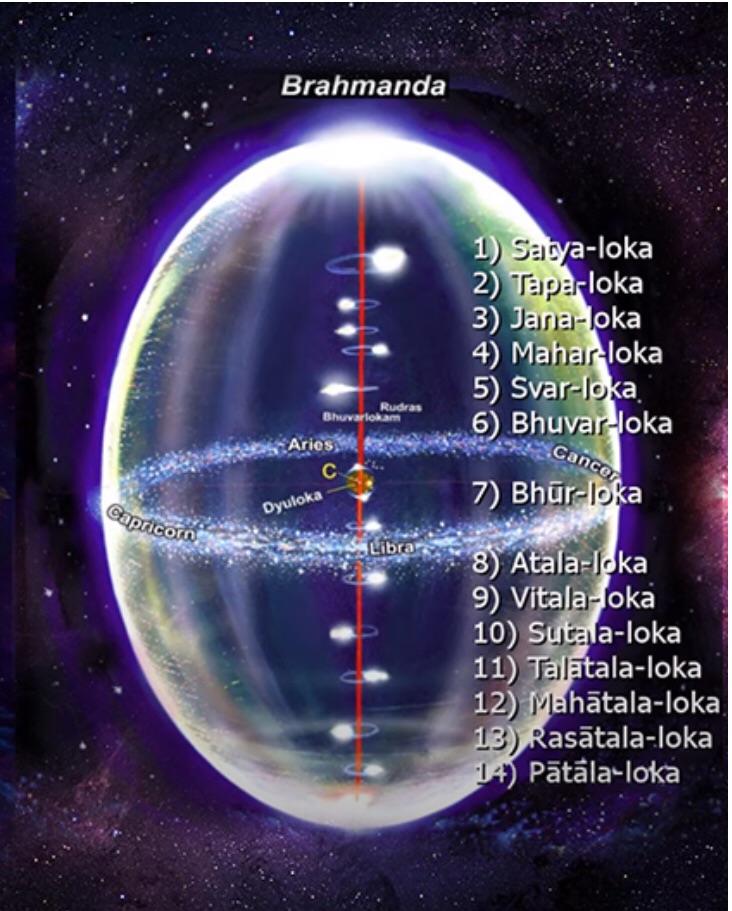
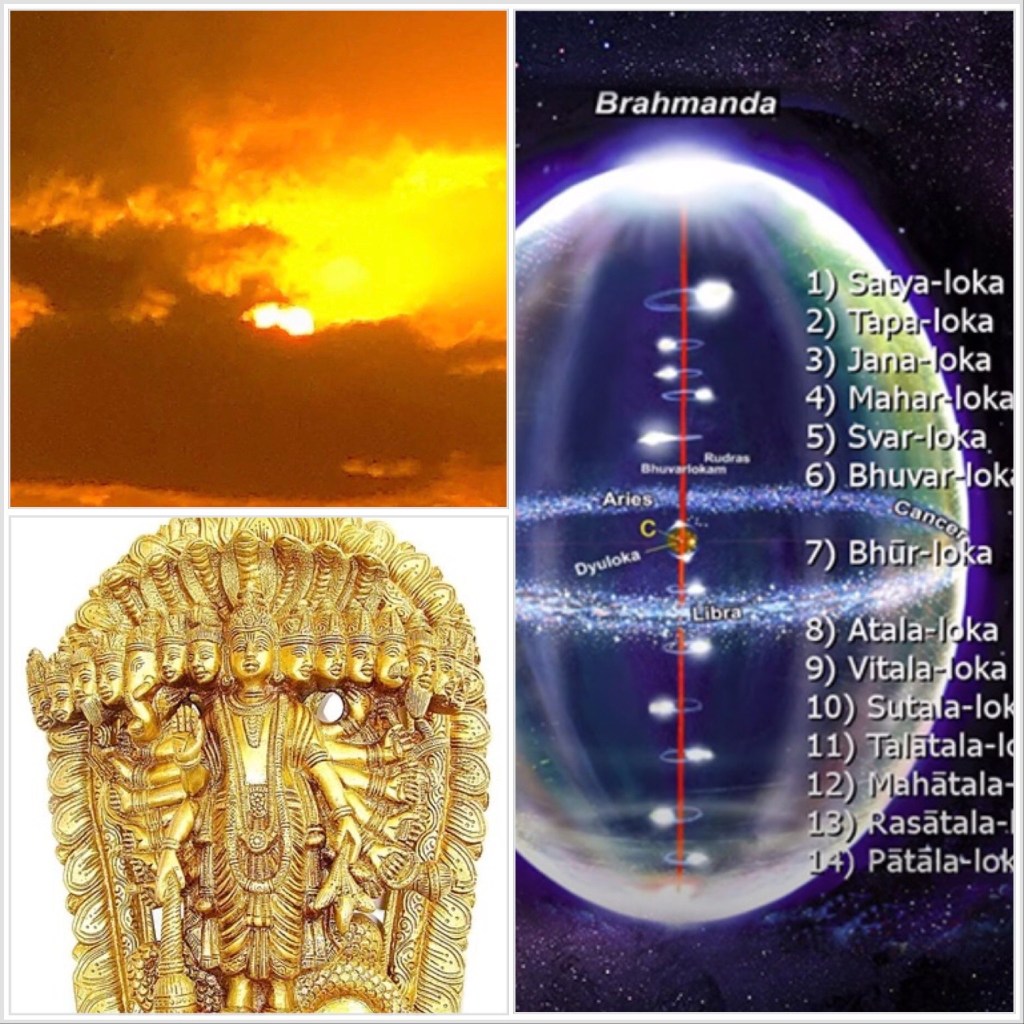
O Lord! Thy body is the whole universe. Maharloka is Thy neck. Janaloka is Thy face. Tapoloka is Thy forehead. Satyaloka is Thy head. Of all the other things of which the universe is made, Thy body is also conceived of being made up of all that. O Lord! salutations to Thee.
Meaning of the Sanskrit Words
ग्रीवा मह: - तव - Thy neck is Maharloka
मुखं च जन: - and face is Janaloka
तप: - तु फालं Tapoloka, indeed, is forehead
शिर: - head
तव समस्तमयस्य of Thee who are everything
सत्यम् - is Satyaloka
एवं - in this manner
जगन्मयतनो - whose body is the universe!
जगदाश्रितै:-अपि-अन्यै: - of all other things forming the universe
निबद्धवपुषे - whose body is conceived as being made up of
O Lord! The wielder of the Discus! (One who handles the Chakra with skill and easily). Then “Your” shanks (a part from the knee to the ankle) are ‘Talatala’ and “Your” knees are ‘Sutala’, further, two parts of “Your” thigh region (the lower part of the thighs and waist region) are the two worlds ‘Vitala’ and ‘Atala’ respectively. “Your” hip is the Earth, navel is the Sky and “Your” chest ‘Swarga’, the abode of Indra.
Meaning of the Sanskrit Words
जङ्घे तलातलम्- (Thy) shins Talaata
अथ: सुतलं च जानू - then, Sutala (are Thy) knees
किञ्च-उरु-भाग-युगलं - moreover, the two thighs (are)
वितल-अतले द्वे - the two (worlds) Vitala and Atala
क्षोणीतलं जघनम्- the earth is (Thy) hip
अम्बरम्-अङ्ग नाभि: - sky is O Lord! the navel
वक्ष: - च -and the chest
शक्र-निलय: तव - of Thine is the abode of Indra (swarga)
After explaining the evolution of Cosmic Form (Virat Rupa) in Dasakam 5, Sri. Narayana Bhattathri now begins the description of the various parts of this Cosmic Form in this Sloka.


O Lord! “You”, who had taken or assumed in this manner,the form of the 14 worlds. The soles of the feet are said to be “patala”,He Deva! The upper region of “Your” feet, too are said to be “Rasatala”. O Lord, of wondrous form! “Your” two ankles are, indeed, said to be “Mahatala”


From the above, it is understood that out of the 14 worlds, ‘Patala’ is the lowest and that      corresponds with the lowermost portion of the Cosmic body. The lower portion of the feet-Patala, the Upper portion of the feet -Rasatala, two ankles -Mahatala.

Note - The epithets used by Bhattathri in this Sloka (Isha, Deva, AdbhudAtma) are indicative that the Lord shines in all these three worlds too. In fact, there is nothing where the Lord doesn’t shine.
விளக்கவுரை
தசகம் 5 இல் பிரபஞ்ச வடிவத்தின் (விராட் ரூபத்தின்) பரிணாமத்தை விளக்கிய பிறகு, ஸ்ரீ. நாராயண பட்டத்ரி இப்போது இந்த ஸ்லோகத்தில் இந்த பிரபஞ்ச வடிவத்தின் பல்வேறு பகுதிகளின் விளக்கத்தைத் தொடங்குகிறார்.

இரேழு புவனங்களைப் படைத்த ஆண்டவனே! உனது உட்பாதங்களிரண்டும் பாதாளமென்றும், உன் திருவடிகளின் மேல் பகுதி "ரசதல" என்றும் கூறப்படுகிறது. எழில் வதனுமுடையோனே! உன்னிரு கணுக்கால்கள், உண்மையில், "மஹதள" என்று கூறப்படுகின்றன (என அறிவுடை முனி ஞானியர் கூறுகின்றனரே) என நாராயண பட்டத்ரி வர்ணிக்கின்றார்.

இந்த ஸ்லோகத்தில், ஈசனே, ஒளியோனே (தேவனே), எழிலோனே (அற்புத ஆத்மா) என்று  பட்டத்திரி பயன்படுத்திய அடைமொழிகள், இங்கு குறிப்பிடப்பட்ட மூன்று கீழ் உலகங்களிலும் இறைவன் பிரகாசிக்கிறார் என்பதைக் குறிக்கிறது. உண்மையில், இறைவன் பிரகாசிக்காத இடம் எதுவும் இல்லை.
Meaning of the Sanskrit Words
एवं - in this manner
चतुर्दश-जगत्-मयतां गतस्य - (of Thee) who had manifested as the fourteen worlds
पातालम्-Paataal
ईश- O Lord!
तव पादतलं - soles (lower part) of Thy feet
वदन्ति - is said to be
पाद-ऊर्ध्व-देशम्-अपि - the upper surface of (Thy) feet
In Dasakam 5,starting with the divine intention (sankalpa) or will within the Supreme Being to bring forth the universe, Narayana Bhattathri has so far outlined the evolution of

1. Purusha,
2. Prakriti,
3. Mahat,
4. Ahamkara
5. Fourteen Presiding deities
6. Four functions of Inner conscience,
7. Five Sense and five action organs
8. Five Tanmaatras and the five Pancha Bhootas.
9. Creation of Hiranyagarbha, the Golden Egg.

Concluding this Dasakam, Bhattathri brings out the final evolution of the Virat Purush into the fourteen worlds.
முகவுரை
இந்த தசகத்தில், ஸ்ரீ. நாராயண பட்டத்திரி பிரம்மனின் பிரபஞ்ச வடிவத்தின் பரிணாமத்தை (ஸ்ரீமத் பாகவதத்திற்கு ஏற்ப) பிரம்மனின் "விராட் ரூபத்தில்" வழியாக அறிய உதவுகிறார்.
இதுவரை
1. புருஷன், 2. பிரகிருதி, 3. மஹத், 4. அஹம்காரா 5. பதினான்கு அதிபதிகள் 6 உள் மனசாட்சியின் நான்கு செயல்பாடுகள், 7. ஐந்து உணர்வுகள் மற்றும் ஐந்து செயல் உறுப்புகள் 8. ஐந்து தன்மாத்திரங்கள் மற்றும் ஐந்து பஞ்ச பூதங்கள். 9. ஹிரண்யகர்பம் எனும் பொன் முட்டை




 Prabhu's Ponder