We saw in Sloka 5, the manifestation of “aham” tatvam from the “Mahat” tatvam.

This means that from the Cosmic Intelligence (Mahat), the individuation process at the Cosmic level and at the gross level of an individual,  evolved through the dominant Saatvic Guna at the Cosmic level (samashti) and by the Tamas at the individual level (vyashti). Thus Sloka 5 brought out the evolution of “aham kara” or Ahaṅkāra which literally means ‘egoism’.

Ahaṅkāra is that which produces abhimāna, the sense of “I and mine”, known as the principle of individuation that arises after mahat or buddhi in the process of evolution from prakṛti (nature). It is regarded as a substance since it is the material cause of other substances like the mind or the sense-organs.

Now in Sloka 6, Bhattathri brings out the next stage of evolution, evolution of the deities responsible for the five organs of perception, five organs of action and the four aspects of inner conscience. We will study this Sloka
முன்னுரை
“மஹத்” தத்வத்திலிருந்து “அஹம்” தத்வத்தின் வெளிப்பாட்டை ஸ்லோகம் 5ல் பார்த்தோம். அண்ட உணர்வு/அண்ட அறிவு ( காஸ்மிக் இன்டெலிஜென்ஸ்) அதாவது  “மஹத்” திலிருந்து, அண்ட மட்டத்தில் (சமஷ்டி) சாத்விக் குணத்தின் மூலமாகவும், தனிப்பட்ட மட்டத்தில் (வியஷ்டி) தமஸ் மூலமாகவும் “அஹம்” தத்துவம் உருவானது.  இவ்வாறு ஸ்லோகம் 5 "அஹம் காரா" அல்லது அஹங்காரத்தின் பரிணாமத்தை வெளிப்படுத்தியது.

அதாவது அஹங்காரம் என்பது பிரக்ருதியிலிருந்து (இயற்கையிலிருந்து) பரிணாம வளர்ச்சியின் செயல்பாட்டில் மஹத் அல்லது புத்திக்குப் பிறகு எழும் தனித்துவக் கொள்கை எனப்படும் "நான் மற்றும் என்னுடையது" என்ற அபிமானத்தை உருவாக்குகிறது. மனம் அல்லது புலன் உறுப்புகள் போன்ற பிற பொருட்களின் பொருள் காரணமாக இது ஒரு பொருளாக கருதப்படுகிறது.

இப்போது ஸ்லோகம் 6 இல், பட்டத்திரி பரிணாம வளர்ச்சியின் அடுத்த கட்டத்தை, உணர்வின் ஐந்து உறுப்புகள், ஐந்து செயல் உறுப்புகள் மற்றும் உள் மனசாட்சியின் நான்கு அம்சங்களை ஆளும் தெய்வங்களின் வெளிப்பட்டை கூறுகிறார். இந்த ஸ்லோகத்தைப் படிப்போம்
இந்த நானெனும் (அஹம்) தன்னுணர்வு வகுந்து முக்குணச்சேர்க்கையால்
வைகாரிக, தைஜஸ, தமஸ எனும் மூன்றாகி, நற்குணம் நிறை வைகாரிக மூலம் திசை, வாயு, ஆதித்யா, வருணன் அஸ்வினி எனும் ஐவகை அறிவுப் புலனாளும் தெய்வங்கள், அக்னி, இந்திரன், விஷ்ணு, மித்ரன், பிரஜாபதி எனும் வினைப் புலனாளும் தெய்வங்கள்,
சந்திரன், பிரம்மன், ருத்ரன், க்ஷேத்ரஞ்ன எனும் மனம், புத்தி, அஹங்காரம், சித்தம் ஆளும் தெய்வங்கள்
என வெளிப்பட்டன அன்றோ !! 5.6
Meaning in English
This Aham (Ahankara) at its onset differentiates into Sattvika Ahankara, Rajasic Ahankara and Tamasic Ahankara.

Sattvika Ahankara also known as Vaikarika Ahankara generates the indwelling deities of sense organs, action organs, “anthakarana” (comprising of mind, intellect, ego and reasoning faculty) viz., Dikpalas, Vayu, Surya, Varuna, Asvini, Agni, Indra, Mitra, Prajapathi, Chandra, Brahma, Rudra, ksetrakjan respectively.
Identifying individual deities for individual organs enable individuals to focus on each organ by seeking the respective deity’s grace for the dharmik conduct of that organ. This is a very structured mechanism to regulate sense and action organs to do only righteous actions which is a mandatory requirement for one’s journey towards self realisation.
விளக்கக் குறிப்பு
தனிப்பட்ட புலன், பொறிகளுக்கான தனிப்பட்ட தெய்வங்களை அடையாளம் காண்பது, அந்த உறுப்பின் தர்மமான நடத்தைக்கு அந்தந்த தெய்வத்தையும் தியானித்து அவரின் அருளைப் பெறுவதன் மூலம் ஒவ்வொரு உறுப்பின் மீதும் தனிநபர்கள் கவனம் செலுத்த உதவுகிறது. இது உணர்வு மற்றும் செயல் உறுப்புகளை (பொறி புலன்களை) ஒழுங்குபடுத்தும் மிகவும் கட்டமைக்கப்பட்ட வழிமுறையாகும். அறச் செயல்களை மட்டுமே செய்து, மனதினை நிலப்படுத்தி,தன்னை யார் என்று அறியும் பயணத்திற்கு ஒரு கட்டாயத் தேவை இது.
Meaning of the Sanskrit Words
स: - अहं च - and that Ahankaara

त्रिगुण-क्रमात् - in accordance with the three Gunaas

त्रिविधताम्-आसाद्य - divided into three

वैकारिक: - as Vaikaarika (the Saatwik part)

भूय: तैजस-तामसौ- further as Tejas (Raajasic part) and as Tamas (the Taamasic part)

इति भवन्- thus became

आद्येन सत्त्व-आत्मना -=by means of the first, which is predominantly Saatwic

देवान्-इन्द्रियमानिन: -अकृत - created the gods who presided over the sense organs, organs of action and the mind (Anthahkarana)

दिशा-वात-अर्क-पाशि-अश्विन: - the directions (Dik) -air (Vaayu), sun (Soorya), water (Varuna), the gods presiding over the 5sense organs (Ashavini devas)

वह्नी-इन्द्र-अच्युत-मित्रकान् - Agni, Indra, Upendra, Mitra, Prajaapati (presiding over the 5 organs of action)

विधु-विधि-श्रीरुद्र-शारीरकान् - the Moon, Brahma, Sri Rudra, Kshetraj
In Sloka 4, Bhattathri brought out the creation of “Mahat” tattva, the Cosmic Intelligence or the total consciousness.

The mahat-tattva is called the total (vyashti) consciousness. When Mahat, the all-knowing creative principle, omnipresent, omniscient, omnipotent consciousness becomes conscious of itself – I-am, omnipresent – it becomes cosmic Ahamkara.

So first is Purusha, second is Prakriti, third is Mahat, fourth is Ahamkara.

Ahamkara here is to be understood as Cosmic Self-awareness – the whole universe becoming conscious: ‘I am.' It is not merely omnipresence as such; it is consciousness of one's being omnipresent. This is the omnipresent total (vyashti) level.

Bhattathri also explains the next “creation” at  the individual level (samashti).
ஸ்லோகம் 4 இல், பட்டத்திரி "மஹத்" தத்வா, உலக உணர்வு தத்துவத்தை விளக்கினார். மஹத், அனைத்தையும் அறிந்த படைப்புக் கொள்கை, எங்கும் நிறைந்த, சர்வவல்லமையுள்ள உணர்வு தன்னை உணர்ந்து கொள்ளும் போது - நான் எங்கும் நிறைந்தவன் என்ற உணர்வு; இது தன்முனைப்பு இல்லாதது.
இதனை தன்முனைப்பில்லா பிரபஞ்ச அஹம்காரம் எனலாம்.

எனவே முதலில் புருஷன், இரண்டாவது பிரகிருதி, மூன்றாவது மஹத், நான்காவது அஹம்காரம். இங்கு அஹம்காரம் என்பது எங்கும் நிறைந்த மொத்த (வ்யஷ்டி) நுண் நிலை.

பட்டத்திரி அடுத்ததாக விளக்குகிறார், பருநிலையில், தனிப்பட்ட அளவில், அதாவது உடல் அளவில் (சமஷ்டி) உள்ள “நான்” எனும் தன்னுணர்வின் வெளிப்பாட்டினை.
The Sloka
तत्रासौ त्रिगुणात्मकोऽपि च महान् सत्त्वप्रधान: स्वयं
O All pervading Lord! Even though this Mahat Tatwa is made up of three Gunaas, it is predominated by Satwa. Hence it recognizes the collective Jivas as macro "I". (As cosmic whole and not as individual entities). But the same Mahat Tatwa, when predominated by Tamas and Rajas, creates by Thy will the feeling of individual "I" called Aham Tatwa.
असौ त्रिगुणात्मक: अपि च - that (Mahat) though comprising of all the three Gunaas
महान् Mahat
सत्त्वप्रधान: स्वयं - being itself predominantly Saatwic
जीवे-अस्मिन् खलु - in the collective Jiva, indeed
निर्विकल्पम्-अहम्-इति- as the total 'I' sense, without the sense of plurality causes the cognition
उद्बोध-निष्पाद्क: - created in the Jiva
चक्रे - अस्मिन् - that which causes the awareness of
सविकल्प-बोधक - separate individuality
महत्-तत्वं - Ahankaara (Ego)
महान् खलु-असौ - this same Mahat indeed
सम्पुष्टं त्रिगुणै: - though having all the three Gunaas in full measure
तम: - अतिबहुलं - being dominated by Tamas
विष्णो O - All pervading Lord
भवत् प्रेरणात् - by Thy promptin
Note:
Nirvikalpa is a term that refers to a state of consciousness without any fluctuations or modifications of the mind. It’s a state of pure awareness, devoid of any thoughts, concepts, or distinctions. This satvic state is often associated with deep meditation or spiritual experiences where the individual experiences a sense of oneness and unity.
Describing that satvic state without using thoughts, words, or the mind is a challenge because language and thought are our primary tools for communication. However, that state might be best understood through direct experience rather than description. It’s often described as a sense of pure being, a feeling of oneness or unity, an experience beyond the limitations of language or thought – more of a felt sense or intuitive understanding.
இந்த ஸ்லோகத்தில் நிர்விகல்பா, விகல்பா என்ற எதிர்மறை சொற்கள் உபயோகப்படுத்தப்பட்டுள்ளன.

நிர்விகல்பா என்பது மனதின் எந்த ஏற்ற இறக்கங்களோ அல்லது மாற்றங்களோ இல்லாத ஒரு உணர்வு நிலையைக் குறிக்கும் சொல். இது எந்த எண்ணங்கள், கருத்துக்கள் அல்லது வேறுபாடுகள் இல்லாத தூய்மையான விழிப்புணர்வு நிலை. இந்த சாத்விக நிலை பெரும்பாலும் ஆழ்ந்த தியானம் அல்லது ஆன்மீக அனுபவங்களுடன் தொடர்புடையது, அங்கு தனிநபர் ஒருமை உணர்வை அனுபவிக்கிறார்.

எண்ணங்கள், வார்த்தைகள் அல்லது மனதைப் பயன்படுத்தாமல் அந்த சாத்வீக நிலையை விவரிப்பது மிகவும் கடினம், ஏனென்றால் மொழியும் சிந்தனையும் தொடர்புக்கான நமது முதன்மைக் கருவிகள். இருப்பினும், அந்த நிலை விளக்கத்தை விட நேரடி அனுபவத்தின் மூலம் நன்றாக புரிந்து கொள்ளப்படலாம். இது பெரும்பாலும் தூய்மையான உணர்வு, ஒற்றுமையின் உணர்வு; மொழி அல்லது சிந்தனையின் வரம்புகளுக்கு அப்பாற்பட்ட அனுபவம் - வேற்றுமைமுனைப்புகள் இந்த நிலையில் இல்லை.
In the first Sloka, Narayana Bhattathri brought out that before the Maha Pralaya (The great deluge/Big Bang), only Brahman exists.

In the next Sloka 2 Bhattathri brought out that everything else was in unmanifested, undifferentiated state inside Brahman.

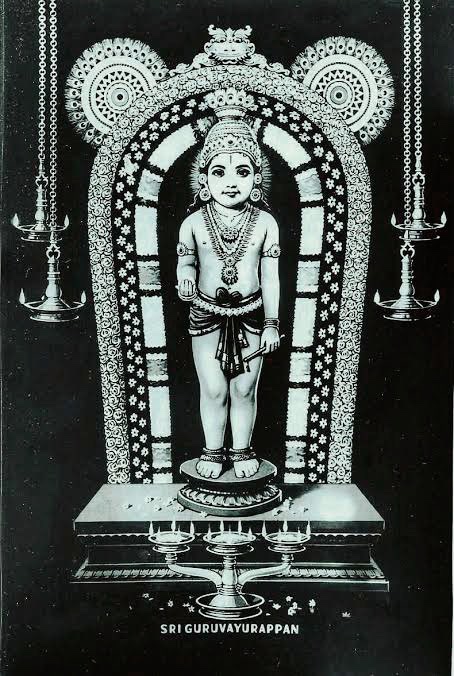
Then in Sloka 3, Narayana Bhattathri outlined that by the sheer will of the Brahman (referred as Guruvayurappan in this case), Maayaa (His creative power) got activated and from it emerged the power of time, the impressions of karma and the resulting tendencies. These supported Maayaa by disturbing the balance and the three Gunaas manifested.

Now in Sloka 4, Bhattathri brings out the creation of “Mahat” tattva, the Cosmic Intelligence or the total consciousness. The mahat-tattva is called the total (vyashti) consciousness because a portion of it is represented in everyone as the intellect (samashti). Mahat may be said to be Hiranyagarbha, the all-knowing creative principle, omnipresent, omniscient, omnipotent consciousness.

We can say that Brahman  is in its unmanifested and undifferentiated state(The causal level); Prakriti is in manifested and undifferentiated state (causal level) ; Mahat-tattva is
in its manifested and differentiated state (subtle level) , ready for creation.
முகவுரை
முதல் ஸ்லோகத்தில், நாராயண பட்டத்ரி, மகா பிரளயத்திற்கு (பெரும் பிரளயம்/பெருவெடிப்பு) முன், பிரம்மன் மட்டுமே இருப்பதாகக் கூறினார்.

அடுத்து, இரண்டாவது ஸ்லோகத்தில் பட்டத்ரி, மற்ற அனைத்தும் பிரம்மனுக்குள் வெளிப்படாத, வேறுபடுத்தப்படாத நிலையில் இருப்பதை அறிவித்தார்.

பின்னர் ஸ்லோகம் மூன்றில், நாராயண பட்டத்ரி, பிரம்மனின் (குருவாயூரப்பன்)முழு விருப்பத்தால், மாயா (அவரது படைப்பு சக்தி) செயல்படுத்தப்பட்டு, அதிலிருந்து காலத்தின் சக்தி, கர்மாவின் தாக்கங்கள் மற்றும் அதன் விளைவாக வெளிப்பட்டது என்று கோடிட்டுக் காட்டினார். இதனால் சமநிலை சீர்குலைந்து மூன்று குணங்கள் வெளிப்பட்டன என்றும் அறிந்தோம்.

இப்போது ஸ்லோகம் நான்கில், பட்டத்திரி "மஹத்" தத்துவத்தின் உருவாக்கம்; அதாவது பேர் நுண் அறிவின் (Cosmic Intelligence) வெளிப்பாட்டை விளக்குகிறார். மஹத்-தத்வா என்பது அண்டங்களின் மொத்த (வ்யஷ்டி) உணர்வு என்று அழைக்கப்படுகிறது, ஏனெனில் அதன் ஒரு பகுதி புத்தியாக (சமஷ்டி) நம் அனைவரிடமும் உள்ளது. மஹத்தை ஹிரண்யகர்பா என்று கூறலாம், அனைத்தையும் அறிந்த படைப்புக் கொள்கை, எங்கும் நிறைந்த, எல்லாம் அறிந்த, சர்வ வல்லமையுள்ள உணர்வு.

ஆக, பிரம்மம் எனும் பரம்பொருள் அதன் வெளிப்படுத்தப்படாத மற்றும் வேறுபடுத்தப்படாத நிலையில் (காரண நிலை) இருப்பதாக நாம் கூறலாம். அதுபோல பிரக்ருதி என்பது காரண நிலையில் வெளிப்படும் மற்றும் வேறுபடுத்தப்படாத நிலையில் உள்ளது எனவும், மஹத்-தத்வா என்பது நுட்பமான நிலையில்
வெளிப்படுத்தப்பட்ட மற்றும் வேறுபட்ட நிலையில் உருவாகத் தயாராக உள்ளது எனக் கூறலாம், நமது புரிதலுக்காக.
kaalaadipratibOdhitaa(a)tha bhavataa sanchOditaa cha svayaM maayaa saa khalu buddhitattvamasR^ijadyO(a)sau mahaanuchyate ||
Meaning in English
O Guruvayurappa, You are characterized as the Witness in the Vedas, remaining by Maya and not entering into it. You appear as Pratibimba (reflected image) in the products of Maya; one such reflection is Jiva, which has no independent existence without You. Directed by You, Maya through its medium of Kālam, (Karmam, and svabhāvam) came Buddhi Tattva, which is known as Mahat.
Meaning of the Sanskrit Words
माया-सन्निहित: - having Maayaa as adjunct only
अप्रविष्ट-वपुषा - but without getting influenced by it (untainted by it)
साक्षी-इति गीत: भवान् - Thou are mere witness, it is proclaimed (in the Vedas)
भेदै: -तां - in diverse appearances in that Maayaa
प्रतिबिंबत:- as reflections
विविशिवान् जीव: -अपि - Thou entered as individual soul also
न-एव-अपर:- (which) is not at all different from ( Thee)
काल-आदि-प्रतिबोधिता - being aroused by Time etc.
अथ भवता संचोदिता च - then also well prompted by Thee
स्वयं माया सा खलु - that Maayaa itself indeed
बुद्धि-तत्त्वम्-असृजत् - projected the principle of Intelligence
In the first Sloka, Narayana Bhattahri brought out that before the Maha Pralaya (The great deluge/Big Bang), only Brahman exists.

The question that naturally followed this assertion was “what happened to all the existing things, living and non living entities at the gross and subtle levels?”.

The answer was provided in the next Sloka 2 wherein Bhattathri brought out that everything else was in unmanifested, undifferentiated state inside Brahman.

Now comes the next question. What happens next?
Answer for this question is Sloka 3.
Sanskrit Verse
एवं च द्विपरार्धकालविगतावीक्षां सिसृक्षात्मिकां
बिभ्राणे त्वयि चुक्षुभे त्रिभुवनीभावाय माया स्वयम् ।
In the first Sloka, Narayana Bhattahri brought out that before the Maha Pralaya (The great deluge/Big Bang), only Brahman exists.

The question that naturally follows this assertion is “what happened to all the existing things, living and non living entities at the gross and subtle levels?”.

Before finding answers to our question, let us  watch an interesting Video.
Now let us come to the core issues on this video. From where did this gigantic Sequoia tree come from ? Well, it came from this simple looking seed.
Wow! How is it possible? The answer is explained by Narayana Bhattathri in Sloka 2. Now let us study the Sloka.
குறிப்பு: வேதாந்தத்தில், இல்லாத விஷயங்கள் (அதாவது, மூன்று காலகட்டங்களில் எப்பொழுதும் இல்லாதவை அல்லது சாத்தியமற்றவை அல்லது உண்மையற்றவை) பொதுவாக மூன்று எடுத்துக்காட்டுகளுடன் விளக்கப்படுகின்றன, அதாவது விண் மலர்கள் (வானில் வளரும் மலர் செடி/மரம் இல்லாமல்), மலட்டுப் பெண்ணின் குழந்தை, முயலின் கொம்பு. மஹா பிரளயத்தின் போது தற்போதுள்ள அனைத்து பொருட்களும் வெளிப்படுத்தப்படாத/வேறுபடுத்தப்படாத நிலையில் இருந்ததை எடுத்துரைக்க பட்டத்திரி இங்கே விண்மலர்கள் உதாரணத்தைப் பயன்படுத்துகிறார்.
Meaning in English
O All pervading Lord! During the period of Maha Pralaya, You were absorbed in Yourself in Your Cosmic Slumber (Yoga Nidra). At that period, Time, Karmas (& effects of good and bad actions), Gunas (Satwa, Rajas and Tamas), all the Jivas and the entire universe (born out of Maayaa) were all merged in Thee and Thou were absorbed in Thy own nature of pure Consciousness Bliss. O Lord! Even the Srutis (Vedas) do not declare them as being non existent. They remained in causal form. If they have perished or non existent like the sky-flowers (which never existed) , how could they come into existence again?

Note 1: In Vedanta, the non-existent things (i.e, that which never exists in any of the three periods of time or an impossibility or unreal) are usually explained with three examples viz., sky-flower (flower which grows in the sky without any plant/tree), child of a barren woman, and the horn of a rabbit. Bhattathri is using the sky-flower example here to drive home the point all existing things were in unmanifested/undifferentiated state during Maha Pralaya.
Note 2:

Readers are advised to cross refer to Sloka 2 of Dakshinamurthy Stothram for an overview of the concepts of Vikalpa and Nirvikalpa. Ref:
Let us recall what we learnt in the previous blogs on Cosmic Evolution.

1. At the outset it should be clear that our Rishis, Seers and Saints understood that creation doesn’t mean formation of something out of nothing. By the word creation, they only meant the manifestation of something which was potentially existent in dormant form or Unmanifest form or undifferentiated form (like the tree inside the seed).

2. In the beginning nothing exists except a singularity called Brahman. This is akin to what modern scientists say as “Before the big bang there was no space, time or matter. There was just singularity where the entire un-manifested universe existed”.

This is what is brought out by Bhattathri in this first Sloka.

Let us now study the Sloka
முகவுரை
“ஒன்று ஆகி மூலத்து உருவம் பல ஆகி

உணர்வும் உயிரும் பிறிது ஆகி ஊழி

சென்று ஆசறும் காலத்து அந்நிலையது ஆகி

திறத்து உலகம்தான் ஆகி செஞ்சவே நின்ற

நன்று ஆய ஞானத் தனிக் கொழுந்தே எங்கள்

நவைதீர்க்கும் நாயகமே நல் வினையே நோக்கி

நின்றாரைக் காத்தி அயல் பேரைக் காய்தி

நிலை இல்லாத் தீவினையும் நீ தந்தது அன்றே”

கம்பராமாயணம், ஆரண்ய காண்டத்தில்

“முதலில் ஒன்றாக இருந்து, பின்னர் பலவேறு (Cosmic Evolution) வடிவங்களாகி, அவ்வடிவங்களில் அறிவும், உயிரும் வெவ்வேறாகி, ஊழிக் காலம் மஹா பிரளயத்தால் முடியும் போது, முதலில் இருந்த ஒன்றாகும் நிலையைப் பெற்று (Cosmic Dissolution) , மீண்டும் படைப்பு நிகழும்போது பலவகைப்பட்ட உலகங்களாகி, செம்மையாய் நின்ற ஞானக் கொழுந்தே! நீ புண்ணிய செயல்களை மேற்கொண்டவர்களைக் காக்கின்றாய், பாவம் செய்பவர்களை அழிக்கின்றாய். நிலையில்லாத அப்பாவமும் நீ படைத்தது அல்லவா?”

என்று கம்பன் வர்ணிப்பதும் நமது முனிவர்களும், ரிஷிகளும் அறிந்துணர்ந்த அண்டங்களின் படைப்பிற்கு காரணமாகிய ஆதி அந்தமில்லா பரம்பொருளைப் பற்றியதே

இதனைத்தான் நாராயண பட்டத்ரி, ஐந்தாம் தசகத்தில் முதல் ஸ்லோகமாக வரைந்தார்.

அதனை இப்போது ஆய்வோம்.
Sanskrit Verse
व्यक्ताव्यक्तमिदं न किञ्चिदभवत्प्राक्प्राकृतप्रक्षये
मायायाम् गुणसाम्यरुद्धविकृतौ त्वय्यागतायां लयम् ।
नो मृत्युश्च तदाऽमृतं च समभून्नाह्नो न रात्रे: स्थिति –
இறப்பில்லை, வீடுபேறென்றில்லை, இறவு பகல் ஏதுமில்லை இருப்பென்பது உனையன்றி வேறெதுவுமல்லை – அப்
பேரழிவுக் காலம் முன்னே பேரின்ப நிலைதனிலே தூய இருப்பெனவே இருந்தனையே பரம்பொருளே 5.1
Meaning in English
This world consisting of the manifest and the unmanifest worlds (gross and the subtle) did not exist at all, before and during the total dissolution.The three Gunaas (Satwa, Rajas and Tamas) of Maya were in equilibrium, preventing any modification and so had become latent in Thee. At that time neither death nor liberation existed. Day and night also did not exist. Thou alone remained at that time as the Supreme Bliss Consciousness.
English Transliteration
vyaktāvyaktamidaṁ na kiñcidabhavatprākprākr̥taprakṣayē

māyāyāṁ guṇasāmyaruddhavikr̥tau tvayyāgatāyāṁ layam |

nō mr̥tyuśca tadāmr̥taṁ ca samabhūnnāhnō na rātrēḥ sthiti -

statraikastvamaśiṣyathāḥ kila parānandaprakāśātmanā || 5
Meaning of the Sanskrit Words
व्यक्त-अव्यक्तम्-इदं - this (universe) made up of the gross and the subtle (manifested and unmanifested)
न किञ्चित्-अभवत् - nothing existed
प्राक्-प्राकृत-प्रक्षये - before Praakrita Pralaya
This write up below is definitely not an exhaustive description of what our scriptures talk about Pralaya. It is my very limited understanding of the vast literature available in public domain. The objective is to get a broad idea of the principles involved so that when we take up the study of our scriptures and Sanskrit Slokas, we will have a better comprehension of what they say.
Reader is strongly advised to strictly learn these under the guidance of a Guru, if one wants a deep dive in this subject.
Introduction
The concept of Pralaya or dissolution is intimately related with the concept of creation. Our scriptures say that the chain of creation and dissolution continues without break. After each creation, there is dissolution and after dissolution there is again new creation.Following the dissolution, there is a period of rest or interval, known as Pralaya. It's a period of non-existence where the universe remains dormant before the next cycle begins.

Each creation i.e., anything that has an “existence” goes through the dissolution process. The dissolution process is the reverse of the creation process. This means that all the creations at the gross level dissolves into the subtle level and the subtle into causal levels.

Therefore, in addition to the “kaala” or time and its breakdown which we saw in the earlier part, we should also understand what is getting dissolved, where is it getting dissolved and how often do they get dissolved. In other words, we should understand

1. The different forms of existence
2. the realms of existence
3. The cycles of dissolution
Forms of existence
In this universe, (universe included) there are sentient and insentient things that exist.

Leaving the near infinite number of insentient and inert materials and their different forms aside, the Padma Purana discusses the number of different types of life-forms in the universe. According to the Padma Purana, there are 8,400,000 life-form species, 900,000 of which are aquatic ones; 2,000,000 are trees and plants; 1,100,000 are small living insects species; 1,000,000 are birds; 3,000,000 are beasts and reptiles; and 400,000 are mammal species.

Creation (srishti) and destruction (pralaya) is about all these forms of existence.
Realms of existence
Apart from the infinite time element, as one of the common causes for cosmic evolution, infinite space is to be understood in proper perspective. This is known as “loka” in our scriptures. The most common cosmological conception of lokas in the Veda was that of the trailokya or triple world: three worlds consisting of earth, atmosphere or sky, and heaven, making up the universe.

Hindu mythology defines fourteen worlds (not to be confused with planets) – seven higher worlds (heavens) and seven lower ones (underworlds). (The earth is considered the lowest of the seven higher worlds.) The higher worlds are the seven Vyahrtis (Heavens or Upper worlds) and seven Patalas (Hells or lower worlds).

The 14 Lokas are: (1) Satya (2) Tapa (2) Jana (4) Mahar (5) Svar (6) Bhuvar (7) Bhu (8) Atala (9) Vitala (10) Sutala (11) Talatala (12) Mahatala (13) Rasatala (14) Patala.
Time Cycles and kinds of Pralaya
Visnu Purana describes, four kinds of pralaya viz.,

Naimittika (occasional),
Prakrtika (elemental),
Atyantika (absolute) and
Nitya (perpetual)
All these are directly related to the life of Brahma, the God assigned the responsibility of creation.
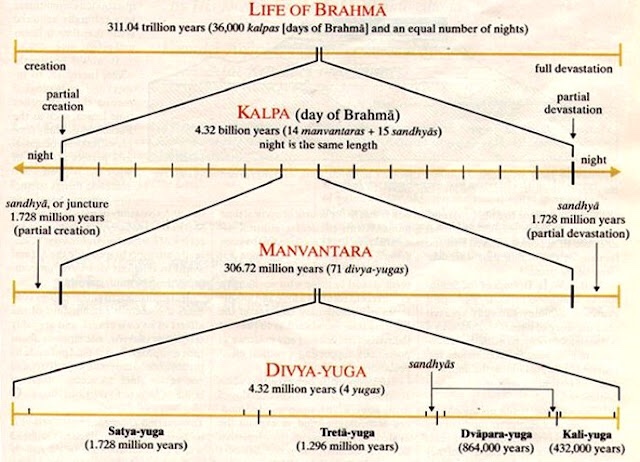
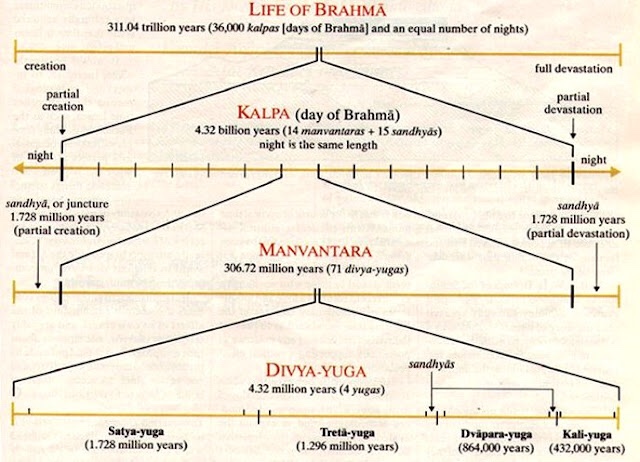
This Pralaya is also termed as the Brahma Pralaya. This Pralaya at the end of a kalpa or at the end of a day of Brahmas life - 4.32 Billion human calendar years);. After a kalpa, Naimittika pralaya occurs. It is also indicated in the Visnu Purana that this dissolution occurs only in the three lokas, i.e., Bhu, Bhuva and Sva.The Visnu Purana also gives a very fearful description of this dissolution.
Prakrtika Pralaya:

This Pralaya occurs when the whole Brahmanda dissolves in Prakrti. This pralaya occurs at the end of the life span of Brahma (100 years as per his calendar) , viz., at the end of Maha Kalpa - 311.04 Trillion years in human calendar (comprising of two paraardhaas of 155.52 Trillion years each).

At that time all the things of the world return to their causes. This dissolution takes place in the opposite order of their creation. Thus, the seven forms of Prakrti from Mahat to earth enter successively into their causes. The Egg of Brahma is dissolved in the waters that surround it with its seven lokas, seven oceans, seven islands and the mountains. Water is drunk up by fire; that of air absorbs the stratum of fire. Air is merged in ether and Bhutadi or Ahamkara devours the ether. Mahat again takes up Ahamkara. Then Prakrti absorbs Mahat and all these. Prakrti and Purusa also are dissolved into the Supreme Spirit. This is Prakrta Pralaya.
Atyantika Pralaya :

Absolute or final dissolution is attained by the knowledge of the Supreme. It is said that all beings are afflicted by three kinds of worldly pains, viz., adhyatmika, adhibhautika and adhidaivika. The Visnu Purana also describes these three types of pains. Adhyatmika is of two types - bodily and mental. That kind of evil, which is inflicted upon men by beasts, birds etc. are called Adhyatmika. Adhidaivika pain is the work of cold, heat, wind, rain, lightning and other atmospherical phenomena. These three types of afflictions are described in the Samkhya system also in the similar vein.

Only true knowledge about one self (atma vidya, brahma jnanam) can rescue men from these three kinds of affliction. When a man attains true, knowledge & detachment from human afflictions, he obtains final dissolution. In this pralaya, the yogis are merged in the Supreme Spirit.
Nitya Pralaya:

It is said that Nitya or perpetual dissolution is the constant disappearance of all living beings. Experts interpret this as the death of the living beings, which occurs constantly - “Nitya is the extinction of life, like the extinction of a lamp, in sleep at night”. Some Vedantists describe Nitya Pralaya as Susupti or deep sleep.
Conclusion
We have through a five part study tried to have an overview of the cosmic evolution as per the modern and Indian perspectives. This study was essential to appreciate Narayaneeyam Dasakam 5.
From the next blog we will start our study the Slokas of Dasakam 5.
இந்த பதிவு, நிச்சயமாக அண்டத்தின் படைப்பைப் பற்றி ஆன்மீகம் என்ன சொல்கிறது என்பது பற்றிய முழுமையான விளக்கம் அல்ல. அண்டத்தின் படைப்பை பற்றிய ஆன்மீக விளக்கங்களிலிருந்து நான் புரிந்து கொண்ட ஒரு மேலான கண்ணொட்டத்தின் வடிவே இது.
நாராயணீயம்தசகம்ஐந்தினைசரியாகபுரிந்துகொள்வதேநமதுகுறிக்கோள். அதற்குதேவையானபுரிதலைநமக்குஅளிக்கவேஇந்தபதிவுகள் என்பதை நாம் மனதில் நிலைநாட்ட வேண்டும். இதனை முந்தைய பதிவான நாரயணீயம் முகவுரையிலேயே அடியேன் குறிப்பிட்டிருந்தேன் என்பதையும் நினைவுகூறுக.
இந்த விஷயத்தில் ஆழ்ந்து அறிய விரும்பினால், தங்களது குருவினை அணுகி, இவற்றைக் கற்றுக் கொள்ளுமாறு வாசகர்களை அன்புடன் கேட்டுக் கொள்கிறேன்.
இதுவரைஅறிந்தது
பகுதி 1ல், "நிறையும் ஆற்றலும்” அதாவது “இருப்பும் உணர்வும்” (matter & energy or existence & consciousness)கொண்ட ஒரே ஒரு தூய்மையான, எங்கும் நீக்கமற நிறைந்த, அழிவிலா நித்திய பேரின்பமான இறுதி உண்மையெனும் பரம்பொருள் தத்துவம் நமது கருத்தியல் அறிவாற்றலில் (In our conceptual cognition), நாம் பொறிபுலன் கொண்டு, கண்டு அனுபவிக்கும் அடிப்படை அம்சங்களாக தன்னை வெளிப்படுத்துகிறது என்று கூறியதை அறிந்தோம்.

பகுதி 2ல், படைப்பு என்பது பரம்பொருளின் இச்சையால் வெளிப்படுகிறது என்றும், அப்பரம்பொருளே படைப்பின் அறிவுக்காரணம் என்றும் அறிந்தோம். மேலும் பரம்பொருளைப் போல ஆதியும் அந்தமும் இல்லாமல் எனினும் பரம்பொருளைச் சார்ந்த சக்தியான மூலப்ரக்ருதி, அவ்யக்தா, மாயா, குணஸம்யா என்றெல்லாம் வடமொழியில் கூறப்படும் மாயையே படைப்பின் பொருட்காரணம் என்றும், அழியா இடம், அழியா காலம் இரண்டும் பொதுக்காரணமென்றும் கண்டோம். அந்த காலத்தின் கணக்கினை நான்முக கடவுளின் ஆயளுடன் இணத்ததையும் அறிந்தோம்.

மூன்றாவது பகுதியில் ஐவகை செறிவு எனும் பஞ்சீகரண செயல்முறை வழியாக அண்டப் பரிணாமத்தின் விவரங்களைக் கண்டோம்.

முடிவாக, இந்தப்பகுதியில் பிரளயம் எனும் கலப்பு தத்துவத்தை காண்போம்.
முகவுரை
“ஒன்றோடொன்றாகவே பற்றிலயமாம் போதினில்” என்று தாயுமானவர் கூற்றின்படி, லயம் என்ற சொல்லுக்கு, ஒன்றுடன் ஒன்றாக கலத்தல் என்ற பொருள் மிகவும் பொருத்தமானது. பலர் இச்சொல்லிற்கு அழிவு என்று பொருள் கொள்கின்றனர். அது ஒரு குறுகிய கண்ணோட்டம். முதற்பதிவல் கண்ட அடிப்படை கொள்கையை நினைவு கூறுக. உருவாக்குதல், அழித்தல் என்று ஒன்றுமில்லை; பரிணாமம் என்று வேறாக, மாறாக, மறைவிலிருந்து வெளிப்படுவதே உண்மை.

பிரளயம் என்பது, பிரபஞ்சத்தின் ஒட்டுமொத்த கலப்பு என்ற பொருளை குறிக்கும் என்று கூறுகிறது என் சிற்றறிவு. .

நமது ஸனாதன தர்மத்தில், அண்டப் பரிணாமம், என்பது ஒரு சக்கர சுழல். தோன்றியது மறையும; மறைவது தோன்றும். இவை இரண்டும் மாறி மாறி வந்து கொண்டே இருக்கும் காலச்சக்கர சுழற்சியின்படி. எதற்கெல்லாம் "இருப்பு" உள்ளதோ அதற்கெல்லாம் “கலப்பு” எனும் “லயம்” உண்டு. எவையெல்லாம் “லயப்படுகின்றனவோ”, அவைகளெல்லாம் “இருப்பாக” வெளிவரும். இதுதான் அண்டத்தின் நியமனம்.

எனவே, இந்த லயம் எவைகளுக்கு, எங்கு, எப்போது என்பதை நாம் அறிய வேண்டும். அதாவது லயத்தின் பொருள், இடம், காலம் இவற்றை நாம் அறிய வேண்டும். அவைகளின் ஒரு கண்ணோட்டம் இதோ.
பிரளயம் – எவைகளுக்கு?
இந்த பிரபஞ்சத்தில், (பிரபஞ்சம் உட்பட) “இருப்பு” உள்ளவைகளை உணர்வுள்ள இருப்பு (sentient), உணர்வற்ற பொருட்கள் (insentient) என்று பிரிக்கலாம். முடிவிலியை எட்டும் எண்ணற்ற உணர்ச்சியற்ற மற்றும் செயலற்ற பொருட்களையும் அவற்றின் வெவ்வேறு வடிவங்களை ஒதுக்கி வைத்துவிட்டுப் பார்த்தால், 8,400,000 உயிரினங்களும், அவற்றில் 900,000 நீர்வாழ் உயிரினங்களாகவும்; 2,000,000 மரங்களும் செடிகளெனவும் ; 1,100,000 சிறிய உயிருள்ள பூச்சி இனங்களாகவும்; 1,000,000 பறவைகள் எனவும்; 3,000,000 மிருகங்கள் மற்றும் ஊர்வன எனவும், பாலூட்டி இனங்கள் 400,000 எனவும் நமது பத்ம புராணம் பிரபஞ்சத்தில் உள்ள பல்வேறு வகையான வாழ்க்கை வடிவங்களின் எண்ணிக்கையைப் பற்றி விவாதிக்கிறது. பல்லுயிர் பெருக்கம் என்பது அண்டங்களில் உள்ள உயிரின வகைகளின் தொகுப்பாகும்.

ஆக , பிரளயம் என்பது இந்த இருவகை இருப்புகளனைத்தையும் உள்ளடக்கியது என்பதை நாம் உணர வேண்டும்.
பிரளயம் – எங்கேநிகழ்கிறது?
அண்ட பரிணாம வளர்ச்சிக்கான பொது காரணங்களில் ஒன்றான, எல்லையற்ற வெளியை சரியான கண்ணோட்டத்தில் நாம் புரிந்து கொள்ள வேண்டும். இது நமது வேதங்களில் "லோகம்" என்று அழைக்கப்படுகிறது.
முடி மன்னர் ஆகில் மூவுலகம் அது ஆள்வார் அடி மன்னர் இன்பத்து அளவு இல்லை கேட்கின்
திருமந்திரம் 1601
தேவர்கள் வாழும் விண்ணுலகம், மனிதர்கள் வாழும் மண்ணுலகம், அசுரர்கள் வாழும் பாதாளவுலகம், ஆகிய மூன்று உலகங்களைக் குறிக்கும். இதுவே மிகவும் பொதுவான அண்டவியல் கருத்து.

எனினும், இந்து புராணங்கள் பதினான்கு உலகங்களை வரையறுக்கின்றன (இதனை கிரகங்களென குழப்பமடையக் கூடாது). ஈரேழு உலகம், 14 லோகங்கள் என நாம் கேட்டிருப்போம். அந்த உலகங்கள் நாம் வாழக்கூடிய பூமிக்கு மேலே ஆறு உலகங்கள் உள்ளன. நம் பூவுலகிற்கு கீழே ஏழு உலங்கள் இருக்கின்றன என குறிப்பிடப்படுகிறது.
1. அதல லோகம் 2. விதல லோகம் – அரக்கர்கள் 3. சுதல லோகம் – அரக்கர் குலத்தில் பிறந்திருந்தாலும், தான, தர்மங்களால் உயர்ந்தவரை உலகளந்த வாமனனால் ஆட்கொள்ளப்பட்ட மகாபலி 4. தலாதல லோகம் – மாயாவிகள் 5. மகாதல லோகம் – நல்ல செயல்கள் பல செய்து புகழ்பெற்ற அசுரர்கள் 6. ரஸாதல லோகம் – அசுர குருக்கள். 7. பாதாள லோகம் – வாசுகி உள்ளிட்ட பாம்புகள்
ஆக மொத்தம் நாம் வாழும் உலகம் உள்பட 14 லோகங்களிலும் பிரளயம் நடைபெறும்.
பிரளயம் – எப்போதுநிகழ்கிறது?
அண்டப்பரிணாம வளர்ச்சியின் எதிர்மறை இந்தப் பிரளயம். எது எது எப்படி வெளிவந்தனவோ, அது அது அப்படி ஒன்றறக் கலக்கும் பரம்பொருளுடன். அதாவது பருநிலை இருப்புகள் நுண்நிலையுடன், நுண்நிலை இருப்புகள் காரண நிலையுடன் லயிக்கும்.இவை அனைத்தும் படைக்கும் தொழிலுக்கு தலைவனான நான்முக கடவுளாம் பிரம்மனின் வாழ்வுக் காலத்துடன் நேரடித் தொடர்பினில் நடக்கும் என்று நமது மறைகள் கூறுகின்றன. (பதிவின் முடிவில் உள்ள படத்தை காணவும்)

விஷ்ணு புராணம் நான்கு வகையான பிரளயத்தை விவரிக்கிறது, 1. நைமித்திகா, 2. பிரகிருதிகா, 3. அத்யாந்திகா மற்றும் 4. நித்யா. முதல் இரு வகைகள் அண்டத்தின் கண்ணோட்டத்தில், அடுத்த இருவகைகள் உயிரினத்தின் கண்ணோட்டத்தில்.

1.நைமித்திக பிரளயம்:

இந்த பிரளயத்தை பிரம்ம பிரளயம் என்றும் அழைப்பர். இந்த பிரளயம் ஒரு கல்பத்தின் முடிவில் அல்லது பிரம்மாவின் வாழ்க்கையின் ஒரு நாளின் முடிவில் - 4.32 பில்லியன் மனித காலண்டர் ஆண்டுகள் முடிவில்; பூ, புவ, ஸ்வா ஆகிய மூன்று லோகங்களில் மட்டுமே இந்த கலைப்பு நிகழ்கிறது என்று விஷ்ணு புராணத்தில் குறிப்பிடப்பட்டுள்ளது.

2.பிரகிருதிகா பிரளயம்:

இயற்கையெனும், பிரக்ருதியில் முழு பிரம்மாண்டமும் கலந்திடும் போது இந்த பிரளயம் ஏற்படுகிறது. பிரம்மாவின் ஆயுட்காலத்தின் முடிவில் (அவரது நாட்காட்டியின்படி 100 ஆண்டுகள்), அதாவது மகா கல்பத்தின் முடிவில் - மனித நாட்காட்டியில் 311.04 டிரில்லியன் ஆண்டுகள் (ஒவ்வொன்றும் 155.52 டிரில்லியன் ஆண்டுகள் கொண்ட இரண்டு பரார்தாக்களை உள்ளடக்கியது) இந்த பிரளயா நிகழ்கிறது. அந்த நேரத்தில் உலகின் அனைத்து பொருட்களும் அதன் காரணங்களுக்குத் திரும்புகின்றன. இந்த கலைப்பு உருவாக்கத்தின் எதிர் வரிசையில் நடைபெறுகிறது. இவ்வாறு, மஹத் முதல் பூமி வரையிலான ஏழு பிரக்ருதி வடிவங்கள் அவற்றின் காரணங்களில் அடுத்தடுத்து நுழைகின்றன. பிரம்மாவின் முட்டை அதன் ஏழு லோகங்கள், ஏழு பெருங்கடல்கள், ஏழு தீவுகள் மற்றும் மலைகளால் சூழப்பட்ட நீரில் கரைகிறது. நெருப்பினால் தண்ணீர் குடிக்கப்படுகிறது; காற்றானது நெருப்பின் அடுக்கை உறிஞ்சுகிறது. காற்று ஈதரில் இணைக்கப்பட்டு பூதாதி அல்லது அஹம்காரம் ஈதரை விழுங்குகிறது. மஹத் மீண்டும் அஹம்காரத்தை எடுத்துக்கொள்கிறார். பிறகு பிரக்ருதி மஹத்தையும் இவை அனைத்தையும் உள்வாங்குகிறது. பிரக்ருதியும் புருஷனும் பரம ஆத்மாவில் கரைந்து விடுகிறார்கள். இது பிரக்ருத பிரளயம்.

3.அத்யாந்திகா பிரளயா:

முழுமையான அல்லது இறுதியான கலைப்பு பரம்பொருளின் அறிவால் (ஆத்ம ஞானம், மெய்யறிவு) அடையப்படுகிறது. எல்லா உயிர்களும் அத்யாத்மிகா, அதிபௌதிகா, ஆதிதைவிகா ஆகிய மூன்று விதமான உலகத் துன்பங்களால் பீடிக்கப்படுகின்றன என்று கூறப்படுகிறது. விஷ்ணு புராணம் இந்த மூன்று வகையான வலிகளையும் விவரிக்கிறது. அத்யாத்மிகா என்பது உடல் மற்றும் மனதினால் எஊற்படும் வலி; மிருகங்கள், பறவைகள் போன்றவற்றால் மனிதர்களுக்கு ஏற்படும் தீமையே அத்யாத்மிகா எனப்படும். ஆதிதைவிக வலி என்பது குளிர், வெப்பம், காற்று, மழை, மின்னல் மற்றும் பிற வளிமண்டல நிகழ்வுகளின் வேலை. மெய்ப்பொருள் அறிவு (ஆத்ம வித்யா, பிரம்ம ஞானம்) மட்டுமே இந்த மூன்று வகையான துன்பங்களிலிருந்து மனிதனை மீட்கும். ஒரு மனிதன் உண்மையான, அறிவு மற்றும் மனித இன்னல்களில் இருந்து பற்றின்மை அடையும் போது, அவன் பரம்பொருளுடன் ஒன்றற கலக்கிறான். இந்த பிரளயத்தில், யோகிகள் பரமாத்மாவில் இணைந்துள்ளனர்.

4.நித்ய பிரளயா:

நித்யா அல்லது நிரந்தர லயம் என்பது அனைத்து உயிரினங்களின் மறைவு என்று கூறப்படுகிறது. தொடர்ந்து நிகழும் இக்கலப்பிற்கு ஜீவராசிகளின் மரணம் என வல்லுநர்கள் இதை விளக்குகிறார்கள். சில வேதாந்திகள் நித்ய பிரளயத்தை சுசுப்தி அல்லது ஆழ்ந்த உறக்கம் என்று விவரிக்கின்றனர்.
முடிவுரை
ஐந்து பகுதி ஆய்வின் மூலம் அறிவியல் மற்றும் நமது ஆன்மீக கண்ணோட்டங்களின்படி அண்டப் பரிணாமத்தை அறிய முயன்றோம்.

நாராயணீயம், தசகம் 5 அண்டத்தின் படைப்பை விவரிக்கின்றது. நாராயண பட்டத்ரீயின் ஸ்லோகங்களை அறிந்து கொள்ள இந்த அடிப்படை அறிவு இன்றியமையாதது.

அடுத்த பதிவுகளிலிருந்துது நாராயணீயம் தசகம் ஐந்தினை ஆராயலாம்
இந்த பதிவு, நிச்சயமாக அண்டத்தின் படைப்பைப் பற்றி ஆன்மீகம் என்ன சொல்கிறது என்பது பற்றிய முழுமையான விளக்கம் அல்ல. அண்டத்தின் படைப்பை பற்றிய ஆன்மீக விளக்கங்களிலிருந்து நான் புரிந்து கொண்ட ஒரு மேலான கண்ணொட்டத்தின் வடிவே இது.
நாராயணீயம்தசகம்ஐந்தினைசரியாகபுரிந்துகொள்வதேநமதுகுறிக்கோள். அதற்குதேவையானபுரிதலைநமக்குஅளிக்கவேஇந்தபதிவுகள் என்பதை நாம் மனதில் நிலைநாட்ட வேண்டும். இதனை முந்தைய பதிவான நாரயணீயம் முகவுரையிலேயே அடியேன் குறிப்பிட்டிருந்தேன் என்பதையும் நினைவுகூறுக.
இந்த விஷயத்தில் ஆழ்ந்து அறிய விரும்பினால், தங்களது குருவினை அணுகி, இவற்றைக் கற்றுக் கொள்ளுமாறு வாசகர்களை அன்புடன் கேட்டுக் கொள்கிறேன்.
இதுவரைஅறிந்தது
பகுதி 1ல், நமது முன்னோர்களான ரிஷிகளும், முனிவர்களும் அவர்கள் இருந்த காலகட்டத்திற்கேற்ப, ஆழ்ந்த தியானங்களின் மூலம், "காரணமற்ற காரணத்தில்" கவனம் செலுத்தி உள்நோக்கி சிந்தித்து, "நிறையும் ஆற்றலும்” அதாவது “இருப்பும் உணர்வும்” (matter & energy or existence & consciousness)கொண்ட ஒரே ஒரு தூய்மையான, எங்கும் நீக்கமற நிறைந்த, அழிவிலா நித்திய பேரின்பமான இறுதி உண்மையெனும் தத்துவம் நமது கருத்தியல் அறிவாற்றலில் (In our conceptual cognition), நாம் பொறிபுலன் கொண்டு, கண்டு அனுபவிக்கும் அடிப்படை அம்சங்களாக தன்னை வெளிப்படுத்துகிறது என்று கூறியதை அறிந்தோம்.

பகுதி 2ல், படைப்பு என்பது பரம்பொருளின் இச்சையால் வெளிப்படுகிறது என்றும், அப்பரம்பொருளே படைப்பின் அறிவுக்காரணம் என்றும் அறிந்தோம். மேலும் பரம்பொருளைப் போல ஆதியும் அந்தமும் இல்லாமல் எனினும் பரம்பொருளைச் சார்ந்த சக்தியான மூலப்ரக்ருதி, அவ்யக்தா, மாயா, குணஸம்யா என்றெல்லாம் வடமொழியில் கூறப்படும் மாயையே படைப்பின் பொருட்காரணம் என்றும், அழியா இடம், அழியா காலம் இரண்டும் பொதுக்காரணமென்றும் கண்டோம். அந்த காலத்தின் கணக்கினை நான்முக கடவுளின் ஆயுளுடன் இணத்ததையும் அறிந்தோம்.

இனி இந்த மூன்றாவது பகுதியில் அண்டப் பரிணாமத்தின் விவரங்களைக் காண்போம்.
அண்டப்பரிணாமம் – அதிஉயர்நிலைகண்ணோட்டம்
இந்நிலை ஆழ் உறக்க (ஸுஷுப்தி என்பர் சமஸ்க்ருதத்தில்) நிலை. அதாவது பரம்பொருள், படைக்கும் இச்சையிலாமல், அசைவிலாமல்/உணர்வலைகளின் அதிர்விலாமல் இருக்கும் தூய இருப்பு நிலை. இந்நிலையில், ஆதியும் அந்தமுமில்லாமல் பரம்பொருளும் மாயையும் நீக்கமற நிறைந்திருக்கும். ஆதியும் அந்தமுமில்லையதனால் காலம் என்பது இல்லை; நீக்கமற நிறைவதனால் இடம் என்ற ஒன்று இல்லை. ஆக இந்நிலையில், இடம், காலம் என்று ஒன்றில்லை.

இந்நிலையில், அறிவாற்றல் இலா, விவரிக்க இயலா மாயையில், சாத்விக, ரஜ, தாமஸ என்று மூன்று குணங்களும் சமநிலையில் இருக்கும்.

சரியாகச் சொல்ல வேண்டுமானால், இதை ஆரம்ப நிலை, மஹா பிரளயம் அல்லது பேரழிவு அல்லது முடிவு நிலை என்றும் எடுத்துக்கொள்ளலாம். இந்நிலையில் படைப்பு, காத்தல், அழித்தல் என்று ஒன்றுமில்லை. ஏனெனில் இந்நிலையை அடைந்த ஆய்வாளர் பரம்பொருளே நான் என்று அறிந்துணர்ந்த ஆனந்த நிலை - அனைத்தும் ஒருமையில் அடங்கிய பரம்பொருள் நிலை.
அண்டப்பரிணாமம் – ஐவகை செறிவு
அறிவுக் காரணமான பிரம்மம் எனும் பரம்பொருளுக்கும், பொருட்காரணமான மூலப்ரக்ருத்தி எனும் மாயைக்கும் இடையேயான தொடர்பினால் படைத்தல், காத்தல், அழித்தல் எனும் மூன்று செயல்முறைகள் சக்கர சுழற்சியென, வரையறுத்த காலக்கணக்கின்படி நடைபெறுகின்றன என்று நமது மறைகள் கூறுகின்றன.

பிரம்மாவின் ஒரு ஆயுட்காலம் முடிந்தபின், பரம்பொருளின் படைக்கும் இச்சையால், பரிணாமம் துவங்குகிறது. இந்த இயக்க இச்சை, பரமனின் கடைக்கண் அசைவிற்கு ஒப்பு என்று ஞானியர்கள் ஸ்தோத்திரங்கள், ஸ்லோகங்களில் வரைந்தனர்.

இந்த இயக்க இச்சையால் மூலப்பரக்ருதி எனும் மாயை அசைந்திட, அந்த அசைவால் முக்குணங்களின் சமநிலை குலைந்து வெளிப்பட, காலச்சக்கரத்தின் உதவி கொண்டு, மாயை எனும் இயற்கையிலிருந்து தத்துவங்கள் என்ற கருவிகள் தோன்றுகின்றன.

ஞானிகளும் முனிவர்களும் கடைப்பிடிக்கும் கோட்பாடுகளின்படி (அத்வைதம், த்வைதம், சைவ சித்தாந்தம் போன்றவை) இந்த தத்துவங்கள் 24ல் இருந்து 36 வரை உள்ளன. ஆக, முக்குண வெளிப்பாட்டிலிருந்து, படிப்படியாக அண்டப் பரிணாமம், மாயா ஜாலங்களாய் தொடர்கிறது.
1. படைப்பு எனும் இந்த சிருஷ்டிச் செயல்பாட்டில் முதன்மையான தத்துவம் மஹத். உலகளாவிய (சமஷ்டி) நிறையின் (matter) வெளிப்பாட்டை அடக்கிய கருப்பை எனலாம். இருப்பினும் இதனை அண்டத்தின் மொத்த உணர்வு (cosmic intelligence) என்றும் கூறலாம். ஏனெனில் அண்டத்தில் அடங்கிய அனைத்துயிரினங்களிலும் இந்த மஹத் புத்தி வடிவத்தில் உள்ளது. இருப்பினும் அது நிறையாகத்தான் இருக்கின்றது. காரணமும் விளைவும் தெளிவாக வெளிப்படாத நிலையில் இருந்து (அவ்யக்தா) மஹத் தத்வா முதலில் வெளிவருகிறது, நிலத்திலுள்ள விதையிலிருந்து முளை வெளிவருவது போல. ஆக, பரம்பொருள் என்பது, நீக்கமற நிறைந்த வேறுபாடுகள் இல்லா, வெளிப்படா தூய இருப்பும் தூய உணர்வும். மாயை என்பது நீக்கமற நிறைந்து வேறுபாடுகள் இல்லா வெளிப்படும் உணர்வு. நீக்கமற நிறைந்து வேறுபாடுகளுடன், வெளிப்படுவது மஹத் எனும் இருப்பும் உணர்வும்.

2. இப்படி வெளிப்பட்ட மஹத் எனும் அனைத்தையும் அறிந்த, எங்கும் நிறைந்த, சர்வ வல்லமையுள்ள படைப்புக் கொள்கை, தன்னைப் பற்றி உணரும் போது, அதாவது, ரஜஸ் எனும் அரச குணம் மஹத்தில் ஆதிக்கம் செலுத்தும் குணமாக இருந்தால், நான் எங்கும் நிறைந்தவன் என்ற அண்டமளாவிய தன்னுணர்வு (சமஷ்டி அஹங்காரம்) வெளிப்படுகிறது. அறியாமை எனும் தமஸ் குண ஆதிக்கம் மஹத்தின் மீதிருந்தால், இதுவே தனிப்பட்ட மட்டத்தில் (வியஷ்டி) சீவனின் தன்னுணர்வாக வெளிப்பட்டு தன்னை மற்றவர்களிடமிருந்து வேறுபட்டதாகக் கருதுகிறது. நான், என்னுடையது என்ற வேறுபடுத்தும் உணர்வாக வெளிப்படுகிறது.

3. மாயையிலிருந்து ஆகாசம் (வெளி), ஆகாசத்திலிருந்து வாயு (காற்று), வாயுவிலிருந்து, தேஜா (நெருப்பு), தேஜாவிலிருந்து, ஆபஹ் (நீர்), “ஆப”த்திலிருந்து, ப்ருத்வி (பூமி) வெளிப்படுகின்றன. விண்வெளி, காற்று, நெருப்பு, நீர் மற்றும் பூமி ஆகிய ஐந்து கூறுகளும் திரிகுணாத்மிகா எனும் முக்குண மாயையிலிருந்து வெளிப்படுவதால், அவைகளனைத்திலும் முக்குணங்களின் ஆதிக்கம் உள்ளது.

4. அடுத்தது பொறி புலன்களின் (இந்திரியங்களின்) உருவாக்கம். 'இந்திரியா' என்றால் 'பொறி’. இதனை இருவகையாக பிரிக்கலாம். (i) கண், காது, மூக்கு, நாக்கு, தோல் என்ற ஐந்து அறிவுப்பொறிகள் (“ஞானேந்திரியங்கள்”)வழியாக ஒளி, ஒலி, சுவாசம், சுவை, உணர்வு என்ற ஐந்து நுண்நிலை புலன்களை (“தன்மாத்திரை” என்பர்)அறிவது. (ii) பேச்சு (வாய்), கைகள், கால்கள், ஆசனவாய் மற்றும் இனப்பெருக்க உறுப்புகள் என்று நாம் வினைகள் புரிய உதவும் ஐந்து வினைப்பொறிகள் (“கர்மேந்திரியங்கள்”). முன்பு கூறியது போல், நமது மறைகள் ஒவ்வொரு இந்திரியங்களுக்கும் ஒரு கட்டுப்படுத்தும் தெய்வம் அல்லது தேவதையை ஏற்படுத்தியது. இந்த பொறிகளின் உருவாக்கங்களின் செயல்முறைக்கு “பஞ்சீகரனா” என்று பெயர். பஞ்ச பூதங்களான விண்வெளி, காற்று, நெருப்பு, நீர், நிலம் ஒவ்வொன்றும் இரண்டு பகுதிகளாகப் பிரிந்து, ஒவ்வொன்றின் ஒரு பாதி நான்கு பகுதிகளாகப் பிரிந்து (அதாவது எட்டில் ஒரு மடங்காக) , பின்னர் ஒவ்வொரு பூதத்திற்கும் அடுத்த நான்கு பூதங்களின் எட்டில் ஒரு பகுதி விநியோகப்படுத்தப்படுகிறது. உதாரணமாக காற்று, நெருப்பு, நீர், பூமி இவை ஒவ்வொன்றும் ஆகாசத்தில் எட்டில் ஒரு பங்கைப் பெறுகின்றன. துணியை நெசவு செய்யும் ஒவ்வொரு உருவாக்கத்தில் பாவு-ஊடு (warp and weft) என்று பிண்ணுவது போல! உதாரணமாக, ஆகாச தத்வத்தின் (விண்வெளி) சத்வ குணத்திலிருந்து, ஷ்ரோத்ரீந்த்ரியா (ஷ்ரோத்ர-இந்திரிய) அதாவது கேட்கும் உறுப்பு (காதுகள்) உருவாக்கப்படுகிறது. ‘ஷ்ரோத்ரா’ என்றால் ஒலி. ஒலியைக் கேட்க, காதுகள் உருவாக்கப்படுகின்றன. ஆகாசத்தின் தரம் சப்தம் அல்லது ஒலி. விண்வெளி என்பது ஒலியை கடத்தும் ஊடகம். ஒலியைக் கேட்பதற்காக, தூய்மையான பகுதியிலிருந்து அதாவது சத்வ குணத்திலிருந்து, காதுகள் உருவாக்கப்பட்டன. ஷ்ரோத்திரத்தின் கட்டுப்படுத்தும் தேவதா திக் அல்லது திசா அல்லது திசைகள் ஆகும். இங்கணம் அனைத்து இந்திரயங்களும் (பொறிகளும்) தன்மாத்தரைகளும் (புலன்களும்) உருவாக்கப்படுகின்றன.
முடிவுரை
இந்த செயல்முறைதனை நான்கே வரிகளில் திருமூலர் எடுத்துரைக்கிறார்.
”மானின்கண் வானாகி வாயு வளர்ந்திடும் கானின்கண் நீருங் கலந்து கடினமாய்த் தேனின்கண் ஐந்துஞ் செறிந்தைந்து பூதமாய்ப் பூவின்கண் நின்று பொருந்தும் புவனமே”
(திருமந்திரம் – 385)*
பரம்பொருளிடமிருந்து முதலில் வானம் தோன்றியது, வானத்தில் இருந்து காற்று தோன்றியது. காற்று வளர்த்தத் தீயில் இருந்து நீர் தோன்றியது. பிறகு கடினத்தன்மை கொண்ட நிலம் தோன்றியது. இந்தப் பிரபஞ்சம் என்னும் பூவில் உள்ள தேன் தான் படைப்புக்கள் அனைத்தும். அந்த அனைத்துப் படைப்புக்களும் ஐந்து பூதங்களால் ஆனவையே என்கிறார் திருமூலர்.
This write up below is definitely not an exhaustive description of what our scriptures talk about Creation. It is my very limited understanding of the vast literature available in public domain.
The objective is to get a broad idea of the principles involved so that when we take up the study of our scriptures and Sanskrit Slokas, we will have a better comprehension of what they say.
Reader is strongly advised to strictly learn these under the guidance of a Guru if one wants a deep dive in this subject.
What is learnt so far
In Part 1, we learnt that our forefathers, the rishis and sages, through deep meditations, focused inward on the "causeless cause" that is responsible for creating this Universe and identified that as "Brahman", the only pure, omnipresent, indestructible eternal blissful ultimate reality with "existence & consciousness". (science calls these as matter and energy in a materialistic sense). We also learnt that Brahman determines itself and reveals itself to our conceptual cognition as the fundamental aspects in which we see and experience through the real and fundamental truths of its being  which are beyond the universe and yet in it and are the very foundation of its existence, like the waves of the sea, the heat of the fire, the fragrance of the flower, the smell of the earth etc.

In Part 2, we learnt that, to understand the Cosmic evolution (a cyclic process of manifestation, sustenance and destruction), we need to clearly understand and accept that the following:

1. Brahman is the intelligent cause for the cosmic evolution

2. Moolaprakrti (called by various names such as Avyakta, Maya, Gunasamya) which like Brahman is without a beginning and end yet completely dependent on Brahman, is the material cause

3. Eternal space and time are the common causes.

4. The cyclic process of evolution is synchronised with the life span of the God Brahma assigned with the responsibility of the process of creation.

Now in this third part we will see an overview of the processes of cosmic evolution.
Cosmic Evolution – Initial State – An apex level Perspective
At the beginning (in a cyclic process this could be the end too) is the Deep Sleep State. (Remember the Scientific Perspective of this state- all that was there was a single point with infinite density and infinite heat. This is that state we are talking about)

1. In this state, the omnipresent and eternal Brahman as pure existence is the only and ultimate reality.

2. The relation between Brahman and Mula Prakṛti is universal pervasion (vyāpti), as He, in very truth, is without beginning and without end.

3. Maya is Abhinna Shakti of Brahman. Abhinna means inseparable. Maya cannot be separated from Brahman. Just as heat is inseparable from fire, so also Maya is inseparable from Brahman.

4. The omnipresence of both Brahman and Maya means that in this state, there are no such thing as Time and Space.

5. The three modes of nature called “gunas” viz., Saatvic, Rajas and Tamas are in perfect equilibrium.

6. There is no such thing as creation, preservation and destruction.

This is the state of Bliss.
Cosmic Evolution – The five pronged iterations – Panchikarana
From this state of bliss, due to the creative will of the Supreme Being, cosmic evolution again begins. In the Big Bang theory, this is stated as “suddenly something happened”. Our saints, seers and sages compare this to the glance from the Brahman’s eyes.

According to Hindu cosmology as described in texts like the Vishnu Purana, Brahma creates the universe through a process involving various stages. Here's a simplified overview of how Brahma is said to create the universe:

1. **Sankalpa (Divine Will):** Before creation, there is a divine intention or will within the Supreme Being to bring forth the universe. This intention is known as "Sankalpa."

2. **Creation of Cosmic Egg:** From the divine intention, a cosmic egg or golden womb known as "Hiranyagarbha" is formed. This egg contains the potential for the entire universe.

3. **Division of Egg:** Brahma emerges from the cosmic egg and divides it into different parts. These divisions form the various planes of existence, including the physical world, the heavens, and the subtle realms.

4. **Creation of Elements:** Brahma then creates the fundamental elements (earth, water, fire, air, and ether) and assembles them to form the physical universe.

5. **Creation of Living Beings:** With the elements in place, Brahma proceeds to create different life forms, from the simplest organisms to more complex beings.

6. **Creation of Celestial Beings:** Brahma also creates celestial beings, including gods, demigods, and other divine entities, who play specific roles in maintaining the cosmic order.

7. **Creation of Time and Natural Laws:** Brahma establishes the laws of nature, the cycles of time (days, nights, seasons, yugas), and the cosmic order that governs the universe.

8. **Creation of Scriptures:** Finally, Brahma imparts knowledge and wisdom to sages and seers, who then record sacred scriptures to guide living beings on their spiritual paths.

It's important to note that these descriptions are symbolic and metaphorical, meant to convey profound spiritual concepts rather than literal scientific explanations. The creation process in Hindu cosmology emphasizes the divine nature of creation and the interconnectedness of all existence.

Our Scriptures say that due to this creative will, Nature called Maya gets activated and the equilibrium among the three gunas that are contained in the Maya gets disturbed. With the disturbed three gunas and aided by the common cause viz., eternal time, Nature then brings out concepts called Tattvas. These Tattvas vary from 24 to 36 as per the philosophies followed by the various sects of Sanatan Dharma (like Advaita, Dvaita, Kashmir Saivaites, Saiva Siddhanta of Southern India etc). While the number of Tattvas may vary, the process of bringing out these Tattvas are essentially the same and is called “Panchikarana”, the five pronged iterations. Thus, from the triadic manifestation if the gunas, gradual cosmic evolution proceeds. Here is an overview.

1. The first out of this process of creation is Mahat.When sattva is dominant, the Mahat (the Great One) is the first reality to arise from Prakriti. It has a global element as the world’s wellspring, as well as a corporeal aspect as living creatures’ intelligence or buddhi. It is in charge of reasoning and discerning awareness. Mahat is the germinating place of all creations. This manifestation is the supreme sum total of matter. The mahat-tattva is directly connected with the supreme consciousness of the Supreme Being, but still it appears as matter. The mahat-tattva is called the total (vyashti) consciousness because a portion of it is represented in everyone as the intellect (samashti).
Mahat, the Cosmic Intelligence may be said to be Hiranyagarbha, the all-knowing creative principle, omnipresent, omniscient, omnipotent consciousness. From the state where the cause and effect are not clearly manifested (avyakta), the Mahat Tattva comes out first, just as the sprout shoots out from the seed in the ground.

2. When Mahat, the all-knowing creative principle, omnipresent, omniscient, omnipotent consciousness becomes conscious of itself in other words if the Rajas Guna is the predominant guna in Mahat,– I-am, omnipresent – it becomes cosmic Ahamkara at the total (Samashti) level . This Ahamkara here is to be understood as Cosmic Self-awareness – the whole universe becoming conscious. This is ascribed to the predominance of Saatvic qualities of Mahat. When Tamas-dominates the Mahat, it generates a specific sense of Aham at the individual level (vyashti), which regards itself different from others. A sense of I am; "I" sense; I, My, Mine. I as different from you, them, it. This is generated in the Jiva the individual soul. Aham is of two kinds, viz., Samashti Aham or collective egoism and Vyashti Aham or individual egoism. The collective egoism is Ishvara and the individual egoism is the Jiva or the human being. The Jiva develops egoism first and begins to feel 'Aham Jiva - I am Jiva,' and then only he begins to cognise the world and the Ishvara. But for the Vyashti Aham, there cannot be any Samashti Aham or Ishvara and the world.

3. From this (māyā), ākāśa (space) was created, from ākāśa, vāyu (air) was created. From vāyu, teja (fire) was created. From teja, āpaḥ (water). From āpaḥ, pruthvi (earth) was created. Since all five elements, space, air, fire, water and earth are created from triguṇātimīkā māyā i.e. māyā containing 3 guṇa-s (satva, rajasa and tamasa), all five elements contain these three guṇas.

4. Next is the creation of indriyas. ‘Indriya’ means ‘organ’.We have five sense organs - ears, eyes, skin, tongue and nose known as Jñānendriyas. We have five karmendriyas which help us to act. They are speech (mouth), hands, legs, anus and reproductive organs. Each indriya has it’s controlling deity or devatā.

5. This creation process is called Panchikarana’. The process involves each of the five elements splitting into two halves and one half of each further spilling into four parts. Thus we have space splitting into two and one of the halves further splitting into four parts. Like that each of the elements undergoes divisions. The four of one-eighth parts are now distributed to other elements. Thus air, fire, water and earth each of them get one eighth of Aakasha. Similarly the other elements get distributed giving again one full for each of the units. Thus Akasha retains half of its own and one -eighth of other Elements. This process is called Panchikaranam or grossification of the five of the Elements in their subtle or fundamental nature. In other words, division of each of the Elements by two equal parts and futher into four equal sub parts with each of the other four elements and so on and such ‘quintiplication process’ is known as ‘Panchikarana’ or a systematic admixture of all the Pancha Bhutas into a warp-weft process of each formation of weaving a cloth!

6. As an example, from satva guṇa part of ākāśa tatva (space element), shrotreindriya (shrotra-indriya) meaning organ of hearing (ears) are created. ‘shrotra’ means sound. To hear sound, ears are created. Here sound is an subject (viṣaya) of sense organ (indriya) ears. The quality of ākāśa is śabda or sound. Space is the medium of transorpting sound. In order to hear sound, from the purest part i.e. sattva guṇa, ears were created.The controlling devatā of shrotra is dik or diśā or directions.

Here is a flow chart which gives an overview which takes into account the Indriya – sense organ, the Viśaya – Subject i.e. what the organ senses and the Adhiṣṭhātā deva or Devatā – controlling deity.
In the concluding part, we will see the end game of Brahman called “Pralaya” as part of the Cosmic Evolution.







 Prabhu's Ponder