“Your side-long glance constitutes the creation of all the fourteen worlds. Hence, it is needless to say that the closure of Your eye lids is the Great Deluge; Your ears are the Directions; the two Nostrils are the pair of Ashwini devas; Your Upper and lower lips represent modesty and greed respectively; Your Teeth, the Stars and Your Molars is Yama, the God of Death”
Meaning of the Sanskrit Words
निश्शेष-विश्व-रचना च - the creation of the whole universe

कटाक्ष-मोक्ष: - is by extending a glance of Thy eye

कर्णौ दिश: - (Thy) ears are the directions (quarters)

अश्वियुगलम् - the two Ashvinidevas

तव नासिके द्वे - are Thy two nostrils

लोभत्रपे च - greed and modesty

भगवन्	 - O Lord!

अधर-उत्तर-ओष्ठौ - (are Thy) lower and upper lips

तारा-गणा: - च - and the galaxy of stars

दशना: - are Thy teeth

शमन: च दंष्ट्रा - the molars are Yama (the god of death
O Lord who are the root cause of the Universe! Your” Brahmarandhara (an aperture on crown of the head) is the Vedas. O Keshava, one with luxuriant hair and the Slayer of the demon Kesi! “Your” ornamented hair are the dark clouds. “Your” delightful pair of eyebrows are the abode of Brahma, the Creator. “Your” eye-lashes are night and day and “Your” eyes are the sun
Meaning of the Sanskrit Words
त्वत्-ब्रह्मरन्ध्रपदम्- Thy Brahmarandhra area (the psychic orifice on the crown of the head)
ईश्वर विश्वकन्द - O Lord! Thou the source of the universe!
छ्न्दांस - (are) the Vedas
केशव - O Keshava!
घना: तव केशपाशा: - the dark clouds are Thy locks of hair
उल्लासि-चिल्लि-युगलं - the delightful two eyebrows
நன்னூல் என்ற இலக்கண நூலின் சொல் அதிகாரத்தில் உள்ள “பழையன கழிதலும் புதியன புகுதலும் வழுவல கால வகையி னானே” என்ற தொடர், வழக்கிழந்த இலக்கணக் கருத்துக்களை நீக்குவதும், புதிய வழக்குகளை ஏற்பதும் தவறில்லை என்பதைக் குறிப்பது. அதாவது, இலக்கணம் காலந்தோறும் ஏற்படும் மாற்றத்திற்கு உட்பட்டது எனக் கூறுகிறது.
வீட்டில் உள்ள பயனற்ற பழைய மற்றும் தேவையில்லாத பொருட்களை புறக்கணித்து வீட்டில் புதியன வந்து புகுதல் வேண்டும் என்ற நம்பிக்கையில் மக்கள் போகிப் பண்டிகையைக் கொண்டாடுகிறார்கள். வீட்டை மட்டுமல்ல மனதில் இருக்கும் தீய எண்ணங்களையும் நீக்கவேண்டும் என்பது இதில் உள்ள தத்துவம். பழையன கழிதலும், புதியன புகுதலும் என்பதுவே இதன் அடிப்படைத் தத்துவம்.
சரி, பவணந்தி முனிவரால் எழுதப்பட்ட தமிழ் இலக்கண நூலில் வரும் ஒரு தத்துவத்திற்கும், போகிப் பண்டிகைக்கும், பகவத்கீதைக்கும் என்ன சம்பந்தம்? அதாவது, பழையனவற்றைக் கழித்தலுக்கும், புதியனவற்னை புகுத்தலுக்கும், பகவத் கீதைக்கும் என்ன தொடர்பு? போர்க்களத்தில் பார்த்தனுக்கு, சாரதியான கண்ணன் இதைப்பற்றி என்ன அறிவுரை வழங்கினான்?
வாருங்கள், ஒரு முக்கியமான ஸ்லோகத்தை அறிய முற்படுவோம்.
தொப்புள் கொடி உறவாக தொடங்கிய நாம், முதலில் நம்மை நமது உடலுடன் பிண்ணி இணைக்கிறோம். இது இயல்பு. பின் வளர்ச்சியின் அங்கமாக அது படிப்படியாக உறுதியாகி, உடலே உயிர் எனும் உணர்வினை அடைகிறோம். அதனை வளர்க்க, மெருகுபடுத்த, காக்க, விதவிதமான பொருள், செயல்முறை என்று பலவற்றை உபயோகப்படுத்துகிறோம்.
காலன் விதித்திட்ட வேளை வந்தால் செத்து மடிகிறோம். நாம் இவ்வுலகில் வந்திறங்கியது எதற்காக, வந்து புரிந்தது என்ன என்று அறியாமல்கூட செல்கிறோம். இருக்கும் போது, நாம் இருக்கும் காயம் ஒரு பொய்; இந்த யாக்கை நிலையாதது என்று நொடிப்பொழுதும் உள்நோக்கி ஆய்ந்ததில்லை. இதுதான் யதார்த்தம். மரணம் என்பது ஒரு கசப்பான உண்மை என்பதை உணர மறுக்கிறோம். இந்த உண்மையை நாம் புரிந்து கொள்ளத்தான் பகவான் கண்ணன் பார்த்தனுக்கு இந்த ஸ்லோகம் வழியாக அறிவுரை வழங்குகிறான்.
“எப்படி ஒரு மனிதன் நைந்து போன ஆடைகளை கழட்டிவிட்டு வேறு புதியவற்றை அணிந்து கொள்கிறானோ, அப்படியே தேஹத்தில் உறைபவன், நைந்து போன உடல்களை விட்டுவிட்டு வேறு புதியவற்றை அடைகிறான்”
என்று பகவான் ஶ்ரீக்ருஷ்ணர் மரணத்தைப் பற்றி கூறுகிறார்.
தாய், குழந்தைக்குப் பழைய அழுக்கான உடுப்பைக் கழட்டிவிட்டு புதியதை அணிவிக்கிறாள். அப்போது குழந்தை அழுகிறது. ஆனால் தாயார் குழந்தை அழுவதைப் பொருட்படுத்துவதில்லை. குழந்தைக்கு “ஹிதம்” (நன்மை) என்று, புதியதை மாற்றிக் கொடுக்கிறாள்.
அது போல, பகவானும் ஜீவனுக்கு ஹிதமாக அவன் அழுவதை கவனியாமல் அவன் உடலை மாற்றிக் கொடுக்கிறார். உடலுக்கு உடை ஆடை; உயிருக்கு உடல் ஆடை.
இதைப் புரிந்தவர் அழுவதில்லை; புரியாதவர் அழுகின்றனர். அதனால்தான் “செத்த பிணத்தைப் பார்த்து சாகாத பிணம் அழுகிறது” என்பர் ஞானியர்.
1. “ஜீர்ணாநி” என்பதற்கு நைந்து போனது என்ற பொருளாகும். இந்த சொல் துணிகளுக்குப் பொருந்தும். நைந்த உடலென்று பகவான் ஒப்பிடுவது, வயதாகித் தேய்ந்த (நலிந்த) உடலுக்குத்தான் மரணமெனும் உடை மாற்றத்தைக் குறிப்பதல்ல. சிறு வயதிலும் மரணமெய்தலாம். உடல் நலிவு என்பது, “ஆயுள் முடிந்தது” என்ற பொருளில் கூறப்படுவது என்பதைப் புரிந்து கொள்ளுதல் அவசியம்.
2. உடையை மாற்றிக் கொள்பவன் ஒரே சமயத்தில் பல உடைகளை (உள்ளாடை, வேஷ்டி, சட்டை, அங்கவஸ்த்திரம் என) மாற்றிக் கொள்ளமுடியும். உயிரைப் (ஜீவாத்மாவைப்) பொருத்தவரை, ஒரே உடலைத்தானே மாற்ற இயலும் என்று இருக்கையிலே, “வாஸாம்ஸி”, “ஸரீராணி”, என்று பன்மையில் பகவான் கூறுவதன் உட்கருத்து என்ன என்பதை இருவகையில் ஆயவேண்டும்:
• ஜீவன் இதுவரை எவ்வளவு உடல்களை விட்டுப் புதிய உடல்களை அடைந்திருக்கிறதோ, அவற்றுக்குக் கணக்கு கிடையாது. வரும் காலத்திலும், ப்ரம்ம ஞானமெனும் ஆத்ம ஞானம் கிட்டும்வரை, இன்னும் எத்தனைப் பழைய உடல்களைவிட்டுப் புதிய உடல்களை அடையப் போகிறது என்பதும் தெரியாது. எனவே சொற்களில் பன்மை உபயோகம் சரியே.
• ஸ்தூலம், ஸூக்ஷ்மம், காரணம் என்று மூன்று உடல்கள் ஜீவனுக்கு உள்ளன. இந்த உடலுவிட்டு அடுத்த உடலை அடையும்போது, இந்த மூன்றும் மாறுகின்றன. ஸத்வ, ரஜஸ், தமஸ் எனும் முக்குணங்களின் ஏற்றத்தாழ்வுகளால் ஒவ்வொருவருக்கும் குணமயமான, அவனுக்கே உரித்தான, தனித்தன்மையுடைய “வ்யஷ்டிப்ரக்ருதி” அமைகிறதே, அது காரண ஸரீரம். இதையே “ஸ்வபாவம்” என்பர். மனிதன் எப்படிச்செயல்படுகிறானோ, அதற்கு ஏற்றவாறு ஸ்வபாவம் மாறுகிறது. இந்த ஸ்வபாவத்திற்கு ஏற்றவாறுதான் உயிர் பிரியும்போது மனதில் எண்ணமும் உண்டாகிறது. அதன்படிதான் அவனுக்கு ஸூக்ஷ்ம ஸரீரம் அமைகிறது. காரணம், ஸூக்ஷ்மம் என்ற இரு ஸரீரங்களுடன் இந்த உடலை (ஸ்தூல ஸரீரத்தை) விட்டுப்பிரிந்த பின்னர், ஸூக்ஷ்மத்திற்கேற்றவாறு அடுத்த பிறவியில் ஸ்தூல ஸரீரத்தைப் பெற்று, காரண ஸரீரத்திற்கேற்றவாறு அடைந்த அந்த அடுத்த உடலில் அவனது ஸ்வபாவம் அமைகிறது. இப்படி மூவுடலும் மாறுவதால், சொற்களில் பன்மை உபயோகம் சரியே.
3. ஆத்மாவிற்கு அசைவில்லை, போக்குவரத்து இல்ல. எனவே ஜீவாத்மா எனும் “தேஹி” அடுத்த உடலைப் போய் சேர்கிறான் என்று சொல்வது எப்படி பொருந்தும் என்பதை இப்போது ஆய்வோம்.
உண்மையில் ஆத்மாவிற்கு அசைவில்லை, செயலில்லை, எந்த நிலையிலும் போக்குவரத்தும் இல்லை. ஆனால், ஒரு குடத்தை ஓரிடத்திலிருந்து மற்றொரு இடத்திற்கு கொண்டு போகும்போது, அதற்குள் இருக்கும் ஆகாயம் போகவில்லையானாலும், குடத்துடன் சம்பந்தத்தால் அது போவதாக நினைக்கிறோம் அல்லவா!
அதுபோல, ஸூக்ஷ்ம ஸரீரம் போகும்போது, அத்துடன் இணைந்த ஆத்மாவும் போவதாகத் தெரிகிறது. இதை உலகத்தார்புரிந்து கொள்ளவே, உயிர் வந்து போவதாக கற்பனை செய்து கூறப்பட்டது. “தேஹீ” என்றால் சரீரத்தை உடையவன் என்று பொருள். தேஹத்தை உற்ற உயிர் என்பர். ஆகவே உடலின் சம்பந்தத்தால் அவனிடம் போக்குவரத்து என்ற தோற்றம் ஏற்படுகிறது.
இதனால்தான இந்த ஸ்லோகத்தில் துணியைப் பற்றிக் குறிப்பிடும்போது “க்ருஹ்ணாதி” (ஏற்பது) என்றும், உயிரைப் பற்றிக் கூறும்போது “ஸம்யாதி” (செல்லுதல்) என்ற சொல்லும் உபயோகப்படுத்தப்பட்டுள்ளது.
3. “நர”, “தேஹி” என்ற சொற்களின் விளக்கம்
ஆடையை அணிவது, நைந்தது, துறப்பது என்பவைகள் எல்லாம் மனிதனுக்கே உரித்தானது. எனவே இந்த ஸ்லோகத்தில் முதல் சொற்றொடரில், மனிதனைக் குறிக்கும் “நர” என்ற சொல் பயன்படுத்தப்பட்டுள்ளது. உடல்களின் போக்குவரத்து என்பது, உடலபிமானமுடைய அனைத்து ஜீவராசிகளுக்கும் பொருந்தும். எனவே இரண்டாவது சொற்றொடரில் “தேஹி” என்ற சொல் உபயோகப்படுத்தப்பட்டுள்ளது.
ஸ்லோகத்தின்உட்கருத்து
ஆத்மா உடல் எடுப்பதில்லை, ஸூக்ஷும ஸரீரம் மட்டுமே உடல் எடுக்கிறது. ஸூக்ஷ்ம ஸரீரமே (mind) பயணிக்கிறது. தூய உணர்வாகிய நான் எங்கும் பயணிப்பதில்லை. நான் எங்கும் நீக்கமற நிறைந்திருக்கிறேன்.
இறைவனும் ஆத்மாவும் எங்கும் நீக்கமற நிறைந்திருப்பவை. எனவே இறைவனும் ஆத்மாவும் ஒன்றே. இறைவனது உபாதியும், ஆத்மாவின் உபாதியும் வேறு. இறைவன் காரண உபாதியை உடையவர், ஆத்மா காரிய உபாதியை உடையது. காரணமும் காரியமும் மாயத்தோற்றங்களே. இருப்பது பரம்பொருள் ஒன்றே.
ஆத்மா எதையும் அனுபவிக்க வேண்டியதில்லை. அனுபவங்கள் அனைத்தும் மாயை. அனுபவிப்பவனைப் பற்றிய உண்மையே நமக்கு முக்தியை கொடுக்கும். எந்த அனுபவமும் மோக்ஷத்தை கொடுக்காது.
அனைத்து உயிர்களில் இருக்கும் ஆத்மா நானே என்கிறான் கண்ணன்.
இதுதான் இந்த ஸ்லோகத்தின் சாரம்.
இதனைத்தான் கவிஞர் கண்ணதாசன், காலத்தால் அழியாத அருமையான திரையிசைப் பாடலாக வடித்துள்ளார்.
ग्रीवा महस्तव मुखं च जनस्तपस्तु फालं शिरस्तव समस्तमयस्य सत्यम् । एवं जगन्मयतनो जगदाश्रितैर- प्यन्यैर्निबद्धवपुषे भगवन्नमस्ते ॥३॥
Translation in Tamil
உன் மிடறு மகர, முகம் ஜன, நுதல் தவ, சிரம் சத்ய உலகென ஈரேழு உலகம்தனை உன் உள்ளடக்கி உன்னுடல் உலகப் பொருட்கள் அனைத்தாலுமே – அந்த உலகுடலோன் உனைத் துதிப்பேன் குருவாயூரப்பனே 6.3
O Lord! Thy body is the whole universe. Maharloka is Thy neck. Janaloka is Thy face. Tapoloka is Thy forehead. Satyaloka is Thy head. Of all the other things of which the universe is made, Thy body is also conceived of being made up of all that. O Lord! salutations to Thee.
Meaning of the Sanskrit Words
ग्रीवा मह: - तव - Thy neck is Maharloka
मुखं च जन: - and face is Janaloka
तप: - तु फालं Tapoloka, indeed, is forehead
शिर: - head
तव समस्तमयस्य of Thee who are everything
सत्यम् - is Satyaloka
एवं - in this manner
जगन्मयतनो - whose body is the universe!
जगदाश्रितै:-अपि-अन्यै: - of all other things forming the universe
निबद्धवपुषे - whose body is conceived as being made up of
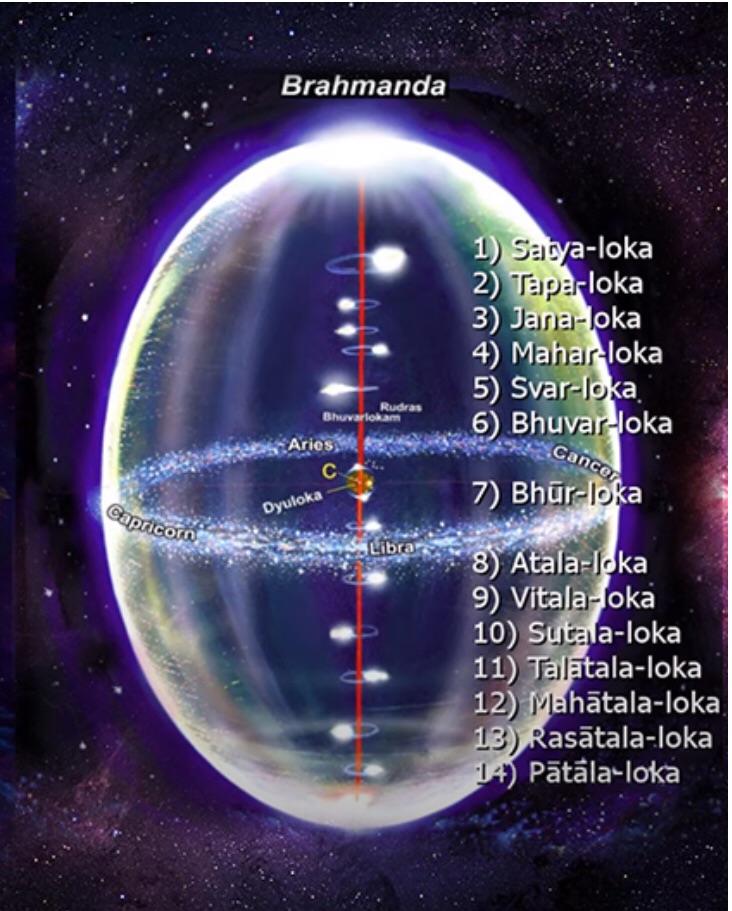
O Lord! The wielder of the Discus! (One who handles the Chakra with skill and easily). Then “Your” shanks (a part from the knee to the ankle) are ‘Talatala’ and “Your” knees are ‘Sutala’, further, two parts of “Your” thigh region (the lower part of the thighs and waist region) are the two worlds ‘Vitala’ and ‘Atala’ respectively. “Your” hip is the Earth, navel is the Sky and “Your” chest ‘Swarga’, the abode of Indra.
Meaning of the Sanskrit Words
जङ्घे तलातलम्- (Thy) shins Talaata
अथ: सुतलं च जानू - then, Sutala (are Thy) knees
किञ्च-उरु-भाग-युगलं - moreover, the two thighs (are)
वितल-अतले द्वे - the two (worlds) Vitala and Atala
क्षोणीतलं जघनम्- the earth is (Thy) hip
अम्बरम्-अङ्ग नाभि: - sky is O Lord! the navel
वक्ष: - च -and the chest
शक्र-निलय: तव - of Thine is the abode of Indra (swarga)
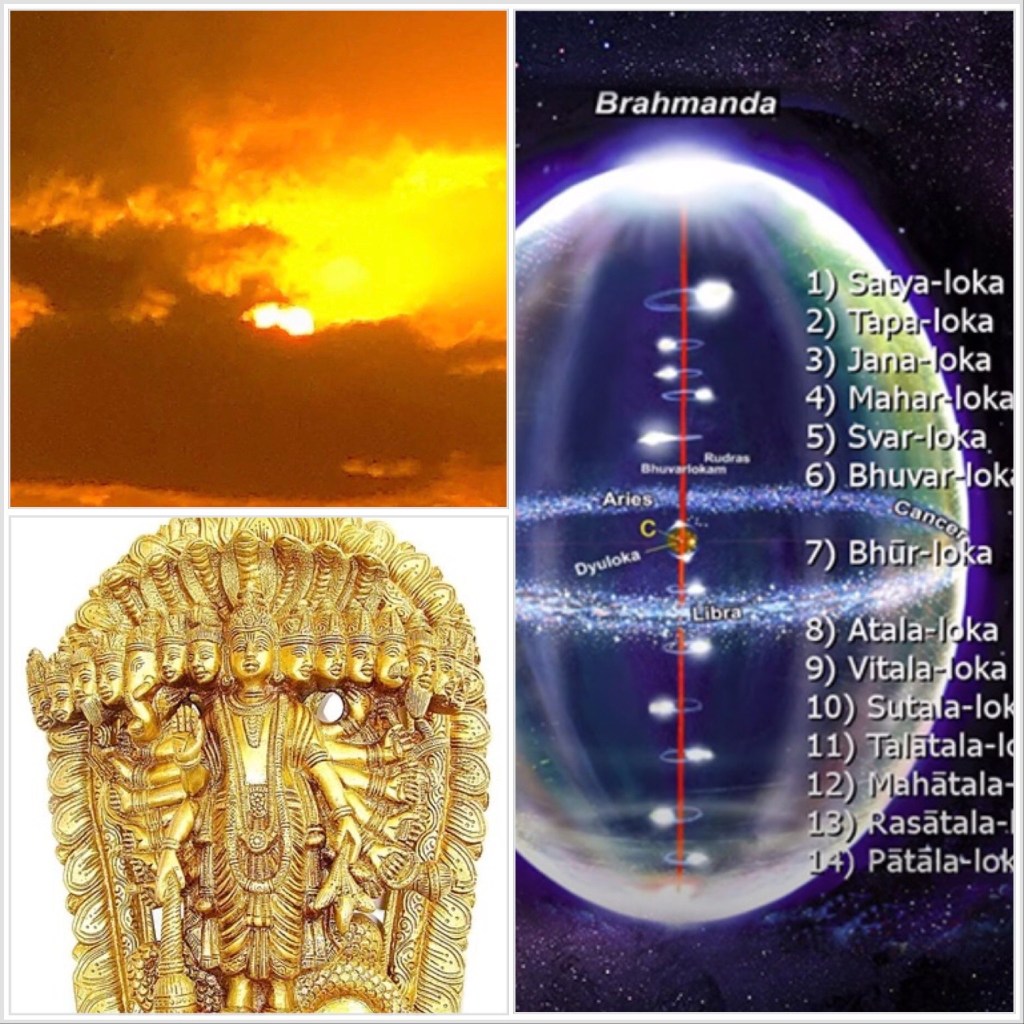
After explaining the evolution of Cosmic Form (Virat Rupa) in Dasakam 5, Sri. Narayana Bhattathri now begins the description of the various parts of this Cosmic Form in this Sloka.


O Lord! “You”, who had taken or assumed in this manner,the form of the 14 worlds. The soles of the feet are said to be “patala”,He Deva! The upper region of “Your” feet, too are said to be “Rasatala”. O Lord, of wondrous form! “Your” two ankles are, indeed, said to be “Mahatala”


From the above, it is understood that out of the 14 worlds, ‘Patala’ is the lowest and that      corresponds with the lowermost portion of the Cosmic body. The lower portion of the feet-Patala, the Upper portion of the feet -Rasatala, two ankles -Mahatala.

Note - The epithets used by Bhattathri in this Sloka (Isha, Deva, AdbhudAtma) are indicative that the Lord shines in all these three worlds too. In fact, there is nothing where the Lord doesn’t shine.
விளக்கவுரை
தசகம் 5 இல் பிரபஞ்ச வடிவத்தின் (விராட் ரூபத்தின்) பரிணாமத்தை விளக்கிய பிறகு, ஸ்ரீ. நாராயண பட்டத்ரி இப்போது இந்த ஸ்லோகத்தில் இந்த பிரபஞ்ச வடிவத்தின் பல்வேறு பகுதிகளின் விளக்கத்தைத் தொடங்குகிறார்.

இரேழு புவனங்களைப் படைத்த ஆண்டவனே! உனது உட்பாதங்களிரண்டும் பாதாளமென்றும், உன் திருவடிகளின் மேல் பகுதி "ரசதல" என்றும் கூறப்படுகிறது. எழில் வதனுமுடையோனே! உன்னிரு கணுக்கால்கள், உண்மையில், "மஹதள" என்று கூறப்படுகின்றன (என அறிவுடை முனி ஞானியர் கூறுகின்றனரே) என நாராயண பட்டத்ரி வர்ணிக்கின்றார்.

இந்த ஸ்லோகத்தில், ஈசனே, ஒளியோனே (தேவனே), எழிலோனே (அற்புத ஆத்மா) என்று  பட்டத்திரி பயன்படுத்திய அடைமொழிகள், இங்கு குறிப்பிடப்பட்ட மூன்று கீழ் உலகங்களிலும் இறைவன் பிரகாசிக்கிறார் என்பதைக் குறிக்கிறது. உண்மையில், இறைவன் பிரகாசிக்காத இடம் எதுவும் இல்லை.
Meaning of the Sanskrit Words
एवं - in this manner
चतुर्दश-जगत्-मयतां गतस्य - (of Thee) who had manifested as the fourteen worlds
पातालम्-Paataal
ईश- O Lord!
तव पादतलं - soles (lower part) of Thy feet
वदन्ति - is said to be
पाद-ऊर्ध्व-देशम्-अपि - the upper surface of (Thy) feet
அரிது அரிது மானிடராகப் பிறத்தல் அரிது என்ற ஔவையின் கூற்றின்படி, ஏழுபத்தொன்று வருடங்களுக்குமுன் அரிதான பிறவியை எடுத்த இந்நாளில், அடியேன் இதுவரை கடந்து வந்த பாதையையும் அந்த பாதையின் அடிப்படையையும் அறிய  முயன்றேன்.

அந்த முயற்சியின் முடிவில் கிடைத்த அறிவின் தொகுப்பை எனது மழலையில் மொழிகிறேன் கீழ்வருமாறு:

1. சாதாரண நடுத்தர குடும்பத்திலிருப்பவன் நடந்து வரும் பாதையெனும் ஆறிலிருந்து அறுபது வரையிலான வாழ்வு,

இளமையில் கல்வி,
அறவழியில் பொருளீட்டுதல்,
மனைமாட்சி

என்ற மூன்று படலங்களத் தழுவியது. என் பாதையும்கூட அதுதான்.

2.“காயேன வாசா மனஸா” என்று உடல், வாக்கு, மனம் வழி ஆண்டவனைச் சார்ந்திருந்து, உலகியல் பலன்களை விரும்பாமல், கல்வி  புகட்டி மனத்தூய்மையுடன் அறச்செயல்கள் புரிந்திட்ட அன்னை தந்தையின் அறிவுரைகளால், இளவயதிலிருந்தே எனக்கு கிட்டியது அறநெறிப்படி திட்டமிட்டு ஸமபுத்தி மனப்பான்மையுடன் வாழும் ஒழுக்கமிகு வாழ்க்கை. பெற்றோரின் வடிவில் இறையருள் கிட்ட, என்ன பெருந்தவம் செய்தேன் என்று  இன்றும் அறியேன் அடியேன்.

3. இளமையில் கல்வி, பொருளீட்டுதல்,  மனைமாட்சி என்ற மூன்று படலங்களில், தர்மத்தை கடைப்பிடிக்கும்போது கொள்ள வேண்டிய மனோபாவனையை அடைந்திட, பெற்றோரின் அன்றாட எளிய வாழ்க்கையே எனக்கு இலவசமாகக் கிடைத்த பயிற்சிக்கூடம்.

4. இன்பம் “அவன்” கொடுத்தது, துன்பம் எனது முன்வினைப் பயனாலே; ஆகவே இன்பத்தில் களித்திடாமலும், துன்பத்தில் துவண்டிடாமலும்  அவர்கள் வாழ்ந்த எளிமையான அனுதின வாழ்வே இன்றும் எனக்கு வழிகாட்டி.

இப்படி, அறிவின் துணை கொண்டு இருமைகளில் சமமான மனப்பான்மை என்பது தான் எனது அறுபது கடந்த ஆன்மீகம் தழுவிய வாழ்வின் அடிப்படை.

சரி, நீ என்ன பெரிய மனிதனா? என்ன சாதித்தாய் இவ்வுலகில்? உன் சுய சரிதையால் எங்களுக்கு என்ன? என்று நீங்கள் வினவுவது எனக்குத் தெளிவாக கேட்கிறது. நான் பெரியவனல்ல; நான் சாதனையாளன் அல்ல. நான் ஒரு சாமான்யனே! எனினும், இன்று நான் அறிந்திடும் பகவத் கீதையின் ஸ்லோகத்திற்கு இது முகவுரையாகும் என்ற எண்ணம் என்னுள் எழுந்ததனால்தான் இந்த சுயசரிதை.

இப்போது கீதையின் ஸ்லோகத்தைக் காண்போம்.
ஸமஸ்க்ருத ஸ்லோகம்
कर्मण्येवाधिकारस्ते मा फलेषु कदाचन | मा कर्मफलहेतुर्भूर्मा ते सङ्गोऽस्त्वकर्मणि || 2.47 ||
1. உனக்கு கர்மங்களை ஆற்றுவதில்தான் பொறுப்பு உண்டு.

2. அவற்றின் பயன்களில் ஒருகாலும் உரிமையில்லை.

3. ஆகவே நீ கர்மங்களின் பயன்களைக் கோருவதற்கு காரணமாக ஆகாதே.

4. மேலும் உனக்கு கர்மங்களை ஆற்றாமல் இருப்பதிலும் பற்று இருக்கக்கூடாது”

என்று நான்கு அறிவுரைகள் வழங்குகிறான் கண்ணன். அதாவது,

1. செயலின்மையில் நாட்டம் வேண்டாம்.
2. செயலின் பலனிலும் நாட்டம் வேண்டாம்.
3. செயலில் மட்டுமே உன் நாட்டம் இருக்கட்டும்.

4. செயல்புரிவதற்கு மட்டுமே உனக்கு தகுதி இருக்கிறது.
5. செயலைத் (கடமையைத்)துறப்பதற்கு உனக்கு தகுதி வரவில்லை.
6. செயலைத் துறக்க வேண்டுமானால், செயலின் பலனை விரும்பாமல் சில காலம் செயலாற்ற வேண்டும். அப்பொழுதுதான் செயலைத் துறக்க தகுதி ஏற்படும்.

என்று கண்ணன் பார்த்தனுக்கு விளக்குகிறான்.

கர்ம யோகம் புரியாமல், கர்ம சந்யாஸம் செய்ய முடியாது. அதைமீறி கர்ம சந்யாஸம் செய்தால் அதனால் துக்கம் விளையும்.
விளக்கவுரை
வர்ணம், ஆசிரமம், இயல்பு, சூழ்நிலை இவற்றிற்கு ஏற்றவாறு மனிதனுக்கு கர்மங்கள் விதிக்கப்பட்டிருக்கின்றன. அந்தக் கர்மங்களை “கர்மணி” என்ற சொல் குறிக்கிறது. மறைகளில் செய்யக்கூடாது என்று கூறப்பட்ட பாவச்செயல்களை “கர்மணி” என்ற சொல் குறிக்காது. ஏனெனில், பாவ கர்மங்களைச் செய்ய அவசியமோ, பொறுப்போ மனிதனுக்கு கிடையாது. விருப்பு-வெறுப்புகளினால் உந்தப்பட்டு அவற்றில் ஈடுபடுகிறான். அது அவனுடைய பொறுப்பிலா செய்கை. அதனால் அத்தகைய செயல்கள் புரிபவனுக்கு, துன்பங்களை அனுபவிக்கக்கூடிய தண்டனை விதிக்கப்பட்டிருக்கிறது. அறம் வழி நடந்து புரியும் வினைகளே “கர்மணி”.
உனக்குகர்மங்களைஆற்றுவதில்தான்பொறுப்பு
உனக்கு செயல் புரிய மட்டுமே தகுதி உள்ளது என்ற இந்தக் கூற்றில்:

1. மனித உடலில்தான் ஜீவனுக்குப் புதிய கர்மங்கள் செய்ய சுதந்திரம் அளிக்கப்பட்டிருக்கிறது.  ஆகவே, அவன் தன் பொறுப்பிற்கு ஏற்றவாறு இறைவனுடைய கட்டளையை ஏற்று நிறைவேற்ற வேண்டும். அந்த கர்மங்களில் “நான் செய்கிறேன்” என்ற ஒட்டுதல்/பற்று இருக்கக்கூடாது. அந்த கர்மங்களை ஆற்றுவதை இறைவனை அடைவதற்கு ஸாதனமாக கருதவேண்டும். அரிதான மானிடப்பிறவி கிட்டியிருப்பது பரம்பொருளை அறிந்துணரவே என்று வினைகள் புரிந்திட வேண்டும்.

2. மனிதனுக்கு கர்மங்களை ஆற்ற மட்டுமே பொறுப்பு உண்டு. அவற்றைச் செய்யாமல் விடுவதற்கு அவனுக்கு சுதந்திரம் கிடையாது. தன்முனைப்பால், பிடிவாதமாக கர்மங்களைச் செய்யாமல் விட்டுவிடலாம்  என்றாலும்கூட அவனால் விட்டுவிட முடியாது. ஏனெனில் அவனது ஸ்வபாவம் (இயல்பு) வலுக்கட்டாயமாக ஏதாவது ஒன்றைச் செய்து கொண்டே இருக்கச் செய்யும். இந்த நிலையில் அவனுடைய பொறுப்பை நிறைவேற்றாமல், தனக்கு கொடுக்கப்பட்ட உரிமையைத் தவறாகப் பயன்படுத்தினால், விதிக்கப்பட்ட கர்மங்களை விட்டுவிடுவதால்,மறைகள் விதித்த விதிகளை மீறியதற்கான தண்டனையை அனுபவிக்க நேரிடும். எனவே நீ ஆற்றவேண்டிய கர்மங்களை ஆற்றத்தான் வேண்டும், தவிர்க்கக்கூடாது.

3. பிறப்பு-இறப்பு (ஜனன-மரணம்) என்ற பிறவிப்பிணியிலிருந்து (ஸம்ஸார பந்தத்திலிருந்து) விடுதலை பெறுவதற்காகவும், பிறருக்கு நன்மை செய்வதற்காகவும், ஜீவனுக்கு மனம், புத்தி, புலன்களுடன் கூடிய இந்த மனித உடலை (ஸரீரத்தை) அளித்து, அதன்மூலம் செயல்கள் செய்ய விஷேஷ சலுகை அளிக்கப்பட்டிருக்கிறது. அந்த சலுகையை நல்விதத்தில் பயன்படுத்தினால் கர்மபந்தத்திலிருந்து விடுதலை பெற்று பரம்பொருளை அறிந்துணர இயலும். தவறாகப் பயன்படுத்தினால் தண்டனையுடன், அந்தப் பொறுப்பும் பிடுங்கப்படும். அதாவது மறபடி மனிதப்பிறவி பெறுவதற்கான தகுதியை இழக்கிறான். இதனை உணர்ந்து தன் பொறுப்பை நல்முறையில் நிறைவேற்ற வேண்டும்.

என்ற மூன்று முக்கிய உட்கருத்துக்கள் அடங்கியுள்ளன.
கர்மபயன்களில்ஒருகாலும்உனக்குஉரிமையில்லை
எந்த கர்மத்திற்கு என்ன பயன்? அந்தப் பயன் எப்பிறவியில் கிடைக்கும்? எந்த முறையில் கிடைக்கும்? என்று மனிதன் அறிய மாட்டான்.

தன் விருப்பப்படி தான் வாழும் காலத்தில் அவற்றைப் பெறவும் முடியாது; விரும்பி முயன்றாலும் அவற்றிலிருந்து தப்பவும் முடியாது. அவன் விரும்புவது ஒன்று; அவனுக்கு கிடைப்பது ஒன்று.  அவன் விரும்புவதை அடையும் சந்தர்ப்பம் அவன் கையில் இல்லை. கர்மங்களின் பயனை விதிப்பது இறையருள் (அத்வைத வேதாந்தத்தில் முன்வினைப் பயன் எனும் ப்ராரப்தம் என்பதே இறையருள் என்ற விளக்கம் உள்ளது). விருப்பு, வெறுப்பு, ஆசை இவையெல்லாம் அறியாமையே. இவைகளால் இவ்வாழ்வில் விளைவதனைத்தும் (இன்பம், துன்பம்) நிரந்தரமல்ல. அவைகள் உண்மையான ஸுகத்தை அளிக்காது.

“ஆசை அறுமின், ஆசை அறுமின்,
ஈசனோடு ஆயினும் ஆசை அறுமின்”

என்று திருமூலர் கூறுவதும் இதுவே.
கர்மபயன்கள்கோருவதற்குகாரணம்ஆகாதே
மனம், புத்தி, புலன்கள் மூலமாக நமக்கு விதிக்கப்பட்ட கர்மங்களிலும், அவற்றின் பயன்களிலும்
1. தான் செய்வதாக கருதும் எண்ணம் (“மமதை”) 2. பற்று (“ஆஸக்தி”) 3. அச்செயல்களில் உள்ள நுண்ணிய விருப்பம் (“வாஸனா”) 4. எதிர்பார்ப்புகள்
ஆகிய இவைகள்தான் கர்மங்களின் பயன்களுக்கு காரணம் ஆகும்.
அறிவின் துணைகொண்டு, இருமைகளை சமமான மனதால் எதிர்கொண்டு “வினை புரிபவன் நானல்ல, வினைப் பயனும் எனதல்ல, அனைத்தும் அவன் செயல்” என்ற மனப்பான்மை உடையவனை, புரியும் கர்மங்களும், கர்ம பயன்களும் ஒட்டாது. அவன் புதிதாக பாபச் செயல்களேதும் புரியவே மாட்டான்.
முன்னால் செய்யப்பட்ட பாவங்களும், இப்பொழுது செய்கின்ற பற்றற்ற கர்மங்களின் ப்ரபாவத்தினால் சாம்பலாகி விடுகின்றன. இக்காரணத்தினால் அவன் பாவச்செயல்களின் பயன்களுக்கு காரணம் ஆகமாட்டான். இவ்விதம் கர்மங்களை ஆற்றுபவனுடைய எல்லாக் கர்மங்களும் மறைந்துவிடுகின்றன. அவன் மாறுதலற்ற உயர்ந்த பதவியை அடைவான் என்கிறான் கண்ணன்.
கர்மங்களைஆற்றாமல்இருப்பதிலும்பற்றுஇருக்கக்கூடாது
மறைகளில் நமக்கு விதிக்கப்பட்ட கர்மங்களைப் புரிவதற்கு மாறாக, தடை செய்யப்பட்ட கார்யங்களைச் செய்வது, செயலாற்றும் உரிமையைத் தவறாக உபயோகப்படுத்துவதாகும். அது போல, வர்ணம், ஆசிரமம், இயல்பு, சூழ்நிலை இவற்றுக்கு ஏற்றவாறு எவனுக்கு எந்த கர்மம் விதிக்கப்பட்டிருக்கிறதோ, அதைச் செய்யாமல் இருப்பதுகூட உரிமையைத் தவறாக உபயோகப்படுத்துவதாகும். விதிக்கப்பட்ட கர்மங்களை ஆற்றாமல் இருப்பது எவ்விதத்திலும் நியாயமில்லை.

விதிக்கப்பட்ட கர்மங்களை மோஹத்தினால் தியாகம் செய்வது “தாமஸ த்யாகம்”; உடல் நோகும் என்று பயந்து தியாகம் செய்வது “ராஜஸ த்யாகம்”. விதிக்கப்பட்ட கர்மங்களை ஆற்றாமல் மனிதன் கர்ம யோகத்தில் ஸித்தி பெற முடியாது.  ஆகவே, எக்காரணம் கொண்டும் விதிக்கப்பட்ட கர்மங்களை ஆற்றாமல் விடுவதற்கு நீ விரும்பக்கூடாது என்பது கண்ணன் கூறும் அறிவுரை.
முடிவில் ஒரு கேள்வி
ஆறிலிருந்து அறுபதுவரை இந்த ஸ்லோகத்தை அறிந்திராமல் வாழ்ந்திடினும், இதன் சாரத்தின்படி அமைந்ததே என் வாழ்வு என்பது இப்போது என் கருத்து. அதனால்தான் என்னவோ, இறையருளால், அன்றும் இன்றும் படுத்தவுடன் உறங்குகிறேன் கவலைகளேதுமின்றி.


1. அன்றாட வாழ்வில் இந்த ஸ்லோகம் உதவுமா?

2. முகவுரையாக கூறப்பட்ட சிறுவனின் சுய சரிதைக்கும் இந்த ஸ்லோகத்திற்கும் சம்பந்தம் உண்டா? ………..
In Dasakam 5,starting with the divine intention (sankalpa) or will within the Supreme Being to bring forth the universe, Narayana Bhattathri has so far outlined the evolution of

1. Purusha,
2. Prakriti,
3. Mahat,
4. Ahamkara
5. Fourteen Presiding deities
6. Four functions of Inner conscience,
7. Five Sense and five action organs
8. Five Tanmaatras and the five Pancha Bhootas.
9. Creation of Hiranyagarbha, the Golden Egg.

Concluding this Dasakam, Bhattathri brings out the final evolution of the Virat Purush into the fourteen worlds.
முகவுரை
இந்த தசகத்தில், ஸ்ரீ. நாராயண பட்டத்திரி பிரம்மனின் பிரபஞ்ச வடிவத்தின் பரிணாமத்தை (ஸ்ரீமத் பாகவதத்திற்கு ஏற்ப) பிரம்மனின் "விராட் ரூபத்தில்" வழியாக அறிய உதவுகிறார்.
இதுவரை
1. புருஷன், 2. பிரகிருதி, 3. மஹத், 4. அஹம்காரா 5. பதினான்கு அதிபதிகள் 6 உள் மனசாட்சியின் நான்கு செயல்பாடுகள், 7. ஐந்து உணர்வுகள் மற்றும் ஐந்து செயல் உறுப்புகள் 8. ஐந்து தன்மாத்திரங்கள் மற்றும் ஐந்து பஞ்ச பூதங்கள். 9. ஹிரண்யகர்பம் எனும் பொன் முட்டை
In Dasakam 5,starting with the divine intention (sankalpa) or will within the Supreme Being to bring forth the universe, Narayana Bhattathri has so far outlined the evolution of

1. Purusha,
2. Prakriti,
3. Mahat,
4. Ahamkara
5. Fourteen Presiding deities
6. Four functions of Inner conscience,
7. Five Sense and five action organs
8. Five Tanmaatras and the five Pancha Bhootas.
முகவுரை
இந்த தசகத்தில், ஸ்ரீ. நாராயண பட்டத்திரி பிரம்மனின் பிரபஞ்ச வடிவத்தின் பரிணாமத்தை (ஸ்ரீமத் பாகவதத்திற்கு ஏற்ப) பிரம்மனின் "விராட் ரூபத்தில்" வழியாக அறிய உதவுகிறார்.

இதுவரை

1. புருஷன்,
2. பிரகிருதி,
3. மஹத்,
4. அஹம்காரா
5. பதினான்கு அதிபதிகள்
6 உள் மனசாட்சியின் நான்கு செயல்பாடுகள்,
7. ஐந்து உணர்வுகள் மற்றும் ஐந்து செயல் உறுப்புகள்
8. ஐந்து தன்மாத்திரங்கள் மற்றும் ஐந்து பஞ்ச பூதங்கள்.

என்ற 26 தத்துவங்கள் (கூறுகள்), 14 அதிபதிகளின் பரிமாணத்தை விளக்கினார் நாராயண பட்டத்ரி.
ete bhuutagaNaastathendriyagaNaa devaashcha jaataaH pR^ithak
nO shekurbhuvanaaNDa nirmitividhau devairamiibhistadaa |
tvaM naanaavidha suuktibhirnutaguNastattvaanyamuunyaavishanshcheShThaa
shaktimudiirya taani ghaTayan hairaNyamaNDaM vyadhaaH ||
Meaning in English
O Lord! Even though all these elements, sense organs , the organs of action, and their presiding deities came into existence, they could not by themselves create the Brahmaanda. Then the presiding deities glorified Thee by various hymns and Thou entered into all of them, activated them and combining them, created the Hiranya Andam (the Golden Egg).
Explanatory Notes
In this Sloka, Bhattathri reiterates that it is because of the desire of the  Lord Himself, He decided to enter into these 26 inanimate elements and generated creative power and united them in proportion and produced a form of a Golden Cosmic Egg  as His own body, based on the pleas of the fourteen presiding deities.

We must bear in mind that the focus of Dasakam 5 so far, has been on the evolution of the Cosmic Egg or the Virat Rupa of the Brahman and should not be mixed up with the evolution of human body which is essentially identical to the one happening in the Cosmos.  At the same time we shouldn’t forget that after all what is happening in the Cosmos do happen in our body too.
விளக்க குறிப்பு
இந்த ஸ்லோகத்தில், பட்டத்திரி, பதினான்கு தலைமை தெய்வங்களின் வேண்டுகோளின் அடிப்படையில், இறைவன் தனது விருப்பத்தின் காரணமாக, இந்த 26 உயிரற்ற கூறுகளுக்குள் நுழைய முடிவு செய்து, படைப்பு சக்தியை உருவாக்கி, அவற்றை விகிதாசாரத்தில் இணைத்து, ஒரு பொன் அண்ட முட்டையின் வடிவத்தை தனது சொந்த உடலாக உருவாக்கினார் என்று மீண்டும் வலியுறுத்துகிறார்.

இதுவரை தசகம் 5-ல் கூறப்படுவது, அண்ட பொன் முட்டை (ஹிரன்ய கர்ப்ப) அல்லது பிரம்மனின் விராட ரூபத்தின் பரிணாம வளர்ச்சி. இதி ஒரு சமஷ்டி நிலை கண்ணோக்கம். நடைமுறை நிலையில், மனித உடலின் பரிணாம வளர்ச்சியுடன் (வ்யஷ்டி நிலை) ஒப்பிட்டு கலந்துவிடக் கூடாது. “அண்டத்தில் நடப்பது பிண்டத்திலும்” என்ற சொல்லிற்கிணங்க, இப்பரிணாமங்களை பிண்டத்திலும் காணலாம் என்பதனையும் மறந்துவிடக் கூடாது.
Meaning of the Sanskrit Words
एते भूतगणा: - all these elements
तथा-इन्द्रियगणा:- and the sense organs and the organs of action
देवा: च - and their presiding deities
जाता: - which had come into existence
पृथक् नो शेकु: - were not capable by themselves
भुवन-अण्ड-निर्मिति-विधौ - of creating the Brahmaand (the cosmic whole)
देवै: अमीभि: तदा - therefore these presiding deities, then
त्वं नाना-विध-सूक्तिभि:-नुत-गुण:- sung Thy excellences by means of various hymns
तत्त्वानि-अमूनि-आविशन्- (then Thou) entering these categories
चेष्टा-शक्तिम्-उदीर्य - and activating them
तानि घटयन् - and combining them
हैरण्यम्-अण्डम् - the Golden Egg (the potential universe)
In Dasakam 5, Narayana Bhattathri provides an evolution of the Cosmic Form of the Brahman (in line with Srimad Bhagavatham) to help us focus on the “Virat Rupa” of Brahman.

Starting with the divine intention (sankalpa) or will within the Supreme Being to bring forth the universe, Bhattathri in the previous Slokas outlined the evolution of Purusha, Prakriti, Mahat, Ahamkara and associated deities for the five organs of perception, five organs of action and the four aspects of inner conscience.He then outlined the evolution of the inner conscience, the sense and action organs.

Now in this Sloka, the evolution of additional elements is highlighted.
முகவுரை
இந்த தசகத்தில், ஸ்ரீ. நாராயண பட்டத்திரி பிரம்மனின் பிரபஞ்ச வடிவத்தின் பரிணாமத்தை (ஸ்ரீமத் பாகவதத்திற்கு ஏற்ப) பிரம்மனின் "விராட் ரூபத்தில்" வழியாக அறிய உதவுகிறார்.

பிரபஞ்சத்தை வெளிக்கொணர வேண்டும் என்ற தெய்வீக எண்ணம் (சங்கல்பம்) அல்லது பரமாத்மாவிற்குள் உள்ள சித்தத்துடன் தொடங்கி, முந்தைய ஸ்லோகங்களில் பட்டத்திரி, புருஷன், பிரகிருதி, மஹத், அஹம்காரம் மற்றும் உள்மனசாட்சியின் நான்கு அம்சங்கள், ஐந்து புலனுணர்வு உறுப்புகள், ஐந்து செயல் உறுப்புகளுக்குக்குத் தொடர்புடைய தெய்வங்களின் பரிணாமத்தை கோடிட்டுக் காட்டினார். பின்னர், நான்கு அம்சங்கள் நிறைந்ந மனம், உணர்வு மற்றும் செயல் உறுப்புகளின் பரிணாமத்தை கோடிட்டுக் காட்டினார்.

இப்போது இந்த ஸ்லோகத்தில், ஸமஷ்டி நிலையில் உருவாகும் அடுத்த தத்துவங்களின் வெளிப்பாட்டினை விளக்குகிறார்.
shabdaadvyOma tataH sasarjitha vibhO sparshaM tatO maarutaM
tasmaadruupamatO mahO(a)tha cha rasaM tOyaM cha gandhaM mahiim |
evaM maadhava puurvapuurvakalanaadaadyaadyadharmaanvitaM
bhuutagraamamimaM tvameva bhagavan praakaashayastaamasaat ||
Meaning in English
O All pervading Lord! From the Tanmaatra of (Shabda) the subtle element of sound, came the element (Aakaash) Space and from it touch (Sparsh). From touch (Sparsh) came the element Air (Vaayu) and from it form (Roopa). From form (Roopa) came the element Fire (Agni) and from it Taste (Rasa). From the Tanmaatra of Taste (Rasa) came the element Water (Jala) and from it smell (Gandha). From smell (Gandha) came the element Earth (Bhoomi). O Maadhava! By Thy will, thus from the Tamasa aspect of Ahankaara, were born the five Tanmaatras and the five Pancha Bhootas each element having the qualities of the preceding one.
Explanatory Notes
We must bear in mind that the focus of Dasakam 5 so far, has been on the evolution of the Cosmic Egg or the Virat Rupa of the Brahman and should not be mixed up with the evolution of human body which is essentially identical to the one happening in the Cosmos. At the same time we shouldn’t forget that after all what is happening in the Cosmos do happen in our body too.
விளக்க குறிப்பு
இதுவரை தசகம் 5-ல் கூறப்படுவது, அண்ட பொன் முட்டை (ஹிரன்ய கர்ப்ப) அல்லது பிரம்மனின் விராட ரூபத்தின் பரிணாம வளர்ச்சி. இதி ஒரு சமஷ்டி நிலை கண்ணோக்கம். நடைமுறை நிலையில், மனித உடலின் பரிணாம வளர்ச்சியுடன் (வ்நஷ்டி நிலை) ஒப்பிட்டு கலந்துவிடக் கூடாது. “அண்டத்தில் நடப்பது பிண்டத்திலும்” என்ற சொல்லிற்கிணங்க, இப்பரிணாமங்களை பிண்டத்திலும் காணலாம் என்பதனையும் மறந்துவிடக் கூடாது.
Meaning of the Sanskrit Words
श्ब्दात्-व्योम - from sound, space
तत: ससर्जिथ - then,Thou created
विभो - O All pervading Lord !
स्पर्शं - touch
तत: मारुतं - then air
तस्मात्-रूपम्- from that (air) form
अत: मह: -then fire
अथ च रसं - and after that taste
तोयं च गन्धं महीम् - then water smell and earth (were born)
एवं माधव - in this manner O Maadhava!
पूर्व-पूर्व-कलनात्- because of association with the preceding (product)
आद्य-आद्य-धर्म-अन्वितं having the qualities of the earlier products





 Prabhu's Ponder