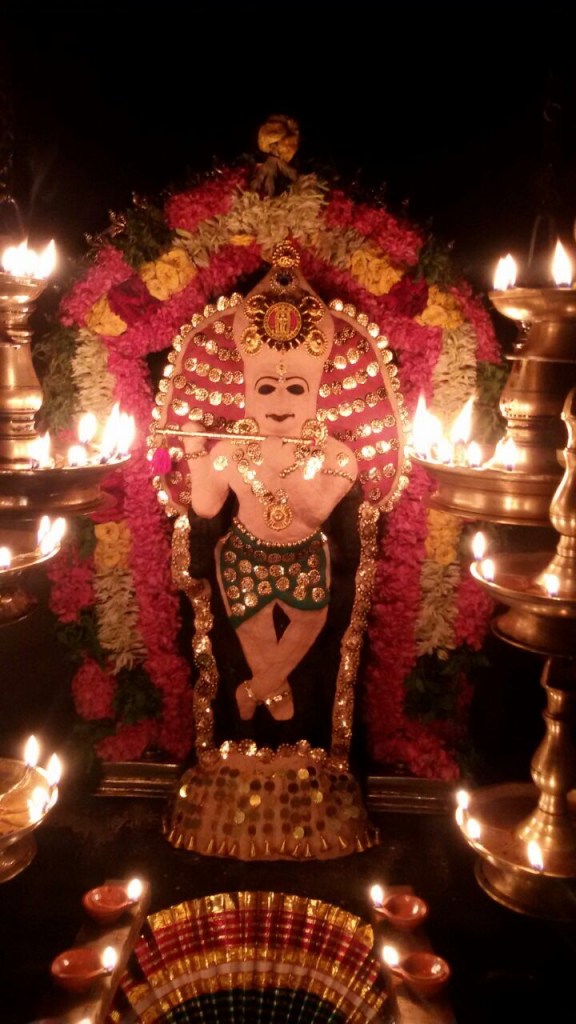
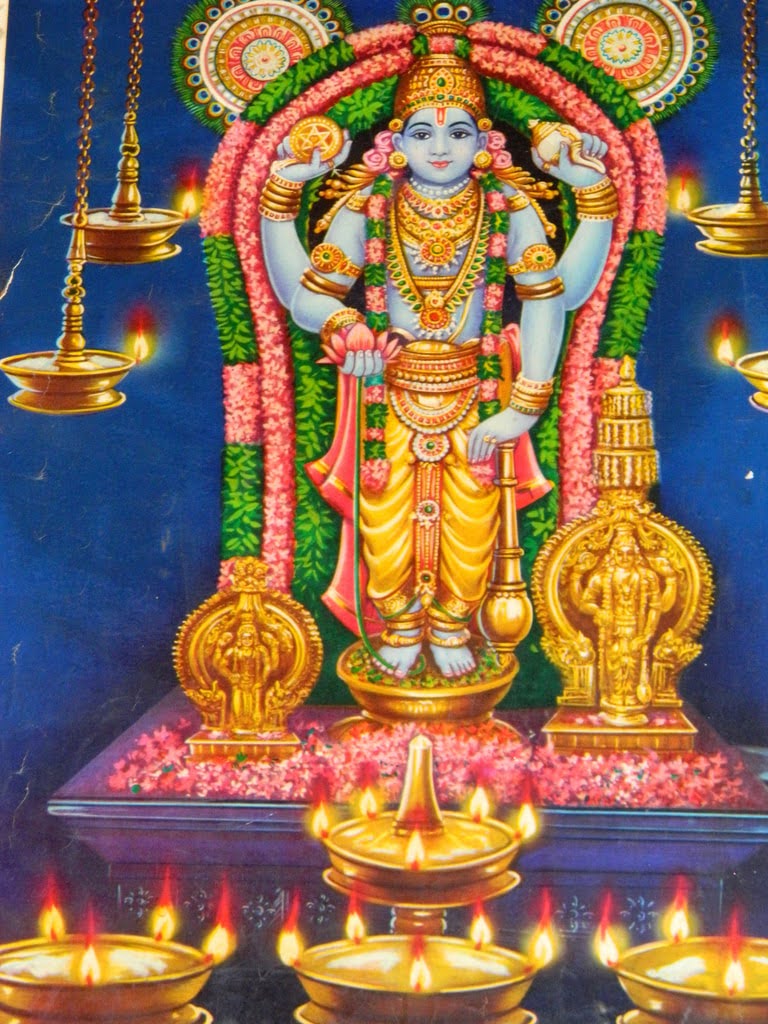
Narayaneeyam – Dasakam 2 – Sloka 6 – A thing of beauty is a joy forever

Lord Krishna’s beauty is beyond the imagination, infact all beauty arises from him only. As his name Krishna means ‘all attractive’ – means his beauty enchants everyone. In front of the beauty of Krishna everything fades and pales . Even the beauty we find in the world is only a spark of the transcendental captivating beauty of Lord Krishna , then how beautiful He, the source of all beauty will be . No wonder, the devotees who visit Guruvayur and see Him are in a state of Bliss and experience horripilation, says Bhattathri in this Sloka.

Audio Link

https://www.dropbox.com/s/dcekyjy56erscfx/Verse%202.6.mp3?dl=0

Sanskrit Verse

एवम्भूतमनोज्ञतानवसुधानिष्यन्दसन्दोहनं
त्वद्रूपं परचिद्रसायनमयं चेतोहरं शृण्वताम्
सद्यः प्रेरयते मतिं मदयते रोमाञ्चयत्यङ्गकं
व्यासिञ्चत्यपि शीतबाष्पविसरैरानन्दमूर्च्छोद्भवैः ॥६॥

English Transliteration

evaM bhuuta manOj~nataa navasudhaa niShyanda sandOhanaM

tvadruupaM parachidrasaayanamayaM chetOharaM shR^iNvataam |

sadyaH perarayate matiM madayate rOmaa~nchayatyangakaM

vyaasi~nchatyapi shiitabaaShpa visarairaanandamuurChOdbhavaiH ||6

Tamil Transliteration

ஏவம் பூ₄தமநோஜ்ஞதாநவஸுதா₄நிஷ்யந்த₃ஸந்தோ₃ஹநம்

த்வத்₃ரூபம் பரசித்₃ரஸாயநமயம் சேதோஹரம் ஶ்ருண்வதாம் |

ஸத்₃ய: ப்ரேரயதே மதிம் மத₃யதே ரோமாஞ்சயத்யங்க₃கம்

வ்யாஸிஞ்சத்யபி ஶீதவாஷ்பவிஸரைராநந்த₃மூர்சோ₂த்₃ப₄வை: || 6||

Meaning in Tamil

அமுது சொரியும் அழகுமிகு பேரின்பப்

பரம்பொருளாம் உன்னெழில் வடிவம்

அடியார்தம் மனம் கவர்ந்து மகிழ்வித்து,

ஆனந்தப் பரவசமுடன் மயிர்கூச்செரிய,

விழிதனிலே நீர்மல்கிப் பெருவெள்ளமென

அவர்தம் அங்கமெல்லாம் நனைத்தனையே,

அச்சுதனே ஆண்டவனே குருவாயூரப்பா 2.6

Meaning in English

O Lord! Thy captivating form which continuously showers pure nectar, which is itself the Supreme Bliss-Consciousness holds the minds of those who hear Thy glories. Their minds are immediately stimulated and filled with joy. They experience horripilation all over their body and are bathed in the cool tears produced from ecstasy of joy.

Meaning of the Sanskrit Words

एवम्भूतमनोज्ञतानवसुधानिष्यन्दसन्दोहनम् = एवं + भूत + मनोज्ञता + नव + सुधा + निष्यन्द + सन्दोहनम् =That (Your)+form + beauty(loveliness) + fresh (pure) + nectar + streaming (constantly flowing) + bestowing

त्वद्रूपम् = त्वत् + रूपं = Your form

परचिद्रसायनमयम् = पर + चित् + रसायनमयं = supreme + consciousness + mixture (combination)

चेतोहरम् = captivating the heart

शृण्वताम् = of those who (devotedly) hear (the recitals of accounts of Thy deeds)

सद्य: प्रेरयते = instantly/immediately + raise/stimulate/excite

मतिम् मदयते =  mind + delights/rejoice/enjoy heavenly bliss = fills the mind with joy (अत्यन्तं तोषयति)

रोमाञ्चयति = thrills/goosebumps

अङ्गकम् = limbs/body = देहम्

व्यासिञ्चत्यपि = व्यासिञ्चति + अपि = bathes also (their bodies)

शीतबाष्पविसरैः = शीत + बाष् + विसरै: = cold + tears + copious quantity = with the flood of cool tears

आनन्दमूर्च्छोद्भवैः = आनन्द + मूर्च्छा + उद्भवै: = joy + excited/increased+ produced = produced from ecstasy of joy

Narayaneeyam – Daskam 2 – Sloka 5

Bhattathri continues his pun on Goddess Lakshmi by citing another reason for the “unstable” nature of Her when it comes to Her short stay at Her devotees’ place.

Audio Link

https://www.dropbox.com/s/j712bi2u5d01peu/Verse%202.5.mp3?dl=0

Sanskrit Verse

लक्ष्मीस्तावकरामणीयकहृतैवेयं परेष्वस्थिरेत्यस्मिन्नन्यदपि प्रमाणमधुना वक्ष्यामि लक्ष्मीपते ।

ये त्वद्ध्यानगुणानुकीर्तनरसासक्ता हि भक्ता जनास्तेष्वेषा वसति स्थिरैव दयितप्रस्तावदत्तादरा ॥५॥

English Transliteration

lakshmiistaavaka-raamaNiiyaka-hR^itaiveyaM pareShvasthiretyasminnanyadapi

pramaaNamadhunaa vakshyaami lakshmiipate |

ye tvaddhyaanaguNaanukiirtanarasaasaktaa hi bhaktaa janaasteShveShaa

vasati sthiraiva dayitaprastaavadattaadaraa ||

Tamil Transliteration

லக்ஷ்மீஸ்தாவகராமணீயகஹ்ருதைவேயம் பரேஷ்வஸ்தி₂ரே-

த்யஸ்மிந்நந்யத₃பி ப்ரமாணமது₄நா வக்ஷ்யாமி லக்ஷ்மீபதே |

யே த்வத்₃த்₄யாநகு₃ணாநுகீர்தநரஸாஸக்தா ஹி ப₄க்தா ஜநா-

ஸ்தேஷ்வேஷா வஸதி ஸ்தி₂ரைவ த₃யிதப்ரஸ்தாவத₃த்தாத₃ரா || 5||

Meaning in Tamil

உரைத்திடுவேன் இன்னுமொரு ஆதாரம்

உலகோரிடம் திருமகள் நிலையாததற்கு!

உன்னெழில் வயப்பட்டு எந்நேரமும் தன்

உயிர் நாதனின் நாமமுடன் புகழ் கேட்டு மகிழ,

உனை நாவார நாளும் பாடி துதித்து உருகிடும்

உன்னடியார் உள்ளம்தனில் உறுதியாக

உறைந்ததனாலன்றோ திருமகள்கொழுநனே !

Meaning in English

Oh Consort of Goddess Lakshmi, I will tell another reason to say,

That Goddess Lakshmi does not stay long with others,

That is because of her attractiveness to your pretty form,

For in the case of devotees of yours who are busy in meditating,

And singing about you, she is interested in hearing about,

The news of her darling and never leaves but stays with them. 2.5

Meaning of the Sanskrit Words

लक्ष्मीः – Oh Goddess Lakshmi

तावकरामणीयकहृता एव इयम् – तावक-रामणीयक हृता एव = your, beauty, fascinated/captivated, only, she = being thus captivated by Thy beauty only,

इयं परेषु अस्थिरा इति – she, is (committed to be in that position), unstable, in this manner/thus = परेषु अस्थिरा इति = she is unstable with others

अस्मिन् – in this respect

अन्यत् अपि प्रमाणम् – another proof also

अधुना – now/at present

वक्ष्यामि – I will state

लक्ष्मीपते – Oh consort of Goddess Lakshmi

ये त्वद्ध्यानगुणानुकीर्तनरसासक्ताः – ये त्वत्-ध्यान-गुण-अनुकीर्तन-रस-आस्क्ताः – those, your , meditate, virtue, singing, essence, devoted/strongly attached/engrossed = those who meditate and are always engrossed in singing Thy glory

हि भक्ताः जनाः – हि भक्ताः जनाः – = certainly (with) such devotees

तेषु एषा वसति स्थिरा एव – त= in those, she, stays, permanently/stable, always = with them she stays always

दयितप्रस्तावदत्तादरा – दयित–प्रस्ताव-दत्त-आदरा = beloved, (being), a song or hymn in praise, presented, respect/reverence/honour/praise = listening attentively to the praises of her beloved Lord

Narayaneeyam – Dasakam 2 – Slokam 4

Happy Deepavali.

We attribute success, wealth and prosperity to the presence of Goddess Lakshmi in our homes. She represents riches that every individual wishes to attain in his/her materialistic life. She is the epitome of opulence and her existence helps us achieve glorious heights. However, it isn’t easy to retain her. It is often said that Goddess Lakshmi does not stay in a family beyond three generations (max). Bhattathri quotes this characteristics of Goddess Lakshmi as a pun in this and the next Sloka to drive home the point that as a consort Goddess Lakshmi is more focussed on Lord Vishnu whose avatar is Lord Krishna of Guruvayur.

Audio Link

https://www.dropbox.com/s/v6slnrbyr1yqh84/Verse%202.4.mp3?dl=0

Sanskrit Verse

तत्तादृङ्मधुरात्मकं तव वपुः सम्प्राप्य सम्पन्मयी

सा देवी परमोत्सुका चिरतरं नास्ते स्वभक्तेष्वपि

तेनास्या बत कष्टमच्युत विभो त्वद्रूपमानोज्ञक

प्रेमस्थैर्यमयादचापलबलाच्चापल्यवार्तोदभूत् ॥४॥

English Transliteration

tattaadR^i~N madhuraatmakaM tava vapuH sampraapya sampanmayii

saa devii paramOtsukaa chirataraM naaste svabhakteShvapi |

tenaasyaa bata kaShTamachyuta vibhO tvadruupamaanOj~nakapremasthairyamayaadachaapala

balaat chaapalya vaartOdabhuut.

Tamil Transliteration

தத்தாத்₃ருங்மது₄ராத்மகம் தவ வபு: ஸம்ப்ராப்ய ஸம்பந்மயீ

ஸா தே₃வீ பரமோத்ஸுகா சிரதரம் நாஸ்தே ஸ்வப₄க்தேஷ்வபி |

தேநாஸ்யா ப₃த கஷ்டமச்யுத விபோ₄ த்வத்₃ரூபமாநோஜ்ஞக –

ப்ரேமஸ்தை₂ர்யமயாத₃சாபலப₃லாச்சாபல்யவார்தோத₃பூ₄த் || 4||

Meaning in Tamil

ஈடிலா எழில்மிகு உன்னுடன் இணைந்து ,

அளவிலாப்பற்று உன்மீது அடைந்ததனால் திருமகள்,

இச்சை களைந்தனளே அடியார் இல்லம்தனில் நிலைத்திட !

அழிவிலா உன் வடிவினில், நிலையான, திடமான

ஆழ் பற்றுடை அச்செயலால், நிலையற்றோள் எனும் பெயர்

அடைந்தனளே அடியாரிடம் அன்னையவள்

அவமன்றோ அப்பெயர் அவளுக்கு

அடுக்கிடுமோ இது திருமகள்கொழுநனே ! 2.4

Meaning in English

After getting and reaching your wonderful and greatly joyous form, that goddess who controls wealth, has become more attached to you. And because of this even after reaching the homes of her great devotees, She does not prefer to stay there. Oh Lord, Oh changeless one, due to the deep, strong and stable love towards your very pretty form, She has got a very bad name as the unstable one. Is it not uncharitable? 2.4

Meaning of the Sanskrit Words

तत्तादृङ्मधुरात्मकम् – तत्-तादृक्-मधुर-आत्मकम् = (of) that such incomparable beauty
तव वपुः – Your form /figure
सम्प्राप्य – having arrived (married)
सम्पन्मयी – endowed with (prosperity and auspiciousness)
सा देवी – that Devi (Lakshmi)
परमोत्सुका – परम-उत्सुका = (who) became very much attached (to Thee)
चिरतरम् – for a very long time
न आस्ते – doesn’t dwell/stay
स्वभक्तेषु अपि – स्व भक्तेषु अपि – her own, devotees, even (even with her own devotees)
तेन अस्याः – so/because,
बत कष्टम् – alas, difficult
अच्युत – imperishable
विभो – Lord
त्वद्रूपमानोज्ञकप्रेमस्थैर्यमयात् = त्वत्-रूप-मानोज्ञक-प्रेम-स्थैर्यमयात् = Your, form, beauty, love, unwavering/ stable = because of the unwavering love for the enchanting beauty of Your form
अचापलबलात् = अचापल-बलात् = firm/unwavering, power
because of the power of (her) firm (love for Thee)
चापल्यवार्ता = चापल्य-वार्ता = as fickle (goddess), News/the reputation
उदभूत् – has risen

Narayaneeyam – Daskam 2 – Sloka 3

The name Krishna means all attractive. He is also God and possesses the opulence of beauty in full. Physical bodies always have faults not least of which the fact that they will age, get sick and die. Sri Krishna has a body full of eternality (sat), knowledge (cid) and bliss (ananda). He is incomparable.

अधरं मधुरं वदनं मधुरं नयनं मधुरं हसितं मधुरं ।
हृदयं मधुरं गमनं मधुरं मधुराधिपते रखिलं मधुरं ॥१॥

“Adharam Madhuram Vadanam Madhuram
Nayanam Madhuram, Hasitham Maduram,
Hrudhayam Madhuram, Gamanam Maduram,
Madhuradhipather Akhilam Madhuram”.

This is what Bhattathri experienced at Guruvayur temple and describes the incomparable features of the Lord in this Sloka.

Audio Link

https://www.dropbox.com/s/mqarn9gbey37t02/Verse%202.3.mp3?dl=0

Sanskrit Verse

यत्त्रैलोक्यमहीयसोऽपि महितं सम्मोहनं मोहनात्

कान्तं कान्तिनिधानतोऽपि मधुरं माधुर्यधुर्यादपि

सौन्दर्योत्तरतोऽपि सुन्दरतरं त्वद्रूपमाश्चर्यतोऽ

प्याश्चर्यं भुवने कस्य कुतुकं पुष्णाति विष्णो विभो ॥३॥

English Transliteration

yatttrailOkyamahiiyasO(a)pi mahitaM sammOhanaM mOhanaat

kaantaM kaantinidhaanatO(a)pi madhuraM maadhuryadhuryaadapi |

saundaryOttaratO(a)pi sundarataraM tvadruupamaashcharyatO(a)-

pyaashcharyaM bhuvane na kasya kutukaM puShNaati viShNO vibhO ||

Tamil Transliteration

யத் த்ரைலோக்ய மஹீய ஸோபி மஹிதம் சம்மோஹனம் மோஹனாத்

கான்தம் கான்தி னிதான தோபிமதுரம் மாதுர்ய துர்யாதபி

சௌந்தர் யோத்தர தோபி சுந்தரதரம் த்வத்ருபமாசர்யதோ

ப்யாஷ்சர்யம் புவனே னகஸ்ய குதுகம் புஷ்னாதி விஷ்னோ விபோ

Meaning in Tamil

மூவுலகில் உறைந்திடும் உயர்வினும் பேருயர்வாய்

வனப்பினும் பேர் வனப்பாய், இனிதினும் பேரினிதாய்

ஒளியிலும் பேரொளியாய், எழிலினும் பேரெழிலாய்

வியப்பினும் பேர் வியப்பாய் விளங்கும் உன் வடிவு கண்டு

பரவச நிலை உயராதோர் எவர் தான் உளரோ

நீக்கமற நிறை திருமாலே உன் அடிபணிந்தேனே 2.3

Meaning in English

Oh Vishnu, Oh Lord, who in this world would not be enchanted by your form, which is superior to, what is considered to be the greatest in all the three worlds, more charming than the most charming, more brilliant than the most brilliant even, sweeter than the sweetest even, more beautiful than even the most beautiful and which is the wonder of wonders in this world.

Meaning of the Sanskrit Words

यत्-त्रैलोक्य-महीयसः अपि महितम् = that which is superior to (what is considered to be) the greatest in all the three worlds

मोहनात् सम्मोहनम् – more charming than the most charming

कान्ति-निधानतः अपि कान्तम् = more brilliant than the most brilliant even

माधुर्य-धुर्यात् अपि मधुरम् = sweeter than the sweetest even

सौन्दर्य-उत्तरतः अपि सुन्दरतरम् = more beautiful than even the most beautiful

त्वत्-रूपम् = Thy form,

आश्चर्यतः अपि आश्चर्यम् = (which is) the wonder of wonders

भुवने = in this world

न कस्य कुतुकं पुष्णाति = (is there any one) whose desire/entrancement (to Thee) is not aroused(enhanced/flourished)

विष्णो विभो = O All Pervading Lord Vishnu!

Narayaneeyam – Daskam 2 – Sloka 2

Preamble:

When I was trying to understand this Sloka, I was reminded of the introduction that Dr S. Radhakrishnan provided to his commentary on Bhagwad Gita.

“dvaitam mohAya bodhAt prAk. prApte bodhe manIshayA pUjArtham kalpitam dvaitam advaitAdapi sundaram”

“Before the rise of knowledge, duality is misleading but when our understanding is enlightened, we perceive that duality is more beautiful than even non-duality and is conceived so that there might be worship”.

Narayana Bhattathri, an enlightened soul “looked at the Eternal one not so much as the God of philosophical speculation but as the God of Grace such as the heart and the soul need and seek; a God who inspires personal trust, love, reverence and loyal self-surrender”. No wonder he comes out with this poetic description of the Lord’s beauty. Let us enjoy his description.

Audio Link

https://www.dropbox.com/s/hlnmdt915pmpq9l/Verse%202.2.mp3?dl=0

Sanskrit Verse

केयूराङ्गदकङ्कणोत्तममहारत्नाङ्गुलीयाङ्कित

श्रीमद्बाहुचतुष्कसङ्गतगदाशङ्खारिपङ्केरुहाम्

काञ्चित् काञ्चनकाञ्चिलाञ्च्छितलसत्पीताम्बरालम्बिनीम्

आलम्बे विमलाम्बुजद्युतिपदां मूर्तिं तवार्तिच्छिदम् ॥२॥

English Transliteration

keyuuraangada kankaNOttama mahaaratnaanguliiyaankitashriimadbaahu

chatuShka sangata gadaa shankhaari pankeruhaam |

kaa~nchit kaa~nchana kaa~nchilaanChita lasatpiitaambaraalambiniim

aalambe vimalaambujadyutipadaaM muurtiM tavaartichChidam

Transliteration in Tamil

கேயூராங்க₃த₃கங்கணோத்தமமஹாரத்நாங்கு₃லீயாங்கித-

ஶ்ரீமத்₃பா₃ஹுசதுஷ்கஸங்க₃தக₃தா₃ஶங்கா₂ரிபங்கேருஹாம் |

காஞ்சித் காஞ்சநகாஞ்சிலாஞ்ச்சி₂தலஸத்பீதாம்ப₃ராலம்பி₃நீ-

மாலம்பே₃ விமலாம்பு₃ஜத்₃யுதிபதா₃ம் மூர்திம் தவார்திச்சி₂த₃ம் || 2||

Meaning in Tamil

கடயம் கங்கணம், விரலதனில் அரிய ரத்தின மோதிரம்

கதாயுதம், சங்கு சக்கரம், தாமரை ஏந்தும் நான்திருக்கரம்

ஒளிமிகு மஞ்சள் பட்டாடை பொன் மேகலை அலங்காரம்

எழில்மிகு தூய கமலஉடல் தாங்குமிரு மென்மலர் பாதம்

அடியார் அல்லல் அறுத்தாட்கொளும் வரையறு இயலா உன்

வடிவம்தனை தஞ்சமென சரணடைந்தேன் குருவாயூரப்பனே 2.2

Meaning in English

I take refuge in Your form with ornaments such as) Keyur (epaulets) Angada (armlets) Kankana (bracelets)and finger rings, studded with gems adorning the sacred four arms, holding the mace, the conch, the discus and the lotus, wearing a yellow resplendent silk cloth, fastened by a golden waist band with pure lotuses like lustrous feet. Oh Lord I take refuge in Your indescribable form that removes the woes of the devotees.

Meaning of the Sanskrit Words

• केयूराङ्गद- – keyur + angada – shoulder guard, armlet – தோளணி, கடயம்

• कङ्कणोत्तम- bracelet – காப்பு, கங்கணம்

• केयूराङ्गद-कङ्कणोत्तम-महारत्न-आङ्गुलीय-अङ्कित- = (ornaments such as) Keyur (epaulets) Angada (armlets) Kankana (bracelets)and finger rings, studded with gems

• महारत्नाङ्गुलीयाङ्कित-(महारत्न-आङ्गुलीय-अङ्कित) – precious jewel அரிய ரத்தினம், finger ring, மோதிரம், studded/marked பொருந்திய

• श्रीमद्- wealthy, வளமிகு

• बाहु- forearm – முன்கை

• चतुष्क- set of 4

• सङ्गत— integrated/united –

• गदा- mace – தண்டாயதம்

• शङ्खारि- (शङ्ख-अरि) – conch, discuss – சங்கு, சக்கரம்

• पङ्केरुहां – lotus – தாமரை

• श्रीमद्बाहु-चतुष्कसङ्गत-गदा-शङ्ख-अरि-पङ्केरुहाम् = adorning the sacred four arms, holding the mace, the conch, the discus and the lotus

• काञ्चन- golden – பொன் – தங்கம்

• काञ्चि- girdle – மேகலை

• लाञ्च्छित- decorated – அலங்கரி, ஒப்பனை

• लसत्- glitter/shining – ஒளிமிகு

• पीताम्बरालम्बिनीं – (पीताम्बर-आलम्बिनीम्) – yellow clothes, wearing – மஞ்சள் நிற ஆடை அணி

• काञ्चन-काञ्चि-लाञ्च्छित-लसत्-पीताम्बर-आलम्बिनीम्- = wearing a yellow resplendent silk cloth, fastened by a golden waist band

• विमलाम्बुज- (विमल-अम्बुज) pure lotus, தூய தாமரை

• द्युति- lustrous, splendour, ஒளிமிகு,

• पदाम् – feet – பாதங்கள்

• आर्तिच्छिदं – आर्ति. छिदम् – grief, cut, which removes the woes (of devotees) – அல்லல், அறு

• काञ्चित् – indescribable – வரையறுக்க இயலா

• तव – Your – உன்

• मूर्तिम् – Form – வடிவம்

• (अहम्) – I – யான்

• आलम्बे – take refuge – சரண் அடைந்தேன்

Narayaneeyam – Dasakam 2 – Sloka 1 – எழில் வடிவமும் இறை அன்பும்

Preamble

Non-duality that is the central core of Advaita philosophy identifies the Supreme Self (that transcends everything) with the innermost Self (that is immanent in every being). If God or the Supreme Reality does not have a separate status other than our Selves, then who is to worship whom? Hence the concept of Bhakti, or Devotion, seems to contradict the Oneness inherent in Advaita. This apparent conflict is easily resolved by Sriman Narayaneeyam. Bhattattiri’s conception of Bhakti emphasizes the nirguNa aspect of the Ultimate in no uncertain terms, even while he expatiates on the worship of the visible form.

That the Ultimate is non-dual there is no question. But to be able to realise it as a fact of experience one has to go through the processes of Bhakti of God with form and content, with name and description, with qualities and adjuncts. Such a God is known by the technical name of saguNa brahman, in contrast to the nirguNa brahman which is the formless and nameless Absolute.

Bhattathri clearly brings out through his spiritual experience that The Absolute Being is not manifest to the senses or the intellect and is difficult to grasp or attain to. But when it is manifest as Guruvayur Krishna it is like the wavy surface of the Ocean of Blissful spirit, definite, clear and easy to grasp. Therefore one resorts to the worship of the Krishna form that is lovable and most captivating by its sweet beauty and other blessed attributes. Slokas in Dasakam 2 depict that beauty. Let us study them.

Audio Link

https://www.dropbox.com/s/wwseyrmva9uujk9/Verse%202.1.mp3?dl=0

Sanskrit Verse

सूर्यस्पर्धिकिरीटमूर्ध्वतिलकप्रोद्भासिफालान्तरं

कारुण्याकुलनेत्रमार्द्रहसितोल्लासं सुनासापुटम्

गण्डोद्यन्मकराभकुण्डलयुगं कण्ठोज्ज्वलत्कौस्तुभं

त्वद्रूपं वनमाल्यहारपटलश्रीवत्सदीप्रं भजे ॥२.१॥

सूर्य-स्पर्धि-किरीटम् ऊर्ध्वतिलक-प्रोद्भासि-फालान्तरम्

कारुण्य-आकुलनेत्रम् आर्द्र-हसित-उल्लासम् सुनासापुटम्

गण्डोद्यन्-मकर-आभ-कुण्डल-युगम् कण्ठोज्ज्वलत्-कौस्तुभम्

त्वत्-रूपम् वनमाल्य-हार-पटल-श्रीवत्सदीप्रम् भजे

Transliteration in English

suuryaspardhikiriiTamuurdhvatilaka prOdbhaasiphaalaantaraM

kaaruNyaakulanetramaardra hasitOllaasaM sunaasaapuTam |

gaNDOdyanmakaraabha kuNDalayugaM kaNThOjvalatkaustubhaM

tvadruupaM vanamaalyahaarapaTala shriivatsadiipraM bhaje ||1

Transliteration in Tamil

ஸூர்யஸ்பர்தி₄கிரீடமூர்த்₄வதிலகப்ரோத்₃பா₄ஸிபா₂லாந்தரம்

காருண்யாகுலநேத்ரமார்த்₃ரஹஸிதோல்லாஸம் ஸுநாஸாபுடம்|

க₃ண்டோ₃த்₃யந்மகராப₄குண்ட₃லயுக₃ம் கண்டோ₂ஜ்வலத்கௌஸ்துப₄ம்

த்வத்₃ரூபம் வநமால்யஹாரபடலஶ்ரீவத்ஸதீ₃ப்ரம் ப₄ஜே|| 1||

Meaning in Tamil

பரிதி இணை ஒளிர்மிகு மணிமகுடம்

நுதலதனில் ஒளிகூட்டும் சந்தன நேர் திலகம்

கருணை பொழி இருவிழியுடன் எழில்வடிவு நாசி

இருசெவியணி மகரகுண்டல எதிரொளிக்கும் கண்ணம்

கௌஸ்துப மாலை அணி நீள் கண்டம்

துளசி மாலைதரி ஒளிமிகு ஶ்ரீவத்ஸம் பதி மார்பகம்

புன்முறுவல் பூத்த திருமுகமுடை உன் இவ் வடிவம்

போற்றிப் பணிந்திடுவேனே யான் அனுதினம் 2.1

Meaning in English

I meditate upon this form of You, adorned with a crown which rivals the sun in its brilliance, whose forehead is made more resplendent by the upright mark (tilak of sandal paste), whose eyes are brimming with mercy, with a shapely nose, with shining cheeks reflecting the brilliance of a pair of fish shaped ear pendants, with the Kaustubh jewel shining on the neck, and bosom resplendent with garlands of flowers (and tulsi) necklaces ( of pearls and gems) and the mark of Srivatsa.

Meaning of the Sanskrit Words

• सूर्य-स्पर्धि-किरीटम्- with a crown which rivals the Sun (in brilliance)

• ऊर्ध्वतिलक-प्रोद्भासि-फालान्तरम् by the upright mark (tilak of sandal paste) whose forehead is made more resplendent,

• कारुण्य-आकुलनेत्रम्- whose eyes are brimming with mercy

• आर्द्र-हसित-उल्लासम् (whose face) is lit up with a benevolent smile புன்முறுவல் பூத்த திருமுகம்

• सुनासापुटम् with a shapely nose

• गण्डोद्यन्-मकर-आभ-कुण्डल-युगम् with cheeks shining due to the brilliance of a pair of fish shaped ear pendants –

• कण्ठोज्ज्वलत्-कौस्तुभम् with the Kaustubh jewel shining on the neck

• त्वत्-रूपम् Thy form

• वनमाल्य-हार-पटल-श्रीवत्सदीप्रम् (and Thy bosom) resplendent with garlands of flowers (and tulsi) necklaces ( of pearls and gems) and the mark of Srivatsa

• भजे I meditate upon

Narayaneeyam – Dasakam 2 – Introduction

Pencil Sketch at the site – Belur Halebidu by my daughter some 25 years ago

The greatness of The Supreme Reality – The Brahma Tatwa, which is dense concentrated Bliss, which is of the nature of the Pure Consciousness, which is without parallel or comparison, and is totally free of time and space limitations, and is always free of Maya is brought out in Daskam 1. That Brahma Tatwa which is not easy to grasp in the beginning, but the realisation of which, is the highest purusharth (i.e. liberation), that very Reality shines right in front in concrete form in the Guruvaayur temple as Lord Krishna.

Through this first Daskam, the transcendent and immanent (Nirguna and Saguna) nature of the Brahman is brought out. Here is a recap of Dasakam 1.

The reality of the Brahman is not a question to be solved by dialectic which the vast majority of the human race will be unable to understand. Dialectic in itself and without reference to personal experience cannot give us conviction. Only spiritual experiences can provide us with proof.

Narayana Bhattathri has brought out his spiritual experience at the Guruvayur Temple for the benefit of ordinary humans like us. Let us try and understand through the Slokas.

In Dasakam 2, the sweetness of the form and the devotion to that form have been brought out clearly.

Each blog will cover the Sloka, transliterations in English and Tamil, the meaning of the Sanskrit words and the meaning of the Sloka in English and Tamil.

The first Sloka of Dasakam 2 will be on next Friday, 24th September.

An important message here: Except for the translation in Tamil which is an expression of my limited and little understanding of the Sloka, everything else is what is available in the public domain.

Narayaneeyam – Dasakam 1 – Conclusion

With very little knowledge of Sanskrit and abysmally poor idea about Vedanta and Spirituality, on January 4th of this year , I commenced my journey to try and get a feeling of the first Dasakam of Narayaneeyam. No need to emphasise the very low confidence that I had in this journey. It was akin to the journey by foot undertaken from the erstwhile State of Madras to Kasi (Varanasi) in the previous centuries, with the traveller not really sure if he will ever reach the destination; leave alone the chances of studying there.

As a beginner and a self-learner, like the Kasi traveller, I take lot of time to understand the sentence in Sanskrit (In Tamil we call it எழுத்துக்கூட்டி படிப்பது). Then look for help in splitting the long words into simple and understandable words (பதம் பிரித்து) and then refer to the dictionaries for meaning; come to some conclusion and then refine it with respect to the context. Many times I had lost hopes of me understanding the context and the concepts that are propounded by Bhattathri. But as I started the journey, I had an invisible hand holding mine after I finished studying each sloka – I can only guess that it was indeed the Lord of Guruvayur Himself.

So here I am; at the end of 75 days plus around 25 days of preparation , have just completed the first round of my study of 10 Slokas . I need to study this again and again till I get an understanding, as I feel that this Daskam brings out Vedantic concepts in describing Lord Guruvayurappan. I will do that as my next project. In the meantime, here is a consolidation of my learning.

Pl bear with me if you find my understanding and translation as inadequate. Please feel free to let me know through your comments.

Narayaneeyam – Dasakam 1 – Verse 10

Sanskrit Verse

ऐश्वर्यं शङ्करादीश्वरविनियमनं विश्वतेजोहराणां
तेजस्संहारि वीर्यं विमलमपि यशो निस्पृहैश्चोपगीतम्।
अङ्गासङ्गा सदा श्रीरखिलविदसि क्वापि ते सङ्गवार्ता
तद्वातागारवासिन् मुरहर भगवच्छब्दमुख्याश्रयोऽसि॥१०॥

Audio Link

https://www.dropbox.com/s/of5xqux33phzhbx/Sloka%2010.mp3?dl=0 – chanting by Sri. Sankararama Sharma

Meaning in Tamil

Dasakam 1 – Verse 10

Meaning in English

O Lord of Guruvaayur! Thy lordliness consists in being the controller of all gods from Lord Shankara onwards.Thy prowess overcomes that of those who excel the whole world in prowess. Thy pure fame is sung by even the most desireless sages. Laxmi Devi always resides in Thy bosom. Thou are omniscient and there is not the slightest trace of attachment in Thee. Therefore, the term ‘Bhagavan’ is applicable to Thee alone

English Transliteration

AishvaryaM shankaraadiishvaraviniyamanaM vishvatejOharaaNaaM

tejassanhaari viiryaM vimalamapi yashO nispRaihaishchOpagiitam .

angaasangaa sadaa shriirakhilavidasi na kvaapi tee sangavaartaa

tadvaataagaaravaasin murahara bhagavachChabdamukhyaashrayO(a)si .. 10

Meaning of the Sanskrit Words

ऐश्वर्यं – state of being a mighty lord (Lordliness)

शङ्करादीश्वरविनियमनं = [शङ्कर + आदी + ईश्वर + विनियमनं = Sankara + beginning + Lord/God + control/limit/restrict = ] controls all gods beginning with Sankara

विश्वतेजोहराणां = [विश् + तेजस् + हर = universe, powers, destroy = ] of those (powerful beings) who are the destroyers (हर) of the powers (तेजस्) of the universe (विश्व)

तेजस्संहारि = [तेज: + संहारि = powers, destroyer ] = is the destroyer (संहारिन्) of the powers (तेजस्)

वीर्यं = prowess

विमलमपि = विमलं + अपि = stain less/pure/untainted

यशो = fame/honour

निस्पृहैश्चोपगीतम् = [निस्पृहै: + च + उपगीतं] = free from desire,and, sing/sung

अङ्गासङ्गा = अङ्ग + सङ्ग = part of the body (implies heart):, union

सदा – always (resides in your bosom)

श्रीरखिलविदसि = श्री + अखिलविदसि = Lakshmi, omnipresent

न क्वापि ते सङ्गवार्ता = no, anywhere, the, attachment (you are beyond any attachment)

तद्वातागारवासिन् = तत + वातगार + वासिन् = hence, air(vayu), house (guruvayur)

मुरहर = Mura the demon, victor (Murari, Krishna):

भगवच्छब्दमुख्याश्रयोऽसि = भगवत् + शब्द+ द्मुख्य + आश्रय: + असि = Bhagwan , the sound, main, base, you are (You are the main base for the name Bhagwan). The author says that only You deserve to be called Bhagavaan since You possess the six qualities of ऐश्वर्यं (sovereignty), वीर्यं (virility), यशः (fame), श्रीः (wealth), ज्ञानं (knowledge), वैराग्यम् (detachment).

Narayaneeyam – Dasakam 1 – Verse 9

Sanskrit Verse

कारुण्यात्काममन्यं ददति खलु परे स्वात्मदस्त्वं विशेषा
दैश्वर्यादीशतेऽन्ये जगति परजने स्वात्मनोऽपीश्वरस्त्वम्।
त्वय्युच्चैरारमन्ति प्रतिपदमधुरे चेतना: स्फीतभाग्या
स्त्वं चात्माराम एवेत्यतुलगुणगणाधार शौरे नमस्ते॥९॥

Audio Link

https://www.dropbox.com/s/2k4ty4w5dd8bys6/Sloka%209.mp3?dl=0 – chanting by Sri. Sankararama Sharma

Meaning in Tamil

Dasakam 1 – Verse 9

Meaning in English

O Lord Shri Krishna! while other gods out of compassion, fulfill the desires of their devotees, Thou out of Thy unique compassion, offer Thyself (liberation) to Thy devotees. While other gods rule over the world with the powers invested in them, Thou are the very inner controller of all and rule over all beings and other gods as well as Thyself. Hence all fortunate jeevas [souls] take immense delight in the bliss that Thou are. As for Thee, Thou are ever satisfied in Thyself and are the abode of incomparable attributes. O Lord! prostrations to Thee.

English Transliteration

kaaruNyaatkaamamanyaM dadati khalu pare svaatmadastvaM visheShaa-

daishvaryaadiishate(a)nye jagati parajane svaatmanO(a)piishvarastvam .

tvaiyyuchchairaaramanti pratipadamadhure chetanaaH sphiitabhaagyaa-

stvaM chaatmaaraama evetyatulaguNagaNaadhaara shaure namaste .. 9

Meaning of the Sanskrit Words

कारुण्यात्काममन्यं = कारुण्यात्-कामम्-अन्यं = compassion, desired objects, other

ददति – given

खलु – indeed

परे – other (other gods)

स्वात्मदस्त्वं = स्वात्मन् + असि + त्वं = swatman, asi, tvam = own self, give, your [You give your own self (i.e., give liberation)]

विशेषाद्- special
ऐश्वर्यादीशतेऽन्ये = ऐश्वर्यात् + ईस्ते + अन्ये = aishwaryath, ISTe, anye = by the power, rule, other (others rule by the power )

जगति – in the world

परजने – other people

स्वात्मनोऽपीश्वरस्त्वम्। = स्व-आत्मन: + अपि-ईश्वर: + त्वं = own self , even, lord, yourself
त्वय्युच्चैरारमन्ति= त्वयि-उच्चै:+ आरमन्ति = in you, higher (deeply), revel,

प्रतिपदमधुरे = प्रतिपद + मधुरे = every step, sweet

चेतना: – souls

स्फीतभाग्या = स्फीत + भाग्य = exceedingly, fortunate
स्त्वं चात्माराम एवेत्यतुलगुणगणाधार = त्वं + च + आत्माराम: + एव + इति + अतुल + गुण + गण+ आधार = you, also, reveling in ones own self + the one+ thus + immense + qualities + abode

शौरे – oh Sauri

नमस्ते – ते नमः. – to you, salutations