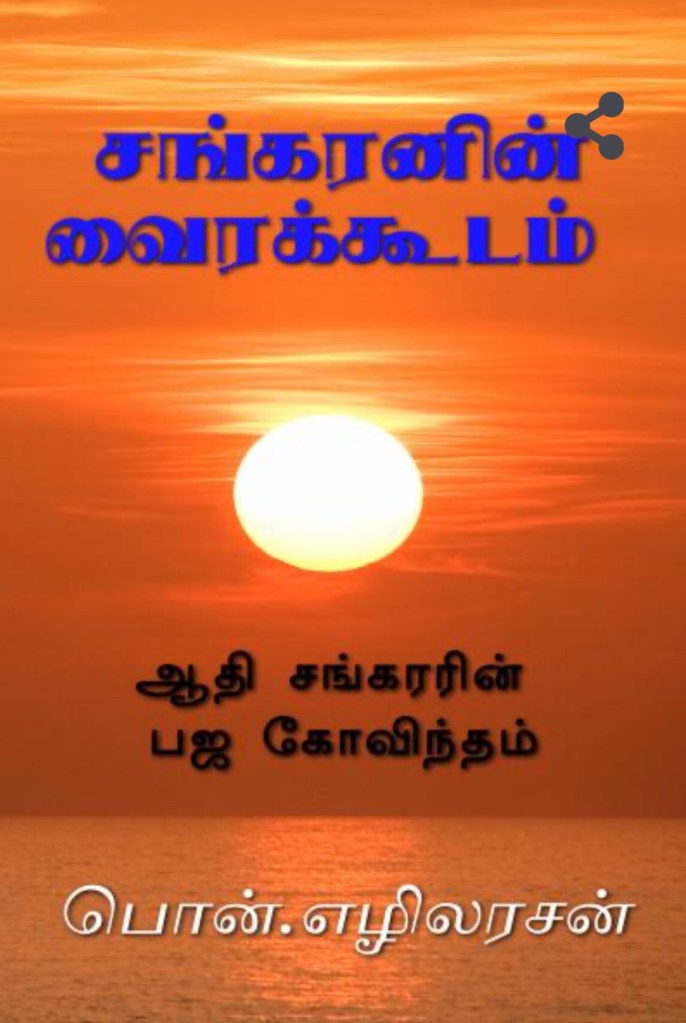
Sankara’s Smithy – Bhaja Govindam – Book

We live in an era of materialism (we call it Kali Yuga). Day in and day out we engage in actions through our bodies, outward looking sense and action organs and minds (“kaayena vaachaa manasa”), transact with people and objects, earn money, fame and do actions that give us what we call as happiness. As we start ageing, we start wondering as to what is that we have been doing so far and where are we heading; as age catches up and the body starts withering, this thinking turns into worries and finally we perish after worrying about men, materials and matter which have only “shelf life” and nothing else.

We wander about ignorantly trying to experience the world without trying to experience the "Experiencer". We learn with the help of instruments of knowledge without inquiring as to what instruments of knowledge are required to know about ourselves, the Experiencer. We, the embodiment of absolute happiness, run behind sorrows & sufferings, thinking that there is happiness in them.

In this journey called life, did we at any point of time have the time to ponder and compare our journey with our ultimate goal of pure and permanent happiness? Why is that our journey and our goal were not in sync? As we,” the souls that wander in utter dismay in the dense woods of mental ignorance”, we need practical “dos and don’ts” that will enable us to live in the present without guilt about an unchangeable past and anxiety about an unknowable future. Where do we get these answers?

Don’t worry. Let us visit a heritage and a traditional Smithy owned by Adi Sankaracharya and his fourteen disciples since the fifth century. Answers for all our questions are all hidden here. Thirty-one of them in total in the form of 31 hammer blows. We need to receive these hammer strikes to get the answers. There is a guarantee that comes along with these hammer blows. The hammer blows are nothing but knowledge-based action strategies laced effectively with devotion to the Ultimate Reality and are in the form of simple Slokas (Verses) called Bhaja Govindam or Moha Mudgara.

If we absorb these Slokas internally and contemplate, our transformation and subsequent happiness is ensured; just like the hot solid iron is worked into a wonderful product.

Welcome to Sankara’s Smithy.
Sankara’s Smithy is now available in India and abroad as a book in English, with Sanskrit Verses, transliterations, translations and explanations by expert as understood by me.

Here are the links

India – Paperback Edition

https://notionpress.com/read/bhaja-govindam-1389756

Abroad – Paperback Edition

https://www.amazon.com/Sankaras-Smithy-Bhaja-Govindam-Mudgara/dp/B0BZFNYLZG/ref=sr_1_1?crid=15ECA68PTY0NW&keywords=sankara%27s+smithy&qid=1681126554&sprefix=%2Caps%2C658&sr=8-1

Amazon Kindle Edition

https://www.amazon.in/gp/product/B0BZDJ93DK?ref_=dbs_m_mng_rwt_calw_tkin_3&storeType=ebooks

Entire proceeds from the sale of this book will go gor charity. There are no commercial interests.

சங்கரனின் வைரக்கூடம் 9 – நல்லோர் இணக்கம்

நல்லோர் இணக்கம்

வலைதள ஒலித்தொடர் பதிவின் இணைப்பு

https://soundar53.substack.com/podcast

முகவுரை

இனியது கேட்கின் தனிநெடு வேலோய்
இனிது இனிது ஏகாந்தம் இனிது
அதனினும் இனிது ஆதியை தொழுதல்
அதனினும் இனிது அறிவினம் சேர்தல்
அதனினும் இனிது அறிவுள்ளோரை
கனவிலும் நனவிலும் காண்பது தானே

என்று கந்தன் கருணை என்ற திரைப்படத்தில் கவிஞர் கண்ணதாசன் வடித்த இந்த பாடலே, ஆதி சங்கரனின் வைரக்கூடத்தில் நாம் காணப்போகும் இந்த ஒன்பதாவது செயல்முறைக்கு முகவுரை.

ஆதி சங்கரர், பஜ கோவிந்தம் எனும் வைரக் கூடத்தில் முதல் எட்டு செயல்முறைகள் (ஸ்லோகங்கள்) வழியாக, நம்முள் ஒளிந்திருக்கும் வைராக்கியம் என்ற வைரத்தை தோண்டி எடுத்தார். இது நமது ஆன்மீகப் பயணத்தின் முதல் கட்டம். அடுத்த கட்டமாக, ஆதி சங்கரர் நமக்கு உதவிக்கரம் நீட்டி உய்விக்க முயலுகிறார். ஏணிப்படிகளை, வைரச் சுரங்கத்திலிருந்து மேலே வருவதற்கு இறக்குகிறார் என்கிறார் சுவாமி சின்மயானந்தர்.

"உன் நண்பர்கள் யார் என்று சொல்லுங்கள், நீங்கள் யார் என்று நான் உங்களுக்குச் சொல்கிறேன்" என்று ஒரு பழமொழி உண்டு. ஒருவர் தனது உண்மையான வளர்ச்சிக்கு (பொருளாதார ரீதியாகவும் மிக முக்கியமாக ஆன்மீக ரீதியாகவும்) விரும்பினால், அவர் தனக்கு ஒத்த எண்ணம் கொண்ட நண்பர்கள், நிறுவனங்கள், ஆசான்களை நாட வேண்டும். நல்லார் இணக்கம் என்பர் நமது தமிழ் மொழியில்.

இந்த நல்லார் இணக்கம் எப்படி நம் ஆன்மீக வளர்ச்சிக்கு ஊன்றுகோலாய் உள்ளது என்பதை விளக்குவதே இந்த ஸ்லோகத்தின் உட்கருத்து.

வாருங்கள், வைரக் கூடத்தில் நமது பயணம் தொடங்கட்டும். இதோ! சங்கரனின் செயல்முறை

சமஸ்க்ருத ஸ்லோகம்

सत्संगत्वे निस्संगत्वं,

निस्संगत्वे निर्मोहत्वं।

निर्मोहत्वे निश्चलतत्त्वं,

निश्चलतत्त्वे जीवन्मुक्तिः

ஆதி சங்கரர்

தமிழ் ஒலிபெயர்ப்பு

ஸத்ஸங்க3த்வே நிஸ்ஸங்க3த்வம்

நிஸ்ஸங்க3த்வே நிர்மோஹத்வம் |

நிர்மோஹத்வே நிச்’சல தத்வம்

நிச்’சல தத்வே ஜீவன் முக்தி: ||

தமிழ் மொழிபெயர்ப்பு

நல்லோர் இணக்கம் பற்றை விலக்கும்

பற்றை விலக்கினால் மருட்சி இல்லை

மருட்சி இலதால் மனநிலை அமைதி

மனநிலை அமைதியால் வாழ்வில் முக்தி

சமஸ்க்ருத சொற்களின் பொருட்கள்

सत्संगत्वे - ஸத்ஸங்க3த்வே = நல்லோர் இணக்கத்தால் 
निस्संगत्वं - நிஸ்ஸங்க3த்வம் - பற்றின்மை

निस्संगत्वे - நிஸ்ஸங்க3த்வே = பற்றின்மையால்/பற்றை விலக்கினால்
निर्मोहत्वं - நிர்மோஹத்வம் = மருட்சி இல்லை

निर्मोहत्वे - நிர்மோஹத்வே = மருட்சி இலாததால்
निश्चल - நிச்’சல = நிலையான/மாறுதல் இலா/அமைதியான
तत्त्वं - தத்வம் = உண்மை

निश्चलतत्त्वे - நிச்’சல தத்வே = நிலையான உண்மையால்
जीवन्मुक्तिः - ஜீவன் முக்தி: = முக்திநிலை/வீடுபேறு நிலை/மெய்ப்பொருள் அறிதல்/இக்கணமே,இவ்வாழ்விலேயே பிறவிப்பிணி தீர்த்தல்

விளக்கவுரை

நேரடி பொருள்
சான்றோர் சகவாசம் ஏற்பட்டால் மனம் பற்றினை ஒழிக்கும். பற்று அழிந்தால் மன மயக்கங்கள் மறையும். மயக்கங்கள் மறைந்தால் நிலையான உண்மைப் பொருள் வெளிப்படும். நிலையான உண்மைப்பொருளை அறிந்தால் நீ ஜீவன் முக்தி அடைவாய்.
விளக்கம்
இந்த ஸ்லோகத்தில் ஐந்து முக்கிய தத்துவங்கள் ஏணிப்படிகளாய் உள்ளன. அவைகள் முறையே:

ஸத் ஸங்கம் - நல்லோர் இணக்கம்
நிஸ்ஸங் கத்வம் - பற்றின்மை
நிர்மோ ஹத்வம் - மருட்சி இன்மை
நிஸ்சல தத்வம் - மனநிலை அமைதி
ஜீவன் முக்தி - வாழ்வில் வீடுபேறு

இந்த ஐந்து தத்துவங்களை முழுமையாக புரிந்து கொள்ள முயற்சிப்போம்.
சத்சங்கம் - நல்லோர் இணக்கம்

சத்சங்கம் என்ற வடமொழிச் சொல்லின் வேர்ச்சொற்கள் “சத்”, “சங்கம்”. “சத்” என்பது சத்தியம்/உண்மையைக் குறிக்கும்; சங்கம் என்பது இணக்கம், சேர்க்கை, கூட்டம், சபை என்று பொருளாகும்.
சத்சங்கம் என்பதை “சத்தியத்துடன் இருப்பது, சத்தியவாதிகளுடன் இருப்பது, ஒருமித்த ஆன்மீக எண்ணமுடையோரின் உறவு” என்று கொள்ளலாம்.

நம் மனதை ஒரு இளந்தளிருக்கு ஒப்பிடலாம். அது நன்கு வளர, தகுந்த சூழ்நிலையும், பராமரிப்பும் அவசியம். வாழ்வில் உயர்நோக்கம் வளர, மனதை சரியான வழியில் செலுத்தி, பயிற்சி தர வேண்டும். நல்லோர் இணக்கத்தால், மலரோடு சேர்ந்த நார் போல நமது ஆன்மீக அறிவும் நற்சிந்தனைகளும் , நல் அதிர்வலைகளின் செல்வாக்கும், உற்சாகமான சூழ்நிலையும் உருவாகும் சாத்தியம் அதிகரிக்கும். மெய்யறிவை உணர்வதற்கான வழித்தடைகளை அகற்ற உதவும்.

சுவாமி பரமார்த்தானந்தா, சத் என்ற சொல்லின் பொருளைப் பொறுத்து சத்சங்கத்தை மூன்று நிலைகளாக வகைப்படுத்துகிறார்.

1. முதல் நிலையில், சத் என்ற சொல்லுக்கு உன்னத நற்பண்புகள் பெற்றவர் என்று பொருள். நல்லொழுக்க விதிகளனைத்தையும், தர்மத்தின் படி நடப்பவர். இது தர்ம புருஷர்கள் எனப்படும் நல்லோரின் செயல்பாட்டு நிலை. இந்நிலையில் மறைப்படி விதித்திட்ட கடமைகள்/வினைகளுக்கு முதன்மை கவனம். இந்நிலையில் இருக்கும் நல்லோரின் இணக்கம், நம்மை நல்வழியில் வினைகள் புரிய உதவும். எனினும், மெய்யறிவு நோக்கம் முதன்மை பெறாதலால், நமது ஆன்மீகப்பயணம் வரையறுக்கப்பட்டுள்ளது.
2. சத்சங்கத்தின் இரண்டாம் நிலையில், சத் என்ற சொல்லுக்கு ஞானி (ஞான புருஷன்) என்று பொருள். ஒவ்வொரு ஞானியிடமும் நற்பண்புகளும் மெய்யறிவும் உள்ளதால், இத்தகைய ஞானிகளுடனான தொடர்பு இரண்டு மடங்கு நன்மைகளைக் கொண்டுள்ளது. முதல் பலன் நற்பண்புகளை உள்வாங்குவது; , இரண்டாவது நன்மை அறிவையும் உள்வாங்கும் வாய்ப்பைப் பெறுவது.
3. சத்சங்கத்தின் மூன்றாம் கட்டத்தில், சத் என்ற சொல்லுக்கு பிரம்மன் என்று பொருள். பிரம்மனுடனான தொடர்பு என்பது, நான் பிரம்மன், "அஹம் பிரம்மாஸ்மி", அதாவது பிரம்ம ப்ராப்தி அல்லது பிரம்ம ஐக்கியம் என்ற வேதப் படிப்பின் மூலம் பெறப்பட்ட அறிவின் மூலம் நான் பிரம்மத்தை விட்டு விலகி இருக்கிறேன் என்ற அறியாமையை அகற்றுவதாகும். இதுதான் உயர்ந்த நிலை. ஆண்டவனின் அருளால் கிட்டும் இத்தகைய நல்லோர் இணக்கம் அரிதானது.

ஆக, தத்துவஞானி மூஜி சொல்வது போல் “சத்சங்கம் என்பது புடம் போட்டு நம்மை அறியும் ஒரு அக்னிப் பயணத்திற்கு அழைப்பு. அந்த அக்னி “நம்”மை எரிக்காது. “நாம்” எது இல்லையோ அதை மட்டுமே எரிக்கும்”.

எனவே பற்றின்மையை அடைய, சரியான சூழலும் கூட்டமும் அவசியம் என்பதால், நல்லோர் இணக்கத்தை நாடு என்று ஆதிசங்கரர் அறிவுறுத்துகிறார். எது எப்படியிருந்தாலும், நாம் தீயோரின் சகவாசத்தையும், நம்பிக்கையற்றவர்களின் சகவாசத்தையும் அல்லது நமது சிரத்தத்தை அசைக்கக் கூடியவர்களையும் தவிர்க்க வேண்டும்..

இவ்வாறு, நாம் நல்லவர்களுடன் பழகும்போது, கெட்டவர்களின் செல்வாக்கிலிருந்து விலகி வளர்கிறோம். சத்சங்கத்தின் மூலம் தூய எண்ணங்களுக்கான நமது தனிப்பட்ட அர்ப்பணிப்பு அடுத்த படிக்கான அணுகலை நமக்கு வழங்குகிறது.
நிஸ்ஸங் கத்வம் - பற்றின்மை

சத்சங்கம் என்னும் முதல்படியில் அடியெடுத்து வைத்த பலன், நாம் ஒரு காலத்தில் தீவிரமான பற்றுதலுடன் பற்றிக்கொண்ட விஷயங்களிலிருந்து சிறிது ஒதுங்கும்போதுதான் தெரியும். சத்சங்கத்தின் ஒளியானது நமது புத்தியை மழுங்கடிக்கும் மாயையின் திரையை விலக்குகிறது. அந்த தருணத்திலிருந்து ஆன்மீக வாழ்க்கை தீவிரமாக தொடங்குகிறது.

நல்லோர் இணக்கத்தின்செல்வாக்குடன், மனதில் பற்றின்மை உருவாகிறது. எல்லோரும் பரம்பொருளையும், மெய்ப்பொருளையும், உயர் அறிவைப்பற்றியும் பேசுகிறார்கள். நிலையிலாபொருள்களுக்கு மதிப்பு கொடுக்கும் நம் மனம் என்பது நாம் அனைவரும் அறிந்ததே. பொருள்கள் மீது பற்றின்மையை வளர்த்துக் கொள்ள வேண்டும் என்பதை மனம் உணர்ந்தவுடன், அந்த நபர் ஏணியில் இரண்டாவது படியில் இருக்கிறார்.

இப்போது சுவாமி விதிதாத்மானந்தாவின் ஒரு எச்சரிக்கை வார்த்தை. "பற்றுதல் மற்றும் பற்றின்மை என்றால் என்ன என்பதை நாம் தெளிவாக புரிந்து கொள்ள வேண்டும். பெரும்பாலும், பற்றுதலைக் கைவிடுவது என்பது குடும்பத்துடனான தொடர்பைக் கைவிடுவது அல்லது உலகத்தை விட்டு ஓடுவது என்று மக்கள் நினைக்கிறார்கள். உண்மையில், நீங்கள் உலகத்தை விட்டு ஓட முடியாது, ஏனென்றால் அது எல்லா இடங்களிலும் ஏதோ ஒரு வடிவத்தில் உள்ளது. எனவே, உலகத்தின் பௌதிகப் பொருட்களை அல்ல, அவற்றைச் சார்ந்திருப்பதை விட்டுவிட வேண்டும். மக்கள் பற்றின்மையை புலன் பொருள்கள் அல்லது உலகின் வெறுப்பு என்று தவறாக விளக்குகிறார்கள். உலகத்துடன் எந்த தொடர்பும் வைத்துக் கொள்ள வேண்டாம் என்று ஆசிரியர்கள் கேட்பதில்லை. உலகம் நம் இன்பத்திற்காகவே உள்ளது. விஷயங்களை எப்படி அனுபவிக்க வேண்டும் என்பதை மட்டுமே அவை நமக்குக் கற்பிக்கின்றன. இன்பம் என்பது சார்பு அல்லது தேவை, இணைப்பு அல்லது வெறுப்பு ஆகியவற்றிலிருந்து விடுபட்ட ஒரு உறவைக் கொண்டிருப்பது. வெறுப்பு என்பது இணைப்பின் சிதைந்த வடிவம். எனவே, பற்றுதல் மற்றும் வெறுப்பு (ராகம் மற்றும் த்வேஷா), ஒரே நாணயத்தின் இரு பக்கங்கள். இரண்டும் அடிமைத்தனத்தையும் சார்புநிலையையும் குறிக்கின்றன. அவை ஆரோக்கியமற்ற உறவுக்கு இட்டுச் செல்கின்றன, அதில் நான் உலகின் சூழ்நிலைகளுக்கு எனது புறநிலையை இழக்கிறேன்; என்னைச் சுற்றியுள்ள சூழ்நிலைகள் மற்றும் பொருள்களால் என் மகிழ்ச்சியைத் தீர்மானிக்க அனுமதிக்கிறேன். அவைகளின் இணைப்பில், நான் அவைகளுக்கு அதை விட அதிக மதிப்பை விதிக்கிறேன், வெறுப்பில், அதற்கு தகுதியானதை விட குறைவான மதிப்பை நான் காண்கிறேன். ஆகவே, பற்றிலிருந்து விடுபட வேண்டும் என்று கூறும்போது, வெறுப்பிலிருந்து விடுபட முற்பட வேண்டும் என்றும் பொருள்படும்”.

பற்று, வெறுப்பு ஆகிய இரண்டிலிருந்தும் மெல்ல மெல்ல நம்மை விடுவிக்க உதவுவது நல்லவர்களின் கூட்டுறவான சத்சங்கமே. சத்சங்கத்வே நிச்சங்கத்வம் என்பதன் பொருள் என்னவென்றால், ஞானிகளின் சகவாசத்தில், நான் மெதுவாக மனதின் அமைதியையும் விருப்பு வெறுப்புகளின் எதிர்வினைகளிலிருந்து சுதந்திரத்தையும் வளர்த்துக் கொண்டு புறநிலையாக மாறுகிறேன். நான் எப்படிப் பார்க்கிறேன் என்பதன் மூலம் வரையறுக்கப்பட்ட உலகில் வாழ்வதை விட, உலகத்தைப் பற்றிய ஒரு புறநிலை உணர்வை வளர்த்துக் கொள்ளவும், வாழ்க்கையின் யதார்த்தங்களைக் கையாளவும் கற்றுக்கொள்கிறேன்.
நிர்மோஹத்வம் - மருட்சி இன்மை

இதன் பொருள் மோகத்திலிருந்து விடுபடுவது என ற பொருள். இந்த வார்த்தையைப் புரிந்து கொள்ள, முதலில் "மோகம்" என்றால் என்ன என்பதைப் புரிந்து கொள்ள வேண்டும்.

மோனியர்-வில்லியம்ஸ் சமஸ்கிருதம்-ஆங்கில அகராதி மோஹத்தை 'உணர்வின் இழப்பு' என்று விளக்குகிறது. திகைப்பு, குழப்பம், கவனச்சிதறல், மோகம், மாயை, பிழை என்றும் பொருள் கொள்ளலாம்.

மனதின் மாயையே ஒருவரை உண்மையைப் பகுத்தறிவதைத் தடுக்கிறது. உலகப் பொருள்களின் யதார்த்தத்தில் ஒருவரை நம்ப வைக்கிறது மற்றும் சிற்றின்ப இன்பங்களின் திருப்திக்கு அடிமையாக்குகிறது. இதை வடமொழியில் “நித்ய அநித்ய அவிவேக: இதி மோஹ:” என்பர். இப்படி மோகத்தால் மருண்ட மனம் விருப்பு-வெறுப்பு (ராக-த்வேஷ) மூலம் உலகின் பொருட்களின் மீது நியாயமற்ற மதிப்பை, அசுத்தங்களாக சுமத்துகிறது. இந்த ராக-த்வேஷத்தின் செல்வாக்கின் கீழ் ஒரு மனம் ஒரு தூய்மையற்ற மனம். ஏதோ ஒன்று எனது இணைப்பை உறுதிப்படுத்தும் போது நான் மகிழ்ச்சி அடைகிறேன், ஏதாவது முரண்பட்டால் நான் மனச்சோர்வடைகிறேன். மகிழ்ச்சி என்பது ராகத்தின் விளைவாகும், மனச்சோர்வு என்பது துவேஷத்தின் விளைவாகும். எனது ராகத் துவேஷங்களை என்னால் நேரடியாகப் பார்க்க முடியாவிட்டாலும், நான் எதிர்வினையாற்றும்போது இந்த ராகத் துவேஷங்களின் பலனை என்னால் பார்க்க முடிகிறது. இந்த எதிர்வினைகள் கோபம், பேராசை, மனக்கசப்பு, அடக்குமுறை, சோகம் போன்றவையாக இருக்கலாம். எதிர்வினை மனது என்பது தூய்மையற்ற மனம்.

அந்த தூய்மையற்ற மனம் கலங்கிய நீர் தெளிவது போல, இருமை வகைதெரிந்து ஈண்டுஅறம் பூண்டு, தெளிவாகும் போது, அது மெதுவாக மோகத்திலிருந்து அல்லது மாயையிலிருந்து விடுபடுகிறது. மனம் மெதுவாக இந்த மோகத்திலிருந்து விடுபடும்போது அது ராக த்வேஷத்திலிருந்து விடுபடுகிறது.

மனம் எந்த அளவிற்கு தூய்மையாக இருக்கிறதோ, அந்த அளவுக்கு அது அமைதியை அனுபவிக்கிறது, மேலும் மனம் ஒருங்கிணைக்கப்படும் அளவிற்கு, அது சமநிலையை அனுபவிக்கிறது. நீர் எப்படி அழுக்கை அகற்றி தூய்மையானதாக மாறுகிறதோ, அதுபோல், மனதிலிருந்து அசுத்தமான எண்ணங்கள் நீங்கி, தூய்மையாகவும், சாந்தமாகவும் மாறி, மன அமைதியை அனுபவிக்கிறோம் - அது தான் அடுத்த படி - நிச்சலதத்துவம்.
நிஸ்சல தத்வம் - மனநிலை அமைதி

மனம் அமைதியடையும் போது, அது புறநிலையாகிறது. (ராட்சத ரோலர் கோஸ்டரிலிருந்துகொண்டு வெளி வந்த நிலை) அப்போதுதான் மறைகூறும் பொருளை புரிந்து கொள்ள முடிகிறது. அதுவரை, நாம் எதைக் கேட்டாலும் ராக-த்வேஷங்களால் சிதைக்கப்பட்ட மனத்தால் செயலாக்கப்படுகிறது. அந்தத் திரிபுகள் இல்லாதபோது, வேதத்தின் தரிசனம் வெளிப்படுவதை மனத்தால் உண்மையாகப் பாராட்ட முடிகிறது. ராக-த்வேஷங்களின் மீதான பற்று போகும்போது, மோகம் அல்லது மாயை போய்விடும்.

மாயை விலகும் போது, பரம் பொருளான இறுதி யதார்த்தத்தைப் பற்றி வேதங்கள் என்ன வெளிப்படுத்துகின்றன என்பதை மனம் தெளிவாகப் புரிந்து கொள்ள முடியும். அதாவது நமது உடலை மேவிய உயிர் எனும் நிழல், உணர்வான தன்னை, உள்ளார்ந்த இயல்பு (நிஜம்) என்றும், தற்செயலான தன்மை (நிழல்) அல்ல என்றும் புரியத் தொடங்கும் பகுத்தறிவு வளர்கிறது. இப்படி பகுத்தறிவதற்கு முன், நிழல் தன்னை நிஜமாக உணர்கிறது (உடல், மன, புத்தி வளாகமே நான் என்ற உணர்வு). பகுத்தறிவில் மெல்ல மெல்ல நிலைபெறும் போது, அந்த நிழல் நிஜமாகி, நிழல் மறைகிறது.

இறையருள், விவேகம், சங்கல்பம், சத்சங்கம், குருவின் கல்வி, பிரார்த்தனை எனும் ஞானப் பிரசாதங்களே இந்த பகுத்தறிவு வளர உதவும்.
ஜீவன் முக்தி - வாழ்வில் வீடுபேறு

ஜீவன்முக்தி என்பது இந்து தத்துவத்தின்படி, உயிருடன் இருக்கும்போதே ஆன்மீக ரீதியில் விடுதலை பெற்ற நிலை. இதை வீடு பேறு என்று கூறுவர். சமஸ்கிருத சொல், ஜீவா, அதாவது "வாழ்க்கை" மற்றும் முக்தி, அதாவது "சுதந்திரம்" என்பதிலிருந்து பெறப்பட்டது. ஜீவன்முக்தி என்பது வரம்பற்ற அறிவை (மெய்ப்பொருளும் பரம்பொருளும் ஒருங்கிணைந்த நிலை), துன்பத்திலிருந்து விடுபட்டு, நித்திய பேரின்பத்தை அனுபவிக்கும் ஒரு நிலை.

முந்தைய படியில் கோடிட்டுக் காட்டிய பகுத்தறிவில் நிலைத்திருப்பது என்பது, சத் சித் ஆனந்தமே நான், நானே அவன் என்ற நேரடி அறிவினை (அபரோக்ஷ ஞானம் அதாவது “அஹம் பிரம்மாஸ்மி”) அனுபவிப்பது.

அப்படி அனுபவிக்கும் போது, ஒருவர் உயிருடன் இருக்கும்போது கூட (அதாவது, நம்முடைய அன்றாட வாழ்வில், உடலும், உடல் சாரந்த தண்ணுணர்வால் வரும் வினைகளைப் புரியும் உயிராக), அவ்வினைகள் புரியும் “உயிரான நான்” அவையில்லை, அவைகளனைத்தும் நிழலே, தான் நிஜமான சச்சிதானந்தமே என்ற உள்ளுணர்வு ஒன்று மட்டுமே இருக்கும் பூரண சுதந்திர நிலையே ஜீவன் முக்தி நிலை.

முந்தைய படிகளில் ஏறி வந்த பின்னரே, இந்த நிலையை அடைய முடியும். இந்த நிலையை கண்ணாலும், பிற இந்திரியங்களினாலும், வாக்கினாலும், வினைகள்/கர்மங்களாலும், வெறும் தவத்தாலும் புரிந்து கொள்ள முடியாது. “ஸாதந சதுஷ்டைய சம்பத்து” என்ற அடிப்படை தகுதிகள், நல்லோர் இணக்கம், குருமுகமாக மறைகளை கற்று, உள் நோக்கி, அறிவுத் தெளிவினால் நேரடியாக அனுபவிப்பது தான் இந்நிலை.

இவ்வாறு முக்தியடைந்தவருக்கு (எல்லா உயிர்களும் தானே என்று உணர்ந்தவர்), அவருக்கு இரண்டாவது இல்லாததால் மாயையோ துக்கமோ இல்லை. ஜீவன்முக்தா, பேரின்பமான பிரம்மத்தில் அசையாத மனத்துடன் தங்கியிருக்கிறது. அவர் மனதின் அனைத்து மாற்றங்களிலிருந்தும் விடுபட்டவர். அவரது இதயம் இமயமலைப் பனி அல்லது படிகத்தைப் போன்று தூய்மையானது. அவர் வேறுபாடுகளிலிருந்து விடுபட்டவர்.

ஆக, நல்லோர் இணக்கத்தில் துவங்கி, இறுதியில் இந்த ஜீவன்முக்தி அடையும் விரிவான தத்துவங்களை எளிய முறையில், இந்த ஸ்லோகத்தில் கோடிட்டுக்காட்டியுள்ளார் ஆதி சங்கரர்.

தமிழ் இலக்கியங்களில் நல்லோர் இணக்கம்

திருக்குறள்

”நிலத்தியல்பான் நீர்திரிந்து அற்றாகும் மாந்தர்க்கு
இனத்தியல்ப தாகும் அறிவு”

நிலத்தின் தன்மையால் நீரின் தன்மை மாறி அந்த நிலத்தின் தன்மையை நீர் பெற்று விடும். அது போல மனிதனுக்கு அறிவானது தாம் சேர்ந்திருப்பவர்களின் தன்மைக்கேற்ப மாறி விடும். இதற்கான எத்தனையோ உதாரணங்களை நம்மைச் சுற்றிலும் நாம் பார்க்கலாம். யாரிடம் நெருங்கிப் பழகுகிறோமோ அவர்களின் தன்மைகளில் சிலதாவது நம்மைத் தொற்றிக் கொள்ளவே செய்கின்றன. அப்படித் தொற்றிக் கொள்பவை சிறிது சிறிதாக நம்முள் வேரூன்றவே செய்கின்றன. பின் அவையும் நம்மில் ஒரு பகுதியாகவே விடுகிறது.

சங்கரனின் இந்த ஸ்லோகத்தின் முதல் இரண்டு வரிகளை இந்த திருக்குறள்கள் பிரதிபலிக்கின்றன

பற்றுக பற்றற்றான் பற்றினை அப்பற்றைப்
பற்றுக பற்று விடற்கு.

பற்றற்ற கண்ணே பிறப்பறுக்கும் மற்றுநிலையாமை காணப் படும்

பொருட்பாலில், பெரியாரைத் துணைக்கோடல் என்ற அதிகாரம் முழுவதும் நல்லோர் இணக்கத்தைப் பற்றியதே. மேலும், நல்லோர் இணக்கத்தின் பெருமையை

இழுக்கல் உடையுழி ஊற்றுக்கோல் அற்றே
ஒழுக்கம் உடையார் வாய்ச்சொல்

எனைத்தானும் நல்லவை கேட்க அனைத்தானும்
ஆன்ற பெருமை தரும்

என்று, ‘கேள்வி’ என்னும் அதிகாரத்தில், திருவள்ளுவர் சத்சங்கத்தைப் பற்றி கூறுகிறார்.

ஔவையாரின் வாக்குண்டாம்

எளிய இனிய தமிழில், பாமரனுக்கும் புரியும் வண்ணம் எழுதிய தமிழ் மூதாட்டி ஔவையின், வாக்குண்டாம் எனும் தொகுப்பில் வரும்

நல்லாரைக் காண்பதுவும் நன்றே; நலம்மிக்க
நல்லார் சொல் கேட்பதுவும் நன்றே-நல்லார்
குணங்கள் உரைப்பதுவும் நன்றே; அவரோடு
இணங்கி இருப்பதுவும் நன்று.

தீயாரைக் காண்பதுவும் தீதே; திரு அற்ற
தீயார் சொல் கேட்பதுவும் தீதே-தீயார்
குணங்கள் உரைப்பதுவும் தீதே; அவரோடு
இணங்கி இருப்பதுவும் தீது.

ஆத்திசூடி

இணக்கம் அறிந்து இணங்கு

(பதவுரை) இணக்கம் --- (நட்புக்கு ஏதுவாகிய) நற்குண நற்செய்கைகளை, அறிந்து --- ஆராய்ந்தறிந்து, இணங்கு --- (பின் ஒருவரோடு) நட்பு கொள். (பொழிப்புரை) நற்குண நற்செய்கை உடையவர் என்பது தெரிந்து கொண்டு ஒருவரோடு நட்புச் செய.

உலகநாதரின் உலகநீதி

சிறு வயதில் நாம் பயின்ற இந்த நீதிச் சொற்களை எப்படி மறக்க முடியும்

ஓதாமல் ஒருநாளும் இருக்க வேண்டாம்ஒருவரையும் பொல்லாங்கு சொல்ல வேண்டாம்மாதாவை ஒருநாளும் மறக்க வேண்டாம்வஞ்சனைகள் செய்வாரோடு இணங்க வேண்டாம்போகாத இடந்தனிலே போக வேண்டாம்போகவிட்டு புறஞ்சொல்லித் திரிய வேண்டாம்……
நஞ்சுடனே ஒருநாளும் பழக வேண்டாம்நல்லிணக்கம் இல்லாரோடு இணங்க வேண்டாம்…கொலைகளவு செய்வாரோடு இணங்க வேண்டாம்கற்றவரை ஒருநாளும் பழிக்க வேண்டாம்…
சேராத இடந்தனிலே சேர வேண்டாம்செய்நன்றி ஒருநாளும் மறக்க வேண்டாம்ஊரோடும் குண்டுணியாய்த் திரிய வேண்டாம்….
மறம்பேசித் திரிவாரோடு இணங்க வேண்டாம்வாதாடி வழக்கழிவு சொல்ல வேண்டாம்திறம்பேசிக் கலகமிட்டுத் திரிய வேண்டாம்தெய்வத்தை ஒருநாளும் மறக்க வேண்டாம்
அகத்தியர்

சாதுக்கள் சங்கத்தையே மனமே
தஞ்சம் அடைந்திடுவாய்

சாதுக்கள் சங்கமல்லால் மனதில்
சாந்தி வராது அறிவாய்

நாலடியார்

பாலோடு அளாயநீர் பால் ஆகும், அல்லது
நீராய் நிறம் தெரிந்து தோன்றாதாம்; -தேரின்
சிறியார் சிறுமையும் தோன்றாதாம், நல்ல
பெரியார் பெருமையைச் சார்ந்து.

ஊர் அங்கணநீர் உரவுநீர் சேர்ந்தக்கால்,
பேரும் பிறிதாகித் தீர்த்தமாம்; - ஓரும்
குலமாட்சி இல்லாரும் குன்றுபோல் நிற்பர்,
நலமாட்சி நல்லாரைச் சார்ந்து.

முடிவுரை

நல்லாரைச் சார்ந்து இருப்பது துன்பமாக முதலில் தோன்றும். அது நாளடைவில் இன்பத்தைத் தந்துகொண்டே இருக்கும். ஆனால், தீயோரைச் சார்ந்து இருப்பது முதலில் இன்பமாகத் தோன்றும் என்பதால், உடனடியாக, தான் விரும்புவதையே அடையத் துடிக்கின்ற உயிரானது, சிற்றினத்தையே விரும்பும். அது நன்மை தராது என்பதை அறிவுறுத்த, இறைவன் அருளாளர்களை அதிட்டித்து, நீதி நூல்களையும், அருள் நூல்களையும் அருளிச் செய்தான். எனவே, மெய்யறிவு நூல்களை முயன்று படித்து, மெய்யறிவு பெற்றவரோடு கூடி இருந்து, மெய்யறிவு பெற்று உயரவேண்டும். சிறியவர் இனத்தில் சேராமல் காத்துக் கொள்ளவேண்டும்.

இந்த செயல்முறைகளை நாம் கடைபிடிக்கவில்லை என்றால், நாம் என்ன எதிர்பார்க்கலாம் என்பதை பகவத் கீதையின் 2வது அத்தியாயத்தின் 62 மற்றும் 63 ஸ்லோகங்களிலிருந்து அறிந்து கொள்ளலாம்.

“த்யாயதோ விஷயாந்பும்ஸ: ஸங்கஸ்தேஷூபஜாயதே।
ஸங்காத்ஸம்ஜாயதே காம: காமாத்க்ரோதோ அபிஜாயதே॥ 2.62 ॥

க்ரோதாத்பவதி ஸம்மோஹ: ஸம்மோஹாத்ஸ்ம்ருதிவிப்ரம:।
ஸ்ம்ருதிப்ரம்ஷாத் புத்திநாஷோ புத்திநாஷாத்ப்ரணஷ்யதி॥ 2.63 ॥

பொருட்களை நினைப்பதால் அவற்றின் மீது பற்று ஏற்படுகிறது. பற்று ஆசையாக மாறுகிறது. ஆசையால் கோபம், கோபத்தினால் மனமயக்கம், மனமயக்கதால் நினைவு நழுவுதல், நினைவு நழுவுவதால் பகுத்தறிவின் சீர்கேடு, பகுத்தறிவின் சீர்கேட்டால் மனிதன் அழிகிறான்”.

நாம் அறிவின் ஏணியில் ஏற முயற்சிக்கவில்லை என்றால், முதல் எட்டு ஸ்லோகங்களில் கோடிட்டுக் காட்டியது போல் நாம் பற்று எனும, ஏணியின் மேலிருந்து கீழே விழுந்து மீண்டும் பயணத்தை தொடங்குவோம். அதனால்தான் ஆதி சங்கரர் இந்த ஸ்லோகத்தில் முக்தி அடைவதற்கான 5 படிநிலைகளை கோடிட்டுக் காட்டுகிறார்.

இந்தக் கருத்துகளைப் புரிந்துகொண்டு, ஜீரணித்து, உள்வாங்கி, சுய உணர்தலுக்கான அடுத்த படிக்குச் செல்வோம். அடுத்த பதிவில் சங்கர் என்ன சொல்கிறார் என்று பார்ப்போம். அதுவரை…..

இறையருள் பெருக! வளமுடன் வாழ்க!

பஜ கோவிந்தத்தின் 31 ஸ்லோகங்களும், அவைகளின் தமிழ் ஒலி, மொழி பெயர்ப்புகள், சமஸ்க்ருத சொற்களின் பொருட்கள், ஆன்றோரின் விளக்கவுரை ஆகியவை இப்பொழுது நோஷன் ப்ரஸ் பதிப்பகத்தில் தமிழ் புத்தக வடிவில் கிடைக்கிறது. இதோ விவரம்

https://notionpress.com/read/bhaja-govindam-moha-mudgara?book=published&utm_source=share_publish_email&utm_medium=email

Sankara’s Smithy – Strike 9 – The progressive blow

Satsangh

Introduction

The first eight verses Adi Sankara’s Bhaja Govindam, come as heavy hammer blows to blast us out of our comfortable anchors in life. That is the first phase of spiritual transformation. 

Now we come to the first of the verses that extend a positive helping hand to the seeker of Truth.

Man is a gregarious animal. He wants associates; he wants companions; he must have society. Rare is he who can live by himself. Why? Because man has been made so, created so. The Lord created man with the senses going outward therefore he perceives, seeks things outside,’ says the Kathopanisad.

His delights are outside of himself. He wants to share his thoughts, his sorrows, his joys with others. For where is the man who can say that he will not share some good news, that gives him happiness, with another who is likely to appreciate his talents, or envy his success? In sorrow and in disease, man really needs somebody, who would sympathise with him, who would feel for him.

In our everyday life we meet with such situations where we share joy, grief, pain and pleasure in an atmosphere that is conducive (in listening to us). This means that an atmosphere is not merely physical but something more. And this other atmosphere acts on the psychic being of man as the outer climate and atmosphere acts on his body. The psychic being in man can be and is influenced by the environment he lives in, by the company he keeps.

‘Tell me with whom thou art found, and | will tell thee who thou art,’ said the German poet- philosopher Goethe.

So, it has been a universal experience, all through the ages, all
through the climes and all throughout the world that, but for a few
exceptions, all men desire company; and that association influences them as sure as milk acted upon by acid transforms itself into curd. That being so it behoves all to take good care with what type of people they associate. It can be inferred by your own experience in life. Spiritual personages have emphasized the need of keeping holy company, on all aspirants

It is important that if one wants to evolve oneself to his/her true potential (both materially and more importantly spiritually) one should should seek out like minded good company. Such good company comes in the form of great teachers and religious exponents, spiritually inclined friends and colleagues, prayer groups, religious discourses and gatherings, etc.

Swami Chinmayananda commenting on this sloka states that in this sloka Adi Sankara has given a ladder of progress in the spiritual field to beginners in devotion.

Let us try and understand the Sloka in its entirety.

Sanskrit Verse

सत्संगत्वे निस्संगत्वं,

निस्संगत्वे निर्मोहत्वं।

निर्मोहत्वे निश्चलतत्त्वं,

निश्चलतत्त्वे जीवन्मुक्तिः ॥९॥

Adi Sankara

English Transliteration

Satsangatve nissangatvam 

nissangatve nirmohatvam,

nirmohatve niscalatattvam

niscalatattve jivanmuktiH

Meaning of the Sanskrit Words

सत्संगत्वे - Satsangatve = through the company of the good          

निस्संगत्वं -nissangatvam = ( there arises) non attachment/dispassion

निस्संगत्वे - nissangatve = through non attachment/dispassion

निर्मोहत्वं - nirmohatvam = ( there arises) freedom from delusion

निर्मोहत्वे - nirmohatve = through freedom from delusion

निश्चल - nischala = immutable or unchangeable

तत्त्वं - tatvam = Reality

निश्चलतत्त्वे - nishchalatatve = through this immutable Reality/from the steadfast establishment in the Truth

जीवन्मुक्तिः - jivanmuktih = state of liberation/one becomes realized / released from bondage, here and now, while alive.

Meaning in English

Through the company of the good and wise people arises non attachment. Through non attachment arises the freedom from delusion, when there is freedom from delusion, there is unchangeable reality. On experiencing this unchangeable reality, there comes liberation or freedom. Seek Govinda.

Explanation

The steps in the ladder that Swami Chinmayananda was referring are 

1. Satsangam - association of good people
2. Nissangatvam - non attachment
3. Nirmohatvam - freedom from delusion
4. Nishchalatatvam - steadfastness
5. Jeevan Mukti - liberation in life

Let us try to understand each one of these steps.

Satsangh

Satsang is a Sanskrit term derived from two roots: sat meaning "true’"and sangha meaning community, company or association.

It can be translated as "associating with good people" or simply "being in the company of truth," and refers to the act of gathering with like-minded, uplifting people, especially those on a spiritual path.

The mind requires a suitable atmosphere to grow, in much the same way as a little plant does. As a sprout, it is very delicate and requires a lot of care and nurturing. Our mind is also like this sprout. It has to be taught and trained to follow certain values and priorities so that we get a proper perception of life.

Satsang, or the company of those who are good and have wisdom and insight exerts a positive influence upon us. We need an inspiring atmosphere in order to maintain our enthusiasm in a conducive and positive manner.

In modern times, satsang has evolved to mean any gathering in which spiritual reflection, discussion, meditation or teaching takes place. It helps to remove the negative thoughts, material attachments and mental obstacles that block the path to Self-realisation.

Swami Paramarthananda classifies Satsangh into three levels depending on the meaning of the word Sat.

1. At the first level, the word Sat means a person who has got noble values. He is a man of values (Dharma Purusha) who does not compromise with values and adheres to the dharmic values. This is the operational level of “good” people. The primary focus is on action and adherence as laid down by scriptures. By sheer association with such a Dharmic person one will effortlessly imbibe these values. The focus will be on “appropriate, clean, balanced and non-binding desires that will help the society” says Swami Omkarananda. However in this level, the inner growth (inward looking journey) is limited due “avidya” - the lack of knowledge about Self.

2. In the second level of Satsangh, the word Sat means Jnana Purusha or Jnani. As every Jnani has values, the association with a Jnani has two fold benefits. The first benefit is one will imbibe values and the second benefit is one will get an opportunity to imbibe knowledge also. Learning the scriptures from a Jnani sat purusha is the second level of Satsangh.

3. In the third stage of Satsangh, the word Sat means Brahman itself. Association with Brahman itself means removal of ignorance that I am away from Brahman, through the knowledge gained from scriptural study that I am Brahman, “Aham Brahmasmi”, i.e. Brahma Prappti or Brahma Ikyam.

As philosopher Mooji says

“Satsangh is the invitation to step into the fire of self-discovery. This fire will not burn you, it will burn only what you are not.”

Therefore Adi Sankara advises us to keep the company of “good”, the divine centred people who are seeking and spreading the knowledge of “Truth”, as proper environment and company is necessary to start the process of detachment.

At any cost, we must avoid the company of the bad and the company of non-believers or those who can shake our sraddha. We should avoid discussion with others; there is no need for us to go around convincing others, or preaching to them. More often than not, they will convince us otherwise.

As Swami Chinmayananda used to say, “The Rudraksha Mala around Shankaracharyaji’s neck did not get realization!” Mere physical closeness does not ensure the awakening of knowledge and understanding. We have to be ‘in touch’ with what the saint stands for. What is necessary is that we must grow and realize how important this self-growth is.

Thus, when we keep the company of the good, we slowly grow out of the influence of the bad. Our personal commitment to pure thoughts through Satsangam gives us the access to the next step.
Nissangatvam
Satsang sets the ball rolling. The first fruit of Satsang is seen when we become a little detached to things we once clung onto with intense attachment. The light of Satsang lifts the veil of delusion that clouds our intellect. From that point onwards spiritual life begins in earnest.  With the influence of good people, the mind develops a secret of detachment. Everyone is talking about seeking the highest. We all know its the mind that puts value to the objects. Once the mind realizes that one needs to develop detachment to the objects, the person is at the second step in the ladder.

Now here is a word of caution from Swami Viditatmananda.

“We must clearly understand what attachment and detachment do not mean. Very often, people think that giving up attachment means giving up contact with the family, or running away from the world. In fact, you cannot run away from the world because it is present everywhere in some form or the other. Therefore, it is not the physical objects of the world, but your dependence on them that has to be given up. People mistakenly interpret detachment as being an aversion to the sense objects or to the world. The teachers do not ask not to have any contact with the world. The world is meant for our enjoyment. They are only teaching us how to enjoy things. Enjoyment is having a relationship which is free from either dependence or demand, either attachment or aversion. Aversion is but a distorted form of attachment. Therefore, attachment and aversion (raga and dvesha), are the two sides of the same coin. Both represent bondage and dependence. They lead to an unhealthy relationship in which I lose my objectivity to the situations of the world; I allow my happiness to be determined by the situations and objects around me. In being attached, I superimpose a greater value on something than it has, and in having aversion, I see less value in it than it deserves. Thus, when it is said that we should become free from attachment, it also means that we should seek to become free from aversion”.

It is satsanga, the company of the good that enables us to slowly become free from both attachment and aversion. What is meant by satsangatve nissangatva is that in the company of the wise, I slowly develop composure of the mind and a freedom from the reactions of likes and dislikes and become objective. I learn to develop an objective perception of the world and deal with the realities of life, rather than living in a world defined by how I see it.
Nirmohatvam 
This means free from “moha”. To understand this term, we should first understand what is “moha”. 

The Monier-Williams Sanskrit-English Dictionary explains moha as 'loss of. consciousness, bewilderment, perplexity, distraction, infatuation, delusion, error. '

It is delusion of mind which prevents one from discerning the truth (makes one believe in the reality of worldly objects and to be addicted to the gratification of sensual pleasures).

नित्य अनित्य अविवेक: इति मोह: (nitya anitya aviveka: iti moha:).

So, a deluded mind superimposes an unjustified value upon the things of the world through Raga-devsha (attachments and aversions) as impurities. A mind under the influence of raga-dvesha is an impure and reactive mind. When something confirms my attachment I get elated and when something contradicts it I get depressed. Elation is the product of raga and depression is the product of dvesha. While I cannot see my raga-dveshas directly, when I find myself reacting I can see the product of these raga dveshas. These reactions could be anger, greed, resentment, repression, sadness etc. A reactive mind is thus an impure mind.

As the mind becomes clear, it slowly becomes free from moha or delusion. As the mind slowly becomes free from this moha it becomes free from raga and dvesha.

To the extent that the mind is pure, it enjoys peace, serenity, and composure, and to the extent that the mind is composed, it enjoys balance or equipoise. Just as water becomes transparent and pure when you remove the dirt from it, so also, as the impure thoughts are removed from the mind, it becomes pure and serene, and we enjoy tranquility of the mind - niscalatattvam
Niscalatattvam
When the mind becomes tranquil, it becomes objective. It is then able to understand the purport of the scriptures. Until then, whatever we hear is processed by a mind which is distorted by raga-dveshas. When those distortions are not there, the mind is able to truly appreciate the unfoldment of the vision of the scriptures. When the attachment to raga-dveshas goes, the moha or delusion goes; when the delusion goes, the mind is able to understand clearly what the scriptures reveal about the Ultimate Reality - the  intrinsic nature of the Self and not its incidental nature. That is how the knowledge takes place and one slowly gains abidance in that knowledge.
Jeevan Mukti 
Jivanmukti, according to Hindu philosophy, is the state of being spiritually liberated while still alive. The Sanskrit term is derived from the root words, jiva, meaning "life," and mukti, meaning "freedom." Jivanmukti is a state in which one possesses the limitless knowledge (of seamless integration of Self & Brahman), free from suffering, and enjoys eternal bliss.

As outlined in the previous step, when this abidance in the knowledge (the aparoksha jnanam i.e. “Aham Brahmaasmi” - the direct knowledge that “ I am the Ultimate Reality”) is experienced, there is freedom even while one is alive. This is the growth that the scriptures present before us, the goal presented by Vedanta. The goal is jivanmuktiH, becoming free even when we are in this body. It is not the mukti or liberation after death, but the liberation or the freedom even while I am here.

For the one thus liberated (who has realised that all being are the Self), there is neither delusion nor grief, as there is no second for him. The Jivanmukta rests with an unshaken mind in the All-blissful Brahman. He is free from all the modifications of the mind. His heart is pure like the Himalayan snow or the crystal. He is free from the distinctions – I, He, Thou.

It is satsanga, the company of the wise or the company of the good, which ultimately leads to this jivanmuktiH.

Conclusion

If we don’t adhere  to these processes, then what we can expect is clearly described in verses 62 and 63 of Chapter 2 of Bhagavad Gita.

ध्यायतो विषयान्पुंसः सङ्गस्तेषूपजायते । सङ्गात्सञ्जायते कामः कामात्क्रोधोऽभिजायते ॥ २-६२॥

dhyāyato viṣayānpuṃsaḥ saṅgasteṣūpajāyate saṅgātsañjāyate kāmaḥ kāmātkrodho’bhijāyate

When a man thinks of objects, attachment for them arises; from attachment desire is born; from desire arises anger.

क्रोधाद्भवति सम्मोहः सम्मोहात्स्मृतिविभ्रमः । स्मृतिभ्रंशाद् बुद्धिनाशो बुद्धिनाशात्प्रणश्यति ॥ २-६३॥

krodhādbhavati sammohaḥ sammohātsmṛtivibhramaḥ smṛtibhraṃśād buddhināśo buddhināśātpraṇaśyati

If we don’t attempt to climb the ladder of knowledge, we are bound yo come crashing down the ladder of attachment as outlined in the first eight strikes. We start all over again. That is why Adi Sankara outlines the 5 step process of achieving liberation in this Sloka.

Let us understand these concepts, digest, internalise and move to the next step towards Self Realisation. We will see what Sankara comes up with in his next strike. Until then…..

God Bless

You can now get this and other Slokas in the book (English) which is now available at Notion Press

https://notionpress.com/read/bhaja-govindam-1389756?book=published&utm_source=share_publish_email&utm_medium=email

சங்கரனின் வைரக்கூடம் 8 – இல்லற உறவு

வலைதள ஒலித்தொடர் பதிவின் இணைப்பு

https://soundar53.substack.com/podcast

முகவுரை

இந்த உலகம், உண்மையில் என்ன என்பதைப் புரிந்துகொண்டால் அது உங்களுக்குத் தீங்கு செய்யாது என்று கூறுகிறது வேதாந்தம். இது தான் வேதாந்தத்தின் உண்மையான உள்நோக்கம் என்று சுவாமி விவேகானந்தர் கூறுகிறார்.  இந்த உலகம் என்பது என்ன என்று நாம் அறிய நமக்கு உதவி புரியவே

வந்த வரவை மறந்து-மிக்க
மாதர்பொன் பூமி மயக்கத்தில் ஆழும்
இந்தம யக்கை அறுக்க-எனக்கு
எந்தை மெய்ஞ்ஞான எழில்வாள் கொடுத்தான்

என்ற தாயுமானவர் பாடல் கூறுவது போல, மண் என்ற நிலம் மீது பெண் துணைகொண்டு, பொருளைக் கொண்டு வாழ்ந்து, அப்பொருள்களிலிருந்து பெறுகின்ற அனுபோகமே இன்பம் என்றும், அதுவே பொருள் என்ற மயக்க நிலையில் மதி கெட்டு இருந்திடும் மூட மனிதனின் அறிவை உயர்நிலைக்கு எடுத்துச் செல்ல, அவனுள் உறங்கிக் கிடக்கும் வைரமெனும் வைராக்கியத்தை தோண்டி எடுத்து, பட்டை தீட்டி, மெருகூட்டும் பணியாக இதுவரை ஏழு செயல்முறைகளை, அவரது வைரக் கூடத்தில் நம் அனைவருக்கும் அளித்தார் ஆதி சங்கரர்.

இப்பொழுது அடுத்த படியாக, முக்கியமான அடிப்படை கேள்விகளை எழுப்பி நம் சிந்தனையை தூண்டுகிறார் இந்த எட்டாவது ஸ்லோகத்தில். வாருங்கள், பட்டை தீட்டிக் கொள்வோம் நம் வைரத்தை (வைராக்கியத்தை).

சமஸ்க்ருத ஸ்லோகம்

का ते कान्ता कस्ते पुत्रः

संसारोयमतीव विचित्रः |
कस्य त्वं कुत आयातः

तत्त्वं चिन्तय तदिह भ्रातः ||

ஆதி சங்கரர்

தமிழ் ஒலிபெயர்ப்பு

கா தே காந்தா கஸ்தே புத்ர:

ஸம்ஸாரோயமதீவ விசித்ர: |

கஸ்ய த்வம் குத ஆயாத:

தத்வம் சிந்தய ததி3த3ம் ப்4ராத: ||

தமிழ் மொழிபெயர்ப்பு

யாருந்தன் மனைவி யாருந்தன் பிள்ளை

விந்தை யன்றோ இவ்உலக வாழ்க்கை

யாருந்தன் மூலம் எங்கிருந்து வந்தாய்

தம்பி தத்துவ சிந்தனை செய்வாய்

சமஸ்க்ருத சொற்களின் பொருட்கள்

का ते - கா தே - யாருந்தன் 
कान्ता - காந்தா - மனைவி
कस्ते - கஸ்தே - யாருந்தன்
पुत्रः - புத்ர: - பிள்ளை
संसारोयमतीव विचित्रः - ஸம்ஸாரோயமதீவ விசித்ர: - संसार + अयमं + अतीव + विचित्रः - ஸம்ஸார + அயம் + அதீவ + விசித்ர: - ஸம்ஸாரம் + இந்த + மிக + விசித்ரம்कस्य - கஸ்ய - எவருடையவன்
त्वं - த்வம் - நீ
कुत - குத - எங்கிருந்து
आयातः - ஆயாத: - வந்தாய்
तत्त्वं - தத்வம் - இந்த உண்மையை
चिन्तय तदिह - चिन्तय + तद् + इह - சிந்தய+ தத் + இஹ - சிந்தி இங்கேயே
भ्रातः - ப்4ராத: - (உடன் பிறவா) சகோதரனே

விளக்கவுரை

நேரடி பொருள்
 (உடன் பிறவா) சகோதரனே! உன் மனைவி யார்? உன் மகன் யார்? நீ எவரைச் சேர்ந்தவன்? எங்கிருந்து இந்த விசித்திரமான சம்சாரத்திற்கு வந்து சேர்ந்தாய்? இந்த உண்மைகளைக் கொஞ்சம் சிந்தனை செய்!
விளக்கம்
குடும்பம் என்ற சொல்லிற்கு  மூவகை உறவுகளால் ஒன்றுபட்ட நபர்களின் குழு என்று பொருள் கொள்ளலாம்.  அதாவது, திருமணம், இரத்தம் அல்லது தத்தெடுப்பு ஆகிய உறவுகளால் ஒன்றுபட்ட நபர்களின் குழு.  இந்தக் குழுவில் ஒவ்வொருவருக்கும் அன்னை, தந்தை, மகன், மகள், அக்கா, தங்கை, அண்ணா, தம்பி, கணவன், மனைவி என்ற சமூக நிலைகள் உண்டு. இணக்கமான வாழ்க்கைக்காக நாம் ஏற்றுக்கொண்ட ஒரு ஏற்பாடுதான் குடும்பம் என்ற ஒரு நிறுவனம். குடும்பத்தின் வெவ்வேறு உறுப்பினர்கள் ஒரு குறிப்பிட்ட காலத்திற்கு மட்டுமே இருக்கிறார்கள் என்பதை நாம் உணர வேண்டும்.

வாழ்க்கையின் போக்கில், நாம் இந்த உறவுகளின் வலுவான பற்றுதல் காரணமாக நமக்கு பொறுப்புகள், கடமைகள் மற்றும் அவர்கள்/அவைகள் தொடர்பான இன்ப துன்பங்கள், நினைவுகள், கவலைகள் முதலானவற்றை சந்திக்கின்றோம். கால சுழற்சியில் கடைசி காலம் வரும்பொழுது “நான் யார் நீ யார், நாலும் தெரிந்தவர் யார் யார்? தாய் யார், மகன் யார் தெரியார், தந்தை என்பார் அவர் யார் யார்” என்றும், “நான் கேட்டு தாய்தந்தை படைத்தானா; இல்லை என் பிள்ளை எனை கேட்டு பிறந்தானா; இதில் தாய் என்ன மனந்த தாரம் என்ன ஞானப் பெண்ணே, வாழ்வின் பொருள் என்ன நீ வந்த கதை என்ன” என்றெல்லாம் தத்துவ கேள்விகளை நமக்கு நாமே கேட்டுக் கொள்கிறோம்.

இது தான் உலக யதார்த்தம். இதனைத்தான் ஆதி சங்கரர் நமக்கு தெள்ளத் தெளிவாக இந்த ஸ்லோகத்தில் எடுத்துரைத்து, சிந்திக்க வேண்டும் என நமக்கு அறிவுரை வழங்குகிறார்.

ஆழ்ந்து ஆராய்ந்தால், உண்மை புரியும். உதாரணமாக, மகன் பிறப்பதற்கு முன்பே தாயின் வயிற்றில் இருந்தான். அதற்கு முன், அவன் நம் சொந்த உடலில் ஆற்றலாக இருந்தான். அதற்கு முன்பு அந்த ஆற்றல் உணவாக, அவ்வுணவு வயல்களில் உள்ள தாவரங்கள் மற்றும் காய்கறிகளாக, அவைகளனைத்தும் அதற்கு முன்பு பூமியாக இருந்தது. நாம் பூமி என்று அழைக்கப்படுவது உணவாகவும், பின்னர் என் உடலில் ஆற்றலாகவும் மாறி, பின்னர் கருவாகி, தாயின் வயிற்றில் குழந்தையாக மாறியது. எனவே, மாற்றத்தின் முழு செயல்முறையையும் நாம் பார்க்கும்போது, மனைவி, மகன் மற்றும் கணவன் என்று நாம் அழைப்பது ஐந்து கூறுகள் எனப்படும் ஒரு அடிப்படை பொருளின் மாற்றங்களே தவிர வேறில்லை.

ராட்சத “ரோலர் கோஸ்டர்” எனும் “உயர் சுழல் வீச்சு சவாரி”யில் செல்லும்போது , நாம் எந்த திசையில் செல்கிறோம் என்பது நமக்குத் தெரியாது. அதிலிருந்து வெளியே வரும்போதுதான், முடிவில்லாத வட்டங்களில் நாம் சுழன்று கொண்டிருப்பதைக் காணலாம். குடும்பமும் அப்படித்தான். 'குடும்ப' வாழ்க்கையிலிருந்து வெளியே வரும்போது மட்டுமே உலகத்துடனான நமது உண்மையான உறவு புரியும்.

இந்த அடிப்படைக் கேள்விகளை ஆராய்வதற்கான அழைப்பே இந்த ஸ்லோகம். ஆராய்ந்து அறிந்தால் நமது மனதை தயார்படுத்தி, உள்ளுறங்கும் வைராக்கியத்தை பட்டை தீட்டி மெருகேற்றி வெளிக் கொண்டு வர முடியும்.

நல்லோர் இணக்கம், குருவின் வழிகாட்டு, பரம்பொருளின் மேல் பற்று - இவை மூன்றுமே நமது மனதை தயார்படுத்த நமக்கு வேண்டிய கருவிகள். மிக முக்கியமாக, பரம்பொருளின் மேல் பற்றினை வளர்த்திட பிரார்த்தனை மனப்பான்மை தேவை. அதனால் துதி கோவிந்தனை என்கிறார் ஆதி சங்கரர்.
தமிழ் இலக்கியங்களில் உறவுகள்
திருவாசகம் (யாத்திரைப் பத்து)

தாமே தமக்குச் சுற்றமும்
தாமே தமக்கு விதிவகையும்
யாமார் எமதார் பாசமார்
என்ன மாயம் இவைபோகக்
கோமான் பண்டைத் தொண்டரொடும்
அவன்தன் குறிப்பே குறிக்கொண்டு
போமா றமைமின் பொய்நீக்கிப்
புயங்கன் ஆள்வான் பொன்னடிக்கே.

ஒவ்வொருவருக்கும் உறவினரும் அவரே. நடை முறைகளை வகுத்துக் கொள்பவரும் அவரே. ஆதலால் அடியவர் களே! நீங்கள், நாம் யார்? எம்முடையது என்பது யாது? பாசம் என்பது எது? இவையெல்லாம் என்ன மயக்கங்கள்? என்று உணர்ந்து இவை நம்மை விட்டு நீங்க இறைவனுடைய பழைய அடியாரொடும் சேர்ந்து அவ்விறைவனது திருவுளக் குறிப்பையே உறுதியாகப் பற்றிக் கொண்டு, பொய் வாழ்வை நீத்துப் பாம்பணிந்தவனும், எமையாள் வோனுமாகிய பெருமானது பொன்போல ஒளிரும் திருவடிக்கீழ் போய்ச் சேரும் நெறியில் பொருந்தி நில்லுங்கள்.

ஐந்தாம் திருமுறை - கொண்டீச்வரம் - அப்பர்

தந்தை தாயொடு தாரம் எனும் தளை
பந்தம் ஆங்கு அறுத்துப் பயில்வு எய்திய
கொந்தவிழ் பொழில் கொண்டீச்சுரவனை
சிந்தை செய்மின் அவனடி சேரவே

தந்தை தாய் தாரம் ஆகிய சொந்தங்களின் பந்தம் அவர்களின் தேவைகளை நிறைவேற்றும் கட்டாயத்தில் நம்மை தள்ளி விடுகின்றது, மிகவும் அவசியமான தேவைகளை நிறைவேற்றுவது நமது கடமை. ஆனால் பல சமயங்களில் அவர்களது தேவைகளை நிறைவேற்றும் பொருட்டு நாம் செய்யும் முயற்சிகளில் நாம் இறைவனை மறக்க வாய்ப்பு இருப்பதால், நாம் கவனமாக இருக்கவேண்டும் என்பதை உணர்த்தவே பந்தம் எனும் தளை அறுத்து என்று அப்பர் பிரான் இங்கே குறிப்பிடுகின்றார். இறை சிந்தனை, நாம் பாசக் கட்டுகளிலிருந்து விடுபட உதவு செய்யும் என்று அப்பர் பிரான் இங்கே உணர்த்துகின்றார். மேலும் இறைவனின் திருவடிகளை சென்று அடைவதற்கு ஓரே வழி, அவனைப் பற்றிய சிந்தனையை வளர்த்துக் கொள்வது தான் என்று அப்பர் பிரான் இந்த பாடலில் கூறுகின்றார்.

பட்டினத்தார் பாடல்

“ஊரும் சதமல்ல – உற்றார் சதமல்ல – உற்றுப் பெற்ற
பேருஞ் சதமல்ல – பெண்டில் சதமல்ல – பிள்ளைகளுஞ்
சீரும் சதமல்ல – செல்வம் சதமல்ல – தேசத்திலே
யாரும் சதமல்ல”

“வீடிருக்க தாயிருக்க வேண்டும் மனையாள் இருக்க
பீடிருக்க ஊன் இருக்கப் பிள்ளைகளும் தாம் இருக்க
மாடிருக்கக் கன்றிருக்க வைத்த பொருளிருக்கக்
கூடிருக்க நீ போன கோலமென்ன கோலமே”

முடிவுரை

இந்த ஸ்லோகம், குடும்பம் என்ற கட்டமைப்பை தாழ்த்துகிறது; தந்தை, மகன், துணைவி போன்றவற்றில் ஒருவரின் பாசத்தையும் அவரது கடமைகளின் செயல்திறனையும் குறைத்திடுகிறது என்னெல்லாம் தவறாக நாம் கணிக்கக்கூடாது.

ஆன்மிகமும் குடும்ப வாழ்க்கையும் ஒன்றுக்கொன்று முரண்பாடு இல்லாதவை. ஆன்மீக வாழ்க்கை என்பது குடும்ப வாழ்க்கையை துறக்காமலேயே வாழ முடியும். தமிழ்நாட்டில் உள்ள 63 நாயன்மார்கள் என்பவர்களில் குறிப்பாக பெரும்பாலும் குடும்ப வாழ்க்கையை மேற்கொண்டவர்கள் தான் முக்தி அடைந்து உள்ளார்கள் என்பது கவனிக்கத்தக்கது.

நடைமுறை மட்டத்தில், அவர் இங்கு சுட்டிக் காட்டுவது என்னவென்றால், நாம் நமது பல்வேறு பாத்திரங்களில் மற்றவர்களுடன் பழகினாலும், அவர்களிடம் பாசம் காட்டினாலும், போதுமான அளவிலான புறநிலையைப் பேண வேண்டும், அந்த பிணைப்புகள் நம்மைக் குருடாக்கி, வழிக்கு வர விடக்கூடாது. நமக்கான விடுதலையை நாமே தேடுகிறோம் என்பதையே இந்த செயல்முறை விளக்குகிறது.

இதனை அறிந்துணர்வோம். சங்கரனின் வைரக் கூடத்தில் மீண்டும் சந்திப்போம். அதுவரை…….

இறையருள் பெருக. வளமுடன் வாழ்க

Sankara’s Smithy – Strike 8 – The family Blow

Introduction

Dictionaries define family as , “a group of persons united by the ties of marriage, blood or adoption, constituting a single household and interacting with each other in their respective social positions, usually those of spouses, parents, children and siblings”.

Adi Sankara in his eighth strike in his Smithy (eighth verse) addresses common people like us who are totally engrossed in this worldly family life and tells us clearly that there are limitations to this social concept and advises us that one should clearly inquire and understand these limitations.

Let us try to understand this strike in its totality

Sanskrit Verse

का ते कान्ता कस्ते पुत्रः

संसारोयमतीव विचित्रः |

कस्य त्वं कुत आयातः

तत्त्वं चिन्तय तदिह भ्रातः ||

Adi Sankara

English Transliteration

Kaa tE kaantaa kastE putrah, 

SamsaarOyamatIva vichitrah

Kasya tvam kuta aayaatah,

Tattvam chintaya tadiha bhraatah

Meaning of the Sanskrit Words

का ते - kaate  = who is your    
कान्ता - kaanta = wife
कस्ते - kaste = who is your
पुत्रः - putrah = son

संसारोयमतीव - सम्सार अयम् - samsaara ayam = this samsara
अतीव - atiiva = supremely
विचित्रः - vichitrah = wonderful

कस्य - kasya = of whom
त्वं - tvam = who are you
कुत - kuta = from where
आयातः - aayatah = have come

तत्त्वं - tatwam = of that Truth
चिन्तय - chintaya - dwell over, think, inquire
तदिह - तद् इह - tad iha = that here alone
भ्रातः - bhraatah : O brother

Meaning in English

Oh, brother! Who is your wife? Who is your son? This life is very strange.  You belong to whom ? Where did you come from? Dwell and reflect on these truths here.

Explanation

Adi Sankara raises some fundamental questions here. He takes us to a different plane of inquiry. 

“Who is your wife? Who is your son? You belong to whom ? Where did you come from?”

The questions posed above are important and fundamental. But can we really ponder over these questions and grasp the explanations given in the scriptures while our minds are clouded by preconceived and unsubstantiated notions underlying our relationships that bind and blind us? Let us try to understand these relationships.

1. Initially the relationship is between two individuals through “marriage”. From a dictionary perspective, marriage is “the state of being united as spouses in a consensual and contractual relationship recognized by law”.

2. Over a period of time, this relationship fructifies into a “family” as defined in the introduction to this blog.

3. The “family” takes us to the arena of interactions with roles, responsibilities, authorities, goals and tasks for each member of the family individually and collectively.

4. Add to this the dimension of “Time” and the impermanence of materialism. We are now in the thick of issues, challenges, attachments, detachments, pains and pleasures.

5. This process is never ending till the soul permanently terminates its lease agreement with the body and identifies itself with the Ultimate Reality, which happens after innumerable cycles of births and deaths (called Samsara)

This is the ground reality which we decide to ignore and continue life till it hits us one day with all its severity. So the definitions of marriage and family continues to be highly controversial. This is not an issue to be resolved by dictionaries. Therefore, Adi Shankaracharya is looking at these relationships, beyond one’s family concerns and encourages us to question:

1. Did these relationships help to discover the inherent oneness and harmony that obtains between them, inspite of their obvious duality at the level of the body, their individual personalities etc.

2. Were these meant to achieve another goal in life; the realisation of the unity of life in this universe?

For many of us it may appear that Adi Sankara is questioning the validity of the institution of the family. The family institution itself has to be seen in the broader context of the purpose of human life. It is valid for a certain period, during the householder’s stage of life. When it has served its purpose, one has to go beyond its parameters, i.e. wife and son, etc. It is valid only for a certain task in life, not throughout life. So look at these relationships from outside, says Sankara. Then only the true nature of worldly existence or Samsara can be understood.

For example, the son was in the mother's womb before birth. Before that, he was as an energy in our own body. Before that, that energy was in the food that we took, that food was from the plants and vegetables in the fields and all of that was earth before that. What we call earth became food, then energy in my body, then a fetus, then a child in the mother's womb. So when we look at the whole process of transformation, what we call wife, son and husband are nothing but transformations of one basic substance called the five elements (pancha bootha) over a period of time.

When we are in a giant roller coaster , we do not know in which direction we are going. Only when we step out of it, can we see see that we were being spun around in never-ending circles. So it is with Samsara. Step out and see says Sankara.

Conclusion

We must bear in mind that this sloka does not demean the structure of family; We should not misjudge that it diminishes one's affection and the performance of one's duties in father, son, spouse, etc.

Spirituality and family life are not mutually exclusive. Spiritual life can be lived without sacrificing family life.

On a practical level, what Adi Sankara is pointing out here is that even as we interact with and feel affection for others in our various roles, we must maintain a sufficient degree of objectivity so that we do not let those bonds blind us and get in the way of our seeking unadulterated, permanent and eternal happiness called liberation (mukti) from the unending cycles of births and deaths (samsara).

Pretty deep questions posed in a simple manner sums up this eighth strike. Let us now get prepared for the next one soon. Until then………

God Bless.

சங்கரனின் வைரக்கூடம் – 7 – பருவக் கோளாறு

வலைதள ஒலித்தொடர் பதிவின் இணைப்பு

https://soundar53.substack.com/podcast

முகவுரை

மண்ணாசை, பொண்ணாசை, பெண்ணாசை பிடித்து அலையாமல், நமது வாழ்வு நிலையற்றது என்பதை உணர்ந்து, உறவுகள் தொடர்கதைகள் அல்ல என்றும் அந்த உறவுகளும், நாம் ஈட்டும் செல்வமும், நாம் உள்ளிழுத்து விடும் மூச்சுக்காற்றும் உள்ளவரையே என்பதை நன்கு ஆய்ந்து அறிந்து கொள்ள வேண்டும் என்ற ஆறு செயல்முறைகளை சங்கரனின் வைரக்கூடத்தில் அறிந்தோம் இதுவரை.

‘அரிது அரிது, மானிடராய் பிறப்பது அரிது. அதனினும் அரிது கூன், குருடு, செவிடு இன்றி பிறத்தல் அரிது.’ என்றார் ஓளவையார். அப்படிப்பட்ட அரிய பிறவியை எடுத்துள்ள நாம் அதை எப்படி கழிக்கிறோம் என்பதை இந்த நாட்டுப்புற பாடல் எளிமையாக எடுத்துரைக்கிறது..

''தத்தக்கா புத்தக்கா நாலே காலு
தானே நடக்கையிலே ரெண்டேகாலு
உச்சி வெளுக்கையிலே மூணே காலு
ஊருக்குப் போகையிலே எட்டே காலு''

என்ன இது? தத்தக்கா புத்தக்கா என்ற உளரல். இதற்கும் இந்த பஜகோவிந்த ஸ்லோகத்திற்கும் என்ன சம்பந்தம்? சம்பந்தம் உண்டு; இந்த நாட்டுப்புற பாடலின் பொருளை அறிய, முடிவு வரை காத்திருக்கலாம்.

மனித வாழ்வவினை (பிறப்பிலிருந்து இறப்பு வரை உள்ள காலத்தை) பருவங்களாக பிறிக்கலாம். இந்தப் பிறிவுகள் ஒவ்வொருவரின் கண்ணோக்கத்தைப் பொருத்து; இரண்டிலிருந்து, பண்ணிரண்டு வரை பிரிக்துப் பார்க்கலாம் என்பர். அனைத்து கண்ணோக்களிலும் மூன்று முக்கிய நிலைகள் உண்டு. நமது வாழ்நாளை, குழந்தை, இளமை, முதுமை என்று பருவங்களாகப் பிரிக்கலாம். (மேலே உள்ள படத்தை பாரக்கவும்).

இந்தப் பருவங்களை எப்படி கடக்கிறோம் நாம், என்பதை ஆதி சங்கரர் ஒரு புகைப்படம் போல ஒரு ஒரு வரியில் விவரிக்கின்றார் இந்த அடுத்த செயல்முறையில்.

வாருங்கள். எப்படி என்று பார்க்கலாம்.

சமஸ்க்ருத ஸ்லோகம்

बालस्तावत्क्रीडासक्तः

तरुणस्तावत्तरुणीसक्तः |

वृद्धस्तावच्चिन्तासक्तः

परमे ब्रह्मणि कोऽपि न सक्तः ||

ஆதி சங்கராச்சார்யா

தமிழ் ஒலிபெயர்ப்பு

பா3லஸ்தாவத் க்ரீடா3 ஸக்த:
தருணஸ் தாவத் தருணீ ஸக்த: |
வ்ருத்3த4ஸ் தாவத் சிந்தா ஸக்த:
பரமே ப்ரஹ்மணி கோபி ந ஸக்த: ||

தமிழ் மொழிபெயர்ப்பு

பாலகனாக பற்றுவோம் ஆட்டம்

வாலிபனாக குமரியில் நாட்டம்

முதியவனாக உள்ளத்தில் கவலை

முத்தனைப் பற்றிட எவனும் இல்லை

சமஸ்க்ருத சொற்களின் பொருள்கள்

बालस्तावत् - பாலஸ்தாவத் - குழந்தைப் பருவத்தில், 

क्रीडा असक्तः - க்ரீடா ஸக்த: - க்ரிட + அஸக்த: - ஆட்டம்/விளையாட்டு + பற்றுதல்

तरुणस्तावत् - தருண ஸ்தாவத் - இளமை பருவத்தில்

तरुणीसक्तः - தருணீஸக்த: - பெண்ணாசை/குமரியில் நாட்டம்

वृद्धस्तावत् - வ்ருத்தஸக்த: - முதுமைப் பருவத்மில்

चिन्तासक्तः - சிந்தாஸக்த: - கவலை உள்ளம் கொள்வது

परमे ब्रह्मणि - பரமே ப்ரஹ்மநி - பரப்பிரம்மனை

कोपि न - கோபி ந - க அபி ந - ஒருவரும் இல்லை

असक्तः - அஸக்த: - பற்றுடன்

விளக்கவுரை

நேரடிப் பொருள்
விளையாட்டு/விளையாட்டுத்தனத்தின் மீதான பற்றுதலால் குழந்தைப் பருவம் நழுவிப் போகிறது. பெண் மீதான பற்றுதலால் இளமை மறைகிறது. பல விஷயங்களைப் பற்றிக் கவலைப்படுவதில் முதுமை கடந்து செல்கிறது. ஐயகோ, பரபிரம்மத்தைப் பற்றிட விரும்பும் எவரும் இல்லை.
தத்துவ விளக்கம்
முந்தைய இரண்டு ஸ்லோகங்களில் , ஆதி சங்கரர் மரண நேரத்தை விளக்கி, நிலையிலா, வெறுமையான, தவறான மனித உறவுகள் எவ்வாறு நமது முட்டாள்தனமான மனதை நமது ஆன்மீக இலக்கிலிருந்து திசைதிருப்ப முடியும் என்பதை நினைவூட்டினார்.

இந்த செயல்முறையில், அவர் நமது வாழ்க்கைப் பயணத்தின் நான்கு நிலைகளை சுட்டிக்காட்டி அந்நிலைகளின் யதார்த்த நிலமையை எடுத்துரைக்கிறார்.

ஒரு மனிதன் வாழ்வில் நான்கு பருவங்களைக் (4 நிலைகளைக்) கடந்து செல்கிறான் - குழந்தை, பாலகன், இளைஞன், முதியவன் என்பவை இவை.

இந்தப் பயணத்தில் நம்மை எதிர்கொள்ளும் ஆபத்துக்களைப் பற்றி அவர் எச்சரிக்கிறார். நம் வாழ்வின் ஒவ்வொரு கட்டத்திலும் கவனச்சிதறல்கள் உள்ளன.

இன்றய காலக் கட்டத்தில் நாம் அனைவரும் ஒரே “பிஸி” - ஒய்விலா பரபரப்பு; அல்லவா! எப்படி?

1. குழந்தைகளாக இருந்தபோது, விளையாட்டிலே பிஸி.
2. இளமை எனும் பூங்காற்றுக் காலத்தில் பாலினத்தில் நாட்டம். இளஞனுக்கு எத்தனை பெண் தோழிகள் இருக்கிறார்கள் என்ற கவலையும், குமரிப் பெண்ணுக்கு, தனக்கு பின்னால் எத்தனை ஆண் நண்பர்கள் சுற்றுகிறார்கள் என்ற கவலை.
3. முதுமையில், வாழ்க்கையின் இறுதி/இறுதிக் கட்டங்களுக்குள் நுழைகிறோம். நமது கவனம் முழுவதுமாக மாறி, நமது உடமைகள், குழந்தைகள், பேரக்குழந்தைகள் போன்றவற்றின் பாதுகாப்பு/கவலைகள் ஆகியவற்றில் கவனம் செலுத்துகிறோம். எவரிடத்தில் பேசினாலும், “நமது மலரும் நினைவுகளை அவர்களின் மீது வாந்தி எடுக்க ஆரம்பிக்கிறோம்”.

பரம்பொருளை அறியவும், மெய்ப்பொருளை உணரவும் நேரமே இல்லை. சிறிது நேரம் ஒதுக்கலாம் என்று நினைத்தாலும், பயிற்சியின்மையால், அப்படிப்பட்ட எண்ணங்களில் மனம் ஈடுபட மறுக்கும், நொண்டிச்சாக்குகளை நோக்கி விரையும்.

நம் வாழ்வில் தெய்வீகத்தை, மிகக் குறைந்த வயதிலேயே கொண்டுவரும் பொறுப்பு நம் ஒவ்வொருவருக்கும் உள்ளது. நமது உடல், மனம் மற்றும் புத்தி வளாகம் உலக விவகாரங்களில் சிக்கிக்கொள்ளும் முன் இதைச் செய்ய முடிந்தால், அது வாழ்க்கையில் நிறைய கசப்பான அனுபவங்களைக் கடக்க உதவும். இந்த வைராக்கியமெனும் வைரத்தை தோண்டி எடுத்து, பட்டை தீட்டி, மிருகேற்றி நம்மில் ஒளித்திடவே, ஆதி சங்கராச்சாரியார் இந்த நிலையை நமக்கு மிகத் தெளிவாக எடுத்துரைக்கிறார்.

இப்படி எடுத்துரைப்பதால், சங்கரர் உலக நோக்கங்களுக்கு எதிரானவர் அல்ல என்பதை நாம் தெளிவாகப் புரிந்து கொள்ள வேண்டும். ஒரு குழந்தை விளையாட வேண்டும், ஒரு இளைஞன் சம்பாதித்து குடும்பத்தை வளர்க்க வேண்டும் மற்றும் நேர்மையான வழிகளில் செல்வத்தைப் பெற வேண்டும். ஆனால் ஒருவன் தனது அன்றாட வாழ்வின் தொடகத்திலேயே, கடவுளை மையமாகக் கொண்ட உள்நோக்கிய பயணத்தைத் தொடங்க சிறிது நேரம் ஒதுக்க வேண்டும். அப்படி செய்தால், வயதான காலத்தில், நமது உலக உடைமைகளைப் பற்றிய தவிர்க்கக்கூடிய கவலைகள் நம்மை தீண்டாது. நமது மன அமைதியையும் பறிக்காது.

இதுவே இந்த ஸ்லோகத்தின் சாரம்.

தமிழ் இலக்கியங்களில் வாழ்க்கைப்பருவங்களின் நிலையாமை

பட்டினத்தார் பாடல்

முதற்சங்கு அமுதூட்டும்,
மெய்குழலார் ஆசை
நடுச்சங்கம் நல்விலங்கு
பூட்டும் கடைச்சங்கம்
ஆம்போ ததுஊதும், அம்மட்டோ?
இம்மட்டோ?
நாம்பூமி வாழ்ந்த நலம்!

வாலையாய்ப் பக்குவமாய் வளர்ந்து கிழம் தானாகி
பாலையாய் நின்ற பயன் அறியேன் பூரணமே

திருமந்திரம்

திருமந்திரப் பாடல் ஒன்றில், பாலன் இளைஞன் முதியவன் என்ற பல பருவ மாறுபாட்டினை உடல் அடைவதைக் கண்ட பின்னரும், இளமை நிலையற்றது என்ற உண்மையை புரிந்து கொள்ளமால் உலகத்தவர் இருக்கின்றார்களோ என்று வருந்தும் திருமூலர், காலத்தையும் அண்டங்களையும் கடந்தவனாகிய இறைவனின் திருவடிகளை நாம் தொழவேண்டும் என்று உணர்த்துகின்றார்.

பாலன் இளையன் விருத்தன் என நின்ற
காலம் கழிவன கண்டும் அறிகிலார்
ஞாலம் கடந்து அண்டம் ஊடறுத்தான் அடி
மேலும் கிடந்து விரும்பவன் நானே

ஆண்டு பலவும் கழிந்தன அப்பனைப்
பூண்டுகொண்டு ஆரும் புகுந்து அறிவார் இல்லை
நீண்டன காலங்கள் நீண்டு கொடுக்கினும்
தூண்டு விளக்கின் சுடர் அறியாரே.

அறியாமையிலேயே பல ஆண்டுகள் உருண்டோடிவிட்டன. இறைவனே நம் அனைவருக்குத் தந்தையாவான். அவன் நினைவை நெஞ்சில் பூண்டு கொண்டு அவன் ஒளியில் புகுந்து பேரறிவு பெறுபவர் இல்லை. நீண்ட ஆயுள் பெற்று, நீண்ட நாட்கள் வாழ்ந்த போதிலும், தூண்டினால் ஒளியைப் பெருக்கும் விளக்குப் போன்ற இறைவனை அறியாமலேயே உலகில் வாழ்கின்றனர்.

அறநெறிச்சாரம்

தெரிவில் இளமையும் தீப்பிணியும் மூப்பும்
பிரிவுந் துயிலும் உறீஇப் -- பருவந்து
பத்தெட்டு நாளைப் பயனிலா வாழ்க்கைக்கு
வித்துக் குற்று உண்பார் பலர். --- அறநெறிச்சாரம்.

(தெரிவு இல் இளமையும்) பொருள்களை ஆராய்தற்கு ஏலாத இளமைப் பருவத்தையும், (தீப்பிணியும்) கொடிய நோய்களையும், (மூப்பும்) கிழத்தன்மையையும், (பிரிவும்) உற்றாரைப் பிரிதலையும், (துயிலும்) மரணத்தால் வருந் துன்பங்களையும், (உறீஇ) அடைந்து, (பருவந்து) வருந்தி, (பத்தெட்டு நாளைப் பயனிலா வாழ்க்கைக்கு) பயனற்ற சின்னாள் வாழ்க்கைக்கு, (வித்துக் குற்று உண்பார் பலர்) உணவை விரும்பும் வேளாளன் அறிவின்றி வித்தையும் அழித்து உண்பதைப்போல வீடுபேற்றுக்கு வித்தாய அறத்தையே அழித்து வாழ முயல்பவரே உலகிடைப் பலராவர்.

அப்பரின் தேவாரம்

அப்பர் பிரான், இளமைக் காலத்தில் நம்மை விரும்பும் பெண்கள் நம்மை இகழ்வதற்கு வழி வகுக்கும் முதுமை வரும் முன்னர் இறைவனை நினைத்து வழிபடவேண்டும் என்று இந்த பாடலில் கூறுகின்றார்.
எழுது கொடியிடையார் ஏழை மென்தோள்
இளையார்கள் நம்மை இகழா முன்னம்
பழுதுபட நினையேல் பாவி நெஞ்சே பண்டு தான்
என்னோடு பகை தான் உண்டோ
முழுதுலகில் வானவர்கள் முற்றும் கூடி முடியால்
உற வணங்கி முற்றம் பற்றி
அழுது திருவடிக்கே பூசை செய்ய இருக்கின்றான்
ஊர் போலும் ஆரூர் தானே

முடிவுரை

நமது வாழ்நாளின் யதார்த்தத்தை படம் பிடித்துக் காட்டும் அருமையான ஸ்லோகம். ஆழ்ந்து நம்மை சிந்திக்க வைக்கும் உண்மைகள்.

நாலு கால்களில் (இரு கை, இரு கால்) தத்தக்கா புத்தக்கா என்று தவழும் குழந்தையாக, பின் தானாக (சக்தியுடன்) இரு கால்களில் நடக்கும் இளைஞனாக, உச்சி வெளுத்து தண்டுகோல் கொண்டு மூன்று கால்களில் நடக்கும் முதுமைப் பருவம் தாண்டி, எமன் அழைத்து செல்லும் ஊருக்குப் போகையிலே எட்டு கால்களுடன் (நம் பிணத்தை தூக்கிச் செல்லும நால்வரின் கால்கள்) செல்லும் நாம், இறைவனை நினக்க தேரம் ஒதுக்கினோமா என்று ஆராய வேண்டும். இது தான் இந்தப் பண்ணின் சாரம்.
இதனைத்தான்  15ம் நூற்றாண்டில் வாழ்ந்த மஹான் கபீர்தாஸ் , இந்தி மொழியில் கூறுகிறார்:

बीत गये दिन भजन बिना रे।
भजन बिना रे, भजन बिना रे॥

बाल अवस्था खेल गवांयो।
जब यौवन तब मान घना रे॥

लाहे कारण मूल गवाँयो।
अजहुं न गयी मन की तृष्णा रे॥

कहत कबीर सुनो भई साधो।
पार उतर गये संत जना रे॥

ஞானி கபீர் தாஸ்
“ஐயோ, உமது தியானம் இல்லாமலேயே என் உயிர் போய்விட்டது ஆண்டவரே! நான் என் குழந்தைப் பருவத்தை விளையாடிக் கழித்தேன், என் இளமையில் என் பெருமை என்னைத் தாண்டியது.நான் என் வாழ்வின் பெரும்பகுதியை (முக்கியத் தொகை) பயனற்ற நாட்டங்களில் இழந்துவிட்டேன், என் மனம் மற்றும் புலன்களின் ஆசைகள் இன்னும் தணியவில்லை”.

ஆய்வோம் உட்கருத்தினை. தயாராகுவோம் அடுத்த பதிவிற்கு. அதுவரை

இறையருள் பெருக. வளமுடன் வாழ்க

Sankara’s Smithy – Strike 7 – The “Season”al Blow

Life – A snap shot

Introduction

So far, in the six Slokas of Bhaja Govindam, we have learnt  abiut the impermanence of our body, the acquired wealth, our lust, our life itself, our relations and even our own breadth.

'Rare, rare, rare to be born as a human being. It is even rarer to be born without any challenges such as cripple, blindness or deafness’ said Avvayaar, the famous Tamil poetess.

This rare breed of Human’s life span (the period from birth to death) can be divided into several stages or seasons. The number of categories vary as per each individual's perspective. If you surf the internet, you will find from two stages to tweleve seasons.

In general, these seasons or stages broadly cover the childhood, youth and old age phases. A human being primarily passes through 4 stages of growth

1) infancy (bāla),
2) childhood (koumāra),
3) manhood (youvanna) and
4) old age (vārdhakya).

From the cradle to grave how do we spend our lives? Are we living upto our reputation of being a rare breed?

In Sankara’s Smithy, Adi Sankara, provides a season-wise snapshot of our focus and the way we live in this Strike (Sloka) No 7.

Let us examine this Sloka.

Sanskrit Verse

बालस्तावत्क्रीडासक्तः

तरुणस्तावत्तरुणीसक्तः |

वृद्धस्तावच्चिन्तासक्तः

परमे ब्रह्मणि कोऽपि न सक्तः ||

Adi Sankara

English Transliteration

Baalastaavat kreedaasaktha: 
tarunastaavat taruneesaktha:
Vrddhastaavat chintaasaktha:
paramE brahmani kOpi na saktha:

Meaning of the Sanskrit Words

बालस्तावत् - baalastaavat - When one is a child, so long one is in one’s childhood        

क्रीडा असक्तः - krida + asakth = to play + attached

तरुणस्तावत् - taruna statvat = so long as one is in youth

तरुणीसक्तः - tarunisaktah = attached to one’s young woman(passion)

वृद्धस्तावत् - vridhha stavat = so long as one is old

चिन्तासक्तः - chintasaktah = attached to anxiety

परमे ब्रह्मणि - parame brahmani = to the Supreme Brahman

कोपि न - ka api (kopi) + na = alas + not

असक्तः - asakth = attached

Meaning in English

During childhood one is attached to play, during youth one is attached to women. In old age one is attached to anxiety. Yet no one is attached to the Supreme brahman. O! foolish mind !! Seek Govinda!

Explanation

In the previous two verses, the poet used Death to remind us of how the empty and false relationships can distract our foolish mind from our spiritual goal. 

In this verse, he warns us of the pitfalls that face us in our journey throughout the different stages of our lives. There are distractions in every stage of our life. So much so, that we hardly find time for God or for our own introspection about ourselves.

This Sloka looks at these distractions.

1. When we all were children, by and large we were all busy with play as that was the true nature. This is the situation even today.

2. But as we grew into the next stage, the youth, the principal attraction was the other sex. The young man is concerned about how many girl friends he has and the young woman is concerned how many boyfriends are behind her!

3. As we become old, we enter the pre-final/final stages of our life, our focus shifts completely and is on safety/security/worries of our belongings, children, grand children etc. We start ““vomiting out our memories” on every occasion as our genuine worries.

Sankara laments that in all their lives, not many people make efforts to get engaged with self inquiry and seeking the Supreme Brahman, God. Due to lack of training, the mind will refuse to entertain thoughts about God.

Shankaracharya is clearly addressing this verse to each individual. The responsibility is on each one of us to bring Divinity into our life at the earliest possible age. If this can be done before we get sucked into the worldly affairs of the Body, Mind and Intellect complex of ours, then it would save us a lot of bitter experiences in life.

We must clearly understand that Sankara is not against the worldly pursuits as they are your expected duties. A child must play, a young man must earn and raise a family and obtain wealth by honest means, but one must also find some time, early in life, to begin the God focussed inward journey so that when we are in our old age, avoidable worry about our worldly possessions do not rob us of our composure and peace of mind.

And, as stated in the very opening verse of Bhaja Govindam, we can and must cultivate an attitude of prayerfulness from an early age. We are therefore told, bhaja govindam bhaja govindam, govindam bhaja mudhamate. Remember why you have come here. Do not be diverted from your goal.

Conclusion

A similar message is given in Saint Kabir Das’s  poem in Hindi:

बीत गये दिन भजन बिना रे।
भजन बिना रे, भजन बिना रे॥

बाल अवस्था खेल गवांयो।
जब यौवन तब मान घना रे॥

लाहे कारण मूल गवाँयो।
अजहुं न गयी मन की तृष्णा रे॥

कहत कबीर सुनो भई साधो।
पार उतर गये संत जना रे॥

Saint Kabir Das
“ Alas my life is passed away without your meditation O Lord! I spent my child hood playing, in my youth my pride overtook me.
I have lost most of my life (principal amount) in useless pursuits and the desires of my mind and senses are still not quenched. Kabir says listen o Sadho (seeker), the saints dwelling on His name have crossed this ceaseless ocean of the world”.
This Hammer Strike (Sloka) is a snap shot of our life. It captures clearly our “mooda mathe”, our foolish mind . 

It is a clarion call to each one of us, to take a pause, think and then proceed in our journey called life. It is for us to start executing.

We will continue our visits to Sankara’s Smithy. Until our next visit ……

God Bless.

Sankara’s Smithy – Strike 6 – The “airy” blow

Introduction

This Sloka is an extension of the previous Sloka. In the previous blog, Sankara declared that recognition and respect is a result of your wealth earning capability. 

This Strike (Sloka ) is an auxiliary strike to the previous one; it amplifies the same thought to yet another bitter reality. The theme begun in the previous Sloka is continued here with a graphic touch added to it, to drive home the same point with added emphasis. It looks at things straight in the eye.

Let us start with a small incident that we often come across.

A child saw a balloon vendor opposite and wanted to get a a balloon. The mother of the child was not willing to get the child the object of her love. The. Child got disappointed and started crying. An elderly saint saw this, went to the vendor, got the baloon, gave it to the child. The child was extremely thrilled, she started playing with the baloon and was very happy.

The mother asked the seer as to why he bought the baloon. The saint smiled at her and responded:

“Look at the child; she is so happy as long as the baloon is in her hand. The moment the baloon goes out of her hand or the baloon gets deflated, the child will be disappointed and will be unhappy again. We all are children like her. We are very happy with our body, play with that in life and are happy because we think we own them and we love the body of ours. The moment the air inside us gets deflated/released, we are gone; there is only distress and crying all around. So don’t bother much” he said and walked away.

This in ident involving the greatest saint of Kanchi Kamkoti Mutt sets the background for this strike by Adi Sankara. Let us now receive the sixth strike.

Sanskrit Verse

यावत्पवनो निवसति देहे,

तावत् पृच्छति कुशलं गेहे |

गतवति वायौ देहापाये,

भार्या बिभ्यति तस्मिन्काये ||

English Transliteration

yāvatpavano nivasati dehe, 

tāvat pṛcchati kuśalaṃ gehe |

gatavati vāyau dehāpāye,

bhāryā bibhyati tasminkāye ||

Meaning of the Sanskrit Words

यावत्  - yaavat. - so long as;
पवनः - pavanaH - air/breath (life breath)
निवसति - nivasati - lives/dwells;
देहे - dehe- in the body;
तावत् - taavat - till then;
पृच्छति - pR^ichchhati - enquires about;
कुशलं - kushalaM - welfare;
गेहे - gehe - in the house; in the family
गतवति - gatavati - while gone; has left
वायौ - vaayau - air(breath);
देह अपाये - dehaapaaye - life departs the body;
भार्या - bhaaryaa - wife;
बिभ्यति - bibhyati - is afraid;fears;
तस्मिन् काये - tasminkaaye - tasmin.h+kaye - in that body;

Meaning in English

As long as he/she is alive, the family members crowd around and enquire about the welfare. But when the breathing stops, even the spouse who has enjoyed this body fears the corpse.

Explanation

For ordinary people like us, death is frightening. We are people with likes and desires and attachments to worldly beings and things. So, we all tend to shun the topic of death. We close our eyes to the reality that is certain to overtake us one day. 

Even if someone talks about it in a conversation, we tend to say “Don’t talk about “inauspicious” matters. We will see when it comes. Why do you worry about that now. We all have very good health now and we have family and friends to take care of us. Relax now and enjoy.” Fine for that moment. But, is this the reality?

The body is important only to the extent that it is an instrument for achieving certain of our goals. However healthy a body may be, it is appreciated only as long as it has “breathing” or life in it. The departure of prana (the spark of consciousness) changes the entire outlook.

Once breathing stops and life is gone, the person becomes a body or a corpse. “He” or “She” becomes “it”, a fast decaying object no longer required. “It” needs to be disposed off first. Everyone including the wife will be scared to be with a corpse. So, the body is laid out, placed on blocks of wood, and set fire to or laid to rest with Mother Earth. The only things that accompany the departed are noble (dhārmic धार्मिक्) acts”.

Then the relatives and others leave. And after the ceremonial rituals, everyone without exception moves on in life to seek new avenues of joy and the dead person becomes history and fades away in memory. This is a sour fact. As long as the gasp of life is there, people come and surround.

This is reality. So, “The blind affection which we give to our family is never shown towards something is ever-present. Unless there is detachment from worldly pleasures, mind can not be turned inwards. The utter worthlessness of the ties will become apparent after one contemplates on the impermanence of the worldly ties. If one enquires deeply, one can rise about merely satisfying the needs of the body and make the mind suitable for self-enquiry by making time for the spiritual dimension of life. So pray Govinda”

Adi Sankara clearly brings out this and advises us to weigh our priorities.

Conclusion

“Knowing the limitations of the body will help us keep a healthy outlook in life and turn the mind to everlasting principles, rather than being obsessively engaged in pampering our bodies. This, however, doesn’t mean we don’t take care of the body and neglect it. Yes, we should take care of the ‘vehicle’ (our body) for living a meaningful life and use that as a means or a tool to understand and realise the truth, but without undue attachment to it. We must pray to the divine to give us the understanding to dispel the ignorance in which we are slowly drowning every day. So, Shankara through this verse reminds us of the temporary nature of the body and advises us to chant the name of the Lord who will ultimately guide and help us to realise our true self”.

This is the essence of the Strike 6. Let us understand the reality of our lives and prepare ourselves dor the inevitable which Adi Sankara continues to remind us in this Bhaja Govindam.

We will get ready for his next strike. Until then……

God Bless

சங்கரனின் வைரக் கூடம் – 6 – காற்றுள்ள போதே தூற்றிக் கொள்

தமிழ் வலைதள ஒலித்தொடர் இணைப்பு

https://soundar53.substack.com/podcast

முகவுரை

ஒரு  குழந்தை எதிரில் இருந்த பலூன் வியாபாரியை பார்த்து     பலூன் வேண்டுமென்று அழுதது. தாய் கண்டிக்க,அங்கிருந்த ஒரு ஞானி,பலூன் வாங்கி குழந்தையிடம் தரும் படி சொன்னார். பலூன் கைக்கு வந்தவுடன் குழந்தைக்கு ஒரே கொண்டாட்டம்,    கும்மாளம். இதைப் பார்த்த அந்த மாமுனி:   

“பாரு!குழந்தை இப்போ ஒரே சந்தோஷமா இருக்கு. அது பலூனில் காத்துள்ள மட்டும் தான். காத்து போயிடுத்தோ அல்லது பலூன் உடைஞ்சி போச்சுன்னாலோ ஒரே வருத்தமாயிடும் அழும். இப்போ எவ்வளவு சந்தோஷமோ, காத்து போனா அவ்வளவு துக்கம் வரும். நாமும் குழந்தை மாதிரி தான் இந்தஉடம்பை வெச்சுண்டு விளையாடுறோம். ரொம்ப சந்தோஷமா, சவுக்கியமா இருக்காப்புல நினைக்கிறோம். ஆனால்,இதுலயும் காத்து போயிட்டா ஒரே துக்கம்,அழுகதான்”. இதைத் தான் சித்தர்கள் ரொம்ப சாதாரணமா

காயமே இது பொய்யடா வெறுங்
காற்றடைத்த பையடா
மாயனார் குயவன் செய்த
மண்ணு பாண்டம் ஓடடான்னுபாடிவிட்டார்கள் என்றார்.

அந்த மாமுனியே நமது காஞ்சிப் பெரியவர்.

சமஸ்க்ருத ஸ்லோகம்

यावत्पवनो निवसति देहे,

तावत् पृच्छति कुशलं गेहे |

गतवति वायौ देहापाये,

भार्या बिभ्यति तस्मिन्काये ||

தமிழ் ஒலிபெயர்ப்பு

யாவத் பவனோ நிவஸதி தே3ஹே
தாவத் ப்ருச்சதி குச’லம் கே3ஹே |
க3தவதி வாயௌ தே3ஹாபாயே
பா4ர்யா பி3ப்4யதி தஸ்மின் காயே ||

தமிழ் மொழிபெயர்ப்பு

காயம் தனிலே காற்றுள்ள வரைக்கும்

குசலம் கேட்பர் சுற்றமும் சூழலும்

மூச்சுக் காற்று நின்று போனதும்

உடலைக் கண்டு மனைவியும் அச்சம்

சமஸ்க்ருத சொற்களின் பொருள்

यावत्  - யாவத் - எவ்வளவு
पवनः - பவன: - மூச்சுக் காற்று - பிராண வாயு
निवसति - நிவஸதி - வசிக்கும் - இருக்கும்
देहे - தேஹ - உடலில்
तावत् - தாவத் - அதுவரைக்கும்;
पृच्छति - ப்ருச்சதி - விசாரித்தல்
कुशलं - குச’லம் - நலம்
गेहे - கே3ஹே - வீட்டில்/குடும்பத்தில்
गतवति - க3தவதி - சென்றது
वायौ - வாயௌ - காற்று
देह अपाये - தே3ஹாபாயே - உடலை விட்டு பிரிதல்
भार्या - பா4ர்யா - மனைவி/இல்லாள்
बिभ्यति - பி3ப்4யதி - அச்சத்தில்;
तस्मिन् काये - தஸ்மின் காயே - அந்த உடலை (உயிர் பிரிந்த உடலை)

விளக்கவுரை

நேரடிப் பொருள்

(உன்) உடலில் எவ்வளவு காலம் வாயு (ஜீவன்) இருக்கிறதோ அதுவரை தான் உனது குடும்பத்தினர் உன் நலனில் இச்சை காட்டுவார்கள். தேஹத்திலிருந்து வாயு (ஜீவன்) அகன்று விட்டாள், உனது மனைவிகூட உன் (உயிரற்ற) சடலத்தை கண்டு ந்டுங்குவாள். அதாவது உடலில் மூச்சுக் காற்றுள்ள வரையே வீட்டில் உள்ளவர்கள் உன் நலத்தை விசாரிப்பார்கள். பிராணன் பிரிந்துவிட்டால், நீ கூடிக்குலாவிய உன் மனைவிகூட உன் உடலைக்கண்டு அஞ்சுகின்றாள்.

விளக்கம்:

நம்மைப் போன்ற சாமானியர்களுக்கு, மரணம் பயமாக இருக்கிறது. நாம் அனைவருமே உலக உயிர்கள், பொருள்கள் மீது விருப்பு, வெறுப்பு, ஆசைகள் மற்றும் பற்றுதல் கொண்ட மக்கள். எனவே, நாம் மரணம் என்னும் பேச்சையே தவிர்க்கிறோம். ஏதாவது நமது உரையாடலில் யாராவது அதைப் பற்றி பேசினால் கூட, "அமங்கலமான" விஷயங்களைப் பற்றி பேச வேண்டாம். வரும்போது பார்ப்போம். அதைப்பற்றி இப்போது ஏன் கவலைப்படுகிறீர்கள். நாம் அனைவரும் இப்போது மிகவும் நல்ல ஆரோக்கியத்துடன் இருக்கிறோம், நம்மை கவனித்துக் கொள்ள குடும்பம் மற்றும் நண்பர்கள் உள்ளனர். இப்போது ஏன் அதைப் பற்றிய பேச்சு?" என்று கூறி நமது உரையாடலை திசை திருப்பி தொடர்கிறோம். அல்லவா!

ஆனால் இது தான் நிஜ வாழ்வா? சிந்திக்கலாம்.

நமது சில இலக்குகளை அடைவதற்கான கருவியாக இருக்கும் அளவுக்கு மட்டுமே உடல் முக்கியமானது. ஒரு உடல் எவ்வளவு ஆரோக்கியமாக இருந்தாலும், அதில் "சுவாசம்" அல்லது உயிர் இருக்கும் வரை மட்டுமே அது பாராட்டப்படுகிறது. பிராணனின் புறப்பாடு (உற்ற தேகத்மிலிருந்து உயிர் பிரியும் பொழுது), நம் அனைவரின் முழுக் கண்ணோட்டத்தையும் மாற்றுகிறது.

சுவாசம் நின்று, உயிர் போனவுடன், அந்த நபர் உடலாகவோ, பிணமாகவோ மாறுகிறார். "அவன்" அல்லது "அவள்" என்பது "அது" ஆகிவிடும்; வேகமாக அழுகும் பொருள் இனி தேவையில்லை "இது".
முதலில் அகற்றப்பட வேண்டும். மனைவி உட்பட அனைவரும் பிணத்துடன் இருக்க பயப்படுவார்கள். எனவே, உடல் அமைக்கப்பட்டு, மரக் கட்டைகளில் வைக்கப்பட்டு, தீ வைக்கப்படுகிறது அல்லது அன்னை பூமியுடன் சேர்கப்படுகிறது. பிரிந்தவர்களுடன் இருக்கும் ஒரே விஷயங்கள், அவர்களின் உன்னதமான (தார்மிக் धार्मिक्) செயல்கள்”

பின்னர் உறவினர்களும் மற்றவர்களும் சென்று விடுவர். சடங்குகளுக்குப் பிறகு, விதிவிலக்கு இல்லாமல் அனைவரும் மகிழ்ச்சியின் புதிய வழிகளைத் தேடப் புறப்பட்டு, வாழ்க்கையில் முன்னேறுகிறார்கள், இறந்தவர் வரலாற்றாகி நினைவிலிருந்து மங்குகிறார். இது ஒரு கசப்பான உண்மை.

இதுதான் யதார்த்தம். எனவே, “நம் குடும்பத்தின் மீது நாம் காட்டும் கண்மூடித்தனமான பாசம்/பற்று, நிலையாக நீக்கமற நிறைந்திருக்கும் பரம்பொருளின் மேல் காட்டப்படுவதில்லை. உலக இன்பங்களிலிருந்து பற்றின்மை இல்லாவிட்டால், மனதை உள்நோக்கித் திருப்ப முடியாது. உலக உறவுகளின் நிலையற்ற தன்மையைப் பற்றி ஒருவர் சிந்தித்த பிறகு, உறவுகள் தொடர்கதை அல்ல அவைகள ரயில் பயண சிநேகிதம் போலவே என்பது தெளிவாகத் தெரியும். ஆழ்ந்து விசாரித்தால், உடலின் தேவைகளை மட்டும் பூர்த்தி செய்து, வாழ்க்கையின் ஆன்மிகப் பரிமாணத்திற்கு நேரத்தை ஒதுக்குவதன் மூலம் மனதை சுய விசாரணைக்கு ஏற்றதாக மாற்ற முடியும். எனவே கோவிந்தாவை வேண்டிக்கொள்”

ஆதிசங்கரர் இதை தெளிவாக வெளிப்படுத்தி, வாழ்க்கையில் நமது முன்னுரிமைகளை எடைபோட அறிவுறுத்துகிறார்.

தமிழ் இலக்கிய மேற்கோள்கள்


திருக்குறள்

உயிர் என்பது நமது உடலை இயக்கும் ஒரு ஆற்றல் என்று கருதப்படுகிறது. உயிர் நிலையானது என்றும், அது மீண்டும் மீண்டும் பல பிறவிகளை எடுக்கிறது என்றும் வள்ளுவர் கருதுகிறார். இவ்வுடம்புக்கும் உயிருக்குமுள்ள நட்பு, முட்டைக்குள் இருந்த பறவை இறக்கை முளைத்தபின் வெளிவந்து, அந்த முட்டையைவிட்டுப் பறந்து போவதைப் போன்றது (குறள் – 338). மற்றும், சாவு என்பது உறக்கத்தைப் போன்றது; பிறப்பு என்பது உறங்கி விழித்தலைப் போன்றது (குறள் – 338). உறங்கியவன் மீண்டும் எழுவதைப்போல், ஒரு உடலில் இருந்த உயிர் அந்த உடலின் மரணத்திற்குப் பிறகு அந்த உடலைவிட்டு வெளியேறி, மீண்டும் மற்றொரு உடலோடு இயங்குகிறது என்பதை உணர்ந்த வள்ளுவர், “உடம்பில் ஒதுக்குக் குடியாயிருந்த உயிர்க்கு புகுந்து தங்குதற்கு நிலையான ஒரு இல்லம் அமைந்திடவில்லையே (குறள் – 340)” என்று வியக்கிறார்.

குடம்பை தனித்துஒழியப் புள்பறந் தற்றே
உடம்பொடு உயிரிடை நட்பு. (குறள் – 338)

உறங்கு வதுபோலுஞ் சாக்காடு உறங்கி
விழிப்பது போலும் பிறப்பு. (குறள் – 339)

புக்கில் அமைந்தின்று கொல்லோ உடம்பினுள்
துச்சில் இருந்த உயிர்க்கு. (குறள் – 340)

சுந்தரர் தேவாரம்.

ஊன்மிசை உதிரக் குப்பை
ஒருபொருள் இலாத மாயம்
மான்மறித்து அனைய நோக்கின்
மடந்தைமார் மதிக்கும் இந்த
மானுடப் பிறவி வாழ்வு
வாழ்வதோர் வாழ்வு வேண்டேன்,
ஆனல்வெள் ளேற்ற ஆரூர்
அப்பனே! அஞ்சி னேனே. --- சுந்தரர் தேவாரம்.

வெள்ளிய நல்ல ஆனேற்றை உடையவனே! திருவாரூரில் உள்ள தந்தையே! இறைச்சியை உள்ளடக்கி ஓடுகின்ற குருதிக்குப் பையாய் உள்ள இவ்வுடம்பு , பொருட்டன்மையாகிய உண்மையை உடைத்தல்லாத பொய்ப்பொருள் ; ஆதலின் , அத் தன்மையை அறியாத , மான் மருண்டாற் போலும் பார்வையினை யுடைய பெண்டிரே மதிக்கின்ற இந்த மானிடப்பிறவி வாழ்வினை , இன்புற்று வாழ்வதொரு வாழ்வாக விரும்புகின்றிலேன்; அத்துன்ப நிலைக்கு அஞ்சுதல் உடையன் ஆயினேன் .

சோமேசர் முதுமொழி வெண்பா

சிவஞான யோகிகள் பாடி அருளிய, "சோமேசர் முதுமொழி வெண்பா" என்னும் நூலில் வரும் ஒரு பாடல்...

ஆக்கையும் ஆயிரத்துஎட்டு அண்டங்களும் நிலையாத்
தூக்கி அழிந்தான்சூரன், சோமேசா! - நோக்கியிடில்
நில்லாதவற்றை நிலையின என்றுஉணரும்
புல்லறி வாண்மை கடை.

சூர பத்மன் , தன் உடம்பும், தன் அரசாட்சிக்குரித்தாக ஆணை செலுத்திய ஆயிரத்தெட்டு அண்டங்களும், நிலையுடையவெனக் கருதி, அழிந்தொழிந்தான்; சோமேசா! அதுபோல, ஆராயுமிடத்து நிலையுதல் இலவாகிய பொருள்களை, நிலையுதலை உடையன என்று, புல்லிய அறிவினை உடையராதல் கருதுகின்ற இழிபாம்.

பட்டினத்தார் பாடல்

“காற்றைத் துருத்தி கடிய வினைக்கு உள்ளான
ஊற்றைச் சடலத்தை உண்டு என்று இறுமாந்து
பார்த்து இரங்கி அன்னம் பசித்தோருக்கு ஈயாமல்
ஆற்று வெள்ளம் போல அளாவினையே நெஞ்சமே”

யாரோ ஒரு கவி

"பொய்வீடு கட்டிப் புலால் வீட்டைப் போஷித்து
மெய்வீட்டினை இழந்த மேடங்காள்! -- பொய்வீடு
போ என்னும், உங்கள் புலால் வீட்டை உண்பதற்கு
வா என்னும் நல்ல வனம்"

முடிவுரை

வயலில் விளைந்த நெற்பயிரினை அறுவடை செய்யும்போது, நெற்பயிரின் அடிப்பகுதியில் ஒருசாண் அளவிற்கு விட்டு அறுவடை செய்வர். பின் களத்து மேடுகளில் அறுத்த நெற்பயிரிலிருந்து நெல்மணிகள் தனியாக உதிர்ந்து விடுமாறு அடித்து பிரிப்பர். இதற்கு போரடித்தல் என்று பெயர். போரடித்து பிரிக்கப்படும் நெல்மணிகளுடன் தூசு, குறைந்த விளைச்சல் கொண்ட நெல்மணிகளான சாவி போன்றவையும் சேர்ந்து இருக்கும்.போரடித்து வரும் நெல்லை காற்று வீசும்போது அள்ளி தூற்றுவர். இவ்வாறு தூற்றும்போது நல்ல நெல்கள் நேராக கீழேயும், தூசு, பதர் என்று சொல்லப்படும் விளைச்சல் குறைந்த நெல்கள் காற்றின் பிடியில் சிக்கி சற்றுத் தள்ளியும் விழும். நல்ல நெல்லினை இம்முறையில் எளிதில் பிரித்து எடுக்கலாம். இதுவே இப்பழமொழிக்கான நேடியான பொருளாகும். 

ஆனால் இந்தப் பழமொழிக்கு மறைமுகப் பொருள் ஒன்றும் உள்ளது.காற்று என்ற ஒன்று இல்லாதிருந்தால் உயிர்கள் உயிர்வாழ இயலாது.எனவே காற்று என்பது உயிர்களுக்கு மிகவும் அவசியம். இந்தக் காற்று உடலில் உட்சென்று வெளிவந்து தன் பணியை செய்யும் வரையே உடலில் உயிர் நிலைத்து நிற்கும். மாறாக உடலில் காற்று செல்லாத நிலை ஏற்பட்டால் அவ்வுடலைவிட்டு உயிர் நீங்கி விடும். உடலில் காற்று உள்ள வரையே மட்டுமே ஒரு மனிதனுக்கு வாழ்வு உள்ளது. அதற்குள்ளாக தான் தூற்றிக் கொள்ள வேண்டும். மனிதன் தேவையில்லாத கெட்டவற்றை ஒதுக்கிவிட்டு, தேவையான நல்லவற்றை மட்டுமே கடைப்பிடித்து வாழ வேண்டும். இதை விளக்கவே நமது முன்னோர்கள் காற்றுள்ள போதே தூற்றிக்கொள் என்று கூறியுள்ளனர்.

இது தான் ஆதி சங்கரரின் ஆறாவது செயல்முறை. இதுவரை நாம் பெற்ற முறைகள் மூலம், உடல், செல்வம், காமம், வாழ்க்கை, உறவு, உயிர் இவைகளின் நிலையாமை பற்றி அறிந்தோம். அடுத்த செயல்முறையை அறியும்வரை….

இறையருள் பெருக. வளமுடன் வாழ்க!

சங்கரனின் வைரக் கூடம் – 5 – உறவும் பிரிவும்

உறவும் பிரிவும்

வலைதள தமிழ் ஒலிப்பதிவு தொடரின் இணைப்பு

https://soundar53.substack.com/podcast

முகவுரை

உடல், பொருள், காமம், வாழ்வு,  இவை அனைத்தும் நிலையற்றவை என ஆதி சங்கரர் இதுவரை நமது மூட மனதிற்கு நான்கு செயல்முறைகளாக எடுத்துரைத்துள்ளார். 

நமது மனம் எவ்வளவு மூடமானது பாருங்கள். நான்கு முறைகளை உள்வாங்கியும், நம் மனது தளராமல் கூறுகிறது

“எனக்கு எதற்கு இந்த முயற்சியெல்லாம். எனக்கு உற்றார், உறவினர், சுற்றம், சூழம் எவ்வளவு பேர்கள் எனக்கு. ஏதாவது ஒன்று எனக்கு என்றால் ஓடி வந்து உதவுவார்கள் தெரியுமா? நதி எங்கே போகிறது? கடலைத் தேடி; நாளெங்கே போகிறது? இரவைத் தேடி; நிலவெங்கே போகிறது? மலரைத் தேடி; நினைவெங்கே போகிறது? உறவைத் தேடி” என்று கூறுகிறது நம் மனம். அல்லவா!

உண்மை தான். உற்றார்களும், உறவினர்களும் எவ்வளவு தடவை, எவ்வளவு நேரம் உதவுவர்? விடை கூற முடியுமா?

வாருங்கள். சங்கரனின் வைரக்கூடத்தில் ஐந்தாவது செயல்முறை காத்திருக்கிறது. அதைப் பெற்றபின், இந்தக் கேள்விக்கு பதில், கிடைக்கும்.

சமஸ்க்ருத ஸ்லோகம்

यावद्वित्तोपार्जन सक्तः

स्तावन्निज परिवारो रक्तः |

पश्चाज्जीवति जर्जर देहे

वार्तां कोऽपि पृच्छति गेहे ||

ஆதி சங்கரர்

தமிழ் ஒலிபெயர்ப்பு

யாவத்3 வித்தோ பார்ஜன சக்த:

தாவன் நிஜ பரிவாரோ ரக்த: |

பச்’சாஜ்ஜீவதி ஜர்ஜர தே3ஹே

வார்த்தாம் கோபின ப்ருச்சதி கே3ஹே ||

தமிழ் மொழிபெயர்ப்பு

பொருள்தனை ஈட்டும் ஆற்றல் வரைக்கும்

கொள்வர் சுற்றம் பற்றுடன் பிரியம்!

சக்தி இன்றி தளர்ந்திடும் தேகம்

கேட்பார் இல்லை யோக ஷேமம்!!

சமஸ்க்ருத சொற்களின் பொருள்

यावद्  யாவத்3 - எது வரையில்/எதுவரைக்கும்

वित्त-उपार्जन-सक्तः வித்தோ பார்ஜன சக்த: வித்த உபார்ஜன சக்த: - வித்த - பொருள், உபாரஜன - ஈட்டுதல்/சம்பாதித்தல், சக்த: - சக்தி/ஆற்றல்

तावत् - தாவத் - அதுவரையில்/அதுவரைக்கும்

निज परिवारः நிஜ பரிவார: - சுற்றத்தார்

रक्तः ரக்த: - பற்றுடன் பிரியம்

पश्चात् பச்’சாத் - பின்னர் (பொருள் ஈட்ட இயலா நிலை வரும் பொழுது)

जर्जर देहे जीवति ஜர்ஜர ஜீவதி தே3ஹே - ஜீவதி - பொருள் ஈட்ட முடியா நிலையில் வாழ்தல், ஜர்ஜர - முதுமைக் காலத்தில் (உடல் தளர்ந்த காலத்தில்), தேஹே - உடலில்

कोपि न கோபின - ஒருவரும் இல்லை

गेहे gEhE - கே3ஹே வீட்டினில்

वार्तां पृच्छति வார்த்தாம் ப்ருச்சதி - வார்தைகள் கூற (நலம் விசாரிக்க, அன்புடன் பேச)

விளக்கவுரை

பணம் சம்பாதித்துத் தரும் வரையில் மனைவி, மக்கள் அன்புடன் பழகுவர். உடல் தளர்ந்தபின் அவன் வீட்டில் தங்கிவிட்டால், யாரும் அவனுடன் பேசக்கூட மாட்டார்கள். சுற்றத்தினர்களும் சுயநலவாதிகளே என்று உணர்வாய். இதுதான் நேரடியான பொருள் இப்பண்ணிற்கு. இதன் விளக்கத்தை இப்பொது காணலாம்.

மனிதன் என்பவன் ஒரு சமூகப் பிராணி. குடும்பம், கணவன், மனைவி, சகோதரர்கள், சகோதரிகள், குழந்தைகள் போன்ற உறவுகளில், அவர்கள் எப்போதும் தன்னுடன் இருப்பார்கள் என்ற நம்பிக்கையில் மனிதன் பாதுகாப்பைத் தேடுகிறான். நம்மைச் சுற்றி அமர்ந்திருப்பவர்கள் நம் பரிவாரங்கள் என்று அழைக்கப்படுகிறார்கள். வாழ்வில் நம் குடும்பத்தினர், நம் நண்பர்கள் மற்றும் உறவினர்களுடன் இணைந்திருக்கின்றோம். அன்பும் பற்றுதலும் பரஸ்பரம் இருப்பதாக உணர்கிறோம். ஆனால், இந்த பாதுகாப்பு/பற்றுதல்/காதல் என்ற உணர்வு, வாழ்நாளில் நிரந்தரமா, நிலையானதா?

நாம் சுற்றியுள்ளவர்களுக்குப் பயன்படும் வரை, நம் தொடர்புடைய வட்டங்களில் நமக்கு செல்வாக்கு/மரியாதை. நம் வாழ்வில், எத்தனை மேலாளர்கள்/உயர் அதிகாரிகள்/ ஆனையர்கள், அவர்கள் ஓய்வு பெற்ற/வெளியேறிய மறுநாளே, அவர்களால் பணியில் சேர்க்கப்பட்ட காவல் தொழிலாளியால் அதே அலுவலகங்களில், நுழைவதற்கு தடை செய்யப்படுகின்றனர் என்பதை கண்கூடாகப் பார்க்கிறோம்.

பதவி, பொருள் ஈட்டும் நிலை, அல்லது நம் திறன்களைக் காலத்தின் செயல்முறை குறைக்கும் போது, மக்கள் நம்மில் எந்த மதிப்பையும்/பயனையும் காண மாட்டார்கள். ஆனால் அதுதான் உலக இயல்பு அல்லவா?

அது போல, நம் பரிவாரம், நம் குடும்பத்தினர், நம் நண்பர்கள் மற்றும் உறவினர்களின் உறவுகள் தொடர்கதை என்று நாம் கருதினாலும், அது சிறு கதையாக முடியாமல் இருக்க நம் பதவி, பொருள் ஈட்டும் நிலை, அல்லது நம் திறன் உதவுகிறது என்பது உலக யதார்த்தம்.

முதுமைக்காலத்தில், திறன், உடல் நலக்குறைவு அடைந்து, பணம்/பொருள் சம்பாதிக்க வழி இல்லாத நேரத்தில், சொந்த வீட்டில் கூட நாம் ஒரு சுமை. அப்படி, மற்றவர்களைச் சாரந்து வாழும் போது அன்பின் தரம் மாறுகிறது.

அன்றாட வாழ்வில் இந்த யதார்த்தத்தை நிருபிக்க முதியோர் இல்லங்கள் / முதியோர் பராமரிப்பு நிறுவனங்கள், ஆசிரமங்களில் விடப்படும் பெற்றோர்களின் எண்ணிக்கை அதிகரித்து வருவது ஒன்றே போதுமானது.

ஒரு சிலர், வயது முதிர்ந்து நெடுநாள் நோய்பட்டு இருக்கும் நபரை வலியிலிருந்து விடுவிப்பதற்காக, இறைவனிடம் பிராரத்தனை; ஆனால் உண்மையில் அவர்கள் எந்த மதிப்பும் இல்லாத அந்த வயோதிகனிடமிருந்து விடுதலையை விரும்புகிறார்கள். அவர்கள் அதை நேரடியாக வெளிப்படுத்தவில்லை ஆனால் அதுதான் மனதில் மறைந்திருக்கும் நிகழ்ச்சி நிரல். இதுவும் யதார்த்தமே.

ஆக, யாரிடமிருந்தும் அன்புக்காக ஏங்காதே. இதனை ஆங்கிலத்தில் Emotional Dependence என்பார்கள்.

உணர்வுகளை உலுக்கிடும் உலக நடப்பை நேரடியாக ஸ்ரீ சங்கராச்சாரியார் சுட்டிக்காட்டுகிறார்.

தமிழ் இலக்கியத்தில் உறவு நிலையாமை

திருமந்திரம்

பந்தல் பிரிந்தது, பண்டாரம் கட்டு அற்ற
ஒன்பது வாலும் ஒக்க அடைத்தன,
துன்பு உறு காலத் துரிசுவர மேன்மேல்
அன்புடையார்கள் அழுது அகன்றார்களே.

உடல் என்னும் அழகிய பந்தல் பிரிந்துவிட்டது. உயிர்நிலை அப்போது நிலை குலைந்துவிட்டது. உடலின் ஒன்பது வாயில்களும் ஒன்றாக மூடிக் கொண்டன. துன்பம் தருகின்ற, காலம் என்பதன் முடிவு வந்து சேர்ந்தது. அன்பு கொண்ட உறவினர்கள் அழுவிட்டு அகன்று சென்றார்கள்.

பண்டம்பெய் கூரைபழகி விழுந்தக்கால்
உண்டஅப்பெண்டிரும் மக்களும் பின் செலார்
கொண்ட விரதமும் ஞானமுமல்லது
மண்டியவருடன் வழி நடவாதே.

கன்ம வினைப் பயன்களைத் துய்த்த பின் உடல் விழுந்துவிடும். உடன் இருந்து இன்பங்களை அனுபவித்த மனைவியோ மக்களோ உடன் வரமாட்டார்கள் அப்போது நம்முடன். வாழ்ந்திருந்த காலத்தில் நாம் செய்த நோன்புகளின் பலன்களும்,நாம் சேகரித்த ஞானமும் மட்டுமே நம்மைத் தொடர்ந்து வரும்.

ஆர்த்துஎழு சுற்றமும் பெண்டிரும் மக்களும்
ஊர்த்துறைக் காலே ஒழிவர், ஒழிந்தபின்
வேர்த்தலை போக்கி விறகு இட்டு எரிமூட்டி
நீர்த்தலை மூழ்குவர் நீதி இலோரே.

ஆரவாரம் செய்து எழும் சுற்றத்தவரும், மனைவியும், மக்களும், ஊருக்கு வெளியே உள்ள நீர்நிலை வரை வந்துவிட்டு நீங்குவர். வாழ்க்கைக்கு வேராகிய தலையினை மறைத்து எரி மூட்டுவார்கள். நீரில் தலை முழுகிவிட்டுச் செல்லும் இவர்கள் பந்தம் அற்றவர்கள்.

அப்பர் - பதிக எண்: 5.70 கொண்டீச்சரம் குறுந்தொகை

சுற்றமும் துணை நன் மடவாளொடு
பெற்ற மக்களும் பேணல் ஒழிந்தனர்
குற்றமில் புகழ்க் கொண்டீச்சுரவனார்
பற்று அலால் பற்று மற்று இல்லையே

பொதுவாக உலகியலில் காணப்படும் காட்சியை அப்பர் பிரான் இங்கே உணர்த்துகின்றார். தங்களுக்கு பயனுள்ள வரை ஒட்டி உறவாடும் சுற்றத்தார், நம்மால் ஆகவேண்டிய காரியம் ஏதும் இல்லை என்ற நிலை வந்த பின்னர், நம்மைப் போற்றுவதை நிறுத்திவிடுவார்கள். இத்தகைய செய்கைகளுக்கு, மனைவியும் பெற்ற மக்களும் விதிவிலக்கு அல்ல என்று அப்பர் பிரான் இங்கே கூறுகின்றார். இந்த நிலையை நாம் பல இல்லங்களில் காண்கின்றோம். பயன் கருதி பழகும் மாந்தர்கள், நாம் அவர்களுக்கு பயனாக இருக்கும் தன்மையின் அடிப்படையில் நம்முடன் பழகும் விதத்தில் மாறுபாடு கொள்கின்றார்கள். ஆனால் இறைவனுக்கு நம்மால் ஆக வேண்டிய காரியம் ஏதும் இல்லை. அதனால் என்றும், அவனைச் சார்ந்து வழிபடும் அடியார்களிடம் மாறாத அன்பு கொண்டு அவன் காப்பற்றுகின்றான், எனவே இறைவனை விடவும் சிறந்த பற்றுக்கோடு நமக்கு ஏதும் இல்லை என்று அப்பர் பிரான் இங்கே உணர்த்துகின்றார்.

ஔவையாரின் மூதுரை பாடல்

ஒருவனது செல்வம் குறைந்து வறுமை அடையும் நேரத்தில், நீர் குறைந்து வறண்டும் நிலையை அடைந்த குளத்தை விட்டு நீர்ப்பறவைகள் விலகுவது போல், சுற்றத்தார் அகன்று விடுவார்கள் என்று இந்த பாடல் ஔவை பிராட்டி கூறுகின்றார்.

அற்ற குளத்து அறுநீர்ப் பறவை போல்
உற்றுழி தீர்வார் உறவு அல்லர் அக்குளத்தில்
கொட்டியும் ஆம்பலும் நெய்தலும் போலவே
ஒட்டி உறுவார் உறவு

பட்டினத்தார் பாடல்கள்

மனையாளும் மக்களும் வாழ்வும் தனமும் உந்தன் வாயில் மட்டே
இனமான சுற்றமும் மயான மட்டே வழிக்கே துணை
தினையாம் அளவு எள்ளளவாகிலும் முன்பு செய்த தலந்
தனையாள வென்றும் பரலோகஞ் சித்திக்கும் சத்தியமே. 7.

அத்தமும் வாழ்வும் அகத்துமட்டே, விழி அம்பு ஒழுக
மெத்திய மாதரும் வீதிமட்டே, விம்மி விம்மி இரு
கைத்தலம் மேல் வைத்து அழும் மைந்தரும் சுடுகாடு மட்டே
பற்றித் தொடரும் இருவினைப் புண்ணிய பாவமுமே. 8.

மாடுண்டு கன்றுண்டு மக்கள் உண்டென்று மகிழ்வதெல்லாம்
கேடுண்டு எனும்படி கேட்டுவிட்டோம் இனிக் கேள் மனமே
ஓடுண்டு கந்தை உண்டு உள்ளே எழும் ஐந்தும் ஓதவுண்டு
தோடுண்ட கண்டன் அடியார் நமக்குத் துணையும் உண்டே. 9.

உற்றார் அழுது அலுத்தார் உறன்முறையார் சுட்டு அலுத்தார்
பெற்று அலுத்தால் தாயார் பிறந்து அலுத்தேன் பூரணமே

வீடிருக்க தாயிருக்க வேண்டும் மனையாள் இருக்க
பீடிருக்க ஊன் இருக்கப் பிள்ளைகளும் தாம் இருக்க
மாடிருக்கக் கன்றிருக்க வைத்த பொருளிருக்கக்
கூடிருக்க நீ போன கோலமென்ன கோலமே”

சதுரகிரி சித்தர் பாடல்

காயம்ஒரு புற்புதம்! வாழ்வுமலை சூழ்தரும்
காட்டில்ஆற் றின்பெ ருக்காம்!
கருணைதரு புதல்வர்கிளை மனைமனைவிஇவையெலாம்
கானல்காட் டும்ப்ர வாகம்!

இந்த உடம்பு ஒரு நீர்க்குமிழியைப் போன்றது,இந்த வாழ்க்கையானது மலையைச் சுற்றியுள்ள காட்டிலே ஓடுகின்ற ஆற்று வெள்ளம் ஆகும்,அன்புக்கு உரிய மக்கள், உறவினர், தேடிய வீடு, மனைவி ஆகிய இவைகளெல்லாம் கானல் நீர் காட்டுகின்ற வெள்ளம்!

திரை இசைப்பாடல்கள்

உறவு என்றொரு சொல்லிருந்தால்
பிரிவு என்றொரு பொருள் இருக்‍கும்
காதல் என்றொரு கதை இருந்தால்
கனவு என்றொரு முடிவு இருக்‍கும் …..வாலி

வீடு வரை உறவு
வீதி வரை மணைவி
காடு வரை பிள்ளை
கடைசி வரை யாரோ……. கண்ணதாசன்

முடிவுரை

உற்றார், உறவினர், சுற்றம், சூழம் இவர்களிடமிருந்து வரும் அன்பு நிலையற்றது. எதிர்பார்ப்புகளுடன் நிறைந்தவை அவை.

எனினும், நமக்கு நம் மேல் என்றுமே, எப்பொழுதுமே அளவிலா, அழியாத அன்பு. அந்த அன்பே இன்பமெனும் உணர்வாக வெளிப்படுகிறது. இது மறுக்க முடியாத உண்மை. அல்லவா?

அதைப்போல, ஒப்புயர்வற்ற பொருளின் (வஸ்து) மேல் நாம் வைக்கும் ஒப்புயர்வற்ற பேரன்பு (परमप्रेमं- பரம ப்ரேமம்), அதாவது, அழியா, மாறா இறைவனிடத்தில் செலுத்தும் அந்த அன்பும், அழியாதது. அந்த அன்பிற்கும் உண்டோ அடைக்கும் தாழ்?

எப்படி என்னுள் அழியாமல் எனக்கு இருக்கும் பதப்படுத்தப்படாத அன்பு, இயற்கையாக இன்பமாக(புன்னகையாக) வெளிப்படுகிறதோ, (“யத்ர யத்ர ஸுகம், தத்ர தத்ர ப்ரீதி) அப்படி இன்பத்தோடு உறையும் அன்பே இறைவன். அந்த அன்பு வெளிப்படுத்தப்படும்போது, இருமை வடிவம் (அன்பு, இன்பம்); வெளிப்படுத்தாவிடில் நம்முள்ளே தூய இருப்பாய், தூய உணர்வாய் இருந்திடும் அந்த பேரன்பே இறைவன்; அதுவே கோவிந்தம். அது யாண்டும் அழியாதது.

அதை புரிந்து கொண்டால், அதை வெளியில் தேடமாட்டோம். ஆகையால் கோவிந்தனைத் துதி. இது தான் இந்த பண்ணின் சாரம்.

பின் குறிப்பு

“செல்வம், புகழ் மற்றும் பெயர் ஆகியவற்றின் நிலையற்ற தன்மையின் காரணமாக, அதன் மேல் உள்ள பற்றினை பதப்படுத்த வேண்டும் என ஆதிசங்கரர் கூறுகிறார். செல்வத்தையும் புகழையும் நாம் தவிர்க்க வேண்டும் என்று சொல்லவில்லை. உண்மையில் அது நம்மிடம் இருக்கும்போது அதை அனுபவிக்க வேண்டும். ஆனால் நாம் அவற்றின் மீது வைக்கும் மதிப்பு/பற்றினை, நிரந்தரமான ஒன்றிலிருந்து பெற வேண்டும். அதுதான் இறை நோக்கமுடைய தூய மனம்.

ஏனெனில், பட்டினத்தார் கூறிய போல “ஆவியோடு காயம் அழிந்தாலும், மேதினியில் பாவி என்று நாமம் படையாதிரு”க்க, அந்த தூய மனத்தை இறை நோக்கி செலுத்திப்பெரும் ஆன்மீகச் சிந்தனைகளே நம்மிடம் எஞ்சியிருக்கும் சொத்து, காலனின் அழைப்பிதழ் வரும் பொழுத”.

ஆக, உடல், பொருள், காமம், வாழ்வு, உறவு இவை அனைத்தும் நிலையற்றவை என்று தெளிவாக, ஐந்து செயல்முறைகளால் ஆதி சங்கரர் நம் உள் உறைந்த வைராக்கியமெனும் வைரக்கல்லினைத் தோண்டி, பட்டை தீட்டி மெருகேற்ற முயல்கிறார்.

ஆறாவது செயல்முறையில் சங்கரர் என்ன செய்யப் போகிறார். பொறுத்திருந்து பார்ப்போம்.அதுவரை…..

இறையருள் பெருக! வளமுடன் வாழ்க!