Dakshinamurthy Sthothram – Sloka 2 – Introduction – Part 1- The Creator

The Creator

The Creator:

In all the Sanatana Dharma śāstrās, it is stated that God/Brahman/Ishwar/Paramatma known as the Ultimate Reality is the one and only cause of the universe. He is the Creator, the Maintainer and the Destroyer.

அகர முதல எழுத்தெல்லாம்

ஆதிபகவன் முதற்றே உலகு:

அவனின்றி ஓர் அணுவும் அசையாது.

Who is this Ultimate Reality? யார் அந்த “அவன் – ஆதி பகவன் ”?

Mundaka Upanishad defines this Ultimate Reality as

यत्तदद्रेश्यमग्राह्यमगोत्रमवर्णंमचक्षुःश्रोत्रं तदपाणिपादम् |

नित्यं विभुं सर्वगतं सुसूक्ष्मं तदव्ययं यद्भूतयोनिं परिपश्यन्ति धीराः || 1.1.6 ||

That which is invisible, inconceivable, without lineage, without any classifications (Varṇa), without eyes and ears, without hands and feet, and that which is eternal, all-pervasive, omnipresent, extremely subtle and undecaying” – that is what the wise behold as the source of all beings.

This essence is the first Sloka of Isavasya Upanishad too (isavasyam idam sarvam). You can get the details of the same at https://soundar53.substack.com/p/isavasya-upanisad-sloka-1-46e

Adi Sankaracharya says:
That omniscient and omnipotent source must be Brahman from which occur the birth, continuance and dissolution of this universe that is manifested through name and form, that is associated with diverse agents and experiences, that provides the support for actions and results, having well-regulated space, time and causation, and that deifies all thoughts about the real nature of its creation. (Brahma Sutra, I. 1 2)

Sanatana Dharma is perhaps the only one which gives such a clear perspective of this concept without calling any single individual as God.

The Basic requirements for Creation :

Let us try and understand some basic concepts in creation. The requirements for creation are as under:

1. The efficient cause (Nimitta Kaaran) whose activity makes something and whose inactivity does not make anything.

2. The material cause (Sadharan Kaaran) or the ‘raw material’ without which nothing can be made – Prakriti or Nature

3. The common cause (Upadan Kaaran) or the accessories helping in creation.

Efficient cause can be further divided into two:

a. Major efficient cause or the engineer or the master architect who creates, manages and destroys – Ishwar

b. Minor efficient cause or the user of the creation – Souls. Without it, the creation is purposeless.

Material cause or Nature is inert non-living and hence incapable of being organized or disorganized itself in a planned manner. It needs an organizer or efficient cause for that.

Common cause includes the time and space.

This is true for any creation that happens in world – by Ishwar or by us.

Now, the next logical question that may arise in one’s mind is “How can this universe and physical beings come out from such an entity that is beyond physical attributes”?

The web that answers:

For this we should watch two interesting videos (one by Mr. David Attenborough).

We will see what these amazing videos convey w.r.t our subject – the creator in our next blog

Dakshinamurthy Sthothram – Sloka 2 – Prologue – The Creation Process & Science

The Compact Muon Solenoid (CMS) is a general-purpose detector at the Large Hadron Collider (LHC). It has a broad physics program ranging from studying the Standard Model (including the Higgs boson) to searching for extra dimensions and particles that could make up dark matter. The CMS detector is built around a huge solenoid magnet. This takes the form of a cylindrical coil of superconducting cable that generates a field of 4 tesla, about 100,000 times the magnetic field of the Earth. The field is confined by a steel “yoke” that forms the bulk of the detector’s 14,000-tonne weight. Credit: CERN

Wondering what has Higgs Boson to do with Dakshinamurthy Stothram !

Let us have a quick overview of the current scientific scenario related to Theory of Creation (Information collated from the public domain)

Big Bang Theory

When the universe began, it was just hot, tiny particles mixed with light and energy. It was nothing like what we see now. As everything expanded and took up more space, it cooled down. The tiny particles grouped together. They formed atoms. Then those atoms grouped together. Over lots of time, atoms came together to form stars and galaxies. The first stars created bigger atoms and groups of atoms. That led to more stars being born. At the same time, galaxies were crashing and grouping together. As new stars were being born and dying, then things like asteroids, comets, planets, and black holes formed! How long did all of this take? Well, we now know that the universe is 13,800,000,000 years old—that’s 13.8 billion. That is a very long time. That’s pretty much how the universe began. Because it got so big and led to such great things, some people call it the “Big Bang.” But maybe a better name would be the “Everywhere Stretch.”

The Multiverse Theory:

What happened before the Big Bang? No one is sure, and some physicists contend that the word “before” has no clear meaning in this context. The universe could have been eternal, or it could have had a beginning — we just don’t know. In recent years, scientists have developed several theoretical models that attempt to describe epochs that preceded the Big Bang. Advances in physics over the past 30 years have led some physicists and cosmologists to the mind-boggling conclusion that the universe we inhabit is just one of many in existence — perhaps an infinite number. If these scientists are right, then all the stars and galaxies we see in the night sky are but a tiny fraction of an incomprehensibly vast assemblage that scientists call the multiverse.

String Theory in support of Multiverse:

One of the arguments put forth for the existence of a multiverse arises is the string theory, which holds that matter is ultimately composed not of particles but of unimaginably small, vibrating strings or loops of energy. String theory’s equations seem to have a staggering number of possible solutions (perhaps as many as 10^500 — that’s a one followed by 500 zeros). Some string theorists argue that each of these solutions describes a different universe, each with its own physical properties.

Higgs Boson – God Particle:

God Particle or the Higgs boson is the fundamental particle associated with the Higgs field, a field that gives mass to other fundamental particles such as electrons and quarks. A particle’s mass determines how much it resists changing its speed or position when it encounters a force. Not all fundamental particles have mass. The photon, which is the particle of light and carries the electromagnetic force, has no mass at all.

Scientists are now studying the characteristic properties of the Higgs boson to determine if it precisely matches the predictions of the Standard Model of particle physics. If the Higgs boson deviates from the model, it may provide clues to new particles that only interact with other Standard Model particles through the Higgs boson and thereby lead to new scientific discoveries.

Back to Basics:

After these overviews on the theory of creation, here is an observation by Alessandro Fedrizzi (Professor of Quantum Physics at Heriot Watt UNiversity) & Massimiliano Proietti, PhD Candidate)

“The scientific method is after all founded on the reliable notions of observation, measurement and repeatability. A fact, as established by a measurement, should be objective, such that all observers can agree with it. But in a paper recently published in Science Advances, we show that, in the micro-world of atoms and particles that is governed by the strange rules of quantum mechanics, two different observers are entitled to their own facts. In other words, according to our best theory of the building blocks of nature itself, facts can actually be subjective. Observers are powerful players in the quantum world. According to the theory, particles can be in several places or states at once – this is called a superposition. But oddly, this is only the case when they aren’t observed. The second you observe a quantum system, it picks a specific location or state – breaking the superposition. The fact that nature behaves this way has been proven multiple times in the lab. (https://theconversation.com/quantum-physics-our-study-suggests-objective-reality-doesnt-exist-126805)”.

Here is an interesting observation, which I read in one of the news reports recently :

Whether or not there is a “God particle,” we know this about Christ: “For by him all things were created: things in heaven and on earth, visible and invisible . . . all things were created by him and for him” (Colossians 1:16).

Sounds familiar – We are trying to find out the cause of Infinity (“Purnam”) and trying our best to define it within the gamut of time and space; well, these scientific work backed up by extremely complex mathematical equations and powerfully equipped astronomy can continue without end. Let us recollect the Shanthi Sloka of Isavasya Upanishad:

पूर्णमदः पूर्णमिदं पूर्णात्पूर्णमुदच्यते

पूर्णस्य पूर्णमादाय पूर्णमेवावशिष्यते

शान्तिः शान्तिः शान्तिः

Isavasyam idham sarvam” ! Isn’t it? This is exactly what Vedas, Upanishads, Saints and Philosophers from Hinduism had told centuries ago through their “darshanas” (perspectives), “vaadaas” (deliberations), commentaries and Slokas.

Sloka No 2 focusses on “Creator and the process”. Let us see “HIM/HER”, the Creator and HIS/HER process for creation in the subsequent blogs.

Dakshinamurthy Sthothram – Sloka 1 – Conclusion

Adi Sankarar, Manicka Vasagar, Thirumoolar

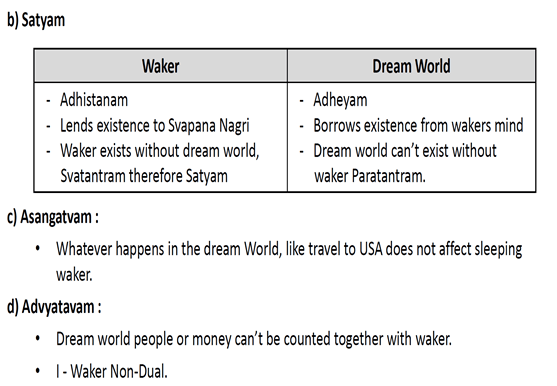
Essentially the first Sloka of the Dakṣiṇāmūrti Sthothram deals with “atma svaroopam” which Adi Sankaracharya reveals with two day to day examples of “darpana nagari” and “svapna nagari”. The Atma is revealed as the base “adishtaanam” of the Universe, as the independent existence – truth “sathya”, as the one unaffected by the events and whatever happens “asamgaha” and finally as non dual “advayam”, the Brahman Himself.

In this first verse, from the experiential standpoint we discover that the world exists in our mind. The world exists because we experience it. Usually we think the other way around. The conventional perspective is world exists therefore we experience it. This is called srishti drishti vada . (Srushti means creation. Drishti means seeing. Vada means doctrine or teaching). It means, you see the world because it has been created. In the ongoing “Global Festival of Oneness 2021” conducted by Advaita Academy, there was an interesting presentation on this. This is how this debate on the two perspective was summed up pictorially by the speaker.

But the presentation by Sankara in this first verse is opposite to the conventional view. The creation exists because you see it. The world in the mind exists because you are there to experience it. If you are not there to witness the world, the world in your mind would not exist. What you directly experience is only the contents of your mind. So the vision conveyed by the first verse is drishti srishti vada. It is opposite to the conventional perspective.

ஆதி சங்கரரின் தக்ஷிணா மூர்தி ஸ்தோத்திரத்தின் முதல் பண்ணின் கருத்துக்கள் சைவ சித்தாந்தத்தில் வெளிப்படுகிறது. திருமூலர் திருமந்திரத்தில் சொல்கிறார்:

மனத்தில் எழுந்ததுஓர் மாயக் கண்ணாடி;

நினைப்பின் அதனின் நிழலையும் காணார்;

வினைப்பயன் போக விளக்கியும் கொள்ளார்;

புறக்கடை இச்சித்துப் போகின்ற வாறே (திருமந்திரம், 1681)

தன்னை அறியக் கிளம்பியவர்கள் தன்னுடைய மூலை முடுக்குகளிலெல்லாம் தன்னைத் தேடினார்கள்; மனம் எதிர்ப்பட்டது; அங்கும் தேடினார்கள்; அது ஒரு மாயப் பிம்பத்தை எழுப்பிக் காட்டியது. அடிமுடி தேடிய படலத்தில், முடி தேடிப் போன பிரம்மன், முடியைக் காணாமல் அன்னப் பறவையைக் கண்டு திரும்பிவிட்டதைப்போல, தன்னையே தேடிப் போனவர்கள், தன்னைக் காணாமல் ஏதோ ஒரு மாயப் பிம்பத்தைக் கண்டு அதுவே தான் என்று எண்ணித் திரும்பி விட்டார்கள். விளங்காதவர்கள்; விளக்கிச் சொன்னாலும் விளங்கிக் கொள்ளத் தெரியாதவர்கள். தலைவாயில் அடைத்திருப்பதாக எண்ணி ஏமாந்து பின்னால் சென்று புறக்கடை வாசலைத் தட்டிக்கொண்டு நிற்கிறார்கள். தன்னை அல்ல, தன்னுடைய நிழலைக்கூட இவர்களால் கண்டுகொள்ள முடியாது.

Brahman is in essence the indwelling Controller for all activity seen in any being whatsoever. That is why Bhagwan Ramana Maharishi says that stop unwanted discussions/arguments about the real or unreal world and objects. Start looking inwards in his “Ulladhu Naarpadhu” – உள்ளது நாற்பது.

உலகுமெய்பொய்த் தோற்ற முலகறிவா மன்றென்

றுலகுசுக மன்றென் றுரைத்தெ — னுலகுவிட்டுத்

தன்னையோர்ந் தொன்றிரண்டு தானற்று நானற்ற

வந்நிலையெல் லார்க்குமொப் பாம்.

What is the use of disputing: ‘The world is real’, ‘[No, it is] an unreal appearance’; ‘The world is sentient’, ‘It is not’; ‘The world is happiness’, ‘It is not’? Leaving [all thought about] the world and investigating [or knowing] oneself, [thereby] putting an end to [all disputes about] one and two [non-duality and duality], that state in which ‘I’ [ego] has [thereby] perished is agreeable to all. So instead of looking outward, start looking inward.

இதனையே திருமூலர் திருமந்திரம், 2956 பதியில்;

மனமாயை மாயை;இம் மாயை மயக்க;

மனமாயை தான்மாயமற்றொன்றும் இல்லை;

பினைமாய்வது இல்லைபிதற்றவும் வேண்டா;

தனைஆய்ந்து இருப்பது தத்துவம் தானே.

என தெளிவாக உரைக்கிறார். உங்களைப் பேதைமைப்படுத்துவதும் மயக்குவதும் நீங்களே உருவாக்கிச் செல்லங் கொஞ்சிப் பேணி வளர்த்து வைத்திருக்கிற மனம்தான். மனம் உங்களை மயக்குவதை நிறுத்துங்கள்; மனத்தை நீங்கள் மயக்குங்கள். மனம் என்கிற மாயை ஒழிந்துவிட்டால், பிறகு உங்களை மயக்கத்தக்கது வேறு ஒன்றும் இல்லை. ஒழித்துக்கட்ட வேண்டியதும் வேறு ஒன்றும் இல்லை. மனத்தின் தூண்டுதலுக்கு ஆட்பட்டுத் தாறுமாறாக நடந்துகொள்ளவும் தேவையில்லை. தன்னையே தான் ஆராய்ந்து, தானே தானாக இருப்பதுதான் யோகம்.

தன்னையே தான் ஆராய்தல் எப்படி? மாணிக்கவாசகர் சொல்கிறார்:

நான்ஆர்?என் உள்ளம்ஆர்ஞானங்கள்

ஆர்? என்னை யார்அறிவார்?

வானோர் பிரான்என்னை

ஆண்டுஇலனேல் மதிமயங்கி

ஊனார் உடைதலையில்

உண்பலிதேர் அம்பலவன்

தேன்ஆர் கமலமே

சென்றுஊதாய் கோத்தும்பீ

(திருவாசகம், திருக்கோத்தும்பி, 2). நான் யார், என் உள்ளம் எது, ஞானங்கள் எவை என்று அறிய வேண்டும்; என்னை அறிகிறவர் யார் என்றும் பார்க்க வேண்டும். எல்லாமே வானோர் பிரானாகிய சிவன்தான் என்று தன்னை அறிவிக்கும் பொறுப்பையும் அறியும் பொறுப்பையும் இறைவனிடம் ஒப்படைக்கிறார் பக்தியின் வழிவந்த மாணிக்கவாசகர். யோகத்தின் வழிவந்த திருமூலரோ அந்தப் பொறுப்பைத் தன் வசமே வைத்துக்கொள்கிறார்.

So, how do we elevate ourselves to that enquiry Who am I? How can I look inward? In answer to this question, Sages have identified four areas

  1. Study of Shastras and Shruti 2. The Kripa of the Guru 3. Yoga practice (Abhyasa) through meditation 4. God’s grace/Isvara Anugraha

When, by Shruti,, by the master’s favour, by practice of Yoga, and by the Grace of God, there arises a knowledge of one’s own Self, then, as a man regards the food he has eaten as one with himself, the Adept Yogin sees the universe as one with his Self, absorbed as the universe is in the Universal Ego which he has become.

References:

மேற்கோள் நூல்கள்

1. Dakṣiṇāmurty. Sthothram – Talks By Swami Paramarthananda; Transcribed by Sri P.S. Ramachandrn; Published by :Arsha Avinash

2. Dakshinamurti Stotra with Mānasollāsa of Sureśvarācārya translated by Alladi Mahadeva Sastri – from archives.org

3.சங்கரரின் தக்ஷிணாமூர்த்தி தோத்திரம்: சைவசித்தாந்த விளக்கம் – முனைவர்கோ.ந. முத்துக்குமாரசுவாமி – https://www.tamilhindu.com/

4. Prof. Mahadevan, IIM, Bangalore – https://www.sanskritfromhome.in/course/daksinamurtiSthothram /

5. https://Vedāntaḥstudents.com/class-notes/#1539832350612-778c6bda-cf96

6. தக்ஷிணாமூர்த்தி ஸ்தோத்திரம் – பகவான் ரமண மகரிஷி

Dakshinamurthy Stothram- Sloka 1 – ஆன்மாவும் அண்டமும் – SELF & THE UNIVERSE – “JIVA & JAGAT”

We saw in the last two blogs the Vedantic Concepts behind the Mirror and Dream. Let us now see how Bhagwadpaada Adi Sankara uses these two examples and teaches us further.

DAKSHINAMURTHY STHOTHRAM SLOKA 1

विश्वं दर्पणदृश्यमाननगरीतुल्यं निजान्तर्गतं

पश्यन्नात्मनि मायया बहिरिवोद्भूतं यथा निद्रया

यः साक्षात्कुरुते प्रबोधसमये स्वात्मानमेवाद्वयं

तस्मै श्रीगुरुमूर्तये नम इदं श्रीदक्षिणामूर्तये ॥१॥

தமிழ் மொழிபெயர்பு

நிலைக்கண்ணாடியில் பிரதிபலிக்கும் நகரமன்றோ

நிலையிலா இவ்வுலகமதின் நிழற்படம் நம்முள்ளே !

நம்முள்ளுறை தரணிதனை, நாம் உறவாடும் வெளியுலகமென

மனத்திரையில் காண்போம், விழித்தவுடன் மடியும் கனவென !

அவ்வாறே மாயையினால் மருவுடனே நமை அறியா நமக்கு,

ஆன்மீக விழிப்புணர்வூட்டி நம்முள்ளுறை தூய ஒருமையான

பரம்பொருளே நானெனும் ஆன்மா” எனும் அறிவு புகட்டும்

ஆதிஅந்தமிலா மோனநிலை ஆசானாம் அருள்மிகு

தக்ஷிணாமூர்த்தி  பொற்பாதம் பணிந்திடுவோம்

The Meaning:

“To Him who by illusion of Ātman, as by sleep, sees the Universe existing within Himself – like a city seen to exist within a mirror – as though it were manifested without; to Him who beholds, when awake, His own very Self, the second less; to Him who is incarnate in the Teacher; to Him in the Effulgent form facing the South, to Him (Siva) be this bow!”

First Line of the Sloka

विश्वं दर्पणदृश्यमाननगरीतुल्यं निजान्तर्गतं पश्यन्नात्मनि मायया बहिरिवोद्भूतं यथा निद्रया

Vishvam Darpana-Drshyamaana-Nagarii-Tulyam – viśvam means this visible universe; the universe which we see in our waking state is comparable to darpaṇa dṛśyamāna nagari tulyam, comparable to the reflected city being seen in a huge mirror.

Nija-Antargatam – This visvam is within oneself only

Pashyann-Aātmani – This visvam (the world we are experiencing within ourselves only) is actually existing in me, ātmani pasyathi.

Mayayaa –  because of the “aadhiṣṭāna ajnānam” i.e., avidya or maya (Ref the previous blogs)

bahiri udbhūtam – appears as though outside,

yathaa – like

nidrayaa – when we are asleep,

(the dream world which is really existing within ourselves appears as though outside, when we are asleep – implied meaning).

Iva – By using the word iva: as though outside, Sankaracharya conveyed that it is really not outside, everything is inside me only.

Second Line of the Sloka

यः साक्षात्कुरुते प्रबोधसमये स्वात्मानमेवाद्वयं Yah Saakssaat-Kurute Prabodha-Samaye Sva-[A]ātmaanam-Eva-Advayam

Yah:  – In this context refers to the sleeping person “supta puruṣaḥ”; and this sleeping person was seeing the svapna viśvam outside; the sleeping person was seeing the dream world outside;

prabhodha samaya –  but when the sleeping person wakes up, what is his experience; his outside dream world is resolved into himself. All elements of svapna viz. svpna deśa disappears into himself; svapna kālaḥ, svapna padārthaḥ, svapna jīvaḥ, they all dissolve effortlessly; since the entire dream world is resolved into himself, what remains? he the waker alone remains. Therefore, “supta puruṣaḥ, prabodha samaye,

advaiyam svatmānam sākṣātkurute” –  meaning that on waking up, the sleeping person recognises himself as the secondless one; without any dream object. After waking up, I do not see the waker; I claim myself to be the waker. This claiming is called sākṣātkāraha. I should not use any other verb. If I say I see the waker, waker appears to be another person. If I say I experience the waker; it appears as though waker is different. Suppose I say I become the waker; even that word is not correct strictly because; there is no becoming involved; I was the waker before, I am the waker now, therefore, I do not even become the waker. I claim myself to be the waker; this claiming is called sākṣātkāraha.

Similarly, in self-knowledge, I do not experience the ātma/ In self-knowledge I do not see the ātma. In self-knowledge I do not become the ātma; In self-knowledge I claim I am the ātma. And this peculiar process of claiming is called sākṣātkāraha. So, it is not coming face to face. sākṣātkāraha, if it is translated as direct experience, we will have all kinds of misconception that when I wake up Brahman will be standing in front, smiling, giving darshanam. It is not like that, I am the waker. Therefore, prabhoda samaye, on waking up supta puruṣaḥ svātmaanam advyayam eva sākṣātkārute.

Last Line of the Sloka

तस्मै श्रीगुरुमूर्तये नम इदं श्रीदक्षिणामूर्तये Tasmai Shrii-Guru-Muurtaye Nama Idam Shrii-Dakssinnaamuurtaye

tasmai  – means prabuddha puruṣāya; to that woken-up person, who is a jnāni; who is liberated; who knows I am jagatadhishtaanam, to that jnani my namaskaaram. So tasmai prabuddha puruṣāya, jnānine namaha. And who is that jnāni?

Shree gurumurthaye – who alone is a guru, who alone can serve as a guru and who is my guru, gurumoorthaye.

Namaha – my salutations.

Thus we can see that a complex concept in Philosophy is explained by Adi Sankara in just two lines using two simple day to day events in human life – the examples of viewing in a mirror and dreaming captures the essence of Vedanta. We will conclude the Sloka 1 in the next blog with a summary.

References:

மேற்கோள் நூல்கள்

1. Dakṣiṇāmurty. Sthothram – Talks By Swami Paramarthananda; Transcribed by Sri P.S. Ramachandrn; Published by :Arsha Avinash

2. Dakshinamurti Stotra with Mānasollāsa of Sureśvarācārya translated by Alladi Mahadeva Sastri

3.சங்கரரின் தக்ஷிணாமூர்த்தி தோத்திரம்: சைவசித்தாந்த விளக்கம் – முனைவர்கோ.ந. முத்துக்குமாரசுவாமிwww.tamilhindu.com/

4. Prof. Mahadevan, IIM, Bangalore – https://www.sanskritfromhome.in/course/daksinamurtiSthothram /

5. https://Vedāntaḥstudents.com/class-notes/#1539832350612-778c6bda-cf96

6. தக்ஷிணாமூர்த்தி ஸ்தோத்திரம் – பகவான் ரமண மகரிஷி

Dakshinamurthy Stothram – Sloka 1 – Introduction – Part 2 – Dream

We saw in the first part, the four features of the Mirror and the reflected image. These are adhiṣṭānatvam, sathyatvam, asaṃgattvam, advaiyatvam (the supporter, independent existence, unaffectedness and unitary nature of the Mirror and the opposites for the reflected images. Now let us see what happens in a dream.

The features of a dream:

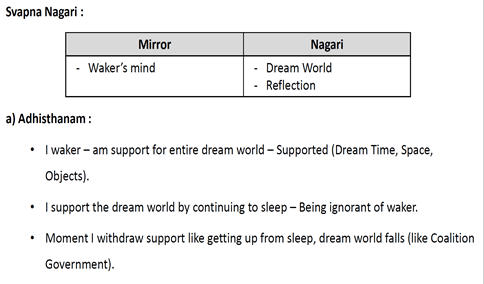
Now have a look at the image below; someone (let us say it is myself) is having a dream about London.

Here I am, an young executive, after presenting my credentials to the HMS Authorities, I am being taken around for a tour of SW1 areas of London ( the dream city – स्वप्न नगरि svapna nagari) where I will be working. Wow. What a dream (स्वप्न svapna). Wow.

This Dream is a projection from myself; it is exclusive and unique to me and cannot be a collective event. For the purpose of the dream, I create a world within myself, a SW1 area in London, create the Queen, create the PM at 10 Downing St, create people and objects (in the lighter sense I have become a the God- the Brahman). My Dream is real but the events in the dream are imaginary. I create a dream and I enter into it either as an actor or as a witness. Dream is related to what I know; the world as experienced by me is required for all dream transactions. Within the dream I am not a creator; I am either an actor or a witness. In the dream, who am I is a function of where I want to associate myself with. The creator, the witness and the dreamer are one and the same and all are happy to perform the roles associated.

Summing up the two attributes of my dream are:

a) Entire dream and events, everything happens within me/inside me – “nija anthargatham” and

b) The whole thing is Externally Projected.“Bahir-Iva-Udbhuutam”

So, my Svapna nagaram, the dream world is one thing and the entire dream world is resting/residing in Me the waker; to be precise in my mind, in my mind it is resting, but since the mind is an integral part of the waker, I will use the expression, waker. So the mirror of the first example is comparable to the waker and the images/reflections of the first example is comparable to the स्वप्न प्रपछः svapna prapachaḥ the dream world.

1. Here I-the-waker, am the adhiṣṭānam, support, the basis for the entire dream world. The dream time; the dream space; As long as I support through sleep, the dream world continues, the moment the I the waker withdraws the support, the dream word collapses.

2. I-the waker, lend existence to svapna nagari, which means without me, dream world cannot exist, whereas without the dream world, I can, Thank God, I happily exist.

3. Whatever events happen in the dream world, has nothing to do with waker. In this particular dream case, the waker that is me, did not have a work permit, a visa and even a passport. I reached the airport in no time, flew to London in no time, everything was done with no time and space constraints at all.. In short, I the waker is asaṃgah, the dream event does not touch me at all.

4. The dream object and people; how many? OR whatever be their number, none of them can be counted, the only countable one is waker, and therefore, the people in dream are as good as non-existent. The Queen, the HMS Authorities, the Staff everyone are all non existent and therefore I am advayaha, I-the waker.

Here is a pictorial representation of the dream’s features

Waking up from a dream:

Let us take an example to understand the process of waking up from a dream. In a dark room, a rope is (wrongly) perceived as snake. Reacting to this snake, either one is afraid of it and tries to run away from it or one tries to catch it to earn something out of it. The game (reaction) of ‘run-and-chase’ continues as long as snake is perceived. The reason for this behaviour is our ignorance i.e. absence of the knowledge of truth. When we switch on the light, snake simply disappears and rope manifests itself without any effort on our part. Snake simply vanishes leaving no trace of itself. Snake was superimposed on Rope. Wrong perception made it look real. Snake ‘veiled’ the rope. Snake was real only until darkness prevailed. Now let us get back to the dream!

  • The dream world is inside me and it is unreal (mithya) but the dream world appears to be outside me, and real, when I am asleep (nidrāḥ). In other words, sleep (nidrāḥ) makes the inside-dream-world, outside and not only that,it makes the unreal-dream-world look as though real. To put it in a technical manner, my sleep state is not aware of my Waker nature which essentially means that Waker-ignorance is sleep (nidrāḥ). More technically, waker is adhiṣṭānam and therefore adhiṣṭāna-ignorance is nidrāḥ. Or still more technically, Waker-aadhiṣṭāna ajnānam eva nidra iti ucyate. When I am asleep, when I have adhiṣṭāna-ajnanam, the inside-dream appears outside and false-dream appears real.
  • When sleep (nidrāḥ) goes away i.e., at prabodha samaya (prabhoda is waking, samaya means at that time) I am aware of my waker status. So waking up is nothing but waker-knowledge. Prabhodha is nothing but adhiṣṭāna jnānam. And when I am aware of myself as the waker, when I have adhiṣṭāna jnānam, the outside dream is no more outside, and, the real dream is no more real; it is falsified.

In the same way, this world is experienced as separate object due to veiling power of māyā. Once this veil, the root cause of ignorance is removed, Self, the Brahman, shines by itself. This world is true only until the truth is veiled. The world talked here is better understood if we take it as ‘mental world’ or ‘Jīva shṛṣṭi’.

With the two examples of Mirror & Dream in these two introductory blogs,let us digest these learnings and proceed to the Sloka in the next blog.

…………

To be continued in next week.

Dakshinamurthy Stothram- Sloka 1 Introduction – Part 1 – Mirror

It has been a month since I commenced my journey in search of myself by trying to understand Dakshinamurthy Stothram. Someone told me en route, “If you are searching yourselves, then why don’t you look at the mirror ? simple; why do you undertake arduous journeys?” Very valid question. Infact, this is what all of us do daily either in our dressing room or in the bathroom.

Well, that is exactly what I have been doing so long and so foolishly. Every time I see myself in the mirror, I think that I am the smartest guy around, trying to be one of the specially initiated in the field of Vedanta. Hardly did I realise that all I do is nothing but dreaming and I am the one who wanders in the region of the many and variable.

Mirror and its features: Talking about Mirrors, look at this building, the Museum of Contemporary Arts at Cleveland, Ohio, USA.

MOCA, Cleveland, Ohio

What an impressive architecture! I can see the whole street, the traffic, the buildings etc in the mirror – in other words, the “दर्पण नगरि Darpana Nagari” (Darpana – Mirror; Nagari – City/Street) as we call in Sanskrit. Let us keep looking at it a bit more and contemplate as to what we see. We could see four distinct features. They are

1. The Mirror is the base and supports (अधिष्टानं adhiṣṭānam) the reflected street. The relationship between the mirror and the reflected street is one of supporter-supported relationship (अधिष्टान आदेय स्म्बन्धः adhiṣṭāna-ādeya-sambandhaḥ).

2. Then the second feature is that the reflected street does not have an existence of its own, even though it is experienced by me. I experience the street, the cars that move, the buildings and everything . But all of them are surreal. They all are borrowed from the mirror. And therefore the reflected street has borrowed existence; whereas the mirror has got its own existence (i.e., whether the reflection is there or not, mirror exists), the reflection cannot exist without the mirror. Therefore, the mirror is having independent existence (सत्यम् sathyam) , whereas reflection is having dependent existence (मित्यम् mithyam).

3. Whatever events that happen in the reflected street, will not affect the mirror. If there is a car accident that is reflected, it does not crack the mirror. If it is a water spill on the road that is reflected, it does not wet the mirror. Therefore mirror is असंगत्त्वम् asaṃgattvam. This “unaffectedness” of the mirror is the third feature of the mirror.

4. Since the reflected objects are having dependent existence (mithya) i.e., having no existence of their own, they are as good as non-existent. This means they cannot be counted along with the mirror; they are uncountable and therefore what is countable is only one; even though there are hundreds of reflected objects, thousand reflected objects; none of them can add up to the mirror. And therefore this non-duality अद्वैयत्वं (advaiyatvam) is the fourth feature.of the mirror.

Here are the pictorial representations of the features of the Mirror.

Never ever in my life so far (until I started studying the Dakshinamurthy Sthothram), did I bother to focus on the philosophical features of a mirror and it is a new learning.

Talking about this new learning, never did I realize too, that these four features are very much applicable to my dreams too. Let us see the “Dreaming” process in this perspective in my next blog which will be a week later.

To be continued……

Dakshinamurthy Sthothram – Dhyana Slokas

Sri. Dakshinamurthy

Sloka 1

मौनव्याख्या प्रकटित परब्रह्मतत्त्वं युवानं
वर्षिष्ठांते वसद् ऋषिगणैः आवृतं ब्रह्मनिष्ठैः ।
आचार्येन्द्रं करकलित चिन्मुद्रमानंदमूर्तिं
स्वात्मारामं मुदितवदनं दक्षिणामूर्तिमीडे ॥१॥

Mauna-Vyaakhyaa Prakattita Para-Brahma-Tattvam Yuvaanam
Varssisstthaam-Te Vasad Rssigannaih Aavrtam Brahma-Nisstthaih |
Aacaarye[a-I]ndram Kara-Kalita Cin-Mudram-Aananda-Muurtim
Sva-[A]ātmaaraamam Mudita-Vadanam Dakssinnaamuurti-Miidde||1||

பரம்பொருளின் தத்துவ உரை விதிதம் ஆழ்மௌனம்

வித்தக முதிர்ஞானியர் இடையமர் இளமை வடிவம்

ஆசானுக்கு ஆசானாம்  ஆதியும் முதலும்

ஞான முத்திரை காட்டும் கரமுடை பேரின்ப வடிவம்

அகமகிழும் புன்னகை நிறை அழகு வதனம்

பணிவோம் தக்ஷிணாமூர்த்தி  பொற்பாதம்

Salutations to Dakṣiṇāmurty whose exposition through profound silence is awakening the knowledge of the Supreme Brahman in the hearts of His disciples; who is Himself youthful but is sitting surrounded by old and great sages who are devoted to Brahman. The hands of the Supreme Spiritual Teacher form the Cin-Mudra. His appearance is still and blissful and who rejoices in His own Self which is reflected on his blissful face

Sloka 2

वटविटपिसमीपेभूमिभागे निषण्णं
सकलमुनिजनानां ज्ञानदातारमारात् ।
त्रिभुवनगुरुमीशं दक्षिणामूर्तिदेवं
जननमरणदुःखच्छेद दक्षं नमामि ॥२॥

Vatta-Vittapi-Samiipe-Bhuumi-Bhaage Nissannnnam

Sakala-Muni-Janaanaam Jnyaana-Daataaram-Aaraat |

Tri-Bhuvana-Gurum-Iisham Dakssinnaamuurti-Devam

Janana-Maranna-Duhkhac-Cheda Dakssam Namaami ||2||

கிளைமிகு ஆலத்தரு அருகில் நிலத்தலம் அமர்

வித்தக முனியோரின் ஞானமருள் போதகன்

மூவுலக ஆசான் ஜனன மரண துக்கம் அறு வல்லுநன்

தக்ஷிணாமூர்த்தி பொற்பாதம் பணிந்திடுவோம்

Sitting on the ground near the banyan tree (Vata) were all Munis (Sages), who were (sitting) near to the bestower of knowledge. They were (sitting) near to the Guru of the three worlds, the Lord Himself, personified as Dakshinamurthy Deva; near to the one, expert in severing the sorrows resulting from the cycles of births and deaths; I bow to that Dakshinamurthy.

Sloka 3

चित्रं वटतरोर्मूले वृद्धाः शिष्या गुरुर्युवा ।

गुरोस्तु मौनं व्याख्यानं शिष्यास्तुच्छिन्नसंशयाः ॥३॥

Citram Vatta-Taror-Muule Vrddhaah Shissyaa Gurur-Yuvaa |

Guros-Tu Maunam Vyaakhyaanam Shissyaas-Tuc-Chinna-Samshayaah ||3||

வேரூன்றிய ஆலத்தரு அடியில்

வயதுமுதிர் ஞானிய சீடர்தம் நடுவே

இளமை நிறை ஆசான் மோன வழியே

சீடர்தம் ஐயம் தீர்க்கும் சித்தாந்த விதிதம்

விந்தைமிகு காட்சி அன்றோ இது

It is indeed a strange picture to behold; At the root (i.e. base) of a banyan tree (Vata) are seated old disciples (i.e. aged disciples) in front of an young Guru, The Guru is silent, and silence is His exposition (of the highest knowledge); and that (silence) is severing the doubts (automatically) from the minds of the disciples.

Sloka 4

निधये सर्वविद्यानां भिषजे भवरोगिणाम् ।

गुरवे सर्वलोकानां दक्षिणामूर्तये नमः ॥४॥

Nidhaye Sarva-Vidyaanaam Bhissaje Bhava-Roginnaam |

Gurave Sarva-Lokaanaam Dakssinnaamuurtaye Namah ||4||

சகல கல்விக் களஞ்சியமாய்

பிறவிப் பிணி தீர் மருந்தாய்

சகல உலக ஆசானாய் நிறை

தக்ஷிணாமூர்த்தி பொற்பாதம் பணிந்திடுவோம்

(Salutations to Sri Dakshinamurthy) who is a receptacle to all Knowledge, who is a Medicine to all the diseases of Worldly bondage, who is a Guru to all the Worlds; Salutations to Sri Dakshinamurthy

Sloka 5

ॐ नमः प्रणवार्थाय शुद्धज्ञानैकमूर्तये ।

निर्मलाय प्रशान्ताय दक्षिणामूर्तये नमः ॥५॥

Om Namah Prannava-Arthaaya Shuddha-Jnyaanai[a-E]ka-Muurtaye |

Nirmalaaya Prashaantaaya Dakssinnaamuurtaye Namah ||5||

ஓங்காரப் பிரணவ மந்திரத்தின் உட்பொருளாய்

மாசிலா தூய ஒருமை நல்லறிவின் உள்வடிவாய்

கரையிலா சுத்த அமைதிநிறை ஆண்டவனாம்

தக்ஷிணாமூர்த்தி பொற்பாதம் பணிந்திடுவோம்

Salutations to the embodiment of Pranava (Om), Salutations to the personification of the pure, non-dual knowledge, Salutations to the pure and stainless, and Salutations to the tranquil; Salutations to Sri Dakshinamurthy.

Sloka 6

चिद्घनाय महेशाय वटमूलनिवासिने ।

सच्चिदानन्दरूपाय दक्षिणामूर्तये नमः ॥६॥

Cid-Ghanaaya Mahe[aa-Ii]shaaya Vatta-Muula-Nivaasine |

Sac-Cid-Aananda-Ruupaaya Dakssinnaamuurtaye Namah ||6||

ஆத்மாவின் திடவடிவான இறைக்கு இறையோனை

ஆலத்தருவேரடி அமர்ந்த ஆதிபோதகனை

பேரின்பப் பரம்பொருளின் வடிவ

தக்ஷிணாமூர்த்தி பொற்பாதம் பணிந்திடுவோம்.

(Salutations to Sri Dakshinamurthy) Salutations to the one who is (as if) Consciousness solidified, Salutations to the Mahesha (the Great God), Salutations to the one who dwell at the root (i.e. base) of the banyan tree (Vata), Salutations to the embodiment of Sacchidananda (Existence, Consciousness, Bliss); Salutations to Sri Dakshinamurthy.

Sloka 7

ईश्वरो गुरुरात्मेति मूर्तिभेदविभागिने ।

व्योमवद् व्याप्तदेहाय दक्षिणामूर्तये नमः ॥७॥

Iishvaro Gurur-Aatme[a-I]ti Muurti-Bheda-Vibhaagine |

Vyoma-Vad Vyaapta-Dehaaya Dakssinnaamuurtaye Namah ||7||

ஆத்மா ஆசான் ஆண்டவன் எனும் மூவடிவாய்

ஆகாயமென நீக்கமற பரவி நிறைந்திடும்

தக்ஷிணாமூர்த்தி பொற்பாதம் பணிந்திடுவோம்

“Ishwara – Guru – Atman”; (underlying) these different forms of (apparent) separation like a sky (i.e. spiritual sky or Chidakasha) who pervades, Salutations to that Dakshinamurthy.

Plan for the month of May 2021

Starting from April 30, 2021 we will try and understand the first Sloka of Dakshinamurthy Stothram through 5 blogs, each spaced at one week from the other.

ஆலமரத்தடி ஆசானின் அருள்வாக்கு – Dakshinamurthy Stothram

As I wrote last week, I have commenced my journey in understanding myself. Nothing works without a prayer and I am a strong believer in that life style. So, I will start with a prayer on who else except the one and only Lord Arunachala at Thiruvannamalai who through Bhagwan Ramana Maharishi kindled the enquiry “WHO AM I?” in millions of people in the Universe, me being the latest ignorant one , the “jada jana”. This will be a composition by Sri Muthuswamy Dikshithar. The blog will appear under Carnatic Musing in the Menu on 9th April 2021

An introduction to Dakshinamurthy will be presented in the blog that follows on 16th April. I am deeply obliged to Mr. Sreenivasa Rao for kindly permitting me to use his blogs where he has covered the subject in it’s entirety

This will be followed by a blog on the Dhyana Slokas (துதிப்பாடல்கள்) that will be published on 24th April 2021 coinciding with the Divine Wedding of Goddess Meenakshi with Lord Sundareshwarar at the Meenakshi Temple at Madurai, Tamil Nadu.

After that I plan to take time for each of the Slokas as I am a learner. These blogs will be longer than usual, as these will include apart from the translation in Tamil, excerpts from the various commentaries that I tried to read for my understanding. The first Sloka is planned in the month of May

For kind information

WHO AM I – The baby steps

As a kid nearly 60 years back, Visalakshi Ammman Kovil (Temple is more than 300 years old ) in Batlagundu (Vattlagundu), situated in Nilkottai Taluk of in Dindigul District in Tamilnadu, on the bank of HARIDHRA RIVER (MANJALARU – no idea if the river exists today!) was the only place which I used to go regularly for prayers, not because I understood what a prayer is and the need for one; but that used to be the mandate those days for boys at the “Agraharam (an ungated community!)” from the family. Visalakshi Amman & Lord Visvesvarar are the principal deities and the temple included several Deities such as Ganesha, Subramanya, Chandikeshwarar, Dakṣiṇāmurty etc. For each of the Gods, we used to recite a specific Sloka and when it came to Dakṣiṇāmurty, we used to recite as a routine. Here is a short video of the temple (Photo Courtesy – My friend Muthunarayanan alias Muthappa)

Guru Brahma, Guru Vishnu, Guru Devo Maheswara

Guru sakshath ParaBrahma tasmai Sri Guruve Namah.

I did not know anything about either God or the Sloka except that I had to recite it at that particular spot where Lord Dakṣiṇāmurty was situated. All I knew was that He was a form of Siva. Never in my life subsequent to that period and even in my dreams did I imagine once, that one day I will be writing about the Sthothram on Lord Dakṣiṇāmurty by Adi Śankarācārya. Blessed I am indeed to even think of consolidating what is written and explained by legends and doyens of Spirituality and Vedāntaḥ.

But strange is the nature and power of “the Ultimate Reality”. Study of Vedāntaḥ and listening to Spirituality oriented Discourses is the most familiar route for spending time after retirement for most of us and I am no exception to this. One such lecture by Prof. Mahadevan of IIM, Bangalore was the spark I needed to dive into the Ocean of Vedāntaḥ Concepts brought out in Dakṣiṇāmurty Stotram.  Realizing that I am getting old and spending time on spirituality, my son presented me with a book titled “The Upanishads” by Sri. Eknath Easwaran. This added fuel to the fire. As I was exploring these two topics, I learnt that I can’t do either if I don’t know Tattva Bodha. Now this is the third dimension to my time management. My preoccupation with these three books and commentaries by Swami Paramarthananda, Swami Omkaranada and Swami Sravapriyananda drove my grandchildren (my daughter’s young boys) to the conclusion that their “Thatha” (grandfather) who used to spend lot of time playing cricket and organizing/fixing the place rendered as a “mess” by them is not doing it anymore and is lost. They even declared my room as “Thatha’s Corner “– The lost and found room. The fact is that as a “Thatha” I am lost; but I am trying to find out as to who I am instead of where I am. 

How can I find out the answer to the question “Who am I”? The legendary Tamil Saint Thirumoolar comes to my rescue in his epic Thirumandiram

“நரருஞ் சுரரும் பசுபாசம் நண்ணிக்

கருமங்க ளாலே கழித்தலிற் கண்டு

குருஎன் பவன்ஞானி கோதில னானால்

பரமென்ற லன்றிப் பகர்வொன்று மின்றே”.

மனிதர்களும்,தேவர்களும் பாசத்தில் அகப்பட்டு பல்வேறு வினைகளைச் செய்து அதனால் அழிந்து போகின்றனர். இதைக் கண்ட பின்பு ஒருவன் செய்ய வேண்டியது என்ன? ஒரு குற்றமற்ற ஞானியைத் தன் குருவாகப் பற்றிக் கொண்டாலே போதும். “பரத்துடன் கூடி நீயும் பரம் ஆவாய்” என்று உபதேசம் செய்வதன்றி அந்த குரு செய்ய வேண்டியது எதுவும் இல்லை.

As mortals like me, get trapped by “attachment” and perform actions which lead us nowhere, one has to look for a Guru who will make him understand that “You are That”. Fine; I need a Guru. How do I look for Guru at this Old age? Thirumoolar gives a response to my query.

“ஆட்கொண்ட வர்தனி நாயகன் அன்புற

மேற்கொண்ட வர்வினை போயற நாடொறும்

நிற்கின்ற செஞ்சடை நீளன் உருவத்தின்

மேற்கொண்ட வாறலை வீவித் துளானே”.

ஒரு குருவாக வந்து மாணவனை ஆட்கொள்பவர் ஒப்பற்ற ஈசனே ஆவார். அவர் தன் மாணவனின் வினைகள் அழியும் வண்ணம் நாள்தோறும் உபதேசிக்கிறார். அவர் நீர்மலிந்த நீள் சடையை உடைய சிவனே அன்றி வேறு எவரும் அல்ல. சிவனே மனம் இரங்கியும் கீழே இறங்கியும் வந்து மாணவனின் வருத்துகின்ற வல்வினைகளை அழித்து விடுகின்றார்.

Thirumoolar further states Lord Siva Himself comes in the form of a Guru to help us understand ourselves. It is with this confidence, that I am undertaking this journey, with Lord Dakṣiṇāmurty as my Guru and Adi Śankarācārya’ Stotramon on the Lord as the first leg of my journey.

To be honest, nothing that I will be writing in the months to come is mine, except the attempt to focus my understanding and in that process try to express the Sanskrit Slokas in my mother tongue – Tamil; it is only my limited understanding of the vast literature available in public domain. The purpose of documenting my understanding is with the hope that someday someone as ignorant as me (hopefully not when they become “the lost Thatha”), will take baby steps as a novice like me, into this delightful field of spirituality holding this piece of document as the helping hand. If that happens, that will be the biggest gift that I would be automatically passing on (without holding back) to all the people in the public domain whose works I have used extensively. There is no commercial interest whatsoever.

A word of caution here – Millions of pages have been written over centuries by “Subject” – “Matter” – Specialists to provide commentaries for the Slokas in these books. Summing them up into few lines is absolutely immature and childish; yet as a child I have started my baby steps on Vedāntaḥ. Pardon me for that. But Children have the right to enquire and ask questions. The child I am, I am asking questions to myself with the fond hope that someday I will find answers as to who I am.

Seeking your Blessings and wishes as I commence my journey. You are most welcome to join me in my journey. Looking forward to your wonderful and valued company. A broad based schedule for April & May will be posted in the next blog.