Dakshinamurthy Stothram – Sloka 7 – அறிவு அறிவாக அறி

We saw in the introductory blog that the experience of the self is not a simple act of knowing but it is a complex act of re-knowing. When recognition of self occurs, the limited consciousness merges with the supreme consciousness. Tirumūlar compares this to space merging with space and light merging with light. Let us now see in this Sloka about this recognition – when, where and how do we re-cognise this Self.

Audio Link

https://www.dropbox.com/s/eayzudvymbtchde/Sloka%207%20-%20Balyyadisupi%20jaagrad.mp3?dl=0

Sanskrit Sloka


बाल्यादिष्वपि जाग्रदादिषु तथा सर्वास्ववस्थास्वपि
व्यावृत्तास्वनुवर्तमानमहमित्यन्तः स्फुरन्तं सदा ।
स्वात्मानं प्रकटीकरोति भजतां यो मुद्रयाभद्रया
तस्मै श्रीगुरुमूर्तये नम इदं श्रीदक्षिणामूर्तये ॥७॥

Meaning in Tamil

இடைநிலையாய் பாலன் இளையன் விருத்தனென உடலிருந்தும்

அடையும் அறுபாதி அவத்தையும்* தொடர்விலாதெனினும் – அதனுள்

இடையிலா தொடராய் சுயநேருணர்வாய் அனைத்து நிலைதனிலும் உள்ளுறை

ஆதியும் அந்தமும் அருட்பரம்பொருளெனும் ஆன்மாவை அறியும் ஆற்றல்தனை

அமைதியின் வடிவாய் கரவழி மோனமுத்திரை காட்டி நாடுவோர்கு கற்பிக்கும்

ஆதிஅந்தமிலா மோனநிலை ஆசானாம் அந்த அருள்மிகு

தக்ஷிணாமூர்த்தி பொற்பாதம் பணிந்திடுவோம்

(*அறுபாதி அவத்தை – ஆன்மாவின் மூன்று நிலைகள் –

விழிப்பு, கனவு, ஆழ் உறக்கம்)

Meaning in English:

During boyhood and other stages of life (Youth, Old age etc), during waking and other states (Dreaming, Deep Sleep, Turiya etc) and similarly in all conditions the Ātman always shines as the “I” within, free from all conditions but at the same time present in all conditions. The Inner Guru awakens this Knowledge of One’s Own Ātman to those who surrender to Him; this Knowledge is represented by the auspicious Cin-Mudra. Salutations to Him, the Personification of Our Inner Guru Who Awakens This Knowledge through His Profound Silence; Salutation to Sri Dakṣiṇāmurty.

Understanding the Sloka:

1.      अन्त: स्फुरन्तं सदा स्वात्मानं Antah Sphurantam Sadaa
Sva-[A]ātmaanam  – आत्मानुभवः सदा अन्तः स्फुरन्तं

Where is Ātma experienced?  Self is experienced by me. ātma, the real Self, is always experienced by me. It is ever-evident to myself; And when is the self-experienced? Sada spurantaṃ. It is ever-experienced. And where is it experienced? अन्तः स्फुरन्तं antaḥ spurantaṃ. Within the body-mind-complex, within the enclosure of body-mind-complex, it is ever-experienced. (आत्मानुभवः ātmānubhavaḥ is a सदा अन्तः स्फुरन्तं sada antaḥ sphurantaṃ;  sada – always; antah – inside/internal; spurantaṃ meaning shining, experienced, evident, accessible, recognisable, is spurantaṃ).

And how do we refer to that experience?  Every experience is identified through an expression. When I experience an object let us say a clock, I invent an expression to refer that experience; I say that it is a clock. What is that expression for ātma? This ever-experienced ātma, is referred to me by me as Aham – Aham iti. It is ever experienced in the form of I-am; I-am; I-am;

When do we experience?  “I-am’ experience is there continuously.  Throughout the waking state, “I-am” continues; the ātma is experienced as I am, during the dream state; even during the sleep state, “I am” continues. You do not verbalise during sleep; but that experience is verbalised after waking; “I am” experience is present in sleep, but it is verbalised, vocalised only in the waking state; verbalisation is later, but the experience is there; even during sleep. Therefore I-am, I-am, I-am, this continuously experienced I am is ātma.

From this Adi Śankarācārya conveys a very important thing, ātmā experience or ātmānubhavaḥ is continuously present; ātmānubhavaḥ is continuously present for everyone, all the time. And therefore, we should remember ātmānubhavaḥ is not a particular experience happening at a particular time. You cannot say I had ātmānubhavaḥ in meditation. Then you are making ātmānubhavaḥ an event in time. Adi Śankarācārya negates that by using the word सदा sadā. So ātmānubhavaḥ is not an event in time and therefore it does not require a process to make it an event in time. An event in time happens because of an effort, because of a process. Śankarā says ātmānubhavaḥ is not an event; which happens in time through a process or through an effort of any individual or individuals. Therefore, we should never say; I am working for ātmānubhavaḥ. This is one explanation of ātma.

2.      व्यावृत्तास्वनुवर्तमानमहमित्यन्तः (Vyaavrttaasu-AnuVartamaanam-Aham-Iti-Antah) बाल्यादिष्वपि जाग्रदादिषु तथा सर्वास्ववस्थास्वपि bālyādiṣvapi jāgradādiṣu tathā sarvāsvavasthāsvapi.

This ever-experienced ātma is anuvartamānam, is continuously-present, anuvartha means to continuously present, to inhere, to permeate, to inform, anuvarthamānam; this ātma is continuously-present. When? In and through. In and through what? vyāvṛttāsu avāstāsu, vyāvṛttām means discontinuous, anuvartham means continuous, and avāstā means states/stages, So ātma is continuously present in and through the discontinuous-avāstās.

The word avāstā, if you take the life as a whole, the word avāstā means the stages of life and they are classified as four in our śātrās. There are four avāstās or stages of life, if you take life as a whole. And what are those avāstās? bālyam, kaumāram, yauvanam, vārdakyam; bālyam is childhood state, kaumāram means boyhood state; or stage; and yauvanam is youth stage; and vārdakyam means old-age stage. Thus, four avāstās are there. bālyadishu avāstāshu, in and through the four discontinous stages of life, like childhood etc. ātma is continuously present. How? I am a child, I am a boy, I am a youth; I am old; When child word is used, boy word is not there; when I say boy, youth word is not there; When I say old, youth, boy is not there. Child, boy, youth, old, there are anuvartam or vyāvṛttam, these four; they are vyāvṛttam means, mutually-exclusive-discontinous stages-of-life; but even though these stages are mutually exclusive; even though these stages are discontinuous, what is continuous? I am, I am, I am. That “I am” refers to the ātma.

And not only these four stages of life. If you take a particular day of your life, instead of taking the whole life, if you take a particular day, in the context of a day, avāstās are called states of experience, and they are classified into three. If you take life; four stages; if you take day; three states; four stages are called avāstās; three states are also called avāstās. One is taking a segment of life called a day, another taking the whole life. And what are the three states of experience? Adi Śankarācārya says जाग्रदाददषु jāgradādiṣu when we say jāgradādiṣu avāstāsu, we should translate as states of experience. And there also “I am waker”, “I am dreamer” and “I am sleeper”; wakerhood-state, dreamerhood and sleeperhood; They are vyāvṛttam or anuvrutham? They are vyāvṛttam, which means they are mutually exclusive, and they are discontinuous states. But in and through the discontinous states, what is common, “I am”, “I am”, that “I am”, and that continuous”I am” experience is ātmanubhavaha;

3.   प्रकटीकरोति भजतां – Prakattii-Karoti Bhajataam

Here Śankarā talks about the knowledge that the Guru is teaching – the knowledge about the attributeless ever present and ever experienced ātma. Because they are floating and march pasting, this exclusion of attributes, and seeing the ever experienced continuous I-am as ātma is called ātma jnanam. Seeing the attributeless I-am as the ātma is called ātmajnanam. And therefore, ātma jnanam is not a new experience; but it is a new perception of the ever experienced I, excluding the attributes. And this ātma, the ātma, which is separated from attributes, प्रकटीकरोशत prakaṭīkaroti, is taught by the guru. Guru does not give a new experience. Guru does not ask the disciple to work for a new experience, Guru teaches the student to reshuffle; reclassify the available experience. You say “I am”, but do not include any attribute.

In Nirvana Satakam, Śankarā Says ,

नमे द्वेष रागौ, नमे लोभः मोहौः

मदौ नैव मे नैव मात्सर्य भावः

न धमॊ नचाथॊ, न कामॊ न मॊक्षः

शचदानन्दरूप शिवॊहम् शिवॊहम

Include the attribute; I am the empirical-ahaṃkāra; exclude the attribute, I am absolute-ātma. And therefore, the difference between ahaṃkāra and ātma is only in my reclassified-perception. That is why we say ātma-jnanam is a cognitive-change; a perspective-change, with regard to myself. And what is that change? Earlier when I was saying “I am” it was along with anger; along with desire; I included them; now I have learnt to exclude them. And the moment l learn how to exclude them; I can happily claim I am Brahman. Inclusive of attributes, as ahaṃkāra, I cannot claim I am Brahman. Exclusive of atttributes, as Aham, I can claim I am Brahman; I have not become Brahman; but I have claimed the Brahman that I was, I am, and I ever will be. And it is this new perspective which is the teaching of the guru.

Therefore, Adi Adi Śankarācāryacharya says: स्वात्मानं svātmānaṃ; this attributeless-I, this reclassified-I, the guru प्रकटीकरोशत; prakaṭīkaroti means reveals, teaches, instructs; to whom? भजतां bhajatāṃ, to the seekers who are willing for the new-look “I”. Who are willing for the new-look “I”; there is no change in the eye; in the look or perspective there is a new perspective; that I prakaṭīkaroti bhajatāṃ; bhajatāṃ means śiṣyānām (the seekers).

4. यो मुद्रयाभद्रया – Yo Mudrayaa Bhadrayaa

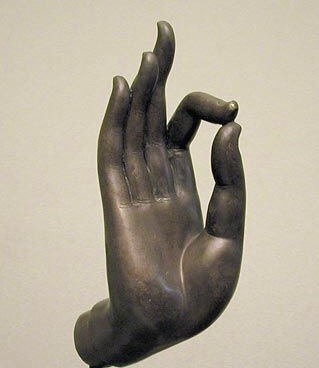
Now, Śankarā explains as to how the Guru transfers this knowledge to the Seekers. And how does he reveal? Two methods, by verbal and non-verbal communication. So, all the body gestures are non-verbal communication. That non-verbal communication is called badraya mudraya; bhadraḥ means auspicious, mudraḥ means hand gestures. The blessed symbol here referred to is variously named as follows:

  1. Cinmudra, the symbol of consciousness;
    1. Vyakhya-mudra, the symbol of exposition;
    1. Tarka-mudra, the symbol of investigation;
    1. Jnana-mudra, the symbol of wisdom.

It consists of a circle formed by joining the thumb and the index-finger at their tips. Through the auspicious hand gesture, called cinmudraḥ – karakalita cinmudra ānandarūpam.

We saw in the dhyāna slokaḥ; the index finger (let us call it the I – am-finger). With this I-am-finger only we attach attributes and point out “you are different, I am different ” meaning that we attach sthula, sukshma and karana sareera attributes through this finger.

And once I separate the “I am” from the attributes, then it can touch the thumb which refers absolute Brahmanhood; separate from the attributes, “I acquire”, I accomplish the status of absolute-brahmanhood. The relative I itself is the absolute-I, when it is freed from attributes. I plus attributes is relative-I, ahaṃkāra; I minus attributes am the absolute-I; ātma. This is what Dakshinamurthy conveys.

The CinMudra is also extensively quoted in several Tamil “Saiva Siddhanta” works. Here is one from Kanda Puranam and Tiruvanaika Puranam

சைவத்தில் சின்முத்திரை கந்தபுராணத்தில் விளக்கப்பட்டுள்ளது. உமையம்மை இமய அரசன் வேண்டுகோளுக் கிரங்கி அவனுக்கு மகளாக இறைவன் அனுப்பப் பிரிந்தவுடன் , இறைவன் தனியே இருந்தனன். அப்பொழுது வேதம் முழுதும் கற்றுணர்ந்த சனகாதி முனிவர் இறைவனிடம் வந்து,” ஐயனே!கடல் போல விரிந்த பொருட்பரப்புள்ள வேதங்களைக் கற்றும் மனம் அடங்காமல், நள்ளிரவில்சூறாவளிக் காற்றடிக்க எழும் அலைகள் மோதித் தாக்க அலைப்புண்ட கப்பல் போல மனம் ஒருநிலைப்படாமல் கலங்கினோம். இந்தக் கலக்கம் நீங்க அருளுவாயாக” என்று இரந்தனர். இறைவன் அந்தமில் ஆகமத்தின் அரும்பொருள் மூன்றும் (சரியை, கிரியை, யோகம்) கூறினன். முனிவரர்கள் மனம் அடங்கும் ‘ஞானபோதகம்’ போதி என்றனர். இறைவன் அது சொல்லத்தக்கதன்று; இப்பரிசினால் இருத்தல் கண்டீர் எனக் கூறி,

“உரத்திர் சீர்கொள் கரதல மொன்று சேர்த்தி மோனமுத் திரையைக் காட்டி, ஒருகணம் செயலொன் றின்றி யோகுசெய் வாரி னுற்றான்”

கந்தபுராணம்

மோனமுத்திரை என்றது, சின்முத்திரையை. சின்முத்திரை உணர்த்தும் பொருள்யாது?

கட்டைவிரல் சிவபரம்பொருளைக் குறிக்கும் . சுட்டுவிரல் உயிரைக் குறிக்கும் சுட்டுவிரலுடன் ஒட்டிய நடுவிரல் உயிருடன் இணைந்த ஆணவமலத்தையும் மோதிரவிரல் மாயாமலத்தையும் சுண்டுவிரல் கன்மமலத்தையும் குறிக்கும். சுட்டுவிரல் மற்றைய மூன்று விரல்களையும் விட்டு விலகிப் பெருவிரலின் அடியினைப் பொருந்தி நிற்றல், உயிர் , மும்மலங்களையும் நீத்துச் சிவனின் தாளிணையில் படிந்து நிற்றல் முத்தி என்பதைக் குறிக்கும். இதனை,

“மும்மலம் வேறுபட் டொழிய மொய்த்துயிர்

அம்மலர்த் தாள்நிழல் அடங்கும் உண்மையைக்

கைம்மலர்க் காட்சியில் கதுவ நல்கிய

செம்மலை யலதுஉளம் சிந்தி யாதரோ.”

திருவானைக்காப் புராணம் – வரங்கொள்படலம்.

என உணர்த்திற்று.

5.   तस्मै श्रीगुरुमूर्तये नम इदं श्रीदक्षिणामूर्तयेTasmai Shrii-Guru-Muurtaye Nama Idam Shrii-Dakssinnaamuurtaye

To that Guru, who gives me the knowledge of the attributeless-I, who teaches me to have a new perspective, without looking for a new experience, that teacher I prostrate; Tasmai. Gurumurthaye; śrī dakṣiṇāmūrtaye; who is none other than dakṣiṇāmūrti idaṃ namaha; my prostrations.

This is the seventh verse.

Dakshinamurthy Slokam – 7 – Part 1 – RE Cognition – An Introduction

Wow – I know it – I have seen it

In this verse Adi Śankarācārya is restating the ātma svarupam. We have been told that ātma is not deha, prana, indriyani, buddhi and śūnyam. If ātma is not anyone of them, then what exactly is ātma? That is beautifully described here; Svātmānam. Svātma means my own self; my own essential nature; or the real self. What is this real self?

If it is concluded, on the strength of recognition or pratyabhijná of self-identity, that Ātman is a persistent entity, what is this pratyabhijná? And what its purpose? In Vedanta, Pratyabhijná is also not enumerated among the right sources of knowledge called pramánas along with pratyaksha, etc. Then how can it be a source of knowledge (pramâna)?

The answers to these questions are enlightened in this seventh stanza of the Sloka/Hymn.

The Concept of Re cognition of an object/thing:

Recognition which is essentially a re- cognition (Pratyabhijnána) consists in re-cognising an object/thing—in the form ‘this is the same as that’—which, having once before presented itself to consciousness, again becomes an object of consciousness at present. Semantics in English can give different names for this – recollection, episodic memory, self awareness, Autonoetic consciousness etc. The basic fact is the transaction between consciousness and an object. Let us see an example – a black colored box with golden handle.

  1. First let us see cognition. In the case of external objects, whenever we experience an object, let us say a box, we invent/use an expression to refer to that experience – a box. Let us say that as a kid I have seen a black colored box with a golden handle.
  2. Now after several years later as an adult I see an identical black box with a golden handle, then what do I say “Wow; it is exactly the same or like the same that I saw/experienced several years earlier as a kid”. All the accidental circumstances of place, time and form are left out of account when I recall and say “wow…”.

In this recollection (Recollection here means consciousness of something as having been experienced before), “I” remain the same; there has been no change to that “I”. In other words, in this recollection, Ātman remains the same through all the varying states of wake, dream and deep sleep (jagrat, svapna, and suṣupti), unchanging though the body changes in infancy, childhood, youth, manhood, and old age of an individual. This Black colored box with golden handle is recognized as that Black colored box with golden handle in all the above states. Present both before and after, both at the time of experience and at the time of recollection, Ātman recollects the thing which has persisted in Himself in the form of a samskára or latent impression. So, in the whole process of initial cognition, re-cognition and recall, the Ātman remains the same irrespective of the states of the individual.

The Concept of Re cognition of an Ātman:

Similarly, the pratyabhijnána of Ātman consists in His becoming conscious that He is omniscient, etc., after casting aside the notion that He is of limited knowledge and so on, a notion engendered by His association with Mâyâ. That is to say, the recognition of Ātman’s self-identity consists in the intuitive realisation of His essential nature as the infinite Consciousness and infinite Bliss, after eliminating all limitations of Maya and its effects ascribed to Him by the ignorant.

And how do I refer to that experience? As said earlier, every experience is identified through an “wow” expression. What is that expression for ātma? This ever-experienced ātma, is referred to me by me as Aham – Aham iti. It is ever experienced in the form of I-am; I-am; I-am; “I-am’ experience is there continuously. Throughout the waking state, “I-am” continues; the ātma is experienced as I am, during the dream state; even during the sleep state, “I am” continues. You do not verbalise during sleep; but that experience is verbalised after waking; “I am” experience is present in sleep, but it is verbalised, vocalised only in the waking state; verbalisation is later, but the experience is there; even during sleep. Therefore I-am, I-am, I-am, this continuously experienced I am is ātma.

This “I am” or “aham” is present silently without verbalisation. That is why silence is golden and has no price tage attached to it. That is why we don’t understand it also.

“இதற்கு சொல் என்றும், பொருள் என்றும், மொழி என்றும் இல்லை. அதனாலேதான் இந்த சொல்லாத சொல்லுக்கு விலை ஏதுமில்லை” என்றான் கவிஞன்.

When and where do I have this experience of “I am” or aham ? The answer to this question is provided by Adi Śankarācārya in this Sloka. Let us see the meaning of the Sloka in the blog scheduled on 24th October 2021.

Dakshinamurthy Stothram- Sloka 6 – Part 2 – The Empty Secret – வெறுமையின் வறுமை

Solar Eclipse

“In deep sleep there is an experience of absence and not an absence of experience”.

Swami Sarvapriyananda

This is exactly what our introductory blog to Sloka 6 talked about. Many and in particular the Sunyavadis mistake this as emptiness, says Adi Sankara in this Sloka. Let us get into the Sloka.

Audio Link

https://www.dropbox.com/s/cd07dpxfmujtoft/Sloka%206%20-%20Raahugrasta%20Divaakare.mp3?dl=0

Sanskrit Verse:

राहुग्रस्तदिवाकरेन्दुसदृशो मायासमाच्छादनात्
सन्मात्रः करणोपसंहरणतो योऽभूत्सुषुप्तः पुमान् ।
प्रागस्वाप्समिति प्रबोधसमये यः प्रत्यभिज्ञायते
तस्मै श्रीगुरुमूर्तये नम इदं श्रीदक्षिणामूर्तये ॥६॥

Meaning in Tamil

ஆதவ மதி ஒளிமறை இராகு கோளொப்ப

ஆத்மனை மறைத்திடும் மாயை என அறிந்து

ஆழ் உறக்கமதில் ஐயிரண்டு பொறி அடக்கி

முழுமை நிறை தூய ஆத்மனை அடைந்து, பின்

விழித்தெழும் வேளைதனில் தன் உணர்வால்

மீள்எழும் நான் அந்த ஆத்மனே என அறியும்

ஆதி அந்தமிலா மோனநிலை ஆசானாம்

தக்ஷிணாமூர்த்தி பொற்பாதம் பணிந்திடுவோம்

Meaning in English

Just Like the Sun and the Moon are Eclipsed by Rahu, the Pure Consciousness is Eclipsed by Maya (for a spiritually ignorant person).  A Spiritually Elevated Soul can enter that state of Unborn Deep Sleep (i.e., Pure Consciousness) by Withdrawing His Sense Organs to such an extent that Only the Real Essence remains. That state (Pure Consciousness) is experienced during Spiritual Awakening whereby one clearly Perceives that “Before I was Sleeping” (by being eclipsed by Maya). Salutations to Him, the Personification of Our Inner Guru Who Awakens This Knowledge through His Profound Silence; Salutation to Sri Dakṣiṇāmurty.

Understanding the Sloka:

राहुग्रस्तदिवाकरेन्दुसदृशो मायासमाच्छादनात् Raahu-Grasta-Divaakare[a-I]ndu-Sadrsho Maayaa-Sama-[A]acchaadanaat


In the first line “divākarendu sadṛśo māyā samācchādanāt”, Adi Śankarācārya quotes the celestial phenomenon of solar & lunar eclipse as an example. He explains that just like the Sun & Moon are eclipsed by Rahu, Pure Consciousness is eclipsed by Maya

“Rahu” in mythological language is a dark snake which swallows the sun/moon; In astrological language, rāhu is only the shadow; that is why it is called chāyāḥ grahaḥ. Therefore, that shadow is eclipsing. We must understand that the eclipsed sun/moon is not non-existent; it is only not-prominent, dominant, pronounced during the eclipse.  However, for the ignorant it appears as though the Sun/Moon is not there during the eclipse.  

Similarly, when the transactions are not there; existence is not prominent. Non prominent existence is not non-existence. Non-transactable existence is non-prominent existence; it is as though nonexistent, but it is not non-existence.And therefore the general existence, in sleep, is as though eclipsed; because of:

  1. maya’s āvanara śakti (veiling power);
  2. resolution of the organs;
  3. end of transactions.

All these three are important; and therefore it is eclipsed as it were. And therefore, Shankaracharya compares this general sattaḥ to the eclipsed Sun and moon.

करणोपसंहरणतो karaṇopa saṃharaṇataḥ; and consequently, because of withdrawal of the kāraṇam. upasaṃharaṇam means withdrawal; kāraṇam means the eleven organs. With the withdrawal of sense and action organs (upasaṃharaṇam of Kāraṇam – karaṇopa saṃharaṇataḥ – करणोपसंहरणत),

सन्मात्रः करणोपसंहरणतो य्योऽभूत्सुषुप्तः पुमान् । San-Maatrah Karanno[a-U]pasangharannato Yo(a-A]bhuut-Sussuptah Pumaan |

अभुत्  the individual Self (abhut – अभुत् – this jīvātma)

सुषुप्ता was in deep sleep (suṣuptāḥ – सुषुप्ता) meaning that without any transactions, in the form of

सन्मात्रा attributeless-unqualified, pure existence (sanmātrahaḥ – सन्मात्रा). This is the essence of the second line.

प्रागस्वाप्समिति प्रबोधसमये यः प्रत्यभिज्ञायते Praag-Asvaapsam-Iti Prabodha-Samaye Yah Pratyabhijnyaayate


Now let us go to the third line. What is the proof for the presence of pure existence in suṣupti? You say it is not available for transaction. That means it is not available for proving also; because proving itself is a form of transaction. So how do you know the pure existence as my true nature?  For this,  we say three प्रमाणस् pramāṇas are there to prove it;

  1. one is Shruti pramāṇas;
  2. another is yukti pramāṇas,
  3. and the third is anubhava pramāṇas.

Of these three pramāṇas, Adi Śankarācāryacharya gives in the third line, the powerful anubhava pramāṇam.

Let us see the Shruti,pramāṇa:

When a person goes to sleep, he is not becoming non-existent; but he is withholding himself into his pure nature called existent; sadā; sat, means existence. He merges into his pure nature of existence. स्वम् अवपतो भवशत svam apito bhavati; The sat which is his svarūpam into that he merges. So the Upanishad does not say he merges into asat. Therefore, Shruti, pramāṇam proves this.

The next one is yukti pramāṇam. Logic; in fact, we need not go to traditional logic; we can go to modern logic; modern science itself; by the law of conservation of energy and matter; nothing can be totally destroyed. An existent thing can never become non-existent. An existent thing can never become non-existent; destruction is what? You are not converting an existent thing into a non-existent thing. When pot is destroyed, what happens? Pot exists in a different form; it becomes what; clay. So, pot never becomes non-existent; then it becomes what; it is existent in a different form. So, there is no destruction, in the form of becoming non-existent. That being so, an existent thing cannot be converted into non-existence and vice versa also. And out of non-existence, an existent thing cannot come out. Out of nothing what comes? Nothing comes;

न सतो ववध्र्ते भावाः, न भावो ववध्र्ते सतः

na sato vidhyate bhāvāḥ, na bhāvo vidhyate sataḥ;

कथम् असतः सत्र् एथः

katham asataḥ satya ethaḥ

Existent-I cannot become non-existent in सुषुशप्त suṣupti and out of the non-existent I, again an existent-I cannot come; and therefore, in sleep I am existent; but not in the form of a qualified-I; I am existing in a different form. When pot is destroyed that potness attribute goes away. Similarly, when I resolve, my individuality goes away, the individuality_less-I. Like the potness_less clay. The attributeless-I am existent. I did not know then. You will not know. Because if you want to know, you have to become a knower. The moment you become the knower, you are no more in sushupthi. It becomes jagrat or swapna. Therefore, what is the second logic; the second pramanam, logic is; an existent thing can never become non-existent;

Then what is the third: अनुभव प्रमाणम् anubhava pramāṇam. And what is the anubhavam pramāṇam. Adi Śankarācārya calls it प्रत्र्शभज्ञा pratyabhijñā; pratyabhijñā means recognition. After waking up, this person says: I slept well; I slept well.  What does it mean? I was very much existent there; as a sleeper. If ‘I’ am not there; the subject (see it as grammatical). If subject is not there; how can you use the verb, ’slept’?. Slept is a verb, whatever be the meaning. So, if you have to use the verb slept, it refers to the locus of the sleep, of the subject of sleep, which is I. And that-I, who slept before, that-I, that-I, am awake now. This is called recognition. and recognition means appreciating the continuity of I, in the sleeping state, as well as the waking state.

Let us take the word recognition itself. Recognition means re-cognition. When I say I recognise you – What do you understand? I have seen you somewhere; I know that you are so and so; and now I am recognising you; That means a continuity of your existence in the past and in the present is indicated. The verb of recognition indicates, the existence of the recognised-object in the past. In the past it existed as what? A cognised-object, and when you see again; it exists as the recognised-object, it existed in the past, as cognised-one, now as a recognised-one, which means continuity. of recognised-object. When I wake up, I am recognising myself. How? I who was sleeper in the past, am the I, which is the waker-in-the-present. ‘I slept well’ means I am recognising myself, which means I appreciate the fact, that I who was a sleeper in the past, am the waker-in-the-present.

Thus, Adi Śankarācārya argues self-recognition is the proof for self-continuity. And self-continuity proves that I existed in sleep also. And that proves in sleep, I am existent; it is not nothingness. Self-recognition proves self-continuity. Self-continuity proves that I am very much in the sleep also. That means sleep is not the state of nothingness.

And therefore, Adi Śankarācārya says प्रभोदसमर्े prabhodasamaye; at the time of waking; प्रत्र्शभज्ञार्ते pratyabhijñāyate; the self is recognised as the what? Self is recognised in what form? प्रागस्वाप्सम् prāgasvāpsam; I slept well before. When does he say? In the waking state; that means how I who am awake; now slept well before, (this is within quote “prāgasvāpsam”, iti pratyabhijñāyate. Self is recognised; therefore, self is continuous; Therefore, jāgrat avastāyām I am, svapna I am; suṣupti I am; I am the existence in all the three states. There is only minor difference. In jāgrat and svapnā, I am the attributed-localised-existence, in suṣupti I am attributeless-unlocalised-existence. And that is why in jagrat avastha, you can refer to your location; once you go to sleep, you do not know the location; and therefore that existence is recognised after waking up. Therefore, through प्रत्र्शभज्ञा प्रमाणम् pratyabhijñā pramāṇam also it is proved that sleep is not a state of nothingness and therefore mādhyamika buddhism is wrong.

Dakshinamurthy Stothram- Sloka 6 – Part 1 – Introduction – The Empty Secret – வெறுமையின் வறுமை – Negating the Sunyavadis

Nagarjuna

In the fifth verse, Śankarācārya enumerated various systems of philosophy, in which there are varieties of confusion regarding the real nature of “I”; and in this sixth verse, Śankarācārya wants to refute the main system, known as mādhyamika bauddisam; or śūnyavādaḥ; which is one of the main pūrvapakṣis of vedāntaḥ. And Śankarācārya does not refute the other systems, because this shoonya vadi has already refuted others and therefore he becomes the main challenger; and therefore Śankarācārya refutes the śūnyavādaḥ in the 6th verse.

The śūnyavādi points out that the essential nature of me; or the I, is nothingness or emptiness. Not only the individual, even the essential nature of the world is nothingness or emptiness. And in support of this conclusion, he takes our sleep experience as the pramāṇam or truth. In sleep we do not experience anything; there is no objective world. In sleep we do not experience the subject also; so neither ‘seen’ is there; nor is there the ‘seer’; neither the ‘heard’ nor the ‘hearer’. Therefore the subject as well as the object, both of them are not there; and therefore śūnyam is the tatvam is their conclusion.

Now Śankarācārya shows in this verse; that in deep sleep state, it is not śūnyam or emptiness. In deep sleep state, there is pure existence; but it is an unqualified existence; which is not available for any transaction. Only qualified existence is available for transaction; unqualified existence is not available for transaction. And therefore we make a mistake that it is emptiness; because we have a general misconception, whatever is not available for transaction is non-existent. This is one of the intellectual confusions. We think the space is nothingness; because space is not available for transaction. But the truth is that, space is not emptiness or nothingness, it is a positive entity. But generally we mistake space as emptiness, because it is not avialable for seeing, touching or any other local view. The same mistake is extended to the pure existence also; because it is not available for vyavahara. And therefore, in sleep, non-transactional existence is available which is my nature. This is the essence of this verse.

To highlight the mistake or the illusion that Sunyavadis have about “existence or otherwise” Adi Sankara brings out an incident that happened during the “Samudra Manthan” (churning of the ocean) as told in the Puranas.

The story of Rahu & Ketu and Maya

According to Puranas, the birth of Rahu and Ketu dates back to the earliest of times.‘Samudra Manthan’ is regarded as one of the most important events in the history of Hindu civilization. The Solar and Lunar eclipse is also associated with ‘Samudra Manthan’. When the ocean was churned by the Asuras and Devas, ‘Amrit’ was produced. This Amrit was stolen by Asuras and to obtain the Amrit, Lord Vishnu took incarnation in the form of a beautiful damsel ‘Mohini’ and tried to please and distract the demons. On receiving the Amrit, Mohini came to Devas to distribute it to them. ‘Svarbhanu’, one of the asuras changed his appearance to a deva to obtain some portion of the Amrit. However, Surya (Sun) and the Chandra (Moon) realized that Svarbhanu was an Asura and not one of the devas. Knowing this, Lord Vishnu severed Svarbhanu’s head with his discus, the Sudarshan Charka. However, even though his head and body became separated, they still remained immortal as the separate entity because before his head was served, he managed to drink a drop of the nectar from the Amrit. The Head is known as Rahu and the headless body is the Ketu. Since then Rahu and Ketu constantly chase the Sun and the Moon for revenge as they are the cause of separating the head and body of the Asura Rahu. It is a popular belief that when they succeed in catching Sun and Moon they swallow them causing Solar or Lunar eclipse but they can’t hold them for long and Sun and Moon emerge again intact as they also had nectar and are immortal.

Let us study the Sloka 6 in detail , in the next blog which will appear on 30th September

Dakshinamurthy Stothram- Sloka 5 – Part 1 – Introduction

Preamble

In Vedanta one of the word which is used quite often is “saṃsāraḥ”.There is also a wonderful Question and Answer in Sanskrit.

Q: सम्सारे किम् सारं ?

A: सदा अनुचिन्थनेमेव सारं

Q: What is the essence of worldly life ?

A: The very fact that you always keep thinking about it is the essence.

Swami Dayananda Saraswathi used to say in his lectures that the word “samsara” has different connotations. Birth-death is samsara; Sukha dukha is samsara ; Household choir is samsara; Wife is called samasaram in Tamil Nadu; “Becoming” is samsara; Subject-object division is samsara ; Doership enjoyership is samasara; The division of “I” and “not I” is samsara; Atma anatma divide is samsara. All these imply a demarcation line between the two. Where does this line run? Not outside . It runs upto and including where “I” sees to feel “I am”.

Therefore when it comes to identification of the Atma (Self) there are many misconceptions (“adyāsahaḥ”) that people have. Adi Śankarācārya identifies the many misconceptions, when it comes to identification of the Atma (Self). These errors in perception are:

1. error of a non-thinking person; the layman like us making erroneous conclusion. This is understandable and correctable

2. error of the so-called thinker, who makes thoughtful errors and comes to wrong conclusion. This kind of people are difficult to correct.

The wrong conclusions that thinker following different philosophies make are as under:

1. Ātma identified with physical body (deha ātmā vādaḥ): The first category of people, misunderstand or conclude that the body (deham) is Ātma. They do not accept anything surviving after the death of the body. For them death is the total destruction of the individual, they do not believe in a mind which can survive; because for them, mind is nothing but functioning brain and emotions are neurological disturbances etc. Thirumoolar, one of the sixty-three Nayanmars and one of the 18 Siddhars, in his main work the Thirumandhiram cautions against this conlusion and states that one can’t avoid rebirth if one adopts this policy as this will result in “attachment” from which one cannot come out.

மலமென் றுடம்பை மதியாத ஊமர்

தலமென்று வேறு தரித்தமை கண்டீர்

நலமென் றிதனையே நாடி யிருக்கின்

பலமுள்ள காயத்தில் பற்றுமிவ் வண்டத்தே.

“இந்த உடல் மலத்தால் ஆனது!” என்று எண்ணி அதை ஒதுக்கிவிட வேண்டும். அவ்வாறு செய்யாமல் அதையே நல்ல தலம் என்று எண்ணி இன்பத்துடன் உடலைத் தரித்துக் கொண்டால், மேலும் உடலில் விளையும் நன்மைகளையே நாடிக்கொண்டு இருந்தால், அந்தப் பற்றின் காரணமாக மீண்டும் மீண்டும் ஒருவனுக்குப் பிறவிகள் தொடர்ந்து கொண்டே இருக்கும்.

Half a century ago, my father a common man like most of us and was the Head Master of a Government run High School gave me this advice when I entered the “Teens”. He used to say in Tamil “கண்டதே காட்சி, கொண்டதே கோலம் என்று இருக்காதே”. At that time I didn’t understand the real meaning. But being with him and watching his “simple living-noble thinking” lifestyle taught me lessons which were definitely not part of the curriculum in my Masters and MBA courses subsequently. I can now visualise and get as to what was he hinting at.

A Tamil scholar and poet Keeran (புலவர் கீரன்) in a discourse on “Thiruvasagam” brings out two interesting observations and ask us to ponder the these two facts which will reinforce my dad’s statement.

  • Among all the living beings, only humans have the capacity to introspect and look at SELF. மனித இனம் ஒன்றே மன சாட்சியை நோக்க முடியும். விலங்கினங்களால் முடியாது.
  • After death, bodies of animals are more valuable than the human body. இறந்தபின் விலங்கினங்களின் உடலுக்கு மதிப்பு அதிகம்;மனித உடலுக்கு அல்ல;

2. Ātma identified with Prana: Then comes another group of people who say that anatomy is not individual, but the physiology is the individual; physiology, the functions of the body; so, for them, prana is I, the ātmā; I breathe, I am alive, I feel hungry, I feel thirsty: on the strength of these and other notions of the sort, some conclude that Prâna is Ātman. Finding that the dead body which is to all appearance quite of the same nature as the living is yet not self-conscious and does not breathe or perform other functions of a living being, they hold that Ātman must be the Prana, the vital principle, whose presence in the body makes it alive and whose departure reduces it to a corpse.

3. Ātma identified with Sense Organs: The third category of people believe that “indrīẏāṇi” – sense organs are the ātmā; I hear, I see, I smell, I cause motion: from an experience of this sort, some rise higher and look upon the indriyas, the sense-organs, as Ātman. As self-consciousness arises only when the sense-organs are active, Ātman must be identical with the sense-organs. There is no evidence of the existence of Prana distinct from the senses; for no motion is observed during sleep when the senses are quiescent: and breathing, &c., visible during sleep are a mere illusion. As the sense-organs do not perceive objects simultaneously, i.e., as the scope of each sense-organ is restricted to one kind of objects and as there are several sense-organs occupying the body, each of them is an Ātman by itself.

4. Ātman identified with Intellect (buddhim): And then the next one” calāṃ buddhiṃ” – calāṃ buddhiṃ means buddhi means consciousness in this context, vijnānam; they say consciousness is ātmā; but calāṃ buddhiṃ, that consciousness is subject to fluctuations; fluctuating, fleeting, flow of consciousness like the water fall, you see the water, but the second-second, the next second, the water fall you see, is not the same waterfall, it has been replaced by another and another. So, you have a seeming continuous water fall, but there is no continuous water fall and continuous existence is only a changing entity. Similarly, that flowing consciousness is the ātmā, is the philosophy of ẏogācāra Buddhist; On the strength of the notion “I understand,” others regard Buddhi (Intellect) as the Ātman.

5. Ātma identified with Emptiness (śūnyam): Another sect argues that if consciousness is subject to arrival and departure: between the two consciousnesses, what should be there? There should be emptiness alone and therefore śūnyam, blankness, emptiness is the ultimate truth in which emptiness the consciousness comes and goes. Because arriving and departing consciousness cannot be permanent; What is the only permanent thing; vacuum; shoonyam; they are called śūnya vāda buddhisam; previous one is ẏogācāra; last one is śūnyam

Adi Śankarācārya discounts all the above false identification of the Ātman in this sloka. We will see the Sloka in the next blog in the coming week.

Dakshinamurthy Sloka 4 – The Light within – அருட் பெரும் ஜோதி

In the last three blogs as introduction to the Sloka, we understood that the core of all of us viz., the inner consciousness known as the ātmā is compared to a maha deepam அருட்பெரும் ஜோதி (the light like Sun). The ātmā is described or revealed by comparing it to a light principle as the nearest example due to its self-luminous and self-evident nature called svayam prakāśatvam.

We also saw through experiments that in every perception, I, the ātmā, is independently self evident; and anātmā the object is dependently evident. The infinite consciousness by itself never illumines anything by itself. It is a upakaranaa or upadhi. It needs a medium to illumine. The medium borrows the light and reflect on the object. The mind borrows light from “me” temporarily and throws it on the object thro the 5 indriyas thro which it escapes.. That is called perception/gnana. The light of consciousness, when reflected at an inner equipment, reaches the object to illumine them. This process of reflecting light on objects and perceiving them through the atma-mind-indriyas combination is called व्रित्त्त पररणाम vritti pariṇāma, and when that takes place alone, the object becomes known. In other words for the knower to know we need cit (light), mind (anthakarana) and organs (indriyas) otherwise the object is masked or unknown (avidya).

With this understanding let us now study the Sloka

Audio Link

https://www.dropbox.com/s/np6at9nb77dj0n8/Sloka%204%20-%20Naanaa%20Chidra%20Ghattoudara.mp3?dl=0

Sanskrit Verse:

नानाच्छिद्रघटोदरस्थितमहादीपप्रभा भास्वरं
ज्ञानं यस्य तु चक्षुरादिकरणद्वारा वहिः स्पन्दते ।
जानामीति तमेव भान्तमनुभात्येतत्समस्तं जगत्
तस्मै श्रीगुरुमूर्तये नम इदं श्रीदक्षिणामूर्तये ॥४॥

Audio Link

https://www.dropbox.com/s/np6at9nb77dj0n8/Sloka%204%20-%20Naanaa%20Chidra%20Ghattoudara.mp3?dl=0

Meaning in Tamil

ஐந்துளைக் குடமுள்ளிட்ட பெருவிளக்கின் ஒளியென

ஐம்பொரிவழி அதிரலையென வெளிப்படும் ஒன்றே,

பரம்பொருளின் பேரொளியால், ‘எனை அறிவேன்’ எனும்

ஆன்மாவின் உள்ளுணர்வில் ஒளிவிடும் இவ்உலகம்! அந்த

ஆதிஅந்தமிலா மோனநிலை பரம்பொருளாம் ஆசான்

தக்ஷிணாமூர்த்தி  பொற்பாதம் பணிந்திடுவோம்

Meaning in English:

All this world shines after Him alone shining in the consciousness “I know”—after Him alone whose consciousness, luminous like the light of a mighty lamp standing in the bosom of a many-holed pot, moves outwards through the sense-organs such as the eye. To Him who is incarnate in the Teacher, to Him in the Effulgent Form Facing the South, to Him (Siva) be this bow!

Understanding the Sloka:

Here Śankarācārya wants to point out that the ātmā, the existence consciousness is ever evident and therefore does not require any special process to know. Knowing the ātmā is not a special event taking place by your special effort. Any other object in the world becomes known at a particular time by your special effort and becomes an event in time.

First Line

नानाच्छिद्रघटोदरस्थितमहादीपप्रभा भास्वरंज्ञानं यस्य तु चक्षुरादिकरणद्वारा वहिः स्पन्दते ।

Naanaac-Chidra-Ghatto[a-U]dara-Sthita-Mahaa-Diipa-Prabhaa Bhaasvaram Jnyaanam Yasya Tu Cakssur-Aadi-Karanna-Dvaaraa Vahih Spandate |


ज्ञानं यस्य jñānam yasya; yasya means ātmānaha; ātmānaha jñānam. So, the light of ātmā, the light of consciousness of ātmā is भास्वरम् bhāsvaram; is brilliant; because it has to create a long beam; so it can see even the farthest star, I am able to see. Therefore, it is bhāsvaram; it is brilliant. Brilliant like what?

नानात्छिर घटोदर त्स्थत महादीप प्रभा, nānācchidra ghaṭodara sthita mahādīpa prabhā; like the prabhā, brilliance, like the brilliance of maha deepam; a very bright lamp, so that consciousness of ātmā is brilliant like the brilliance of a very bright lamp or big lamp; घट उदर त्स्थत gada udara sthitha; which is placed within a pot;

वहिः स्पन्दते Vahih Spandate Emerges out as a pulse/light

Second Line

जानामीति तमेव भान्तमनुभात्येतत्समस्तं जगत्. Jaanaamiti Tam-Eva Bhaantam-Anubhaaty-Etat-Samastam Jagat

Continuing from the understanding of the first line which means that we presuppose the word तत् tat meaning that bright light of consciousness, that emerges out (वहिः स्पन्दते) through the five apertures, I know that viz. जानामीति Jaanaam-Iiti And then what happens, each beam of light falls on an object, one beam of light falling on sābda, another falling on sparsa; another falling on rūpa, and the moment the light falls on them; what happens, they all become known or bright; the non-luminous one becomes luminous; I know means what; that has become knowable or luminous.

When I say I know (जानामि) the object, the process of knowledge is only one; Verb is single; but on the two sides of the verb, there is a subject and there is an object. The subject reveals self-evidence; object is dependently evident; Depending on whom? Me. Therefore every jānāmi reveals one dependently evident object and independently evident subject. Adi Sankara uses the words; जानामि इति jānāmi ithi – इत्ति iti indicates a process of cognition of the object by the subject which by itself is self evident भानम् bhānam. Since the cognised object is proved only through cognition; it is called dependently evident; अनुभानम् anubhānam.

Thus जानामीर्त तमेव भान्तम् jānāmīti tameva bhāntam, in every jānāmi statement, that ātmā alone reveals itself and sarvam tam anubhāti. Not Sarvam, but yetat samastaṃ jagat. Śankarā uses the same word, bhāntam and anubhāti. yetatsamastaṃ jagat, the whole universe.

Last Line of the Sloka

तस्मै श्रीगुरुमूर्तये नम इदं श्रीदक्षिणामूर्तये Tasmai Shrii-Guru-Muurtaye Nama Idam Shrii-Dakssinnaamuurtaye

tasmai – means prabuddha puruṣāya; to that woken-up person, who is a jnāni; who is liberated; who is the knower, the known and the process , to that jnani my namaskaaram. So tasmai prabuddha puruṣāya, jnānine namaha. And who is that jnāni?

Shree gurumurthaye – who alone is a guru, who alone can serve as a guru and who is my guru, gurumoorthaye.

Namaha – my salutations.

Thus we can see again that a complex concept in Philosophy of knower- known, the relationship between “being” and “knowing” and the process of cognition is explained by Adi Sankara in just two lines using a simple experiment using a pot and a lamp.

இதனையே “உயிர் இடைவிடாது சிவனோடு பொருந்தி நின்று நீண்டு செல்லும் மனமும் சத்தம், பரிசம், ரூபம், இரசம், கந்தம் ஆகிய புலன்களின் உண்மையை அறிந்துவிட்டு, சுத்தமாயை அசுத்தமாயைகள் பற்றாவகை எண்ணி, தலைவனாகிய முழுமுதற் பொருளை அடைதல் சித்தாந்த நெறியாகும்” என திருமூலர் திருமந்திரத்தில் உபதேசிக்கிறார்

2373. நித்தம் பரனோடு உயிருற்று நீள்மனம்
சத்தம் முதல்ஐந்தும் தத்துவத் தால்நீங்கிச்
சுத்தம் அசுத்தம் தொடரா வகைநினைந்து
அத்தன் பரன்பால் அடைதல்சித் தாந்தமே.

Dakshinamurthy Stothram – Sloka 3 – तत्वमसि – நான் அவனே தான்

Tat Tvam Asi

Audio Link

https://www.dropbox.com/s/03sal2wrduidcsg/Sloka%203%20-%20Yasya%20Eva%20Sphuranam.mp3?dl=0

Sanskrit Verse

यस्यैव स्फुरणं सदात्मकमसत्कल्पार्थकं भासते
साक्षात्तत्त्वमसीति वेदवचसा यो बोधयत्याश्रितान् ।
यत्साक्षात्करणाद्भवेन्न पुनरावृत्तिर्भवाम्भोनिधौ
तस्मै श्रीगुरुमूर्तये नम इदं श्रीदक्षिणामूर्तये ॥३॥

தமிழ் மொழி பெயர்ப்பு

பரம்பொருளின் உளதெனும் அதிர்வலையால்

பண்டமெனும் வடிவர்த்தமுடை தன்மை, உளமதில்

பதியும் ஒளிமய நேருணர்வாய் மெய்யெனவே!

அம்மெய்யுணர்வை “அதுவே நீ” என்று நேர்முகமாய்

அனுபவமெனப் பெற, அண்டிடு அருமறையறி ஆசானை,

அடைந்திடு பிறவிப் பிணி தீர் பேரானந்தம் நிரந்தரமென!

ஆதி அந்தமிலா மோனநிலை அமர் அந்த ஆசானம்

தக்ஷிணாமூர்த்தி  பொற்பாதம் பணிந்திடுவோம்

Meaning in English

To Him in the Effulgent Form Facing the South, whose light, which is Existence itself, shines forth entering the objects which are almost non-existent—to Him incarnate in the Guru who instructs the disciples in the Vedic text “That thou art;”—to Him who being realized there will be no more return to the ocean of samsâra, to Him (Siva) be this bow!

Commentary

From the previous blogs, it is clear that the integration or Aikyam happens as the Paramātma gets into an instrument as “Existence” & “Light” (Paramātma/Isvara & Jiva/Consciousness/Self respectively) or otherwise as “being” and “knowing”.

திருமூலர், திருமந்திரத்தில் சிவன் ஒளி வடிவானவன் சீவனும் ஒளி வடிவானவன். சீவ ஒளி சிவ ஒளியில் கலந்தால் பிறவி நீங்கும் என்பதை, #2681 பதியில்

ஒளியும் உருவமும்

ஒளியை அறியில் உருவும் ஒளியும்

ஒளியும் உருவம் அறியில் உருவாம்

ஒளியின் உருவம் அறியில் ஒளியே

ஒளியும் உருக உடனிருந் தானே.

சீவன் ஆன்மஒளியை அறிந்து கொண்டால், சீவனின் உருவம் ஆகிய உடல் ஒளிந்து கொள்ளும். சீவன் ஒளிந்து நிற்கும் தன் உடலை அறிந்து கொண்டால், சீவனின் பிறவிகள் தொடரும். ஆன்மஒளியின் உருவம் சீவன் அறிந்து கொண்டால், சீவன் உருவம் ஒளிமயம் ஆகிவிடும்.சீவன் ஆன்ம ஒளியில் தோய்ந்து நின்றால், சீவனுக்குச் சிவன் அங்கு விளங்குவான் என விளக்குகிறார்.

Now let us see the meaning of the Sloka in detail

First Line: यस्यैव स्फुरणं सदात्मकमसत्कल्पार्थकं भासते साक्षात्तत्त्वमसीति

यस्यैव स्फुरणं (Yasya-Eva sphuraṇaṃ):

Here it means the throbbing/pulsating/vibrations of THAT alone, implying that of the pure Consciousness (Eternal Awareness) which is nothing but paramātmā’s sphuraṇaṃ (Recollect the vibrations from the emptiness when we explore matter as per modern science as explained in the previous introductory blogs)

सदात्मकमसत्कल्पार्थकं (Sadaa-Aātmakam-Asat-Kalpa-Arthakam):

सदात्मकम:  manifestation in the world is sadātmakam is in the form of Existence, in every object. paramātmā‘s manifestion in the world is in the form of ISness in everything. ISness part is paramātmā – the formless; pure, all-pervading ISness is the manifestation of paramātmā.

असत्कल्पार्थकं:    asat means non-existence & kalpa means as good as or almost; artha means object of desire. And where is this manifestation available? – located in/manifested in the medium of artha; artha means every object; And what type of object? असत कल्प asat kalpa; Asat Kalpa means Mithya; an unreal thing is called asat kalpa.

भासते (bhāsate):

bhāsate means is experienceable for all (appear in the mind). It is exactly like the sunlight is experienceable for all of us and upon every object as reflected sunlight; manifest sunlight is experienceable on every body. Similarly, vedāntaḥ says when you say table IS; we are experiencing the formed chair, which is soaked in formless existence.

So, paramātmā‘s sphuraṇaṃ is sadaātmakam in asat kalpa artha bhāsate; i.e., paramātmā’s vibe is always experienced by all in every “otherwise as good as non-existent” object of desire as a reflection of the all-pervading pure ISness, the eternal formless Existence.

साक्षात्तत्त्वमसीति (Saakssaat-Tat-Tvam-Asi-Iti):

We just saw यस्यैव स्फुरणं सदात्मकमसत्कल्पार्थकं भासतेthat paramātmā’s vibe is always experienced by all in every “otherwise as good as non-existent” object of desire as a reflection of the all-pervading pure ISness, the eternal formless Existence

Now the question is: How can I experience that existence in its pure form? I am experiencing the Existence; along with object, adulterated existence; I am enjoying, but I want to appreciate or experience unadulterated pure ISness; the formless, eternal, all pervading existence.

Then the Upanishad says, साक्षात्तत्त्वमसीति (Saakssaat-Tat-Tvam-Asi-Iti): that pure Existence you will never experience. You can experience only adulterated existence; the pure existence cannot be experienced;

त्तत्त्वमसी: Why cant Pure Existence be experienced? ? tat tvam asi; pure existence is none other than you; What type of You? The formless consciousness principle; “You” means not the body, body is also not pure existence; body is adulterated existence with body nama rupa; When I say You, you cannot take the mind also; mind is also not pure existence; it is existence associated with mind nama rupa. You cannot even take the thought because thought is also not pure existence; but it is existence associated with thought form. Then what type of You? You, the pure consciousness, which is the experiencer of the thought, which is witness of the body; witness of the mind; witness of the thought. That I, is the sākṣi caitanyam, am the pure existence; And the sākṣi caitanyam is called jīvātma; and Aham, the sākṣi caitanyam jīvātma eva suddha satta rupa paramātma asmi. This is called Aham Brahma Asmi.

साक्षात्त: And how will it be? the pure existence and consciousness without any nama rupa; how will it look like? I am not able to conceive at all. Better you do not conceive. If we conceive, again it will become an object, associated with some nama rupa. If you need some examples which are nearest to the pure existence-consciousness, we have only two examples:

  1. one is the space; space is not pure existence-consciousness; but it is the nearest example for pure sat chit ātma; that is one example.
  2. The second example is: You in the deep sleep state is the nearest example for pure existence-consciousness without name and form.

And therefore, try to conceive of space; try to conceive of yourselves in deep sleep; And similar to that is I; the pure existence-consciousness. And what is the significance of the word, sākṣāt? It has a very important technical significance, normally when we describe something, the words give only the indirect knowledge; that is called verbal knowledge; indirect knowledge and has to be converted into direct experience later; the book knowledge is converted into experiential knowledge; that experiential knowledge is अपरॊक्ष ज्ञानम् aparokṣa jñānam. Normally, words give indirect knowledge which has to be converted into direct knowledge, by effort. This is our general experience. Here Śankarācārya says in the case of Brahman, these two divisions are not there; because paramātmā is Existence; Existence is consciousness is all the time self-evidently experinced;

वेदवचसा यो बोधयत्याश्रितान् : And Śankarācārya says that this is what is the Guru told through Veda “Veda-Vacasaa Yo Bodhayaty”. The Guru directly reveals to you with the help of Vedas that paramārtha which is nothing but “You”. Guru has the knowledge, he did not get through intuition, वेद वचसा veda vachasa; He got it through the vedas, taught by his guru; And how did he get the knowledge? Not thru intuitution; by śabda pramāṇa handed down by the guru; when did the whole thing start? it started when the creation started; and when did creation start; अनाश्रधः anādi; and therefore as anadi as the creation, is the parampara of teaching. This teaching tradition is also anādi; with the help of this tradition, the guru reveals; that is why in our tradition, always the śāstra or parampara is given more importance than the person; in our tradition, no single आचार्यः ācāryaḥ is given more importance;

So far in the first two lines we have learnt what Adi Śankarācārya was saying. Now what do I get out of this knowledge? Till now I thought that I am the physical body, the formed body, now I have learned that I am not the body with consciousness, but I am the consciousness, temporarily functioning through the body. Not only I am the consciousness, lending sentiency to the body, I am the existence lending existence to the world also. Now where am I? I alone give two things; caitanyam to the body; existence to the world; And having given these two, the body becomes subject, world becomes object, all the transactions takes place, All the transactions are possible because I lend Sat to the world, and I lend Cit to the body;  you imagine dream. In the dream individual, I alone lend consciousness to the dream individual. I alone lend existence to the dream world; Lending Sat and Cit I allow the dream-drama to go on. Similarly, by lending Sat and Cit, I allow the world drama to go on. Remember the first Sloka viśvandarpaṇa dṛśyamāna nagarī tulyaṃ nijāntargataṃ.

The next question that automatically comes to or mind is What is the advantage of this vision? To answer this question, let us see the third line and understand what the Acharya is trying to convey.

यत्साक्षात्करणाद्भवेन्न पुनरावृत्तिर्भवाम्भोनिधौ Yat-Saakssaat-Karannaad-Bhaven-Na Punaraavrttir-Bhavaam-Bho-Nidhau


यत्साक्षात्करणात: Śankarācārya says; yassākṣātkaraṇāt; Yath again means paramātmā, paramātma sākṣātkaraṇāt, by this अपरोक्ष ज्ञानम aparokṣa jñānam, this direct knowledge of paramātmā, that I am the सत्त्चदात्माः satcidātmāḥ, the advantage is:

पुनरावृत्तिर्भवाम्भोनिधौ Punaraavrttir-Bhavaam-Bho-Nidhau): No more Reappearance in the Ocean of Wordly Existence

(Punaraavrtti) = Return, Reappearance, Re-Birth

पुनरावृत्ति न भवेत punarāvrittīḥ na bhavet . There is no question of punar janma itself for that jnani. punarāvrittīḥ is not there for that jnani. Where?

भवाम्भोतनधौ bhavāmbhonidhau. – भव (Bhava) = Worldly Existence; भोस् (Bhos) = A particle of sorrow; निधि (Nidhi) = Sea. It means the ocean of becoming, the ocean of change, the ocean of अत्स्र्, जार्ते, वधयर्े, द्धवपररणमते, अपक्षक्षर्ते, द्धवनिर्तत asthi, jāyate, vardhathe, vipariṇamate, apakṣiyate, vinaśayati; in that ocean of change, this person is not born;

Thus, this Sloka brings out the Maha Vakya Tat Tvam Asi clearly.

Dakshinamurthy Sthothram – Sloka 3 – Part 3 – thou art that – तत् त्वम् असि

Tat Tvam Asi – Painting by Dhruv

From the previous blogs we understood the concepts behind the word Existence and Light viz., “Being & Knowing” – The Tat and the Tvam parts; the Paramatma and Jivatma. We saw with examples of an existing Table and analysis that both are two kinds of emptiness. We can say that there are two kinds of emptiness; one called being and the other called knowing. What is the difference between the substance of vibration (being) and the substance of knowing? Where is the line between these two emptiness.

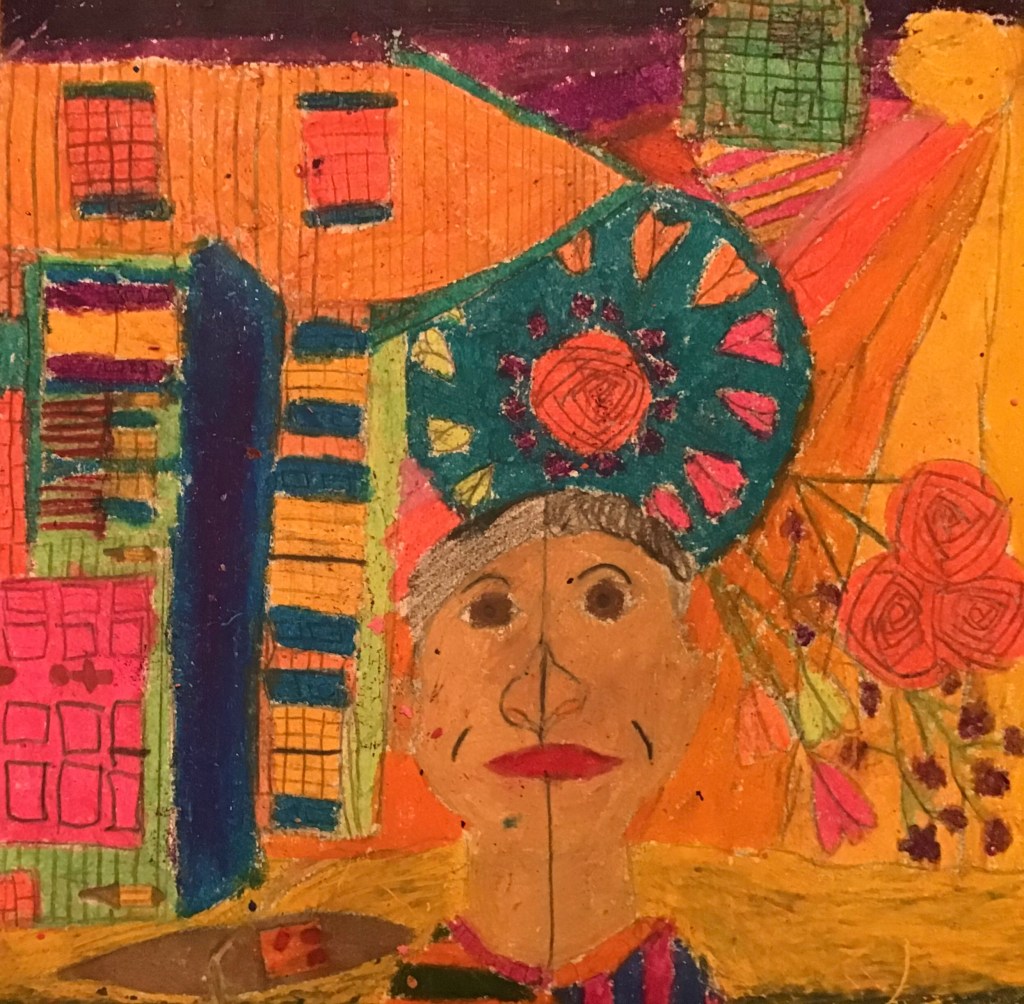
Initially, we may think that the line between the two emptiness is just outside us. As we contemplate and meditate with the help of a Guru, we will experience that there is no dividing line: It is not there. This is the great discovery of the nondual (advaita) understanding. The reality i.e, the emptiness of the knowledge of pure consciousness (I) called time and the reality of emptiness of the matter as the substance of vibration (you the object) called as space are empty and identical. These are two different shades of water colors on the same paper (like the two parts of the faces in the art work done by my 8 year old grandson in the image shown above). This is an experiential recognition as we meditate on the subject. This is called the Jivatma-Paramatma Aikyam.

So jīvātma is pure Consciousness, paramātma is pure Existence. Then vedāntaḥ says this pure Existence which lends existence to the world, this pure Consciousness which lends consciousness to the body, both this pure Existence and pure Consciousness are one and the same. So, Existence is Consciousness; Consciousness is Existence. And it is this Existence-Consciousness which makes the body sentient; and which makes the world existent. And this recognition of the oneness of the existence and consciousness is jīvātma paramātma êkya jnānam, and Śankarācārya says, whichever Guru manages to successfully communicate, this identity of this pure Existence and Pure consciousness, to that Guru, who is Dakṣiṇāmurty., My namaskarams. This is going to be the essence of this third Sloka which we will see in the next blog.

Here are the pictorial representations of our learning on Sat & Cit (Existence and Consciouness) (Courtesy: vedantastudents.com)

Dakshinamurthy Stothram- Sloka 3 – Part 2 – Light – Chaitanyam- त्वम्

Preamble

In the previous blog we saw that there are two ways of perceiving an object like the example of the table. “ I see it and therefore the table exists” and “the table exists and therefore I see it”. According to Adi Sankaracharya’ Advaita philosophy, knowledge of the world is knowledge of the thoughts of the objects of the world, or viṣayākāravṛittijñana. When knowledge is thus based on the modification of the mind, the objects will definitely be external to you. The knowledge of the world, being viṣayākāra vṛitti, is therefore obtained through the senses. Therefore He also advocates that yad-dṛśyam tat naśyam—that which is perceivable is perishable. I was reminded by my “Twitter Friends” of a wonderful Tamil proverbs that reflect this: விண்டவர் கண்டிலார்….கண்டவர் விண்டிலார்; கண்ணால் காண்பதும் பொய் காதால் கேட்பதும் பொய் தீர விசாரிப்பதே மெய்

Nevertheless we also understood that we need both “Existence” and “Light” for our knowledge of the objects and hence the world.

Light

From the scientific perspective, we know that light is an energy radiation. No single answer to the question “What is light?” satisfies the many contexts in which light is experienced, explored, and exploited. The physicist is interested in the physical properties of light, the artist in an aesthetic appreciation of the visual world. Through the sense of sight, light is a primary tool for perceiving the world and communicating within it. Light from the Sun warms the Earth, drives global weather patterns, and initiates the life-sustaining process of photosynthesis. On the grandest scale, light’s interactions with matter have helped shape the structure of the Universe.

Vedantic Treatise on Light

Imagine a situation where you are just entering a room and the light goes off. Do you need light to identify the objects in the room? Yes, surely. Remember you are an object too. Do you need light to identify yourselves? No. Why?

When we discuss this topic, one important Eka Sloki (Single Sloka) of Adi Śankarā is to be understood. Adi Śankarā answers these two questions by a single sloka. The Sloka is presented as a dialogue between a teacher (Guru) and student (Sishya), in response to a question by the student on realization of self. The Sloka, its Tamil & English Translations are given below:

Guru: How do you see (What is that light/power which helps you see?) Sishya: I see with the help of sunlight

Guru: How do you see in the night? Sishya: I see with the help of a lamp

Guru: Let that be so. How do you see the light? Sishya: With my eyes.

Guru: How do you see when tour eyes are closed ? Sishya: It is with my intellect

Guru: What helps you see (know) that intellect? Sishya: This is me (me as pure consciousness)

Guru: (Indeed) You are that supreme light Sishya: I realize that I am (immediate experience for the disciple)

So, the following facts about the “Light” have to be understood:

1. “Light” is not a part, product or property of the object

2. “Light” is formless

3. “Light” is independent, enlivens the object and makes it sentient.

4. “Light” is beyond the object and is “Sarvaghataha”.

5. “Light” will be there even after the object is destroyed. Once object goes, “Light” is not recognizable as the recognizing medium is gone

Light is Cit, the Chaitanyam

Let us go back to the previous blog where we saw that an object in the ultimate analysis of matter, either through the inward looking Vedantic route or through the outward looking scientific route (as explained in the blogs that covered Sloka 2 on Creation) is nothing but emptiness which takes the shape of vibrations and comes into existence. If this vibration is not known then we will not know that it “is”. So there is also this knowing. To visualise this knowing we add a spatial reference to it. If we further contemplate on this existence of this vibration suspended as it were in the “knowing” spatial field, we learn that this spatial knowing field is also empty of objects. This is the second kind of emptiness: the emptiness of pure consciousness. This emptiness is “cit” चित् (chaitanyam) is pure (independent from body & mind) and is the Jivātma, the Self-awareness त्वम् (Tvam) and at the worldly level is known as visibility (bhaati भाति)

We saw “sat” Existence earlier. We now saw “cit” Light. In either of these two studies, there is a basic question that is not addressed yet and needs to be looked into. That question is “How have existence and light come to be conjoined with all existing things?”.

The answer to this question will come up in the next blog.