When I commenced my study of Moha Mudgara otherwise known as Bhaja Govindam, there were interesting exchange of comments between a novice like myself and learned individuals, in the social media.
Some were of the view that the title that I have given “Sankara’s Smithy” and சங்கரனின் சம்மட்டி அடிகள் (“Sankaranin Sammatti Adigal” in Tamil) is not appropriate.
“Adi Sankara never had to resort to violence, vulgarity, force,guile or such aids to advance his views. Intellect and compassion were his forte. Please do not ascribe such epithets to write about Adi Sankara’s achievements; why this kind of rebellious/militant attitude of force to defend one’s belief system?”
These were some of the remarks.
This is to reconfirm that my intention is not to project Sankara in that manner at all. I never even realised that there could be an interpretation from that angle.
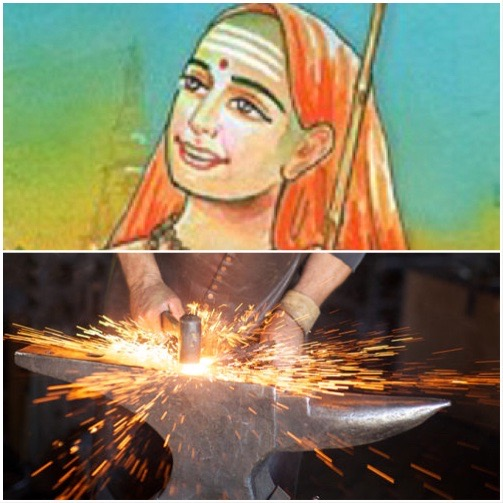
In a smithy, the iron is heated and struck with hammer blows before it is converted into a fine product. Those strikes are not rebellious/militant. They are meant to transform a rigid matter into useful product. If my little understanding of these Slokas are correct, the message of each sloka is like a hammer blow(mudgara) to the ignorant minds of ours, pointing out the stark realties which we choose to ignore in our life.
It is with this intention that I gave the title for my study as Sankara’s Smithy (being an engineer myself) and have taken up my study of Bhaja Govindam. I am absolutely open for any change or suggestions for the title. Please let me know through your comments.
Just thought I will clarify my thought process to all. After all, the idea is to learn and understand the message of Adi Sankara.
Thank you.
பஜ கோவிந்தம் என்று அழைக்கப்படும் “மோக முத்கரா”வைப் பற்றிய எனது ஆய்வைத் தொடங்கியபோது, சமூக ஊடகங்களில் “மூட மனம்” கொண்ட எனக்கும், கற்றறிந்தவர்களுக்கும் இடையே சுவாரஸ்யமான கருத்துப் பரிமாற்றங்கள் நடந்தன.
“Sankara’s Smithy” சங்கரனின் சம்மட்டி அடிகள் என்று கொடுத்த தலைப்பு பொருத்தமானதல்ல, ஆதி சங்கரர் ஒருபோதும் “வன்முறை, அசிங்கம், பலம், வஞ்சகம் போன்றவற்றை நாட வேண்டியதில்லை” என்று சிலர் கருத்து தெரிவித்தனர்.
“ஆதி சங்கரரின் சாதனைகளைப் பற்றி எழுத தயவு செய்து இது போன்ற அடைமொழிகளைக் கூறாதீர்கள்; ஒருவரின் நம்பிக்கை அமைப்பைப் பாதுகாக்க ஏன் இந்த வகையான கிளர்ச்சி/போராளி மனப்பான்மை?” இவை சில குறிப்புகள்.
அந்த வகையில் ஆதி சங்கரரை முன்னிறுத்துவதோ அல்லது வர்ணிப்பதோ என் எண்ணம் அல்ல என்பதை மீண்டும் உறுதிப்படுத்துவதுதான் இந்த விளக்கம். இப்படி ஒரு கோணத்தில் பார்க்கக்கூடும் என்று நான் சிறிதேனும் சிந்திக்ககூட இல்லை.
ஒரு பட்டறையில், இரும்பை சூடாக்கி, சுத்தியலால் அடித்து, நீரில் மூழ்கடித்து, அதனை ஒரு உபயோகமுள்ள சிறந்த பொருளாக மாற்றுவர். அது போல, ஒவ்வொரு ஸ்லோகத்தின் செய்தியும் நமது அறியாமை மனங்களுக்கு பட்டறையில் விழும் சுத்தியல் அடி போன்றது; நம் வாழ்க்கையில் நாம் புறக்கணிக்கத் தேர்ந்தெடுக்கும் அப்பட்டமான உண்மைகளைச் சுட்டிக்காட்டுவது என்பதே எனது தாழ்மையான கருத்து.
இந்த நோக்கத்தில்தான் பஜ கோவிந்தம் பற்றிய எனது ஆய்வையும், நான் பகிர்ந்து கொள்ள முயன்ற எண்ணங்களையும் எடுத்துக் கொண்டு, சங்கரனின் சம்மட்டி அடிகள் என்ற தலைப்பை கொடுத்தேன் (என் பொறி இயல் படிப்பு இந்த தலைப்பை கொடுக்க உந்தியது). தலைப்பில் ஏதேனும் மாற்றம் அல்லது பரிந்துரைகளுக்கு நான் முற்றிலும் தயாராக இருக்கிறேன். உங்கள் கருத்துகள் மூலம் எனக்கு அவசியம் தெரியப்படுத்துங்கள்.
எனது இந்த சிந்தனை முறையை அனைவருக்கும் தெளிவுபடுத்தலாம் என்று நினைத்தேன். எல்லாவற்றிற்கும் மேலாக, ஆதி சங்கரரின் செய்தியைக் கற்று புரிந்து கொள்ள வேண்டும் என்பதே என் எண்ணம்.
தமிழ் ஒலித் தொடர் பதிவு இணைப்பு (Link to the Tamil Podcast)
இன்றய காலக் கட்டத்தில் தமிழ் மொழி அறிந்தவர்களை, இரு வகையாகப் பிரிக்கலாம். 1. தமிழில் எழுதப் படிக்கத் தெரிந்தவர்கள். 2. தமிழ் எழுத, படிக்க தெரியாது; ஆனால் பேச முடியும்; அடுத்தவர் பேசினால் புரிந்து கொள்ள முடியும்.இந்த இரண்டாம் பிரிவைச் சேர்ந்தவருக்காக, இந்தப் பதிவின் ஒலித் தொடர் பதிவை (podcast) கீழ்காணும் இணைப்பில் கேட்கலாம்.
ஏன் பிறந்தாய் மகனே ? ஏன் பிறந்தாயோ? ……….. நான் பிறந்த காரணத்தை நானே அறியும் முன்னே நீயும் வந்து ஏன் பிறந்தாய் செல்வ மகனே!
கவிஞர் கண்ணதாசன், திரைப்படம்-பாகப்பிரிவினை
63 வருடங்களுக்கு முன் வந்த பிரபலமான தமிழ் திரைப்படத்தில் வரும் ஒரு பாடலின் தொடக்க வரிகள். வருடங்கள் பல கடந்தாலும் இக்கேள்விகள் நம் ஒவ்வொருவர் மனதையும் வருட்டி எடுக்கும் (இடர்கள் நம்மை சூழும் போதாவது) என்றால் அது மிகையாகாது. இந்த திரை இசைப் பாடலில் அடங்கிய தத்துவத்தை இப்போது ஆய்ந்திடலாம்.
மனிதப் பிறவியின் நோக்கம்
மனிதப் பிறவியின் நோக்கம் என்ன? இவ்வினாவிற்கு இப்புவியிலே இன்றும் எண்ணற்ற ஆன்மீகவாதிகள், துறவிகள், முனிவர்கள், தனிநபர்கள், நன்னெறி தத்துவம் பற்றிய எழுத்தாளர்கள், மற்றும் பலர் விடையளிக்க முயன்று கொண்டு வருகின்றனர். இவர்கள் வேறுபட்ட பாதைகளில், மாறுபட்ட கருத்துக்களுடன் ஆராய்ந்த போதிலும் அனைவரும் ஒப்பும் ஒரு உண்மை:
“ஆறறிவு பெற்ற மானிடர் அனைவருமே துன்பம் தவிர்த்து நிலையான இன்பமடையவே அவர்தம் பணிகளின் குறிக்கோளாக வைத்து அவரவர் பணிகளைப் புரிகின்றனர்”
என்பது. இதில் ஐயமேதுமில்லை.
வட மொழியில் வாழ்வின் பொருள் என்பதை புருஷார்த்தம் என்பர். புருஷார்த்தம் என்பது தர்மம், அர்த்தம், காமம், மோக்ஷம் எனபவைகளுக் குறிக்கும்.  இதனையே அறம், பொருள், இன்பம், வீடு என தமிழில் கூறுவர்.

அறத்தின் வழி நின்று பொருள் தேடி முறையாக இன்பம் துய்த்து வீடுபேறடைதல் என்பதுவே இவ்வழி முறையாகும். அதாவது, முதலில் தர்மத்தை அறம் என்று சொல்லி, அதைத் செய்வதற்காகவே எப்படிப் பொருள் ஈட்ட வேண்டுமோ அந்த நியாயமான முறையைச் சொல்லி, அதனால் இன்னின்ன இன்பங்களைப் பூர்த்தி செய்து கொள்ளலாம் என்று பக்குவம் வருகிற வரையில் கிரமப்படுத்திக் கொடுத்து, அப்புறம் இந்தச் சின்ன சின்ன இன்பங்களை எல்லாம் விடுத்து, இறுதியில் நிரந்தர இன்பமான வீடு என்கிற மோக்ஷத்தைக் காட்டுவதே வாழ்வியல் முறை எனும் நான்கு புருஷார்த்தங்கள்.

பாரதியாரின் எளிமையான வாக்கில் இந்நான்கும் இதோ:

தன்னைக் கட்டுதல் அறம்
பிறர் துயர் தீர்த்தல் பொருள்
பிறர் நலம் நாடுதல் இன்பம்
உலகு காக்கும் ஒருவனைப் போற்றுதல் வீடு.
மனிதப் பிறவியின் நடப்பு
அந்த ஆனந்தத்தை அடைய முயலும் நம் அனைவரின் வாழ்க்கையிலும் அன்றாடம் இடைவிடாது, முக்கியமான மூன்று பெரும் தத்துவங்கள் தொடர்பு கொள்கின்றன. அவை, மனிதன், உலகம் (படைப்பு), இறைவன்.

இவைகளை வாழ்வில் உபயோகித்து (அனுபவித்து) , வினைகள் புரிந்து, “பொருள்” தேடி, “இன்பம்” துய்த்து, களைத்து, முடிவில்

 “நாம் வந்த கதை என்ன? நாம் கொண்டது என்ன, கொடுப்பது என்ன? மன்னைத் தோண்டி தண்ணீர் தேடும் நாம், நம்மைத் தோண்டி ஞானம் கண்டோமா? இல்லை, நம் மனமெங்கும் தெருக் கூத்து, பகல் வேஷமா?”

என்றெல்லாம் பிதற்றி, தன்னை அறிவதே தனது பிறவியின் நோக்கம், அதனை அறிய முயலாமல் வாழ்நாளை வீனாக்கினோமே என துன்பமுற்று, வருந்தி மடிகிறோமே. இது தானே நடப்பு.

தாயுமானவர் இந்த நடப்பைத்தான் இப்படி கூறுகிறார்:

“ஆசைக்கோரளவல்லை அகிலமெல்லாம் கட்டி
ஆளினும் கடல்மீதிலே ஆனை செலவே நினைவர்,

அளகேசன் நிகராக அம்பொன் மிக வைத்த பேரும்
நேசித்து ரசவாத வித்தைக் கலைந்திடுவர்

நெடுநாளிருந்த பேரும் நிலையாகவேயினுங்
காயகல்பந்தேடி புண்ணாவர் எல்லாம்

யோசிக்கும் வேளையிற் பசிதீர உண்பதும்
உறங்குவதுமாகடியும் உள்ளதே போதும்

நான் நான் எனக்குளறியே ஒன்றைவிட்டு ஒன்றைப்பற்றி
பாசக்கடற்குள்ளே வீழ…”
இன்பம் பயக்கா இருள் – ஏன்?
சரி, நமது வாழ்க்கை அனுபவம், நம்மை, நமது வாழ்வின் பொருளை நோக்கிச் செலுத்தவில்லையே! ஏன்?

இந்தக் கேள்விக்கு, இதோ! மூன்று பதில்கள் - கேள்விகள் வடிவில்:

1. அனுபவிக்கின்றவனை அனுபவிக்காமல், அனுபவிக்கப்படுவைகளை அனுபவிக்க முயலும் அறிவிலிகளாக அலைகிறோம் நாம்; அல்லவா! (ஆஹா! நம்ம மொபைல் ஃபோனில் இருந்து நம் சொந்த மொபைல் எண்ணயே  அழைக்கிறேனே! எப்படி பதில் கிடைக்கும்? அது போல இருக்கே இந்தக் கேள்வி).

2. அறிவைத் தரும் கருவிகளின் துணை கொண்டு, அறியப்படும் பொருள்களை அறியும் நம்மை, எந்த அறிவைத் தரும் கருவிகளைக் கொண்டு அறிவது என்று என்றேனும் ஆராய்ந்தோமா?

3. “நானெனும் பொய்யை நடத்துவோன் நான்
ஞானச் சுடர்வானில் செல்லுவோன் நான்
ஆன பொருள்கள் அனைத்திலும் ஒன்றாய்
அறிவாய் விளங்குதற் சோதி நான்”

என்று பாட்டுக்கொரு புலவன் பாரதி கூறிய “நான்” ஆக இல்லாமல், “இன்பமாகிய நாம், தம்மை இன்பெமென அறியாமல், துன்பத்தின் பின்னால், துன்பத்தில் இன்பம் இருக்கின்றதென்று ஏன் ஓடிக்கொண்டிருந்தோம்”.
கேள்விக்கு என்ன பதில்?
சரி. குழம்பி இருக்கும் நம்முடைய கேள்விகளுக்கு பதில் கூறாமல், கேள்விகளையே திருப்பி வைத்தால், நாம் என்ன செய்வது? எங்கு செல்வது? - நம் அனைவரின் சிந்தனை, அல்லவா!
சுலபம். வாருங்கள், நம்அனைவரையும்ஒருகொல்லன்பட்டறைக்குகூட்டிச்செல்லலாம். அங்கேநமக்குவிடைகள்கிடைக்கும். ஆனால், ஒருநிபந்தனை! அங்கேஆசாரிநமக்கு 31 சம்மட்டிஅடிகள்கொடுப்பார்.அவைகளைஉள்வாங்கிக்கொள்ளவேண்டும்.
ஒன்று மட்டும் நிச்சயம்/உத்தரவாதம். அந்த முப்பதொன்று அடிகளை, கொல்லன் பட்டறையில் இரும்பு வாங்கும் அடிகளாக நாம் ஏற்றிட்டால், கனிந்து மாறிடும் இரும்பு போல,
இருள் நீங்கி இன்பம் பயக்கும் மருள் நீங்கி மாசறு காட்சி
நமக்கு கிட்டி, நாம் மாறுவோம். அதில் சந்தேகமே இல்லை. சம்மதமா?
பயம் தவிர்த்து, அந்த உத்தரவாதத்துடன் வாருங்கள் ஆதி சங்கரனின் பட்டறைக்கு.
வருக! வருக! மாதம் ஒருமுறையாவது, சங்கரனின் பட்டறைக்குச் செல்வோம், சம்மட்டி அடிகள் வாங்குவோம். பின், நமது நிலையை உணர்வோம்.
சங்கரனின் சம்மட்டி அடி 1 - நவம்பர் 11ம் தேதியில் - கற்ற கல்வியும் சுற்றி விழும் காலன் கயிறும் - யாக்கை நிலையாமை - அடுத்த பதிவில். அதுவரை
இறையருள் பெருக. வளமுடன் வாழ்க
முக்கிய குறிப்பு: இப்பதிவும், வரும் தொடர் பதிவுகள் அனைத்தும், பூஜ்யஸ்ரீ சுவாமி ஓம்காரானந்தாவின் விரிவுரைகளால் ஈர்க்கப்பட்டு, சுவாமிஜியின் சொந்த விரிவுரைகளில் இருந்து அடியேன் அறிந்து கொண்டது. இப்பதிவுகளில் காணும் கல்லாப் பிழை, கருதாப் பிழை, எல்லாப் பிழைகளுக்கும் அடியேனின்அறியாமையே காரணம். அவைகளை சுட்டிக்காட்டின், அடியேனின் அறியாமையைக் களைய உதவும். நன்றி.
The opening lines of a song from a popular Tamil movie released 63 years ago starts with a physically challenged hero, in contemplative mood asking question to his child
Why were you born son? Why were you born? Why did you come here and be born, son? Why were you born, before I knew the reason for my birth, dear son!
Kannadasan
It is no exaggeration to say that even after many years, these questions haunt each of us when trials and tribulations surround us and whenever we turn into a contemplative mood . Now let's analyze the philosophy behind this lyrics.
The Goal
Countless spiritualists, saints, sages, individuals, writers on ethical philosophy, poets, lyricists, and many others are still trying to answer this question. However, one truth they all agree on, even though they explored it on different paths, with different perspectives.
“All with six senses aim for unceasing permanent happiness without pains and suffering; they keep this aim as the target and carry on with their work day in and day out”.
Swami Omkarananda
There are no two opinions about this aim.

"alpa aayasham ananta Sugam" - Adi Sankara says in his Vishnu Sahasranama text (in Bhashyam).

Well, in the life of all of us who are trying to achieve that ananta sugam (bliss): there are three words that are very important; Man, Universe (or more broadly called Creation) & God.

All three of these words contain great philosophies. If we deeply examine these three words, many questions such as these given below, will arise in us.

Who am I? Why do I do what I do? How can I do what I do better?

What does birth and death really mean?

Who is God? What is His nature?

What is this world? What do I have to do with this world?

What is the relationship between me and God and this world?
One can ask “What is the benefit of finding answers to these questions?”. Such a question may arise for all of us. This is answered by the Tamil Saint “Thayumanavar”.

"If you know yourself, you will be attached to the Lord, the leader. After that, is there anything else to get attached”?
The path to the Goal
So, the purpose of human birth is to know oneself. If we want to know ourselves, we need to know what the meaning of our life is. “Purushartham “ is the word for this in Sanskrit. Here are two perspectives for this word.
1. “Purusha” means “Human”. "Artham" means "ideal" or "goal". The goal of unceasing peaceful bliss, and the efforts (prayatanam) we have to make to achieve this goal are called Purushartham.

There are many different species in this world. In this, only man is given the opportunity (wisdom) to choose. Other species do not have the opportunity to choose. The ideal or goal comes in when there is an opportunity to choose.

Thus, Purushartham can be divided into two types of power i.e Shakti (Icha Shakti, Kriya Shakti) which are the desire for the goal and the actions to achieve it.

Icha (pleasure) is of two kinds. One is cultivated by our senses - sense pleasure; that which are outward looking and initiated through the body mind intellect complex of us. This is peripheral and unstable. The other is cultivated by knowledge. An inward looking set of actions - Dharma, Bhakti, Gnana and Moksha are the highest goals. Actions that help you to undetermine who you are.
2. The great Mahaan Bhaskara Raya, from Bhaga in Maharashtra, explains that Purushartham means Dharma, Artha, Kama and Moksha. These four Purusharthas are also considered as the vital modes of human life.

The focus of this perspective is to stay on the path of virtue always , seek material things (through ethical means) required for supporting one’s family and the society, gradually start giving up and then reach the abode of the Lord.
Here are all four in Bharatiyar’s simple words:
Self-restraint is Dharma Remove distress in others is Artha Seeking the welfare of others is Kama Praise the one who saves the world is Moksha
So far so good….Well, we know the reality of purpose, object and means. But what happens in our daily lives? What is the reality?
Goal v.s. Reality
Day in and day out we see human beings doing actions through their body, mouth and mind ; earn money,fame and do actions that give them what they call it as happiness. As we start ageing we start wondering as to what is that we have been doing so far and where are we heading; as age catches up and the body starts withering, this thinking turns into worries and finally we perish after worrying about men, materials and matter which have only “shelf life” and nothing else. Did we at any point of time have the time to ponder and compare our journey with our ultimate goal of pure and permanent happiness? Why is that our journey and our goal were not in sync?
For this question, here it is! Answers – in the form of questions:

1. We wander about ignorantly trying to experience the world without experiencing the experiencer. Isn't it! (Wow! It is like trying desperately to call our mobile number from our own cell phone. How foolish are we! How can we get an answer? That's the question).

2. We learn with the help of instruments of knowledge; have we ever inquired what instruments of knowledge are required to know about ourselves?

3. Why are we, not  knowing that we are the embodiment of absolute happiness,running behind sufferings, thinking that there is happiness in sufferings?
The Course Correction
“What is this? When we want answers and ask questions, we are given questions to answer. This is a problem” - we all must be wondering.

Don’t worry. Let us visit a Forge Shop, a traditional Smithy owned by Adi Sankara. Answers are there for all our questions in the form of 31 hammer blows. There is a guarantee that comes along with these hammer blows.

If we absorb these blows internally and contemplate, our transformation and subsequent happiness is ensured; just like the hot solid iron is worked into a wonderful product.

Avoid fear and come to Adi Sankara's workshop with that assurance.
What next?
Welcome! At least once a month, we will visit Sankara's workshop and get the hammer blows.

The first visit will be on November 11th. Looking forward to seeing you there.

Until then, take care. Start looking inwards. God Bless.
Important Note:

This post and all subsequent posts on this subject are inspired by Guru, Pujyasree Swami Omkarananda. Guruji's lectures in public domain and what I learnt from Swamiji’ Atma Vidya Course lectures are the principal source of reference.

All errors if any on these posts are entirely due to my ignorance and incapability to understand.

I seek your feedback which will be of immense help to me in my learning process.
2.1: (O Ganapati) You indeed are the visible Tattvam (Conscious Essence underlying everything), 2.2: (O Ganapati) You indeed are the only Creator (Karta) (by Whose Power the Universe is Created), 2.3: (O Ganapati) You indeed are the only Sustainer (Dharta) (by Whose Power the Universe is Sustained), 2.4: (O Ganapati) You indeed are the only Destroyer (Harta) (by Whose Power the Universe is finally Dissolved in its Conscious Essence), 2.5: (O Ganapati) You indeed are All This (The Universe); You verily are the Brahman (giving Consciousness to All), 2.6: (O Ganapati) You are the visible Atman, the Eternal (underlying Reality),
3.1: I declare the Ritam (Divine Law); I declare the Satyam (Absolute Reality) (that there is an Absolute Consciousness underlying everything, which I saw as Ganapati),
4.1: (Now) Protect me (O Ganapati) (Protect the Truth I declared), 4.2: Protect the Speaker (O Ganapati) (Protect the Teacher who declares this Truth), 4.3: Protect the Listener (O Ganapati) (Protect the Student who listens to this Truth), 4.4: Protect the Giver (O Ganapati) (Protect the Giver of knowledge who transmits this Truth), 4.5: Protect the Sustainer (O Ganapati) (Protect the Sustainer who retains this Truth in Memory), 4.6: Protect the Disciple (O Ganapati) (Protect the Disciple who repeats this Truth following the Teacher), 4.7: Protect this Truth from the East (O Ganapati), 4.8: Protect this Truth from the South (O Ganapati), 4.9: Protect this Truth from the West (O Ganapati), 4.10: Protect this Truth from the North (O Ganapati), 4.11: Protect this Truth from the Top (O Ganapati), 4.12: Protect this Truth from the Bottom (O Ganapati), 4.13: (Now) Please Protect me (O Ganapati) (Protect this Truth I declared) from all Sides,
5.1: You are of the nature of Words (Vangmaya), and You are of the nature of Consciousness (Chinmaya) (which is the source of all words) (Therefore, O Ganapati, the Absolute Truth I have spoken have come from You), 5.2: You are of the nature of Bliss (Anandamaya), and You are of the nature of Brahman (Brahmamaya) (which is the source of all Bliss) (Therefore, O Ganapati, the Absolute Truth I have spoken will give Bliss to all who realize it), 5.3: You are Sacchidananda (Sat-Chit-Ananda) (Existence-Consciousness-Bliss), and You are the One without a second (Therefore, O Ganapati, the Absolute Truth I have spoken will liberate all to the Greater Consciousness who realize it), 5.4: You are the visible Brahman (manifested as the Universe) (Therefore, O Ganapati, the Absolute Truth I have spoken will make the realized see this vast World as emanating from Sacchidananda), 5.5: You are of the nature of Gyana (Spiritual Knowledge) (Self-Manifesting within the Core of our Being as Bliss-Consciousness), and You are Vigyana (Giving the Spiritual Vision of the whole World from the standpoint of the Greater Consciousness), (Therefore, O Ganapati, protect the Absolute Truth I have spoken for the welfare of all)
6.1: The Entire Universe has Manifested (Born) from You (Therefore, O Ganapati, help us realize Your essence within the Core of our Hearts), 6.2: The Entire Universe is Sustained by Your Power (Therefore, O Ganapati, help us realize Your essence within the Core of our Hearts), 6.3: The Entire Universe will Dissolve in You (Therefore, O Ganapati, help us realize Your essence within the Core of our Hearts), 6.4: The Entire Universe will thus finally Return to You (Therefore, O Ganapati, help us realize Your essence within the Core of our Hearts), 6.5: You have manifested as Bhumi (Earth), You have manifested as Apas (Water), You have manifested as Anala (Fire), You have manifested as Anila (Wind), and You have manifested as Nabha (Sky or Space), (Therefore, O Ganapati, help us realize Your essence in the manifested World), 6.6: You are the Four Types of Speech (Para, Pashyanti, Madhyama and Vaikhari), (Therefore, O Ganapati, help us realize Your essence as the source of Speech), 6.7: You are beyond the Three Gunas (Sattva, Rajas and Tamas) (Therefore, O Ganapati, help us realize Your Conscious Essence beyond all the variations of the Mind due to the play of Gunas), 6.8: You are beyond the Three States (Waking, Dreaming and Deep Sleep) (Therefore, O Ganapati, help us realize Your Conscious Essence beyond the three States), 6.9: You are beyond the Three Bodies (Gross Body, Subtle Body and Causal Body) (Therefore, O Ganapati, help us realize Your Conscious Essence beyond the three Bodies), 6.10: You are beyond the Three Times (Past, Present and Future) (Therefore, O Ganapati, help us realize Your Eternal Essence beyond all Times), 6.11: You always abide in the Muladhara (Therefore, O Ganapati, help us in awakening our Kundalini Shakti), 6.12: You are the source of the Three Shaktis (Iccha Shakti, Kriya Shakti and Gyana Shakti) (Will Power, Power of Action and the Power of Knowledge) (Therefore, O Ganapati, help us in awakening these Shaktis to realize Your Conscious Essence), 6.13: The Yogis always meditate on You (to realize Your Conscious Essence, which is the aim of Human Life), 6.14: (O Ganapati) You are Brahma, You are Vishnu, You are ... 6.15: ... Rudra, You are Indra, You are Agni (God of Fire), You are ... 6.16: ... Vayu (God of Wind), You are Surya (The Sun God), You are Chandrama (The Moon God), You are ... 6.17: ... Brahman (Absolute Consciousness), You pervade the Bhur-Bhuvah-Suvar Lokas; You are the Om Itself (Parabrahman).
When we say “wild and wonderful” where does our mind jump to immediately?
“Hakuna Matata. kusafiri” is the answer.
Confused with the answer? In the East African language of Swahili, it simply means “no worries”, “take it easy”. The answer is “Safari”.
Safari -An introduction
In Swahili, the word safari means “journey”, originally from the Arabic noun سفر, safar, meaning “journey”, “travel”, “trip”, or “tour”; the verb for “to travel” in Swahili is kusafiri. These words are used for any type of journey.
Safari entered the English language at the end of the 1850s thanks to the British explorer Richard Francis Burton. In 1836, British Army Engineer,
William Cornwall Harris led an expedition purely to observe and record wildlife and landscapes. Harris established the safari style of journey, starting with a not too strenuous rising at first light, an energetic day walking, an afternoon rest then concluding with a formal dinner and telling stories in the evening over drinks and tobacco.
The hunting aspect traditionally associated with the safari is said to have its origins where villagers got together to hunt wild boars and reclaim land for farming. However it was the British who used Safaris for hunting for personal pleasure and popularized it.
Gujarat – The wild and wonderful
Our trip to Gujarat contained two segments where we stuck to the spirit of William Cornwall Harris style of Safari as a means to understand the wild and wonderful Gujarat.
Segment 1 – Gir – The kingdom of the “Wild and Wonderful”.
Part A – Jungle Safari
The Gir National Park was established in 1965 in the erstwhile Nawab of Junagarh’s private hunting area, with a total area of 1,412 km2(545 sq mi), of which 258 km2 (100 sq mi) is fully protected as a national park and 1,153 km2 (445 sq mi) as wildlife sanctuary.
Kicking off the day at 0530 Hrs we started our Safari in the jungles of Gir. A four hour drive in an open Gypsy (A jeep) took us the nook and corner of the sprawling Gir Forest. We were lucky to spot a lioness marking her territory right at the start of the Safari. The rest of the Safari covered other animals and birds. Here is an overview.
Sasan Gir – Jungle Safari
This was followed by an exquisite lunch and siesta at the FERN GIR FOREST RESORT.
Part 2 – Devalia Safari
Evening Safari was a bit different; we wanted to present ourselves as “strange moving creatures with two legs” to the wild and wonderful. So we locked ourselves in a cage mounted on a Gypsy and paraded ourselves to the wild animals in the Gir Forest. Needless to say that the Wild and Wonderful didn’t bother about us at all and were busy at their routines.
Gujarat Tourism calls this place as “ Devalia Safari Park ” also known as “Gir Interpretation Zone- Devalia”. Here is our Safari with a dufference:
Devalia Park – Safari with a difference
Experience in this segment summed up – “High” on expectations (with increased Lions population and previous day sightings expectations built up) and “Moderate” on success in sighting.
Segment 2 – The Little Rann of Kutch – A saline sublime
In this segment, we moved away from the Jungle to the vast, dry and extremely hot saline desert.
Covering an area of 4954 Km2, Little Rann of Kutch is one of the most remarkable and unique landscapes of its kind. Wild Ass Sanctuary is located in this Rann which harbours the last population of Wild Ass (Equus hemionus khur).
It is a vast desiccated, unbroken bare surface of dark silt, encrusted with salts which transforms into a spectacular coastal wetland after the rains. The present saline desert of the Little Rann (saline desert-cum-seasonal wetland) of Kutch is believed to have been shallow sea.
We checked into the Royal Safari Camp at Bajana and relaxed after a sumptuous meal.
Part A – The Wild Ass Safari
We were ready for the Evening Safari. Temperature soared to 43 deg C (in the last week of March itself) and here we are driving in an open Gypsy towards the saline desert from the village center.
Wild Ass Safari – LRK
Part B – Nature’s Aviary at the Saline Desert
We even got down from the Gypsy and walked around the waterbodies to have an exclusive “darshan” of the birds around there. Wow. What a sight.
Nature’s Aviary
Experience in this segment summed up – “Low” on expectations (what do you expect, except a few Wild Asses and that too in a hot desert) and “High” on success in sighting (not only Wild Asses but also an impressive show by the Birds and Aditya, the Sun while setting).
Lessons learnt – Safari and Vedanta
This is our second Jungle Safari after the one at Kanha Tiger Reserve at Madhya Pradesh in 2018.
Safaris like these drive home several lessons, many of them straight from our Vedanta.
Here are some of my learnings:
1. If you are keeping your expectations (desires) high, you are bound to get disappointed (frustrated). After all you are looking for a few hundred wild animals (which are mostly territory oriented) in an area spanning thousands of square kilometers.
2. What you get to see (or otherwise) need not necessarily be seen (or otherwise) by someone who are either ahead of you or behind you. Your experience is unique to yourselves.
3. Time and Space can decide what you get or loose. In other words your experience is time and space limited.
4. Enjoy what you see, your experience. That moment is precious. The idea of being present and savoring the moment is not a novel idea, but it’s often a forgotten one. David Attenborough’s extraordinary documentaries on Animal Kingdom are awesome; no doubt about that. But nothing will ever have as big an effect as seeing the real beauty of the world and its inhabitants on safari by yourselves.
5. Silence is golden. Feel it and enjoy it. Through the day enjoy that moment where a bird or a monkey or a deer provides an alarm for an approaching animal. In the night at the Camp, listen to the insects’ hum and chirp; the stars in the sky and the sounds of nature.
6. See the positives. Even dirty roads and bushy terrain offers great views.
7. The Sun always provides spectacular views both in the morning and evening. Enjoy it and pray Aditya for keeping us alive.
8. Be patient. You have no choice. Sometimes what you want and expect doesn’t happen right away; sometimes what you want takes much longer than you thought it would.
9. Ears are better than mouth. Listening is Often Better Than Talking. Listen to the safari guide or just listen to the sounds of the bush. The point is that when we listen, our bodies are much more attuned to everything that’s happening around us. You also learn what you may not have known.
10. Life is not a rat race. Reconnect with the beauty of little things and enjoy.
Around the Christmas period in the month Marghazhi (December 26th to be precise), we were travelling by road from Dindigul to Coimbatore via the holy place of Palani. We saw a continuous stream of people walking on barefoot all along the stretch of the highway that led to Palani. It was clearly an indication that the bhakti filled festival of Thaipoosam is not far away.
“Thaipoosam is an important festival observed by the Hindus of southern India during the Tamil month of Thai (January – February). Outside of India, it is celebrated mainly by the Tamil speaking community settled in Malaysia, Singapore, South Africa, Sri Lanka and elsewhere around the world. Thaipusam is dedicated to the Hindu god Murugan, the son of Shiva and Parvati. Murugan is also known as Karttikeya, Subrahmanya, Sanmukha, Shadanana, Skanda and Guha. It is believed that on this day, Goddess Parvati presented a lance to Lord Murugan to vanquish the demon army of Tarakasura and combat their evil deeds. Therefore, Thaipusam is a celebration of the victory of good over evil. Thaipusam is celebrated during the full moon in the Tamil month of Thai and commemorates the birthday of the Hindu deity Murugan.”
All along the drive I was thinking if I could relate this bhakti oriented activity with the Advaita Vedantic mindset that I have been focusing on over the last couple of years and come out with some learning that will be immensely satisfying. In other words, I need to link Guha (Bhakti) with Sankara (Advaita); the Manifest with the Unmanifest; the Son with the Father. Looks simple; but impossible without a Guru.
That thinking took me to another Guruguha, one of the trinity in Carnatic music world. Yes, Muthuswamy Dikshithar provided me, the link for relating Bhakti with Vedanta.
Oh mind, worship the form of Guruguhan. Give up the agony of the heart caused by illusion.When human birth has been obtained, attain the perfect unsurpassed bliss of the Supreme Being ( don’t waste the opportunity) He is SADASIVA, full of SATVAGUNA;All living beings are born out of Him as the result of the impact of AVIDYA. The universe with its TAMASIC qualities is again a manifestation of His greatness; He is TARAKESVARA and ANANDA BHAIRAVA. Prostrate on His feet ; Mediate on His name; Conquer the veil of illusion and Think of Him as your sole refuge.
Meaning in Tamil
பல்லவி
போற்றிடுவாய்மனமேகுருகுகன்வடிவம்தனையே
அகற்றிடுவாய்மாயைவிளைஇதயநோவதனையே
அனுபல்லவி
அரியமானிடப்பிறவியெடுத்தநீ,
அடைந்திடுநாடிஇறையருட்பேரின்பம்தனை
சரணம்
நற்குணப்பண்பின்வடிவானசதாசிவன்அவன்
அகஇருள் விளை உயிரின உருவகமூலம் அவன்
இருள்நிறை இவ்வண்டம்கடந்தபேரொளிஅவன்
காக்கும்கடவுளாம்ஆனந்தபைரவன்அவன்
மத்தியமகாலசாகித்யம்
குருகுகனின்பாதம்பணிந்துநாமம்துதித்து
இருள்மாயத்திரையகற்றி அடைக்கலம்அவன்
ஒருவனேஎனநினைந்து ….போற்றிடுவாய்மனமே
Understanding the Kriti
Right at the beginning of the Kriti (Pallavi), Muthuswamy Dikshithar relates Jiva, Jagat and Isvara through their manifestations Mind, Maya and Guha. He “straight away instructs the mind to strive for higher goals – “Oh mind!!(“rE mAnasa”) meditate on (“bhajarE”) guha, the form of guru and abandon (“tyajarE”) the delusionary (“mAya-maya”) sorrows and afflictions of the heart/mind (“hRttApam”). He straightaway equates a guru as a form of the Lord Himself and commands the mind to worship him and meditate on him.”
Continuing, Dikshithar in the anupallavi, says “Having obtained the human birth form, go,take the path and try to attain the unsurpassed bliss associated with the supreme consciousness” – a reference to the Isavasya Upanishad Slokas which outline the paths that one can pursue for understanding the “Atma Svaroopam”.
In the caraNam, dIkshitar describes the Lord as ” The form of everlasting consciousness (“sadASivaM”), the one endowed with (“sahita”) with qualities of (“guNOpAdhi”) satva. The one from whom all the living beings (“jIva”) are born (“udbhavam”) as a result of their own ignorance (“sva avidya”). His greatness (“vaibhavaM”) symbolises the truth (“tatvam”) that lies beyond this world (“viSva”) filled with tamasic qualities (“tAmasa yuta”). He is tArakEswara, the Lord who helps cross this ocean of samsara. He is the form of Anandabhairava, radiating ever-lasting bliss”. Again I am reminded of the Shanthi Sloka and the first Sloka of Isavasya Upanishad – Isavasyam idham sarvam.
In the madhyamakAla sAhityam, Dikshithar says “Worship (“natvA”) the feet (“caraNam”) of the auspicious preceptor (“shrI guru”). Chant and meditate on his name (“nAmasmaraNam”). Conquer (“jitvA”) the sheath/veil (“AvaraNam”) of delusion/desire (“mOha”). Surrender to him as the sole (“twadEka”) refuge (“SaraNam”).” Pray, meditate, get mind control, come out of ignorance, surrender and reach Sat Cit Ananda – the very process that takes you to your SELF and reveals that “Tat Tvam Asi” which is the essence of Vedanta.
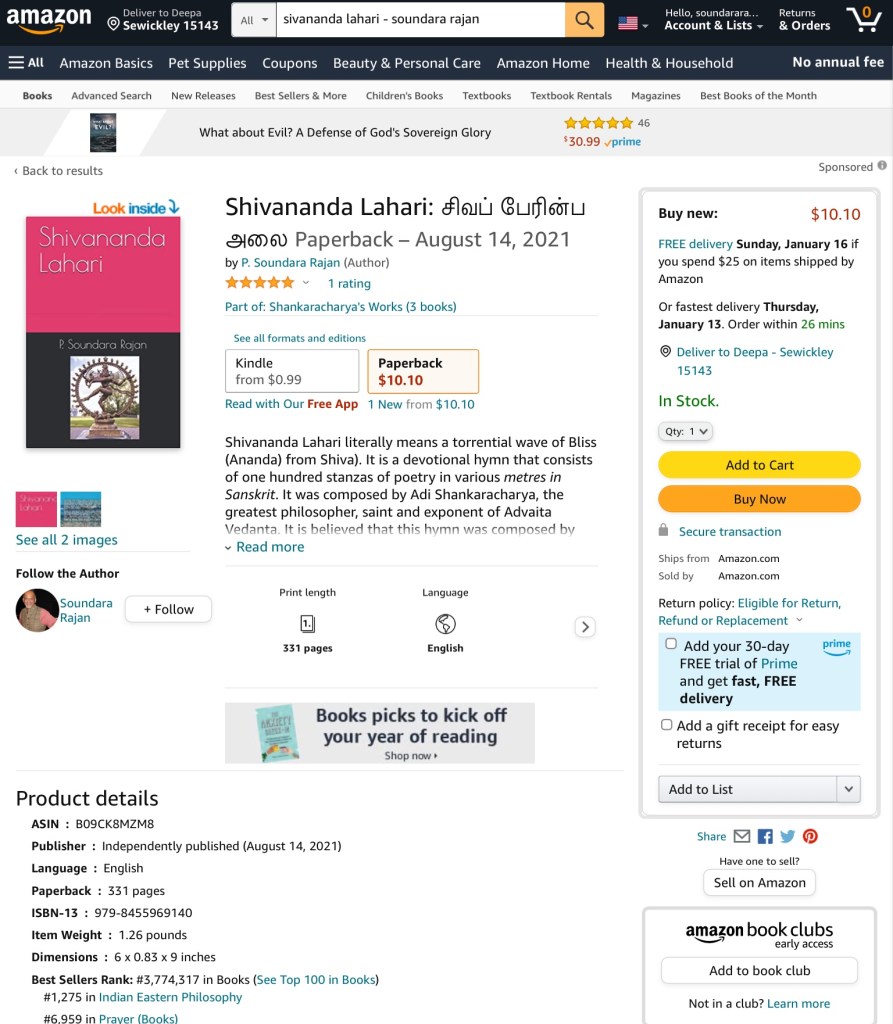
Adi Sankaracharya’s Sivananda Lahari and Dakshinamurthy Stothram – All the Sanskrit Verses with Transliteration, translation and meaning in English and Tamil is available at Amzon Kindle and will be available at
speciallydiscounted price of 0.99 USD (From USD 2.99) each
from Jan 10th to Jan 16 for Mahara Sankaranthi & Pongal.
We saw in the introductory blog earlier that this “jivatma” which was “relation less” and who is otherwise a witness “Saakshi” becomes related due to the influence of Maya, becomes an actor and the misery starts with transactions and continues till we know our true self through “atma gnanam”. Adi Sankara outlines a few relationships in this Sloka.
The differentiations that we see in the world as Cause and Effect, as possessor-possession, relations as the disciple & teacher, and also as father & son etc., are all differentiations within the one Ātman. In Dream or Waking state, He, the One Puruṣaḥ is always present, and (as if) Maya wanders over Him and gives rise to all these Differentiations. Salutations to Him, the Personification of Our Inner Guru Who Awakens This Knowledge through His Profound Silence; Salutation to Sri Dakṣiṇāmurty.
Understanding the Sloka
The Role of Maya
Let us look at the third line first: य एष पुरुषो मायापरिभ्रामितः eṣa: puruṣaḥ māyāparibhrāmitaḥ;
1. It means – This ordinary person in the world; even though he may be worldly-educated; who is spiritually and scripturally-illiterate; he is māyā paribhrāmitaḥ; { माया māyā means avidya परिभ्रम Paribhrama = Moving To and Fro, Wander/drift}. மாயையவள் வசப்பட்டு உழலும்
2. This means that he is confused because of avidya and therefore instead of taking original sākṣi svarūpam as himself; he mistakes the incidental-ahaṃkāra as himself drifts into the attached-self called ahaṃkāra I; I am going to certainly become a relative individual, related to the external world; asaṃga sākṣi (the unattached witness), becomes ससंगजीवः sasaṃga jīvaḥ (attached soul); relationless pure sākṣi-I, have now drifted and fallen down to a relative samsāri-I;
3. This means that every relation is causing one form of samsāra or the other. There is no relationship which is free from problems; In fact, if there is a relationship free from problems then the end of the relationship will cause problems; If there is a relationship so beautiful and wonderful and enjoyable, even that wonderful relationship becomes a problem when the relationship has to end because of time/kala, because of prarabdhaḥ, because of any reason. Therefore, a problem free relationship is an oxymoron; it does not exist. And therefore, the sākṣi-I, who is ever free, now has fallen down to ahaṃkāra-I, with varieties of problems.
Relationship
A few empirical relationships are enumerated in the sloka i.e., कार्यकारण संबन्धः kāryakāraṇa saṃbandhaḥ; cause and effect relationship. I-as-jīvātma, the ahaṃkāra-I, am a product of my own past karma; my prarabdhaḥ karma has given me this personality; this physical, this emotional, this social personality. Therefore, I am never a free person; I am tossed up and down; by my own karma; thus I am a कार्मय kāryam; my karma becomes the kāranam for my situation.
Let us see a few of the cause & effect relationships.
1. स्वस्वामिसम्बन्धतः svasvāmisambandhataḥ; स्वस्वामि (Svasvaami = Possessor and Possession & सम्बन्ध (Sambandha = Relation). That means as ahaṃkāra, I am related to several possession, as owner-owned sambandhataḥ; and ownership means, there is a yogakṣema samsāra. yogakṣema samsāra means acquisition-maintenance samsāra is there like. உடையவன் – உடமை உறவுகள்.
शिष्याचार्यतया śiṣyacāryatayā; means guru-śiṣya sambandhataḥ. ஆசான் – சீடன் உறவுகள்.
पितृपुत्राद्यात्मना pitṛ putrādyātmanā; means father son adhi etc. தந்தை – மகன் உறவுகள் (சொந்தம் எப்போதும் தொடர் கதைதான், முடிவே இல்லாதது)
So, the māyā paribhrāmitaḥ puruṣaḥ drifted and fallen down from a relationless pure sākṣi-I, to relative samsāri-I in either of the स्वप्ने जाग्रति वा Svapne Jaagrati Vaa avastha, whether it is waking state or dream state, gets into the inevitable saṃsāraḥ.
Of course we get some interval and relief in सुषुशि अवस्त suṣupti avasta, wherein we do not worry about the family members and society and other problems, and unfortunately we cannot sleep for long. The sleep is only for a few hours and older we grow, lesser the sleep also. Therefore even sleep is not a permanent solution; even death is not a permanent solution, because punarjanma brings in punaha sambandhataḥ and samsāra; And therefore this jeevathama, puruṣaḥ ha; who is really a sākṣi; that purushā, māyā paribhrāmitaḥ; as is confused because of māya.
Relationships & The Birds on a Tree – A Vedic Perspective
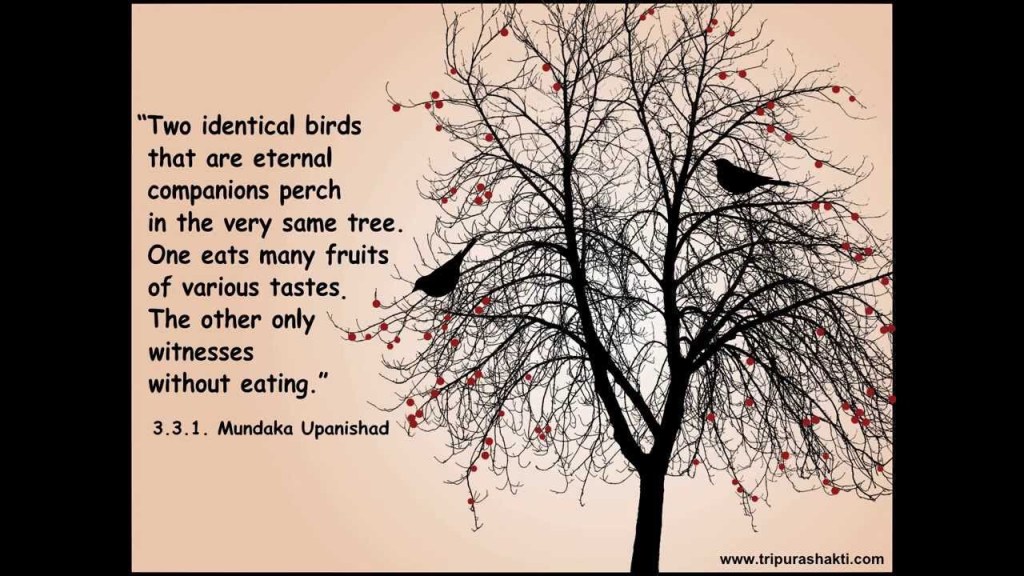
Talking about the relationships of the unattached witness and the attached soul, the famous two birds in one tree Sloka from the Upanishads provides the classic conceptual framework for this Sloka in Dakshinamurthy Stothram.
The Shruti, says: By Mâyâ, Siva became two birds always associated together; the One, clinging to the one unborn (Prakriti), became many as it were (vide Mundaka- Up. 3-1; Yâjniki-Upanishad 12–5).
Meaning of the Sanskrit Words – “Suparnau – two of good motion or two birds; (the “word Suparna” being used to denote birds generally); Sayujau – inseparable, constant, companions; Sakhayau – bearing the same name or having the same cause of manifestation. Being thus, they are perched on the same tree (‘same,’ because the place where they could be perceived is identical). ‘Tree’ here means ‘body;’ because of the similitude in their liability to be cut or destroyed. Parishasvajate – embraced; just as birds go to the same tree for tasting the fruits.
Two birds bound to each other in close friendship are perched on a tree. While one of the birds is busy consuming the fruits of the tree with great relish, the other seems to be in a state of detached equanimity just looking at its compatriot. The tree in this example represents the body. The bird busying itself with the material pleasures accorded by the tree is the ‘Jivātma’ (individual soul), that has an inextricable identification with the body and mind. Such an identification makes the Jivātma both the ‘karta’ (doer) and the ‘Bhokta’ (enjoyer). The observing bird on the other hand, represents the ‘Paramātma’ (the Supreme Self). The Supreme Self remains uninfluenced and untainted by any material pleasures and possessions and remains a still tranquil witness.
Adi Śankarācārya in his commentary to this sloka says – This tree as is well known has its root high up (i.e., in Brahman) and its branches (prana, etc..) downwards; it is transitory and has its source in Avyakta (maya). It is named Kshetra and in it hang the fruits of the karma of all living things. It is here that the Ātman, conditioned in the subtle body to which ignorance, desire, karma and their unmanifested tendencies cling, and Isvara are perched like birds. Of these two so perched, one, i.e., kshetrajna occupying the subtle body eats, i.e., tastes from ignorance the fruits of karma marked as happiness and misery, palatable in many and diversified modes; the other, i.e., tbe lord, eternal, pure, intelligent and free in his nature, omniscient and conditioned by maya does not eat; for, He is the director of both the eater and the thing eaten, by the fact of His mere existence as the eternal witness (of all); not tasting, he merely looks on; for, his mere witnessing is direction, as in the case of a king.”
The Way Forward
Swami Dayananda Saraswathi in his lecture says that in all but one relationship listed by Adi Sankara , the “bedha”- the difference between the Atma and the Maya influenced Jeeva continues to exist eternally irrespective of the transactions. The guru-shishya relationship even though is a cause and effect relationship is the only one which ensures that the influence of Maya is nullified and the true nature of Jeeva is revealed through the guru’s teachings. In that state, even the guru-shishya relationship withers away and so too the other relationships.
And that is perhaps why Adi Śankarācārya says, even this confused jeeva is really none other than that dakṣiṇāmūrti only and therefore he says Tasmai Shri Gurumoorthaye; To that Gurumoorthy, dakṣiṇāmūrti , my namaskaraha.
அன்பு சிவமிரண் டென்ப ரறிவிலார்
அன்பே சிவமாவ தாரு மறிகிலார்
அன்பே சிவமாவ தாரு மறிந்தபின்
அன்பே சிவமா யமர்ந்திருந் தாரே
என்ற திருமந்திரப் பண் இக்கருத்தினைப் பிரதிபலிக்கிறது.
This, in essence is the eighth Sloka.
Long distance shoot using iPhone from the balcony of my house.
ஒப்பனை கலந்த உறவுப் பரிமாற்றங்கள் – Illusionary Relational Transactions – An illustration
Preamble:
In the 7th verse, Śankarācārya pointed out that aham or “I am” alone is inherent in and through all the states of experience and therefore that I am or sat chit ātma alone must be taken as the real I. And since all the other states are subject to arrival and departure, he should be taken as my real nature; I am Satcidātma. And relevant to every particular state, I take the attribute to myself; like the youthful-I, youth-I; old-I, waker-I, etc.; even those attributes should not be taken as an integral part of I; because even the attributes are subject to arrival and departure, which means the attributeless-I alone is the ātma and this attributeless-I alone is called Sakshi. On the other hand, if I take the incidental attributes also as my intrinsic nature, then I mistake myself as an attributed-I, which is called ahaṃkāra. So, because of ignorance when I add attributes to myself it is called ahaṃkāra; through wisdom when I see the attribute as distinct from me, then I am called Sakshi. So, the difference between ahaṃkāra and साक्षि sākṣi is caused by ignorance and wisdom; in ignorance attributes are added; I am ahaṃkāra. In wisdom attributes are not added; I am sākṣi. This was the content of the teaching of the 7th verse
Maya – ஒப்பனை – An overview
Now in the 8th verse; Adi Śankarācārya says unfortunately most people are in a state of ignorance; and therefore they do not own up the sākṣi-I, and therefore they remain the empirical ahaṃkāra-I.
Two questions arises immediately –
1. “How come? Why are most of us ignorant?”.
2. The moment I become empirical ahaṃkāra, what happens?
For this we should try and understand the concept of Maya (Illusion). The subject of “Maya” is Vedantic Student’s delight. So much literature is available on the subject. However for our study, we will take the verses given in Sureshwaracharya’s Mānasollāsa (text and translated by Alladi Mahadeva Sastry first in 1899).
The excerpts reproduced here are from Mānasollāsa.
Puranas say that Rahu and Ketu** are, respectively, the head and the trunk of one Rakshasa’s body severed into two; so that, when one speaks of the head of Rahu, we cannot suppose that the head exists distinct from Rahu. The two are, in fact, one. Similarly when Paramesvara is spoken of as the cause of the universe, we should not understand that the universe is distinct from Paramesvara. There is only one existence, namely, Paramesvara. That Isvara amuses Himself assuming, of His own accord, the forms of worshipper and the worshipped, of teacher and disciple, of master and servant, and so on. He who is a son with reference to his father is himself the father with reference to his son; one alone, indeed, is imagined in various ways according to mere words. Therefore, on investigating supreme truth, we find that the Light alone exists. False (mithyâ) indeed is all notion of difference in Ātman, caused as it is by Mâyâ. All our mundane experience is a display of Mâyâ. Like unto suṣupti, Mâyâ is nullified by knowledge of Ātman. The name ‘mâya’ is given to an appearance which cannot be accounted for. It is not non-existent, because it appears; neither is it existent, because it is nullified. It is not distinct from the Light, as the dark shadow is distinct from the sun. Neither is it identical with the Light because it is insentient. Nor can it be both distinct from and identical with the Light, because it is a contradiction in terms. Or, Maya may be compared to the shadow which conceals the sun from the view of those who are blind by day. Here the sun’s light itself appears to be a shadow; and the shadow, therefore, has no distinct existence from the light. It is not said to be made up of parts, because no parts caused it. Neither is it devoid of parts, since in the effects it is made up of parts. This harlot of a Mâyâ, appearing only so long as not scrutinised, does deceive the Ātman by her false affectations of coquetry.
Mānasollāsa Chapter 8 Slokas 5-16
(** – Ref: Introduction to Sloka 6 for the story about Rahu & Ketu from the Puranas).
கண்ணன், மமமாயா என்றும் தைவீமாயா என்றும் இந்த மாயையைப் பற்றிக் குறிப்பிடுகிறான். மம என்றால் என்னுடைய என்றும் தைவீ என்றால் தெய்வீகமான என்றும் பொருள்படும்.
ஏஷா என்றும் மாயைக்கு ஒரு அடைமொழி கொடுக்கிறான். அதாவது புலன்களால் உணரக் கூடியது. கண்களால் காணவும், செவிகளால் கேட்கவும், சருமத்தால் உணரவும், மனதால் புரிந்துகொள்ளக் கூடியதுமான மாயை. ஆக, மாயையின் வடிவில் உனக்கு எந்நேரமும் நான் காட்சியளித்துக் கொண்டுதான் இருக்கிறேன் என்று கண்ணன் நமக்கு உறுதி கூறுவதாக இதைப் புரிந்துகொள்ள வேண்டும்.என்னை வெளிப்படுத்திக்கொள்ளாத பிரம்மமாக இருக்கையில், நானே மாயையாக இருக்கிறேன் என்றும் கண்ணன் கீதையில் தெளிவாகவே குறிப்பிடுகிறான். அவனே மாயையாய் நம்மை மருள வைக்கிறான்.
இருள்நீங்கி இன்பம் பயக்கும் மருள்நீங்கி
மாசுஅறு காட்சி யவர்க்கு
என்று திருக்குறளில், மெய் உணர்தல் அதிகாரத்தில், திருவள்ளுவர் கூறியது என் நினைவிற்கு வருகிறது.
So the answer to the first question is clear. We are ignorant thanks to Maya. Now the second question.
Relations and Transactions – உறவுகளும் பரிமாற்றங்களும்
The moment I become empirical ahaṃkāra, I cannot avoid relationships with the relevant world. So the “relationless” Atma becomes “related” or “relationed”. It is a never ending story of relationships.
நானாக நானில்லை, ஏனெனில்
மாயையவள் தரும் ஒப்பனையிட்டு
நானெனும் உள்ளொளி மறைந்து
நானெனும் உறவுகள் மலர்ந்தன – பின்
நானெனும் பொய்யை நானே
நடத்தினேன் உறவுகளுடனே !
அந்த உறவுகள் ஒரு தொடர் கதை; அந்த ஒப்பனை கலந்த உறவுகள் எத்துனை எத்துனை ! இவ்வுறவெனும் உலகத்தில் வரவொன்றும் இல்லாததால் வறுமையின் வாரிசாகி வாசலோடு துரத்தபடுகிறோம். ஒப்பனையைக் கலைத்து உள்ளிருக்கும் மெய்ப்பொருளை உணர்ந்தால் நிலையான வீடுபேறு. இதுவே இப்பண்ணின் சாரம்.
இப் பண்ணில் எடுத்துக் காட்டாக ஓரிரு உறவுகளை ஆதி சங்கரர் விவரிக்கிறார். அவைதனை அடுத்த பதிவில் காண்போம்.
What all relationships? Plenty.
A few examples are discussed in the Sloka which we will see subsequently. What essentially happens is that this “jivatma” which was “relation less” and who is otherwise a witness “Saakshi” becomes related and the misery starts with transactions and continues till we know our true self through “atma gnanam”.
With this understanding let us get into the Sloka in the next blog.





 Prabhu's Ponder