This Hindu festival celebrating the birth of Lord Surya (the Sun God) and the onset of spring. Known as Surya Jayanti or Arogya Saptami, it marks the sun turning its seven-horse chariot toward the northern hemisphere (Uttarayana), symbolizing light over darkness and the start of warmer, longer days.
Vividly remember going around the bushes in the village and plucking leaves with the flowers (called Calotropis gigantea – “Erukkalam Poo” ) and having early morning bath with the leaves and flowers on the head and pouring water over it. It is called Arunodaya Snan.
Here is my maiden venture into Carnatic Music Composition. As a novice, I have no clue about this genre and its notations. All I heard was the song Muruga Muruga sung by the legendary sisters Radha & Jayalakshmi in the raga Saveri.
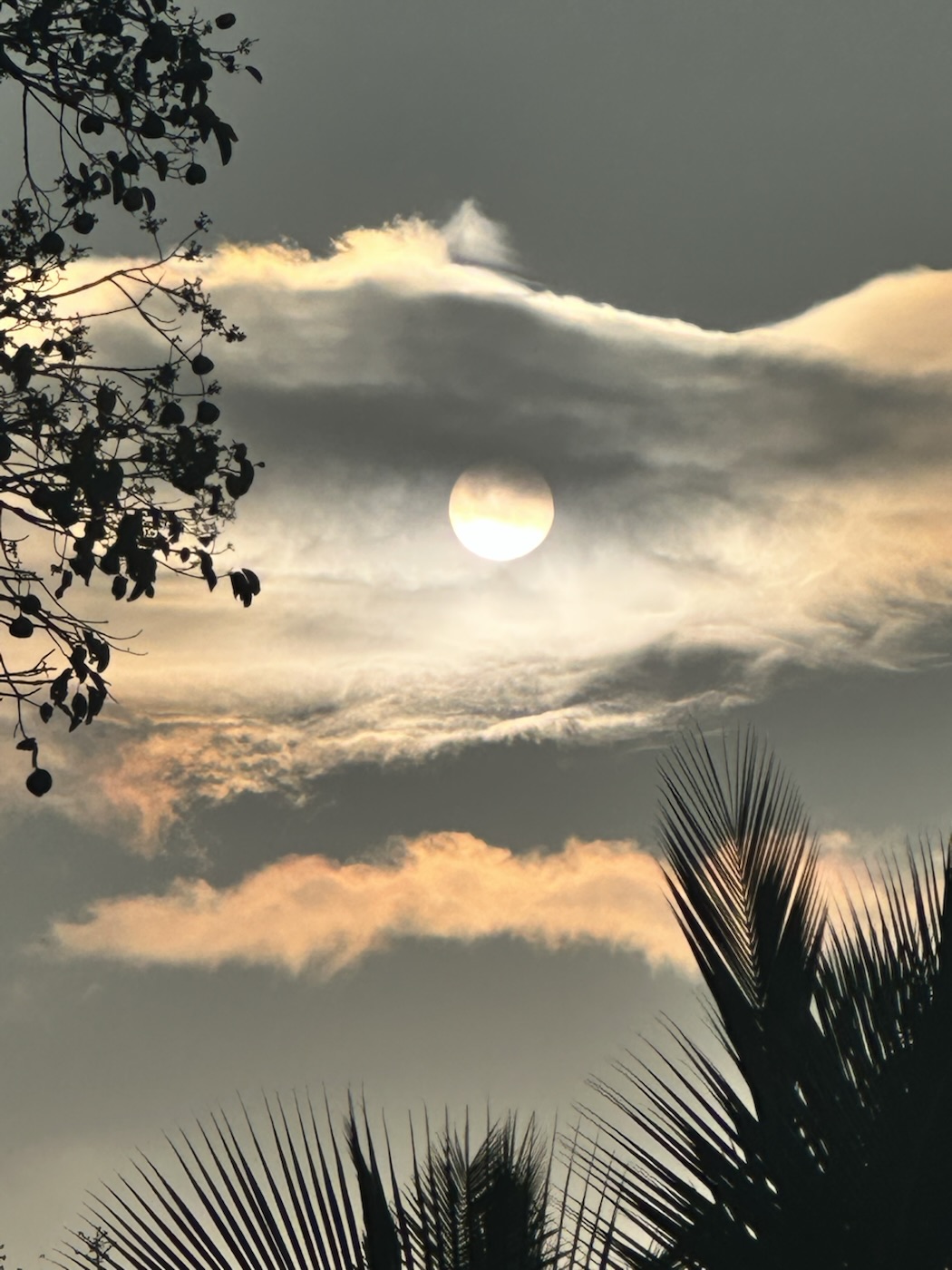
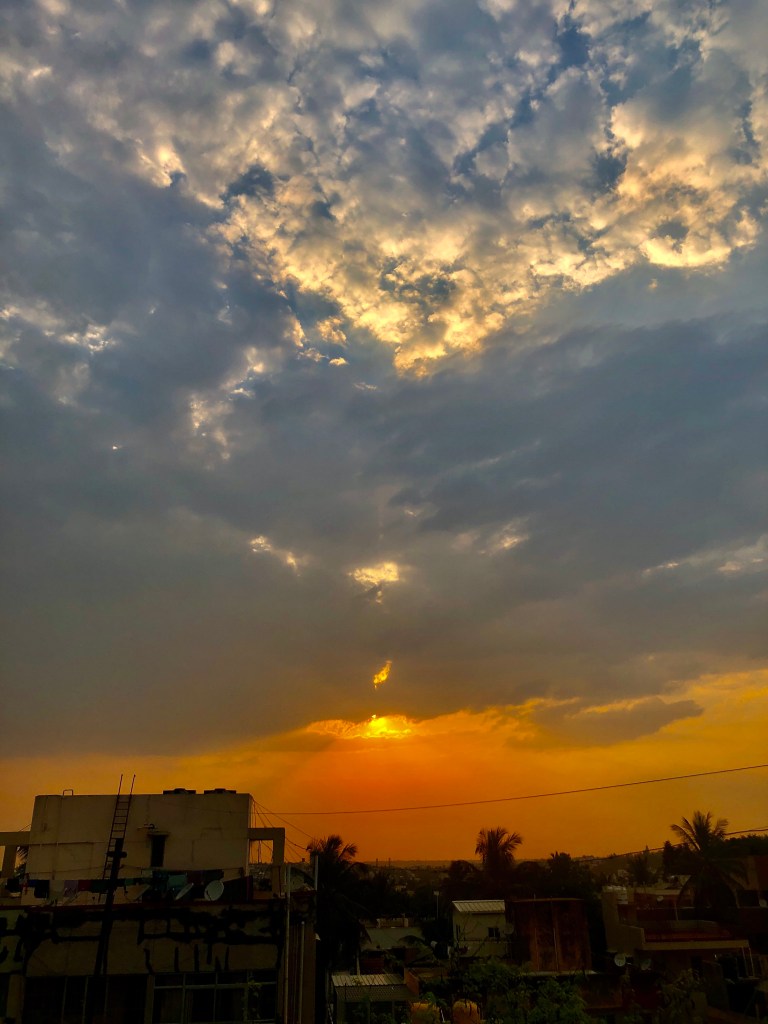
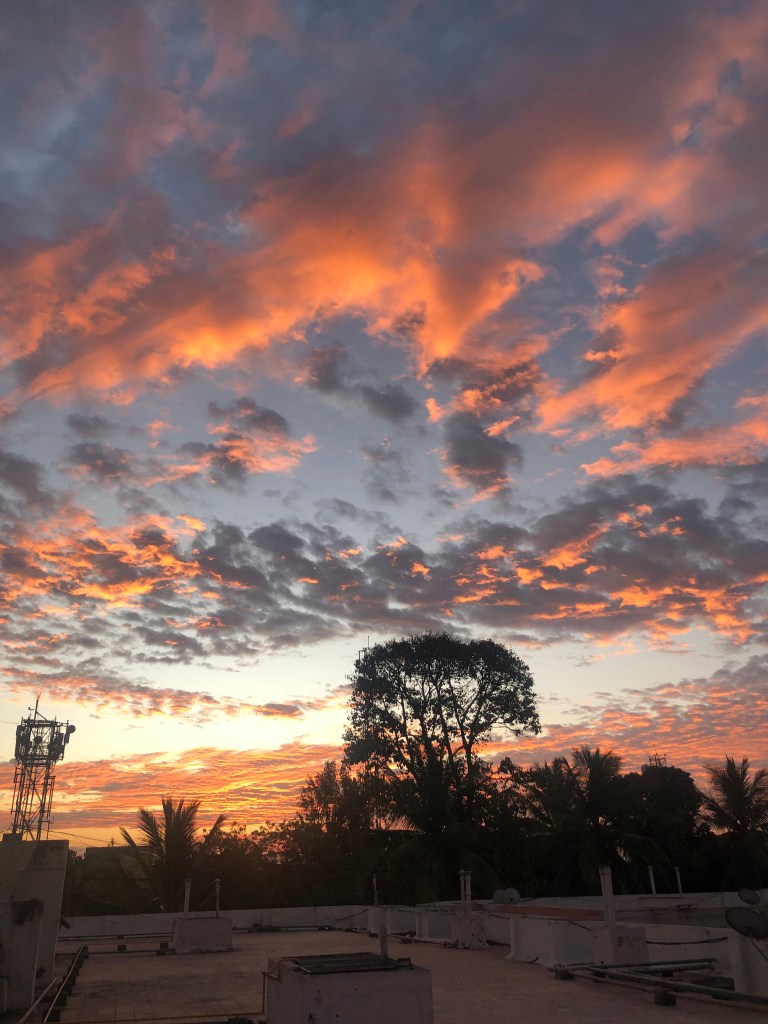
A typical Mid November in Bangalore, when the blue sky is taken over by low level rain bearing clouds, when incessant drizzle makes driving crazy, when the atmosphere is nothing but dull and gloomy, all you have to do is to reach your roof top at home, park yourselves there with a hot cup of coffee and watch the skies.
See the enthralling match between the Sun and the Clouds absolutely free. If you are lucky you should be able to see the Moon as a substitute player for the Sun.
Of course, it is mandatory that there is an instrumental running commentary in form of the Raga “Subha Pantuvarali”.
All your doom and gloom gets washed away and there is nothing but bliss.
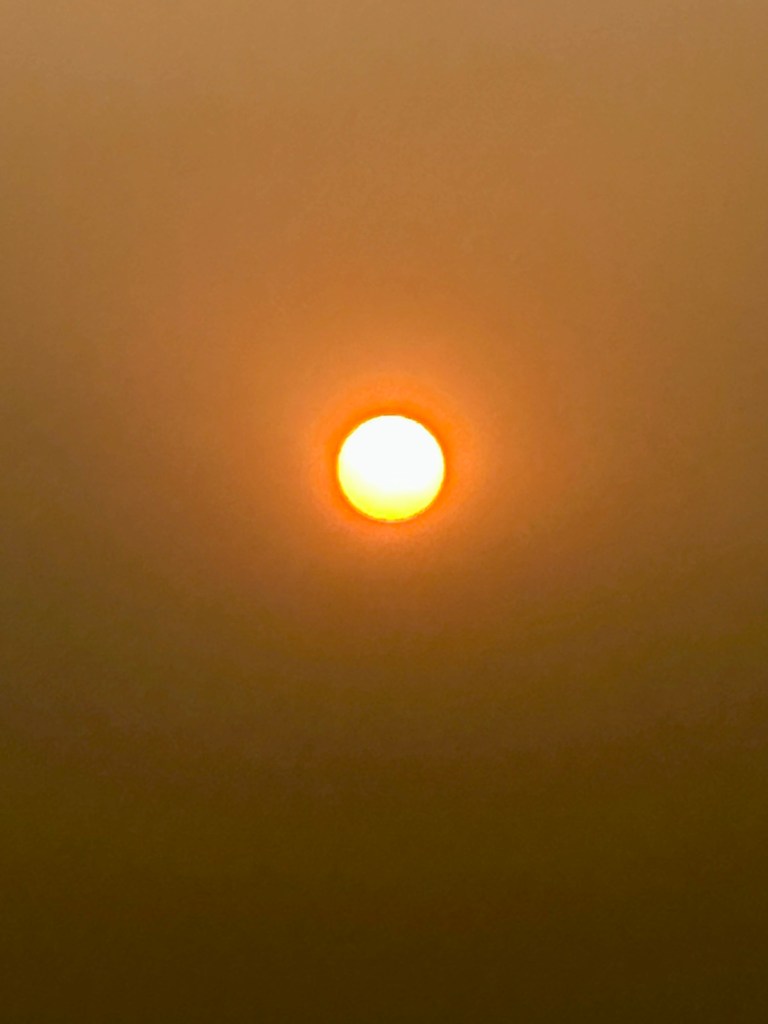
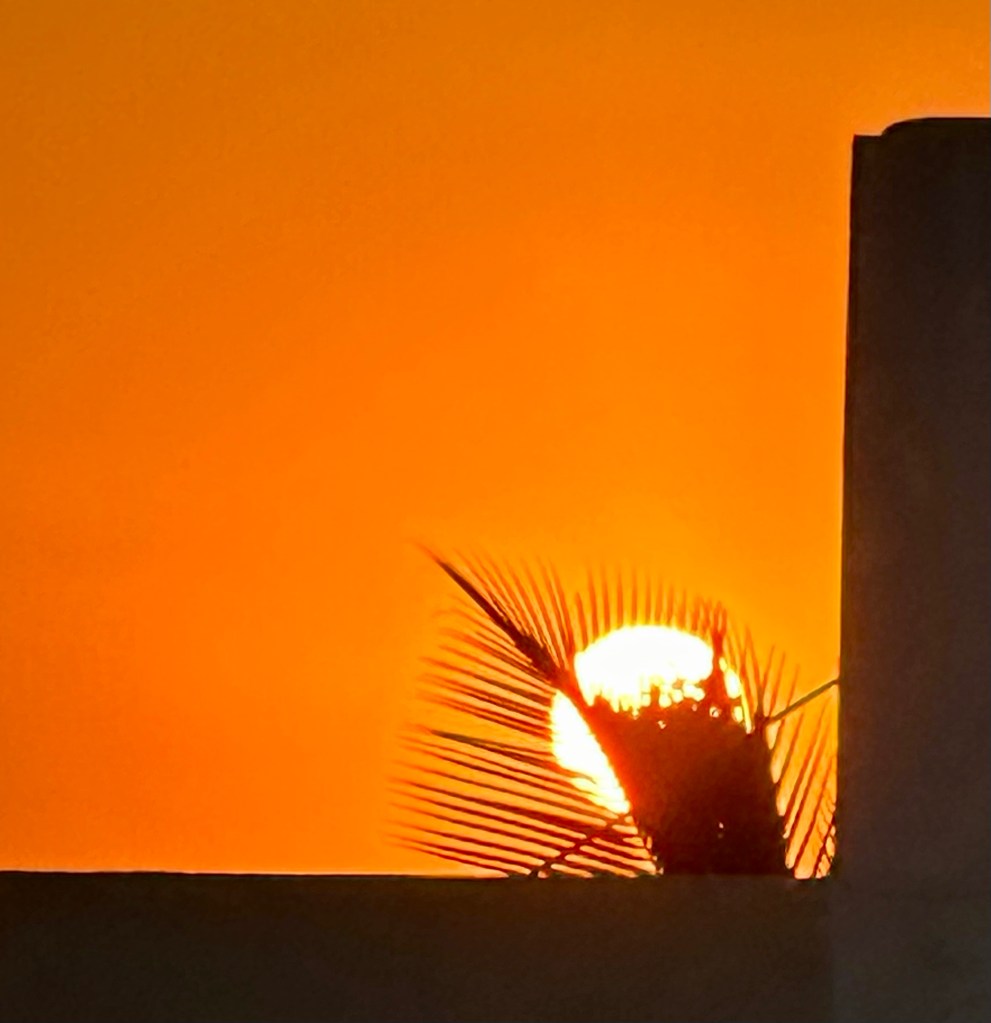
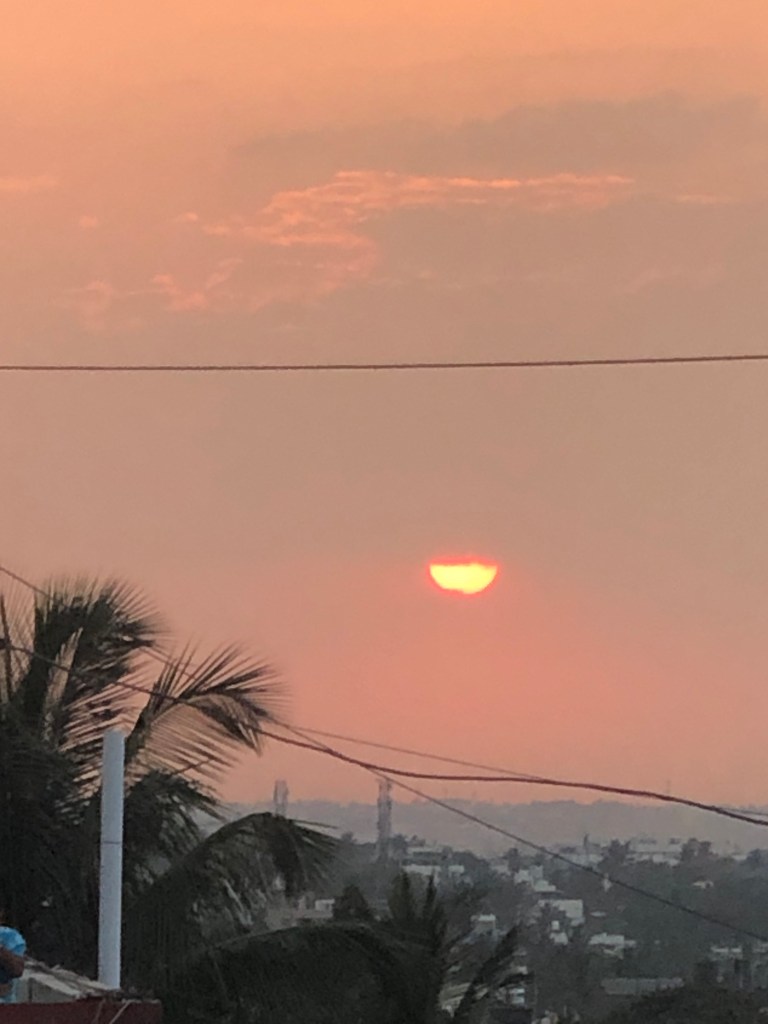
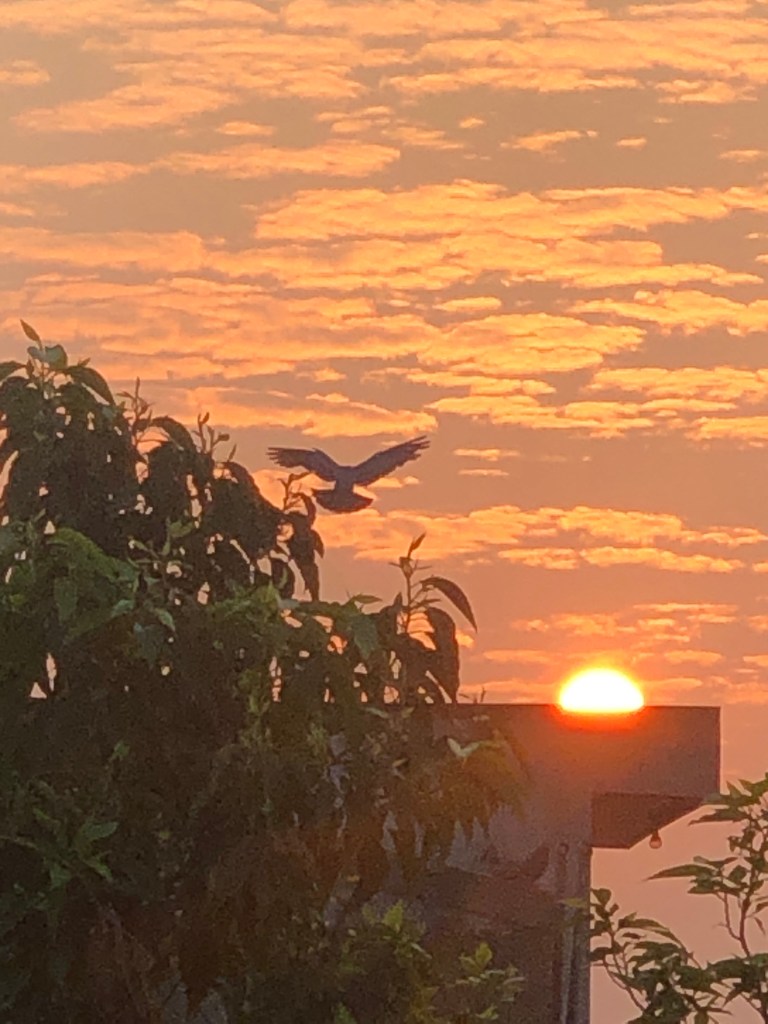
All my photographs taken with my iPhone about Sun Rise and Sun Set will appear in my Substack Newsletter along with a prayer on Aditya, the Sun God. Here is the link.
சூரிய உதயம், சூரிய அஸ்தமனம் பற்றிய எனது புகைப்படங்கள் (ஐபோனில் எடுத்தது) எனது “ஸப்ஸ்டாக்” வலைப்பதிவில் வெளியிடப்படுகிறது. இதோ இணைப்பு
An interesting imagination fully backed up by Aditya & Varuna and most definitely by my iPhone.
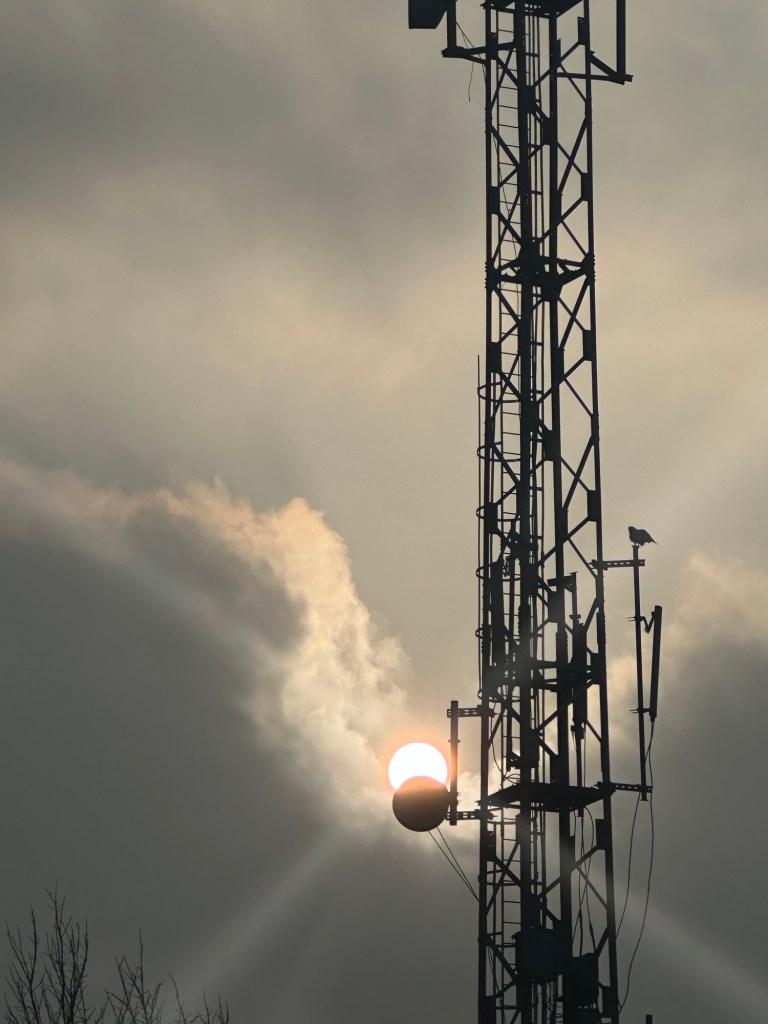
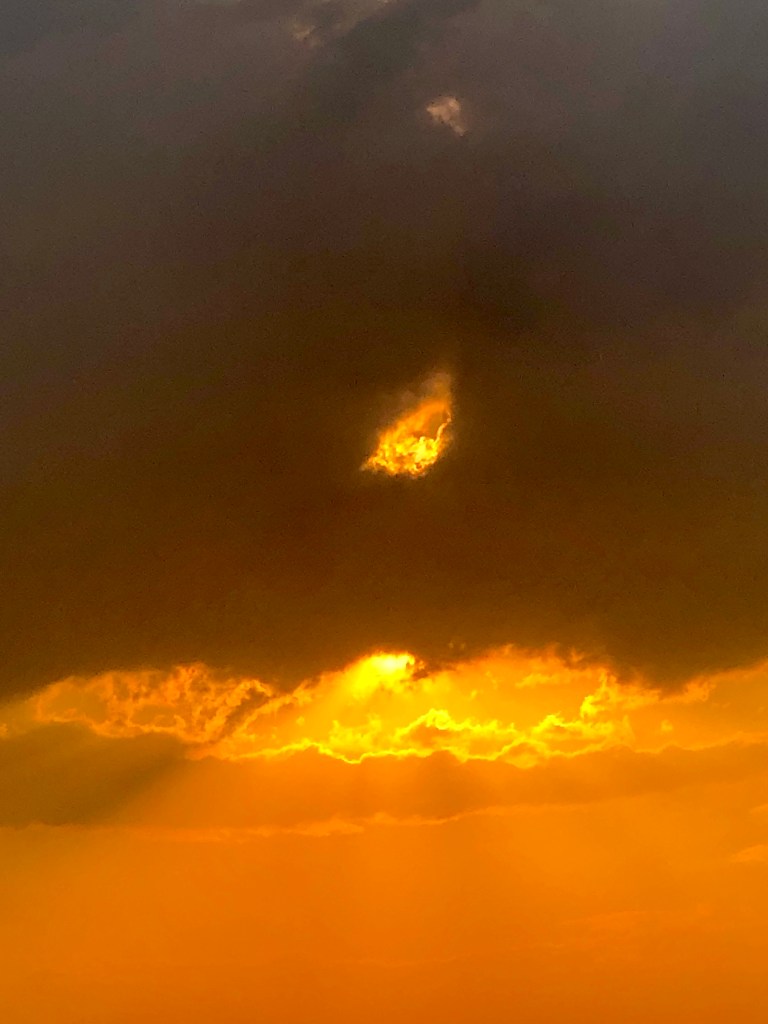
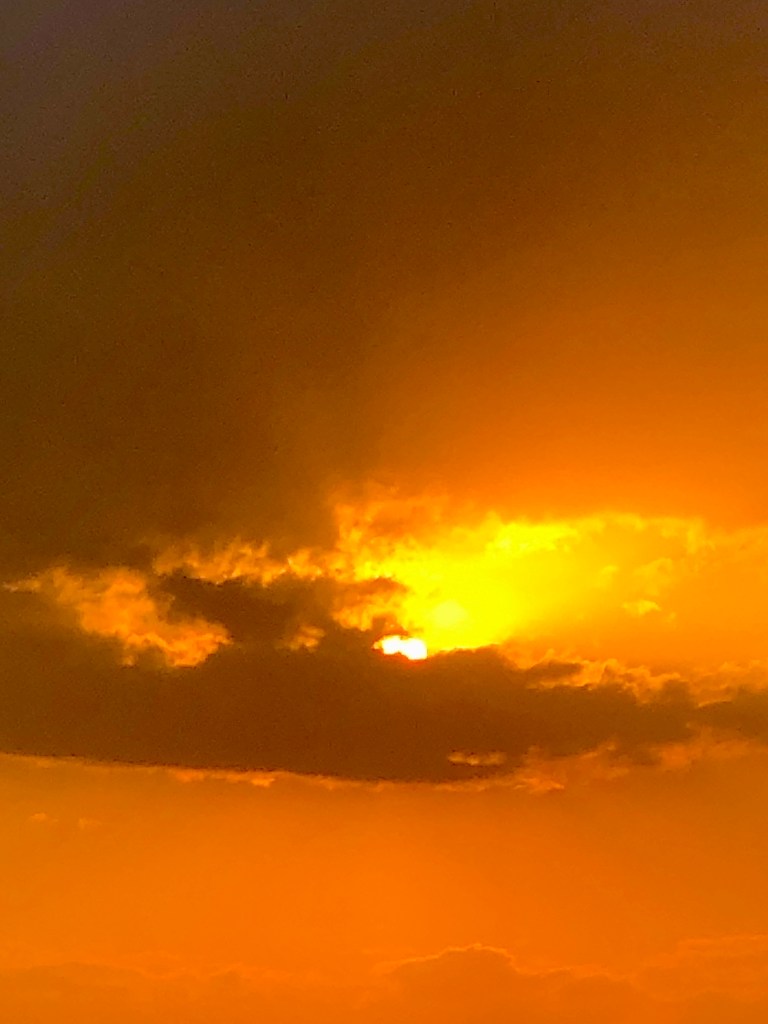
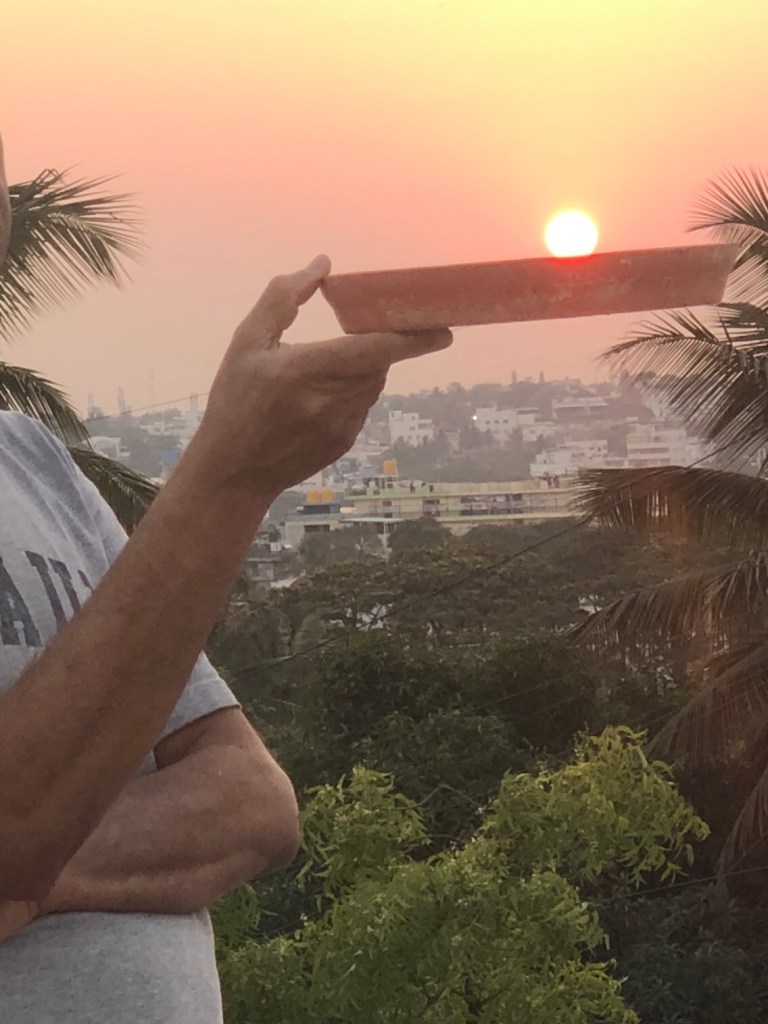
Monday, 03 April evening. Time for yet another routine in my retired life - the evening walk for one hour (scheduled at 1730 Hrs). Mother Earth was perhaps yearning for some water after a long, bright and sunny day. Varuna sensing this started to respond. He gathered his allies….and then started this amazing battle royal with Aditya.
At 1749 Hrs, Varuna very nearly succeeded in vanquishing Aditya, with the later fighting to free his arms (Rays) and managed to do some stretching. (See the photo below)
The battle intensified for the next ten minutes with Aditya battling his way out
Aditya managed to extricate Himself from the clutches of Varuna and his allies briefly, before He was again well covered and surrounded.
There was hardly any winner here. Mother Earth sensing that both her close friends are battling out for Her sake, decided to call it off and rotated herself and ensured that Aditya moves away from the scene by setting Himself to resume his work at another location of Mother Earth, ten minutes after the battle started.
Strangely the entire battle was enacted behind an Apartment named “Krishna Leela”.
When we say “wild and wonderful” where does our mind jump to immediately?
“Hakuna Matata. kusafiri” is the answer.
Confused with the answer? In the East African language of Swahili, it simply means “no worries”, “take it easy”. The answer is “Safari”.
Safari -An introduction
In Swahili, the word safari means “journey”, originally from the Arabic noun سفر, safar, meaning “journey”, “travel”, “trip”, or “tour”; the verb for “to travel” in Swahili is kusafiri. These words are used for any type of journey.
Safari entered the English language at the end of the 1850s thanks to the British explorer Richard Francis Burton. In 1836, British Army Engineer,
William Cornwall Harris led an expedition purely to observe and record wildlife and landscapes. Harris established the safari style of journey, starting with a not too strenuous rising at first light, an energetic day walking, an afternoon rest then concluding with a formal dinner and telling stories in the evening over drinks and tobacco.
The hunting aspect traditionally associated with the safari is said to have its origins where villagers got together to hunt wild boars and reclaim land for farming. However it was the British who used Safaris for hunting for personal pleasure and popularized it.
Gujarat – The wild and wonderful
Our trip to Gujarat contained two segments where we stuck to the spirit of William Cornwall Harris style of Safari as a means to understand the wild and wonderful Gujarat.
Segment 1 – Gir – The kingdom of the “Wild and Wonderful”.
Part A – Jungle Safari
The Gir National Park was established in 1965 in the erstwhile Nawab of Junagarh’s private hunting area, with a total area of 1,412 km2(545 sq mi), of which 258 km2 (100 sq mi) is fully protected as a national park and 1,153 km2 (445 sq mi) as wildlife sanctuary.
Kicking off the day at 0530 Hrs we started our Safari in the jungles of Gir. A four hour drive in an open Gypsy (A jeep) took us the nook and corner of the sprawling Gir Forest. We were lucky to spot a lioness marking her territory right at the start of the Safari. The rest of the Safari covered other animals and birds. Here is an overview.
Sasan Gir – Jungle Safari
This was followed by an exquisite lunch and siesta at the FERN GIR FOREST RESORT.
Part 2 – Devalia Safari
Evening Safari was a bit different; we wanted to present ourselves as “strange moving creatures with two legs” to the wild and wonderful. So we locked ourselves in a cage mounted on a Gypsy and paraded ourselves to the wild animals in the Gir Forest. Needless to say that the Wild and Wonderful didn’t bother about us at all and were busy at their routines.
Gujarat Tourism calls this place as “ Devalia Safari Park ” also known as “Gir Interpretation Zone- Devalia”. Here is our Safari with a dufference:
Devalia Park – Safari with a difference
Experience in this segment summed up – “High” on expectations (with increased Lions population and previous day sightings expectations built up) and “Moderate” on success in sighting.
Segment 2 – The Little Rann of Kutch – A saline sublime
In this segment, we moved away from the Jungle to the vast, dry and extremely hot saline desert.
Covering an area of 4954 Km2, Little Rann of Kutch is one of the most remarkable and unique landscapes of its kind. Wild Ass Sanctuary is located in this Rann which harbours the last population of Wild Ass (Equus hemionus khur).
It is a vast desiccated, unbroken bare surface of dark silt, encrusted with salts which transforms into a spectacular coastal wetland after the rains. The present saline desert of the Little Rann (saline desert-cum-seasonal wetland) of Kutch is believed to have been shallow sea.
We checked into the Royal Safari Camp at Bajana and relaxed after a sumptuous meal.
Part A – The Wild Ass Safari
We were ready for the Evening Safari. Temperature soared to 43 deg C (in the last week of March itself) and here we are driving in an open Gypsy towards the saline desert from the village center.
Wild Ass Safari – LRK
Part B – Nature’s Aviary at the Saline Desert
We even got down from the Gypsy and walked around the waterbodies to have an exclusive “darshan” of the birds around there. Wow. What a sight.
Nature’s Aviary
Experience in this segment summed up – “Low” on expectations (what do you expect, except a few Wild Asses and that too in a hot desert) and “High” on success in sighting (not only Wild Asses but also an impressive show by the Birds and Aditya, the Sun while setting).
Lessons learnt – Safari and Vedanta
This is our second Jungle Safari after the one at Kanha Tiger Reserve at Madhya Pradesh in 2018.
Safaris like these drive home several lessons, many of them straight from our Vedanta.
Here are some of my learnings:
1. If you are keeping your expectations (desires) high, you are bound to get disappointed (frustrated). After all you are looking for a few hundred wild animals (which are mostly territory oriented) in an area spanning thousands of square kilometers.
2. What you get to see (or otherwise) need not necessarily be seen (or otherwise) by someone who are either ahead of you or behind you. Your experience is unique to yourselves.
3. Time and Space can decide what you get or loose. In other words your experience is time and space limited.
4. Enjoy what you see, your experience. That moment is precious. The idea of being present and savoring the moment is not a novel idea, but it’s often a forgotten one. David Attenborough’s extraordinary documentaries on Animal Kingdom are awesome; no doubt about that. But nothing will ever have as big an effect as seeing the real beauty of the world and its inhabitants on safari by yourselves.
5. Silence is golden. Feel it and enjoy it. Through the day enjoy that moment where a bird or a monkey or a deer provides an alarm for an approaching animal. In the night at the Camp, listen to the insects’ hum and chirp; the stars in the sky and the sounds of nature.
6. See the positives. Even dirty roads and bushy terrain offers great views.
7. The Sun always provides spectacular views both in the morning and evening. Enjoy it and pray Aditya for keeping us alive.
8. Be patient. You have no choice. Sometimes what you want and expect doesn’t happen right away; sometimes what you want takes much longer than you thought it would.
9. Ears are better than mouth. Listening is Often Better Than Talking. Listen to the safari guide or just listen to the sounds of the bush. The point is that when we listen, our bodies are much more attuned to everything that’s happening around us. You also learn what you may not have known.
10. Life is not a rat race. Reconnect with the beauty of little things and enjoy.







 Prabhu's Ponder