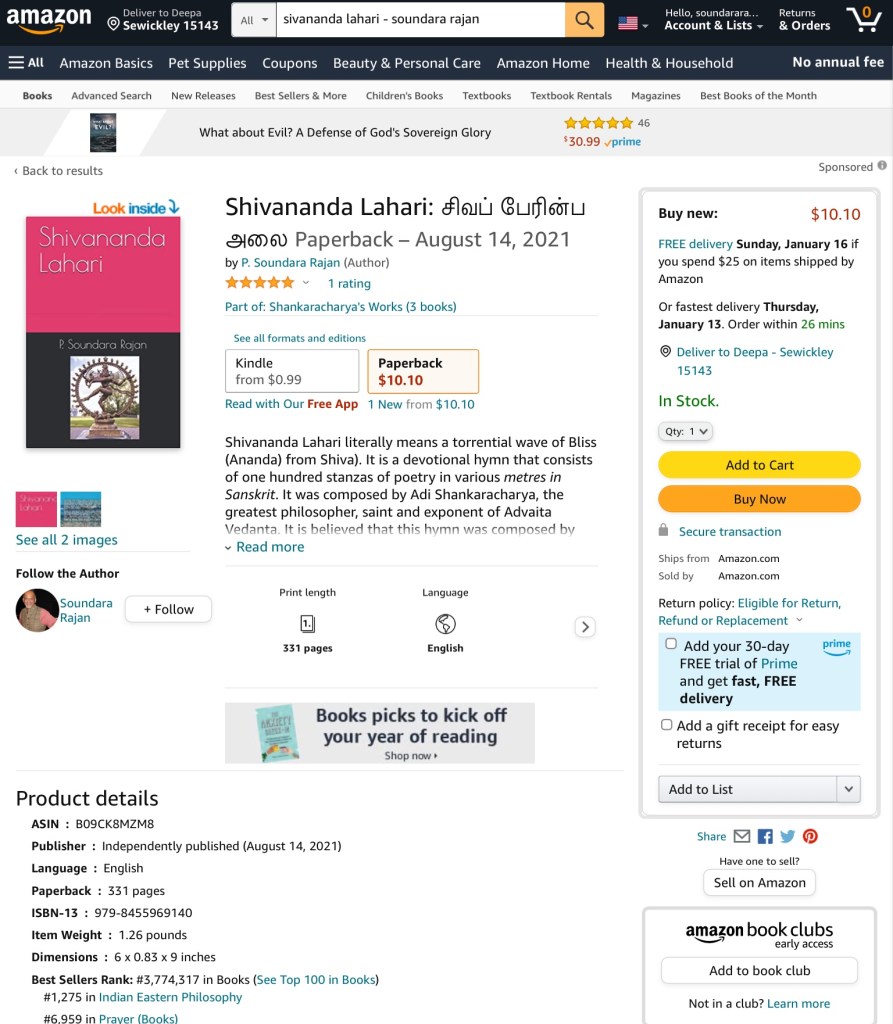
Adi Sankaracharya’s Sivananda Lahari and Dakshinamurthy Stothram – All the Sanskrit Verses with Transliteration, translation and meaning in English and Tamil is available at Amzon Kindle and will be available at
speciallydiscounted price of 0.99 USD (From USD 2.99) each
from Jan 10th to Jan 16 for Mahara Sankaranthi & Pongal.
The greatness of The Supreme Reality-The Brahma Tatwa is of the nature of the Pure Consciousness, is without parallel or comparison, is totally free of time and space limitations, and is always free of Maya. This was brought out in Daskam 1. That Brahma Tatwa which is not easy to grasp in the beginning, but the realisation of which, is the highest purusharth (i.e. liberation), that very Reality shines right in front in concrete form in the Guruvaayur temple as Lord Krishna. Through this first Daskam, the transcendent and immanent (Nirguna and Saguna) nature of the Brahman is brought out.
The reality of the Brahman is not a question to be solved by dialectic which the vast majority of the human race will be unable to understand. Dialectic in itself and without reference to personal experience cannot give us conviction. Only spiritual experiences can provide us with proof. Narayana Bhattathri has brought out his spiritual experience at the Guruvayur Temple for the benefit of ordinary humans like us. In Dasakam 2, the sweetness of the form and the devotion to that form was brought out clearly.
Now in Daskam 3, Bhattathri brings out his personal health issues and earnestly appeals to the Lord to help him. In that process he amplifies the various aspects of Bhakti and the significant gains that devotees acquire through Bhakti Marga.
We will commence our study of the Slokas. Each Sloka will be covered in a blog.
The first Sloka of Dasakam 3 will appear on the Vaikunta Ekadasi day of 13th January 2022.
The subsequent blogs will appear on every Ekadasi day at 0400 Hrs (IST) and will contain a link to the Chanting Audio .
Each blog will cover the Sloka, transliterations in English and Tamil and the meaning of the Sloka in English and Tamil.
An important message here: Except for the translation in Tamil which is an expression of my limited understanding of the Sloka, everything else is what is available in the public domain.
Having brought out the distinct advantages of Bhakti Yoga in the previous Slokas, Bhattathri concludes this Dasakam with a fervent prayer to Lord Guruvayurappan in Sloka 10.
O all pervading Lord! Devotion to Thee is easily attainable just by submerging oneself in the nectarine flood of Thy stories. This can be done without much effort and it instantly leads to pure Knowledge – Bliss. O Lord of Guruvaayur! May I soon experience that state of melting of the heart in intense love for Thy lotus feet.
Meaning of the Sanskrit Words
त्वद्भक्तिः तु = त्वत्-भक्तिः तु = devotion to Thee, indeed
कथारसामृतझरीनिर्मज्जनेन = कथायाः + रसः + अमृतम् + झरी = कथारस-अमृतझरी = in the flow of nectar showering from Thy stories
निमज्जनम् = by submerging in its bliss =
स्वयम् सिद्ध्यन्ती = is self attainable, directly
विमलप्रबोधपदवीम् = विमल-प्रबोध-पदवीम् = the state of pure knowledge and enlightenment
अक्लेशतः = (नक्लेशः = अक्लेशः) = without any effort
तन्वती = bestows (because it gives)
सद्यः सिद्धिकरी = instant achievement
जयति = (and) is superior (to the other two paths)
अयि विभो = O Thou Universal Lord!
सा एव अस्तु मे = may I have that (Bhakti)
त्वत्पदप्रेमप्रौढिरसार्द्रता = त्वत्-पद-प्रेम-प्रौढि-रस-आर्द्रता = the state of melting of the heart from the bliss of intense love for Thy feet
There are six important Slokas (Slokas 9-14) of Isavasya Upanishad that clearly bring out the limitations of following the paths of Karma, Upasana and Gnana in isolation, in our spiritual journey. A seamless integrated approach is what is recommended for ordinary mortals like us in our journey. I get a feeling that Bhattathri echoes this philosophy in Sloka 9. Let us study this Sloka.
O Lord! Some people follow the path of Karma Yoga,and perform the various disciplines for long and attain mental purity. This only entitles them to become fit for the practice of Gyaana or Bhakti yoga. Some others strive hard pondering over the attributeless Supreme Brahman, based on logic and reason. They, without melting their hearts in love for Thee, take a long time to reach their goal of perfection.
Meaning of the Sanskrit Words
अत्यायासकराणि = अति-आयास-कराणि = great + effort + to be done = demanding great effort –
कर्मपटलानि = कर्मणाम् पटलम् कर्मपटलम् = Karma + portion/piece/section/chapter = the disciplines of Karma (yoga) = கர்மயோக
आचर्य = to be approached = by performing = புரிந்து
निर्यन्मलाः = निर्यन्तः + मलाः = set free + impurity = become purified (in mind) = மலமகற்றி
बोधे = awakening/knowledge = (required) for following the path of Gyaana (yoga) = ஞானோதயம்
भक्तिपथे अथवा अपि = भक्ते: + पथम् + अथवा + अपि = devotee + path + rather/and + also = and also for the path of Bhakti (yoga) = பக்தி மாரக்கமதிலும்
उचितताम् आयान्ति = उचितताम् + आयान्ति = fitness + gain = (one) gains fitness – தகுதி பெற்று
किम् तावता = किं + तावता = why + to that extent = what is the use (after spending so much effort) = இத்துனை முயற்சியின் பலன் என்ன
क्लिष्ट्वा तर्कपथे = क्लिष्ट्वा तर्कपथे = क्लिष्ट्वा + (तर्कस्य पथम् ) तर्कपथम् = distress/strain + logical reasoning + path = of straining in the path of logical reasoning (Gyaana yoga) = மிகை முயல் தருக்க விளை ஞான யோகம்
परम् तव वपुः ब्रह्माख्यम् = परं + तव + वपु: + ब्रह्म + आख्यम्- = Supreme + You + body + Brahman + name/known = (because) Thy unmanifested aspect known as Supreme Brahman = பிரமனெனும் பரம் பொருள்
अन्ये पुनः = others, however மற்றோர் எனினும்
चित्तार्द्रत्वम् ऋते = चित्त + आर्द्रत्वम् + ऋते = mind/heart + wet/moist/ + without = without melting of the heart (in love) – உளம் உருகி
विचिन्त्य = pondering over (trying to fathom)= தீர எண்ணி
என்ற திருஞானசம்பந்தரின் திருப்பதிகம் என் நினைவிற்கு வருகிறது.
Meaning of the Sanskrit Words
निष्कामम् – desire less, without self desire
नियतस्वधर्मचरणम् – नियतः + स्वधर्मः (स्वस्य ध) + चरणम् = assigned/laid down + one’s own duty + practice/follow = performance of one’s duties
यत् कर्मयोगाभिधम् = यत् + कर्मयोगः + इति + अभिधम् = that + karma yoga + which is + named = that which is called Karma yoga – கர்மயோகம்
तत् दूरेत्यफलम् = तत् + दूरात्एत्यम् + फलं = that + distant + fruitful = that becomes fruitful only in a distant future
यत् औपनिषदज्ञानोपलभ्यम् पुनः = यत् + औपनिषदः + उपलभ्यम् + ज्ञानं + पुनः = (Note – औपनिषदोपलभ्यं च तत् ज्ञानं च = औपनिषदज्ञानोपलभ्यम्) = that which + the fruit of the Upanishad which is Brahman + knowledge + again = (again) that which consists in attaining knowledge of Brahman as described in the Upanishads
तत् तु अव्यक्ततया = तत् + तु + न व्यक्तता = अव्यक्त = that + indeed + not evolved = तत्-तु-अव्यक्ततया = that indeed being abstract
सुदुर्गमतरम् चित्तस्य = सुदुर्गमतरम् + चित्तस्य = very difficult to cross + for the mind = is very difficult for the mind to pursue
तस्मात् विभो = hence, O All pervading Lord
त्वत्प्रेमात्मकभक्तिः एव = त्वत्प्रेम (त्वयि प्रेम ) + आत्मा + भक्तिः + एव = Love for you + soul + devotion + only = the Bhakti yoga which consists only in love for Thee
நிலையறிந்து மோனஆசானின் அருளுடனே நாலிரு சித்தி பெற்று
பிறவிப் பெருங்கடல் தாண்டி ஈடேறி வீடுபேறு பெற்றிடலாம்
Meaning in English:
Since the Divine Essence in all is made clear in this hymn, hence by listening to it, contemplating on its meaning, meditating on it, and glorifying it, one becomes endowed with the greatness of the knowledge of the Divine Essence ( present in all ); perhaps the Divine Essence by Itself will awaken within him after that again, the eightfold manifestations of Divine powers (Siddhis) unimpeded.
Understanding the Sloka:
Extracted from Swami Paramarthananda’s lectures
iti idam sarvātvamiti spūṭikritam. – In this manner, in nine verses, the sarvātva bhāva which is the essence of all the Upanishads has been taught by me. Adi Śankarācārya says in this manner, in 9 verses, I have taught or condensed the essence of all the upanishads; the essence of prastāna trayam I have given and What is the essence? sarvātmatvam. And what do you mean by sarvātmatvam, sarvam ātma eva. Everything in the creation is ātma alone; other than ātma there is nothing. The so-called anātma is also mithya, which has the content of ātma alone; Just as the so-called ornaments also are not separate substances, they are also nothing but gold with different names. Similarly, the so-called anātma prapancha also is also ātma only, with a different name; Names are different, but the substance is only ātma. And this is called sarvātmatvam, sarvam ātma iti bhavaha, sarvātmatvam. If you want to put in our own language, जीवात्म परमात्म ऐक्र्म् jīvātma paramātma aikyam,; we can also say brahma satya jagat mityā, jīvo brahmaiva na parāḥ. This vedantic essence has been taught by me; Śankarā says:
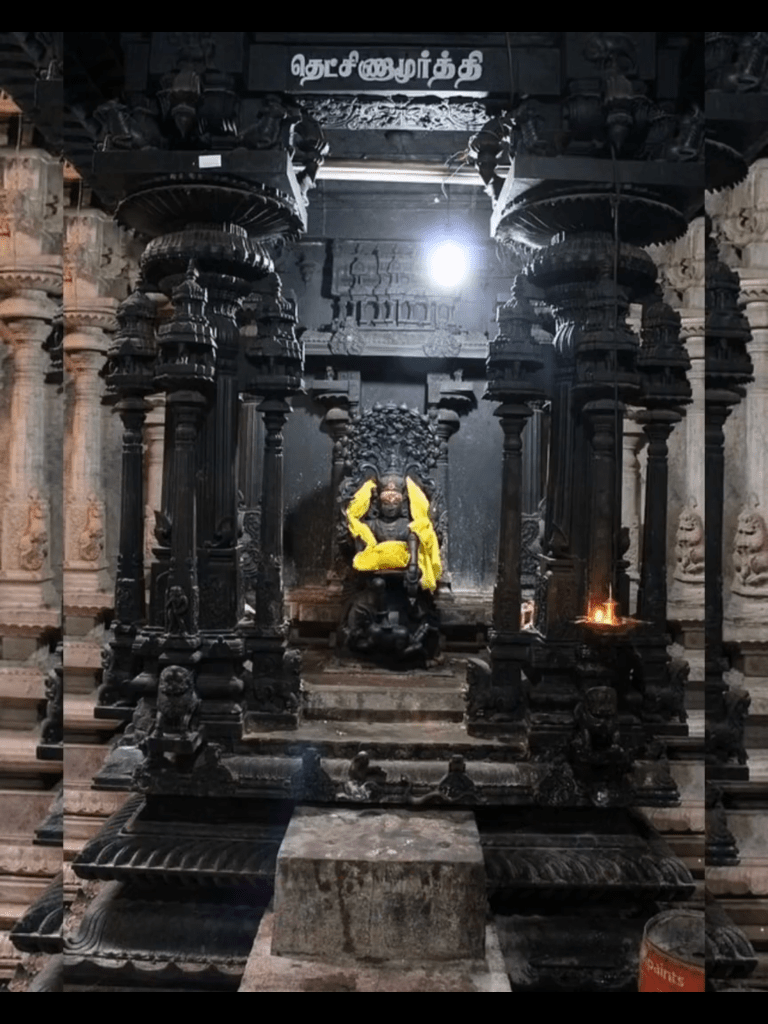
Where did I teach it? अमुक्षष्मन् स्तवे amuṣmin stave, in this sthoram called dakṣiṇāmūrti Sthothram; here he did not use the word ashtake; because two more added, therefore no more Ashtakam, instead of using the word ashtakam, he uses the word sthavam; Sthavam is the same as sthoram; sthoram means a hymn or praise of the Lord.
In this dakṣiṇāmūrti sthoram, that has been taught and therefore, study of dakṣiṇāmūrti sthoram is equal to the study of the प्रस्तान त्रर्म् prastāna trayam; because the content of dakṣiṇāmūrti sthothram is the same as the content of the prastāna trayam; means upanishads, geetha and brahma sutram. In all the upanishads, Geetha and brahma sutra, whatever has been taught; that is given in capsule form
“Thena”, therefore since dakṣiṇāmūrti sthoram is equal to प्रस्तान त्रर्म् prastāna trayam; अस्र् श्रवणा asya śravaṇā, a person, a seeker of moksha, should do the śravaṇam of this work. (Systematic and consistent study of this work for a length of time under the guidance of a competent teacher). So śrava ṇat; and not only śravaṇam, tat artha mananāt, one should also do the mananam, to find out whether there are any doubts in accepting this teaching. And what is this teaching? There is nothing other than me; the ātma; सवात्य मत्वम sarvātmatvam that means, I alone am in the form of everything; I am all.
And then dhyānāt; and later this has to be assimilated, so that it becomes my second nature; So śravaṇa manana nididhyāsana sādanāni. And then सङ्कीतयनात् saṅkīrtanāt. The word saṅkīrtanāt is given two meanings; for those people who are not fit for śravaṇa manana nididhyāsanam; because they do not have साधना चतुष्टर् संपवत्त sādhanā catuṣṭaya saṃpatti and therefore everything goes above their head, for those unprepared people; the word संकीतयनम saṃkīrtanam means by mere पारार्णम् pārāyaṇam itself they will gradually grow. They need not know the meaning. Let them daily chant this dakṣiṇāmūrti sthothram; that itself will give them sadhana catuṣṭaya saṃpatti; later opportunity for śravaṇam, manana nididhyāsanam. This sthotra will make you climb all those steps. Therefore even pārāyaṇam is a form of sādhana.
On the other hand, if a person is a qualified person and therefore, he has gone through śravaṇa manana nididhyāsanam; for those people, what is the next sādhana? If you call it sādhana, saṃkīrtanam, means after I assimilate this wisdom, I communicate this to others. Communication or sharing is another form of nididhyāsanam. It is a very beautiful form of nididhyāsanam.
And thus by following all these sādhanas, he will get the result; What is the result; सवात्य मत्वमहाववभूशत स्र्ात ् sarvātmatvamahāvibhūti syāt, he will attain the greatest glory, called sarvātmatvam, sarvātmatvam means the wisdom that I am everything. There is no second thing to frighten me; to harass; to torture me; to hurt me, to limit me, to isolate me, there is no second thing at all; this wisdom and this non-dual status is called sarvātmatvam, which is mahāvibhūti, which is the greatest glory called kaivalyam; Non-dual state.
And not only that. Look at the fourth line, aṣṭadāpariṇadam aiśvaryam ca; aṣṭadāpariṇadam aiśvaryam means aṣṭamūrti dakṣiṇāmūrti aikyam. aṣṭadāpariṇadam means eight-fold; ऐश्वर्मय् aiśvaryam is ईश्वरत्वम् īśvaratvam, which means the dakṣiṇāmūrti भावः bhāvaḥ. So, I will attain this status of ashta Moorthy dakṣiṇāmūrti . That means vishvaroopa dakṣiṇāmūrti aikyam;
This equanity is called svamitvam. And this mokṣaḥ is also svastāha, it has come from outside, it is only discovery of the very nature. svastāha means natural freedom; he claims. This is called jīvanmukti which will lead to videhamukti; which is the फलम् phalam.
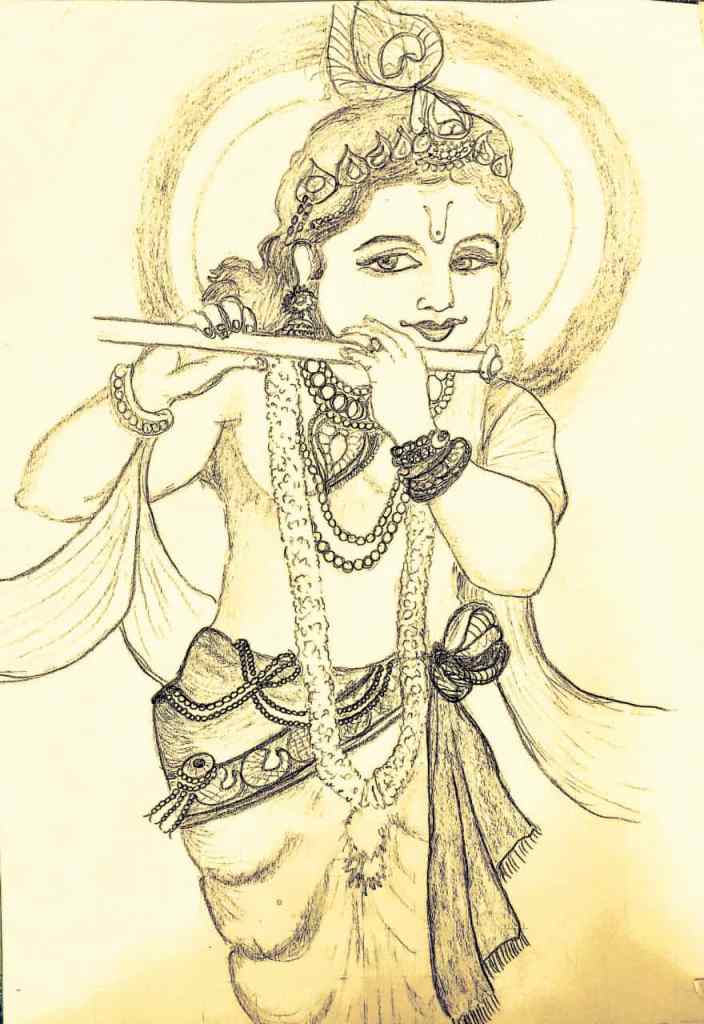
Lord Krishna’s beauty is beyond the imagination, infact all beauty arises from him only. As his name Krishna means ‘all attractive’ – means his beauty enchants everyone. In front of the beauty of Krishna everything fades and pales . Even the beauty we find in the world is only a spark of the transcendental captivating beauty of Lord Krishna , then how beautiful He, the source of all beauty will be . No wonder, the devotees who visit Guruvayur and see Him are in a state of Bliss and experience horripilation, says Bhattathri in this Sloka.
O Lord! Thy captivating form which continuously showers pure nectar, which is itself the Supreme Bliss-Consciousness holds the minds of those who hear Thy glories. Their minds are immediately stimulated and filled with joy. They experience horripilation all over their body and are bathed in the cool tears produced from ecstasy of joy.
For all of us, Life is nothing but the time spent between the maternity ward and crematorium on the “surface of a tiny rock-ball, rotating around a spherical fire in a tiny galaxy in an ever expanding galaxies ” loosely called as Earth, world, visvam, jagat etc. Tamil poet Kannadasan called the life as the time between between the drop of a water (semen) and the spark of fire lit. ஒரு துளி நீரில் ஜனனம் ஒரு துளி நெருப்பில் மரணம். இதனிடையில் தான் நம் வாழ்க்கையெனும் பயணம்.
In this “real” (or unreal?) world, all of us (none excluded) have one single goal – mitigating our pains and enhancing our pleasures. துன்பத்தைப் போக்கி இன்பத்தை அடைவதே நம் வாழ்வின் குறிக்கோள். Towards this we all carry out nonstop transactions within ourselves, with the world and of course with the “God” – the Unknown.
From a Vedantic perspective, life can be also stated as the journey. When we say “journey” we are not talking about a point to point or time to time journey. We are talking about a journey which is beyond the domain of time and space; beyond our sense and action organs. We are talking about a journey from avidya to vidya; from ignorance to enlightenment; a journey to understand the intricate relationships between the puzzling trio of Ishvara, Jiva and Jagat. Understanding this relationship called Isvara Jnana by the Seeker is the ultimate goal.
The first eight Slokas of Dakshinamurthy Stothram (some call it as Dakshinamurthy Ashtakam) provided us with the essence of this Vedantic perspective. It presented to us, the Vidya viz., knowledge of Atman, which is Pure Awareness, Changeless and unborn Ultimate Reality. We tried to understand that Vidya, the “atma jnanam” (Know Thyself) is an individual’s experiential learning about “atma isvara aikyam” under the able guidance of a Guru. All wisdom is born of spirit of self-enquiry. It dispels the non-understanding and the undivided intelligence shines in its own light. The wisdom has to arrive directly on the individual, no transmitted knowledge can be sufficient for the real enlightenment. Self is self-luminous. When consciousness becomes aware of itself, there manifests the Intelligence itself. That awareness is Vidya. Adi Sankara with the help of examples highlighted the purpose of our life.
The concept of Viswa Rupa:
Our culture is deep rooted in the spiritual ethos of each individual working towards his own ultimate liberation as a fundamental goal of life. This is the unique gift of Vedic philosophy to the world of spirituality. Ordinary mortals like us find it impossible to acquire this Vidya in our cycles of life (birth and death).
Our Vedic Rishis realised our plight and the fact that Brahman as creator or Supreme Consciousness is too abstract to follow and understand. Since everything in nature is God’s creation, so they simply connected the people with Brahman through an icon of personal choice of Ishta Deva as long as it remains only a symbolic representation of the Ultimate Reality; making it possible for all diversities to represent that single transcendental Reality.
This connection/attachment to the Ishta Deva turned into devotion and worship. A farmer may worship the plough, a fisherman his boat, people whatever god and goddesses they propitiate for their aspect of life related to them. God is there and so the happiness of life can be attained by His grace. The medium is not important, our spirit of surrender to Him and dedicated work for a noble cause is the way out to realise Him in the blissful heart.
Next, from the single idol of God (eka rupa), the rishis had to find ways to migrate us to the state of understanding Brahman, i.e., from an Idol to a formless, omnipresent eternal Ultimate Reality. This means that the focus of our actions should shift from “Eka Rupa” to “arupa”; from “saguna” to “nirguna”. For this purpose, the Rishis introduced an intermediate level, an “aneka rupa” called “Visva Rupa” as we progressed towards our goal. Based on the spiritual progress made, the Seeker is introduced to a form which encapsulates all that is perceivable in this universe and beyond.
The challenge next is how do you list out all that is perceivable. Vedic Philosophy found an answer for this question by identifying the principles (“tattva”) by which one could perceive. Different philosophies within our culture identified different number of “tattva”. For example, the Saivites identified 36 “tattvas”. (https://www.saivism.net/articles/tattvas.asp). இதனையே திருமூலரின் திருமந்திரத்திலும் காணலாம்.
முப்பதும் ஆறும் படிமுத்தி ஏணியாய் ஒப்பிலா ஆனந்தத்து உள்ளொளி புக்கு செப்ப அரிய சிவம்கண்டு, தான் தெளிந்து அப்பரிசாக அமர்ந்திருந்தாரே.
திருமந்திரம்
முப்பத்தாறு தத்துவங்களையே முக்தியை அடைவிக்கும் சிறந்த ஏணியின் பல படிகளாக அமைத்துக் கொண்டு, ஒப்பில்லாத சிவானந்தத்தைத் தரும் ஒளியில் புகுந்து, சொல்வதற்கு அரிய சிவபெருமானைத் தரிசித்தவர்கள் அந்த சிவத் தன்மையை அடைந்து சிவமாகத் திகழ்வார்கள்.
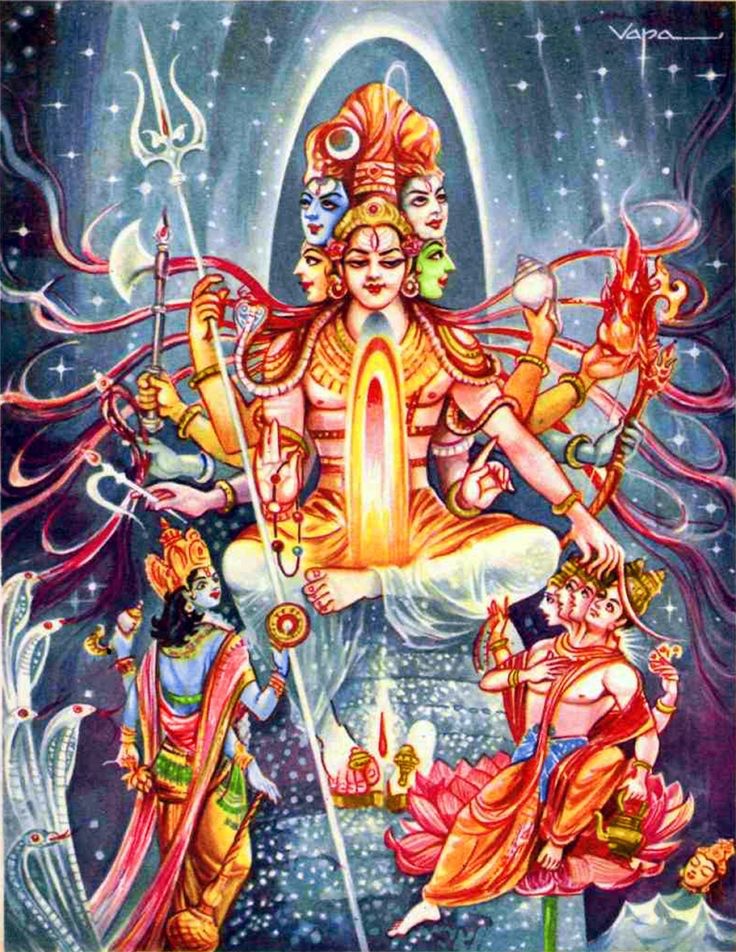
The Rishis then presented the Visva Rupa of Brahman as a seamless integration of principles or tattvas on the “eka rupa” bringing out the “aneka rupa” of Brahman. If one studies the description of the Visva Rupa of Vishnu, Siva and Devi, one can understand that essentially they all are descriptions of the same tattvas, thus reinforcing the Advaita nature of the Brahman.
Adi Sankaracarya in Sloka 9 picks up representative samples from these tattvas and integrates it with Lord Siva, the Dakshinamurthy and presents to us for our understanding.
Bhattathri continues his pun on Goddess Lakshmi by citing another reason for the “unstable” nature of Her when it comes to Her short stay at Her devotees’ place.
Oh Consort of Goddess Lakshmi, I will tell another reason to say,
That Goddess Lakshmi does not stay long with others,
That is because of her attractiveness to your pretty form,
For in the case of devotees of yours who are busy in meditating,
And singing about you, she is interested in hearing about,
The news of her darling and never leaves but stays with them. 2.5
Meaning of the Sanskrit Words
लक्ष्मीः – Oh Goddess Lakshmi
तावकरामणीयकहृता एव इयम् – तावक-रामणीयक हृता एव = your, beauty, fascinated/captivated, only, she = being thus captivated by Thy beauty only,
इयं परेषु अस्थिरा इति – she, is (committed to be in that position), unstable, in this manner/thus = परेषु अस्थिरा इति = she is unstable with others
अस्मिन् – in this respect
अन्यत् अपि प्रमाणम् – another proof also
अधुना – now/at present
वक्ष्यामि – I will state
लक्ष्मीपते – Oh consort of Goddess Lakshmi
ये त्वद्ध्यानगुणानुकीर्तनरसासक्ताः – ये त्वत्-ध्यान-गुण-अनुकीर्तन-रस-आस्क्ताः – those, your , meditate, virtue, singing, essence, devoted/strongly attached/engrossed = those who meditate and are always engrossed in singing Thy glory
हि भक्ताः जनाः – हि भक्ताः जनाः – = certainly (with) such devotees
तेषु एषा वसति स्थिरा एव – त= in those, she, stays, permanently/stable, always = with them she stays always
दयितप्रस्तावदत्तादरा – दयित–प्रस्ताव-दत्त-आदरा = beloved, (being), a song or hymn in praise, presented, respect/reverence/honour/praise = listening attentively to the praises of her beloved Lord





 Prabhu's Ponder