Dakshinamurthy Stothram – Sloka 4 – Introduction – Part 3 – Throwing some light on “Light”! – Vedantic Concepts

In our attempt to understand the relationship between “being” and “knowing”, after answering a questionnaire, we conducted two experiments last week; in the first we threw light inside a dark room with the help of a mirror and sun and in the second experiment we spread the light from a oil wick lamp through a “holi” pot in a dark room on five selected objects.

Let us now see the Vedantic Concepts behind these experiments.

The concepts behind the first experiment

In the first experiment, the Sun as the powerful light source ( Maha deepam) is comparable to the ātmā. Just as Sun has got its own light, ātmā has got its own “cit”-consciousness; it is self-evident because one does not need either a Sun or a mirror to see oneself. Remember the Part 1 Blog of Questions and Answers (If someone asks you when you are in a dark room “Are you there?” what response do we give? Yes “I am here”). And the mind of every individual is comparable to the mirror. The entire world is comparable to the dark room.

Now the whole world is seen because of two factors. What are the factors? The mirror_like mind and the Sun_like ātmā. This ātmā and Mind together, both of them are together responsible for the experience of the world. One can view this from two perspectives.

1. You can say mirror, backed by the Sun, illumines the dark room. Similarly, we can say the mind experiences everything backed by ātmā. How the mind borrows consciousness from ātmā; just as the mirror borrows brightness from the Sun. Mind borrows brightness and that mind illumines the world. So here the emphasises is on the mind alone. In Vedānta, when the emphasis is given to the mind, that is called प्रमात् (pramaatR) , the consciousness-backed-mind is called, the knower; and mind the knower, expereinces the world backed by ātmā. Here the emphasis is to the mind, because that is the subject.

2. In the second perspective, you do not say the mind illumines the world. ātmā, the consciousness illumines the world; but you have to acknowledge the role of the mirror. Mirror is very important, therefore you use the expression; through the reflecting medium of mind; through the instrumentality of the mind, ātmā alone illumines the world. And when the instrument is removed, what happens? When the mirror is removed, Sun will continue to shine; but it cannot illumine the dark room; the room will again go dark; Similarly, when the mind mirror is there, ātmā illumines the world. When the mind mirror is closed, the world is dark, not because ātmā has turned inert; but the mind-medium is closed. And therefore the world goes dark.

3. When do you close it? The answer is “During sleep”. What happens to ātmā during sleep.? ātmā continues to be self-evident consciousness, the light like the Sun; but the world goes dark because the medium of mind is closed; even during bright daylight, if the mind closes down, it will be dark.

4. Therefore, who is the illuminator of everything? ātmā, the eternal light. And therefore, whenever you are knowing anything, every knowledge indriya jñānam (śabda jñānam, sparśa jñānam, rūpa jñānam); every perception pre-supposes (indirectly reveals) the presence of ātmā; you do not require a separate proof for the existence of ātmā; Every object that we see in the dark room is thanks to the presence of Sun like ātmā. Even when there is no object, you say nothing is known; that nothing is known is known. That nothing is known is known, again because of the presence of consciousness. And therefore, Sankaracharya says; जानाशम jānāmi; jānāmi means, I know; This is called svayam prakāśatvam of ātmā; self-evidence of ātmā;

So in every perception, I, the ātmā, is independently self evident; and anātmā the object is dependently evident; In every perception, I the ātmā, is independently evident like the sun, and the anātmā is dependently evident like the dark room. This is the learning from the first experiment.

The Concepts behind the Second Experiment

Now let us come to second experiment with “holi” pot.

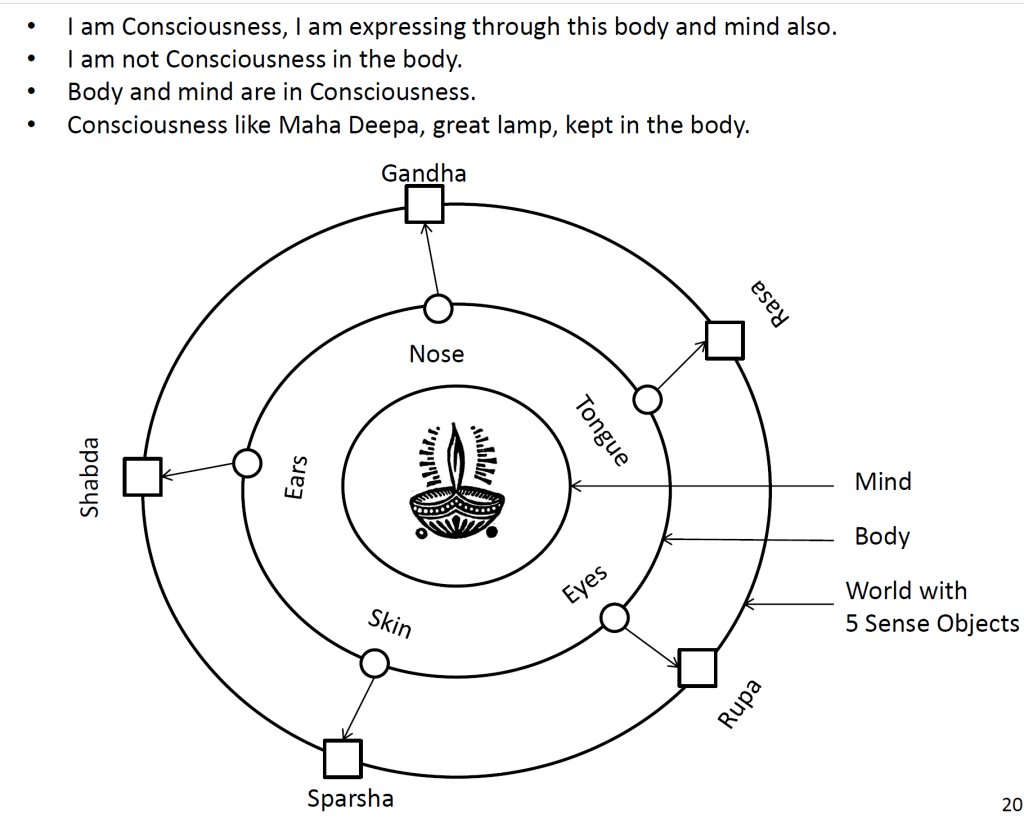
The room where the lamp is burning is the material world, full of ignorance, known as māyā. Pot is the human body. The Atma/Self that exists in the body is the light. The five holes in the pot are five sensory organs. Experience of the sensory organs is the five objects placed on the holes. They are śabda, sparśa, rūpa, rasa, gandha (five tanmātra-s or rudimentary subtle elements). Amala/Gooseberry is the taste (rasa); Veena is the sound (śabda); musk is the smell (gandha); gem by form (rūpa) and touch (sparśa) by the fan. The earthen lamp that holds the oil and wick is the biological system of the human body. Wick is the mind. Oil that makes the wick to burn is the prāṇa. With all these things, perception of the material world is not possible. Without that light, nothing can be perceived. Similarly, without the Self, nothing can be experienced.

We saw in Part 1 of the Introduction, the process of sighting/experiencing an object. We also termed it as व्रित्त्त पररणाम vritti pariṇāma. Vritti or thought-wave is a modification of the mind through a process. Just as waves and bubbles arise from the surface of the ocean, so also these Vrittis arise from the surface of the mind. The function of a Vritti in the mind is to cause removal of the veil of ignorance covering objects by reflecting the light from the ātmā i.e., only lend existence by throwing light. Gnanam is a process of throwing light (That is why in Tamil they call both the light & and the process of throwing light to uncover Gnana as விளக்கு & விளக்குதல்/விளக்க உரை and not allowing it to escape through the indriyas ( the pot with 5 holes and 5 items).

Every wave of thought in the mind (vritti pariṇāma) is illumined by an awareness – the maha deepa. This maha deepa goes out through thro 5 indriyas and get back to the reflecting medium – mind for “I know” (jaanaami ithi) – The learning from the Second Experiment.

Eg of maha deepa – you are able to see a star million miles away. The kind of illumination that you were able to put it on the star. Amount of illumine that you have put – that is maha deepa.

We should understand that the infinite consciousness by itself never illumines because it is illumination itself like the Sun. It is an upakaranaa or upadhi. It needs a medium to illumine. The medium borrows the light and reflect on the object. The mind borrows light from “me” temporarily and throws it on the object thro the 5 indriyas thro which it escapes.. That is called perception/gnana. The light of consciousness, when reflected at an inner equipment, reaches the object to illumine them.

Here is a pictorial summary.
வேதாந்தத்தின் இக்கருத்துக்களை கவனித்தோமானால், அன்பர் திரு. அப்பாதுரை அவர்கள், வளைதளத்தில் பதிவிட்ட நசிகேதன் கதையில் (கடோபனிஷத் தமிழாக்கம்) ஒரு கவிதை (87) ஞாபகத்திற்கு வருகிறது {http://nasivenba.blogspot.com/2012/03/blog-post_23.html}.

கதிருங் கணப்பொறியுங் கங்குல் கலையுங்

கதிர்க்குங் கணங்களுங் கங்குல் – கதிநாடிக்

கட்கிலியைக் கண்பெறுங் காலையிற் காரிரியக்

கிட்டுங் ககனக் கனல்.

திரவனும் மின்னலும் இருளே. நிலவும் ஒளிவீசும் விண்மீன்களும் இருளே. தன்னறிவைத் தேடி, எளிதில் புலப்படாத ஆன்மாவை அகத்தே அறியும் வேளையில் அண்டத்தின் இருளகற்றும் ஒளி பிறக்கும். அங்கே சூரியனும் பிரகாசிப்பதில்லை; சந்திரனும் தாரகைகளும் பிரகாசிப்பதில்லை; மின்னல்களும் ஏன் தீயும் பிரகாசிப்பதில்லை. அவன் பிரகாசிக்கும் பொழுது எல்லாம் பிரகாசிக்கின்றன; அவனுடைய ஒளியால் இவை எல்லாமே பிரகாசிக்கின்றன. வடமொழிப் பாடலில் ‘அவன்’ என்று குறிப்பிடப்படுவது ஆன்மா. சூட்சுமக் குறிப்பு.

Interestingly, in my exchanges on “Existence” in Twitter last week, I was fortunate to receive an excellent quote from Mr. R. Prabhu. This is from one of the verses of a very well known Siddha – Sivavaakiyar சிவவாக்கியர் which reflects the relationship between the “being” and the “knowing”.

இல்லைஇல்லை என்றுநீர் இயம்புகின்ற ஏழைகாள்,

இல்லைஎன்று நின்றதொன்றை இல்லை என்னலாகுமோ

இல்லைஅல்ல ஒன்றுமல்ல இரண்டும்ஒன்றி நின்றதை

எல்லைகண்டு கொண்டபேர் இனிப்பிறப்பது இல்லையே

With this understanding let us now see the Sloka No 4 in the next blog.

SIKSHASTAKAM – Prayer to Lord Krishna – Verses – 5&6

Sanskrit Verse 5

अयि नन्दतनुज किंकरं

पतितं मां विषमे भवाम्बुधौ।

कृपया तव पादपंकज

स्थितधूलिसदृशं विचिन्तय ॥५॥

Meaning in Tamil

நந்த குமரனே! பிறவிப் பெருங்கடல் வீழ்ந்து

நலியும் எளியொன் யான்! பரிவுடனே கருணை

நல்கி அருள் புரிவாய் கண்ணனே ! எனை உன்னிரு

நறுமலர் பாதம்தனில் சேர் புழுதியென ஏற்றிடுவாய் !

Meaning in English

“O My Lord, O Kṛṣṇa, son of Mahārāja Nanda, I am Your eternal servant, but because of My own fruitive acts I have fallen into this horrible ocean of nescience. Now please be causelessly merciful to Me. Consider Me a particle of dust at Your lotus feet.”

Sanskrit Verse 6

नयनं गलदश्रुधारया

वदनं गदगदरुद्धया गिरा।

पुलकैर्निचितं वपुः कदा

तव नामग्रहणे भविष्यति ॥६॥

Meaning in Tamil

உன் நாமம் துதிக்கையினில் என் பொறியாம்

கண்கள் ஆனந்த நீர்மல்கி தாரையென வழியவும்

வாய்மிடறு வாக்கு திணறி இடறுடன் தளரவும்,

உடல் பேரின்ப நிலையுடன் மயிர்கூச்செரிந்து

பரவசம் அடைவதும் எப்பொழுது என் பரமனே!

Meaning in English

“My dear Lord, when will My eyes be beautified by filling with tears that constantly glide down as I chant Your holy name? When will My voice falter and all the hairs on My body stand erect in transcendental happiness as I chant Your holy name?”

Video Link

Dakshinamurthy Stothram – Sloka 4 – Introduction – Part 2 – Throwing some light on “Light”! – The experiments

We are used to a “question paper based exam followed by practicals” – Aren’t we? Exactly; that is what we are going to do now in our study of Dakshinamurthy Stothram, Sloka 4.

In the previous introductory blog, we saw through sets of questions and answers, as to how the Self (ātmā) is comparable to the “maha deepam” the great light source. Let us continue the conceptual exploration through two experiments.

Experiment 1 – Sun, Dark Room & Mirror Experiment:

Place some objects inside a pitch-dark room. On a bright & sunny day, position a mirror outside at an angle; open the window of the dark room and try reflecting the sunlight through the window into the dark room by adjusting the angle of the mirror. What do you observe? You see that the objects which are otherwise invisible are illumined by the patch of sun light entering the dark room via the mirror and the window.

The question is: who or what illumines the dark room? The mirror or the Sun?

Suppose we say mirror, can we try the same experiment during midnight; keep the mirror at the same angle or at any other angle and try to illumine. The mirror is not able to provide light. So, we cannot say mirror is the illuminator.

If we say that the Sun alone illumines the dark room and not the mirror, then, what will happen if we remove the mirror? Again, the room will continue to be dark, because if the mirror is not there, with a roof over the room, the sunlight can not directly penetrate in the room and illumine. Therefore, mere Sun alone cannot illumine like mere mirror cannot illumine. Therefore, a combination of both the Sun and the mirror together illumine the objects of the dark room.

Pictorially the above experiment can be summarised as under

So, what are we trying to get out of this experiment. What is the illation here?

Experiment 2 – The “holi” pot and lamp Experiment

Light and place a bright lamp (wick lamp with burning oil) on the surface of the earth within a room which is densely dark. Place a pot having five holes with its mouth down over the lamp. Outside of that pot place (in front of each of the hole), an amala (நெல்லிக்காய்) fruit, veena, musk, good gem and a fan.

Now the question is about the perception of the collection of separate objects. Is it attributed to any of the following viz. Lamp or Oil or Wick or Pot or the objects themselves? What is the significance of the 5 holes and the five objects ? Why only these objects ?

The lamp is not able to directly illumine the objects, because it is covered by a pot with five holes; Therefore cooperation of pot is required in the sense that we need a pot with holes and not just the pot. In a lighter vein, therefore we require a ‘holi pot’.

The pot with holes alone can’t illumine and we require the lamp. The holes without the lamp within, cannot also illumine the ibject.

Same arguments go for the oil, the wick and the objects. None of them are self-illumine too and only those objects which fall within the range of the beam of light that comes out of the holes are perceived.

So, what are we trying to get out of this experiment. What is the illation here?

Well, “Practicals” are over. What did we learn?

Let us get into the details in the blog next week.

To be continued……

SIKSHASTAKAM – Prayer to Lord Krishna – Verses – 3&4

Sanskrit Verse 3

तृणादपि सुनीचेन

तरोरपि सहिष्णुना।

अमानिना मानदेन

कीर्तनीयः सदा हरिः ॥३॥

Meaning in Tamil

நாணலினும் குறு அகந்தை கொண்டு

நெடிது வளர் மரமொப்ப பொருமையுடன்

செருக்கு ஏதம் சிந்தனையில் இல்லாமல்

நலிந்தோர்க்கும் நன்மதி தரும் நல்லோர்

எளிவுடனே பண்ணிசைப்பார் உன் நாமம்

Meaning in English

“One who thinks himself lower than the grass, who is more tolerant than a tree, and who does not expect personal honor but is always prepared to give all respect to others can very easily always chant the holy name of the Lord”.

Sanskrit Verse 4

धनं जनं सुन्दरीं

कवितां वा जगदीश कामये।

मम जन्मनि जन्मनीश्वरे

भवताद् भक्तिरहैतुकी त्वयि॥४॥

Meaning in Tamil

பொருள் வேண்டேன் புகழ் வேண்டேன்

மனை வேண்டேன் கவிவரை கடமை வேண்டேன்

இப்பிறவி எப்பிறவிதனிலும் உள்நோக்கிலா

பக்திநிறை உன்னிரு பாத சேவை புரிந்திட

வேண்டுகிறேன் வாசுதேவனே உலகுய்வோனே

Meaning in English

“O Lord of the universe, I do not desire material wealth, materialistic followers, a beautiful wife or fruitive activities described in flowery language. All I want, life after life, is unmotivated devotional service to You.”

Video Link

Dakshinamurthy Stothram – Sloka 4 – Introduction – Part 1 – Throwing some light on “Light”! – Questions and Answers

We saw in the previous Sloka 3, the vedantic concept of conjoined existence and light in perception of objects and understood that both “being” and “knowing” are nothing but the same (tat tvam asi). In Sloka 4, Adi Sankara throws more light on the “Light”.

Questions

Before we venture into the Sloka, I am going to start this blog with three sets of questions.

Set 1

Can you see yourselves in broad day light ?

Can you see your friend in a crowd in the park in the day light ?

Set 2

Can you see yourselves in a pitch dark room ?

Can you see your friend in the same pitch dark room?

Set 3

Do you need a torch to see Sun in the daytime.

Can you see the stars and constellations on a clear night?

Answers

These are very simple and innocuous questions. Answering these shouldn’t pose difficulties.

Set 1

Yes. I can see myself in broad light.

Yes. I searched and can see my friend in a crowd in the park.

Set 2

No. I cant see myself physically but I know that I am there.

No. I can’t see my friend in the pitch dark room. I need light.

Set 3

I don’t need a torch to see the Sun in daylight. It is all powerful.

Yes. I am able to see stars and constellations on a clear night.

Explanatory Notes for the answers

Now let us amplify the answers given.

Set 1

Suppose if I ask whether you have seen your friend in the crowd, you will have to look around to see whether he has come or not; which means that a process is required. But when I ask you the question, are you there, you do not take any time, or even thinking. Even before the process of thinking starts, “I am here” is an evident fact.

SET 2

I don’t need a light to say that I am inside a dark room since I know that I am there. It is self evident as indicated above. But I need a process and a light to see anyone else.

SET 3

I don’t need an external light to see the Sun in daylight. It is the most powerful light source. It is a “maha deepam”. But the strange fact is I can see the stars which are millions of miles away in the sky on a clear night. Perhaps I have a powerful source of light inside me (a maha deepam) that helps me to see the stars. Maybe ! I don’t know.

Preamble to the Vedic Philosophy behind the “Light”

Apparently in these three sets of questions and answers, the underlying focus is on light and sight. Let us now throw some light on this light.

An object in the world becomes known at a particular time by our special effort. If I have to see my friend in a crowd at the park, it is an event in space and time. I have to turn in that direction and my mind should be behind the eye. Or the eyes will not see. And the light should fall on the crowd; and then a thought should take place in the mind; and that is called vritti pariṇāma, and when that takes place alone, the knowledge of my friend takes place; as an event, in the mind, because of the operation of the sense organ called eye. So, the steps involved in this light throwing process called mano vritti is as under:

1. Some object is there.

2. Light falls on it.

3. You see it through your effort with your eyes.

4. It translates that it is other than you

5. You recognize it through something.

6. It forms a wave thought

7. That gets reflected in a medium to lend existence

The process is nothing complicated. Simple. Isn’t it? But then how do you say “I am here” when you are in a pitch dark room and someone asks you “Where are you?” You even say sometimes “Don’t switch on the light. I am relaxing”. Strange ! Are you self luminous? Exactly. This is called svayam prakāśatvam of ātmā; self-evidence of ātmā; this is a very important concept in vedānta. In India we have people named as Swayam Prakash.

The core of an Individual known as ātmā is not only svayam prakāś but also a “maha deepam” – a great light.

In a lighter vein that is why if we see several Indian movies particularly the historical/mythological ones, you will see in death scenes, a light moves up from the body towards the heaven. We see obituary statements like “The light in our life has merged with the Almighty” even today.

With this introductory understanding that core of all of us viz., the inner consciousness known as the ātmā is compared to a maha deepam (the light like Sun) in, let us proceed toward our goal of understanding the Sloka 4 where Adi Sankara again comes out with simple experiments to drive home the Vedantic Concepts.

To be continued……

SIKSHASTAKAM – Prayer to Lord Krishna – Verses – 1&2

Sanskrit Verse 1

चेतोदर्पणमार्जनं भव महादावाग्नि निर्वापणम्

श्रेयः कैरवचन्द्रिकावितरणं विद्यावधू जीवनम्

आनंदाम्बुधिवर्धनं प्रतिपदं पूर्णामृतास्वादनम्

सर्वात्मस्नपनं परं विजयते श्रीकृष्ण संकीर्तनम् ॥१॥

Meaning in Tamil

மாசு நிறை இதயக் கண்ணாடிதனை தூய்மை ஆக்கிடும்

ஆசை நிறை பிறவி சூழ் பேரழல்தனை அணைத்திடும்

பிறை மதியென நற்பேறாம் வெண்தாமரைதனை விரித்திடும்

வாழ்வதனில் ஞான சக்தியென அறிவுதனைப் புகட்டிடும்

படிப் படியாய் பெருகிடும் அலைகடலென பேரானந்தமதில்

மூழ்கிக்குளிக்கும் அனைவரும் சுவைக்கும் அமிழ்து அளிக்கும்

திருக்கூட்டத்துதி பாடும் கண்ணன் நாமம் வெற்றி சூடட்டும்.

Meaning in English

“Cleansing the mirror of the heart, mind, and consciousness (citta), extinguishing the great forest fire of material existence, spreading the moonshine of the lotus of good fortune, the life of the spouse of all knowledge, increasing the ocean of bliss, giving a taste of full nectar (amrita) at each step, bathing all souls, let there be all victory for the congregational hearing and chanting of the Holy Names of Lord Kṛṣṇa”.

Sanskrit Verse 2

नाम्नामकारि बहुधा निज सर्व

शक्तिस्तत्रार्पिता नियमितः स्मरणे कालः।

एतादृशी तव कृपा भगवन्ममापि

दुर्दैवमीदृशमिहाजनि नानुरागः॥२॥

Meaning in Tamil

உனக்குள்ள பல நாம வழி விதிதம் உன் சக்திஅவை

நினைய எமக்கில்லை நேரவிதிவரம்பு ஏதும்உனக்கு

அத்துனை கருணையன்றோ அல்லலுறும் அடியார் மேல்ஆயினும்

ஆகூழிலா அடியேன் அடையவில்லை அந்நாமங்களில் விருப்பம்

Meaning in English

“In your (divine) names manifested various kinds of full potencies (shaktis) therein bestowed, with no rules according to time for remembering them, O Lord, you are so merciful, but it is my misfortune here that I have no anuraga (interest) in those names”.

Video Link:

August – Bhakti Yoga on Lord Krishna

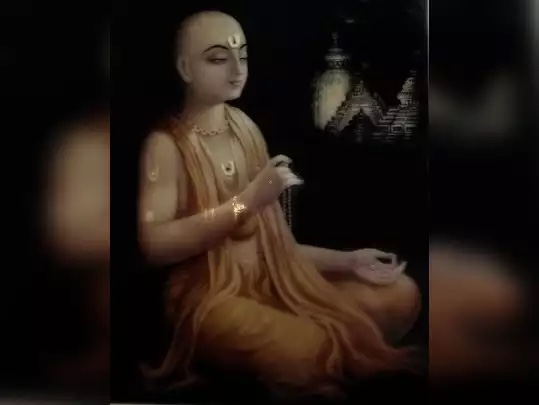
Chaitanya Maha Prabhu

August is the month for Lord Krishna. The Gokulashtami this year is on 31st August. Last year we celebrated with a series of Blogs on the Dance of the Yuga, the “Kalinga Narthanam”. This year it is time for a month of Bhakti Yoga.

The Shikshashtakam is a prayer of eight verses. They were written by Chaitanya Mahaprabhu (1486 – 1534). The name of the prayer comes from the Sanskrit words Śikṣā, meaning ‘instruction’, and aṣṭaka, meaning ‘consisting of eight parts’, i.e., stanzas. The teachings contained within the eight verses are believed to contain the essence of all teachings on Bhakti yoga within the Gaudiya tradition. With two verses in each week, we will cover the Shikshashtakam in this month of Aug 2021 starting from August 3rd.

Every week, the blog will be accompanied by the divine rendering of Shikshashtakam by the legendary MS Subbulakshmi.

Dakshinamurthy Stothram – Sloka 3 – तत्वमसि – நான் அவனே தான்

Tat Tvam Asi

Audio Link

https://www.dropbox.com/s/03sal2wrduidcsg/Sloka%203%20-%20Yasya%20Eva%20Sphuranam.mp3?dl=0

Sanskrit Verse

यस्यैव स्फुरणं सदात्मकमसत्कल्पार्थकं भासते
साक्षात्तत्त्वमसीति वेदवचसा यो बोधयत्याश्रितान् ।
यत्साक्षात्करणाद्भवेन्न पुनरावृत्तिर्भवाम्भोनिधौ
तस्मै श्रीगुरुमूर्तये नम इदं श्रीदक्षिणामूर्तये ॥३॥

தமிழ் மொழி பெயர்ப்பு

பரம்பொருளின் உளதெனும் அதிர்வலையால்

பண்டமெனும் வடிவர்த்தமுடை தன்மை, உளமதில்

பதியும் ஒளிமய நேருணர்வாய் மெய்யெனவே!

அம்மெய்யுணர்வை “அதுவே நீ” என்று நேர்முகமாய்

அனுபவமெனப் பெற, அண்டிடு அருமறையறி ஆசானை,

அடைந்திடு பிறவிப் பிணி தீர் பேரானந்தம் நிரந்தரமென!

ஆதி அந்தமிலா மோனநிலை அமர் அந்த ஆசானம்

தக்ஷிணாமூர்த்தி  பொற்பாதம் பணிந்திடுவோம்

Meaning in English

To Him in the Effulgent Form Facing the South, whose light, which is Existence itself, shines forth entering the objects which are almost non-existent—to Him incarnate in the Guru who instructs the disciples in the Vedic text “That thou art;”—to Him who being realized there will be no more return to the ocean of samsâra, to Him (Siva) be this bow!

Commentary

From the previous blogs, it is clear that the integration or Aikyam happens as the Paramātma gets into an instrument as “Existence” & “Light” (Paramātma/Isvara & Jiva/Consciousness/Self respectively) or otherwise as “being” and “knowing”.

திருமூலர், திருமந்திரத்தில் சிவன் ஒளி வடிவானவன் சீவனும் ஒளி வடிவானவன். சீவ ஒளி சிவ ஒளியில் கலந்தால் பிறவி நீங்கும் என்பதை, #2681 பதியில்

ஒளியும் உருவமும்

ஒளியை அறியில் உருவும் ஒளியும்

ஒளியும் உருவம் அறியில் உருவாம்

ஒளியின் உருவம் அறியில் ஒளியே

ஒளியும் உருக உடனிருந் தானே.

சீவன் ஆன்மஒளியை அறிந்து கொண்டால், சீவனின் உருவம் ஆகிய உடல் ஒளிந்து கொள்ளும். சீவன் ஒளிந்து நிற்கும் தன் உடலை அறிந்து கொண்டால், சீவனின் பிறவிகள் தொடரும். ஆன்மஒளியின் உருவம் சீவன் அறிந்து கொண்டால், சீவன் உருவம் ஒளிமயம் ஆகிவிடும்.சீவன் ஆன்ம ஒளியில் தோய்ந்து நின்றால், சீவனுக்குச் சிவன் அங்கு விளங்குவான் என விளக்குகிறார்.

Now let us see the meaning of the Sloka in detail

First Line: यस्यैव स्फुरणं सदात्मकमसत्कल्पार्थकं भासते साक्षात्तत्त्वमसीति

यस्यैव स्फुरणं (Yasya-Eva sphuraṇaṃ):

Here it means the throbbing/pulsating/vibrations of THAT alone, implying that of the pure Consciousness (Eternal Awareness) which is nothing but paramātmā’s sphuraṇaṃ (Recollect the vibrations from the emptiness when we explore matter as per modern science as explained in the previous introductory blogs)

सदात्मकमसत्कल्पार्थकं (Sadaa-Aātmakam-Asat-Kalpa-Arthakam):

सदात्मकम:  manifestation in the world is sadātmakam is in the form of Existence, in every object. paramātmā‘s manifestion in the world is in the form of ISness in everything. ISness part is paramātmā – the formless; pure, all-pervading ISness is the manifestation of paramātmā.

असत्कल्पार्थकं:    asat means non-existence & kalpa means as good as or almost; artha means object of desire. And where is this manifestation available? – located in/manifested in the medium of artha; artha means every object; And what type of object? असत कल्प asat kalpa; Asat Kalpa means Mithya; an unreal thing is called asat kalpa.

भासते (bhāsate):

bhāsate means is experienceable for all (appear in the mind). It is exactly like the sunlight is experienceable for all of us and upon every object as reflected sunlight; manifest sunlight is experienceable on every body. Similarly, vedāntaḥ says when you say table IS; we are experiencing the formed chair, which is soaked in formless existence.

So, paramātmā‘s sphuraṇaṃ is sadaātmakam in asat kalpa artha bhāsate; i.e., paramātmā’s vibe is always experienced by all in every “otherwise as good as non-existent” object of desire as a reflection of the all-pervading pure ISness, the eternal formless Existence.

साक्षात्तत्त्वमसीति (Saakssaat-Tat-Tvam-Asi-Iti):

We just saw यस्यैव स्फुरणं सदात्मकमसत्कल्पार्थकं भासतेthat paramātmā’s vibe is always experienced by all in every “otherwise as good as non-existent” object of desire as a reflection of the all-pervading pure ISness, the eternal formless Existence

Now the question is: How can I experience that existence in its pure form? I am experiencing the Existence; along with object, adulterated existence; I am enjoying, but I want to appreciate or experience unadulterated pure ISness; the formless, eternal, all pervading existence.

Then the Upanishad says, साक्षात्तत्त्वमसीति (Saakssaat-Tat-Tvam-Asi-Iti): that pure Existence you will never experience. You can experience only adulterated existence; the pure existence cannot be experienced;

त्तत्त्वमसी: Why cant Pure Existence be experienced? ? tat tvam asi; pure existence is none other than you; What type of You? The formless consciousness principle; “You” means not the body, body is also not pure existence; body is adulterated existence with body nama rupa; When I say You, you cannot take the mind also; mind is also not pure existence; it is existence associated with mind nama rupa. You cannot even take the thought because thought is also not pure existence; but it is existence associated with thought form. Then what type of You? You, the pure consciousness, which is the experiencer of the thought, which is witness of the body; witness of the mind; witness of the thought. That I, is the sākṣi caitanyam, am the pure existence; And the sākṣi caitanyam is called jīvātma; and Aham, the sākṣi caitanyam jīvātma eva suddha satta rupa paramātma asmi. This is called Aham Brahma Asmi.

साक्षात्त: And how will it be? the pure existence and consciousness without any nama rupa; how will it look like? I am not able to conceive at all. Better you do not conceive. If we conceive, again it will become an object, associated with some nama rupa. If you need some examples which are nearest to the pure existence-consciousness, we have only two examples:

  1. one is the space; space is not pure existence-consciousness; but it is the nearest example for pure sat chit ātma; that is one example.
  2. The second example is: You in the deep sleep state is the nearest example for pure existence-consciousness without name and form.

And therefore, try to conceive of space; try to conceive of yourselves in deep sleep; And similar to that is I; the pure existence-consciousness. And what is the significance of the word, sākṣāt? It has a very important technical significance, normally when we describe something, the words give only the indirect knowledge; that is called verbal knowledge; indirect knowledge and has to be converted into direct experience later; the book knowledge is converted into experiential knowledge; that experiential knowledge is अपरॊक्ष ज्ञानम् aparokṣa jñānam. Normally, words give indirect knowledge which has to be converted into direct knowledge, by effort. This is our general experience. Here Śankarācārya says in the case of Brahman, these two divisions are not there; because paramātmā is Existence; Existence is consciousness is all the time self-evidently experinced;

वेदवचसा यो बोधयत्याश्रितान् : And Śankarācārya says that this is what is the Guru told through Veda “Veda-Vacasaa Yo Bodhayaty”. The Guru directly reveals to you with the help of Vedas that paramārtha which is nothing but “You”. Guru has the knowledge, he did not get through intuition, वेद वचसा veda vachasa; He got it through the vedas, taught by his guru; And how did he get the knowledge? Not thru intuitution; by śabda pramāṇa handed down by the guru; when did the whole thing start? it started when the creation started; and when did creation start; अनाश्रधः anādi; and therefore as anadi as the creation, is the parampara of teaching. This teaching tradition is also anādi; with the help of this tradition, the guru reveals; that is why in our tradition, always the śāstra or parampara is given more importance than the person; in our tradition, no single आचार्यः ācāryaḥ is given more importance;

So far in the first two lines we have learnt what Adi Śankarācārya was saying. Now what do I get out of this knowledge? Till now I thought that I am the physical body, the formed body, now I have learned that I am not the body with consciousness, but I am the consciousness, temporarily functioning through the body. Not only I am the consciousness, lending sentiency to the body, I am the existence lending existence to the world also. Now where am I? I alone give two things; caitanyam to the body; existence to the world; And having given these two, the body becomes subject, world becomes object, all the transactions takes place, All the transactions are possible because I lend Sat to the world, and I lend Cit to the body;  you imagine dream. In the dream individual, I alone lend consciousness to the dream individual. I alone lend existence to the dream world; Lending Sat and Cit I allow the dream-drama to go on. Similarly, by lending Sat and Cit, I allow the world drama to go on. Remember the first Sloka viśvandarpaṇa dṛśyamāna nagarī tulyaṃ nijāntargataṃ.

The next question that automatically comes to or mind is What is the advantage of this vision? To answer this question, let us see the third line and understand what the Acharya is trying to convey.

यत्साक्षात्करणाद्भवेन्न पुनरावृत्तिर्भवाम्भोनिधौ Yat-Saakssaat-Karannaad-Bhaven-Na Punaraavrttir-Bhavaam-Bho-Nidhau


यत्साक्षात्करणात: Śankarācārya says; yassākṣātkaraṇāt; Yath again means paramātmā, paramātma sākṣātkaraṇāt, by this अपरोक्ष ज्ञानम aparokṣa jñānam, this direct knowledge of paramātmā, that I am the सत्त्चदात्माः satcidātmāḥ, the advantage is:

पुनरावृत्तिर्भवाम्भोनिधौ Punaraavrttir-Bhavaam-Bho-Nidhau): No more Reappearance in the Ocean of Wordly Existence

(Punaraavrtti) = Return, Reappearance, Re-Birth

पुनरावृत्ति न भवेत punarāvrittīḥ na bhavet . There is no question of punar janma itself for that jnani. punarāvrittīḥ is not there for that jnani. Where?

भवाम्भोतनधौ bhavāmbhonidhau. – भव (Bhava) = Worldly Existence; भोस् (Bhos) = A particle of sorrow; निधि (Nidhi) = Sea. It means the ocean of becoming, the ocean of change, the ocean of अत्स्र्, जार्ते, वधयर्े, द्धवपररणमते, अपक्षक्षर्ते, द्धवनिर्तत asthi, jāyate, vardhathe, vipariṇamate, apakṣiyate, vinaśayati; in that ocean of change, this person is not born;

Thus, this Sloka brings out the Maha Vakya Tat Tvam Asi clearly.

Dakshinamurthy Sthothram – Sloka 3 – Part 3 – thou art that – तत् त्वम् असि

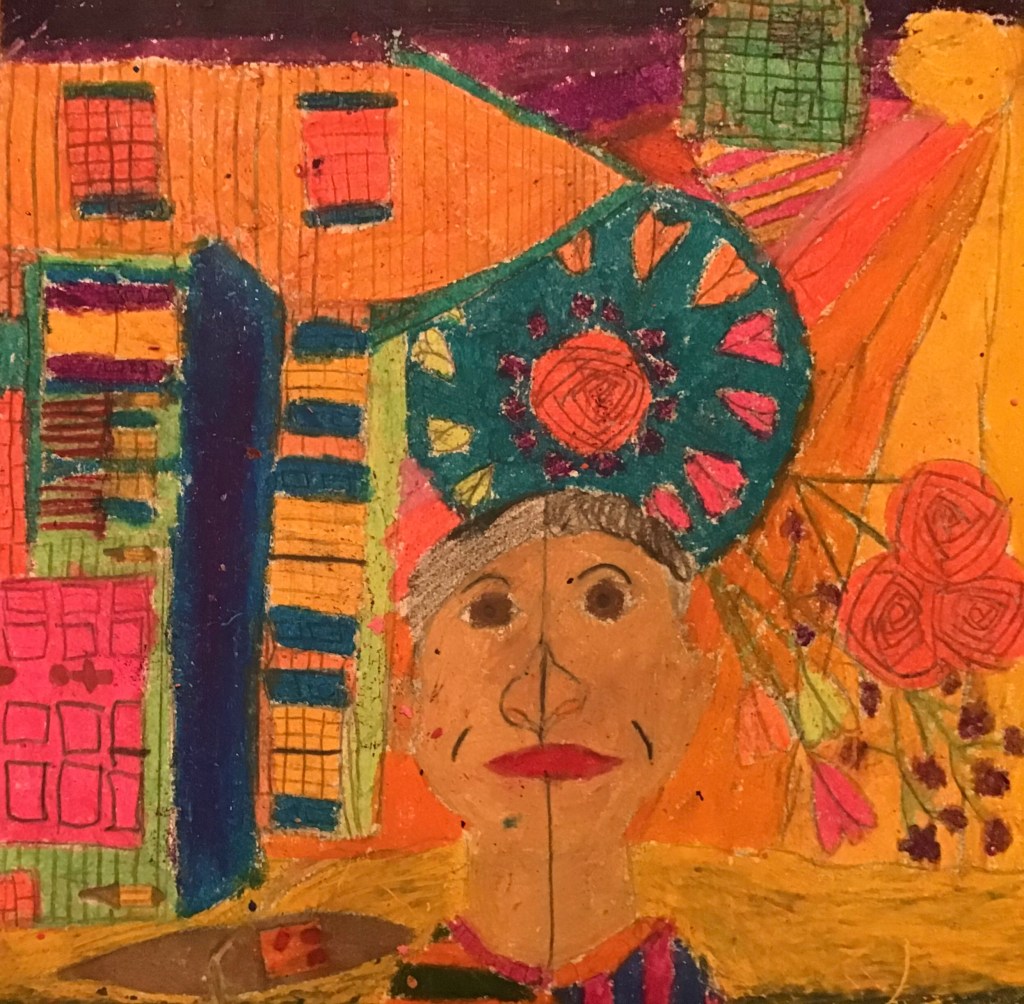
Tat Tvam Asi – Painting by Dhruv

From the previous blogs we understood the concepts behind the word Existence and Light viz., “Being & Knowing” – The Tat and the Tvam parts; the Paramatma and Jivatma. We saw with examples of an existing Table and analysis that both are two kinds of emptiness. We can say that there are two kinds of emptiness; one called being and the other called knowing. What is the difference between the substance of vibration (being) and the substance of knowing? Where is the line between these two emptiness.

Initially, we may think that the line between the two emptiness is just outside us. As we contemplate and meditate with the help of a Guru, we will experience that there is no dividing line: It is not there. This is the great discovery of the nondual (advaita) understanding. The reality i.e, the emptiness of the knowledge of pure consciousness (I) called time and the reality of emptiness of the matter as the substance of vibration (you the object) called as space are empty and identical. These are two different shades of water colors on the same paper (like the two parts of the faces in the art work done by my 8 year old grandson in the image shown above). This is an experiential recognition as we meditate on the subject. This is called the Jivatma-Paramatma Aikyam.

So jīvātma is pure Consciousness, paramātma is pure Existence. Then vedāntaḥ says this pure Existence which lends existence to the world, this pure Consciousness which lends consciousness to the body, both this pure Existence and pure Consciousness are one and the same. So, Existence is Consciousness; Consciousness is Existence. And it is this Existence-Consciousness which makes the body sentient; and which makes the world existent. And this recognition of the oneness of the existence and consciousness is jīvātma paramātma êkya jnānam, and Śankarācārya says, whichever Guru manages to successfully communicate, this identity of this pure Existence and Pure consciousness, to that Guru, who is Dakṣiṇāmurty., My namaskarams. This is going to be the essence of this third Sloka which we will see in the next blog.

Here are the pictorial representations of our learning on Sat & Cit (Existence and Consciouness) (Courtesy: vedantastudents.com)

Dakshinamurthy Stothram- Sloka 3 – Part 2 – Light – Chaitanyam- त्वम्

Preamble

In the previous blog we saw that there are two ways of perceiving an object like the example of the table. “ I see it and therefore the table exists” and “the table exists and therefore I see it”. According to Adi Sankaracharya’ Advaita philosophy, knowledge of the world is knowledge of the thoughts of the objects of the world, or viṣayākāravṛittijñana. When knowledge is thus based on the modification of the mind, the objects will definitely be external to you. The knowledge of the world, being viṣayākāra vṛitti, is therefore obtained through the senses. Therefore He also advocates that yad-dṛśyam tat naśyam—that which is perceivable is perishable. I was reminded by my “Twitter Friends” of a wonderful Tamil proverbs that reflect this: விண்டவர் கண்டிலார்….கண்டவர் விண்டிலார்; கண்ணால் காண்பதும் பொய் காதால் கேட்பதும் பொய் தீர விசாரிப்பதே மெய்

Nevertheless we also understood that we need both “Existence” and “Light” for our knowledge of the objects and hence the world.

Light

From the scientific perspective, we know that light is an energy radiation. No single answer to the question “What is light?” satisfies the many contexts in which light is experienced, explored, and exploited. The physicist is interested in the physical properties of light, the artist in an aesthetic appreciation of the visual world. Through the sense of sight, light is a primary tool for perceiving the world and communicating within it. Light from the Sun warms the Earth, drives global weather patterns, and initiates the life-sustaining process of photosynthesis. On the grandest scale, light’s interactions with matter have helped shape the structure of the Universe.

Vedantic Treatise on Light

Imagine a situation where you are just entering a room and the light goes off. Do you need light to identify the objects in the room? Yes, surely. Remember you are an object too. Do you need light to identify yourselves? No. Why?

When we discuss this topic, one important Eka Sloki (Single Sloka) of Adi Śankarā is to be understood. Adi Śankarā answers these two questions by a single sloka. The Sloka is presented as a dialogue between a teacher (Guru) and student (Sishya), in response to a question by the student on realization of self. The Sloka, its Tamil & English Translations are given below:

Guru: How do you see (What is that light/power which helps you see?) Sishya: I see with the help of sunlight

Guru: How do you see in the night? Sishya: I see with the help of a lamp

Guru: Let that be so. How do you see the light? Sishya: With my eyes.

Guru: How do you see when tour eyes are closed ? Sishya: It is with my intellect

Guru: What helps you see (know) that intellect? Sishya: This is me (me as pure consciousness)

Guru: (Indeed) You are that supreme light Sishya: I realize that I am (immediate experience for the disciple)

So, the following facts about the “Light” have to be understood:

1. “Light” is not a part, product or property of the object

2. “Light” is formless

3. “Light” is independent, enlivens the object and makes it sentient.

4. “Light” is beyond the object and is “Sarvaghataha”.

5. “Light” will be there even after the object is destroyed. Once object goes, “Light” is not recognizable as the recognizing medium is gone

Light is Cit, the Chaitanyam

Let us go back to the previous blog where we saw that an object in the ultimate analysis of matter, either through the inward looking Vedantic route or through the outward looking scientific route (as explained in the blogs that covered Sloka 2 on Creation) is nothing but emptiness which takes the shape of vibrations and comes into existence. If this vibration is not known then we will not know that it “is”. So there is also this knowing. To visualise this knowing we add a spatial reference to it. If we further contemplate on this existence of this vibration suspended as it were in the “knowing” spatial field, we learn that this spatial knowing field is also empty of objects. This is the second kind of emptiness: the emptiness of pure consciousness. This emptiness is “cit” चित् (chaitanyam) is pure (independent from body & mind) and is the Jivātma, the Self-awareness त्वम् (Tvam) and at the worldly level is known as visibility (bhaati भाति)

We saw “sat” Existence earlier. We now saw “cit” Light. In either of these two studies, there is a basic question that is not addressed yet and needs to be looked into. That question is “How have existence and light come to be conjoined with all existing things?”.

The answer to this question will come up in the next blog.