Angkor Thom – Cambodia Travel Diary – 3

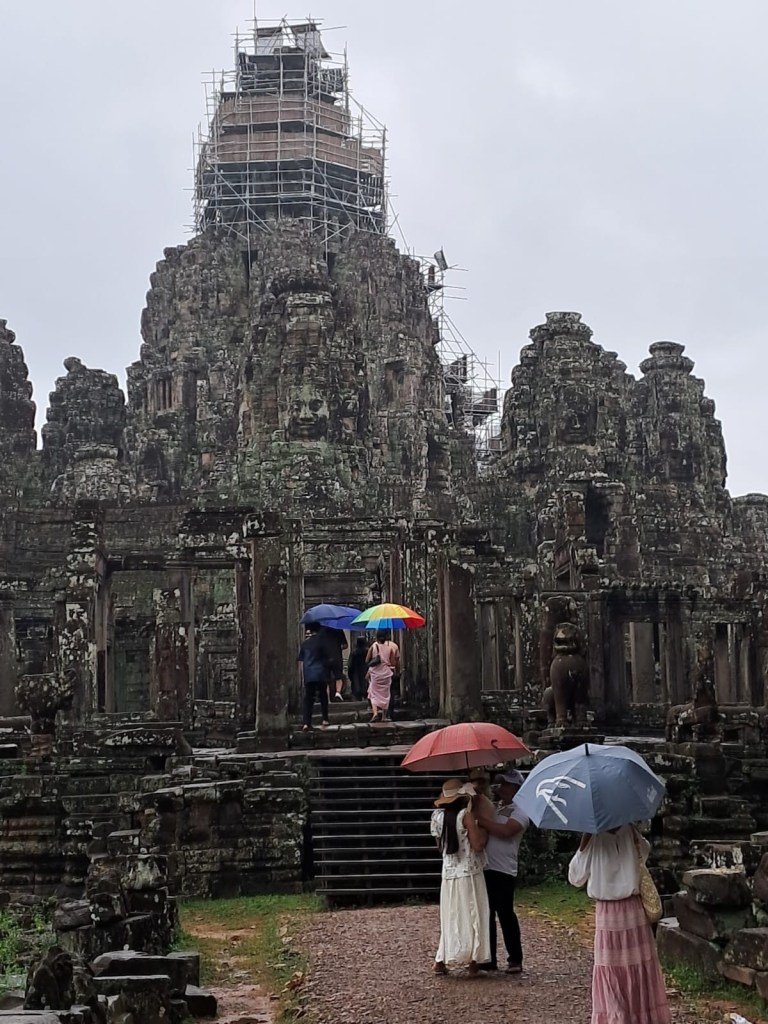
Angkor Thom was the last and most enduring capital city of the Khmer Empire, established in the late 12th century by King Jayavarman VII in what is now Cambodia. Angkor Thom served as the final capital of this powerful empire, which ruled much of Southeast Asia from the 9th to the 15th centuries.

It is not a single temple, but a massive walled royal city containing temples, a Royal Palace, and impressive bas-reliefs, with the Bayon temple and its famous smiling faces being a central feature. The site is located in the Angkor Archaeological Park, a UNESCO World Heritage site, and is a popular tourist destination.  

Key features of the city includes the Bayon temple, the Terrace of the Elephants and a Royal Palace, all within a large, walled and moated area. It is known for its architectural genius and intricate bas-reliefs that depict both mythical and historical scenes from Khmer life and battles. 

”Angkor Thom is a ruined citadel several kilometers north of Angkor Wat. Angkor Thom encloses a rectangular area of nine square kilometers, and at its peak may have held a population of over 100,000, living in tiled or thatched houses. The building of the citadel dates to around the year 1200. Angkor Thom enclosed the Royal Palace (now vanished) and a handful of major temples; the complex was bounded by walls and a moat (now mostly dry) and pierced by five gates. The city was surrounded with rice fields, which provided food; these were irrigated with reservoirs, which also supplied drinking water.

While Angkor Wat is Hindu in inspiration, Angkor Thom resonates with sculpted images expressing the Mahayana Buddhist ideal of Lokesvara (compassion), Prajnaparamita (wisdom), and the Buddha (enlightenment). Although still incorporating Hindu elements, Angkor Thom is a three-dimensional representation of Buddhist cosmology. Temple ground plans reveal a mandala-like base, with radiating symmetrical forms. At the exact center of Angkor Thom lies the Bayon Temple.

What at first appears to be of masonry actually consists of massive stones shaped into fluid sculptures, without apparent use of cement or mortar.

On the top terrace of the Bayon, you come face-to-face with myriad of these giant stone heads topped with lotus crowns. There are dozens of them, originally 54 towers with four heads each of which 37 towers remain. The enormous heads, ranging in size from ten to fifteen feet, features eyes downcast under lowered lids.

Disorder in the construction of the Bayon is reflected in the numerous architectural changes. It seems that after the Cham sacked Angkor in 1177, Jayavarman VII decided the Hindu deities had failed, so he switched allegiance to Mahayana Buddhism. However, he made no attempt to alter existing Hindu elements. The Bayon was caught in the middle — the foundations are Hindu, but the superstructure is Buddhist. It is estimated that the Bayon took 20 years to build. Jayavarman VII’s son and grandson reverted the use of the temple to Hindu (Shivaist) worship, with Brahmans from India gaining great influence over the Angkor court. Heads and faces on statues were destroyed and replaced with Hindu gods.”

Michael Buckley

Angkor Wat – Cambodia Travel Diary – 1

Located on a site measuring 162.6 hectares (1.6 km2; 401.8 acres) within the ancient Khmer capital city of Angkor, it was originally constructed in 1150 CE as a Hindu temple dedicated to the deity Vishnu.

Angkor Wat was built at the behest of the Khmer king Suryavarman II in the early 12th century in Yaśodharapura (present-day Angkor), the capital of the Khmer Empire, as his state temple and eventual mausoleum.

Angkor Wat combines two basic plans of Khmer temple architecture: the temple-mountain and the later galleried temple. It is designed to represent Mount Meru and is surrounded by a moat more than 5 km (3.1 mi).

Enclosed within an outer wall 3.6 kilometres (2.2 mi) long are three rectangular galleries, each raised above the next. The expansive Temple complex covers an area of 400 acres. At the centre of the temple stands a quincunx of towers.

In 1177, approximately 27 years after the death of Suryavarman II, Angkor was sacked by the Chams, the traditional enemies of the Khmer. Thereafter, the Khmer empire was restored by Jayavarman VII, who established a new capital at Angkor Thom and the Bayon as the state temple, situated to the north. The temple was dedicated to Buddhism as the king’s wife Indradevi was a devout Mahayana Buddhist who encouraged him to convert. Angkor Wat was therefore also gradually converted into a Buddhist site with many Hindu sculptures replaced by Buddhist art.

The construction of Angkor Wat suggests that there was a celestial significance with certain features of the temple. This is observed in the temple’s east–west orientation, and lines of sight from terraces within the temple that show specific towers to be at the precise location of the solstice at sunrise. The Angkor Wat temple’s main tower aligns with the morning sun of the spring equinox.

Integrated with the architecture of the building, one of the causes for its fame is Angkor Wat’s extensive decoration. The inner walls of the outer gallery bear a series of large-scale scenes mainly depicting episodes from the Hindu epics the Ramayana and the Mahabharata.

https://youtu.be/cqJP27mSAv0?si=dz8uyIpRPf69_d4d

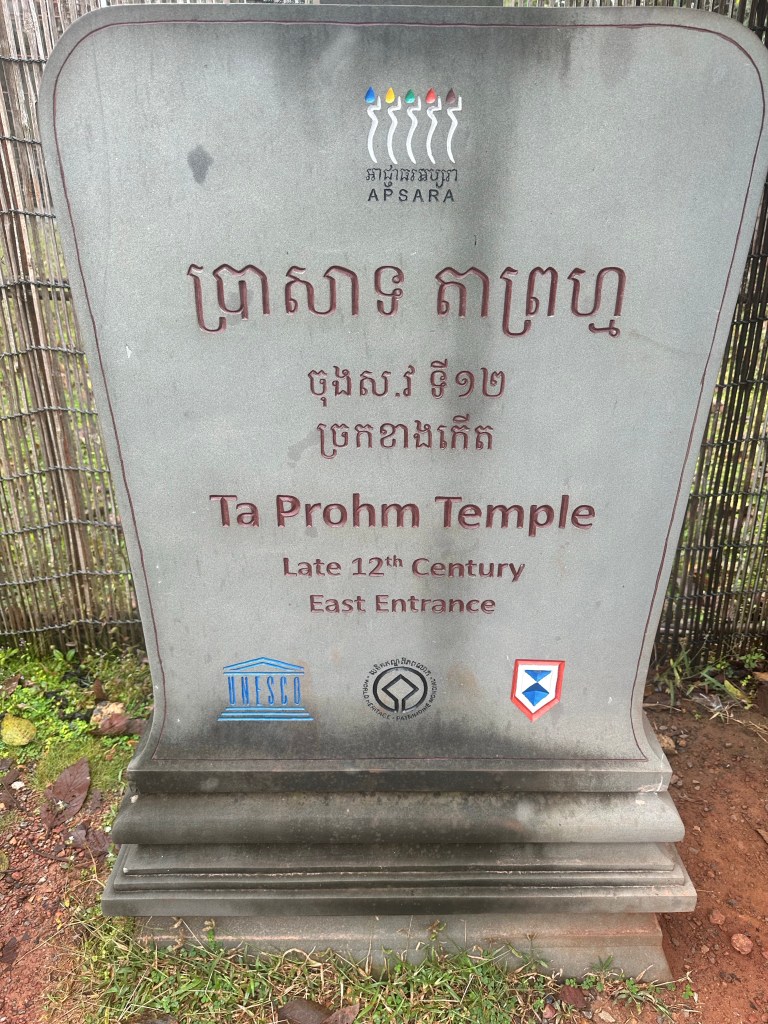
Ta Prohm (Temple of Brahma) – Cambodia Travel Diary – 2

In 1186 A.D., King Jayavarman 7, embarked on a massive program of construction and public works. Rajavihara (“monastery of the king”), today known as Ta Prohm (“ancestor Brahma”), was one of the first temples founded pursuant to that program. 

Jayavarman VII constructed Rajavihara in honour of his family. The temple’s main image, representing the personification of wisdom, was modelled on the king’s mother.

The site was home to more than 12,500 people (including 18 high priests and 615 dancers), with an additional 80,000 inhabitants in the surrounding villages working to provide services and supplies. 

After the fall of the Khmer Empire in the 15th century, the temple of Ta Prohm was abandoned and neglected for centuries.

In 1992, UNESCO inscribing Ta Prohm on the World Heritage List, initiated the conservation and restoration of Ta Prohm as a partnership project of the Archaeological Survey of India (ASI) and the Authority for the Protection and Management of Angkor and the Region of Siem Reap (APSARA).

By 2013, the ASI restored most parts of the temple complex, some of which were constructed from scratch. Wooden walkways, platforms, and roped railings were put in place around the site to protect the monument from further damages from tourists.

It is emotionally draining to see “one of the most imposing [temples] built for personification of wisdom and was dedicated to a mother, best merging with the jungle, to the point of becoming a part of it”. 

Nothing but a soulful “Subha Pantuvarali” , (a raga that stirs one’s soul, evokes grief and sorrow in the heart and focusses one towards the inner consciousness) can describe the feeling one goes through on visiting this place.

I am no exception to that when I visited this place recently.

Here is my YouTube video . Pl subscribe to my channel

https://youtu.be/3u8-Wjk0V2Q?si=mv3u8udLpgQqCDIw

“Crowmmunications” – I want to understand

Since childhood days I have watched with wonder how my mom and other lady members in our family call out crows and offer food to them before we commence our lunch. This is a routine affair.

I also learnt as a child that we should be like crows when it comes to sharing food. Crows call out fairly loudly all their family and friends to come and share the food what they got. I have also seen and heard their SOS when one of their clan is injured (sometimes fatally wounded/shot).

How do they communicate with each other in their meetings during their “business as usual” days? I am neither an Ornithologist nor an avid bird watcher to understand this. According to Ornithologists at Cornell Lab, communications by crows may be more complex than other birds.

Strange enough, I now regularly watch with awe their meetings . I decided to record the proceedings. In the month of January 2025, I witnessed 5 such meetings. These meetings happened fairly regularly at the end of the day between 17.45 to 18.30 hrs (just around the sun set time). Their meetings lasted for not more than 5 minutes

I have no clue whatsoever on their communications. But I did notice a striking similarity with how we communicate in a group. The voice modulations, gesticulations (vigorous shaking of their tails), display of restlessness, manoeuvring to get strategic seat for effective communication etc were all there for me to see.

Here is a video clip.

What were they trying to communicate?

Were they trying to share their experiences on a daily basis?

Were they discussing strategies for handling the forthcoming summer?

Were they concerned about the menace from the ever growing population of pigeons?

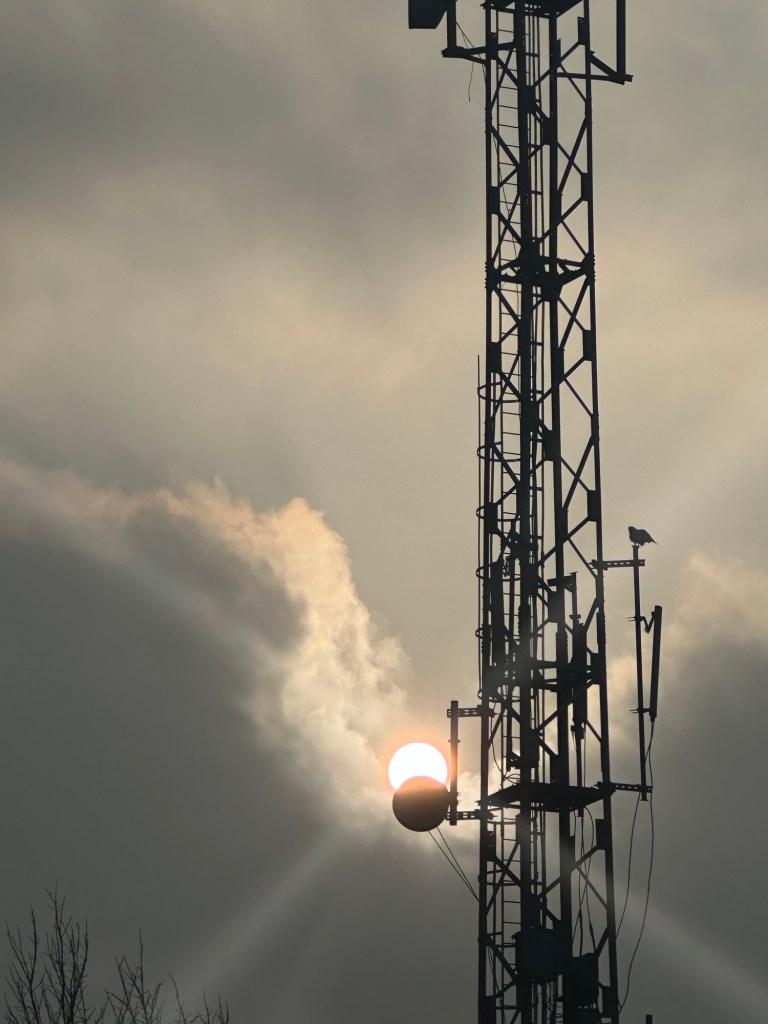
Were they talking about the radiations fron the Cell Phone towers?

I have absolutely no clue. I can’t hear, I can’t see, I can’t think, yet my intellect surely tells me that they had SOMETHING in them that sets an agenda for them to discuss daily, even though THAT which sets the agenda and which EXISTS is beyond my sensory perceptions.

After all, Vedas tell me that, THAT SOMETHING which is beyond my sensory perceptions EXIST inside me and in-fact is ME (tat tvam asi). Vedas do tell me that the same EXISTS inside them too.

That something that EXISTS in me and as me and in those crows too, is what I want to understand and nothing else.

For me understanding THAT SOMETHING is enough. Rest are all perishables and really doesn’t matter.

பொங்கல் வாழ்த்து

பொங்கும் மங்களம் பெருகி

எங்கும் எவரும் மகிழ்வு பெற

தை பிறக்கும் இந்நாள் துவங்கி

  உடல் நலமும் மன நிறைவும்

தரணியிலே வளமான வாழ்வும்

தந்திடுவாய் நீ எமக்கு தடையேதுமின்றி


தாழ் பணிந்தேன் கதிரவனே அனுதினமும் !!

இறையருள் பெருக! வளமுடன் வாழ்க!

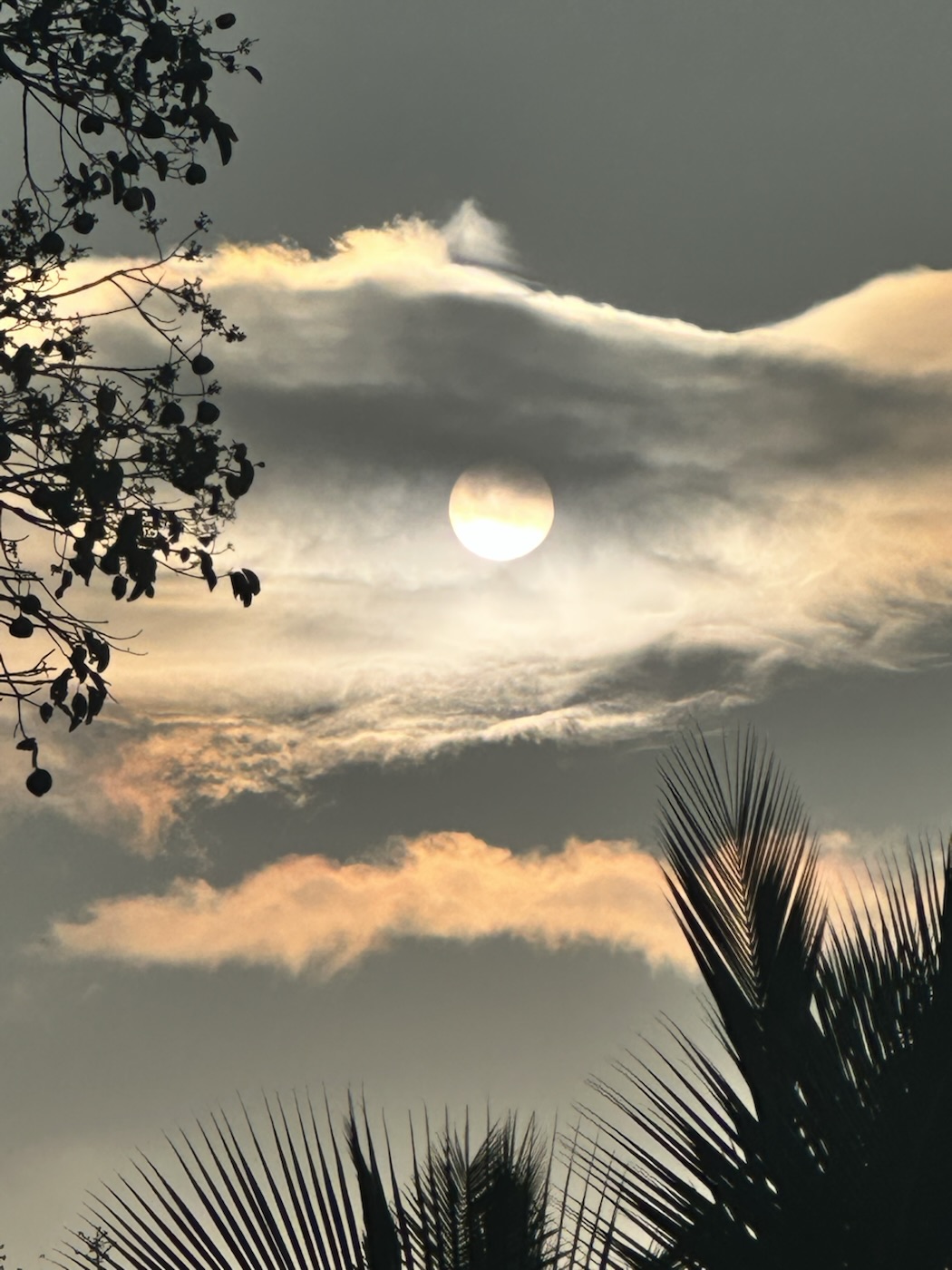
Cloudy is not gloomy

A typical Mid  November in Bangalore, when the blue sky is taken over by low level rain bearing clouds, when incessant drizzle makes driving crazy, when the atmosphere is nothing but dull and gloomy, all you have to do is to reach your roof top at home, park yourselves there with a hot cup of coffee and watch the skies. 

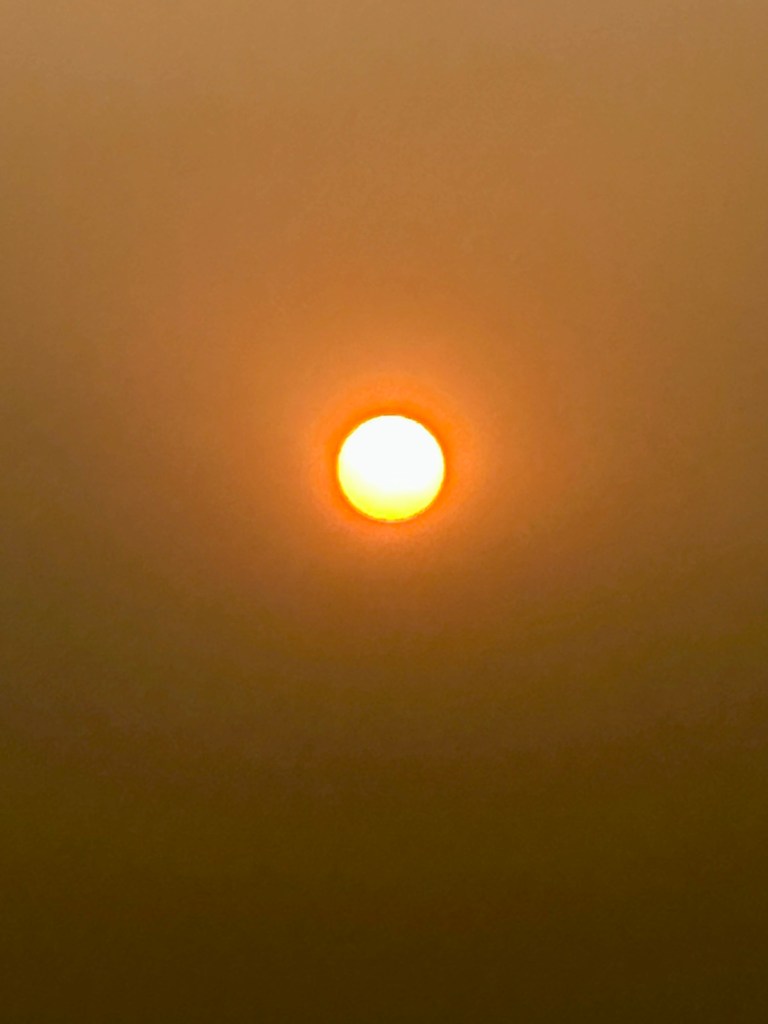
See the enthralling match between the Sun and the Clouds absolutely free. If you are lucky you should  be able to see the Moon as a substitute player for the Sun. 

Of course, it is mandatory that there is an instrumental running commentary in form of the Raga “Subha Pantuvarali”.  

All your doom and gloom gets washed away and there is nothing but bliss.

Vasantham 2024

Vasantha Ragam

Nature is the manifestation of the Ultimate Reality. The five elements of Nature conjure to present to us infinite combinations of names, forms, color, light, fragrance, sound… etc.

All we have to do is to just observe and contemplate on the game that the Ultimate Reality plays through Its manifestations. Words, deeds and thoughts can’t do justice to describe the play.

Yet at the transactional level, we need to express through words, deeds and thoughts.

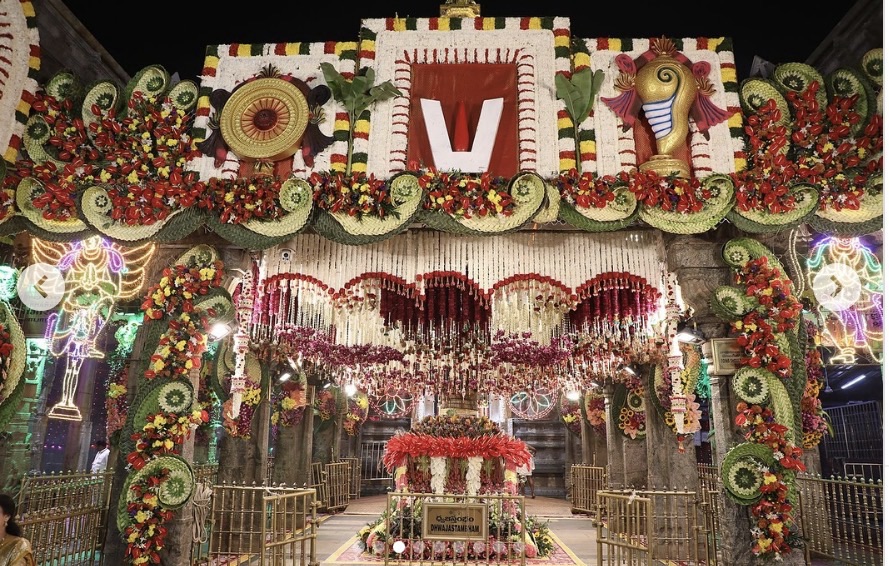
When a genius like Sanjay Subramanyan expresses Vasantha, we have to match it with beauty. Nothing can do justice except Nature in the form of flowers.

Here is my humble attempt to present a bouquet to Sanjay.

https://youtu.be/2Ze2xMoBdwA?si=61-QSt0vrktVnWWn