Adi Sankaracharya’s Sivananda Lahari and Dakshinamurthy Stothram – All the Sanskrit Verses with Transliteration, translation and meaning in English and Tamil is available at Amzon Kindle and will be available at
speciallydiscounted price of 0.99 USD (From USD 2.99) each
from Jan 10th to Jan 16 for Mahara Sankaranthi & Pongal.
Having brought out the distinct advantages of Bhakti Yoga in the previous Slokas, Bhattathri concludes this Dasakam with a fervent prayer to Lord Guruvayurappan in Sloka 10.
O all pervading Lord! Devotion to Thee is easily attainable just by submerging oneself in the nectarine flood of Thy stories. This can be done without much effort and it instantly leads to pure Knowledge – Bliss. O Lord of Guruvaayur! May I soon experience that state of melting of the heart in intense love for Thy lotus feet.
Meaning of the Sanskrit Words
त्वद्भक्तिः तु = त्वत्-भक्तिः तु = devotion to Thee, indeed
कथारसामृतझरीनिर्मज्जनेन = कथायाः + रसः + अमृतम् + झरी = कथारस-अमृतझरी = in the flow of nectar showering from Thy stories
निमज्जनम् = by submerging in its bliss =
स्वयम् सिद्ध्यन्ती = is self attainable, directly
विमलप्रबोधपदवीम् = विमल-प्रबोध-पदवीम् = the state of pure knowledge and enlightenment
अक्लेशतः = (नक्लेशः = अक्लेशः) = without any effort
तन्वती = bestows (because it gives)
सद्यः सिद्धिकरी = instant achievement
जयति = (and) is superior (to the other two paths)
अयि विभो = O Thou Universal Lord!
सा एव अस्तु मे = may I have that (Bhakti)
त्वत्पदप्रेमप्रौढिरसार्द्रता = त्वत्-पद-प्रेम-प्रौढि-रस-आर्द्रता = the state of melting of the heart from the bliss of intense love for Thy feet
நிலையறிந்து மோனஆசானின் அருளுடனே நாலிரு சித்தி பெற்று
பிறவிப் பெருங்கடல் தாண்டி ஈடேறி வீடுபேறு பெற்றிடலாம்
Meaning in English:
Since the Divine Essence in all is made clear in this hymn, hence by listening to it, contemplating on its meaning, meditating on it, and glorifying it, one becomes endowed with the greatness of the knowledge of the Divine Essence ( present in all ); perhaps the Divine Essence by Itself will awaken within him after that again, the eightfold manifestations of Divine powers (Siddhis) unimpeded.
Understanding the Sloka:
Extracted from Swami Paramarthananda’s lectures
iti idam sarvātvamiti spūṭikritam. – In this manner, in nine verses, the sarvātva bhāva which is the essence of all the Upanishads has been taught by me. Adi Śankarācārya says in this manner, in 9 verses, I have taught or condensed the essence of all the upanishads; the essence of prastāna trayam I have given and What is the essence? sarvātmatvam. And what do you mean by sarvātmatvam, sarvam ātma eva. Everything in the creation is ātma alone; other than ātma there is nothing. The so-called anātma is also mithya, which has the content of ātma alone; Just as the so-called ornaments also are not separate substances, they are also nothing but gold with different names. Similarly, the so-called anātma prapancha also is also ātma only, with a different name; Names are different, but the substance is only ātma. And this is called sarvātmatvam, sarvam ātma iti bhavaha, sarvātmatvam. If you want to put in our own language, जीवात्म परमात्म ऐक्र्म् jīvātma paramātma aikyam,; we can also say brahma satya jagat mityā, jīvo brahmaiva na parāḥ. This vedantic essence has been taught by me; Śankarā says:
Where did I teach it? अमुक्षष्मन् स्तवे amuṣmin stave, in this sthoram called dakṣiṇāmūrti Sthothram; here he did not use the word ashtake; because two more added, therefore no more Ashtakam, instead of using the word ashtakam, he uses the word sthavam; Sthavam is the same as sthoram; sthoram means a hymn or praise of the Lord.
In this dakṣiṇāmūrti sthoram, that has been taught and therefore, study of dakṣiṇāmūrti sthoram is equal to the study of the प्रस्तान त्रर्म् prastāna trayam; because the content of dakṣiṇāmūrti sthothram is the same as the content of the prastāna trayam; means upanishads, geetha and brahma sutram. In all the upanishads, Geetha and brahma sutra, whatever has been taught; that is given in capsule form
“Thena”, therefore since dakṣiṇāmūrti sthoram is equal to प्रस्तान त्रर्म् prastāna trayam; अस्र् श्रवणा asya śravaṇā, a person, a seeker of moksha, should do the śravaṇam of this work. (Systematic and consistent study of this work for a length of time under the guidance of a competent teacher). So śrava ṇat; and not only śravaṇam, tat artha mananāt, one should also do the mananam, to find out whether there are any doubts in accepting this teaching. And what is this teaching? There is nothing other than me; the ātma; सवात्य मत्वम sarvātmatvam that means, I alone am in the form of everything; I am all.
And then dhyānāt; and later this has to be assimilated, so that it becomes my second nature; So śravaṇa manana nididhyāsana sādanāni. And then सङ्कीतयनात् saṅkīrtanāt. The word saṅkīrtanāt is given two meanings; for those people who are not fit for śravaṇa manana nididhyāsanam; because they do not have साधना चतुष्टर् संपवत्त sādhanā catuṣṭaya saṃpatti and therefore everything goes above their head, for those unprepared people; the word संकीतयनम saṃkīrtanam means by mere पारार्णम् pārāyaṇam itself they will gradually grow. They need not know the meaning. Let them daily chant this dakṣiṇāmūrti sthothram; that itself will give them sadhana catuṣṭaya saṃpatti; later opportunity for śravaṇam, manana nididhyāsanam. This sthotra will make you climb all those steps. Therefore even pārāyaṇam is a form of sādhana.
On the other hand, if a person is a qualified person and therefore, he has gone through śravaṇa manana nididhyāsanam; for those people, what is the next sādhana? If you call it sādhana, saṃkīrtanam, means after I assimilate this wisdom, I communicate this to others. Communication or sharing is another form of nididhyāsanam. It is a very beautiful form of nididhyāsanam.
And thus by following all these sādhanas, he will get the result; What is the result; सवात्य मत्वमहाववभूशत स्र्ात ् sarvātmatvamahāvibhūti syāt, he will attain the greatest glory, called sarvātmatvam, sarvātmatvam means the wisdom that I am everything. There is no second thing to frighten me; to harass; to torture me; to hurt me, to limit me, to isolate me, there is no second thing at all; this wisdom and this non-dual status is called sarvātmatvam, which is mahāvibhūti, which is the greatest glory called kaivalyam; Non-dual state.
And not only that. Look at the fourth line, aṣṭadāpariṇadam aiśvaryam ca; aṣṭadāpariṇadam aiśvaryam means aṣṭamūrti dakṣiṇāmūrti aikyam. aṣṭadāpariṇadam means eight-fold; ऐश्वर्मय् aiśvaryam is ईश्वरत्वम् īśvaratvam, which means the dakṣiṇāmūrti भावः bhāvaḥ. So, I will attain this status of ashta Moorthy dakṣiṇāmūrti . That means vishvaroopa dakṣiṇāmūrti aikyam;
This equanity is called svamitvam. And this mokṣaḥ is also svastāha, it has come from outside, it is only discovery of the very nature. svastāha means natural freedom; he claims. This is called jīvanmukti which will lead to videhamukti; which is the फलम् phalam.
For all of us, Life is nothing but the time spent between the maternity ward and crematorium on the “surface of a tiny rock-ball, rotating around a spherical fire in a tiny galaxy in an ever expanding galaxies ” loosely called as Earth, world, visvam, jagat etc. Tamil poet Kannadasan called the life as the time between between the drop of a water (semen) and the spark of fire lit. ஒரு துளி நீரில் ஜனனம் ஒரு துளி நெருப்பில் மரணம். இதனிடையில் தான் நம் வாழ்க்கையெனும் பயணம்.
In this “real” (or unreal?) world, all of us (none excluded) have one single goal – mitigating our pains and enhancing our pleasures. துன்பத்தைப் போக்கி இன்பத்தை அடைவதே நம் வாழ்வின் குறிக்கோள். Towards this we all carry out nonstop transactions within ourselves, with the world and of course with the “God” – the Unknown.
From a Vedantic perspective, life can be also stated as the journey. When we say “journey” we are not talking about a point to point or time to time journey. We are talking about a journey which is beyond the domain of time and space; beyond our sense and action organs. We are talking about a journey from avidya to vidya; from ignorance to enlightenment; a journey to understand the intricate relationships between the puzzling trio of Ishvara, Jiva and Jagat. Understanding this relationship called Isvara Jnana by the Seeker is the ultimate goal.
The first eight Slokas of Dakshinamurthy Stothram (some call it as Dakshinamurthy Ashtakam) provided us with the essence of this Vedantic perspective. It presented to us, the Vidya viz., knowledge of Atman, which is Pure Awareness, Changeless and unborn Ultimate Reality. We tried to understand that Vidya, the “atma jnanam” (Know Thyself) is an individual’s experiential learning about “atma isvara aikyam” under the able guidance of a Guru. All wisdom is born of spirit of self-enquiry. It dispels the non-understanding and the undivided intelligence shines in its own light. The wisdom has to arrive directly on the individual, no transmitted knowledge can be sufficient for the real enlightenment. Self is self-luminous. When consciousness becomes aware of itself, there manifests the Intelligence itself. That awareness is Vidya. Adi Sankara with the help of examples highlighted the purpose of our life.
The concept of Viswa Rupa:
Our culture is deep rooted in the spiritual ethos of each individual working towards his own ultimate liberation as a fundamental goal of life. This is the unique gift of Vedic philosophy to the world of spirituality. Ordinary mortals like us find it impossible to acquire this Vidya in our cycles of life (birth and death).
Our Vedic Rishis realised our plight and the fact that Brahman as creator or Supreme Consciousness is too abstract to follow and understand. Since everything in nature is God’s creation, so they simply connected the people with Brahman through an icon of personal choice of Ishta Deva as long as it remains only a symbolic representation of the Ultimate Reality; making it possible for all diversities to represent that single transcendental Reality.
This connection/attachment to the Ishta Deva turned into devotion and worship. A farmer may worship the plough, a fisherman his boat, people whatever god and goddesses they propitiate for their aspect of life related to them. God is there and so the happiness of life can be attained by His grace. The medium is not important, our spirit of surrender to Him and dedicated work for a noble cause is the way out to realise Him in the blissful heart.
Next, from the single idol of God (eka rupa), the rishis had to find ways to migrate us to the state of understanding Brahman, i.e., from an Idol to a formless, omnipresent eternal Ultimate Reality. This means that the focus of our actions should shift from “Eka Rupa” to “arupa”; from “saguna” to “nirguna”. For this purpose, the Rishis introduced an intermediate level, an “aneka rupa” called “Visva Rupa” as we progressed towards our goal. Based on the spiritual progress made, the Seeker is introduced to a form which encapsulates all that is perceivable in this universe and beyond.
The challenge next is how do you list out all that is perceivable. Vedic Philosophy found an answer for this question by identifying the principles (“tattva”) by which one could perceive. Different philosophies within our culture identified different number of “tattva”. For example, the Saivites identified 36 “tattvas”. (https://www.saivism.net/articles/tattvas.asp). இதனையே திருமூலரின் திருமந்திரத்திலும் காணலாம்.
முப்பதும் ஆறும் படிமுத்தி ஏணியாய் ஒப்பிலா ஆனந்தத்து உள்ளொளி புக்கு செப்ப அரிய சிவம்கண்டு, தான் தெளிந்து அப்பரிசாக அமர்ந்திருந்தாரே.
திருமந்திரம்
முப்பத்தாறு தத்துவங்களையே முக்தியை அடைவிக்கும் சிறந்த ஏணியின் பல படிகளாக அமைத்துக் கொண்டு, ஒப்பில்லாத சிவானந்தத்தைத் தரும் ஒளியில் புகுந்து, சொல்வதற்கு அரிய சிவபெருமானைத் தரிசித்தவர்கள் அந்த சிவத் தன்மையை அடைந்து சிவமாகத் திகழ்வார்கள்.
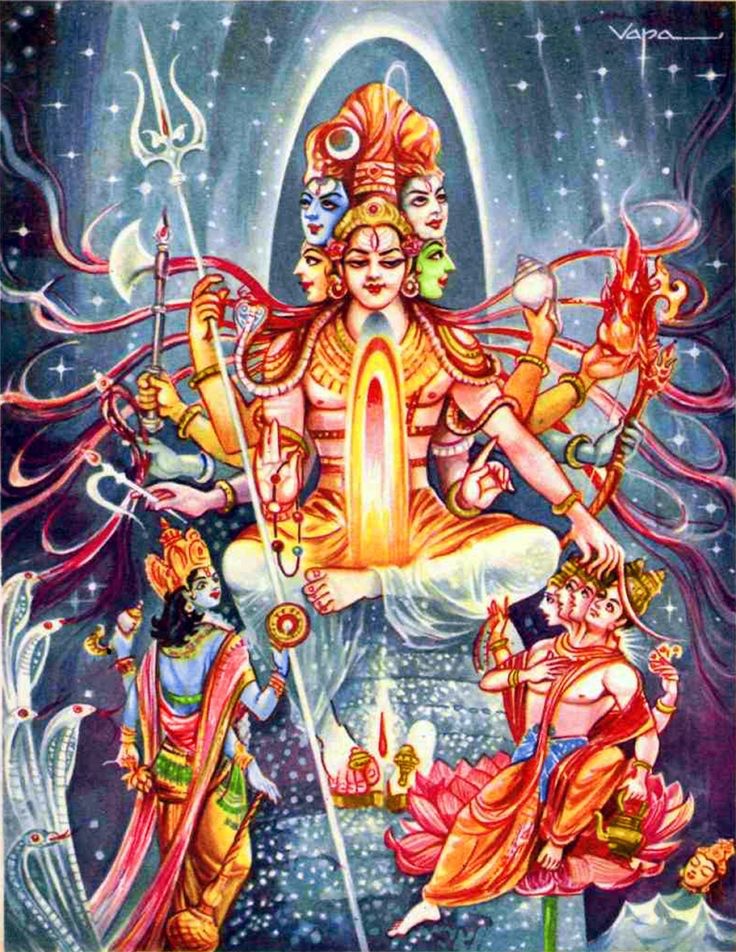
The Rishis then presented the Visva Rupa of Brahman as a seamless integration of principles or tattvas on the “eka rupa” bringing out the “aneka rupa” of Brahman. If one studies the description of the Visva Rupa of Vishnu, Siva and Devi, one can understand that essentially they all are descriptions of the same tattvas, thus reinforcing the Advaita nature of the Brahman.
Adi Sankaracarya in Sloka 9 picks up representative samples from these tattvas and integrates it with Lord Siva, the Dakshinamurthy and presents to us for our understanding.
We saw in the introductory blog earlier that this “jivatma” which was “relation less” and who is otherwise a witness “Saakshi” becomes related due to the influence of Maya, becomes an actor and the misery starts with transactions and continues till we know our true self through “atma gnanam”. Adi Sankara outlines a few relationships in this Sloka.
The differentiations that we see in the world as Cause and Effect, as possessor-possession, relations as the disciple & teacher, and also as father & son etc., are all differentiations within the one Ātman. In Dream or Waking state, He, the One Puruṣaḥ is always present, and (as if) Maya wanders over Him and gives rise to all these Differentiations. Salutations to Him, the Personification of Our Inner Guru Who Awakens This Knowledge through His Profound Silence; Salutation to Sri Dakṣiṇāmurty.
Understanding the Sloka
The Role of Maya
Let us look at the third line first: य एष पुरुषो मायापरिभ्रामितः eṣa: puruṣaḥ māyāparibhrāmitaḥ;
1. It means – This ordinary person in the world; even though he may be worldly-educated; who is spiritually and scripturally-illiterate; he is māyā paribhrāmitaḥ; { माया māyā means avidya परिभ्रम Paribhrama = Moving To and Fro, Wander/drift}. மாயையவள் வசப்பட்டு உழலும்
2. This means that he is confused because of avidya and therefore instead of taking original sākṣi svarūpam as himself; he mistakes the incidental-ahaṃkāra as himself drifts into the attached-self called ahaṃkāra I; I am going to certainly become a relative individual, related to the external world; asaṃga sākṣi (the unattached witness), becomes ससंगजीवः sasaṃga jīvaḥ (attached soul); relationless pure sākṣi-I, have now drifted and fallen down to a relative samsāri-I;
3. This means that every relation is causing one form of samsāra or the other. There is no relationship which is free from problems; In fact, if there is a relationship free from problems then the end of the relationship will cause problems; If there is a relationship so beautiful and wonderful and enjoyable, even that wonderful relationship becomes a problem when the relationship has to end because of time/kala, because of prarabdhaḥ, because of any reason. Therefore, a problem free relationship is an oxymoron; it does not exist. And therefore, the sākṣi-I, who is ever free, now has fallen down to ahaṃkāra-I, with varieties of problems.
Relationship
A few empirical relationships are enumerated in the sloka i.e., कार्यकारण संबन्धः kāryakāraṇa saṃbandhaḥ; cause and effect relationship. I-as-jīvātma, the ahaṃkāra-I, am a product of my own past karma; my prarabdhaḥ karma has given me this personality; this physical, this emotional, this social personality. Therefore, I am never a free person; I am tossed up and down; by my own karma; thus I am a कार्मय kāryam; my karma becomes the kāranam for my situation.
Let us see a few of the cause & effect relationships.
1. स्वस्वामिसम्बन्धतः svasvāmisambandhataḥ; स्वस्वामि (Svasvaami = Possessor and Possession & सम्बन्ध (Sambandha = Relation). That means as ahaṃkāra, I am related to several possession, as owner-owned sambandhataḥ; and ownership means, there is a yogakṣema samsāra. yogakṣema samsāra means acquisition-maintenance samsāra is there like. உடையவன் – உடமை உறவுகள்.
शिष्याचार्यतया śiṣyacāryatayā; means guru-śiṣya sambandhataḥ. ஆசான் – சீடன் உறவுகள்.
पितृपुत्राद्यात्मना pitṛ putrādyātmanā; means father son adhi etc. தந்தை – மகன் உறவுகள் (சொந்தம் எப்போதும் தொடர் கதைதான், முடிவே இல்லாதது)
So, the māyā paribhrāmitaḥ puruṣaḥ drifted and fallen down from a relationless pure sākṣi-I, to relative samsāri-I in either of the स्वप्ने जाग्रति वा Svapne Jaagrati Vaa avastha, whether it is waking state or dream state, gets into the inevitable saṃsāraḥ.
Of course we get some interval and relief in सुषुशि अवस्त suṣupti avasta, wherein we do not worry about the family members and society and other problems, and unfortunately we cannot sleep for long. The sleep is only for a few hours and older we grow, lesser the sleep also. Therefore even sleep is not a permanent solution; even death is not a permanent solution, because punarjanma brings in punaha sambandhataḥ and samsāra; And therefore this jeevathama, puruṣaḥ ha; who is really a sākṣi; that purushā, māyā paribhrāmitaḥ; as is confused because of māya.
Relationships & The Birds on a Tree – A Vedic Perspective
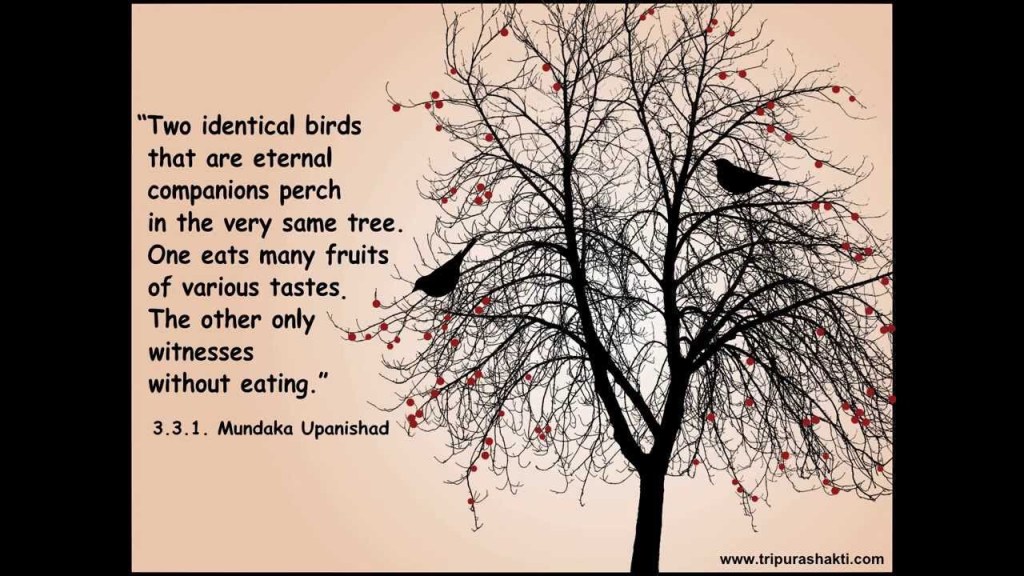
Talking about the relationships of the unattached witness and the attached soul, the famous two birds in one tree Sloka from the Upanishads provides the classic conceptual framework for this Sloka in Dakshinamurthy Stothram.
The Shruti, says: By Mâyâ, Siva became two birds always associated together; the One, clinging to the one unborn (Prakriti), became many as it were (vide Mundaka- Up. 3-1; Yâjniki-Upanishad 12–5).
Meaning of the Sanskrit Words – “Suparnau – two of good motion or two birds; (the “word Suparna” being used to denote birds generally); Sayujau – inseparable, constant, companions; Sakhayau – bearing the same name or having the same cause of manifestation. Being thus, they are perched on the same tree (‘same,’ because the place where they could be perceived is identical). ‘Tree’ here means ‘body;’ because of the similitude in their liability to be cut or destroyed. Parishasvajate – embraced; just as birds go to the same tree for tasting the fruits.
Two birds bound to each other in close friendship are perched on a tree. While one of the birds is busy consuming the fruits of the tree with great relish, the other seems to be in a state of detached equanimity just looking at its compatriot. The tree in this example represents the body. The bird busying itself with the material pleasures accorded by the tree is the ‘Jivātma’ (individual soul), that has an inextricable identification with the body and mind. Such an identification makes the Jivātma both the ‘karta’ (doer) and the ‘Bhokta’ (enjoyer). The observing bird on the other hand, represents the ‘Paramātma’ (the Supreme Self). The Supreme Self remains uninfluenced and untainted by any material pleasures and possessions and remains a still tranquil witness.
Adi Śankarācārya in his commentary to this sloka says – This tree as is well known has its root high up (i.e., in Brahman) and its branches (prana, etc..) downwards; it is transitory and has its source in Avyakta (maya). It is named Kshetra and in it hang the fruits of the karma of all living things. It is here that the Ātman, conditioned in the subtle body to which ignorance, desire, karma and their unmanifested tendencies cling, and Isvara are perched like birds. Of these two so perched, one, i.e., kshetrajna occupying the subtle body eats, i.e., tastes from ignorance the fruits of karma marked as happiness and misery, palatable in many and diversified modes; the other, i.e., tbe lord, eternal, pure, intelligent and free in his nature, omniscient and conditioned by maya does not eat; for, He is the director of both the eater and the thing eaten, by the fact of His mere existence as the eternal witness (of all); not tasting, he merely looks on; for, his mere witnessing is direction, as in the case of a king.”
The Way Forward
Swami Dayananda Saraswathi in his lecture says that in all but one relationship listed by Adi Sankara , the “bedha”- the difference between the Atma and the Maya influenced Jeeva continues to exist eternally irrespective of the transactions. The guru-shishya relationship even though is a cause and effect relationship is the only one which ensures that the influence of Maya is nullified and the true nature of Jeeva is revealed through the guru’s teachings. In that state, even the guru-shishya relationship withers away and so too the other relationships.
And that is perhaps why Adi Śankarācārya says, even this confused jeeva is really none other than that dakṣiṇāmūrti only and therefore he says Tasmai Shri Gurumoorthaye; To that Gurumoorthy, dakṣiṇāmūrti , my namaskaraha.
அன்பு சிவமிரண் டென்ப ரறிவிலார்
அன்பே சிவமாவ தாரு மறிகிலார்
அன்பே சிவமாவ தாரு மறிந்தபின்
அன்பே சிவமா யமர்ந்திருந் தாரே
என்ற திருமந்திரப் பண் இக்கருத்தினைப் பிரதிபலிக்கிறது.
This, in essence is the eighth Sloka.
Long distance shoot using iPhone from the balcony of my house.
Today is November 1, 2021. Sixty six years ago on this day, dreams of Sri. Aluru Venkata Rao and others came true with the formation of Mysore State based on the majority language spoken in the region, Kannada. Seventeen years later, the state was renamed as Karnataka.
What could be a more befitting occasion for me on this wonderful day, than to take up one of the monumental works of Devanahalli Venkataramanaiah Gundappa affectionately known as DVG, the Doyen of Kannada Language for my detailed study. If I could try to understand that epic and express that in my mother tongue Tamil, that would be the icing on the cake for my efforts to understand the classical languages of India.
Yes! I have taken up the Epic by DVG – Manku Thimmanna Kagga for my study. My current knowledge of this wonderful language is limited to only “understanding and speaking to a fair degree of comfort” and I start my journey here like I do in other fields as a toddler.
So the “condicio sine qua non” for the readers is exactly the same as that of my other adventures viz., “pardon me for my ignorance and consider my deficiencies and faults as the learning process of a toddler”.
My sincere thanks to VedaBrahmaShri BR Prabhakar ji for presenting me the translation in the form of a book and a friend in the social media @GunduHuDuGa for helping this toddler to gain confidence and proceed further.My sincere Pranaam🙏and thanks to them.
The Prayer
Like all the Epics in our culture, DVG starts the Kagga with a three verses section where he wants us to understand and surrender to that Unknowable Ultimate Reality and Principle called Vishnu, the Creator.
We will begin our study with the Prayer.
Here is the Prayer in the form of a video. The video has both Kannada and Tamil Verses.
We saw in the introductory blog that the experience of the self is not a simple act of knowing but it is a complex act of re-knowing. When recognition of self occurs, the limited consciousness merges with the supreme consciousness. Tirumūlar compares this to space merging with space and light merging with light. Let us now see in this Sloka about this recognition – when, where and how do we re-cognise this Self.
बाल्यादिष्वपि जाग्रदादिषु तथा सर्वास्ववस्थास्वपि व्यावृत्तास्वनुवर्तमानमहमित्यन्तः स्फुरन्तं सदा । स्वात्मानं प्रकटीकरोति भजतां यो मुद्रयाभद्रया तस्मै श्रीगुरुमूर्तये नम इदं श्रीदक्षिणामूर्तये ॥७॥
Meaning in Tamil
இடைநிலையாய் பாலன் இளையன் விருத்தனென உடலிருந்தும்
அடையும் அறுபாதி அவத்தையும்* தொடர்விலாதெனினும் – அதனுள்
இடையிலா தொடராய் சுயநேருணர்வாய் அனைத்து நிலைதனிலும் உள்ளுறை
ஆதியும் அந்தமும் அருட்பரம்பொருளெனும் ஆன்மாவை அறியும் ஆற்றல்தனை
அமைதியின் வடிவாய் கரவழி மோனமுத்திரை காட்டி நாடுவோர்கு கற்பிக்கும்
ஆதிஅந்தமிலா மோனநிலை ஆசானாம் அந்த அருள்மிகு
தக்ஷிணாமூர்த்தி பொற்பாதம் பணிந்திடுவோம்
(*அறுபாதி அவத்தை – ஆன்மாவின் மூன்று நிலைகள் –
விழிப்பு, கனவு, ஆழ் உறக்கம்)
Meaning in English:
During boyhood and other stages of life (Youth, Old age etc), during waking and other states (Dreaming, Deep Sleep, Turiya etc) and similarly in all conditions the Ātman always shines as the “I” within, free from all conditions but at the same time present in all conditions. The Inner Guru awakens this Knowledge of One’s Own Ātman to those who surrender to Him; this Knowledge is represented by the auspicious Cin-Mudra. Salutations to Him, the Personification of Our Inner Guru Who Awakens This Knowledge through His Profound Silence; Salutation to Sri Dakṣiṇāmurty.
Where is Ātma experienced? Self is experienced by me. ātma, the real Self, is always experienced by me. It is ever-evident to myself; And when is the self-experienced? Sada spurantaṃ. It is ever-experienced. And where is it experienced? अन्तः स्फुरन्तं antaḥ spurantaṃ. Within the body-mind-complex, within the enclosure of body-mind-complex, it is ever-experienced. (आत्मानुभवः ātmānubhavaḥ is a सदा अन्तः स्फुरन्तं sada antaḥ sphurantaṃ; sada – always; antah – inside/internal; spurantaṃ meaning shining, experienced, evident, accessible, recognisable, is spurantaṃ).
And how do we refer to that experience? Every experience is identified through an expression. When I experience an object let us say a clock, I invent an expression to refer that experience; I say that it is a clock. What is that expression for ātma? This ever-experienced ātma, is referred to me by me as Aham – Aham iti. It is ever experienced in the form of I-am; I-am; I-am;
When do we experience? “I-am’ experience is there continuously. Throughout the waking state, “I-am” continues; the ātma is experienced as I am, during the dream state; even during the sleep state, “I am” continues. You do not verbalise during sleep; but that experience is verbalised after waking; “I am” experience is present in sleep, but it is verbalised, vocalised only in the waking state; verbalisation is later, but the experience is there; even during sleep. Therefore I-am, I-am, I-am, this continuously experienced I am is ātma.
From this Adi Śankarācārya conveys a very important thing, ātmā experience or ātmānubhavaḥ is continuously present; ātmānubhavaḥ is continuously present for everyone, all the time. And therefore, we should remember ātmānubhavaḥ is not a particular experience happening at a particular time. You cannot say I had ātmānubhavaḥ in meditation. Then you are making ātmānubhavaḥ an event in time. Adi Śankarācārya negates that by using the word सदा sadā. So ātmānubhavaḥ is not an event in time and therefore it does not require a process to make it an event in time. An event in time happens because of an effort, because of a process. Śankarā says ātmānubhavaḥ is not an event; which happens in time through a process or through an effort of any individual or individuals. Therefore, we should never say; I am working for ātmānubhavaḥ. This is one explanation of ātma.
This ever-experienced ātma is anuvartamānam, is continuously-present, anuvartha means to continuously present, to inhere, to permeate, to inform, anuvarthamānam; this ātma is continuously-present. When? In and through. In and through what? vyāvṛttāsu avāstāsu, vyāvṛttām means discontinuous, anuvartham means continuous, and avāstā means states/stages, So ātma is continuously present in and through the discontinuous-avāstās.
The word avāstā, if you take the life as a whole, the word avāstā means the stages of life and they are classified as four in our śātrās. There are four avāstās or stages of life, if you take life as a whole. And what are those avāstās? bālyam, kaumāram, yauvanam, vārdakyam; bālyam is childhood state, kaumāram means boyhood state; or stage; and yauvanam is youth stage; and vārdakyam means old-age stage. Thus, four avāstās are there. bālyadishu avāstāshu, in and through the four discontinous stages of life, like childhood etc. ātma is continuously present. How? I am a child, I am a boy, I am a youth; I am old; When child word is used, boy word is not there; when I say boy, youth word is not there; When I say old, youth, boy is not there. Child, boy, youth, old, there are anuvartam or vyāvṛttam, these four; they are vyāvṛttam means, mutually-exclusive-discontinous stages-of-life; but even though these stages are mutually exclusive; even though these stages are discontinuous, what is continuous? I am, I am, I am. That “I am” refers to the ātma.
And not only these four stages of life. If you take a particular day of your life, instead of taking the whole life, if you take a particular day, in the context of a day, avāstās are called states of experience, and they are classified into three. If you take life; four stages; if you take day; three states; four stages are called avāstās; three states are also called avāstās. One is taking a segment of life called a day, another taking the whole life. And what are the three states of experience? Adi Śankarācārya says जाग्रदाददषु jāgradādiṣu when we say jāgradādiṣu avāstāsu, we should translate as states of experience. And there also “I am waker”, “I am dreamer” and “I am sleeper”; wakerhood-state, dreamerhood and sleeperhood; They are vyāvṛttam or anuvrutham? They are vyāvṛttam, which means they are mutually exclusive, and they are discontinuous states. But in and through the discontinous states, what is common, “I am”, “I am”, that “I am”, and that continuous”I am” experience is ātmanubhavaha;
3. प्रकटीकरोति भजतां – Prakattii-Karoti Bhajataam
Here Śankarā talks about the knowledge that the Guru is teaching – the knowledge about the attributeless ever present and ever experienced ātma. Because they are floating and march pasting, this exclusion of attributes, and seeing the ever experienced continuous I-am as ātma is called ātma jnanam. Seeing the attributeless I-am as the ātma is called ātmajnanam. And therefore, ātma jnanam is not a new experience; but it is a new perception of the ever experienced I, excluding the attributes. And this ātma, the ātma, which is separated from attributes, प्रकटीकरोशत prakaṭīkaroti, is taught by the guru. Guru does not give a new experience. Guru does not ask the disciple to work for a new experience, Guru teaches the student to reshuffle; reclassify the available experience. You say “I am”, but do not include any attribute.
In Nirvana Satakam, Śankarā Says ,
नमे द्वेष रागौ, नमे लोभः मोहौः
मदौ नैव मे नैव मात्सर्य भावः
न धमॊ नचाथॊ, न कामॊ न मॊक्षः
शचदानन्दरूप शिवॊहम् शिवॊहम
Include the attribute; I am the empirical-ahaṃkāra; exclude the attribute, I am absolute-ātma. And therefore, the difference between ahaṃkāra and ātma is only in my reclassified-perception. That is why we say ātma-jnanam is a cognitive-change; a perspective-change, with regard to myself. And what is that change? Earlier when I was saying “I am” it was along with anger; along with desire; I included them; now I have learnt to exclude them. And the moment l learn how to exclude them; I can happily claim I am Brahman. Inclusive of attributes, as ahaṃkāra, I cannot claim I am Brahman. Exclusive of atttributes, as Aham, I can claim I am Brahman; I have not become Brahman; but I have claimed the Brahman that I was, I am, and I ever will be. And it is this new perspective which is the teaching of the guru.
Therefore, Adi Adi Śankarācāryacharya says: स्वात्मानं svātmānaṃ; this attributeless-I, this reclassified-I, the guru प्रकटीकरोशत; prakaṭīkaroti means reveals, teaches, instructs; to whom? भजतां bhajatāṃ, to the seekers who are willing for the new-look “I”. Who are willing for the new-look “I”; there is no change in the eye; in the look or perspective there is a new perspective; that I prakaṭīkaroti bhajatāṃ; bhajatāṃ means śiṣyānām (the seekers).
4. यो मुद्रयाभद्रया – Yo Mudrayaa Bhadrayaa
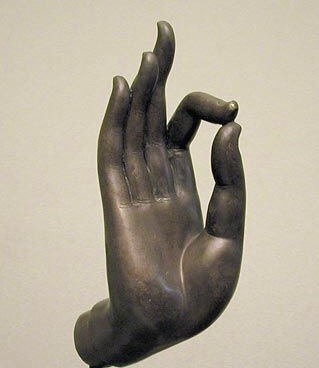
Now, Śankarā explains as to how the Guru transfers this knowledge to the Seekers. And how does he reveal? Two methods, by verbal and non-verbal communication. So, all the body gestures are non-verbal communication. That non-verbal communication is called badraya mudraya; bhadraḥ means auspicious, mudraḥ means hand gestures. The blessed symbol here referred to is variously named as follows:
Cinmudra, the symbol of consciousness;
Vyakhya-mudra, the symbol of exposition;
Tarka-mudra, the symbol of investigation;
Jnana-mudra, the symbol of wisdom.
It consists of a circle formed by joining the thumb and the index-finger at their tips. Through the auspicious hand gesture, called cinmudraḥ – karakalita cinmudra ānandarūpam.
We saw in the dhyāna slokaḥ; the index finger (let us call it the I – am-finger). With this I-am-finger only we attach attributes and point out “you are different, I am different ” meaning that we attach sthula, sukshma and karana sareera attributes through this finger.
And once I separate the “I am” from the attributes, then it can touch the thumb which refers absolute Brahmanhood; separate from the attributes, “I acquire”, I accomplish the status of absolute-brahmanhood. The relative I itself is the absolute-I, when it is freed from attributes. I plus attributes is relative-I, ahaṃkāra; I minus attributes am the absolute-I; ātma. This is what Dakshinamurthy conveys.
The CinMudra is also extensively quoted in several Tamil “Saiva Siddhanta” works. Here is one from Kanda Puranam and Tiruvanaika Puranam
சைவத்தில் சின்முத்திரை கந்தபுராணத்தில் விளக்கப்பட்டுள்ளது. உமையம்மை இமய அரசன் வேண்டுகோளுக் கிரங்கி அவனுக்கு மகளாக இறைவன் அனுப்பப் பிரிந்தவுடன் , இறைவன் தனியே இருந்தனன். அப்பொழுது வேதம் முழுதும் கற்றுணர்ந்த சனகாதி முனிவர் இறைவனிடம் வந்து,” ஐயனே!கடல் போல விரிந்த பொருட்பரப்புள்ள வேதங்களைக் கற்றும் மனம் அடங்காமல், நள்ளிரவில்சூறாவளிக் காற்றடிக்க எழும் அலைகள் மோதித் தாக்க அலைப்புண்ட கப்பல் போல மனம் ஒருநிலைப்படாமல் கலங்கினோம். இந்தக் கலக்கம் நீங்க அருளுவாயாக” என்று இரந்தனர். இறைவன் அந்தமில் ஆகமத்தின் அரும்பொருள் மூன்றும் (சரியை, கிரியை, யோகம்) கூறினன். முனிவரர்கள் மனம் அடங்கும் ‘ஞானபோதகம்’ போதி என்றனர். இறைவன் அது சொல்லத்தக்கதன்று; இப்பரிசினால் இருத்தல் கண்டீர் எனக் கூறி,
கட்டைவிரல் சிவபரம்பொருளைக் குறிக்கும் . சுட்டுவிரல் உயிரைக் குறிக்கும் சுட்டுவிரலுடன் ஒட்டிய நடுவிரல் உயிருடன் இணைந்த ஆணவமலத்தையும் மோதிரவிரல் மாயாமலத்தையும் சுண்டுவிரல் கன்மமலத்தையும் குறிக்கும். சுட்டுவிரல் மற்றைய மூன்று விரல்களையும் விட்டு விலகிப் பெருவிரலின் அடியினைப் பொருந்தி நிற்றல், உயிர் , மும்மலங்களையும் நீத்துச் சிவனின் தாளிணையில் படிந்து நிற்றல் முத்தி என்பதைக் குறிக்கும். இதனை,
“மும்மலம் வேறுபட் டொழிய மொய்த்துயிர்
அம்மலர்த் தாள்நிழல் அடங்கும் உண்மையைக்
கைம்மலர்க் காட்சியில் கதுவ நல்கிய
செம்மலை யலதுஉளம் சிந்தி யாதரோ.”
திருவானைக்காப் புராணம் – வரங்கொள்படலம்.
என உணர்த்திற்று.
5. तस्मैश्रीगुरुमूर्तयेनमइदंश्रीदक्षिणामूर्तये – Tasmai Shrii-Guru-Muurtaye Nama Idam Shrii-Dakssinnaamuurtaye
To that Guru, who gives me the knowledge of the attributeless-I, who teaches me to have a new perspective, without looking for a new experience, that teacher I prostrate; Tasmai. Gurumurthaye; śrī dakṣiṇāmūrtaye; who is none other than dakṣiṇāmūrti idaṃ namaha; my prostrations.
In this verse Adi Śankarācārya is restating the ātma svarupam. We have been told that ātma is not deha, prana, indriyani, buddhi and śūnyam. If ātma is not anyone of them, then what exactly is ātma? That is beautifully described here; Svātmānam. Svātma means my own self; my own essential nature; or the real self. What is this real self?
If it is concluded, on the strength of recognition or pratyabhijná of self-identity, that Ātman is a persistent entity, what is this pratyabhijná? And what its purpose? In Vedanta, Pratyabhijná is also not enumerated among the right sources of knowledge called pramánas along with pratyaksha, etc. Then how can it be a source of knowledge (pramâna)?
The answers to these questions are enlightened in this seventh stanza of the Sloka/Hymn.
The Concept of Re cognition of an object/thing:
Recognition which is essentially a re- cognition (Pratyabhijnána) consists in re-cognising an object/thing—in the form ‘this is the same as that’—which, having once before presented itself to consciousness, again becomes an object of consciousness at present. Semantics in English can give different names for this – recollection, episodic memory, self awareness, Autonoetic consciousness etc. The basic fact is the transaction between consciousness and an object. Let us see an example – a black colored box with golden handle.
First let us see cognition. In the case of external objects, whenever we experience an object, let us say a box, we invent/use an expression to refer to that experience – a box. Let us say that as a kid I have seen a black colored box with a golden handle.
Now after several years later as an adult I see an identical black box with a golden handle, then what do I say “Wow; it is exactly the same or like the same that I saw/experienced several years earlier as a kid”. All the accidental circumstances of place, time and form are left out of account when I recall and say “wow…”.
In this recollection (Recollection here means consciousness of something as having been experienced before), “I” remain the same; there has been no change to that “I”. In other words, in this recollection, Ātman remains the same through all the varying states of wake, dream and deep sleep (jagrat, svapna, and suṣupti), unchanging though the body changes in infancy, childhood, youth, manhood, and old age of an individual. This Black colored box with golden handle is recognized as that Black colored box with golden handle in all the above states. Present both before and after, both at the time of experience and at the time of recollection, Ātman recollects the thing which has persisted in Himself in the form of a samskára or latent impression. So, in the whole process of initial cognition, re-cognition and recall, the Ātman remains the same irrespective of the states of the individual.
The Concept of Re cognition of an Ātman:
Similarly, the pratyabhijnána of Ātman consists in His becoming conscious that He is omniscient, etc., after casting aside the notion that He is of limited knowledge and so on, a notion engendered by His association with Mâyâ. That is to say, the recognition of Ātman’s self-identity consists in the intuitive realisation of His essential nature as the infinite Consciousness and infinite Bliss, after eliminating all limitations of Maya and its effects ascribed to Him by the ignorant.
And how do I refer to that experience? As said earlier, every experience is identified through an “wow” expression. What is that expression for ātma? This ever-experienced ātma, is referred to me by me as Aham – Aham iti. It is ever experienced in the form of I-am; I-am; I-am; “I-am’ experience is there continuously. Throughout the waking state, “I-am” continues; the ātma is experienced as I am, during the dream state; even during the sleep state, “I am” continues. You do not verbalise during sleep; but that experience is verbalised after waking; “I am” experience is present in sleep, but it is verbalised, vocalised only in the waking state; verbalisation is later, but the experience is there; even during sleep. Therefore I-am, I-am, I-am, this continuously experienced I am is ātma.
This “I am” or “aham” is present silently without verbalisation. That is why silence is golden and has no price tage attached to it. That is why we don’t understand it also.
“இதற்கு சொல் என்றும், பொருள் என்றும், மொழி என்றும் இல்லை. அதனாலேதான் இந்த சொல்லாத சொல்லுக்கு விலை ஏதுமில்லை” என்றான் கவிஞன்.
When and where do I have this experience of “I am” or aham ? The answer to this question is provided by Adi Śankarācārya in this Sloka. Let us see the meaning of the Sloka in the blog scheduled on 24th October 2021.
In the fifth verse, Śankarācārya enumerated various systems of philosophy, in which there are varieties of confusion regarding the real nature of “I”; and in this sixth verse, Śankarācārya wants to refute the main system, known as mādhyamika bauddisam; or śūnyavādaḥ; which is one of the main pūrvapakṣis of vedāntaḥ. And Śankarācārya does not refute the other systems, because this shoonya vadi has already refuted others and therefore he becomes the main challenger; and therefore Śankarācārya refutes the śūnyavādaḥ in the 6th verse.
The śūnyavādi points out that the essential nature of me; or the I, is nothingness or emptiness. Not only the individual, even the essential nature of the world is nothingness or emptiness. And in support of this conclusion, he takes our sleep experience as the pramāṇam or truth. In sleep we do not experience anything; there is no objective world. In sleep we do not experience the subject also; so neither ‘seen’ is there; nor is there the ‘seer’; neither the ‘heard’ nor the ‘hearer’. Therefore the subject as well as the object, both of them are not there; and therefore śūnyam is the tatvam is their conclusion.
Now Śankarācārya shows in this verse; that in deep sleep state, it is not śūnyam or emptiness. In deep sleep state, there is pure existence; but it is an unqualified existence; which is not available for any transaction. Only qualified existence is available for transaction; unqualified existence is not available for transaction. And therefore we make a mistake that it is emptiness; because we have a general misconception, whatever is not available for transaction is non-existent. This is one of the intellectual confusions. We think the space is nothingness; because space is not available for transaction. But the truth is that, space is not emptiness or nothingness, it is a positive entity. But generally we mistake space as emptiness, because it is not avialable for seeing, touching or any other local view. The same mistake is extended to the pure existence also; because it is not available for vyavahara. And therefore, in sleep, non-transactional existence is available which is my nature. This is the essence of this verse.
To highlight the mistake or the illusion that Sunyavadis have about “existence or otherwise” Adi Sankara brings out an incident that happened during the “Samudra Manthan” (churning of the ocean) as told in the Puranas.
The story of Rahu & Ketu and Maya
According to Puranas, the birth of Rahu and Ketu dates back to the earliest of times.‘Samudra Manthan’ is regarded as one of the most important events in the history of Hindu civilization. The Solar and Lunar eclipse is also associated with ‘Samudra Manthan’. When the ocean was churned by the Asuras and Devas, ‘Amrit’ was produced. This Amrit was stolen by Asuras and to obtain the Amrit, Lord Vishnu took incarnation in the form of a beautiful damsel ‘Mohini’ and tried to please and distract the demons. On receiving the Amrit, Mohini came to Devas to distribute it to them. ‘Svarbhanu’, one of the asuras changed his appearance to a deva to obtain some portion of the Amrit. However, Surya (Sun) and the Chandra (Moon) realized that Svarbhanu was an Asura and not one of the devas. Knowing this, Lord Vishnu severed Svarbhanu’s head with his discus, the Sudarshan Charka. However, even though his head and body became separated, they still remained immortal as the separate entity because before his head was served, he managed to drink a drop of the nectar from the Amrit. The Head is known as Rahu and the headless body is the Ketu. Since then Rahu and Ketu constantly chase the Sun and the Moon for revenge as they are the cause of separating the head and body of the Asura Rahu. It is a popular belief that when they succeed in catching Sun and Moon they swallow them causing Solar or Lunar eclipse but they can’t hold them for long and Sun and Moon emerge again intact as they also had nectar and are immortal.
Let us study the Sloka 6 in detail , in the next blog which will appear on 30th September






 Prabhu's Ponder