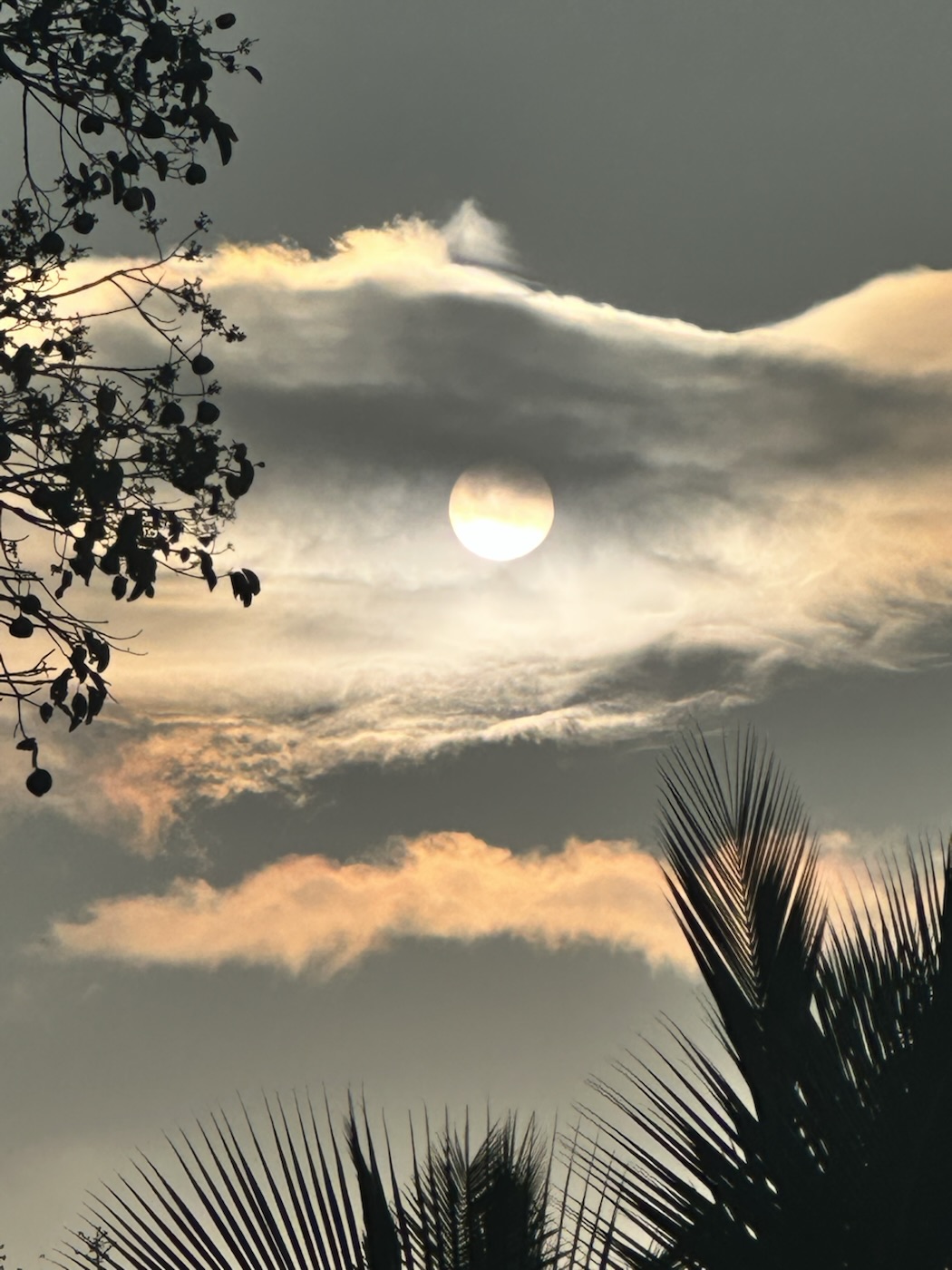
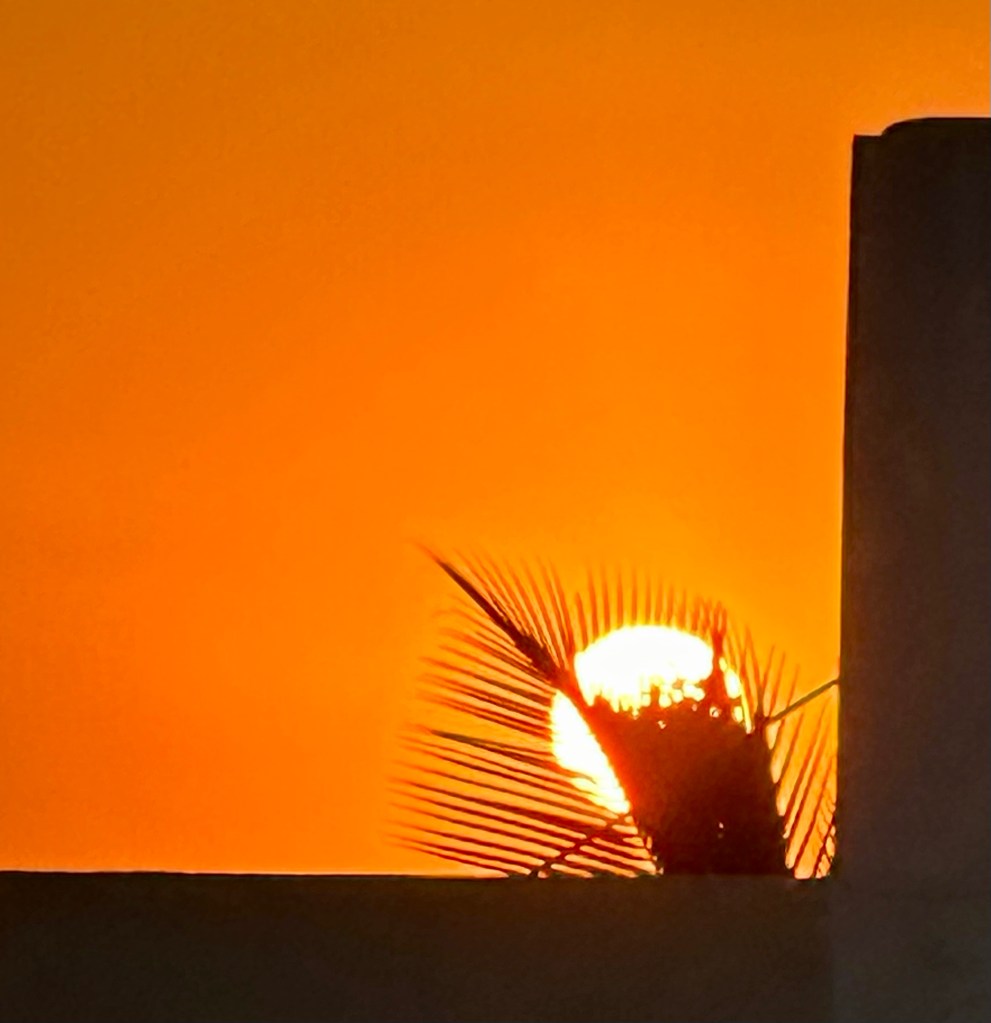
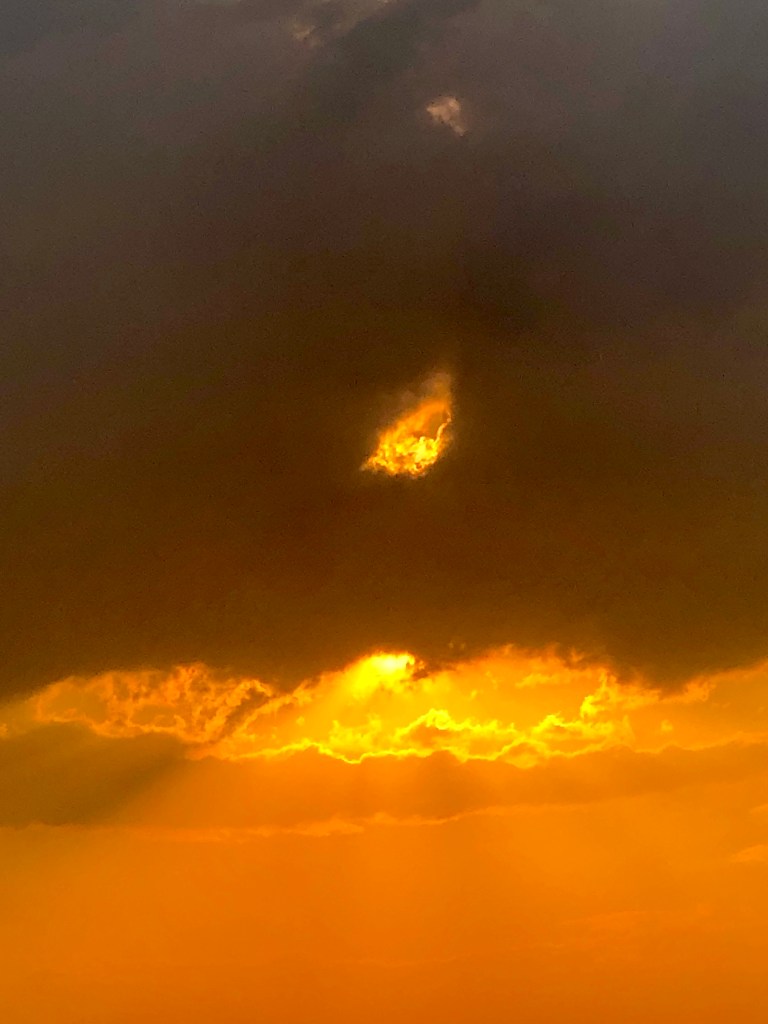
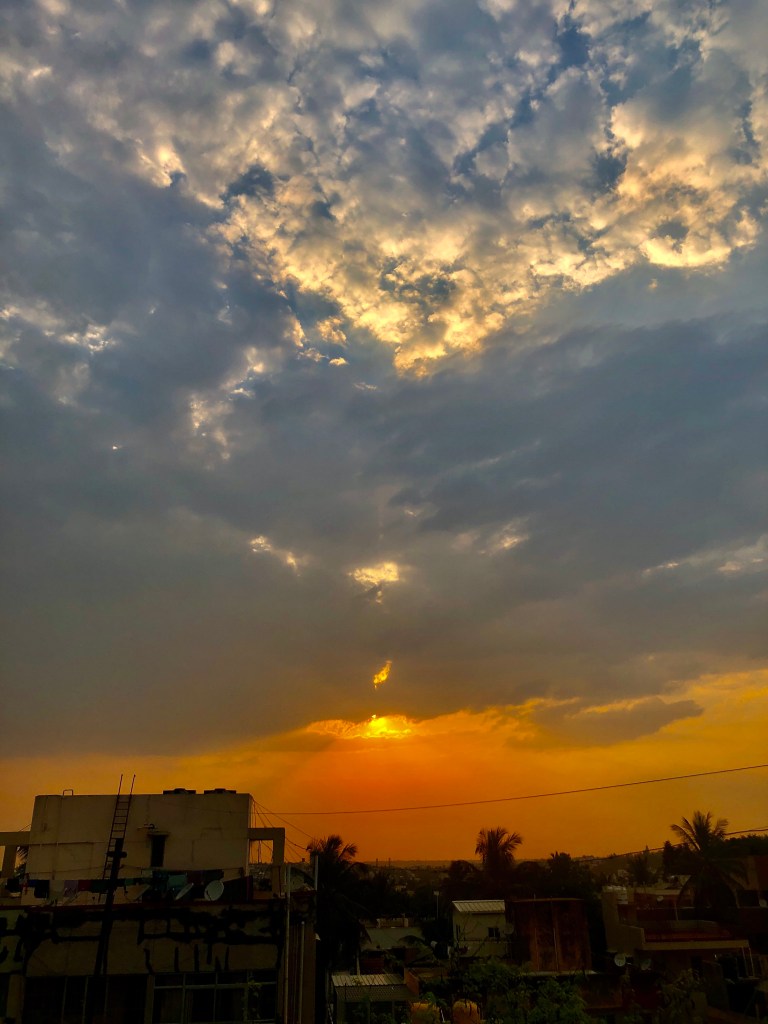
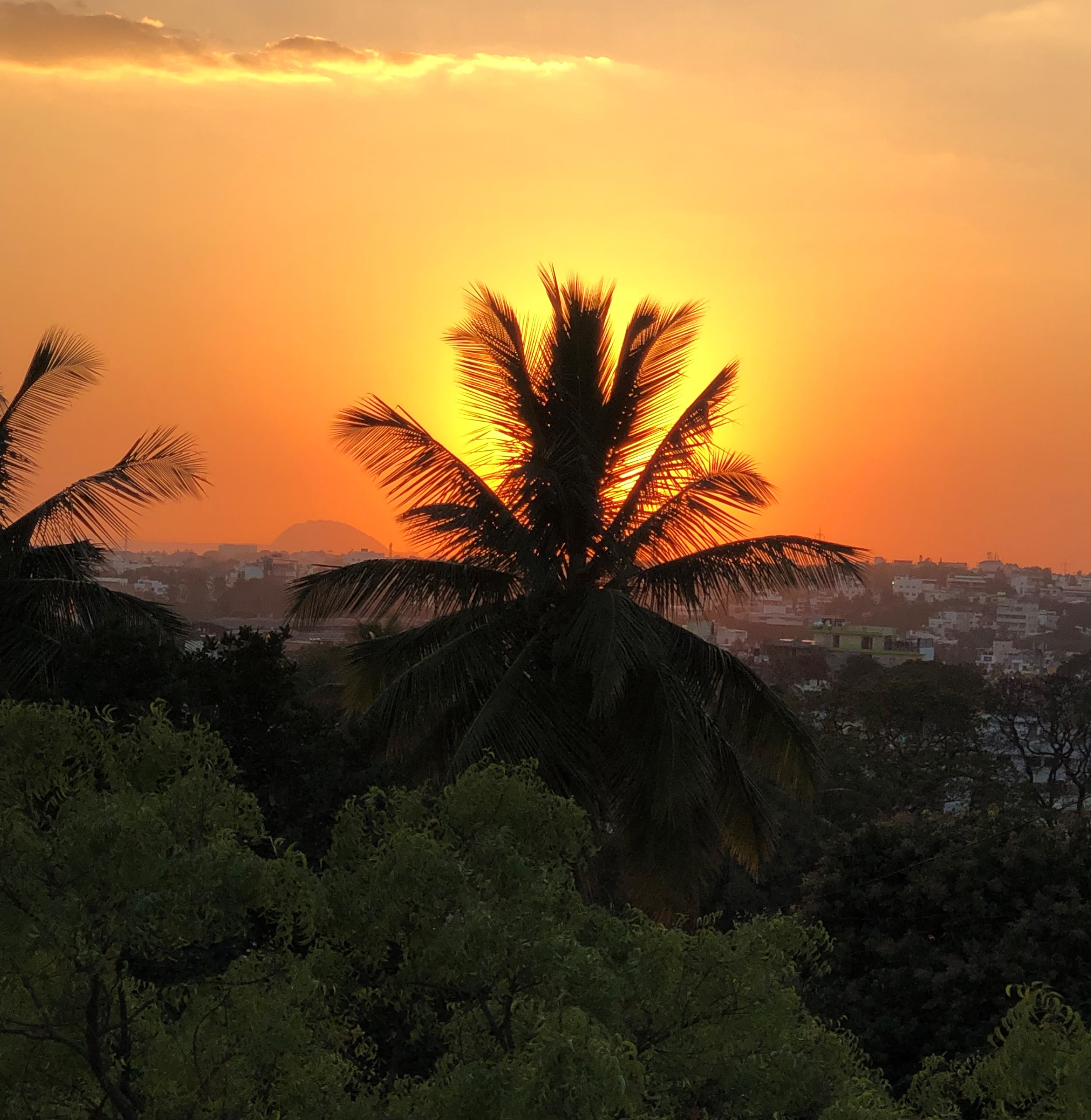
A selection of my photos on Sun Rise and Sun Set along with a prayer

A selection of my photos on Sun Rise and Sun Set along with a prayer
An interesting imagination fully backed up by Aditya & Varuna and most definitely by my iPhone.
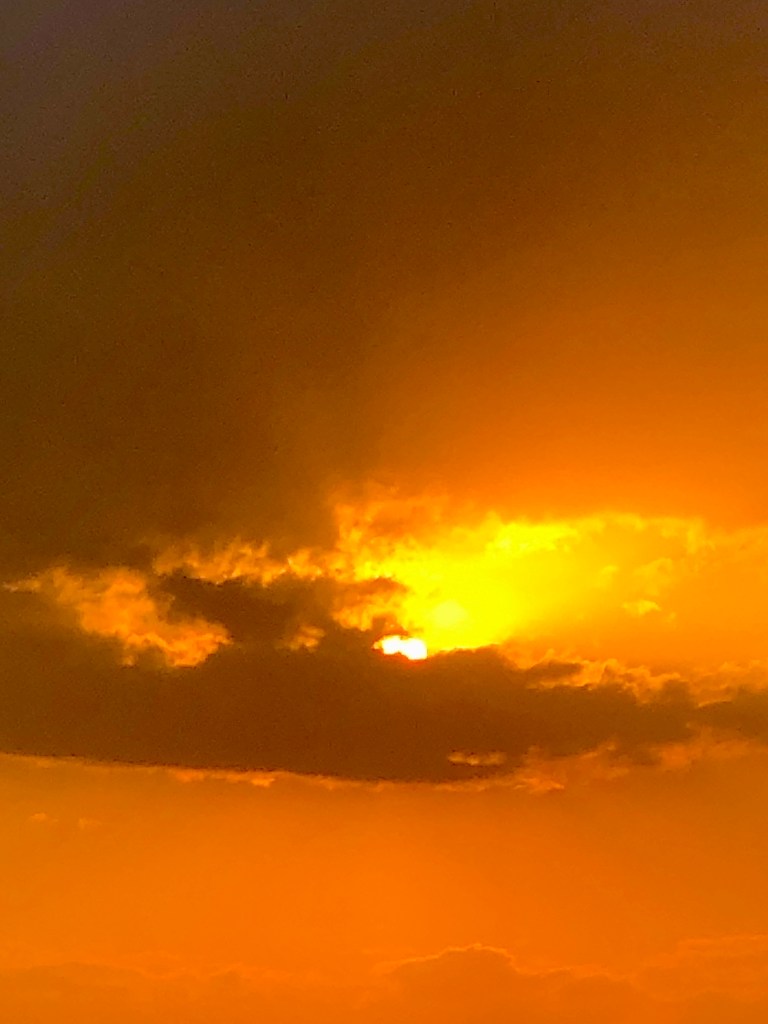
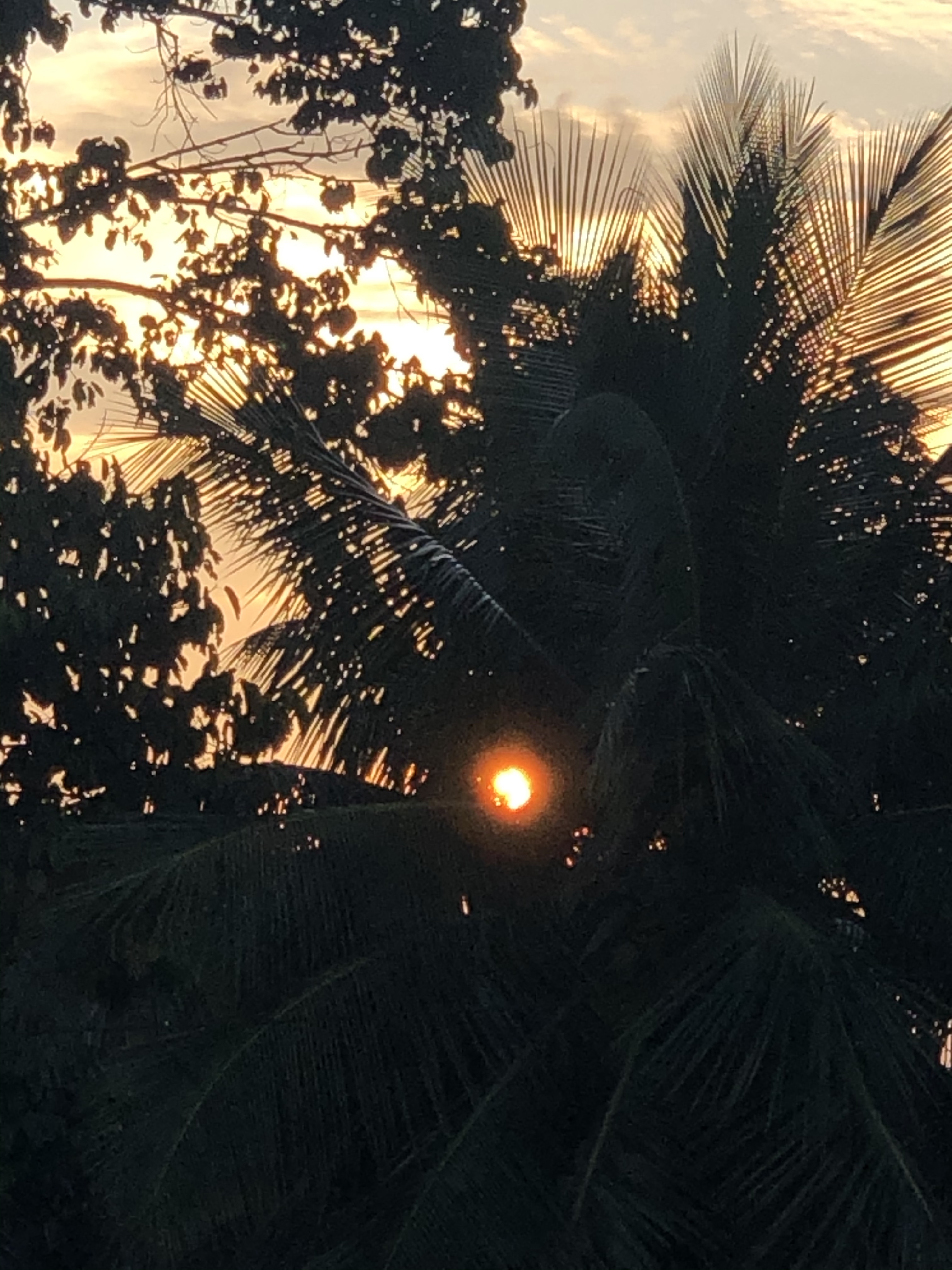
Monday, 03 April evening. Time for yet another routine in my retired life - the evening walk for one hour (scheduled at 1730 Hrs). Mother Earth was perhaps yearning for some water after a long, bright and sunny day. Varuna sensing this started to respond. He gathered his allies….and then started this amazing battle royal with Aditya.
At 1749 Hrs, Varuna very nearly succeeded in vanquishing Aditya, with the later fighting to free his arms (Rays) and managed to do some stretching. (See the photo below)

The battle intensified for the next ten minutes with Aditya battling his way out


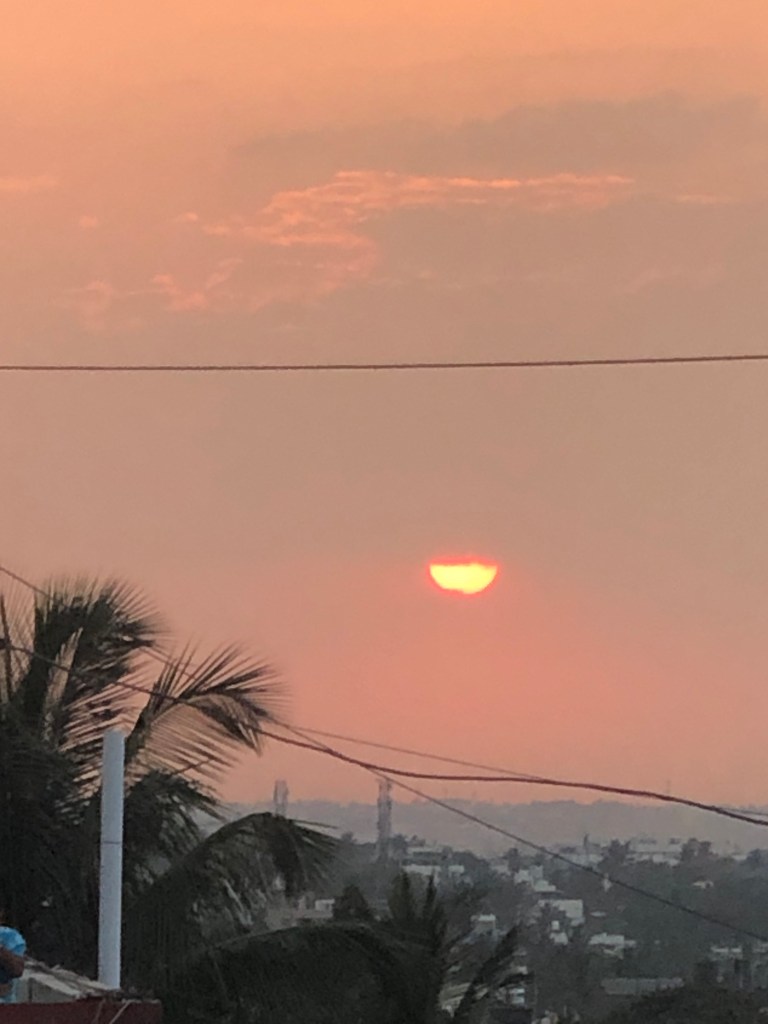
Aditya managed to extricate Himself from the clutches of Varuna and his allies briefly, before He was again well covered and surrounded.


There was hardly any winner here. Mother Earth sensing that both her close friends are battling out for Her sake, decided to call it off and rotated herself and ensured that Aditya moves away from the scene by setting Himself to resume his work at another location of Mother Earth, ten minutes after the battle started.

Strangely the entire battle was enacted behind an Apartment named “Krishna Leela”.
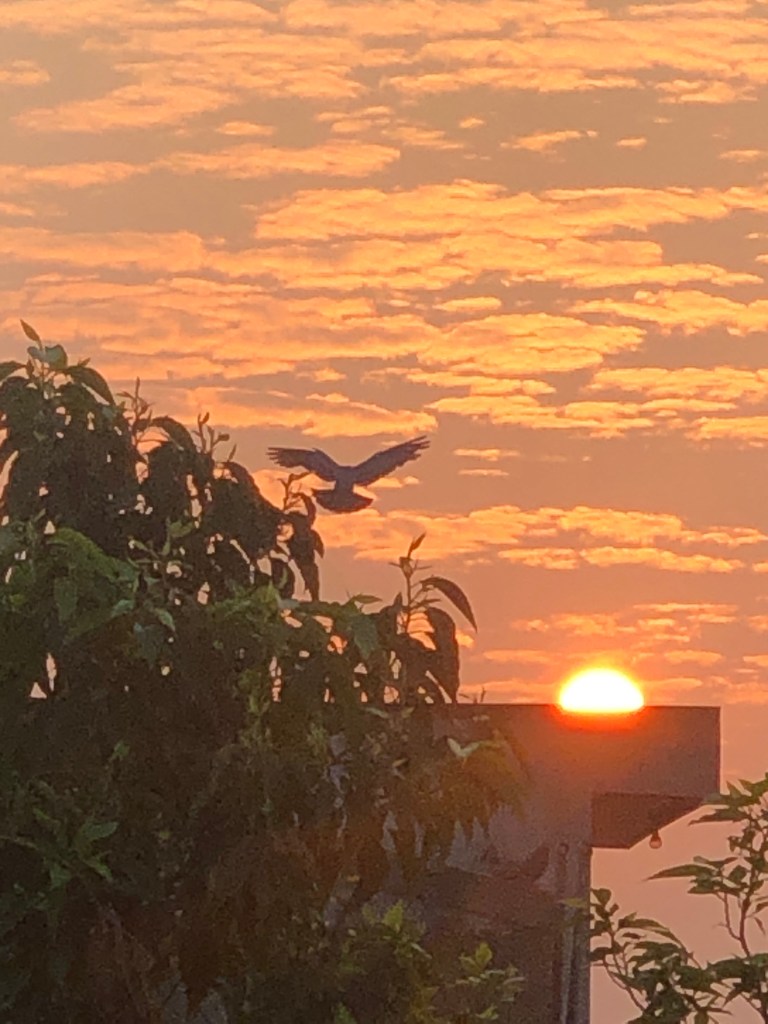
Here is a “iPhone photographic” salute.

வையம் தகளியாய்
வார்கடலே நெய்யாக
வெய்யக் கதிரோன் விளக்காக
செய்ய சுடர் ஆழியான் அடிக்கே
சூட்டினேன் சொல் மாலை
இடர் ஆழி நீங்குகவே என்று
பொய்கை ஆழ்வார்

காசினி இருளை நீக்கும் கதிரொளியாய் எங்கும்
பூசலை உலகோர் போற்ற புசிப்போடு சுகத்தை நல்கும்
வாசி ஏழுடைய தேர் மேல் மகாகிரி வலமாய் வந்த
தேசிகா எனை ரட்சிப்பாய் செங்கதிரோனே போற்றி.🙏


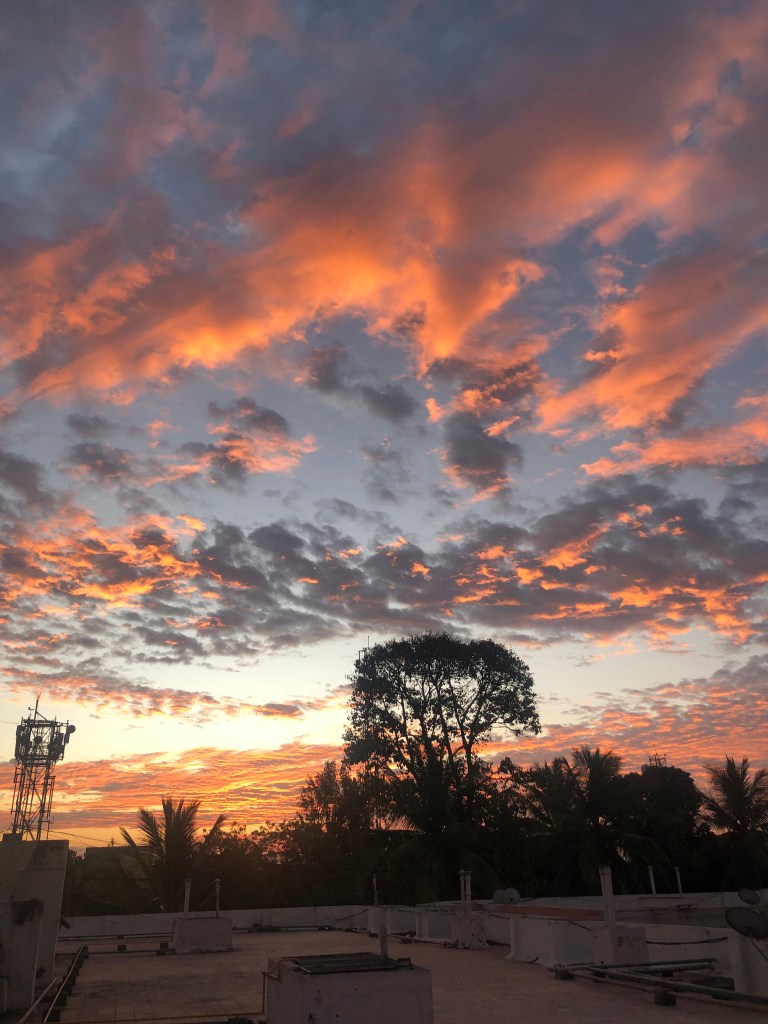
Looking at the Sunrise with awe and reciting Aditya Hrudayam during my early morning walks has been my most enjoyable moment for the day for several years.
Nothing can be more invigorating than this particularly in this era of pandemic and lock down. The one hour that I spend in the early morning is worth the gold. That is what Aditya (Sun) seems to be telling me today morning.
Watch Him talk to me today, Sunday the 16th Morning between 0545 and 0645 Hrs in Bangalore
https://www.dropbox.com/s/782xv6yj94n67mq/Arunodaya%20.MOV?dl=0
Music Courtesy – Music Today Album Arunodayam – Bowli Raga

in the concluding phase of Aditya Hridayam, the impact that the Sun had on a tired and weary Rama is brought out. While these verses might sound “unrealistic” to some of the present time “rational thinking” personnel, the fact that Sun has a refreshing effect on life and rejuvenates millions of living beings into action is undeniable.
Verse 28
एतच्छ्रुत्वा महातेजाः नष्टशोकोऽभवत्तदा ।
धारयामास सुप्रीतो राघवः प्रयतात्मवान् ॥२८॥
– EtacchrutvA mahAtEjA naShTashOkO$bhavattadA
– dhArayAmAsa suprItO rAghava: prayatAtmavAn
Meaning of the Sanskrit Words
tadA = then
mahAtEjA = one with tremendous energy
Etat = this
shrutvA = having heard
naShTashOka: = losing grief, cheered up
abhavat = became [Simple Past, la~Ng lakAra:]
suprIta: = pleased, gladdened
prayatAtmavAn = one with a pious-minded, subdued mind
rAghava: = of the Raghu dynasty (“Rama” here)
dhArayAmAsa = held, retained [Past Perfect, lit lakAra:]
Meaning of the Verse
On hearing this advice, Raghava, who is endowed
with extraordinary energy, found his grief dispelled
immediately. Feeling greatly delighted, he, who has a
subdued mind, retained (Aditya Hridayam) in his memory.
Meaning in Tamil
ஆதவனின் புகழ் செவிமடுத்து சோர்வு நீர்ந்து
புதுப்பொலிவு கொண்டான் பேரொளியுடன்
மாவீரன் ராகவன் மனதில் நிறுத்தி மறைதனை
————————————————————
Verse 29
आदित्यं प्रेक्ष्य जप्त्वा तु परं हर्षमवाप्तवान् ।
त्रिराचम्य शुचिर्भूत्वा धनुरादाय वीर्यवान् ॥२९॥
– Adityam prEkshya japtvA tu param harShamavAptavAn
– trirAcamya shucirbhUtvA dhanurAdAya vIryavAn
Meaning of the Sanskrit Words
Adityam = Surya (in subject form)
prEkshya = on looking/gazing at
japtvA = having recited
param = high, excellent
harSha: = joy, delight, satisfaction
avAptavAn = received, experienced
tri: = three times
Acamya = having sipped
shuci: = purity; cleansed, hallowed state
bhUtvA = having become
vIryavAn = brave one
dhanu: = bow [from ‘dhanus’]
AdAya = having taken [indeclinable]
Meaning of the Verse
Gazing at Surya, and reciting the hymn, Rama
experienced supreme joy. Purifying himself by
performing “Acamanam” (Sipping water thrice with
the name of the Lord in one’s lips), Rama took up his bow.
Meaning in Tamil
ஒருமையுடன் உதயவனை உற்றுநோக்கி
வெறுமைநீக்கி ஒப்புயர்வற்ற மகிழ்வுடனே
ஆதவனை மனதினில் நிலை நிறுத்தி
அருந்தினான் புனிதநீரதனை மும்முறை
அடைந்திட்டான் ராமன் ஆற்றல்மிகு தன் வளைவில்தனை
——————————————————————-
Verse 30
रावणं प्रेक्ष्य हृष्टात्मा युद्धाय समुपागमत् ।
सर्वयत्नेन महता वधे तस्य धृतोऽभवत् ॥३०॥
– rAvaNam prEkshya hR^iShTAtmA yuddhAya samupAgamat
– sarvayatnEna mahatA vadhE tasya dhR^itO$bhavat
Meaning of the Sanskrit Words
hR^iShTAtmA = pleased, glad person [hR^iSh, 4P, harShati, hR^iShTa]
rAvaNam prEkshya = seeing/facing Ravana
yuddha: = battle/combat; yuddhAya = for combat
samupAgamat = approached near, advanced
mahatA = with greatness [mahAn yuddha:; mahatI vEdanA]
yatna: = effort, attempt; yatnEna = with effort
tasya = his (Ravana’s)
vadha: = killing, murder; vadhE = in the slaughter, killing
dhR^ita: = resolved, firm, determined one
abhavat = became [Simple Past]
Meaning of the Verse
Fixing his eyes on Ravana, a delighted Rama advanced for
the combat; He became resolved in Ravana’s killing with an
intense all-out effort.
Meaning in Tamil
முழுமையுடன் போர் புரிந்து உயிர்வதைக்கும் உறுதியுடன்
முன்சென்றான் ராவணணை எதிர் நோக்கி மகிழ்மிகு ராமன்
———————————————————-
Verse 31
अथ रविरवदन्निरीक्ष्य रामं मुदितमनाः परमं प्रहृष्यमाणः ।
निशिचरपतिसंक्षयं विदित्वा सुरगणमध्यगतो वचस्त्वरेति ॥३१॥
– atha raviravadan nirIkshya rAmam
– muditamanA: paramam prahR^iShyamANa:
– nishicarapatisankshayam viditvA
– suragaNamadhyagatO vacastvarEti
Meaning of the Sanskrit Words
atha = here; hence begins (to indicate auspiciousness) [indeclinable]
muditamanA: = delighted mind
paramam = highest, chief
prahR^iShyamANa: = delighted one
ravi: = Aditya
nishicarapati: = lord of the night-stalkers (Ravana here)
viditvA = on observing
suragaNa: = the group of Devas
madhyagata: = on going amidst
rAmam nirIkshya = seeing/facing Rama
avadat = said (simple past)
vaca: = speech/word [from vacas; used in subject form here]
tvara = (you) hurry; make haste
iti = as/that [to follow a quote]
Meaning of the Verse
Then, delighted in mind, supremely exhilarated Aditya,
on observing Ravana’s destruction, amidst the assembly
of the Devas, seeing Rama, said “Make Haste”.
Meaning in Tamil
கதிரவன் களிமிகு முழுமனமகிழ்வுடன்
எதிரியின் வதம் எதிர்பார்த்து ராமனிடம்
விரைந்திடுவாய் வீழ்த்திடு ராவணன்தனையென
வின்னவர் புடைசூழ விழைத்திட்டான ஆதவன்

Agastya is done with eulogising sUryA. Now, he gets to the phala-shruti (the benefits of chanting ) of Aditya Hridayam and instructs Rama
Verse 25
एनमापत्सु कृच्छ्रेषु कान्तारेषु भयेषु च ।
कीर्तयन् पुरुषः कश्चिन्नावसीदति राघव ॥२५॥
– EnamApatsu kR^icchEShu kAntArEShu bhayEShu ca
– kIrtayan puruSha: kashcinnAvasIdati rAghava
Meaning of the Sanskrit Words
rAghava = Hey Ram!
kashcit = any one
puruSha: = individual
Enam = this [Enam Apatsu, and NOT Ena mApatsu]
Apatsu = in calamity, adversity
kR^iccha:, kR^iccham = hardship, misery
kAntAra:, kAntAram = large or dreary forest, bad road
bhaya: bhayam = fear, dread
kIrtayan = reciting; singing praises [continuous participle]
na = not/no
avasIdati = fails, faints, sinks down, to be ruined
Meaning of the Verse
Hey Raghava, No individual, singing His praises during
difficulties, in fear, or when lost in the woods, has ever
come to grief.
Meaning in Tamil
அச்சமும் அவலமும் அல்லலுறும் நேரம்தனில்
அழிவதில்லை யாவரும் அடைவதில்லை துயரென்றும்
அழல்வடிவோனைத் துதிப்போர் எவரொருவரும் – ராகவனே
———————————————————————————
Verse 26
पूजयस्वैनमेकाग्रो देवदेवं जगत्पतिम् ।
एतत्त्रिगुणितं जप्त्वा युद्धेषु विजयिष्यसि ॥२६॥
– pUjayasvainamEkAgrO devadevam jagatpatim
– Etat triguNitam japtvA yuddhEShu vijayiShyasi
Meaning of the Sanskrit Words
Enam = this
devadeva: = God of gods [samAsa: – devasya deva:]
jagatpati: = Lord of the universe [samAsa: – jagata: pati:]
EkAgra: = intent, concentrated, single-pointed
pUjayasva = (you) revere, to hono(u)r with
Etat = this (shlOka:)
triguNitam = three times
japtvA = on/after chanting
yuddha: = battle [yuddhEShu = in battles]
vijayiShyasi = (you) will win
Meaning of the Verse
You worship this God of gods, Lord of the universe
with a concentrated mind; On chanting this three
times, you will be victorious in battles
Meaning in Tamil
ஒருமையுடன் ஆதவனின் புகழுரையாம் இவ்வுறையை
மும்முறை உரைத்திட்டால் வென்றிடுவாய் சமரதனில் பகைதனை
————————————————————
Verse 27
अस्मिन् क्षणे महाबाहो रावणं त्वं वधिष्यसि ।
एवमुक्त्वा ततोऽगस्त्यो जगाम च यथागतम् ॥२७॥
– asminkshaNE mahAbAhO rAvaNam tvam vadhiShyasi
– EvamuktvA tadAgastyO jagAma ca yathAgatam
Meaning of the Sanskrit Words
mahAbAhu: = one with strong fore-arms [when being called, “mahAbAhO”]
asmin = in this
kshaNam = second, moment
tvam = you
rAvaNa: = Ravana [subject form “rAvaNam”]
vadhiShyasi = (you) will slay
Evam = like this
tadA = then
uktvA = having said
jagAma = left [Past Perfect, lit lakAra:]
yathA = just like
Agatam = arrival, the coming
Meaning of the Verse
“Hey Mighty-Armed Rama, In this very moment, you
will kill Ravana” said Agastya and left just as he came
Meaning in Tamil
அழித்திடுவாய் இராவனன்தனை இக்கணமே தோள்வலி ராமா என
அழைப்புவிடுத்து திரும்பிச்சென்றான் அகத்தியன் வந்தவன்னமே
—————————————————————

Verse 22
नाशयत्येष वै भूतं तदेव सृजति प्रभुः ।
पायत्येष तपत्येष वर्षत्येष गभस्तिभिः ॥२२॥
nAshayatyESha vaibhUtam tadEva sR^ijati prabhu:
pAyatyESha tapatyESha varShatyESha gabhastibhi:
Meaning of the Sanskrit Words
nAshayati = to cause to destroy
ESha: = this
vai = indeed (“vai ESha:” = “hi Esha:”)
bhUtam = all that exists
tat Eva = that alone
sR^ijati = to create, produce; to release, emit; throw; quit
prabhu: = lord, master [prabhu = mighty, strong]
pAyati = protects, sustains
tapati = to shine, blaze; to suffer pain; to do penance
varShati = to shower
gabhasti: = ray of light, sunbeam, moonbeam
gabhastibhi: = by rays of light
Meaning of the Verse
He indeed is the Lord Destroying the Beings, and He indeed is the Lord Creating the Beings,
He drinks (the Water) by His Rays, Heats the Water, and again Rains (the same Water),
Meaning in Tamil
அழித்தலும் படைத்தலும் ஆதவனின் அருளாலே
அருந்தியநீரை அனலேற்றி அளித்திடுவான் மழையென
———————————————————————-
Verse 23
एष सुप्तेषु जागर्ति भूतेषु परिनिष्ठितः ।
एष चैवाग्निहोत्रं च फलं चैवाग्निहोत्रिणाम् ॥२३॥
Esha suptEShu jAgarti bhUtEShu pariniShThita:
Esha EvAgnihOtram ca phalam caivAgnihOtriNAm
Meaning of the Sanskrit Words
ESha: = He
supta: = sleeping one
suptEShu = in sleeping people
jAgarti = to keep awake
bhUtam = all that exists
bhUtEShu = in everything that exists
pariniShThita: = one is completely skilled in; accomplished
agnihOtram = an oblation to Agni
hOtriNAm = of the sacrifices
phalam = fruit
Meaning of the Verse
He is the one who is well fixed in all things that exist,
and keeps awake while they sleep; He is the sacrificial
oblation as well as the fruit of it
Meaning in Tamil
உறக்கத்து உள்ளுறைந்து உய்விப்பான் உலகோரை
வேள்விக்கு வித்தாகி வேள்வியின் பலனாவான் வித்தகன் பகலவன்
———————————————————————-
Verse 24
वेदाश्च क्रतवश्चैव क्रतूनां फलमेव च ।
यानि कृत्यानि लोकेषु सर्व एष रविः प्रभुः ॥२४॥
vEdAshca kratavashcaiva kratUnAm phalamEva ca
yAni kR^ityAni lOkEShu sarva ESha ravi: prabhu:
Meaning of the Sanskrit Words
ESha: = He
vEda: = primary scripture (of Hinduism)
kratu: = sacrifice
phalam = fruit
lOka: = world, universe
lOkEShu = in the worlds/peoples’
yAni = which things
kR^ityam = what ought to be done; duty
kR^ityAni = duties, deeds
sarvE = all those
ravi: = sun; mountain
prabhu: = lord, ruler
Meaning of the Verse
He indeed is the Vedic Sacrifice, and He indeed is the Fruit of those Sacrifices,
Whatever works are to be performed in the World, He, the Ravi (Sun God) is the Lord of all those (Being the Power behind),
Meaning in Tamil
மும்மறைவேதமதின் வேள்வியாகி அம்மறைதனின் பலனாகி
எம்முறைப்பணிதனிலும் அப்பணியுறைவிந்தாவான் பகலவன்
————————————————————————

Starting from the end of Verse 15, Sage Agasthya brings out the salutory tone (nama:) and continues until the 21st verse, showering the Lord Sun (sUryA) with more positive epithets (அடைமொழி) such as victory (jaya), happiness (Bhadra) etc
Verse 16
नमः पूर्वाय गिरये पश्चिमायाद्रये नमः ।
ज्योतिर्गणानां पतये दिनाधिपतये नमः ॥१६॥
nama: pUrvAya girayE pashcimAyAdrayEnnama:
jyOtirgaNAnAm patayE dinAdipatayE nama:
Meaning of the Sanskrit Words
nama: = salutations
pUrva = eastern
giri: = mountain
pashcima = western
adri: = mountain
jyOti: = light
gaNa: = collection, group
jyOtirgaNa: = collection of stellar bodies
pati: = ruler, leader
dina = day
adhipati: = ruler, Lord
Meaning of the Verse
Salutations be to the eastern and western mountains, to
the Lord of the celestial bodies, to the Lord of the day
Meaning in Tamil
காலையில் உதிக்கும் கீழ்மலையே போற்றி
மாலையில் சாயும் மேல்மலையே போற்றி
ஜோதியுள் விண்மண்டல வேந்தனே போற்றி
பகலுக்குத் தலையான பரமனே போற்றி
——————————————————————
Verse 17
जयाय जयभद्राय हर्यश्वाय नमो नमः ।
नमो नमस्सहस्रांशो आदित्याय नमो नमः ॥१७॥
jayAya jayabhadrAya haryashvAya namO nama:
namO nama: sahasrAmsha AdityAya namO nama:
Meaning of the Sanskrit Words
jaya: = victory; epithet for sun
bhadra = happy; auspicious
jayabhadra: = happiness from victory
hari = green; greenish-yellow
ashva: = horse
nama: = salutation
sahasra = thousand; large number
amsha: = part, portion [amshu: = ray]
Aditya: = son of Aditi
Meaning of the Verse
Salutations be to the victor (sun), the happiness from
victory, the one with the green horses, the one with a
thousand parts/rays, the son of Aditi.
Meaning in Tamil
வெற்றியின் வடிவே போற்றி
பெற்றிடும் மகிழ்வே போற்றி
பசுமைப்பரி பூணுடையோனே போற்றி
ஆயிரம் கரமுடையோனே போற்றி
வான்அன்னை அதிதியின் மகனே போற்றி
—————————————————————-
Verse 18
नम उग्राय वीराय सारङ्गाय नमो नमः ।
नमः पद्मप्रबोधाय मार्तण्डाय नमो नमः ॥१८॥
nama ugrAya vIrAya sAra.NgAya namOnnama:
nama: padmaprabOdhAya mArtaNDAya namOnnama:
Meaning of the Sanskrit Words
nama: = salutations
ugra: = ferocious, powerful; intensely hot;
(also a name of Shiva)
vIra: = powerful one; hero
sAra.Nga: = has ~30 meanings; here, it is “light”;
(primarily used to refer to “spotted deer”)
padmaprabOdha: = awakening of the lotus, stimulating
the expansion, blooming of a lotus
mArtaNDa: = sun
Meaning of the Verse
Salutations be to the fearful, powerful sun, who is
the awakener of the lotus.
Meaning in Tamil
அச்சம்தரும் ஆதவனே போற்றி
அனைத்தும் வெல்லும் அதிவீரனே போற்றி
வண்ண ஒளியோனே போற்றி
ஆம்பல் மலர அருள்புரிவோனே போற்றி
ஆதவ அய்யனே போற்றி போற்றி
———————————————————————-
Verse 19
ब्रह्मेशानाच्युतेशाय सूर्यादित्यवर्चसे ।
भास्वते सर्वभक्षाय रौद्राय वपुषे नमः ॥१९॥
brahmEshAnAcyutEshAya sUryAyAditya varcasE
bhAsvatE sarva bhakshAya rOudrAya vapuShE nama:
Meaning of the Sanskrit Words
brahma: = Brahma
IshAna: = Shiva; ruler, lord
acyuta: = Vishnu
Isha: = ruler; Shiva
sUrya: = sun
Aditya: = sun, son of Aditi
varca: = brilliance, vigor, splendor
bhAsvat = luminous, resplendent
sarva = all
bhaksha: = consumer, devourer
rOudra: = like Rudra; worshipper of Rudra; fierce one
vapuSh = body; handsome
Meaning of the Verse
Salutations be to the ruler of Brahma, Shiva and Vishnu,
the Sun, the brilliance in Him, the devourer of all, and
the one appearing to take the form of Rudra
Meaning in Tamil
அயனாகி அனந்தனாகி ஆதியோகியாகி
அதிதியின் புதல்வனாகி ஆற்றல் நிறையோனாகி
சுடரொளி வீசீ அனைத்தும் நுகர்வோனாகி
அஞ்சுவரு தோற்றமுடை அழகோனே போற்றி
—————————————————————————
Verse 20
तमोघ्नाय हिमघ्नाय शत्रुघ्नायामितात्मने ।
कृतघ्नघ्नाय देवाय ज्योतिषां पतये नमः ॥२०॥
tamOghnAya himaghnAya shatrughnAyAmitAtmanE
kRtaghnahanAya dEvAya jyOtiShAm patayEnnama:
(Also kRtaghnaghnAya…)
Meaning of the Sanskrit Words
tama: = darkness
ghna = killing, removing; curing
himam = coldness, frost
shatrughna: = destroyer of enemies
amitAtman = immeasurable form
krutaghna = ungrateful
hana: = destroy
[ghna is also “to destroy”, so “kRtaghna-ghnAya” and
“kRtaghna-hanAya” mean the same]
dEva: = Deva
jyOtis = heavenly body
jyOtiShAm = of heavenly bodies
pati: = ruler, Lord
nama: = salutations
Meaning of the Verse
Salutations be to He who is the dispeller of darkness,
destroyer of cold and enemies, who has an immeasurable
form, is a destroyer of the ingratiates, the Deva who
is the ruler of the heavenly bodies
Meaning in Tamil
காரிருள் கடுங்குளிர் கொடும்பகை ஒழி அளவிலா ஆதவனே
நன்றிக்கேடழி தேவனே விண்ணோர் தலையனே போற்றி
———————————————————————————-
Verse 21
तप्तचामीकराभाय वह्नये विश्वकर्मणे ।
नमस्तमोऽभिनिघ्नाय रुचये लोकसाक्षिणे ॥२१॥
taptacAmIkarAbhAya harayE vahnaye vishva karmaNE
namastamO$bhinighnAya rucayE lOkasAkshiNE
Meaning of the Sanskrit Words
tapta = heated, burnt; melting
cAmIkaram = gold
AbhAs = lustre, splendor
taptacAmIkarAbha: = one with lustre of refined gold
vahnaye – fire
hari: = captivating; Vishnu; destroying
vishva karmaN = creator of the universe
nama: = salutations
tama: = darkness
abhinighna: = destroyer
ruci: = light, brightness; taste; appearance
lOka = world; cosmos
sAkshin = witness
Meaning of the Verse
Salutations be to He who shines like molten gold, who is
captivating and the architect of the universe, who removes
darkness, is the essense of lustre and is the cosmic witness
Meaning in Tamil
உருக்கிய பொன்மிளிர் ஒளியோனே
உன்னழலால் இவ்வுலகம் வடிப்போனே
உலகிருள் களைவோனே அழகொளிக்கதிரோனே – இவ்
இயலுலக வாழ்வின் சான்றுரையோனே போற்றி
—————————————————————————

Verse 11
हरिदश्वस्सहस्रार्चिस्सप्तसप्तिर्मरीचिमान् ।
तिमिरोन्मथनश्शम्भुस्त्वष्टा मार्ताण्ड अंशुमान् ॥११॥
Harid-Ashvas-Sahasra-Arcis-Sapta-Saptir-Mariicimaan |
Timiro[a-U]nmathanash-Shambhus-Tvassttaa Maartaanndda Amshumaan ||11||
Meaning of Sanskrit Words
harita = of green color
ashva: = horse
(haridashva: = He who has green horses)
sahasra = thousand (also to mean ‘large numbers’)
arci: = ray of the sun
(sahasrArci: = having massive number of rays)
sapta = seven
sapti: = horse
marIci: = ray of the sun
marIcimAn = one who is filled with rays
timira: = darkness
unmathana: = tearing/shaking off
(timirOnmathana: = remover of darkness)
shambhu: = auspiciousness
tvaShTA = (literally) to peel, make thin, remove
(here, decrease of sufferings)
aNda: = egg (here, primordial egg)
mArtaNda: = mArta aNda: = egg infused with mortality/life
anshu: = ray
anshumAn = one with rays
Meaning of the Verse
He is omnipresent who pervades all with His thousands of rays (that symbolize his hands).
He rides a chariot with seven green horses (symbolizing the sense organs). He is the dispeller of darkness (ignorance). He is the incarnation of auspiciousness and mitigator of ills, and is
the source of life in the form of a mundane cosmic egg
Meaning in Tamil
பசுமைநிறை புரவிஏழுபூண் ரதமேறி
ஆயிரம் கரங்கள் நீட்டி துயர் நீக்கி
உலகிருள் நீக்கி மங்கள திருஉருவாகி
உயிர்மூலமெனும் இம்மை அண்டமாகி
உலகாள்வான் எங்கும் நிறை ஆதவன்
Here is the link to the incident in Mahabharat where Lord Karna offers prayers to the Sun God before removing his Kavach (inborn Protective Armor). The lyrics & picturisation of this song exactly describes this para in Tamil
—————————————————————
Verse 12
हिरण्यगर्भश्शिशिरस्तपनो भास्करो रविः ।
अग्निगर्भोऽदितेः पुत्रः शङ्खश्शिशिरनाशनः ॥१२॥
hiraNyagarbha: shishirastapanO bhAskarO ravi:
agnigarbhO aditE: putra: sha.Nkha shishiranAshana:
Meaning of the Sanskrit Words
hiraNyam = gold
garbha: = born from
shishira: = cold
tapana: = heat; sun
bhAs = light, brightness; bhAskara: = the one causing it; sun
ravi: = sun
agnigarbha: = pregnant with fire
aditi: = free, boundless; here, refers to Aditi, the mother of
the devAs; hence the sun is also called Adityaa
putra: = son
sha.Nkha: = conch; drum; here, precious?
shishiranAshana: = remover of cold
Meaning of the Verse
The Sun is the one born from the golden egg, the remover of darkness, bearer of fire, son of Aditi, and the destroyer of cold.
Meaning in Tamil
பொன் அண்டப்பிறப்போன் பனித்திவலைவிலக்கி வெப்பஒளிக்கதிராவான்
அழற்பிழம்போன் அதிதிபுதல்வன் சங்கமுழங்கி குளிரதனை விரட்டிடுவான்
———————————————————————
Verse 13
व्योमनाथस्तमोभेदी ऋग्यजुस्सामपारगः ।
घनवृष्टिरपां मित्रो विन्ध्यवीथीप्लवङ्गमः ॥१३॥
vyOmanAtha: tama: bhEdI ruk yaju: sAmapAraga:
ghanavruShTirapAm mitrO vindhya vIthI plavangama:
Meaning of the Sanskrit Words
vyOma: = sky, atmosphere
nAtha: = ruler
tama: = darkness
bhEdI = destruction, annihilation [bhEdiram = thunderbolt]
rugyajussAmapAraga: = master of Rig, Yajur and Sama Vedas
ghana = dense, firm, heavy
vruShTi: = rain [vruShTibhU: = frog]
apAm = water
vindhya = Vindhya mountains (deccan)
vIthI = road, way (vIthi: also)
plava = swimming, floating, jumping
plava.Ngama: = coarsing, movement [also means a monkey, frog]
Meaning of the Verse
He is the ruler of the skies, remover of darkness, master of the three Vedas (Rig, Yajur and Sama), from whom come heavy showers of water, and who coarses in his way across the Vindhya mountains
Meaning in Tamil
இருளகற்றும் வானாளோன் மும்மறை வித்தகன் கனமழை
நீர்பொழியக் காரணமாவான் விந்தியமலைவீதி உலாவோன்
—————————————————————
Verse 14
आतपी मण्डली मृत्युः पिङ्गलस्सर्वतापनः ।
कविर्विश्वो महातेजाः रक्तस्सर्वभवोद्भवः ॥१४॥
AtapI maNDalI mrutyu: pi.Ngala: sarvatApana:
kavirvishvO mahAtEjA raktassarvabhavOdbhava:
Meaning of the Sanskrit Words
AtapI = heating; causing pain
maNDalI = round, circular
mrutyu: = death
pi.Ngala: = yellowish, brownish “tawny” color
sarvatApana: = burning/distressing everything
kavi: = wise man, sage; poet
vishva: = universal; soul
mahAtEjA = great lustre, brilliance
rakta: = red
sarvabhava: = everything that exists
udbhava: = creator
Meaning of the Verse
He is heat-causing, circular, death, tawny, and all destroying. He is the all-knowing, extremely shining, red colored, creator of everything that exists.
Meaning in Tamil
மாள் விளை வெப்பமிகு கோள்வீதியுடை பழு–
மஞ்சள் நிற அனைத்தெரிக்கும் ஆற்றலுடையான்
உலகாளும் மெய்யறியோன் மாகதிரொளிச்சிவந்தோன்
உளயாவும் உயிரினங்களனைத்தும் படைவினையான்
————————————————————
Verse 15
नक्षत्रग्रहताराणामधिपो विश्वभावनः ।
तेजसामपि तेजस्वी द्वादशात्मन्नमोऽस्तु ते ॥१५॥
nakshatra grahatArANAm adhipO vishvabhAvana:
tejasAm api tejasvI dvAdashAtmannamOstutE
Meaning of the Sanskrit Words
nakshatram = star; constellation
graha: = planet (as understood in those times); seize, grab
tArA = star
…tArANAm = Among the stars, planets and constellations
adhipa: = ruler, king [= adhipati:]
vishva: = soul; universal [vishvam = world; Vishnu]
bhAvana: = creator
tEjas = brilliance; sharpness; prowess
dvAdasha = twelve (dvi adika dasha)
Atman = inner form
nama: = salutations
astu = let it be
tE = to you (“tubhyam” is also valid)
Meaning of the Verse
He is the controller of stars, constellations and planets,
the creator of everything that exists, most brilliant among
everything splendid. Oh God, who appears in twelveforms (the months of the yr), all my salutations be to you.
In other words, He is the presiding Deity of Constellations (Nakshatras), Planets(Graha) and Stars (Tara), and conceives the whole Universe in his mind (i.e. his scope of influence is universal). He has more Energy of Splendour (Tejas) than even the most Energetic; Salutations to You who has twelve Atmans (i.e. 12 Adityas – Varuna, Mitra, Aryama, Bhaga, Amshuman, Dhata, Parjamya, Tvashtha, Vishnu, Pushya, Vivasvan),
Meaning in Tamil
விண்மண்டலம் கோள் விண்மீன் அனைத்திற்கும் முதல்வோன்
அவன் விளைசெயலன்றோ புவிவிண் அடங்கும் இப்பிரபஞ்சம்
ஒளிமயத்துஒளிமயமாய் பன்னிரு இறைவடிவாய் பரஞ்ஜோதியாய்
படர்ந்திருக்கும் பரம்பொருளான பகலவனடி யான் பணிந்தேன்
——————————————————————-

Verse 7
सर्वदेवात्मको ह्येषः तेजस्वी रश्मिभावनः ।
एष देवासुरगणान् लोकान् पाति गभस्तिभिः ॥७॥
sarvadevAtmakO hyESha tEjasvI rashmibhAvana:
ESha devAsuragaNAn lokAn pAti gabhastibhi:
Meaning of the Sanskrit words
sarva deva Atmaka: = all the devAs’ embodiment/real nature/form
hi ESha: = indeed, this [sUryA]
tEjasvI = bright, sharp
rashmi bhAvana: = creator/cause of His rays
ESha: = this [AdityA]
devA asura = devAs and asurAs
gaNa: = group/collection [gaNA: = plural; gaNAn = used in object sense]
lokAn = all the worlds [used in an object form here]
pAti = sustains/takes care [pAti: = master, husband; pAlanam = take care
comes from this root]
gabhasti: = rays/beams of light [gabhastibhi: = by His rays]
Meaning of the Verse
Indeed, He is the real form (embodiment) of all devAs, bright, and creator of His rays.
He sustains the groups of devAs and asurAs and their worlds by His rays.
Meaning in Tamil
கருத்துருவமன்றோ ஆதவன் அனைத்து தேவரினத்தின்
கதிரொளி படைத்துக்காப்பான் தேவ அசுர கணங்களை
——————————————————————-
Verse 8
एष ब्रह्मा च विष्णुश्च शिवः स्कन्दः प्रजापतिः ।
माहेन्द्रो धनदः कालो यमस्सोमो ह्यपां पतिः ॥८॥
ESha: brahmA ca vishnushca shiva: skanda: prajApati:
mahEndrO dhanada: kAlO yama: sOmO hyapAm pati:
Meaning of the Sanskrit words
ESha: = He
brahmA ca vishnu: ca shiva: ca = the trinity
skanda: = shivA’s son
prajApati: = Lord of all creatures
mahA indra: = great Indra (Lord of Celestial Beings)
dhanada: = Kubera (Lord of Wealth)
kAla: = Lord of Time
yama: = Lord of Death
soma: = moon, nourisher (Moon God)
hi = indeed
apAm pati: = Varuna (Lord of Waters)
Meaning of the Verse
He is indeed Brahma, Vishnu, Shiva, Skanda, Prajaapati, Indra, Kubera,
Kaala, Yamaa, Soma, and Varuna.
Meaning in Tamil
அயனும் மாயவனும் அழழேந்தியும் அவனே
அறுமுகனும் ஆக்குபவனும் அவனே
காலமும் காலனும் அவனே
இந்திரனும் சந்திரனும் அவனே
பொன்னரசனும் பொழிமழையரசனும் அவனே
(அறிந்திடுவாய் இராமா)
—————————————————————
Verse 9
पितरो वसवस्साध्याः ह्यश्विनौ मरुतो मनुः ।
वायुर्वह्निः प्रजाप्राणा ऋतुकर्ता प्रभाकरः ॥९॥
pitarO vasava: sAdhyA hi ashvinOu marutO manu:
vAyu: vahni: prajAprANa R^itukartA prabhAkara:
Meaning of the Sanskrit words
pitara: = revered spirit of dead/manes
vasava: = (8) gods who attend to indrA [vasu: – singular] 8 Vasus
sAdhyA: = (12) yogIs
hi = indeed
ashvinOu = (2) physicians in devaloka: ( Ashwini kumaras)
maruta: = (49) more gods
manu: = another god
vAyu: = wind god
vahni: = agni, fire-god
prajAprANa = air that sustains life
R^itukartA = creator of seasons
prabhAkara: = producer of light
Meaning of the Verse
Indeed He is the Pitrs, Vasus, Sadhyas, Ashwins,
Maruts, Manu, Vayu, Agni, life-breath, source of
seasons and light in the universe.
Meaning in Tamil
முன்னோரும் முனியோரும் இறையோரும் இறையோரின்
மருத்துவரும் இயற்கையின் ஐம்புலன்களும் அவனே
பருவ காலங்களும் பகலொளி படைப்போனும் அவனே
————————————————————
Verse 10
आदित्यः सविता सूर्यः खगः पूषा गभस्तिमान् ।
सुवर्णसदृशो भानुर्हिरण्यरेतो दिवाकरः ॥१०॥
Aditya: savitA sUrya: khaga: pUShA gabhastimAn
suvarNasadrushO bhAnur hirenyaretaa divAkara:
Meaning of the Sanskrit words
Aditya: = son of aditi [srimad bhAgavatam has great
details on lineages]
savitA = creator/generator/inspirer (of senses)
sUrya: = sun
khaga: = moving/flying in the air; here it is the sun;
it is also used to mean “bird”
pUShA = nourisher [pUSh dhAtu has the meanings of
nourish, to grow, increase; pOShanam is a noun
form]
gabhastimAn = owner of rays of light
suvarNasadrusha: = like (sadrusha:) pearls (suvarNa:)
[golden, sparkling]
bhAnu: = brilliant
Hirenyareta = fertility seed (rEtA) of the world (vishva)
divAkara: = maker (-Akara:) of days (diva:)
Meaning of the Verse
He is the son of Aditi, the inspirer/creator of senses, the sun,
the traveller in the heavens, sustainer, possessor of
rays, golden, brilliant, and the cause of the universe
and creator of day.
Meaning in Tamil
புலன் ஐந்தும் ஊக்குவிப்போன் அதிதிஅன்னையின் புதல்வன் அவன்
வான் உலவிப்பேணி உலகூட்டமளித் திகழொளிக்கதிரவன் அவன்
பொன் ஒளியினால் இயலுலகுக்கு கருவான வித்தவன் பகலவன் அவன்