This Hindu festival celebrating the birth of Lord Surya (the Sun God) and the onset of spring. Known as Surya Jayanti or Arogya Saptami, it marks the sun turning its seven-horse chariot toward the northern hemisphere (Uttarayana), symbolizing light over darkness and the start of warmer, longer days.
Vividly remember going around the bushes in the village and plucking leaves with the flowers (called Calotropis gigantea – “Erukkalam Poo” ) and having early morning bath with the leaves and flowers on the head and pouring water over it. It is called Arunodaya Snan.
Here is my maiden venture into Carnatic Music Composition. As a novice, I have no clue about this genre and its notations. All I heard was the song Muruga Muruga sung by the legendary sisters Radha & Jayalakshmi in the raga Saveri.
Angkor Thom was the last and most enduring capital city of the Khmer Empire, established in the late 12th century by King Jayavarman VII in what is now Cambodia. Angkor Thom served as the final capital of this powerful empire, which ruled much of Southeast Asia from the 9th to the 15th centuries.
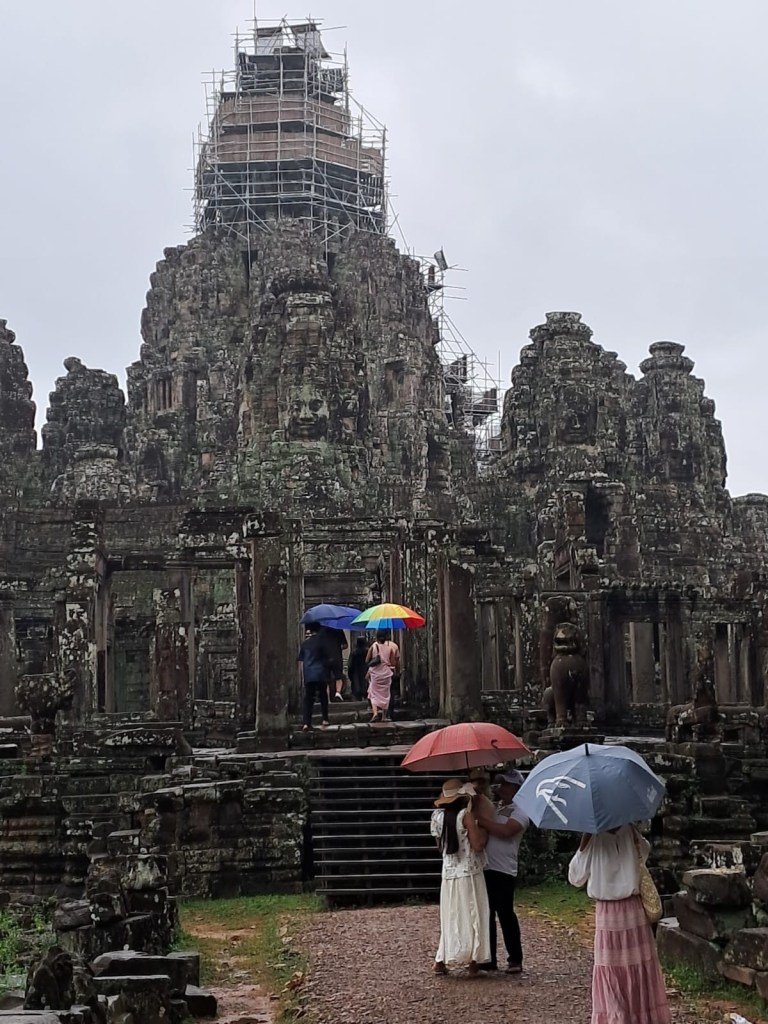
It is not a single temple, but a massive walled royal city containing temples, a Royal Palace, and impressive bas-reliefs, with the Bayon temple and its famous smiling faces being a central feature. The site is located in the Angkor Archaeological Park, a UNESCO World Heritage site, and is a popular tourist destination.
Key features of the city includes the Bayon temple, the Terrace of the Elephants and a Royal Palace, all within a large, walled and moated area. It is known for its architectural genius and intricate bas-reliefs that depict both mythical and historical scenes from Khmer life and battles.
”Angkor Thom is a ruined citadel several kilometers north of Angkor Wat. Angkor Thom encloses a rectangular area of nine square kilometers, and at its peak may have held a population of over 100,000, living in tiled or thatched houses. The building of the citadel dates to around the year 1200. Angkor Thom enclosed the Royal Palace (now vanished) and a handful of major temples; the complex was bounded by walls and a moat (now mostly dry) and pierced by five gates. The city was surrounded with rice fields, which provided food; these were irrigated with reservoirs, which also supplied drinking water.
While Angkor Wat is Hindu in inspiration, Angkor Thom resonates with sculpted images expressing the Mahayana Buddhist ideal of Lokesvara (compassion), Prajnaparamita (wisdom), and the Buddha (enlightenment). Although still incorporating Hindu elements, Angkor Thom is a three-dimensional representation of Buddhist cosmology. Temple ground plans reveal a mandala-like base, with radiating symmetrical forms. At the exact center of Angkor Thom lies the Bayon Temple.
What at first appears to be of masonry actually consists of massive stones shaped into fluid sculptures, without apparent use of cement or mortar.
On the top terrace of the Bayon, you come face-to-face with myriad of these giant stone heads topped with lotus crowns. There are dozens of them, originally 54 towers with four heads each of which 37 towers remain. The enormous heads, ranging in size from ten to fifteen feet, features eyes downcast under lowered lids.
Disorder in the construction of the Bayon is reflected in the numerous architectural changes. It seems that after the Cham sacked Angkor in 1177, Jayavarman VII decided the Hindu deities had failed, so he switched allegiance to Mahayana Buddhism. However, he made no attempt to alter existing Hindu elements. The Bayon was caught in the middle — the foundations are Hindu, but the superstructure is Buddhist. It is estimated that the Bayon took 20 years to build. Jayavarman VII’s son and grandson reverted the use of the temple to Hindu (Shivaist) worship, with Brahmans from India gaining great influence over the Angkor court. Heads and faces on statues were destroyed and replaced with Hindu gods.”
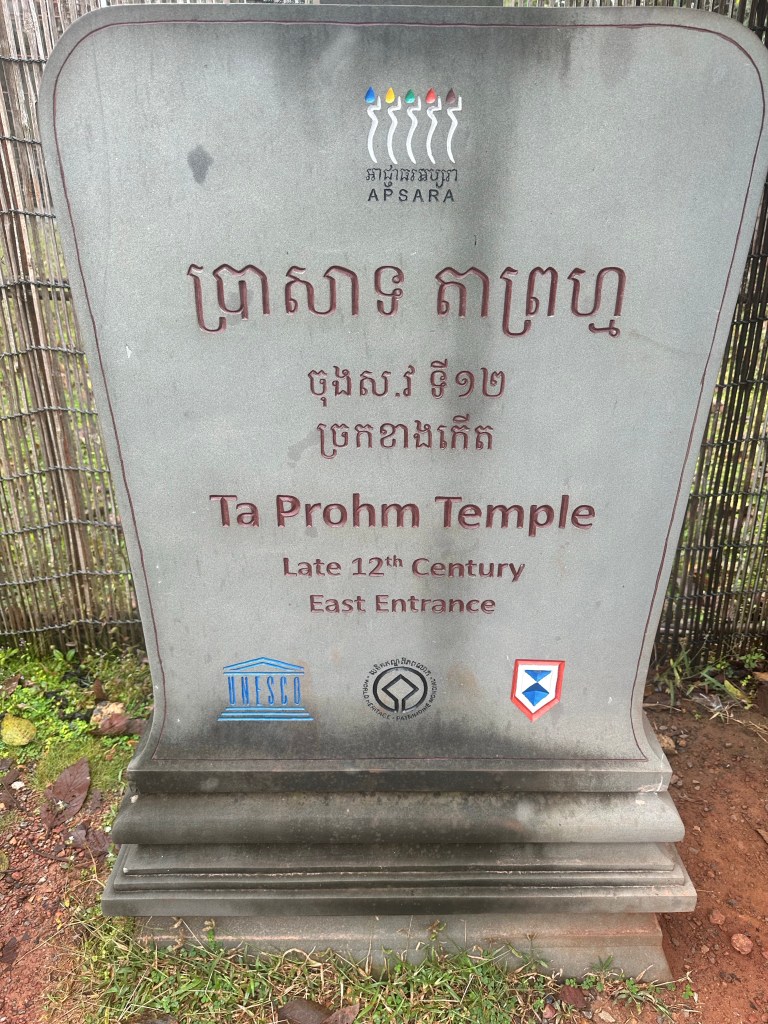
In 1186 A.D., King Jayavarman 7, embarked on a massive program of construction and public works. Rajavihara (“monastery of the king”), today known as Ta Prohm (“ancestor Brahma”), was one of the first temples founded pursuant to that program.
Jayavarman VII constructed Rajavihara in honour of his family. The temple’s main image, representing the personification of wisdom, was modelled on the king’s mother.
The site was home to more than 12,500 people (including 18 high priests and 615 dancers), with an additional 80,000 inhabitants in the surrounding villages working to provide services and supplies.
After the fall of the Khmer Empire in the 15th century, the temple of Ta Prohm was abandoned and neglected for centuries.
In 1992, UNESCO inscribing Ta Prohm on the World Heritage List, initiated the conservation and restoration of Ta Prohm as a partnership project of the Archaeological Survey of India (ASI) and the Authority for the Protection and Management of Angkor and the Region of Siem Reap (APSARA).
By 2013, the ASI restored most parts of the temple complex, some of which were constructed from scratch. Wooden walkways, platforms, and roped railings were put in place around the site to protect the monument from further damages from tourists.
It is emotionally draining to see “one of the most imposing [temples] built for personification of wisdom and was dedicated to a mother, best merging with the jungle, to the point of becoming a part of it”.
Nothing but a soulful “Subha Pantuvarali” , (a raga that stirs one’s soul, evokes grief and sorrow in the heart and focusses one towards the inner consciousness) can describe the feeling one goes through on visiting this place.
I am no exception to that when I visited this place recently.
Here is my YouTube video . Pl subscribe to my channel
Nature is the manifestation of the Ultimate Reality. The five elements of Nature conjure to present to us infinite combinations of names, forms, color, light, fragrance, sound… etc.
All we have to do is to just observe and contemplate on the game that the Ultimate Reality plays through Its manifestations. Words, deeds and thoughts can’t do justice to describe the play.
Yet at the transactional level, we need to express through words, deeds and thoughts.
When a genius like Sanjay Subramanyan expresses Vasantha, we have to match it with beauty. Nothing can do justice except Nature in the form of flowers.
Here is my humble attempt to present a bouquet to Sanjay.
It has been three years and three months, since I started my inward journey here in WordPress. The objective was, is and continues to be “learning” and understanding mySELF.

In these three years, more than 27000 visitors from more than 30 countries with more than 50000 views have helped me in my inward journey, supporting me and encouraging me to continue this journey. I am indebted to everyone of you.

Here is my prayer for all of us in the coming New Year 2023.

May God Bless you all.
எனது ஆன்மீக பயணத்தை இந்த பதிவுகள் வழியாகத்  தொடங்கி  மூன்று வருடம், மூன்று மாதங்களாகின்றன.  என்னை அறிய யான் முற்படும் முயற்சிகளில் இதுவும் ஒன்று.

இந்தப் பயணத்தில் எனக்கு இதுவரை, முப்பதிற்கும் மேற்பட்ட நாடுகளிலிருந்து இருபத்தெழாயிரத்துக்கும் அதிகமான (27000)  நண்பர்கள், தங்களது  ஐம்பதாயிரத்திற்கும் (50000) மேற்பட்ட பார்வைகளின் மூலம்,  ஆதரவு வழங்கி நல்லாசி வழங்கியுள்ளனர்.  அவர்கள் ஒவ்வொருவருக்கும் நன்றிக்கடன் பட்டுள்ளேன் அடியேன்.

நம் அனைவருக்கும் இந்த இனிய புத்தாண்டில்  இறையருளும், மன மகிழ்வும் பெற எனது பிரார்த்தனைகள் இதோ.
The term Avatāra (अवतार) in Sanskrit means 1) Descent, alighting; descending or going down into; 2) Form, manifestation; 3) Descent of a deity upon earth, incarnation in general.

The Vedas, the Puranas, the Epics and the Bhagavadgita acknowledge the incarnations of Vishnu as an essential and important function of creation to ensure the order and regularity of the worlds and keep the chaos and demonic forces under control.

An incarnation of God is also different in many respects from a manifestation (vibhuti) or an aspect (amsa) of God. Practically, everything is a manifestation of God. A manifestation may or may not be aware of its divine nature. Its purpose may be limited in scope and influence, and it may represent only some qualities or aspects of God such as his knowledge, intelligence, power, wealth, beauty, aura, grace, etc. Secondly, a manifestation of God may happen with or without a form, not necessarily upon earth, whereas an incarnation always happens upon earth and in corporeal form only.

Technically, all living beings are incarnations of God only, since the soul or the Self is an aspect of Brahman and identical to him in all aspects. However, there is a fundamental difference. The incarnations of God are full-fledged. He manifests all his power and knows inherently his divine purpose upon earth. In contrast, the living beings are subject to the impurities of egoism, delusion and attachments.
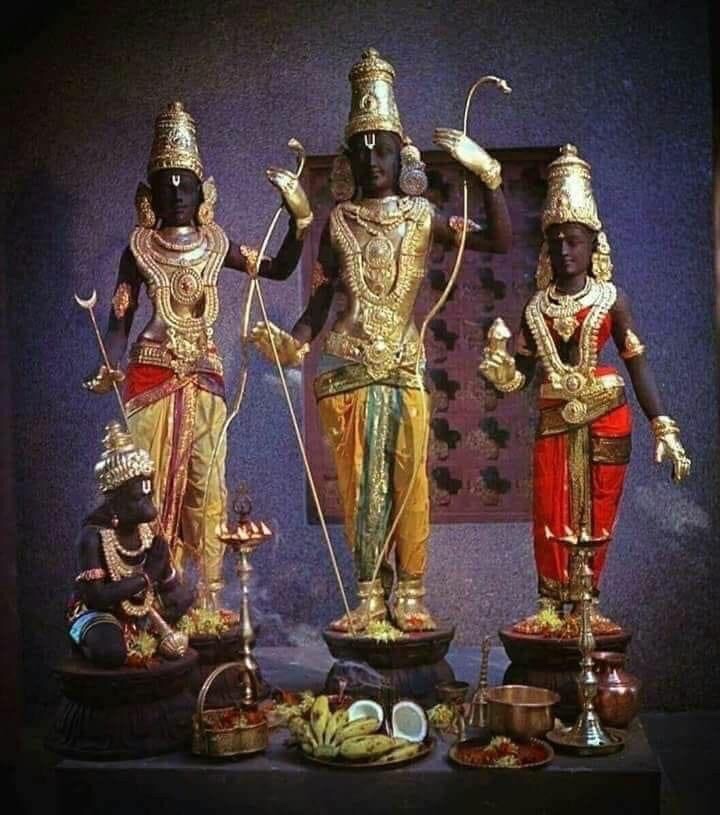
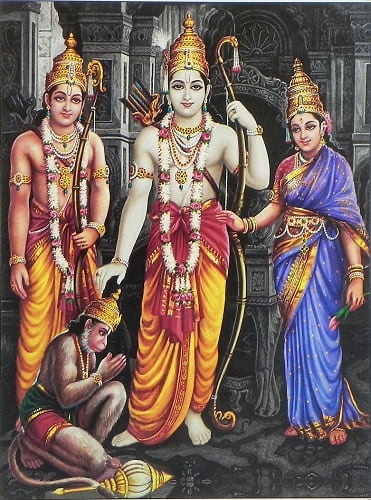
With the above introduction, let us now study a wonderful Sloka which depicts the qualities of Lord Rama, the seventh Avatar of Lord Vishnu.
Audio Link
Pl. Listen to a wonderful recitation of the Sloka by the young Carnatic Musician Sri. Ashwath Narayanan in Ragamalika as a Virutham (approx 9 mts).
1. SAntaM SaSvatam apramEyaM anaghaM - him, the embodiment of tranquility, the eternal one, the causeless one, sinless one.

2. nirvANa SAntipradaM - him who confers liberation and peace.

3. brahmAviShNu phaNIndra sEvyaM aniSaM - the lord to whom Brahma, Vishnu and Shiva offer service.

4. vEdAnta vEdyaM vibhuM - the one knowable through Vedas, the Cosmic one.

5. rAmAkhyaM jagdISvaraM suraguruM mAyAmanuSyaM hariM -  named Rama, the lord of the world, the preceptor of gods, the one incarnated by Hari as a man as an act of Maya.

6. vandEhaM karunAkaraM - I bow down to him, the ocean of mercy.

7. raghuvaraM bhUpAlacUDAmaNiM - the scion of Raghus, and a crest jewel among kings.
“The magic of music can bring about that experience of contention-free connectedness to the whole …
I see music as a blessing of Ishvara for the self-conscious, self-judgmental human to survive and experience, for the time being, the reality of the oneness with the total, the Lord, without any qualifications for it.”
Swami Dayanananda Saraswati, the composer thus spoke about music. His compositions have simple, yet soul stirring verses.
Here is one on Lord Rama. My understanding of the composition and translation in Tamil is presented here for the Rama Navami Festival.
Pray the rain bearing cloud coloured Lord Rama Hey mind
Pray the rain bearing cloud coloured Lord Rama by words
Anupallavi
He is the essence of all the Vedas. He is the cause for everything in the Universe.
Charanam 1
Vibheeshana and Anjaneya are delighted by offering their obeisance to his lotus feet.
He is the Vedic heart of Sage Vasishta and other great Seers and Saints
He is the controller in Human form of the seductive Maya. He is the Lord of the three types of bodies of all humans (sthula, sukshma and karana sareera)
Charanam 2
He is blue like a rain bearing cloud. He forever maintains Dharma.
He is the protector of Humans and holds the mighty bow “Kodandam”.
He vanquishes evil forces. He is the one who liberates us from the cycle of birth and death and provides relief from Old age , disease , sorrow and sins.
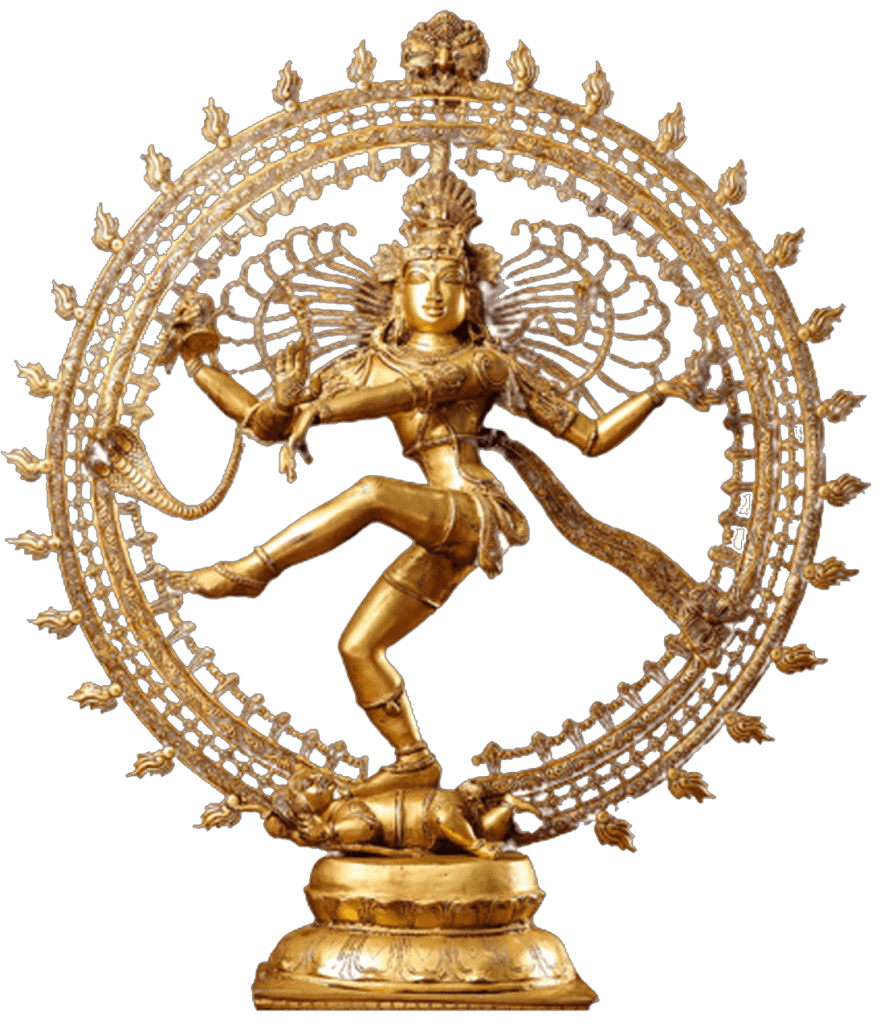
I meditate (bhAvayEham) on Lord Sadachaleshvara, He who has his abode (geham) in Chamatkarapura, and is the beloved (moham) of Girija.
Like a Kalpa tree (vrksha), He is always (sadA) a refuge (Ashrita) for everyone(samUham=group), including the celestials (dEvatA samUham) who seek sanctuary(sharanAgata = literally, they who come to His feet), he who is known (nAmadhEya, literally titled) as the one who turned water (uda) to ghee (Ajya), he is like a flow (pravAham) of nectar (amrtam) of bliss (chidAnanda).
He is Mahalinga (shiva) who causes (karaNa) the well-being (prasAda) of king (bhUpAla) Chamatkara etc (Adi).
His shadow-less (chAyA rahita) sanctum (garbhagRha madhya rangam=the inner room in the middle of the house) is lit by a lamp (dIpa prakAsha).
He removes (hetu bhoota, literally causes to be past) all sorrows (dukha) etc (Adi) and removes fear (bhaya bhanga) of this ocean (sAgaram) like life (samsAra).
Like a bee (bhRnga) which hovers (implied) over a lotus (sarasija), He hovers over the hearts (hrdaya) of good people (sAdu jana) who are tranquil (shama) and self-controlled (dama), senses etc (unsure: cannot findpavrti in dictionary) in unison (samyukta).
His lotus-like (kamala) victory-giving (vijaya kara) hands (implied) holds (vidhRta) a deer (kurangam),
he is like a nectar-filled (sudha maya) wave (taranga) of compassion (karuna rasa).
He is worshipped (vinuta) by Vishnu (kamalesha), he is mounted (turangam) on a bull (vRshabha), he is dear to the lotus-faced (kamala vadana) Guruguha (subrahmanya).
Meaning of the Sanskrit Words
पल्लवि
सदा – always
अचल- mountain (that which doesn’t move)
ईश्वरं – lord
भावये- worship
अहं – i
चमत्कार पुर – According to the Skanda Purana, Tiruvarur is also called Chamatkara-pura, after a king who ruled the place
गेहं – resides
गिरिजा – மலைமகள், Goddess Parvati
मोहम्. – loves
अनुपल्लवि
सदा- always
आश्रित – to the surrendered
कल्प वृक्ष समूहं – grove of wish fulfilling trees
शरण आगत देवता समूहं – (the one in whom) the legions of Devas seek refuge,
उद-आज्य कृत नामधेय वाहं – the one bearing the name and fame of converting water to ghee,
चित्-आनन्द-अमृत प्रवाहम् – the flood of bliss of consciousness
चरणम्
चमत्कार भू-पाल-आदि प्रसाद -करण निपुण महा-लिङ्गं – the one in the form of a great Linga, adept at bestowing grace to the King Chamatkara,
छाया रहित दीप प्रकाश -गर्भ गृह मध्य रङ्गम् – the one at the centre of the sanctum lit by a lamp that casts no shadow,
समस्त दुःख-आदि हेतु भूत -संसार सागर भय भङ्गं
शम दम-उपवृत्ति-आदि संयुक्त -the one who removes the fear of the ocean of Samsara (worldly existence) which is the root cause of all misery,
साधु जन हृदय सरसिज भृङ्गम् – the honey bee that hovers in the heart-lotus of saints endowed with tranquility, self-restraint, endeavour etc.
कमल विजय कर विधृत कुरङ्गं – the one who holds a deer in his hand that surpasses a lotus (in beauty)
करुणा रस सुधा-अर्णव तरङ्गं – the wave from the ambrosial ocean of compassion,
कमला-ईश विनुत – the one worshipped by Vishnu (lord of Lakshmi),
वृषभ तुरङ्गं – the one who rides a bull,
कमल वदन गुरु गुह-अन्तरङ्गम् – the one dear to the lotus-faced Guruguha.
• The phrase ‘camatkAra bhU-pAla-Adi prasAda’ contains the Raga Mudra
• According to the Skanda Purana, Tiruvarur is also called Chamatkara-pura, after a king who ruled the place
• The reference to converting water to ghee is connected to the Saivite saint Nami Nandi aDigaL (one of the 63 Nayanmars), who took up a challenge from the Jains who were occupying the place to light a lamp with water.
• The reference to the lamp not casting a shadow is again from the Skanda Purana. Shiva appeared before King Camatkara and told him that the lamp would not cast a shadow in the sanctum sanctorum.




 Prabhu's Ponder