On this day of the victory for the Lord over the Demons at Tiruchendur, a coastal town in Tamil Nadu, here is my prayer in the form of Tamil Translation of a Sloka from the epic work of Adi Sankara. “Subramanya Bhujangam”.
சூர பத்மனை வதம் செய்த இந்நாளில், ஆதி சங்கரரின் சுப்ரமண்ய புஜங்கத்திலிருந்து ஒரு ஸ்லோகம் இதோ.
Translations for all Slokas are available in this website. அனைத்து ஸ்லோகங்களின் தமிழாக்கத்திற்கு கீழ்காணும் வலைதளப் பகுதியைக் காணவும்.
The first eight verses Adi Sankara’s Bhaja Govindam, come as heavy hammer blows to blast us out of our comfortable anchors in life. That is the first phase of spiritual transformation.

Now we come to the first of the verses that extend a positive helping hand to the seeker of Truth.

Man is a gregarious animal. He wants associates; he wants companions; he must have society. Rare is he who can live by himself.  Why? Because man has been made so, created so. The Lord created man  with the senses going outward therefore he perceives, seeks things outside,’ says the Kathopanisad.

His delights are outside of himself. He wants to share his thoughts, his sorrows, his joys with others. For where is the man who can say that he will not share some good news, that gives him happiness, with another who is likely to appreciate his talents, or envy his success? In sorrow and in disease, man really needs somebody, who would sympathise with him, who would feel for him.

In our everyday life we meet with such situations where we share joy, grief, pain and pleasure in an atmosphere that is conducive (in listening to us). This means that an atmosphere is not merely physical but something more. And this other atmosphere acts on the psychic being of man as the outer climate and atmosphere acts on his body. The psychic being in man can be and is influenced by the environment he lives in, by the company he keeps.

‘Tell me with whom thou art found, and | will tell thee who thou art,’ said the German poet- philosopher Goethe.

So, it has been a universal experience, all through the ages, all
through the climes and all throughout the world that, but for a few
exceptions, all men desire company; and that association influences them as sure as milk acted upon by acid transforms itself into curd. That being so it behoves all to take good care with what type of people they associate. It can be inferred by your own experience in life. Spiritual personages have emphasized the need of keeping holy company, on all aspirants

 It is important that if one wants to evolve oneself to his/her true potential (both materially and more importantly spiritually) one should should seek out like minded good company.  Such good company comes in the form of great teachers and religious exponents, spiritually inclined friends and colleagues, prayer groups, religious discourses and gatherings, etc.

Swami Chinmayananda commenting on this sloka states that in this sloka Adi Sankara has given a ladder of progress in the spiritual field to beginners in devotion.

Let us try and understand the Sloka in its entirety.
Sanskrit Verse
सत्संगत्वे निस्संगत्वं,
निस्संगत्वे निर्मोहत्वं।
निर्मोहत्वे निश्चलतत्त्वं,
निश्चलतत्त्वे जीवन्मुक्तिः ॥९॥
Adi Sankara
English Transliteration
Satsangatve nissangatvam

nissangatve nirmohatvam,

nirmohatve niscalatattvam

niscalatattve jivanmuktiH
Meaning of the Sanskrit Words
सत्संगत्वे - Satsangatve = through the company of the good

निस्संगत्वं -nissangatvam  = ( there arises) non attachment/dispassion

निस्संगत्वे - nissangatve  =  through non attachment/dispassion

निर्मोहत्वं - nirmohatvam  = ( there arises)  freedom from delusion

निर्मोहत्वे - nirmohatve  = through freedom from delusion

निश्चल - nischala  = immutable or unchangeable

तत्त्वं - tatvam  =     Reality

निश्चलतत्त्वे - nishchalatatve  = through this immutable Reality/from the steadfast establishment in the Truth

जीवन्मुक्तिः - jivanmuktih  = state of liberation/one becomes realized / released from bondage, here and now, while alive.
Meaning in English
Through the company of the good and wise people arises non attachment. Through non attachment arises the freedom from delusion, when there is freedom from delusion, there is unchangeable reality. On experiencing this unchangeable reality, there comes liberation or freedom. Seek Govinda.
Explanation
The steps in the ladder that Swami Chinmayananda was referring are

1. Satsangam - association of good people
2. Nissangatvam - non attachment
3. Nirmohatvam - freedom from delusion
4. Nishchalatatvam - steadfastness
5. Jeevan Mukti - liberation in life

Let us try to understand each one of these steps.
Satsangh
Satsang is a Sanskrit term derived from two roots: sat meaning "true’"and sangha meaning community, company or association.

It can be translated as "associating with good people" or simply "being in the company of truth," and refers to the act of gathering with like-minded, uplifting people, especially those on a spiritual path.

The mind requires a suitable atmosphere to grow, in much the same way as a little plant does. As a sprout, it is very delicate and requires a lot of care and nurturing. Our mind is also like this sprout. It has to be taught and trained to follow certain values and priorities so that we get a proper perception of life.

Satsang, or the company of those who are good and have wisdom and insight exerts a positive influence upon us. We need an inspiring atmosphere in order to maintain our enthusiasm in a conducive and positive manner.

In modern times, satsang has evolved to mean any gathering in which spiritual reflection, discussion, meditation or teaching takes place. It helps to remove the negative thoughts, material attachments and mental obstacles that block the path to Self-realisation.

Swami Paramarthananda classifies Satsangh into three levels depending on the meaning of the word Sat.

1. At the first level, the word Sat means a person who has got noble values. He is a man of values (Dharma Purusha) who does not compromise with values and adheres to the dharmic values. This is the operational level of “good” people.  The primary focus is on action and adherence as laid down by scriptures. By sheer association with such a Dharmic person one will effortlessly imbibe these values. The focus will be on “appropriate, clean, balanced and non-binding desires that will help the society” says Swami Omkarananda. However in this level,  the inner growth (inward looking journey) is limited due “avidya” - the lack of knowledge about Self.

2. In the second level of Satsangh, the word Sat means Jnana Purusha or Jnani.  As every Jnani has values, the association with a Jnani has two fold benefits. The first benefit is one will imbibe values and the second benefit is one will get an opportunity to imbibe knowledge also. Learning the scriptures from a Jnani sat purusha is the second level of Satsangh.

3. In the third stage of Satsangh, the word Sat means Brahman itself.  Association with Brahman itself means removal of ignorance that I am away from Brahman, through the knowledge gained from scriptural study that I am Brahman, “Aham Brahmasmi”, i.e. Brahma Prappti or Brahma Ikyam.

As philosopher Mooji says

“Satsangh is the invitation to step into the fire of self-discovery. This fire will not burn you, it will burn only what you are not.”

Therefore Adi Sankara advises us to keep the company of “good”, the divine centred people who are seeking and spreading the knowledge of “Truth”, as proper environment and company is necessary to start the process of detachment.

At any cost, we must avoid the company of the bad and the company of non-believers or those who can shake our sraddha. We should avoid discussion with others; there is no need for us to go around convincing others, or preaching to them. More often than not, they will convince us otherwise.

As Swami Chinmayananda used to say, “The Rudraksha Mala around Shankaracharyaji’s neck did not get realization!” Mere physical closeness does not ensure the awakening of knowledge and understanding. We have to be ‘in touch’ with what the saint stands for. What is necessary is that we must grow and realize how important this self-growth is.

Thus, when we keep the company of the good, we slowly grow out of the influence of the bad. Our personal commitment to pure thoughts through Satsangam gives us the access to the next step.
Nissangatvam
Satsang sets the ball rolling. The first fruit of Satsang is seen when we become a little detached to things we once clung onto with intense attachment. The light of Satsang lifts the veil of delusion that clouds our intellect. From that point onwards spiritual life begins in earnest.  With the influence of good people, the mind develops a secret of detachment. Everyone is talking about seeking the highest. We all know its the mind that puts value to the objects. Once the mind realizes that one needs to develop detachment to the objects, the person is at the second step in the ladder.

Now here is a word of caution from Swami Viditatmananda.

“We must clearly understand what attachment and detachment do not mean.  Very often, people think that giving up attachment means giving up contact with the family, or running away from the world. In fact, you cannot run away from the world because it is present everywhere in some form or the other. Therefore, it is not the physical objects of the world, but your dependence on them that has to be given up. People mistakenly interpret detachment as being an aversion to the sense objects or to the world. The teachers do not ask not to have any contact with the world. The world is meant for our enjoyment. They are only teaching us how to enjoy things. Enjoyment is having a relationship which is free from either dependence or demand, either attachment or aversion. Aversion is but a distorted form of attachment. Therefore, attachment and aversion (raga and dvesha), are the two sides of the same coin. Both represent bondage and dependence. They lead to an unhealthy relationship in which I lose my objectivity to the situations of the world; I allow my happiness to be determined by the situations and objects around me. In being attached, I superimpose a greater value on something than it has, and in having aversion, I see less value in it than it deserves. Thus, when it is said that we should become free from attachment, it also means that we should seek to become free from aversion”.

It is satsanga, the company of the good that enables us to slowly become free from both attachment and aversion. What is meant by satsangatve nissangatva is that in the company of the wise, I slowly develop composure of the mind and a freedom from the reactions of likes and dislikes and become objective. I learn to develop an objective perception of the world and deal with the realities of life, rather than living in a world defined by how I see it.
Nirmohatvam
This means free from “moha”. To understand this term, we should first understand what is “moha”.
The Monier-Williams Sanskrit-English Dictionary explains moha as 'loss of. consciousness, bewilderment, perplexity, distraction, infatuation, delusion, error. '
It is delusion of mind which prevents one from discerning the truth (makes one believe in the reality of worldly objects and to be addicted to the gratification of sensual pleasures).
So, a deluded mind superimposes an unjustified value upon the things of the world through Raga-devsha (attachments and aversions) as impurities. A mind under the influence of raga-dvesha is an impure and reactive mind. When something confirms my attachment I get elated and when something contradicts it I get depressed. Elation is the product of raga and depression is the product of dvesha. While I cannot see my raga-dveshas directly, when I find myself reacting I can see the product of these raga dveshas. These reactions could be anger, greed, resentment, repression, sadness etc. A reactive mind is thus an impure mind.
As the mind becomes clear, it slowly becomes free from moha or delusion. As the mind slowly becomes free from this moha it becomes free from raga and dvesha.
To the extent that the mind is pure, it enjoys peace, serenity, and composure, and to the extent that the mind is composed, it enjoys balance or equipoise. Just as water becomes transparent and pure when you remove the dirt from it, so also, as the impure thoughts are removed from the mind, it becomes pure and serene, and we enjoy tranquility of the mind - niscalatattvam
Niscalatattvam
When the mind becomes tranquil, it becomes objective. It is then able to understand the purport of the scriptures. Until then, whatever we hear is processed by a mind which is distorted by raga-dveshas. When those distortions are not there, the mind is able to truly appreciate the unfoldment of the vision of the scriptures. When the attachment to raga-dveshas goes, the moha or delusion goes; when the delusion goes, the mind is able to understand clearly what the scriptures reveal about the Ultimate Reality - the intrinsic nature of the Self and not its incidental nature. That is how the knowledge takes place and one slowly gains abidance in that knowledge.
Jeevan Mukti
Jivanmukti, according to Hindu philosophy, is the state of being spiritually liberated while still alive. The Sanskrit term is derived from the root words, jiva, meaning "life," and mukti, meaning "freedom." Jivanmukti is a state in which one possesses the limitless knowledge (of seamless integration of Self & Brahman), free from suffering, and enjoys eternal bliss.

As outlined in the previous step, when this abidance in the knowledge  (the aparoksha jnanam i.e.  “Aham Brahmaasmi”  - the direct knowledge that “ I am  the Ultimate Reality”) is experienced, there is freedom even while one is alive. This is the growth that the scriptures present before us, the goal presented by Vedanta. The goal is jivanmuktiH, becoming free even when we are in this body. It is not the mukti or liberation after death, but the liberation or the freedom even while I am here.

For the one thus liberated (who has realised that all being are the Self), there is neither delusion nor grief, as there is no second for him. The Jivanmukta rests with an unshaken mind in the All-blissful Brahman. He is free from all the modifications of the mind. His heart is pure like the Himalayan snow or the crystal. He is free from the distinctions – I, He, Thou.

It is satsanga, the company of the wise or the company of the good, which ultimately leads to this jivanmuktiH.
Conclusion
If we don’t adhere to these processes, then what we can expect is clearly described in verses 62 and 63 of Chapter 2 of Bhagavad Gita.
If we don’t attempt to climb the ladder of knowledge, we are bound yo come crashing down the ladder of attachment as outlined in the first eight strikes. We start all over again. That is why Adi Sankara outlines the 5 step process of achieving liberation in this Sloka.
Let us understand these concepts, digest, internalise and move to the next step towards Self Realisation. We will see what Sankara comes up with in his next strike. Until then…..
God Bless
You can now get this and other Slokas in the book (English) which is now available at Notion Press
சங்கரனின் பட்டறைக்கு வருகை தந்து, முதல் சம்மட்டி அடி வாங்கிட ஒப்பிய உங்களனைவருக்கும் மிக்க நன்றி.

இறை வணக்கம் போல் துவங்குகிறார் ஆதி சங்கரர் அவரது முதல் சம்மட்டி அடியை.

 “கோவிந்தனைத் துதி; உனது மரண காலத்தில் உன்னை ஏட்டறிவு காத்திடாது”. இது தான் இந்த பண்ணின் (அடியின்) சாரம்.

விழும் முதல் அடியை பார்க்கும் பொழுது, மெதுவான அடி போலத்தான் தெரியும். பொதுவாக, விழுந்த பின்தான் தெரியும் அடியின் வலி. அதைப் போல, இந்த அடியின் வலிமையை உணர, பண்ணின் உட்கருத்தை ஆராய வேண்டும்.

வாருங்கள், விழும் அடியை ஆராயலாம். சங்கரனின் இந்த அடிக்குப் பெயர் யாக்கை நிலையாமை.
சமஸ்க்ருத ஸ்லோகம்
भज गोविन्दं भज गोविन्दं, गोविन्दं भज मूढ़मते। संप्राप्ते सन्निहिते काले, न हि न हि रक्षति डुकृञ् करणे॥१॥
தமிழில் ஒலி பெயர்ப்பு
ப4ஜ கோ3விந்த3ம் ப4ஜ கோ3விந்த3ம்

கோ3விந்த3ம் ப4ஜ மூட4மதே |

ஸம்ப்ராப்தே ஸந்நிஹிதே காலே

நஹி நஹி ரக்ஷதி ‘டு3க்ருஞ் கரணே’ ||
தமிழில் மொழிபெயர்ப்பு
துதி கோவிந்தனை துதி கோவிந்தனை
கோவிந்தனைத் துதி மூட மனமே
விதித்திட்ட வேளையில் காயம் அழியும்
காத்திடுமோ உனை வாழ்வியல் பாடம்.
விளக்கவுரை
பஜ

“பஜ“ என்ற சொல்லிற்கு நினை, பூசி, துதி என்ற பொருட்கள் உண்டு. பஜனம் என்பதற்கு சேவை என்ற பொருள்.

இந்தப் பண்ணில் ஆதி சங்கரர் இந்தச் சொல்லையும், கோவிந்தம் என்ற அடுத்த சொல்லையும் மூன்று முறை பயன்படுத்துகிறார்.

ஏன் மூன்று முறை? அதற்கு முக்கியத்துவம் உள்ளதா?

உள்ளது. ஏன் என்பதற்கான சுருக்கமான விளக்கம் இங்கே.

மூன்று வகையான தடைகளை நீக்குவது அல்லது மூன்று வகையான துன்பங்களை (துக்கங்களை) நீக்குவது என்பது வாழ்க்கையின் முக்கிய நோக்கங்களில் ஒன்று என்று நமது மறை நூல்கள் நமக்குச் சொல்கின்றன.

மூன்று வகை துன்பங்கள் வெளிப்படையாக வரையறுக்கப்படவில்லை என்றாலும், ஒவ்வொரு வர்ணனையாளரும் பின்வரும் மூன்று வகையான துன்பங்களைக் குறிக்கின்றனர்:

1. ஆதிதைவிகா (தெய்வீக தோற்றம்) - கடவுளின், இயற்கையின் செயல் காரணமாக வரும் துன்பங்கள். இயற்கையின் சீற்றத்தால் விளையும் துக்கங்கள்.
2. ஆதிபௌதிகா (உடல், ஜட உயிரினங்களில் உருவானது) - வெளிப்புற தாக்கங்கள் காரணமாக வரும் துன்பங்கள்
3. அத்யாத்மிகா (நாமே உருவாக்கியது) - உடல் நோய்கள், மனப்பிரச்சனைகள் (ஆசை, கோபம், பயம், வெறுப்பு, பொறாமை, மோகம், சோகம், அவமானம், காழ்ப்பு…..) முலம் வரும் துன்பங்கள்

இம்மூவகை துக்கங்கள் (தாபத்ரையம்) நீங்கிட இறை வழிபாட்டில் மூன்று முறை முறையிடுதல் மரபு.
கோவிந்தம்

இந்த சொல் கோ, விந்தம் என்ற இரு சொற்களடங்கியது. முதலில் கோ என்ற சொல்லின் பொருளைக் காண்போம்.

1. “கோ” என்றால் - பசு, உயிரினம் (சைவ சித்தாந்தத்தில் பசு என்பது உயிரினங்கள்/மனிதர்களைக் குறிக்கும்), கால்நடை என்று பொருள்.

2. விந்தம் என்றால் - பேணுதல் (காத்தல்), அறிதல்

பசுக்களை/உயிரினங்களை அறிந்து பேணிக் காப்பவன் கோவிந்தன்.

காக்கும் கடவளாம் திருமாலுக்குப் பயன்படுத்தப்படும் அடைமொழிகளில் ஒன்று கோவிந்தா. விஷ்ணு ஸஹஸ்ரநாமத்தில் 187, 539 வது  நாமங்களாக இந்த சொல் உபயோகிக்கப் படுகிறது. இவ்வார்த்தை இரண்டு விளக்கங்களை வழங்குகிறது.

1. முதலாவது வேதங்களின் மூலம் அறியப்பட்டவர். பிரம்மசூத்திரம், வேதங்கள் மூலம் மட்டுமே பிரம்மம் உணரப்படுகிறது என்று கூறுகிறது (गोपिः वेत्ति इति गोविन्दः gopi: vEthi iti gOvinda:).

2. இந்த வார்த்தையின் இரண்டாவது விளக்கம், உயிர்களை அறிந்தவர் (गाः विन्दति इति गोविन्दः கா: விந்ததி இதி கோவிந்த:). இல்லாததொன்றுமில்லை, எல்லாமே அவன் என்று நீக்கமற நிறைந்திருப்பதால், இடம், காலப் பரிமாணங்களைக் கடந்து, உயிரினங்களையும் அவற்றின் செயல்களையும் அறிந்திருப்பவர் கோவிந்தன்.

ஆக, ப்ரம்மம், பரம்பொருள் என்ற தூய இருப்பு, தூய உணர்வு, தூய இன்பம் தான், கோவிந்தன் என்ற சொல்லுக்குப் பொருள்.
மூட மதே

மனிதர்களாகிய நாம் மற்ற உயிரினங்களை விட மிக உயர்ந்த மனமும் புத்தியும் உடையவர்களாக இருக்கிறோம். வேண்டியது, வேண்டாதது, நல்லது, கெட்டது, என்று பகுத்தறியும் தன்மை நம்மிடம் மட்டுமே உண்டு. வெறும்  உள்ளுணர்வால் (உயிரியல் மற்றும் உடலியல் தூண்டுதல்களால்) மட்டும் நாம் வாழ்வதில்லை; உயர்ந்த குறிக்கோள்களால் நிர்வகிக்கப்படுகிறது நம் வாழ்வு.

ஆயினும்கூட,  அன்றாட வாழ்வில் இந்த மனம் நம்மை எங்கெலாம், எப்படியெல்லாம் “ஒன்றை விட்டு ஒன்று பற்றிப் பாசக் கடலக்குள் வீழ்த்திட” அழைத்துச் செல்கிறது.  மனதைப் பற்றிய இந்தப் பாமரனின் விளக்கத்தை, கீழ்காணும்  வலைப் பதிவில் காண்க. https://soundar53.substack.com/p/-6-


முந்தைய பதிவில் கூறியபடி, அன்றாட வாழ்வில் நடப்பு வேறு. அறிவில்லாத ஒன்றை அறிவு என்றும், தெளிவிலாத ஒன்றை தெளிவு என்றும், நிலையற்றவற்றை நிலையானவை என்றும், முழுமையற்றவற்றை முழுமையானவை என்றும் எண்ணும் நம் மனதை, ஆதி சங்கரர் “மூட மனமே” “அறிவிலியே” என்று அழைப்பதில் வியப்பு ஒன்றும் இல்லை.
ஸம்ப்ராப்தே ஸந்நிஹிதே காலே

நேரடி மொழி பெயர்ப்பு என்பது “குறித்த நேரம் வந்திடினில்” என்று பொருளாகும். யாருக்கு, யார் குறித்த, எந்த நேரம்? நமக்கு, காலன் குறித்த, மரண நேரம் என்பது நேரடி விடை. நாட்கள் கடக்க கடக்க, காலன் வரும் நேரமும் நெருங்குகிறது. அது சரி, மரணம் யாருக்கு?

“மரணத்தை எண்ணிக் கலங்கிடும் விஜயா! மரணத்தின் தன்மை சொல்வேன். மானிடர் ஆத்மா மரணம் எய்யாது. மறுபடிப் பிறந்திருக்கும். மேனியைக் கொல்வாய். நீ விட்டு விட்டாலும் அவர்களின் மேனி சென்றுதான் தீரும் ஓர் நாள்” என்று போர்க்களத்தில் அறிவுரை கூறினானே பாரத்தசாரதியான இறைவன் கண்ணன்.

ஆக உடலினுள் உயிர் ஒண்டுக் குடித்தனம். வாடகைதான் வாழ்வு.
நஹி நஹி ரக்ஷதி
“காப்பாற்றாது, காப்பாற்றாது” என்பது நேரடி மொழிபெயர்ப்பு. யாரை, எப்போது, எது காப்பாற்றாது?
எப்போது காப்பாற்றாது - விதித்திட்ட வேளையில் - அதாவது “காலனின் பாசக் கயிறு நம்மைச் சுற்றி விழும்” நேரம். எமனின் ஓலை நமை அடையும் நேரம். உடலை விட்டு உயிர் பிரியும் நேரம்.
எது காப்பாற்றாது - இதற்கு விளக்கம் அடுத்த சொல்லில்
டுக்ருங் கரனே

டுக்ருங் என்பது சமஸ்கிருத இலக்கணத்தில் (வ்யாகரந) கர்ணே (கரனே) என்ற செயலைக் கொண்ட ஒரு வேர் சொல். இலக்கண விதிகளை மனனம் செய்வது என்று பொருள்.

வேதங்கள் மற்றும் வேதாந்தம் படிக்க சமஸ்கிருத இலக்கண அறிவு மிகவும் விரும்பத்தக்கது. பெரிய இலக்கண அறிஞர் பாணினி போன்ற பல அறிஞர்கள் வடித்த சூத்திரங்களை பாட, மனப்பாடம் செய்ய, அறிஞர்கள் இலக்கணத்தில் புலமை பெறுவதற்கான வழிகளில் ஒன்று, "டுக்ருங் கரனே".

இந்தப் பண்ணில் நாம் இதனை வெறும் ஏட்டுக்கல்வி என்று மட்டுமே எடுத்துக் கொள்ளாமல், இன்னும் சற்று விரிவான நோக்கத்தில் அறிந்து கொள்ள வேண்டும்.

அறிவு (வித்யா) இரு வகை: 1. இறையறிவு (மெய்ப்பொருள் அறிவு). இதனை பர வித்யா என்பர். 2. இறையறிவில்லா மற்ற அனைத்து அறிவு. இதனை அபர வித்யா என்பர். அதாவது அன்றாட வாழ்வில், நமக்கு வரையறுக்கப்பட்ட (விதிக்கப்பட்ட) உலகியல், இறையியல் வினைகள் (லௌகீக, வைதீக கர்மங்கள்). அபர வித்யா இன்றி, பர வித்யாவை அடைய முடியாது. பர வித்யா இல்லாமல் அபர வித்யா முமழுமை அடையாது.

ஆக இங்கு குறிப்பிடுவது, அபர வித்யா நம்மைக் காப்பாற்றாது என்ற பரந்த அர்த்தத்தில்.
தமிழ் இலக்கியத்தில் யாக்கை நிலையாமை
இச்சொற்களின் சாரத்தை பல தமிழ் ஞானிளும் சைவ சித்தாந்த அறிஞர்களும், கவிஞர்களும் எண்ணற்ற கவி வடிவிலே எழுதியுள்ளனர். யாக்கை நிலையாமை/நிலையாமை என்ற அத்தியாயங்கள் திருமந்திரத்திலும், திருக்குறளிலும் உள்ளன.
திருமந்திரம்
“மாறு திருத்தி வரம்பு இட்ட பட்டிகை பீறும் அதனைப் பெரிது உணர்ந்தவார் இல்லை கூறும் கருமயிர் வெண்மயிர் ஆவதும் ஈறும் பிறப்பும் ஓர் ஆண்டு எனும் நீரே”.
(நன்கு நெய்து தயாரிக்கப் பட்ட பட்டாடையும் கிழிந்து போய்விடும். இந்த உண்மையைப்பற்றி உலகத்தவர் சிறிதும் சிந்திப்பதில்லை. அழகிய கருங் கூந்தல் வெண் கூந்தலாக மாறிவிடுவதும் கண்கூடு. பிறப்புக்கும், இறப்புக்கும் இடையே ஒரு சிறு பொழுதே உள்ளது. இந்த உண்மைகளைச் சிந்தித்து நன்கு உணர்வீர் உலகத்தோரே).
என்ற சிவவாக்கியர் பாடல் அழியும் உடல் பற்றி குறிப்பிடுகிறது.
நாட்டுப் பாடல்
''குச்சு வீடுங் கட்டலாம் குறுங் கதவு சாத்தலாம் வாழ வேண்டும் என்று சொன்னால் வாய் மதங்கள் பேசலாம் காலனுட ஓலை வந்தால் கனத்தவீடும் தாங்குமோ குச்சு வீடும் தாங்குமோ குறுங்கதவும் தாங்குமோ''
என்ற பாடல் மூலம் அறியப்படும் தத்துவங்கள் பலப்பல. உடம்பு ஒரு குச்சு வீடு. அதில் ஆசைகள் கதவுகளாகும். எனவே வாழ நினைப்பவன் ஆசையை அடக்குதல் வேண்டும். உடம்பு ஒரு குச்சுவீடு, அக்குச்சு வீடு எவ்வளவு கனத்திருந்தாலும் அதாவது (புண்ணியம் செய்திருந்தாலும்) காலதேவன் வந்துவிட்டால் கணப் பொழுதும் நில்லாது மறைந்து விடும் என்ற நிலையாமைத் தத்துவத்தை இப்பாடல் நயம்பட கூறுகிறது.
மேற்கூறிய விளக்கங்கள் எதுவும், வேதங்களின் பூர்வபாகத்தில் (ஆரம்ப பகுதி) பொதிந்துள்ள பல்வேறு சடங்குகள் மற்றும் பிரார்த்தனைகளை இழிவுபடுத்துவதாக தவறாகப் புரிந்து கொள்ளப்பட வேண்டியதில்லை.
பெரும்பாலானவர்களுக்கு, அவை மனதையும் உடலையும் சுத்தப்படுத்துவதிலும், பெரிய பயணத்திற்கு ஒருவரைத் தயார் செய்வதிலும் குறிப்பிடத்தக்க பங்கைக் கொண்டுள்ளன.
ஸ்ரீ ஆதி சங்கரரைப் போன்ற தேர்ந்தெடுக்கப்பட்ட சிலர், விரிவான தயாரிப்புகள் இல்லாமல் நேரடியாக அந்தப் பயணத்தை மேற்கொள்ளத் தயாராக பிறந்தவர்கள், அந்த வகையில் மிகவும் வித்தியாசமானவர்கள்.
உண்மையில், இறுதிக்கான வழிமுறைகளைத் தவறாகப் புரிந்துகொள்வதையும், சடங்குகளில் மட்டுமே திருப்தியடைவதையும், அவற்றின் உண்மையான நோக்கத்தையும் பொருளையும் புரிந்து கொள்ளாமல் அவற்றைச் செய்வதையும் தவிர்த்து பரம்பொருளை உணருவதை முயலவேண்டும் என்று கூறுகிறது இப்பண்.
ஏன் இறைவன் நாமத்தை சொல்ல வேண்டும் என்ற கேள்வி எழலாம். இறைவனே இதற்கு பகவத்கீதையில் 8வது அத்தியாயத்தில் பதில் அளிக்கிறார்:
अन्तकाले च मामेव स्मरन्मुक्त्वा कलेवरम् । यः प्रयाति स मद्भावं याति नास्त्यत्र संशयः ॥८- ५॥
ய: அந்தகாலே ச மாம் ஏவ ஸ்மரந் = எவன் இறுதிக் காலத்தில் எனது நினைவுடன் கலேவரம் முக்த்வா ப்ரயாதி = உடம்பைத் துறந்து கிளம்புகிறானோ (இறப்போன்) ஸ: மத்³பா⁴வம் யாதி = எனதியல்பை எய்துவான் நாஸ்தி அத்ர ஸம்ஸ²ய: = இதில் ஐயமில்லை.
இறுதிக் காலத்தில் உடம்பைத் துறந்து எனது நினைவுடன் இறப்போன் எனதியல்பை எய்துவான். இதில் ஐயமில்லை.
வாழ்நாட்களில் மனதுக்குக் கடவுளிடம் நிலைத்திருக்கும் பழக்கத்தை உண்டுபண்ணினால்தான் அம்மனம் மரண காலத்தில் கடவுளிடம் நிலைபெறும். தொட்டில் பழக்கம் சுடுகாடு மட்டும் அல்லவா. ஆகையால் நாம் அனைவரும் நம் வாழ்நாட்களில் மனதால் கடவுளைத் தியானம் செய்துகொண்டே தங்கள் கர்மங்களைச் செய்யது, கரமத்தின் பலனை அவனிடமே விட்டு விட வேண்டும்.
இது தான் இந்த முதல் சம்மட்டி அடி. என்ன ஒரு ஆழமான அடி! இந்த அடியை உள்வாங்கினால், உற்ற தேகத்தின் உயிரையும், உயிரை மேவிய உடலையும் ஊடுருவி, உலுக்கி எடுத்து, நம் உணர்வினை தட்டி எழுப்பும் என்பது உறுதி.
அடுத்த பதிவில் சங்கரனின் இரண்டாவது சம்மட்டி அடி. அதைப் பெறும் வரை…….
Welcome to Sankara’s Smithy and thank you very much for taking your time off to visit this forge shop and agreeing to receive the hammer strikes (31 in all).

Here is Sankara’s first hammer strike. Adi Sankara begins his first strike as a salutation to God.

 “Glory to Govinda. Always pray  and meditate on Him. Your worldly knowledge will not help you when your departure time arrives”. This is the essence of this first of the thirty one blows.

You might immediately think “Oh! This is only the first one. It will be mild as the focus is on prayer”. Don’t get fooled by your thoughts. Normally one will realise the severity of the strike only after receiving it.  This first strike of Sankara may appear to be mild but the message it delivers is something to be received and realised.

Let us receive the first hammer strike.
Sanskrit Verse
भज गोविन्दं भज गोविन्दं,

गोविन्दं भज मूढ़मते।

संप्राप्ते सन्निहिते काले,

न हि न हि रक्षति डुकृञ् करणे॥१
English Transliteration
Bhaja Govindam, Bhaja Govindam

Govindam Bhaja Moodamathe,

Sampraapte sannihite kaale,

Nahi nahi rakshati dukrumkarane.
Literal Translation
Pray Govinda, Pray Govinda
Pray Govinda, oh ignorant mind
When your designated time arrives
Your grammar education won’t protect you.
Detailed Explanation
Let us understand the Sloka step by step, word by word.
“Bhaja”.
The word "Baja" has the meaning of meditate, pray, worship. In a broader sense, Bhaja means service. Adi Sankara uses this word and the next word Govindam three times in this verse. Why three times? Does it matter? Yes. Here's a brief explanation of why.
Our ancient texts tell us that one of the main purposes of life is to remove the three types of hindrances or to remove the three types of miseries (sorrows). Although the three types of suffering are not clearly defined, each commentator refers to the following three types of suffering:
1. Adidaivika (Divine Origin) - Sufferings caused by the action of God, Nature. Sorrows resulting from the fury of nature.
2. Adibhautika (arising out of body and mater) – Sufferings due to external influences
It is a tradition to appeal three times in worship to remove these three types of sorrows/hindrances.
“The very opening words “Bhaja Govindam” – repeated thrice as is often done for emphasis in the Vedas – serves as the invocation, and the anticipated fruit of learning is unmistakably identified as ultimate salvation. The absence of an explicit mention of the qualified learner (अधिकारि adhikaari) should be interpreted as asserting that the work is relevant to all, and the particular exhortation not to wait too long is a call to start walking along the spiritual path of devotion from early on”.
Govindam

This Sanskrit word is composed of two words, Go and Vindam.

1. “Go” means - cow, living being, cattle.
2. Vindham means - to maintain (keep), to know.

The one who knows and takes care of the living beings is Govinda.

Govinda is one of the epithets used for Lord Vishnu, the protector of this Universe. This word is used as the 187th, 539th name in Vishnu Sahasranama. This term offers two interpretations.

1. The first is known through the Vedas. The Brahmasutra says that Brahman is realized only through the Vedas (गोपिः वेत्ति इति गोविन्दः gopi: vEthi iti gOvinda:).

2. The second interpretation of this word is the knower of beings  (गाः विन्दति इति गोविन्दः கா: விந்ததி இதி கோவிந்த:). Since there is nothing that is not unknown to Him, everything is indelibly full of Him, Govinda is the one who transcends the dimensions of space and time and knows living beings and their actions. The word Govinda thus means Brahman, Paramatma.

Therefore , in the vedantic sense, the connotation of the phrase ‘Bhaja Govindam’ is to be taken as “Know Govinda” which is in the sense of “Know Brahman as thyself.”
Muda mathe

Literal meaning is ignorant mind, foolish mind. But this word has much deeper connotations.

As human beings, we have a superior mind and intelligence than other living beings. Only we have the ability to discern what is necessary and what is not, good and bad. We do not live by mere intuition (biological and physiological impulses); Our lives are governed by higher and lofty goals.

Yet, in everyday life, this mind takes us everywhere and is never stable. Very often we compare our mind to a monkey.  As mentioned in the previous post, what happens in everyday life is different.

It is therefore no wonder that Adi Shankara calls our mind, which considers the ignorance as knowledge, the unclear as clear, the impermanent as stable, and the incomplete as complete, as “blind mind” and “ignorant mind”.
Sampraapte sannihite kaale

Literal translation means “at the appointed time”.

Appointment to whom, by whom, where, when and at what time?

The answer is - appointment by the Lord at a place, date and time decided by Him which is unknown to us.  That's right, death; but for whom?

"Oh Partha: you are worried about death of of those whom you identify as your relatives. Understand what death is . The human soul does not die. It will be reborn.  You can only kill their bodies. Even if you don’t, their bodies  will perish one day. So, go ahead and fight”

advises Lord Krishna to Arjuna at the battlefield at Kurukshetra in  the epic “Mahabharata”.

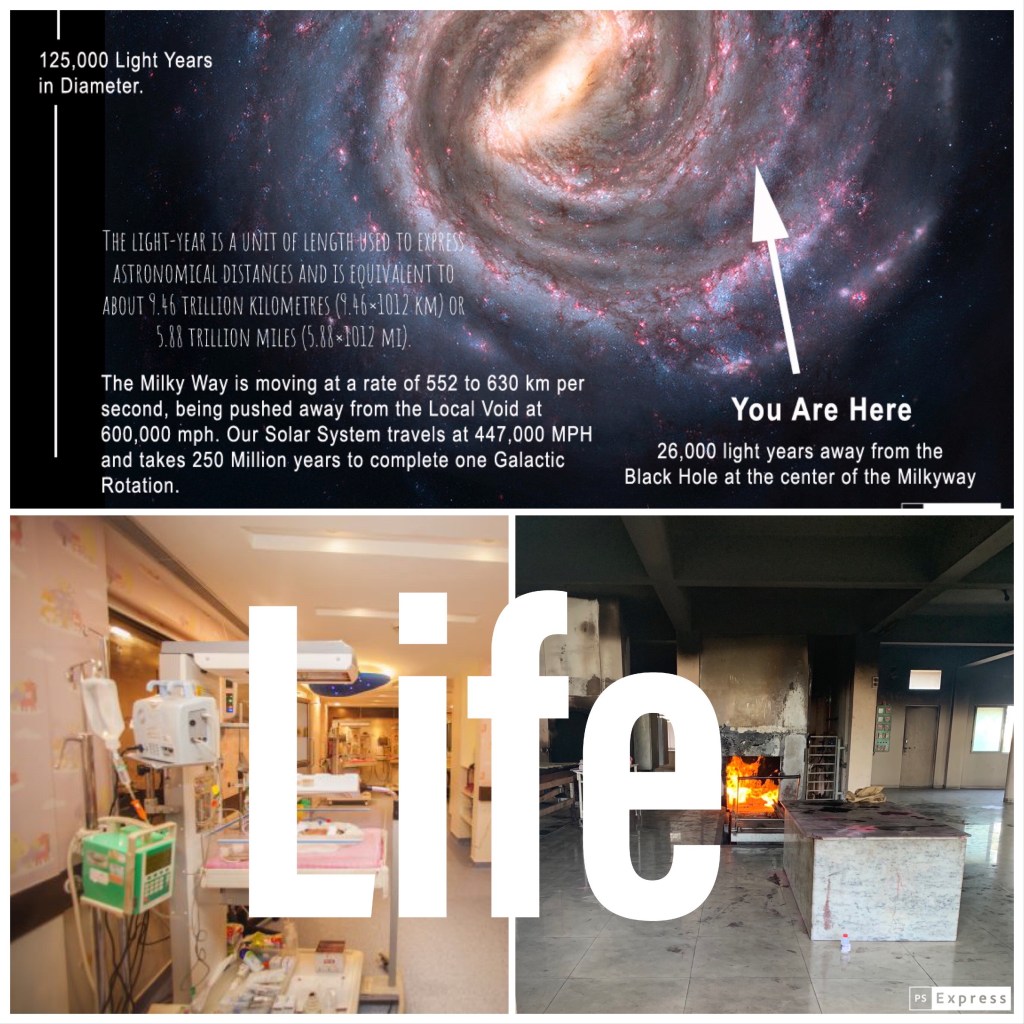
Here is a pictorial depiction of what we terms as our lives.
For all of us, Life is nothing but the time spent between the maternity ward and crematorium on the “surface of a tiny rock-ball 26000 light years away from the black hole, rotating around a spherical fire in a tiny galaxy in an ever expanding galaxies” as depicted in the above picture.

Some call it as the time between between the drop of a water (semen) and the spark of fire lit.  In commercial terms, it is akin to a rental agreement between the mortal frame and the immortal soul.

The essence of these words has been written by many Tamil sages and Saiva Siddhanta scholars and poets in the form of innumerable poems. There are exclusive chapters on impermanence of body in Thirumandra, Naaladiaar and Thirukkural.

The reality is that body will give us up, but we will not give up the body that easily till our subtle body becomes purified.

For that purification only Sankara says Bhaja Govindam.

One can counter Sankara saying that “why should I do it now for an event which will occur later; I will do it at that time”.  For that the answer to be understood in this Sanskrit sentence is :

“Kaala is time and also the Lord of Death.  Our scriptures assert that one attains whatever one’s mind is filled with at the time of death.  But one is not given to know when that time comes.  Therefore, one should at all times in one’s life, have one’s mind rested on the Eternal, for it is the Eternal that we, without doubt, eventually reach”.
Nahi nahi rakshati

Literal translation is “does not protect, does not protect”.

What is Sankara trying to say here? Whose, When, and what won't protect?

Who - The body with which we ignorantly/foolishly identify ourselves will not be saved.

When - at the time of death; destiny -  It is the time of termination of the lease agreement between us and our body. Our Time to leave the body.

“The broader interpretation of this verse’s caution is as one asking not to become conceited and totally self-assured”.
Dukrung karane

 “डुकृङ्ग् Dukrung” is a root in Sanskrit grammar with meaning करणे (karane) action.  Knowledge of Sanskrit grammar is  highly desirable for the study of Hindu scriptures like the vedas and Vedanta.  One of the ways scholars acquire proficiency in grammar is by chanting and memorizing many सूत्राणि sutras (aphorisms) such as that of the great grammarian Panini exemplified here through “Dukrung karane”. Much as Sanskrit grammar proficiency is a great facilitator of the study of scriptures, it must be understood that it is neither sufficient nor absolutely necessary for acquiring true knowledge, namely, knowledge of the eternal.  It is like the plantain leaf (or the plate today) for having one’s meal, a facilitator only.  Indeed, an overemphasis of scholarship can indeed become counter-productive.”

Here, we should not take it only as formal education, but we should understand it in a more comprehensive scope. It essentially implies that all that is prescribed/defined for us in our scriptures both in the worldly transactional sphere and in the religious duties and karmas will not help us at the time of departure unless we understand who we are and realise our relationship with Brahman, the Ultimate reality.

It is precisely the reason that Sankara is striking us, only with the sole objective of transforming our mind set.
Conclusion
Only if the mind is habituated to stay with God during life, then the mind will stay with God at the time of death. Therefore all of us should carry on with our life’s mission (which is to secure permanent happiness free from all sorrows as seen in the introduction) while meditating on God and leaving the fruits of our actions/karma to Him, Govinda.

A word of caution from the Guru:

“None of the above, however, is to be misinterpreted as a denigration of the various rituals and prayers embodied in the पूर्वभाग (purva bhaga, the early part) of Vedas.  For most, they play a significant role in the purification of the mind and body and in preparing one for the greater journey.  The chosen few like Sri Adi Sankara, born prepared to undertake that journey directly without elaborate preparations, are very atypical in that respect.  Indeed, the criticism is to be taken as aimed at mistaking the means for the end and for allowing oneself to be content only with rituals, and for performing them without caring to understand their true purpose and meaning”.
When I commenced my study of Moha Mudgara otherwise known as Bhaja Govindam, there were interesting exchange of comments between a novice like myself and learned individuals, in the social media.
Some were of the view that the title that I have given “Sankara’s Smithy” and சங்கரனின் சம்மட்டி அடிகள் (“Sankaranin Sammatti Adigal” in Tamil) is not appropriate.
“Adi Sankara never had to resort to violence, vulgarity, force,guile or such aids to advance his views. Intellect and compassion were his forte. Please do not ascribe such epithets to write about Adi Sankara’s achievements; why this kind of rebellious/militant attitude of force to defend one’s belief system?”
These were some of the remarks.
This is to reconfirm that my intention is not to project Sankara in that manner at all. I never even realised that there could be an interpretation from that angle.
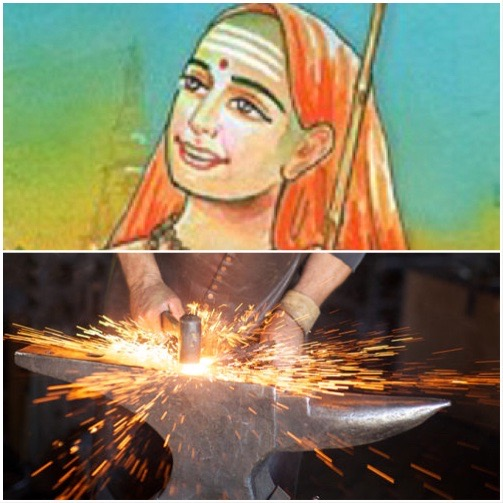
In a smithy, the iron is heated and struck with hammer blows before it is converted into a fine product. Those strikes are not rebellious/militant. They are meant to transform a rigid matter into useful product. If my little understanding of these Slokas are correct, the message of each sloka is like a hammer blow(mudgara) to the ignorant minds of ours, pointing out the stark realties which we choose to ignore in our life.
It is with this intention that I gave the title for my study as Sankara’s Smithy (being an engineer myself) and have taken up my study of Bhaja Govindam. I am absolutely open for any change or suggestions for the title. Please let me know through your comments.
Just thought I will clarify my thought process to all. After all, the idea is to learn and understand the message of Adi Sankara.
Thank you.
பஜ கோவிந்தம் என்று அழைக்கப்படும் “மோக முத்கரா”வைப் பற்றிய எனது ஆய்வைத் தொடங்கியபோது, சமூக ஊடகங்களில் “மூட மனம்” கொண்ட எனக்கும், கற்றறிந்தவர்களுக்கும் இடையே சுவாரஸ்யமான கருத்துப் பரிமாற்றங்கள் நடந்தன.
“Sankara’s Smithy” சங்கரனின் சம்மட்டி அடிகள் என்று கொடுத்த தலைப்பு பொருத்தமானதல்ல, ஆதி சங்கரர் ஒருபோதும் “வன்முறை, அசிங்கம், பலம், வஞ்சகம் போன்றவற்றை நாட வேண்டியதில்லை” என்று சிலர் கருத்து தெரிவித்தனர்.
“ஆதி சங்கரரின் சாதனைகளைப் பற்றி எழுத தயவு செய்து இது போன்ற அடைமொழிகளைக் கூறாதீர்கள்; ஒருவரின் நம்பிக்கை அமைப்பைப் பாதுகாக்க ஏன் இந்த வகையான கிளர்ச்சி/போராளி மனப்பான்மை?” இவை சில குறிப்புகள்.
அந்த வகையில் ஆதி சங்கரரை முன்னிறுத்துவதோ அல்லது வர்ணிப்பதோ என் எண்ணம் அல்ல என்பதை மீண்டும் உறுதிப்படுத்துவதுதான் இந்த விளக்கம். இப்படி ஒரு கோணத்தில் பார்க்கக்கூடும் என்று நான் சிறிதேனும் சிந்திக்ககூட இல்லை.
ஒரு பட்டறையில், இரும்பை சூடாக்கி, சுத்தியலால் அடித்து, நீரில் மூழ்கடித்து, அதனை ஒரு உபயோகமுள்ள சிறந்த பொருளாக மாற்றுவர். அது போல, ஒவ்வொரு ஸ்லோகத்தின் செய்தியும் நமது அறியாமை மனங்களுக்கு பட்டறையில் விழும் சுத்தியல் அடி போன்றது; நம் வாழ்க்கையில் நாம் புறக்கணிக்கத் தேர்ந்தெடுக்கும் அப்பட்டமான உண்மைகளைச் சுட்டிக்காட்டுவது என்பதே எனது தாழ்மையான கருத்து.
இந்த நோக்கத்தில்தான் பஜ கோவிந்தம் பற்றிய எனது ஆய்வையும், நான் பகிர்ந்து கொள்ள முயன்ற எண்ணங்களையும் எடுத்துக் கொண்டு, சங்கரனின் சம்மட்டி அடிகள் என்ற தலைப்பை கொடுத்தேன் (என் பொறி இயல் படிப்பு இந்த தலைப்பை கொடுக்க உந்தியது). தலைப்பில் ஏதேனும் மாற்றம் அல்லது பரிந்துரைகளுக்கு நான் முற்றிலும் தயாராக இருக்கிறேன். உங்கள் கருத்துகள் மூலம் எனக்கு அவசியம் தெரியப்படுத்துங்கள்.
எனது இந்த சிந்தனை முறையை அனைவருக்கும் தெளிவுபடுத்தலாம் என்று நினைத்தேன். எல்லாவற்றிற்கும் மேலாக, ஆதி சங்கரரின் செய்தியைக் கற்று புரிந்து கொள்ள வேண்டும் என்பதே என் எண்ணம்.
Jagadguru Saccidānanda Śivābhinava Nṛsimha Bhārati Mahāswāmiji, (referred as Nṛsimha Bhārati Mahāswāmiji henceforth) was 33rd Jagadguru in the unbroken chain of Ācāryas of Śrīngeri Śrī Śāradā Peetham, one of the foremost of the Mutt’s established by Śrḹ Śaṇkara Bhagavatpāda.
Jagadguru Śrī Śrī Saccidānanda Śivābhinava Nṛsimha Bhārati Mahāswāmiji, embellished the sacred peetham from 1879 to 1912. He is adorned as Śrī ‘Abhinava Śhankarā’, a spiritual reincarnation of the great saint Śrī Śaṇkara Bhagavatpāda.
Bhakthisudha Tarangini is a brainchaild of Nṛsimha Bhārati Mahāswāmiji comprising various poetic compositions which was published by his earnest disciple Śrī. T.S. Balasubrahmanya Iyer in the year 1913.
Bhakthisudha Tarangini is a voluminous work. Like the great Śrī Śaṇkara Bhagavatpāda, Śrī Nṛsimha Bhārati Mahāswāmiji composed many stotras in praise of various Gods and Goddesses at various Shrines throught India. This book is a collection of 170 stotras of different dieties categorised as follows- Ganesha stotras, Devi stotras, Guru stotras, Vishnu, Shiva and Vedanta stotras.
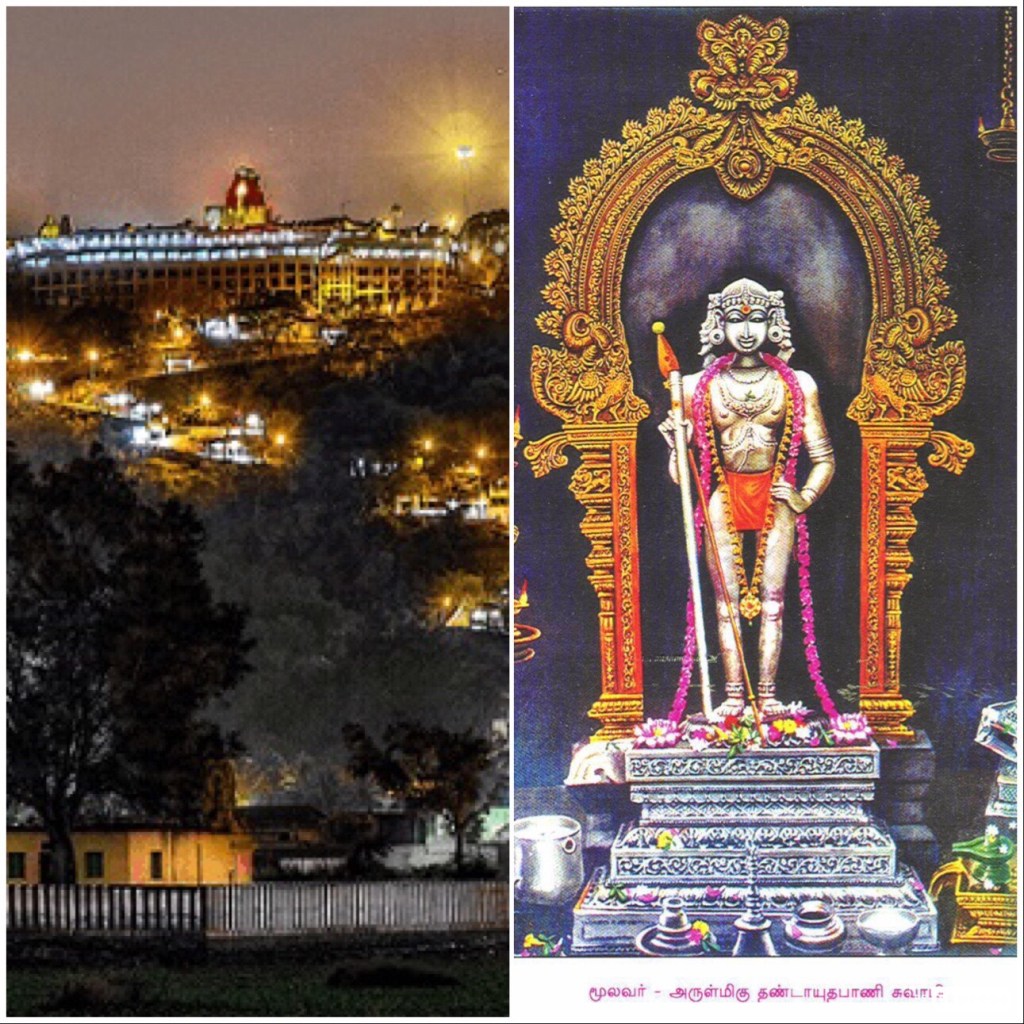
Here is one on Lord Subramanya. Lord Subramanya is also known as Dandapani. This Sloka is a Pancharathna Mala and has five verses.
I pray continuously Lord Dandapani, who destroys the cruel sins of the devotees; who wears earrings which makes the two cheeks glitter; who punishes the Asuras who are the enemies of the Devas.
I pray continuously Lord Dandapani, who is the son of the killer of Yama; who is the temple of mercy; who sports a matted hair decorated by the crescent moon and who is the representative (svarupa) of Lord Siva.
I pray continuously Lord Dandapani, who has a great luster similar to moon, the lord of stars, who is the enemy of Tharaka , who speedily grants the wealth sought by devotees, and who helps us to cross the deep sea of life cycles (samsara) like a boat .
I pray continuously Lord Dandapani, who destroys all the worries of the true devotees, who helps us to destroy our true enemies viz., anger and passion, and who is the one who helps us to reach his abode quickly.
I pray continuously Lord Dandapani, who is the destroyer of the Cupid and is handsome Himself, who is worshipped with hands folded by Lord Ram and Lakshman and who has tender and elegant looking form.
In the fifth verse, Śankarācārya enumerated various systems of philosophy, in which there are varieties of confusion regarding the real nature of “I”; and in this sixth verse, Śankarācārya wants to refute the main system, known as mādhyamika bauddisam; or śūnyavādaḥ; which is one of the main pūrvapakṣis of vedāntaḥ. And Śankarācārya does not refute the other systems, because this shoonya vadi has already refuted others and therefore he becomes the main challenger; and therefore Śankarācārya refutes the śūnyavādaḥ in the 6th verse.
The śūnyavādi points out that the essential nature of me; or the I, is nothingness or emptiness. Not only the individual, even the essential nature of the world is nothingness or emptiness. And in support of this conclusion, he takes our sleep experience as the pramāṇam or truth. In sleep we do not experience anything; there is no objective world. In sleep we do not experience the subject also; so neither ‘seen’ is there; nor is there the ‘seer’; neither the ‘heard’ nor the ‘hearer’. Therefore the subject as well as the object, both of them are not there; and therefore śūnyam is the tatvam is their conclusion.
Now Śankarācārya shows in this verse; that in deep sleep state, it is not śūnyam or emptiness. In deep sleep state, there is pure existence; but it is an unqualified existence; which is not available for any transaction. Only qualified existence is available for transaction; unqualified existence is not available for transaction. And therefore we make a mistake that it is emptiness; because we have a general misconception, whatever is not available for transaction is non-existent. This is one of the intellectual confusions. We think the space is nothingness; because space is not available for transaction. But the truth is that, space is not emptiness or nothingness, it is a positive entity. But generally we mistake space as emptiness, because it is not avialable for seeing, touching or any other local view. The same mistake is extended to the pure existence also; because it is not available for vyavahara. And therefore, in sleep, non-transactional existence is available which is my nature. This is the essence of this verse.
To highlight the mistake or the illusion that Sunyavadis have about “existence or otherwise” Adi Sankara brings out an incident that happened during the “Samudra Manthan” (churning of the ocean) as told in the Puranas.
The story of Rahu & Ketu and Maya
According to Puranas, the birth of Rahu and Ketu dates back to the earliest of times.‘Samudra Manthan’ is regarded as one of the most important events in the history of Hindu civilization. The Solar and Lunar eclipse is also associated with ‘Samudra Manthan’. When the ocean was churned by the Asuras and Devas, ‘Amrit’ was produced. This Amrit was stolen by Asuras and to obtain the Amrit, Lord Vishnu took incarnation in the form of a beautiful damsel ‘Mohini’ and tried to please and distract the demons. On receiving the Amrit, Mohini came to Devas to distribute it to them. ‘Svarbhanu’, one of the asuras changed his appearance to a deva to obtain some portion of the Amrit. However, Surya (Sun) and the Chandra (Moon) realized that Svarbhanu was an Asura and not one of the devas. Knowing this, Lord Vishnu severed Svarbhanu’s head with his discus, the Sudarshan Charka. However, even though his head and body became separated, they still remained immortal as the separate entity because before his head was served, he managed to drink a drop of the nectar from the Amrit. The Head is known as Rahu and the headless body is the Ketu. Since then Rahu and Ketu constantly chase the Sun and the Moon for revenge as they are the cause of separating the head and body of the Asura Rahu. It is a popular belief that when they succeed in catching Sun and Moon they swallow them causing Solar or Lunar eclipse but they can’t hold them for long and Sun and Moon emerge again intact as they also had nectar and are immortal.
Let us study the Sloka 6 in detail , in the next blog which will appear on 30th September
Those who consider the Body or Prana (Vital Force) or Sense Organs or the Changing Mind or the Void (Total non-existence) as the “I”, are Like the emotionally sensitive women or Naive Innocent Girl Child, or Blind, or a Dull-Headed. They are deluded but they vehemently assert their points. The Inner Guru destroys this great delusion created by the play of the power of Maya. Salutations to Him, the personification of Our Inner Guru who awakens this Knowledge through His profound Silence; Salutation to Sri Dakṣiṇāmurty.
Understanding the Sloka:
देहं प्राणमपीन्द्रियाण्यपि चलां बुद्धिं च शून्यं विदुःDeham Praannam-Api-Indriyaanny-Api Calaam Buddhim Ca Shuunyam Viduh – The various types of false identifications of Ātman that we discussed above viz., deham, pranam, indriyani, calam buddhim and shunyam
स्त्रीबालान्धजडोपमास्त्वहमिति Strii-Baala-Andha-Jaddo(a-U)pamaastv[u-]Aham-Iti – Now let us come to the comparison that Adi Śankarā makes while describing these misconceived people. स्रीबालान्धजडोपमा (strī bāla andha jaḍo pamā). These words should be taken as symbolic of four types of defective intellect, which alone can commit these mistakes:
Stri – an intellect which is suppressed by emotions, which is a hostage of emotions, Emotional thralldom; very typical of womanfolk.
Bāla;- is undeveloped intellect, because a bāla, a child is not capable of thinking; it is not trained; therefore bāla represents undeveloped or untrained intellect. Training through tarka, logical reasoning, he has not gone through;
Andhah – represents unaided intellect; literally the word andhā means blind, and what do you mean by the word blindness here; not using the śāstra pramāṇam, makes a person partially blind. If we have to know the spiritual truth; we require two eyes – external & internal. śāstra cakṣuḥ; buddhi cakṣuḥ, These two should combine for knowledge to take place; If one of them is not there, this person becomes what? partially blind; If both are not there, i.e., no buddhi and no śāstram, totally blind;
The fourth one is jadaḥ; jadaḥa means a retarded intellect, an unintelligent intellect.
भ्रान्ता भृशं वादिनः Bhraantaa Bhrsham Vaadinah. – All these people with the misconceptions have one thing in common; “braandhaaha”- delusion is the only common feature. And not only they are confused and they have got wrong conclusion, the tragic part of this conclusion is they are not available for correction. Therefore Śankarācārya says that these people are not available for reconsideration. This is what the Upanisahads also have said:
They are steeped in ignorance, and also because of their arrogance and adamancy, “svayam dhīrāḥ paṇḍitam manyante”; they think we are omniscient. Therefore Śankarācārya says that even Bhagavan’s compassion becomes useless, in front of them. They always say “I am always right, the other person is always wrong”, These people are called “bhṛśaṃ vādinaḥ”. Śankarācārya says never waste your time, talking to them; talking to such people, is misplaced compassion. bhṛśaṃ means intensely; not ordinarily argumentators, intensely vādinaḥ;
मायाशक्तिविलासकल्पितमहाव्यामोहसंहारिणे – Maayaa-Shakti-Vilaasa-Kalpita-Mahaa-Vyaamoha-Samhaarinne. Then Śankarācārya looks at himself; Oh my God, somehow I am not in that group of confusion; I have got an intellect, which is free from all these four-fold defects, I have got an intelligent intellect, intelligent enough to understand Brahman, and also I have got shraddha in vedānta śāstram m, and therefore I have rescued myself and if I could get out of this confusion, it is only because of the external aid I got; and what is that external aid, śāstram pramāṇam. And therefore I am indebted to śāstram; And if śāstram could be meaningful to me, I am indebted to another person; it is purely because of guru; In fact, śāstram is made a pramāṇam by guru alone; And therefore Śankarācārya says I am indebted to śāstram and more indebted to the guru, and that guru who destroyed all my confusions. That confusion-destroyer-guru, I offer my prostrations and therefore Guru. Adi Śankarācārya now defines a Guru and has a new title for Guru; what is the title given to guru? māyāśakti vilāsakalpita mahāvyāmoha saṃhāri; to that guru, who is none other than dakṣiṇāmūrti, my namaskaram. That is said in the third line. Now let us see the meaning of this long Sanskrit Word.
saṃhāriṇi – (my guru) is a destroyer; destroyer of what?
vyāmoha – (destroys) confusion, Delusion with regard to one self; self-delusion is called vyāmoha; how did this confusion come? he says;
kalpitam - created by/caused by - caused by whom?
vilāsa - ; vilāsa has two meanings, one meaning is the sport or play; so vilāsaha means play; Play of what? maya shakthi, the power of māya; play or operation or sport of māya shakthi.
So thus, what will be final translation; the guru who is the destroyer of the great delusion caused by the play of the power of māya.
And therefore, Hey Guro, who is the destroyer of ignorance and consequent delusion permanently, I offer my namaskaram to you.
திருக்குறள், நிலையாமை அதிகாரத்தில் இக்கருத்தினையே இவ்வாறு பிரதிபலிக்கிறது.
In the Tamil calendar (Solar based) of Kartigai (around mid November – mid December), the full moon day is divinely important. Two important events – the arrival of Lord Katikeya (Subramanya/Arumugam) and the manifestation of Lord Siva as an endless flame of light (even Lord Vishnu and Lord Brahma couldn’t find the start and the end of it in the three worlds). The lighting of the famous Deepam at the famous Hill at Thiruvannamalai happens on this day.
Today being that day, I decided to refine and rededicate two of my earlier blogs through an audio visual in the social media. Here are the links to the two videos.
அம்புலி கங்கை அணிந்த
அடிமுடி காணா இறைவனை,
அன்பர் மனங்கவர் அண்ணாமலையோனை,
அன்றே கண்டு ஆனந்தமதனை
அலை அலையாய்ப் பெற்ற,
ஆதி சங்கரனின் சிவ
ஆனந்த லகரி எனும் அருள் மறையும்,
ஆர்க்கும் அலைகள் ஆழ்கடல் தோன்றி அழிவதொப்ப,
அன்பரின் மாளா துயர் அழியும் அவனை அடைந்தால் என
அலைவாயிலில் ஆதி சங்கரன், அருளிய
சுற்றும் அரவு என பதம் அமைந்த சுபரமணிய புஜங்கம் தனையும்,






 Prabhu's Ponder