On this day of the victory for the Lord over the Demons at Tiruchendur, a coastal town in Tamil Nadu, here is my prayer in the form of Tamil Translation of a Sloka from the epic work of Adi Sankara. “Subramanya Bhujangam”.
சூர பத்மனை வதம் செய்த இந்நாளில், ஆதி சங்கரரின் சுப்ரமண்ய புஜங்கத்திலிருந்து ஒரு ஸ்லோகம் இதோ.
Translations for all Slokas are available in this website. அனைத்து ஸ்லோகங்களின் தமிழாக்கத்திற்கு கீழ்காணும் வலைதளப் பகுதியைக் காணவும்.
Jagadguru Saccidānanda Śivābhinava Nṛsimha Bhārati Mahāswāmiji, (referred as Nṛsimha Bhārati Mahāswāmiji henceforth) was 33rd Jagadguru in the unbroken chain of Ācāryas of Śrīngeri Śrī Śāradā Peetham, one of the foremost of the Mutt’s established by Śrḹ Śaṇkara Bhagavatpāda.
Jagadguru Śrī Śrī Saccidānanda Śivābhinava Nṛsimha Bhārati Mahāswāmiji, embellished the sacred peetham from 1879 to 1912. He is adorned as Śrī ‘Abhinava Śhankarā’, a spiritual reincarnation of the great saint Śrī Śaṇkara Bhagavatpāda.
Bhakthisudha Tarangini is a brainchaild of Nṛsimha Bhārati Mahāswāmiji comprising various poetic compositions which was published by his earnest disciple Śrī. T.S. Balasubrahmanya Iyer in the year 1913.
Bhakthisudha Tarangini is a voluminous work. Like the great Śrī Śaṇkara Bhagavatpāda, Śrī Nṛsimha Bhārati Mahāswāmiji composed many stotras in praise of various Gods and Goddesses at various Shrines throught India. This book is a collection of 170 stotras of different dieties categorised as follows- Ganesha stotras, Devi stotras, Guru stotras, Vishnu, Shiva and Vedanta stotras.
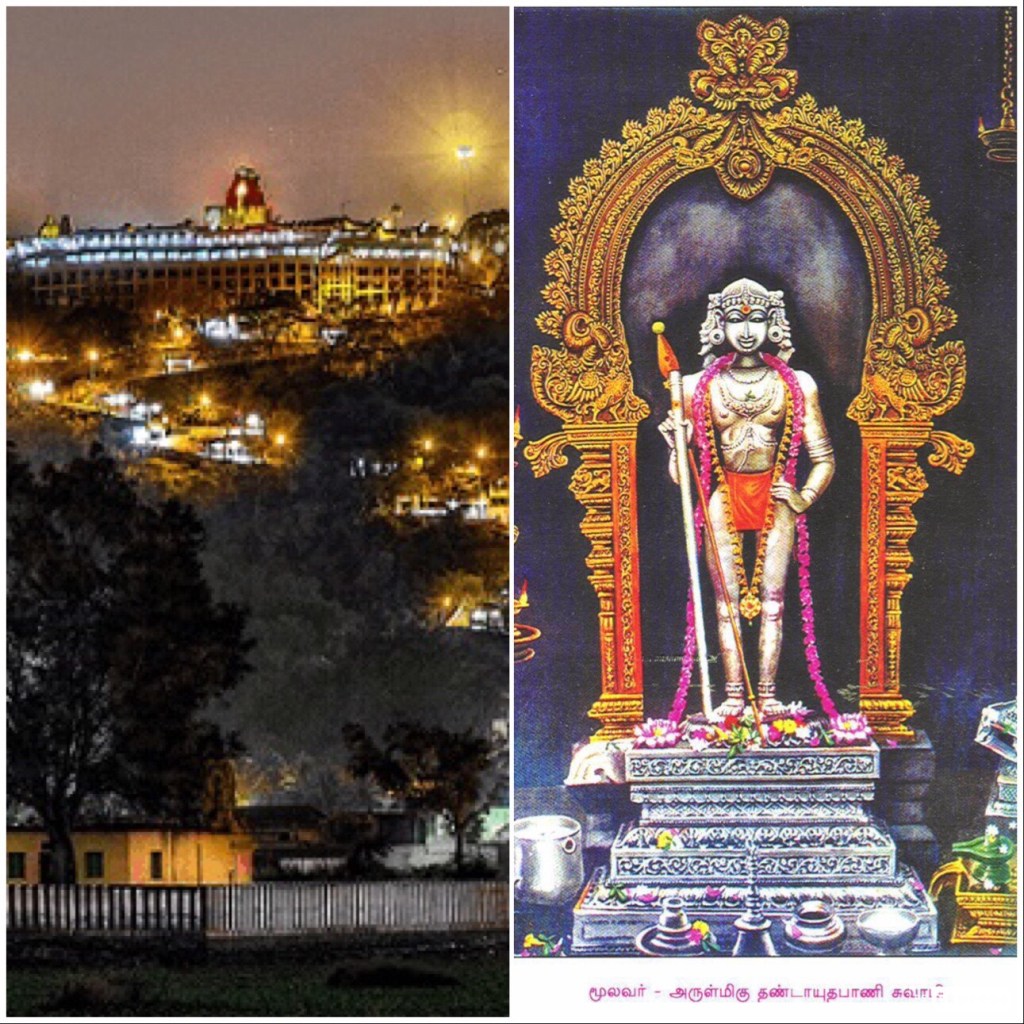
Here is one on Lord Subramanya. Lord Subramanya is also known as Dandapani. This Sloka is a Pancharathna Mala and has five verses.
I pray continuously Lord Dandapani, who destroys the cruel sins of the devotees; who wears earrings which makes the two cheeks glitter; who punishes the Asuras who are the enemies of the Devas.
I pray continuously Lord Dandapani, who is the son of the killer of Yama; who is the temple of mercy; who sports a matted hair decorated by the crescent moon and who is the representative (svarupa) of Lord Siva.
I pray continuously Lord Dandapani, who has a great luster similar to moon, the lord of stars, who is the enemy of Tharaka , who speedily grants the wealth sought by devotees, and who helps us to cross the deep sea of life cycles (samsara) like a boat .
I pray continuously Lord Dandapani, who destroys all the worries of the true devotees, who helps us to destroy our true enemies viz., anger and passion, and who is the one who helps us to reach his abode quickly.
I pray continuously Lord Dandapani, who is the destroyer of the Cupid and is handsome Himself, who is worshipped with hands folded by Lord Ram and Lakshman and who has tender and elegant looking form.
Around the Christmas period in the month Marghazhi (December 26th to be precise), we were travelling by road from Dindigul to Coimbatore via the holy place of Palani. We saw a continuous stream of people walking on barefoot all along the stretch of the highway that led to Palani. It was clearly an indication that the bhakti filled festival of Thaipoosam is not far away.
“Thaipoosam is an important festival observed by the Hindus of southern India during the Tamil month of Thai (January – February). Outside of India, it is celebrated mainly by the Tamil speaking community settled in Malaysia, Singapore, South Africa, Sri Lanka and elsewhere around the world. Thaipusam is dedicated to the Hindu god Murugan, the son of Shiva and Parvati. Murugan is also known as Karttikeya, Subrahmanya, Sanmukha, Shadanana, Skanda and Guha. It is believed that on this day, Goddess Parvati presented a lance to Lord Murugan to vanquish the demon army of Tarakasura and combat their evil deeds. Therefore, Thaipusam is a celebration of the victory of good over evil. Thaipusam is celebrated during the full moon in the Tamil month of Thai and commemorates the birthday of the Hindu deity Murugan.”
All along the drive I was thinking if I could relate this bhakti oriented activity with the Advaita Vedantic mindset that I have been focusing on over the last couple of years and come out with some learning that will be immensely satisfying. In other words, I need to link Guha (Bhakti) with Sankara (Advaita); the Manifest with the Unmanifest; the Son with the Father. Looks simple; but impossible without a Guru.
That thinking took me to another Guruguha, one of the trinity in Carnatic music world. Yes, Muthuswamy Dikshithar provided me, the link for relating Bhakti with Vedanta.
Oh mind, worship the form of Guruguhan. Give up the agony of the heart caused by illusion.When human birth has been obtained, attain the perfect unsurpassed bliss of the Supreme Being ( don’t waste the opportunity) He is SADASIVA, full of SATVAGUNA;All living beings are born out of Him as the result of the impact of AVIDYA. The universe with its TAMASIC qualities is again a manifestation of His greatness; He is TARAKESVARA and ANANDA BHAIRAVA. Prostrate on His feet ; Mediate on His name; Conquer the veil of illusion and Think of Him as your sole refuge.
Meaning in Tamil
பல்லவி
போற்றிடுவாய்மனமேகுருகுகன்வடிவம்தனையே
அகற்றிடுவாய்மாயைவிளைஇதயநோவதனையே
அனுபல்லவி
அரியமானிடப்பிறவியெடுத்தநீ,
அடைந்திடுநாடிஇறையருட்பேரின்பம்தனை
சரணம்
நற்குணப்பண்பின்வடிவானசதாசிவன்அவன்
அகஇருள் விளை உயிரின உருவகமூலம் அவன்
இருள்நிறை இவ்வண்டம்கடந்தபேரொளிஅவன்
காக்கும்கடவுளாம்ஆனந்தபைரவன்அவன்
மத்தியமகாலசாகித்யம்
குருகுகனின்பாதம்பணிந்துநாமம்துதித்து
இருள்மாயத்திரையகற்றி அடைக்கலம்அவன்
ஒருவனேஎனநினைந்து ….போற்றிடுவாய்மனமே
Understanding the Kriti
Right at the beginning of the Kriti (Pallavi), Muthuswamy Dikshithar relates Jiva, Jagat and Isvara through their manifestations Mind, Maya and Guha. He “straight away instructs the mind to strive for higher goals – “Oh mind!!(“rE mAnasa”) meditate on (“bhajarE”) guha, the form of guru and abandon (“tyajarE”) the delusionary (“mAya-maya”) sorrows and afflictions of the heart/mind (“hRttApam”). He straightaway equates a guru as a form of the Lord Himself and commands the mind to worship him and meditate on him.”
Continuing, Dikshithar in the anupallavi, says “Having obtained the human birth form, go,take the path and try to attain the unsurpassed bliss associated with the supreme consciousness” – a reference to the Isavasya Upanishad Slokas which outline the paths that one can pursue for understanding the “Atma Svaroopam”.
In the caraNam, dIkshitar describes the Lord as ” The form of everlasting consciousness (“sadASivaM”), the one endowed with (“sahita”) with qualities of (“guNOpAdhi”) satva. The one from whom all the living beings (“jIva”) are born (“udbhavam”) as a result of their own ignorance (“sva avidya”). His greatness (“vaibhavaM”) symbolises the truth (“tatvam”) that lies beyond this world (“viSva”) filled with tamasic qualities (“tAmasa yuta”). He is tArakEswara, the Lord who helps cross this ocean of samsara. He is the form of Anandabhairava, radiating ever-lasting bliss”. Again I am reminded of the Shanthi Sloka and the first Sloka of Isavasya Upanishad – Isavasyam idham sarvam.
In the madhyamakAla sAhityam, Dikshithar says “Worship (“natvA”) the feet (“caraNam”) of the auspicious preceptor (“shrI guru”). Chant and meditate on his name (“nAmasmaraNam”). Conquer (“jitvA”) the sheath/veil (“AvaraNam”) of delusion/desire (“mOha”). Surrender to him as the sole (“twadEka”) refuge (“SaraNam”).” Pray, meditate, get mind control, come out of ignorance, surrender and reach Sat Cit Ananda – the very process that takes you to your SELF and reveals that “Tat Tvam Asi” which is the essence of Vedanta.
Oh mind, worship the form of Guruguhan. Give up the agony of the heart caused by illusion.When human birth has been obtained, attain the perfect unsurpassed bliss of the Supreme Being ( don’t waste the opportunity) He is SADASIVA, full of SATVAGUNA;All living beings are born out of Him as the result of the impact of AVIDYA. The universe with its TAMASIC qualities is again a manifestation of His greatness; He is TARAKESVARA and ANANDA BHAIRAVA. Prostrate on His feet ; Mediate on His name; Conquer the veil of illusion and Think of Him as your sole refuge.
Meaning of the Sanskrit Words
पल्लवि
मानस – mind
गुरु गुह – Guru Guha – Lord Subramanya (also pen name of Dikshithar)
I am the slave forever of Lord Saravana, the handsome one holding the powerful spear as weapon and who showers wealth and grains
He is the one:
who is bathed with pitchers filled with the waters of Ganga, with very tender feet which are glorified in prose and poetry, worshipped by the nine planets led by Angaraka, with neither beginning nor middle nor end,immeasurable eminent one, who charms all the celestials beginning with Parvati(the universal mother), expert at shattering the sorrow caused by birth etc. delights the hearts of Parvati, Nandi, Nava-nandanas and other devotees. He is Guruguha
Comments:
• This Kriti is in the sixth Vibhakti
• “SRngAra SaktyAyudha dhara” translates to Singaravelan in Tamil, as the lord is known in the Sikkal temple
• The Nava-Nandanas or Nava-Veeras are the sons of the Nava-Shaktis born by the grace of Shiva, and are Subrahmanya’s brothers. The eldest of them is Veerabahu. They assist him in war.
Meaning of the Sanskrit Words
पल्लवि
शृङ्गार – handsome
शक्ति-आयुध – Spear (Vel in Tamil) as the weapon
धर – holding
शरवणस्य – Saravana
दासो-अहं – Servant, I am
अनिशं – for ever
धन धान्य – wealth and grains
प्रदस्य – giver
समष्टि चरणम्
गङ्गा अमृत – The Ganga River water
पूरित घट- Filled pot
अभिषेकस्य – the one who is bathed in
गद्य – prose
पद्य- poetry
आदि – etc
नुत – euologise/glorify
कोमळ-तर पदस्य – lotus like feet
अङ्गारक-आदि – Planet mars etc
नव ग्रह – nine planets
वन्दितस्य – worshipped
आदि मध्य-अन्त रहित- beginning, middle and end
अप्रमेय – immeay
वरस्य – eminent
जगद्-अम्बिका- the Goddess of the world – Parvati
आदि सकल देवता – and all celestials included
मोहित – charms
जनन-आदि खेद भञ्जन चतुर-तरस्य – the expert at shattering the sorrow caused by birth etc.
नग राज सुता – the consort of the king of serpents – i.e., consort of Siva viz. – Parvati
नन्दि-ईश – the God Nandi
नव नन्द-आदि – भक्त जन- all devitees including the the sons of the nine Shaktis of Siva
अन्तः-करण- minds
आनन्द – pleasing
गुरु गुहस्य – Guru Guha (signature name of the composer)
In the Tamil calendar (Solar based) of Kartigai (around mid November – mid December), the full moon day is divinely important. Two important events – the arrival of Lord Katikeya (Subramanya/Arumugam) and the manifestation of Lord Siva as an endless flame of light (even Lord Vishnu and Lord Brahma couldn’t find the start and the end of it in the three worlds). The lighting of the famous Deepam at the famous Hill at Thiruvannamalai happens on this day.
Today being that day, I decided to refine and rededicate two of my earlier blogs through an audio visual in the social media. Here are the links to the two videos.
அம்புலி கங்கை அணிந்த
அடிமுடி காணா இறைவனை,
அன்பர் மனங்கவர் அண்ணாமலையோனை,
அன்றே கண்டு ஆனந்தமதனை
அலை அலையாய்ப் பெற்ற,
ஆதி சங்கரனின் சிவ
ஆனந்த லகரி எனும் அருள் மறையும்,
ஆர்க்கும் அலைகள் ஆழ்கடல் தோன்றி அழிவதொப்ப,
அன்பரின் மாளா துயர் அழியும் அவனை அடைந்தால் என
அலைவாயிலில் ஆதி சங்கரன், அருளிய
சுற்றும் அரவு என பதம் அமைந்த சுபரமணிய புஜங்கம் தனையும்,
I meditate always upon Guruguhan, the son of Goddess Parvati whose six letter mantra is Sa ra va na bha va.
I meditate upon The dear son of Shiva (Marga-sahayeshwara), the one praised by Devas led by Vishnu, and other celestial beings, the one dazzling with a ruby(-studded) crown, the one who is venerated for the glory of his qualities
After presenting his worries, fears and apprehensions in the earlier verses, Sri Adi Sankara now directly appeals to Lord Subramanya that he depends on Him solely for mitigation of his problems & none else ( Verse 24). Sri Sankara then brings out the miraculous healing powers of the Sacred Ash (Vibhuti) presented as “Prasadam” in a leaf to the devotees (Verse 25). It is the firm belief of the devotees that applying the Sacred Ash (received in the leaf) over the affected areas of the body will result in significant mitigation.
A small write up about this leaf is presented at the end of this blog .
பக்திமிகு உன் துதிதனை தடுக்கும் என் மனம் உறை மாசினை
அறுத்தாட்கொள்வாய் விரைவினிலே உமை மைந்தா சண்முகனே!
Verse 25
अपस्मारकुष्टक्षयार्शः प्रमेह_
ज्वरोन्मादगुल्मादिरोगा महान्तः ।
पिशाचाश्च सर्वे भवत्पत्रभूतिं
विलोक्य क्षणात्तारकारे द्रवन्ते ॥२५॥
Apasmaara-Kusstta-Kssaya-Arshah Prameha_
Jvaro[a-U]nmaada-Gulma-Adi-Rogaa Mahaantah |
Pishaacaash-Ca Sarve Bhavat-Patra-Bhuutim
Vilokya Kssannaat-Taaraka-Are Dravante ||
வலிப்பு குஷ்டம் சயம் கபம் மூலம் குன்மம் ஜூரம் பிளவை எனும்
எல்லாப்பிணியுடன் வல்ல பூதபிசாசுகளும், இயலாமல்
எனைவிட்டு ஓடுவர் நில்லாது, அருளும் தாரகவதையோன்
எனைஆளும் முருகன் உன் இலைமடிதிருநீறு அணிந்தால்
पत्रभूतिं Patra-Bhuutim இலைமடிதிருநீறு Sacred Ash in leaf
Patra Vibhuti (Sacred Ash in a leaf)
‘Patra’ means leaf in Sanskrit. In Tiruchendur temple the Sacred Ash (vibhuti ) is kept on a leaf from the “Paneer Tree” ( Guettarda speciosa, colloquially called beach gardenia, or zebra wood, is a species of shrub in the family Rubiaceae) and offered as “prasadam” to the devotees.
The large oval-shaped leaves are 15–23 cm (6–9 in) long by 10–18 cm (4–7 in) wide. Dark green and smooth above with prominent paler veins, they are finely hairy underneath.
“ Now let us delineate on the miraculous healing power of patra bhuti.
The fragrance of this vibhuti is unique. We wonder whether the paneer leaf enhances the fragrance of Tiruchendur vibhuti. No matter what contributes, it is a fact that Tiruchendur vibhuti has the fragrance of divine grace.
After His victory over demon Surapadman and his army, Lord Murugan settled on the coast of Tiruchendur, shining and guiding like a lighthouse. The scriptures stand as paneer trees bearing testimony to His glory. So it is believed that the leaves of those trees have Vedic magical powers. Vibhuti contained in those leaves has miraculous healing power. The veins running across the leaves remind us of Lord Murugan’s twelve hands.
Sage Viswamitra suffered from severe dyspepsia, which he got for killing Tarakai through Lord Rama. Rama appeared in his dream and asked him to smear Chenthilandavan’s patra bhuti as atonement.
There was a remarkable incident in the life of Sri Adi Sankara which revealed the glory of patra bhuti. Abhinav Gupthar, who lost in the argument with Adi Sanakara cast a black magic spell on Adi Sankara which caused a chronic disease. Adi Sankara was staying in Gokarna in north Karnataka at that time. Lord Siva of Gokarna appeared in his dream and instructed him to go to Tiruchendur, the holy abode of HIs son Lord Muruga and get rid of his disease. On getting up he saw vibhuti, kept near him.As ordained by Kokarneswar he set off for Chendur. On reaching Chendur he took a dip in the sea and proceeded towards the shrine of Chenthilandavan. When he was praying fervently to Lord Muruga he saw the serpent, Adiseshan crawling towards the sanctum. At the same time he was blessed with the holy vision and words gushed out extemporaneously in bhujanga metre. In Sanskrit ‘bhujanga’ means snake. Bhujanga metre suggests a snake gliding along. He smeared his body with the patra bhuti prasadam and was soon cured of his disease.“
In the Verses 20-25 of Sri Subramanya Bhujangam, Adi Sankara brings out with full emotions, his personal worries, pains and difficulties. Here in this blog, Verses 20-23 are listed. While trying to understand the meaning of the verses, I was trying to recollect some of my interesting interactions with elders.
Irrespective of country, religion or gender, I have heard everyone say “I know that as a human being I have to die one day. All I want is to have a peaceful end. Without being a burden to anyone, I would like to live the rest of my life and reach the feet of Lord without prolonged illness”. Incidentally as a fellow senior citizen, my own view is precisely the same.
This 21st Century views of the elders, reinforces the sentiments that Sankara brought out in these Verses in the 8th Century, Sankara at his young age brings out the potential scenario that one faces in life at the time of death and seeks Divine interventions to ease one’s pains.
Needless to say that I was truly blank, speechless and emotional as I completed my work on these Verses and recollected the cool, calm and composed manner in which my own mother at her age of 94 and father at his age of 100, closed their eyes and faced the inevitable smilingly; while the former remained silent for 2 days before the end, the later even told me in the hospital bed 48 hours before the end, that he will reach the Lord’s feet in two days time!
அழிக்கவில்லை நீ அவனை, என் செய்வேன் எங்கு செல்வேன் நான்?
One can easily come out with an argument that Sankara wrote these verses out fear of his own death (due the acute distress he had due to the illness): a more insightful look at the verses will bring out clearly that Sankara brings out the fact the Lord will be there with you at the time of your end and there is no need to be afraid of the end.





 Prabhu's Ponder