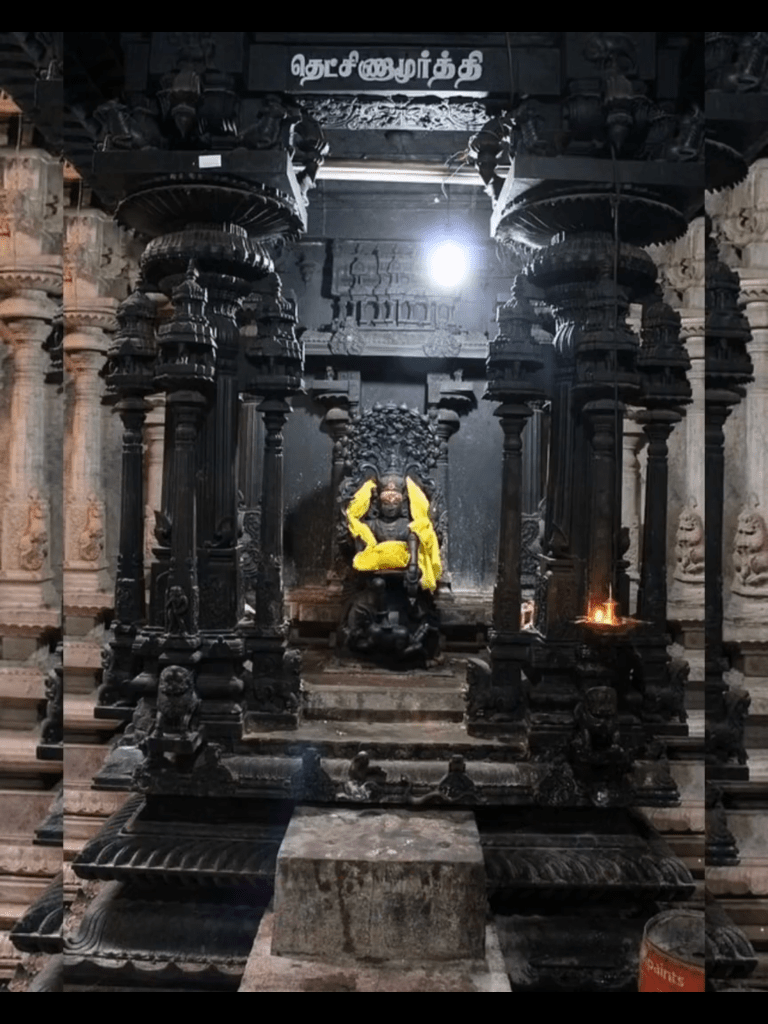
Dakshinamurthy Stothram – Sloka 9

We saw in the introductory blog, a broad perspective about Visvarupa of Brahman. For liberation and eternal Bliss, we need to understand formless Brahman. If we have to have a smooth process of switching over from a Brahman with a form to the formless Brahman, it is essential that we need to expand our vision and horizon and identify ourselves with everything that exists as the Ultimate Reality.

இதனையே பாரதியார் எளிய தமிழில்

காக்கை குருவி எங்கள் ஜாதி-நீள்
கடலும் மலையும் எங்கள் கூட்டம்;
நோக்குந் திசையெலாம் நாமன்றி வேறில்லை;
நோக்க நோக்கக் களியாட்டம்.

என உரைத்தார்.

In this Sloka, Adi Sankaracharya picks up 8 representative samples from the 36 tattvas (principles) of Brahman and presents an integrated form of Lord Siva.

He picks up 7 principles from the “jagat” which are conditioned experience of us from the total cosmic existence and our consciousness (jiva), the conditioner as the eight representative samples given below schematically.

Audio Link

https://www.dropbox.com/s/ucyhdzup0g1vxll/Sloka%209%20-%20Bhuurambhaamsy%20anala.mp3?dl=0

Sanskrit Sloka


भूरम्भांस्यनलोऽनिलोऽम्बरमहर्नाथो हिमांशु पुमान्
इत्याभाति चराचरात्मकमिदं यस्यैव मूर्त्यष्टकम्
नान्यत् किञ्चन विद्यते विमृशतां यस्मात्परस्माद्विभोः
तस्मै श्रीगुरुमूर्तये नम इदं श्रीदक्षिणामूर्तये ॥९॥

Meaning in Tamil

நிலம் நீர் நெருப்பு காற்று விண் பகலவன் மதி உயிரென

சலன அசலனமாய் நாலிரு வடிவாய் நீக்கமற

நிறை மெய்யெனும் பரம்பொருளின்றி வேறெதுவும்

இலையென ஆராய்ந்தறிந்து துதிக்கும் ஞானியர் காணும்

ஆதிஅந்தமிலா மோனநிலை ஆசானாம் அந்த அருள்மிகு

தக்ஷிணாமூர்த்தி  பொற்பாதம் பணிந்திடுவோம்

ஆதி சங்கரர்

Meaning in English:

Earth, Water, Fire, Air, Space, Sun, Moon and Jiva, are verily His (i.e., Ātman’s) eight manifestations shining within the moving and the non-moving forms. Apart from Him (i.e., Ātman) there cannot Exist anything; The Yogis who reflect (i.e., Meditate) within discover Him as the essence from which everything originates; discover Him as existing beyond everything as the Eternal Essence.
Salutations to Him, the personification of our Inner Guru who awakens this knowledge through His profound silence. Salutation to Sri Dakṣiṇāmurty.

Understanding the Sloka

Now look at the verse. The aṣṭamūrtis are enumerated in the first line as under:

भूरम्भांस्यनलोऽनिलोऽम्बरमहर्नाथो हिमांशु पुमान् इत्याभाति चराचरात्मकमिदं यस्यैव मूर्त्यष्टकम्

Bhuur-Ambhaamsy-Analo-[A]nilo-[A]mbaram-Aharnaatho Himaamshu Pumaan Ity[i]-Aabhaati Cara-Acara-[A]ātmakam-Idam Yasya-Eva Muurty[i]-Assttakam

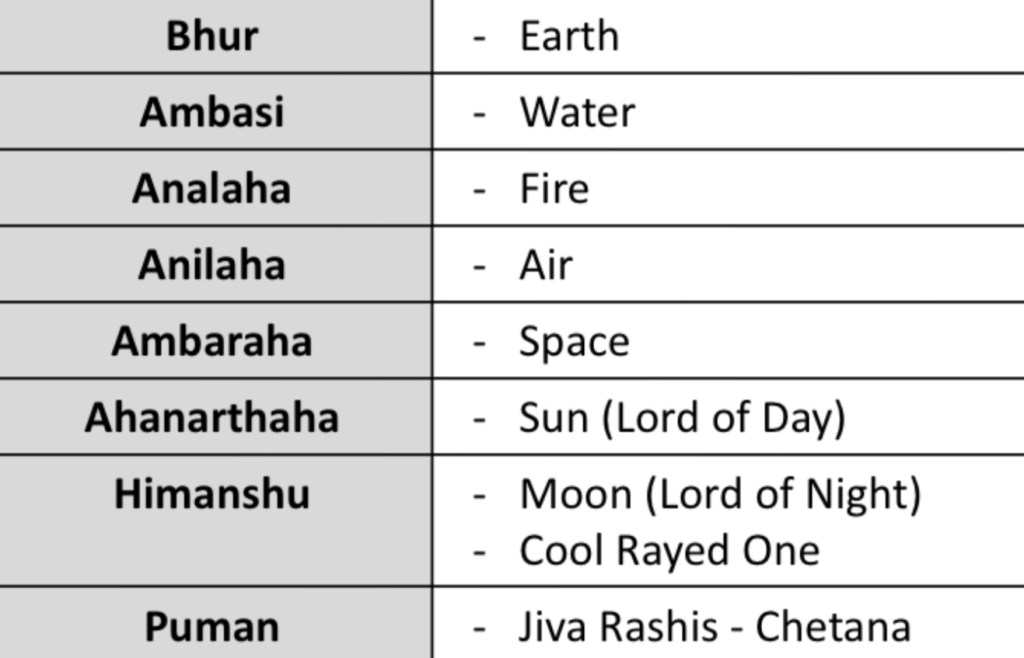
  1. first. bhūambāsi; भूः bhūḥ plus ambāmsi, bhūḥ means earth, ambāmsi means water; अनलः analaḥ means fire; अशनलः anilaḥ means air; अम्भरं ambharaṃ means space. Up to this is five elements; bhutani.
  2. Then अहनायतः aharnātaḥ means the Lord of the day; अहहः ahahaḥ means day, नातः nātaḥ means the Lord; who is the Lord of the day: who is responsible for the day to be the day. Sun rise alone brings the day, the Sun set takes away the day, therefore sun alone presides over the day, therefore it is अहनायतः aharnātaḥ; therefore aharnātaḥ means suryaha;
  3. Then himānśu; himā means cool; aṃśuhuḥ, means rays; beams of light, aṃśuhuḥ; himasu means cool rayed one; And what is that which has got cool rays? Moon; and therefore, himāṃśuhuḥ means chandra; and suryaha and chandraha stands for the entire boudika prapancha; आभाति (Aabhaati) = Shining, Blazing; so with this seven acetanā factors are over.
  4. Now comes 8th chetanā factor. What is that? पुमान् pumān. pumān represents all the जीवः jīvaḥrasis from the minutest micro oganisms to the biggest brahmaji, all of them, by पुमान् जीवः, चेतन जीवः इशत pumān jīvaḥ, cetana jīvaḥ iti;
  5. In this way, चराचरात्मकशमदं मूत्र्ष्टय कम् carācarātmakamidaṃ mūrtyaṣṭakam, these 8-fold factors, mūrtyaṣṭakam or the 8-fold facet consists of carācarātmakamidaṃ; includes both the चर प्रपन्ज cara prapanja; cara means the moving chetana as well as achara prapancha; the non-moving achetanām. mūrtyaṣṭakam; chetanaachetanātmakam mūrtyaṣṭakam; this whole cosmos; which is the śarīram, the very body of dakṣiṇāmūrti ; it is not one body sitting under a banyan tree; that dakṣiṇāmūrti is for worshipping or is an avatāraḥ; but the real dakṣiṇāmūrti has the whole carācarātmakamidaṃ prapancha, as the very mūrti, mūrti means very body. And that is why we name viśvarupaḥ. viśvarupaḥ in that expression; the word rupaḥ means śarīram; iśvarupaḥ means how to understand: viśvam śarīram yasya yasya saha, the Lord whose body is the whole universe. Since the whole universe is the body of the Lord, wherever I am turning, I am seeing the Lord alone; you will find the description of the viśvarupaḥ is the same for all deities; Ekaroopa description will vary from deity to deity. viśvarupaḥ description will not have any variation; and therefore, mūrtiaṣṭakam yasya; yasya means viśvarupaḥ dakṣiṇāmūrti; this is the eight-fold form of viśvarupaḥ dakṣiṇāmūrti .

And not only that; parasmat vibhoho, anyathat chinchana naasthi; There is nothing else in the creation; other than, or away from this viśvarupaḥ dakṣiṇāmūrti; परस्माहिभो parasmādvibho means viśvarupaḥ dakṣiṇāmūrti. So parām means absolutely, vibhuhu means all pervading; parasmādvibho means other than or different from the absolutely all-pervading dakṣiṇāmūrti, kiñcana na asti; there is nothing;

नान्यत् किञ्चन विद्यते विमृशतां यस्मात्परस्माद्विभोः Naanyat Kin.cana Vidyate Vimrshataam Yasmaat-Parasmaad-Vibhoh

You take your own body; body part will become the achetana part of the dakṣiṇāmūrti. Therefore you do not exist, away from the dakṣiṇāmūrti and therefore you cannot say, God and world; that is a delusion; so therefore there is no question of God and world; mistaken-God is world; rightly taken world is none other than God; or what is world for the deluded person is the Lord for the wise person; What is world for the deluded person is the Lord for this wise person And therefore he says vimṛśatāṃ; vimṛśatāṃ means for the thinking people, for the refined people, for the scripturally educated people; For the wise people. For the wise people; there is no world other than dakṣiṇāmūrti ;

Tasmai Sri gurumoorthaye, dakṣiṇāmūrthaye; to that dakṣiṇāmūrti, who happens to be my guru also; I offer my namaskarams.

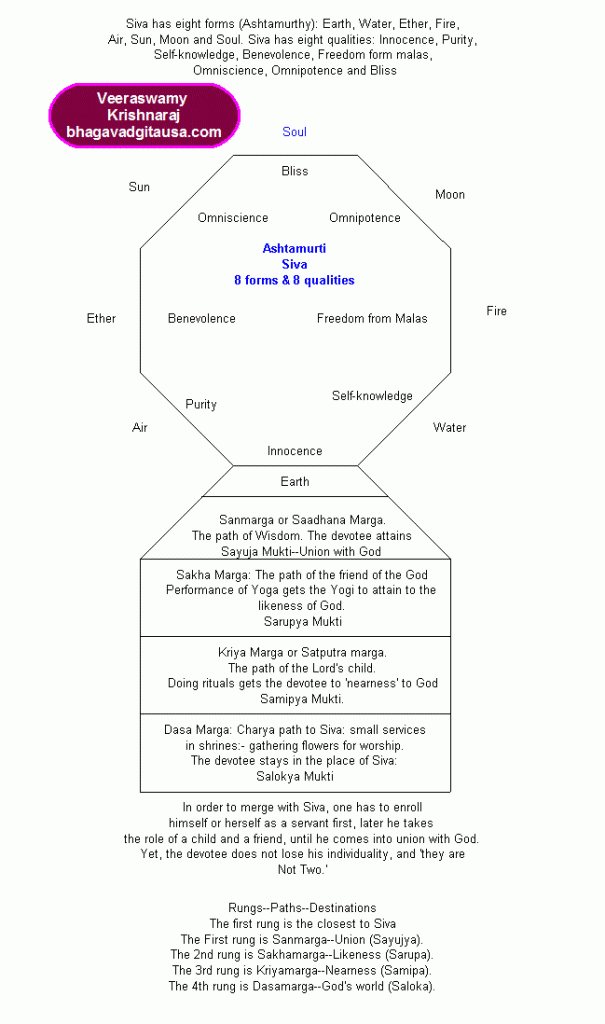
விஸ்வநாதனாகவும் விஸ்வாதீதனாகவும் இருப்பதுடன் உலகுயிர்கள் இயங்குதற்பொருட்டுச் சிவன் விஸ்வாந்தர்யாமியாகவும் உள்ளான். அந்நிலையைச் சித்தாந்த நூல்கள் அட்ட மூர்த்தம் என்று குறிப்பிடுகின்றன. ஐம்பெரும் பூதங்களான நிலம் நீர் நெருப்பு வளி ஆகாயம் என்பனவும் ஞாயிறு திங்கள் எனும் சுடர் இரண்டும் ஆன்மாவும் எனும் எட்டுமட்ட மூர்த்தமாம். இவற்றுள் முதலேழும் அசேதனம் (அறிவற்ற பொருள்); ஆன்மா ஒன்று சேதனம் (அறிவுடைப்பொருள்) இந்த எட்டினையும் இறைவன் தனது திருமேனியாகக் கொண்டு இயங்குகின்றான். இதனை,

“இருநிலனாய்த் தீயாகி நீருமாகி,

இயமனனாய் எறியுங் காற்று மாகி,

அருநிலைய திங்களாய் ஞாயி றாகி

ஆகாச மாயட்ட மூர்த்தியாகி ….

நிமிர்புன்சடையடிகள் நின்றவாறே”

அப்பர்

என்னும் அப்பர் பெருமானின் நின்றதிருத்தாண்டகமும்,

நிலம்நீர் நெருப்புயிர்

நீள்விசும்பு நிலாப்பகலோன்

புலனாய மைந்தனோ

டெண்வகையாய்ப் புணர்ந்து நின்றான்

உலகே ழெனத்திசை

பத்தெனத்தான் ஒருவனுமே

பலவாகி நின்றவா

தோணோக்கம் ஆடாமோ

திருவாசகம்

இறைவன் ஒருவனே, நிலமும், நீரும் தீயும், வாயுவும், பெரிய ஆகாயமும், சந்திரனும் சூரியனும், அறிவுருவாய ஆன்மாவும் என்னும் எட்டு வகைப் பொருள்களாய் அவற்றோடு கலந்து இருப்பவனாய் ஏழுலகங்களும் திக்குகள் பத்தும் ஆகப் பல பொருள்களாக நின்ற வகையைப் பாடி நாம் தோணோக்கம் ஆடுவோம் எனத் திருவாசகம் திருத்தோணோக்கம் (5) கூறின. சிவன் கலப்பினால் அவ்வப் பொருளாக இருத்தலை ஸ்ரீருத்திரமும் கூறிற்று. பொருள்களுடன் கலந்து ஒன்றி நின்று உயிர்களுக்கு உபகரித்தலை விவேக அறிவுடையவர் எவரும் அறிந்துய்யச் சிவம் இவ்வாறு அட்ட மூர்த்தமாக விளங்குகின்றது.

I found some interesting pictorials for this (courtesy: bhagvadgitausa.com).

Adi Sankara thus brings out clearly that our journey is to realise that all pervasive non-dual pure consciousness called Isvara.

Narayaneeyam – Dasakam 2 – Sloka 6 – A thing of beauty is a joy forever

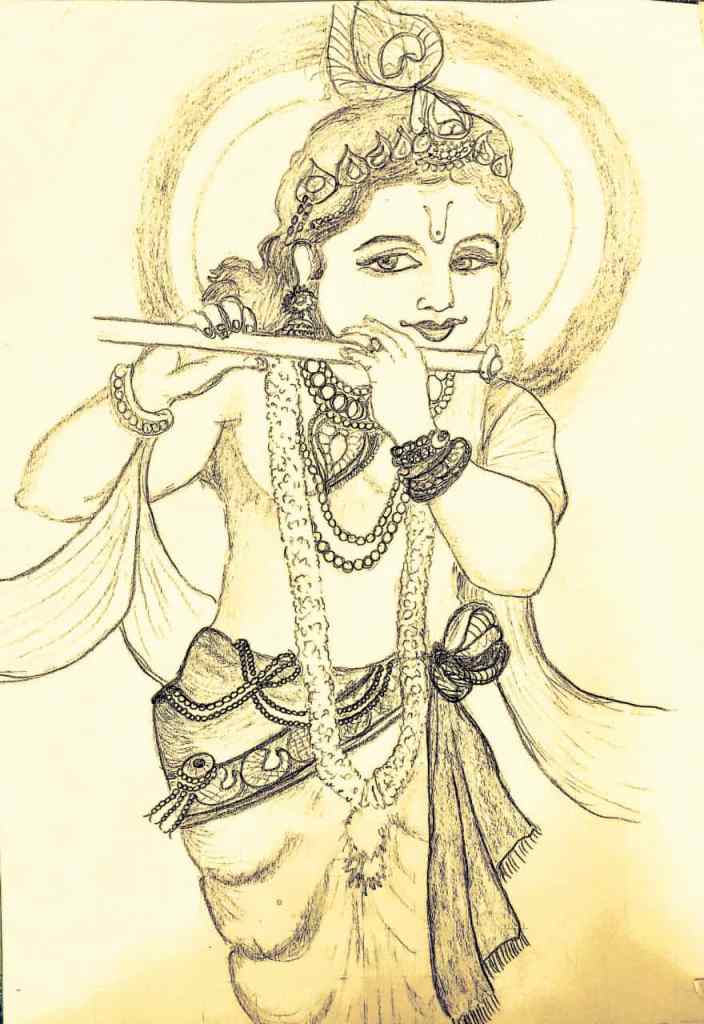
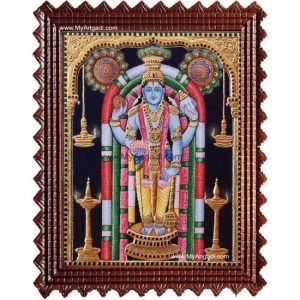
Lord Krishna’s beauty is beyond the imagination, infact all beauty arises from him only. As his name Krishna means ‘all attractive’ – means his beauty enchants everyone. In front of the beauty of Krishna everything fades and pales . Even the beauty we find in the world is only a spark of the transcendental captivating beauty of Lord Krishna , then how beautiful He, the source of all beauty will be . No wonder, the devotees who visit Guruvayur and see Him are in a state of Bliss and experience horripilation, says Bhattathri in this Sloka.

Audio Link

https://www.dropbox.com/s/dcekyjy56erscfx/Verse%202.6.mp3?dl=0

Sanskrit Verse

एवम्भूतमनोज्ञतानवसुधानिष्यन्दसन्दोहनं
त्वद्रूपं परचिद्रसायनमयं चेतोहरं शृण्वताम्
सद्यः प्रेरयते मतिं मदयते रोमाञ्चयत्यङ्गकं
व्यासिञ्चत्यपि शीतबाष्पविसरैरानन्दमूर्च्छोद्भवैः ॥६॥

English Transliteration

evaM bhuuta manOj~nataa navasudhaa niShyanda sandOhanaM

tvadruupaM parachidrasaayanamayaM chetOharaM shR^iNvataam |

sadyaH perarayate matiM madayate rOmaa~nchayatyangakaM

vyaasi~nchatyapi shiitabaaShpa visarairaanandamuurChOdbhavaiH ||6

Tamil Transliteration

ஏவம் பூ₄தமநோஜ்ஞதாநவஸுதா₄நிஷ்யந்த₃ஸந்தோ₃ஹநம்

த்வத்₃ரூபம் பரசித்₃ரஸாயநமயம் சேதோஹரம் ஶ்ருண்வதாம் |

ஸத்₃ய: ப்ரேரயதே மதிம் மத₃யதே ரோமாஞ்சயத்யங்க₃கம்

வ்யாஸிஞ்சத்யபி ஶீதவாஷ்பவிஸரைராநந்த₃மூர்சோ₂த்₃ப₄வை: || 6||

Meaning in Tamil

அமுது சொரியும் அழகுமிகு பேரின்பப்

பரம்பொருளாம் உன்னெழில் வடிவம்

அடியார்தம் மனம் கவர்ந்து மகிழ்வித்து,

ஆனந்தப் பரவசமுடன் மயிர்கூச்செரிய,

விழிதனிலே நீர்மல்கிப் பெருவெள்ளமென

அவர்தம் அங்கமெல்லாம் நனைத்தனையே,

அச்சுதனே ஆண்டவனே குருவாயூரப்பா 2.6

Meaning in English

O Lord! Thy captivating form which continuously showers pure nectar, which is itself the Supreme Bliss-Consciousness holds the minds of those who hear Thy glories. Their minds are immediately stimulated and filled with joy. They experience horripilation all over their body and are bathed in the cool tears produced from ecstasy of joy.

Meaning of the Sanskrit Words

एवम्भूतमनोज्ञतानवसुधानिष्यन्दसन्दोहनम् = एवं + भूत + मनोज्ञता + नव + सुधा + निष्यन्द + सन्दोहनम् =That (Your)+form + beauty(loveliness) + fresh (pure) + nectar + streaming (constantly flowing) + bestowing

त्वद्रूपम् = त्वत् + रूपं = Your form

परचिद्रसायनमयम् = पर + चित् + रसायनमयं = supreme + consciousness + mixture (combination)

चेतोहरम् = captivating the heart

शृण्वताम् = of those who (devotedly) hear (the recitals of accounts of Thy deeds)

सद्य: प्रेरयते = instantly/immediately + raise/stimulate/excite

मतिम् मदयते =  mind + delights/rejoice/enjoy heavenly bliss = fills the mind with joy (अत्यन्तं तोषयति)

रोमाञ्चयति = thrills/goosebumps

अङ्गकम् = limbs/body = देहम्

व्यासिञ्चत्यपि = व्यासिञ्चति + अपि = bathes also (their bodies)

शीतबाष्पविसरैः = शीत + बाष् + विसरै: = cold + tears + copious quantity = with the flood of cool tears

आनन्दमूर्च्छोद्भवैः = आनन्द + मूर्च्छा + उद्भवै: = joy + excited/increased+ produced = produced from ecstasy of joy

Dakshinamurthy Stothram- Sloka 9 – Introduction – The concept of Viswa Rupa.

Preamble- The journey so far:

For all of us, Life is nothing but the time spent between the maternity ward and crematorium on the “surface of a tiny rock-ball, rotating around a spherical fire in a tiny galaxy in an ever expanding galaxies ” loosely called as Earth, world, visvam, jagat etc. Tamil poet Kannadasan called the life as the time between between the drop of a water (semen) and the spark of fire lit. ஒரு துளி நீரில் ஜனனம் ஒரு துளி நெருப்பில் மரணம். இதனிடையில் தான் நம் வாழ்க்கையெனும் பயணம்.

In this “real” (or unreal?) world, all of us (none excluded) have one single goal – mitigating our pains and enhancing our pleasures. துன்பத்தைப் போக்கி இன்பத்தை அடைவதே நம் வாழ்வின் குறிக்கோள். Towards this we all carry out nonstop transactions within ourselves, with the world and of course with the “God” – the Unknown.

From a Vedantic perspective, life can be also stated as the journey. When we say “journey” we are not talking about a point to point or time to time journey. We are talking about a journey which is beyond the domain of time and space; beyond our sense and action organs. We are talking about a journey from avidya to vidya; from ignorance to enlightenment; a journey to understand the intricate relationships between the puzzling trio of Ishvara, Jiva and Jagat. Understanding this relationship called Isvara Jnana by the Seeker is the ultimate goal.

The first eight Slokas of Dakshinamurthy Stothram (some call it as Dakshinamurthy Ashtakam) provided us with the essence of this Vedantic perspective. It presented to us, the Vidya viz., knowledge of Atman, which is Pure Awareness, Changeless and unborn Ultimate Reality. We tried to understand that Vidya, the “atma jnanam” (Know Thyself) is an individual’s experiential learning about “atma isvara aikyam” under the able guidance of a Guru. All wisdom is born of spirit of self-enquiry. It dispels the non-understanding and the undivided intelligence shines in its own light. The wisdom has to arrive directly on the individual, no transmitted knowledge can be sufficient for the real enlightenment. Self is self-luminous. When consciousness becomes aware of itself, there manifests the Intelligence itself. That awareness is Vidya. Adi Sankara with the help of examples highlighted the purpose of our life.

The concept of Viswa Rupa:

Our culture is deep rooted in the spiritual ethos of each individual working towards his own ultimate liberation as a fundamental goal of life. This is the unique gift of Vedic philosophy to the world of spirituality. Ordinary mortals like us find it impossible to acquire this Vidya in our cycles of life (birth and death).

Our Vedic Rishis realised our plight and the fact that Brahman as creator or Supreme Consciousness is too abstract to follow and understand. Since everything in nature is God’s creation, so they simply connected the people with Brahman through an icon of personal choice of Ishta Deva as long as it remains only a symbolic representation of the Ultimate Reality; making it possible for all diversities to represent that single transcendental Reality.

This connection/attachment to the Ishta Deva turned into devotion and worship. A farmer may worship the plough, a fisherman his boat, people whatever god and goddesses they propitiate for their aspect of life related to them. God is there and so the happiness of life can be attained by His grace. The medium is not important, our spirit of surrender to Him and dedicated work for a noble cause is the way out to realise Him in the blissful heart.

Next, from the single idol of God (eka rupa), the rishis had to find ways to migrate us to the state of understanding Brahman, i.e., from an Idol to a formless, omnipresent eternal Ultimate Reality. This means that the focus of our actions should shift from “Eka Rupa” to “arupa”; from “saguna” to “nirguna”. For this purpose, the Rishis introduced an intermediate level, an “aneka rupa” called “Visva Rupa” as we progressed towards our goal. Based on the spiritual progress made, the Seeker is introduced to a form which encapsulates all that is perceivable in this universe and beyond.

The challenge next is how do you list out all that is perceivable. Vedic Philosophy found an answer for this question by identifying the principles (“tattva”) by which one could perceive. Different philosophies within our culture identified different number of “tattva”. For example, the Saivites identified 36 “tattvas”. (https://www.saivism.net/articles/tattvas.asp). இதனையே திருமூலரின் திருமந்திரத்திலும் காணலாம்.

முப்பதும் ஆறும் படிமுத்தி ஏணியாய்
ஒப்பிலா ஆனந்தத்து உள்ளொளி புக்கு
செப்ப அரிய சிவம்கண்டு, தான் தெளிந்து
அப்பரிசாக அமர்ந்திருந்தாரே.

திருமந்திரம்

முப்பத்தாறு தத்துவங்களையே முக்தியை அடைவிக்கும் சிறந்த ஏணியின் பல படிகளாக அமைத்துக் கொண்டு, ஒப்பில்லாத சிவானந்தத்தைத் தரும் ஒளியில் புகுந்து, சொல்வதற்கு அரிய சிவபெருமானைத் தரிசித்தவர்கள் அந்த சிவத் தன்மையை அடைந்து சிவமாகத் திகழ்வார்கள்.

The Rishis then presented the Visva Rupa of Brahman as a seamless integration of principles or tattvas on the “eka rupa” bringing out the “aneka rupa” of Brahman. If one studies the description of the Visva Rupa of Vishnu, Siva and Devi, one can understand that essentially they all are descriptions of the same tattvas, thus reinforcing the Advaita nature of the Brahman.

Adi Sankaracarya in Sloka 9 picks up representative samples from these tattvas and integrates it with Lord Siva, the Dakshinamurthy and presents to us for our understanding.

We will study this in our next blog.

Narayaneeyam – Daskam 2 – Sloka 5

Bhattathri continues his pun on Goddess Lakshmi by citing another reason for the “unstable” nature of Her when it comes to Her short stay at Her devotees’ place.

Audio Link

https://www.dropbox.com/s/j712bi2u5d01peu/Verse%202.5.mp3?dl=0

Sanskrit Verse

लक्ष्मीस्तावकरामणीयकहृतैवेयं परेष्वस्थिरेत्यस्मिन्नन्यदपि प्रमाणमधुना वक्ष्यामि लक्ष्मीपते ।

ये त्वद्ध्यानगुणानुकीर्तनरसासक्ता हि भक्ता जनास्तेष्वेषा वसति स्थिरैव दयितप्रस्तावदत्तादरा ॥५॥

English Transliteration

lakshmiistaavaka-raamaNiiyaka-hR^itaiveyaM pareShvasthiretyasminnanyadapi

pramaaNamadhunaa vakshyaami lakshmiipate |

ye tvaddhyaanaguNaanukiirtanarasaasaktaa hi bhaktaa janaasteShveShaa

vasati sthiraiva dayitaprastaavadattaadaraa ||

Tamil Transliteration

லக்ஷ்மீஸ்தாவகராமணீயகஹ்ருதைவேயம் பரேஷ்வஸ்தி₂ரே-

த்யஸ்மிந்நந்யத₃பி ப்ரமாணமது₄நா வக்ஷ்யாமி லக்ஷ்மீபதே |

யே த்வத்₃த்₄யாநகு₃ணாநுகீர்தநரஸாஸக்தா ஹி ப₄க்தா ஜநா-

ஸ்தேஷ்வேஷா வஸதி ஸ்தி₂ரைவ த₃யிதப்ரஸ்தாவத₃த்தாத₃ரா || 5||

Meaning in Tamil

உரைத்திடுவேன் இன்னுமொரு ஆதாரம்

உலகோரிடம் திருமகள் நிலையாததற்கு!

உன்னெழில் வயப்பட்டு எந்நேரமும் தன்

உயிர் நாதனின் நாமமுடன் புகழ் கேட்டு மகிழ,

உனை நாவார நாளும் பாடி துதித்து உருகிடும்

உன்னடியார் உள்ளம்தனில் உறுதியாக

உறைந்ததனாலன்றோ திருமகள்கொழுநனே !

Meaning in English

Oh Consort of Goddess Lakshmi, I will tell another reason to say,

That Goddess Lakshmi does not stay long with others,

That is because of her attractiveness to your pretty form,

For in the case of devotees of yours who are busy in meditating,

And singing about you, she is interested in hearing about,

The news of her darling and never leaves but stays with them. 2.5

Meaning of the Sanskrit Words

लक्ष्मीः – Oh Goddess Lakshmi

तावकरामणीयकहृता एव इयम् – तावक-रामणीयक हृता एव = your, beauty, fascinated/captivated, only, she = being thus captivated by Thy beauty only,

इयं परेषु अस्थिरा इति – she, is (committed to be in that position), unstable, in this manner/thus = परेषु अस्थिरा इति = she is unstable with others

अस्मिन् – in this respect

अन्यत् अपि प्रमाणम् – another proof also

अधुना – now/at present

वक्ष्यामि – I will state

लक्ष्मीपते – Oh consort of Goddess Lakshmi

ये त्वद्ध्यानगुणानुकीर्तनरसासक्ताः – ये त्वत्-ध्यान-गुण-अनुकीर्तन-रस-आस्क्ताः – those, your , meditate, virtue, singing, essence, devoted/strongly attached/engrossed = those who meditate and are always engrossed in singing Thy glory

हि भक्ताः जनाः – हि भक्ताः जनाः – = certainly (with) such devotees

तेषु एषा वसति स्थिरा एव – त= in those, she, stays, permanently/stable, always = with them she stays always

दयितप्रस्तावदत्तादरा – दयित–प्रस्ताव-दत्त-आदरा = beloved, (being), a song or hymn in praise, presented, respect/reverence/honour/praise = listening attentively to the praises of her beloved Lord

Dakshinamurthy Stothram Sloka 8 – காயப் பறவையின் ஒப்பனை கலந்த உறவுகள் – Illusionary Transactions of the Self

Preamble

We saw in the introductory blog earlier that this “jivatma” which was “relation less” and who is otherwise a witness “Saakshi” becomes related due to the influence of Maya, becomes an actor and the misery starts with transactions and continues till we know our true self through “atma gnanam”. Adi Sankara outlines a few relationships in this Sloka.

Audio Link

https://www.dropbox.com/s/mnp6fmu9ps0gip3/Sloka%208%20-%20Vishwam%20Pashyati%20Kaarya.mp3?dl=0

Sanskrit Sloka

विश्वं पश्यति कार्यकारणतया स्वस्वामिसम्बन्धतः
शिष्याचार्यतया तथैव पितृपुत्राद्यात्मना भेदतः ।
स्वप्ने जाग्रति वा य एष पुरुषो मायापरिभ्रामितः
तस्मै श्रीगुरुमूर्तये नम इदं श्रीदक्षिणामूर्तये ॥८॥

Meaning in Tamil

மாயையவள் வசப்பட்டு உழலும்,

காயமுறை சீவன், கனவிலும் நனவிலும்

காரிய காரண தன்மை கொண்டு,

உடையான் உடமை எனவும்

ஆசான் சீடன் எனவும்,

அருமை தந்தை மகன் எனவும்,

பேதம் பல ஈண்டு

பாடிடுமே பல உறவு கொண்டு.

மோடம் போட்ட அப்பேதம் நீக்கி,

காயமுறை பற்றிலா அச்சீவனே

மாசிலா முழுநிறை இறையென உரை,

ஆதிஅந்தமிலா மோனநிலை ஆசானாம் அந்த அருள்மிகு

தக்ஷிணாமூர்த்தி பொற்பாதம் பணிந்திடுவோம்

Meaning in English

The differentiations that we see in the world as Cause and Effect, as possessor-possession, relations as the disciple & teacher, and also as father & son etc., are all differentiations within the one Ātman. In Dream or Waking state, He, the One Puruṣaḥ  is always present, and (as if) Maya wanders over Him and gives rise to all these Differentiations. Salutations to Him, the Personification of Our Inner Guru Who Awakens This Knowledge through His Profound Silence; Salutation to Sri Dakṣiṇāmurty.

Understanding the Sloka

The Role of Maya

Let us look at the third line first: य एष पुरुषो मायापरिभ्रामितः eṣa: puruṣaḥ māyā paribhrāmitaḥ;

1. It means – This ordinary person in the world; even though he may be worldly-educated; who is spiritually and scripturally-illiterate; he is māyā paribhrāmitaḥ; { माया māyā means avidya परिभ्रम Paribhrama = Moving To and Fro, Wander/drift}. மாயையவள் வசப்பட்டு உழலும்

2. This means that he is confused because of avidya and therefore instead of taking original sākṣi svarūpam as himself; he mistakes the incidental-ahaṃkāra as himself drifts into the attached-self called ahaṃkāra I; I am going to certainly become a relative individual, related to the external world; asaṃga sākṣi (the unattached witness), becomes ससंगजीवः sasaṃga jīvaḥ (attached soul); relationless pure sākṣi-I, have now drifted and fallen down to a relative samsāri-I;

3. This means that every relation is causing one form of samsāra or the other. There is no relationship which is free from problems; In fact, if there is a relationship free from problems then the end of the relationship will cause problems; If there is a relationship so beautiful and wonderful and enjoyable, even that wonderful relationship becomes a problem when the relationship has to end because of time/kala, because of prarabdhaḥ, because of any reason. Therefore, a problem free relationship is an oxymoron; it does not exist. And therefore, the sākṣi-I, who is ever free, now has fallen down to ahaṃkāra-I, with varieties of problems.

Relationship

A few empirical relationships are enumerated in the sloka i.e., कार्यकारण संबन्धः kāryakāraṇa saṃbandhaḥ; cause and effect relationship. I-as-jīvātma, the ahaṃkāra-I, am a product of my own past karma; my prarabdhaḥ karma has given me this personality; this physical, this emotional, this social personality. Therefore, I am never a free person; I am tossed up and down; by my own karma; thus I am a कार्मय kāryam; my karma becomes the kāranam for my situation.

Let us see a few of the cause & effect relationships.

  • 1. स्वस्वामिसम्बन्धतः svasvāmisambandhataḥ; स्वस्वामि (Svasvaami = Possessor and Possession & सम्बन्ध (Sambandha = Relation). That means as ahaṃkāra, I am related to several possession, as owner-owned sambandhataḥ; and ownership means, there is a yogakṣema samsāra. yogakṣema samsāra means acquisition-maintenance samsāra is there like. உடையவன் – உடமை உறவுகள்.
  • 2-3. शिष्याचार्यतया तथैव पितृपुत्राद्यात्मना भेदतः Shissya-[A]acaarya-Tayaa Tatha-Eva Pitr-Putraady[i]-Aātmanaa Bhedatah |
  • शिष्याचार्यतया śiṣyacāryatayā; means guru-śiṣya sambandhataḥ. ஆசான் – சீடன் உறவுகள்.
  • पितृपुत्राद्यात्मना pitṛ putrādyātmanā; means father son adhi etc. தந்தை – மகன் உறவுகள் (சொந்தம் எப்போதும் தொடர் கதைதான், முடிவே இல்லாதது)

So, the māyā paribhrāmitaḥ puruṣaḥ drifted and fallen down from a relationless pure sākṣi-I, to relative samsāri-I in either of the स्वप्ने जाग्रति वा Svapne Jaagrati Vaa avastha, whether it is waking state or dream state, gets into the inevitable saṃsāraḥ.

Of course we get some interval and relief in सुषुशि अवस्त suṣupti avasta, wherein we do not worry about the family members and society and other problems, and unfortunately we cannot sleep for long. The sleep is only for a few hours and older we grow, lesser the sleep also. Therefore even sleep is not a permanent solution; even death is not a permanent solution, because punarjanma brings in punaha sambandhataḥ and samsāra; And therefore this jeevathama, puruṣaḥ ha; who is really a sākṣi; that purushā, māyā paribhrāmitaḥ; as is confused because of māya.

Relationships & The Birds on a Tree – A Vedic Perspective

Talking about the relationships of the unattached witness and the attached soul, the famous two birds in one tree Sloka from the Upanishads provides the classic conceptual framework for this Sloka in Dakshinamurthy Stothram.

The Shruti, says: By Mâyâ, Siva became two birds always associated together; the One, clinging to the one unborn (Prakriti), became many as it were (vide Mundaka- Up. 3-1; Yâjniki-Upanishad 12–5).

The Mundakopanishad Sloka 3.1.1:

द्वा सुपर्णा सयुजा सखाया समानं वृक्षं परिषस्वजाते ।

तयोरन्यः पिप्पलं स्वाद्वत्त्यनश्नन्नन्यो अभिचाकशीति ॥ १ ॥

dvā suparṇā sayujā sakhāyā samānaṃ vṛkṣaṃ pariṣasvajāte |

tayoranyaḥ pippalaṃ svādvattyanaśnannanyo abhicākaśīti || 1 ||

Meaning of the Sanskrit Words – “Suparnau – two of good motion or two birds; (the “word Suparna” being used to denote birds generally); Sayujau – inseparable, constant, companions; Sakhayau – bearing the same name or having the same cause of manifestation. Being thus, they are perched on the same tree (‘same,’ because the place where they could be perceived is identical). ‘Tree’ here means ‘body;’ because of the similitude in their liability to be cut or destroyed. Parishasvajate – embraced; just as birds go to the same tree for tasting the fruits.

Two birds bound to each other in close friendship are perched on a tree. While one of the birds is busy consuming the fruits of the tree with great relish, the other seems to be in a state of detached equanimity just looking at its compatriot. The tree in this example represents the body. The bird busying itself with the material pleasures accorded by the tree is the ‘Jivātma’ (individual soul), that has an inextricable identification with the body and mind. Such an identification makes the Jivātma both the ‘karta’ (doer) and the ‘Bhokta’ (enjoyer). The observing bird on the other hand, represents the ‘Paramātma’ (the Supreme Self). The Supreme Self remains uninfluenced and untainted by any material pleasures and possessions and remains a still tranquil witness.

Adi Śankarācārya in his commentary to this sloka says – This tree as is well known has its root high up (i.e., in Brahman) and its branches (prana, etc..) downwards; it is transitory and has its source in Avyakta (maya). It is named Kshetra and in it hang the fruits of the karma of all living things. It is here that the Ātman, conditioned in the subtle body to which ignorance, desire, karma and their unmanifested tendencies cling, and Isvara are perched like birds. Of these two so perched, one, i.e., kshetrajna occupying the subtle body eats, i.e., tastes from ignorance the fruits of karma marked as happiness and misery, palatable in many and diversified modes; the other, i.e., tbe lord, eternal, pure, intelligent and free in his nature, omniscient and conditioned by maya does not eat; for, He is the director of both the eater and the thing eaten, by the fact of His mere existence as the eternal witness (of all); not tasting, he merely looks on; for, his mere witnessing is direction, as in the case of a king.”

The Way Forward

Swami Dayananda Saraswathi in his lecture says that in all but one relationship listed by Adi Sankara , the “bedha”- the difference between the Atma and the Maya influenced Jeeva continues to exist eternally irrespective of the transactions. The guru-shishya relationship even though is a cause and effect relationship is the only one which ensures that the influence of Maya is nullified and the true nature of Jeeva is revealed through the guru’s teachings. In that state, even the guru-shishya relationship withers away and so too the other relationships.

And that is perhaps why Adi Śankarācārya says, even this confused jeeva is really none other than that dakṣiṇāmūrti only and therefore he says Tasmai Shri Gurumoorthaye; To that Gurumoorthy, dakṣiṇāmūrti , my namaskaraha.

அன்பு சிவமிரண் டென்ப ரறிவிலார்

அன்பே சிவமாவ தாரு மறிகிலார்

அன்பே சிவமாவ தாரு மறிந்தபின்

அன்பே சிவமா யமர்ந்திருந் தாரே

என்ற திருமந்திரப் பண் இக்கருத்தினைப் பிரதிபலிக்கிறது.

This, in essence is the eighth Sloka.

Long distance shoot using iPhone from the balcony of my house.

Narayaneeyam – Dasakam 2 – Slokam 4

Happy Deepavali.

We attribute success, wealth and prosperity to the presence of Goddess Lakshmi in our homes. She represents riches that every individual wishes to attain in his/her materialistic life. She is the epitome of opulence and her existence helps us achieve glorious heights. However, it isn’t easy to retain her. It is often said that Goddess Lakshmi does not stay in a family beyond three generations (max). Bhattathri quotes this characteristics of Goddess Lakshmi as a pun in this and the next Sloka to drive home the point that as a consort Goddess Lakshmi is more focussed on Lord Vishnu whose avatar is Lord Krishna of Guruvayur.

Audio Link

https://www.dropbox.com/s/v6slnrbyr1yqh84/Verse%202.4.mp3?dl=0

Sanskrit Verse

तत्तादृङ्मधुरात्मकं तव वपुः सम्प्राप्य सम्पन्मयी

सा देवी परमोत्सुका चिरतरं नास्ते स्वभक्तेष्वपि

तेनास्या बत कष्टमच्युत विभो त्वद्रूपमानोज्ञक

प्रेमस्थैर्यमयादचापलबलाच्चापल्यवार्तोदभूत् ॥४॥

English Transliteration

tattaadR^i~N madhuraatmakaM tava vapuH sampraapya sampanmayii

saa devii paramOtsukaa chirataraM naaste svabhakteShvapi |

tenaasyaa bata kaShTamachyuta vibhO tvadruupamaanOj~nakapremasthairyamayaadachaapala

balaat chaapalya vaartOdabhuut.

Tamil Transliteration

தத்தாத்₃ருங்மது₄ராத்மகம் தவ வபு: ஸம்ப்ராப்ய ஸம்பந்மயீ

ஸா தே₃வீ பரமோத்ஸுகா சிரதரம் நாஸ்தே ஸ்வப₄க்தேஷ்வபி |

தேநாஸ்யா ப₃த கஷ்டமச்யுத விபோ₄ த்வத்₃ரூபமாநோஜ்ஞக –

ப்ரேமஸ்தை₂ர்யமயாத₃சாபலப₃லாச்சாபல்யவார்தோத₃பூ₄த் || 4||

Meaning in Tamil

ஈடிலா எழில்மிகு உன்னுடன் இணைந்து ,

அளவிலாப்பற்று உன்மீது அடைந்ததனால் திருமகள்,

இச்சை களைந்தனளே அடியார் இல்லம்தனில் நிலைத்திட !

அழிவிலா உன் வடிவினில், நிலையான, திடமான

ஆழ் பற்றுடை அச்செயலால், நிலையற்றோள் எனும் பெயர்

அடைந்தனளே அடியாரிடம் அன்னையவள்

அவமன்றோ அப்பெயர் அவளுக்கு

அடுக்கிடுமோ இது திருமகள்கொழுநனே ! 2.4

Meaning in English

After getting and reaching your wonderful and greatly joyous form, that goddess who controls wealth, has become more attached to you. And because of this even after reaching the homes of her great devotees, She does not prefer to stay there. Oh Lord, Oh changeless one, due to the deep, strong and stable love towards your very pretty form, She has got a very bad name as the unstable one. Is it not uncharitable? 2.4

Meaning of the Sanskrit Words

तत्तादृङ्मधुरात्मकम् – तत्-तादृक्-मधुर-आत्मकम् = (of) that such incomparable beauty
तव वपुः – Your form /figure
सम्प्राप्य – having arrived (married)
सम्पन्मयी – endowed with (prosperity and auspiciousness)
सा देवी – that Devi (Lakshmi)
परमोत्सुका – परम-उत्सुका = (who) became very much attached (to Thee)
चिरतरम् – for a very long time
न आस्ते – doesn’t dwell/stay
स्वभक्तेषु अपि – स्व भक्तेषु अपि – her own, devotees, even (even with her own devotees)
तेन अस्याः – so/because,
बत कष्टम् – alas, difficult
अच्युत – imperishable
विभो – Lord
त्वद्रूपमानोज्ञकप्रेमस्थैर्यमयात् = त्वत्-रूप-मानोज्ञक-प्रेम-स्थैर्यमयात् = Your, form, beauty, love, unwavering/ stable = because of the unwavering love for the enchanting beauty of Your form
अचापलबलात् = अचापल-बलात् = firm/unwavering, power
because of the power of (her) firm (love for Thee)
चापल्यवार्ता = चापल्य-वार्ता = as fickle (goddess), News/the reputation
उदभूत् – has risen

Manku Thimmanna Kagga – DVG

Today is November 1, 2021. Sixty six years ago on this day, dreams of Sri. Aluru Venkata Rao and others came true with the formation of Mysore State based on the majority language spoken in the region, Kannada. Seventeen years later, the state was renamed as Karnataka.

What could be a more befitting occasion for me on this wonderful day, than to take up one of the monumental works of Devanahalli Venkataramanaiah Gundappa affectionately known as DVG, the Doyen of Kannada Language for my detailed study. If I could try to understand that epic and express that in my mother tongue Tamil, that would be the icing on the cake for my efforts to understand the classical languages of India.

Yes! I have taken up the Epic by DVG – Manku Thimmanna Kagga for my study. My current knowledge of this wonderful language is limited to only “understanding and speaking to a fair degree of comfort” and I start my journey here like I do in other fields as a toddler.

So the “condicio sine qua non” for the readers is exactly the same as that of my other adventures viz., “pardon me for my ignorance and consider my deficiencies and faults as the learning process of a toddler”.

My sincere thanks to VedaBrahmaShri BR Prabhakar ji for presenting me the translation in the form of a book and a friend in the social media @GunduHuDuGa for helping this toddler to gain confidence and proceed further. My sincere Pranaam 🙏 and thanks to them.

The Prayer

Like all the Epics in our culture, DVG starts the Kagga with a three verses section where he wants us to understand and surrender to that Unknowable Ultimate Reality and Principle called Vishnu, the Creator.

We will begin our study with the Prayer.

Here is the Prayer in the form of a video. The video has both Kannada and Tamil Verses.

Video Link

Dakshinamurthy Stothram – Sloka 8 – ஒப்பனை கலந்த உறவுகள் – Illusionary Transactions

ஒப்பனை கலந்த உறவுப் பரிமாற்றங்கள் – Illusionary Relational Transactions – An illustration

Preamble:

In the 7th verse, Śankarācārya pointed out that aham or “I am” alone is inherent in and through all the states of experience and therefore that I am or sat chit ātma alone must be taken as the real I. And since all the other states are subject to arrival and departure, he should be taken as my real nature; I am Satcidātma. And relevant to every particular state, I take the attribute to myself; like the youthful-I, youth-I; old-I, waker-I, etc.; even those attributes should not be taken as an integral part of I; because even the attributes are subject to arrival and departure, which means the attributeless-I alone is the ātma and this attributeless-I alone is called Sakshi. On the other hand, if I take the incidental attributes also as my intrinsic nature, then I mistake myself as an attributed-I, which is called ahaṃkāra. So, because of ignorance when I add attributes to myself it is called ahaṃkāra; through wisdom when I see the attribute as distinct from me, then I am called Sakshi. So, the difference between ahaṃkāra and साक्षि sākṣi is caused by ignorance and wisdom; in ignorance attributes are added; I am ahaṃkāra. In wisdom attributes are not added; I am sākṣi. This was the content of the teaching of the 7th verse

Maya – ஒப்பனை – An overview

Now in the 8th verse; Adi Śankarācārya says unfortunately most people are in a state of ignorance; and therefore they do not own up the sākṣi-I, and therefore they remain the empirical ahaṃkāra-I.

Two questions arises immediately –

  • 1. “How come? Why are most of us ignorant?”.
  • 2. The moment I become empirical ahaṃkāra, what happens?

For this we should try and understand the concept of Maya (Illusion). The subject of “Maya” is Vedantic Student’s delight. So much literature is available on the subject. However for our study, we will take the verses given in Sureshwaracharya’s Mānasollāsa (text and translated by Alladi Mahadeva Sastry first in 1899).

The excerpts reproduced here are from Mānasollāsa.

Puranas say that Rahu and Ketu** are, respectively, the head and the trunk of one Rakshasa’s body severed into two; so that, when one speaks of the head of Rahu, we cannot suppose that the head exists distinct from Rahu. The two are, in fact, one. Similarly when Paramesvara is spoken of as the cause of the universe, we should not understand that the universe is distinct from Paramesvara. There is only one existence, namely, Paramesvara. That Isvara amuses Himself assuming, of His own accord, the forms of worshipper and the worshipped, of teacher and disciple, of master and servant, and so on. He who is a son with reference to his father is himself the father with reference to his son; one alone, indeed, is imagined in various ways according to mere words. Therefore, on investigating supreme truth, we find that the Light alone exists. False (mithyâ) indeed is all notion of difference in Ātman, caused as it is by Mâyâ. All our mundane experience is a display of Mâyâ. Like unto suṣupti, Mâyâ is nullified by knowledge of Ātman. The name ‘mâya’ is given to an appearance which cannot be accounted for. It is not non-existent, because it appears; neither is it existent, because it is nullified. It is not distinct from the Light, as the dark shadow is distinct from the sun. Neither is it identical with the Light because it is insentient. Nor can it be both distinct from and identical with the Light, because it is a contradiction in terms. Or, Maya may be compared to the shadow which conceals the sun from the view of those who are blind by day. Here the sun’s light itself appears to be a shadow; and the shadow, therefore, has no distinct existence from the light. It is not said to be made up of parts, because no parts caused it. Neither is it devoid of parts, since in the effects it is made up of parts. This harlot of a Mâyâ, appearing only so long as not scrutinised, does deceive the Ātman by her false affectations of coquetry.

Mānasollāsa Chapter 8 Slokas 5-16

(** – Ref: Introduction to Sloka 6 for the story about Rahu & Ketu from the Puranas).

கண்ணன், மம மாயா என்றும் தைவீ மாயா என்றும் இந்த மாயையைப் பற்றிக் குறிப்பிடுகிறான். மம என்றால் என்னுடைய என்றும் தைவீ என்றால் தெய்வீகமான என்றும் பொருள்படும்.

ஏஷா என்றும் மாயைக்கு ஒரு அடைமொழி கொடுக்கிறான். அதாவது புலன்களால் உணரக் கூடியது. கண்களால் காணவும், செவிகளால் கேட்கவும், சருமத்தால் உணரவும், மனதால் புரிந்துகொள்ளக் கூடியதுமான மாயை. ஆக, மாயையின் வடிவில் உனக்கு எந்நேரமும் நான் காட்சியளித்துக் கொண்டுதான் இருக்கிறேன் என்று கண்ணன் நமக்கு உறுதி கூறுவதாக இதைப் புரிந்துகொள்ள வேண்டும்.என்னை வெளிப்படுத்திக்கொள்ளாத பிரம்மமாக இருக்கையில், நானே மாயையாக இருக்கிறேன் என்றும் கண்ணன் கீதையில் தெளிவாகவே குறிப்பிடுகிறான். அவனே மாயையாய் நம்மை மருள வைக்கிறான்.

இருள்நீங்கி இன்பம் பயக்கும் மருள்நீங்கி

மாசுஅறு காட்சி யவர்க்கு

என்று திருக்குறளில், மெய் உணர்தல் அதிகாரத்தில், திருவள்ளுவர் கூறியது என் நினைவிற்கு வருகிறது.

So the answer to the first question is clear. We are ignorant thanks to Maya. Now the second question.

Relations and Transactions – உறவுகளும் பரிமாற்றங்களும்

The moment I become empirical ahaṃkāra, I cannot avoid relationships with the relevant world. So the “relationless” Atma becomes “related” or “relationed”. It is a never ending story of relationships.

நானாக நானில்லை, ஏனெனில்

மாயையவள் தரும் ஒப்பனையிட்டு

நானெனும் உள்ளொளி மறைந்து

நானெனும் உறவுகள் மலர்ந்தன – பின்

நானெனும் பொய்யை நானே

நடத்தினேன் உறவுகளுடனே !

அந்த உறவுகள் ஒரு தொடர் கதை; அந்த ஒப்பனை கலந்த உறவுகள் எத்துனை எத்துனை ! இவ்வுறவெனும் உலகத்தில் வரவொன்றும் இல்லாததால் வறுமையின் வாரிசாகி வாசலோடு துரத்தபடுகிறோம். ஒப்பனையைக் கலைத்து உள்ளிருக்கும் மெய்ப்பொருளை உணர்ந்தால் நிலையான வீடுபேறு. இதுவே இப்பண்ணின் சாரம்.

இப் பண்ணில் எடுத்துக் காட்டாக ஓரிரு உறவுகளை ஆதி சங்கரர் விவரிக்கிறார். அவைதனை அடுத்த பதிவில் காண்போம்.

What all relationships? Plenty.

A few examples are discussed in the Sloka which we will see subsequently. What essentially happens is that this “jivatma” which was “relation less” and who is otherwise a witness “Saakshi” becomes related and the misery starts with transactions and continues till we know our true self through “atma gnanam”.

With this understanding let us get into the Sloka in the next blog.

Dakshinamurthy Stothram – Sloka 7 – அறிவு அறிவாக அறி

We saw in the introductory blog that the experience of the self is not a simple act of knowing but it is a complex act of re-knowing. When recognition of self occurs, the limited consciousness merges with the supreme consciousness. Tirumūlar compares this to space merging with space and light merging with light. Let us now see in this Sloka about this recognition – when, where and how do we re-cognise this Self.

Audio Link

https://www.dropbox.com/s/eayzudvymbtchde/Sloka%207%20-%20Balyyadisupi%20jaagrad.mp3?dl=0

Sanskrit Sloka


बाल्यादिष्वपि जाग्रदादिषु तथा सर्वास्ववस्थास्वपि
व्यावृत्तास्वनुवर्तमानमहमित्यन्तः स्फुरन्तं सदा ।
स्वात्मानं प्रकटीकरोति भजतां यो मुद्रयाभद्रया
तस्मै श्रीगुरुमूर्तये नम इदं श्रीदक्षिणामूर्तये ॥७॥

Meaning in Tamil

இடைநிலையாய் பாலன் இளையன் விருத்தனென உடலிருந்தும்

அடையும் அறுபாதி அவத்தையும்* தொடர்விலாதெனினும் – அதனுள்

இடையிலா தொடராய் சுயநேருணர்வாய் அனைத்து நிலைதனிலும் உள்ளுறை

ஆதியும் அந்தமும் அருட்பரம்பொருளெனும் ஆன்மாவை அறியும் ஆற்றல்தனை

அமைதியின் வடிவாய் கரவழி மோனமுத்திரை காட்டி நாடுவோர்கு கற்பிக்கும்

ஆதிஅந்தமிலா மோனநிலை ஆசானாம் அந்த அருள்மிகு

தக்ஷிணாமூர்த்தி பொற்பாதம் பணிந்திடுவோம்

(*அறுபாதி அவத்தை – ஆன்மாவின் மூன்று நிலைகள் –

விழிப்பு, கனவு, ஆழ் உறக்கம்)

Meaning in English:

During boyhood and other stages of life (Youth, Old age etc), during waking and other states (Dreaming, Deep Sleep, Turiya etc) and similarly in all conditions the Ātman always shines as the “I” within, free from all conditions but at the same time present in all conditions. The Inner Guru awakens this Knowledge of One’s Own Ātman to those who surrender to Him; this Knowledge is represented by the auspicious Cin-Mudra. Salutations to Him, the Personification of Our Inner Guru Who Awakens This Knowledge through His Profound Silence; Salutation to Sri Dakṣiṇāmurty.

Understanding the Sloka:

1.      अन्त: स्फुरन्तं सदा स्वात्मानं Antah Sphurantam Sadaa
Sva-[A]ātmaanam  – आत्मानुभवः सदा अन्तः स्फुरन्तं

Where is Ātma experienced?  Self is experienced by me. ātma, the real Self, is always experienced by me. It is ever-evident to myself; And when is the self-experienced? Sada spurantaṃ. It is ever-experienced. And where is it experienced? अन्तः स्फुरन्तं antaḥ spurantaṃ. Within the body-mind-complex, within the enclosure of body-mind-complex, it is ever-experienced. (आत्मानुभवः ātmānubhavaḥ is a सदा अन्तः स्फुरन्तं sada antaḥ sphurantaṃ;  sada – always; antah – inside/internal; spurantaṃ meaning shining, experienced, evident, accessible, recognisable, is spurantaṃ).

And how do we refer to that experience?  Every experience is identified through an expression. When I experience an object let us say a clock, I invent an expression to refer that experience; I say that it is a clock. What is that expression for ātma? This ever-experienced ātma, is referred to me by me as Aham – Aham iti. It is ever experienced in the form of I-am; I-am; I-am;

When do we experience?  “I-am’ experience is there continuously.  Throughout the waking state, “I-am” continues; the ātma is experienced as I am, during the dream state; even during the sleep state, “I am” continues. You do not verbalise during sleep; but that experience is verbalised after waking; “I am” experience is present in sleep, but it is verbalised, vocalised only in the waking state; verbalisation is later, but the experience is there; even during sleep. Therefore I-am, I-am, I-am, this continuously experienced I am is ātma.

From this Adi Śankarācārya conveys a very important thing, ātmā experience or ātmānubhavaḥ is continuously present; ātmānubhavaḥ is continuously present for everyone, all the time. And therefore, we should remember ātmānubhavaḥ is not a particular experience happening at a particular time. You cannot say I had ātmānubhavaḥ in meditation. Then you are making ātmānubhavaḥ an event in time. Adi Śankarācārya negates that by using the word सदा sadā. So ātmānubhavaḥ is not an event in time and therefore it does not require a process to make it an event in time. An event in time happens because of an effort, because of a process. Śankarā says ātmānubhavaḥ is not an event; which happens in time through a process or through an effort of any individual or individuals. Therefore, we should never say; I am working for ātmānubhavaḥ. This is one explanation of ātma.

2.      व्यावृत्तास्वनुवर्तमानमहमित्यन्तः (Vyaavrttaasu-AnuVartamaanam-Aham-Iti-Antah) बाल्यादिष्वपि जाग्रदादिषु तथा सर्वास्ववस्थास्वपि bālyādiṣvapi jāgradādiṣu tathā sarvāsvavasthāsvapi.

This ever-experienced ātma is anuvartamānam, is continuously-present, anuvartha means to continuously present, to inhere, to permeate, to inform, anuvarthamānam; this ātma is continuously-present. When? In and through. In and through what? vyāvṛttāsu avāstāsu, vyāvṛttām means discontinuous, anuvartham means continuous, and avāstā means states/stages, So ātma is continuously present in and through the discontinuous-avāstās.

The word avāstā, if you take the life as a whole, the word avāstā means the stages of life and they are classified as four in our śātrās. There are four avāstās or stages of life, if you take life as a whole. And what are those avāstās? bālyam, kaumāram, yauvanam, vārdakyam; bālyam is childhood state, kaumāram means boyhood state; or stage; and yauvanam is youth stage; and vārdakyam means old-age stage. Thus, four avāstās are there. bālyadishu avāstāshu, in and through the four discontinous stages of life, like childhood etc. ātma is continuously present. How? I am a child, I am a boy, I am a youth; I am old; When child word is used, boy word is not there; when I say boy, youth word is not there; When I say old, youth, boy is not there. Child, boy, youth, old, there are anuvartam or vyāvṛttam, these four; they are vyāvṛttam means, mutually-exclusive-discontinous stages-of-life; but even though these stages are mutually exclusive; even though these stages are discontinuous, what is continuous? I am, I am, I am. That “I am” refers to the ātma.

And not only these four stages of life. If you take a particular day of your life, instead of taking the whole life, if you take a particular day, in the context of a day, avāstās are called states of experience, and they are classified into three. If you take life; four stages; if you take day; three states; four stages are called avāstās; three states are also called avāstās. One is taking a segment of life called a day, another taking the whole life. And what are the three states of experience? Adi Śankarācārya says जाग्रदाददषु jāgradādiṣu when we say jāgradādiṣu avāstāsu, we should translate as states of experience. And there also “I am waker”, “I am dreamer” and “I am sleeper”; wakerhood-state, dreamerhood and sleeperhood; They are vyāvṛttam or anuvrutham? They are vyāvṛttam, which means they are mutually exclusive, and they are discontinuous states. But in and through the discontinous states, what is common, “I am”, “I am”, that “I am”, and that continuous”I am” experience is ātmanubhavaha;

3.   प्रकटीकरोति भजतां – Prakattii-Karoti Bhajataam

Here Śankarā talks about the knowledge that the Guru is teaching – the knowledge about the attributeless ever present and ever experienced ātma. Because they are floating and march pasting, this exclusion of attributes, and seeing the ever experienced continuous I-am as ātma is called ātma jnanam. Seeing the attributeless I-am as the ātma is called ātmajnanam. And therefore, ātma jnanam is not a new experience; but it is a new perception of the ever experienced I, excluding the attributes. And this ātma, the ātma, which is separated from attributes, प्रकटीकरोशत prakaṭīkaroti, is taught by the guru. Guru does not give a new experience. Guru does not ask the disciple to work for a new experience, Guru teaches the student to reshuffle; reclassify the available experience. You say “I am”, but do not include any attribute.

In Nirvana Satakam, Śankarā Says ,

नमे द्वेष रागौ, नमे लोभः मोहौः

मदौ नैव मे नैव मात्सर्य भावः

न धमॊ नचाथॊ, न कामॊ न मॊक्षः

शचदानन्दरूप शिवॊहम् शिवॊहम

Include the attribute; I am the empirical-ahaṃkāra; exclude the attribute, I am absolute-ātma. And therefore, the difference between ahaṃkāra and ātma is only in my reclassified-perception. That is why we say ātma-jnanam is a cognitive-change; a perspective-change, with regard to myself. And what is that change? Earlier when I was saying “I am” it was along with anger; along with desire; I included them; now I have learnt to exclude them. And the moment l learn how to exclude them; I can happily claim I am Brahman. Inclusive of attributes, as ahaṃkāra, I cannot claim I am Brahman. Exclusive of atttributes, as Aham, I can claim I am Brahman; I have not become Brahman; but I have claimed the Brahman that I was, I am, and I ever will be. And it is this new perspective which is the teaching of the guru.

Therefore, Adi Adi Śankarācāryacharya says: स्वात्मानं svātmānaṃ; this attributeless-I, this reclassified-I, the guru प्रकटीकरोशत; prakaṭīkaroti means reveals, teaches, instructs; to whom? भजतां bhajatāṃ, to the seekers who are willing for the new-look “I”. Who are willing for the new-look “I”; there is no change in the eye; in the look or perspective there is a new perspective; that I prakaṭīkaroti bhajatāṃ; bhajatāṃ means śiṣyānām (the seekers).

4. यो मुद्रयाभद्रया – Yo Mudrayaa Bhadrayaa

Now, Śankarā explains as to how the Guru transfers this knowledge to the Seekers. And how does he reveal? Two methods, by verbal and non-verbal communication. So, all the body gestures are non-verbal communication. That non-verbal communication is called badraya mudraya; bhadraḥ means auspicious, mudraḥ means hand gestures. The blessed symbol here referred to is variously named as follows:

  1. Cinmudra, the symbol of consciousness;
    1. Vyakhya-mudra, the symbol of exposition;
    1. Tarka-mudra, the symbol of investigation;
    1. Jnana-mudra, the symbol of wisdom.

It consists of a circle formed by joining the thumb and the index-finger at their tips. Through the auspicious hand gesture, called cinmudraḥ – karakalita cinmudra ānandarūpam.

We saw in the dhyāna slokaḥ; the index finger (let us call it the I – am-finger). With this I-am-finger only we attach attributes and point out “you are different, I am different ” meaning that we attach sthula, sukshma and karana sareera attributes through this finger.

And once I separate the “I am” from the attributes, then it can touch the thumb which refers absolute Brahmanhood; separate from the attributes, “I acquire”, I accomplish the status of absolute-brahmanhood. The relative I itself is the absolute-I, when it is freed from attributes. I plus attributes is relative-I, ahaṃkāra; I minus attributes am the absolute-I; ātma. This is what Dakshinamurthy conveys.

The CinMudra is also extensively quoted in several Tamil “Saiva Siddhanta” works. Here is one from Kanda Puranam and Tiruvanaika Puranam

சைவத்தில் சின்முத்திரை கந்தபுராணத்தில் விளக்கப்பட்டுள்ளது. உமையம்மை இமய அரசன் வேண்டுகோளுக் கிரங்கி அவனுக்கு மகளாக இறைவன் அனுப்பப் பிரிந்தவுடன் , இறைவன் தனியே இருந்தனன். அப்பொழுது வேதம் முழுதும் கற்றுணர்ந்த சனகாதி முனிவர் இறைவனிடம் வந்து,” ஐயனே!கடல் போல விரிந்த பொருட்பரப்புள்ள வேதங்களைக் கற்றும் மனம் அடங்காமல், நள்ளிரவில்சூறாவளிக் காற்றடிக்க எழும் அலைகள் மோதித் தாக்க அலைப்புண்ட கப்பல் போல மனம் ஒருநிலைப்படாமல் கலங்கினோம். இந்தக் கலக்கம் நீங்க அருளுவாயாக” என்று இரந்தனர். இறைவன் அந்தமில் ஆகமத்தின் அரும்பொருள் மூன்றும் (சரியை, கிரியை, யோகம்) கூறினன். முனிவரர்கள் மனம் அடங்கும் ‘ஞானபோதகம்’ போதி என்றனர். இறைவன் அது சொல்லத்தக்கதன்று; இப்பரிசினால் இருத்தல் கண்டீர் எனக் கூறி,

“உரத்திர் சீர்கொள் கரதல மொன்று சேர்த்தி மோனமுத் திரையைக் காட்டி, ஒருகணம் செயலொன் றின்றி யோகுசெய் வாரி னுற்றான்”

கந்தபுராணம்

மோனமுத்திரை என்றது, சின்முத்திரையை. சின்முத்திரை உணர்த்தும் பொருள்யாது?

கட்டைவிரல் சிவபரம்பொருளைக் குறிக்கும் . சுட்டுவிரல் உயிரைக் குறிக்கும் சுட்டுவிரலுடன் ஒட்டிய நடுவிரல் உயிருடன் இணைந்த ஆணவமலத்தையும் மோதிரவிரல் மாயாமலத்தையும் சுண்டுவிரல் கன்மமலத்தையும் குறிக்கும். சுட்டுவிரல் மற்றைய மூன்று விரல்களையும் விட்டு விலகிப் பெருவிரலின் அடியினைப் பொருந்தி நிற்றல், உயிர் , மும்மலங்களையும் நீத்துச் சிவனின் தாளிணையில் படிந்து நிற்றல் முத்தி என்பதைக் குறிக்கும். இதனை,

“மும்மலம் வேறுபட் டொழிய மொய்த்துயிர்

அம்மலர்த் தாள்நிழல் அடங்கும் உண்மையைக்

கைம்மலர்க் காட்சியில் கதுவ நல்கிய

செம்மலை யலதுஉளம் சிந்தி யாதரோ.”

திருவானைக்காப் புராணம் – வரங்கொள்படலம்.

என உணர்த்திற்று.

5.   तस्मै श्रीगुरुमूर्तये नम इदं श्रीदक्षिणामूर्तयेTasmai Shrii-Guru-Muurtaye Nama Idam Shrii-Dakssinnaamuurtaye

To that Guru, who gives me the knowledge of the attributeless-I, who teaches me to have a new perspective, without looking for a new experience, that teacher I prostrate; Tasmai. Gurumurthaye; śrī dakṣiṇāmūrtaye; who is none other than dakṣiṇāmūrti idaṃ namaha; my prostrations.

This is the seventh verse.

Narayaneeyam – Daskam 2 – Sloka 3

The name Krishna means all attractive. He is also God and possesses the opulence of beauty in full. Physical bodies always have faults not least of which the fact that they will age, get sick and die. Sri Krishna has a body full of eternality (sat), knowledge (cid) and bliss (ananda). He is incomparable.

अधरं मधुरं वदनं मधुरं नयनं मधुरं हसितं मधुरं ।
हृदयं मधुरं गमनं मधुरं मधुराधिपते रखिलं मधुरं ॥१॥

“Adharam Madhuram Vadanam Madhuram
Nayanam Madhuram, Hasitham Maduram,
Hrudhayam Madhuram, Gamanam Maduram,
Madhuradhipather Akhilam Madhuram”.

This is what Bhattathri experienced at Guruvayur temple and describes the incomparable features of the Lord in this Sloka.

Audio Link

https://www.dropbox.com/s/mqarn9gbey37t02/Verse%202.3.mp3?dl=0

Sanskrit Verse

यत्त्रैलोक्यमहीयसोऽपि महितं सम्मोहनं मोहनात्

कान्तं कान्तिनिधानतोऽपि मधुरं माधुर्यधुर्यादपि

सौन्दर्योत्तरतोऽपि सुन्दरतरं त्वद्रूपमाश्चर्यतोऽ

प्याश्चर्यं भुवने कस्य कुतुकं पुष्णाति विष्णो विभो ॥३॥

English Transliteration

yatttrailOkyamahiiyasO(a)pi mahitaM sammOhanaM mOhanaat

kaantaM kaantinidhaanatO(a)pi madhuraM maadhuryadhuryaadapi |

saundaryOttaratO(a)pi sundarataraM tvadruupamaashcharyatO(a)-

pyaashcharyaM bhuvane na kasya kutukaM puShNaati viShNO vibhO ||

Tamil Transliteration

யத் த்ரைலோக்ய மஹீய ஸோபி மஹிதம் சம்மோஹனம் மோஹனாத்

கான்தம் கான்தி னிதான தோபிமதுரம் மாதுர்ய துர்யாதபி

சௌந்தர் யோத்தர தோபி சுந்தரதரம் த்வத்ருபமாசர்யதோ

ப்யாஷ்சர்யம் புவனே னகஸ்ய குதுகம் புஷ்னாதி விஷ்னோ விபோ

Meaning in Tamil

மூவுலகில் உறைந்திடும் உயர்வினும் பேருயர்வாய்

வனப்பினும் பேர் வனப்பாய், இனிதினும் பேரினிதாய்

ஒளியிலும் பேரொளியாய், எழிலினும் பேரெழிலாய்

வியப்பினும் பேர் வியப்பாய் விளங்கும் உன் வடிவு கண்டு

பரவச நிலை உயராதோர் எவர் தான் உளரோ

நீக்கமற நிறை திருமாலே உன் அடிபணிந்தேனே 2.3

Meaning in English

Oh Vishnu, Oh Lord, who in this world would not be enchanted by your form, which is superior to, what is considered to be the greatest in all the three worlds, more charming than the most charming, more brilliant than the most brilliant even, sweeter than the sweetest even, more beautiful than even the most beautiful and which is the wonder of wonders in this world.

Meaning of the Sanskrit Words

यत्-त्रैलोक्य-महीयसः अपि महितम् = that which is superior to (what is considered to be) the greatest in all the three worlds

मोहनात् सम्मोहनम् – more charming than the most charming

कान्ति-निधानतः अपि कान्तम् = more brilliant than the most brilliant even

माधुर्य-धुर्यात् अपि मधुरम् = sweeter than the sweetest even

सौन्दर्य-उत्तरतः अपि सुन्दरतरम् = more beautiful than even the most beautiful

त्वत्-रूपम् = Thy form,

आश्चर्यतः अपि आश्चर्यम् = (which is) the wonder of wonders

भुवने = in this world

न कस्य कुतुकं पुष्णाति = (is there any one) whose desire/entrancement (to Thee) is not aroused(enhanced/flourished)

विष्णो विभो = O All Pervading Lord Vishnu!