This Hindu festival celebrating the birth of Lord Surya (the Sun God) and the onset of spring. Known as Surya Jayanti or Arogya Saptami, it marks the sun turning its seven-horse chariot toward the northern hemisphere (Uttarayana), symbolizing light over darkness and the start of warmer, longer days.
Vividly remember going around the bushes in the village and plucking leaves with the flowers (called Calotropis gigantea – “Erukkalam Poo” ) and having early morning bath with the leaves and flowers on the head and pouring water over it. It is called Arunodaya Snan.
Here is my maiden venture into Carnatic Music Composition. As a novice, I have no clue about this genre and its notations. All I heard was the song Muruga Muruga sung by the legendary sisters Radha & Jayalakshmi in the raga Saveri.
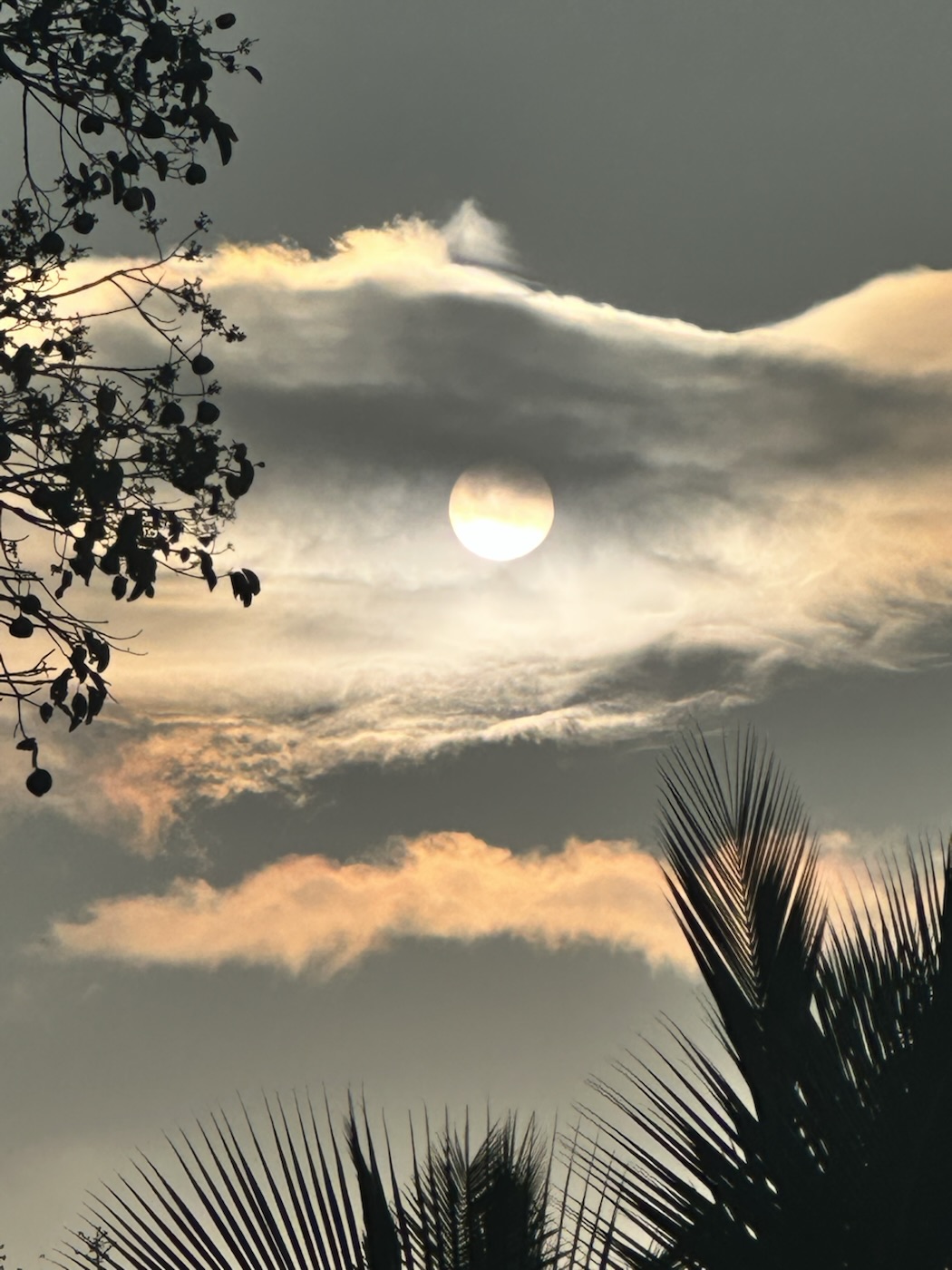
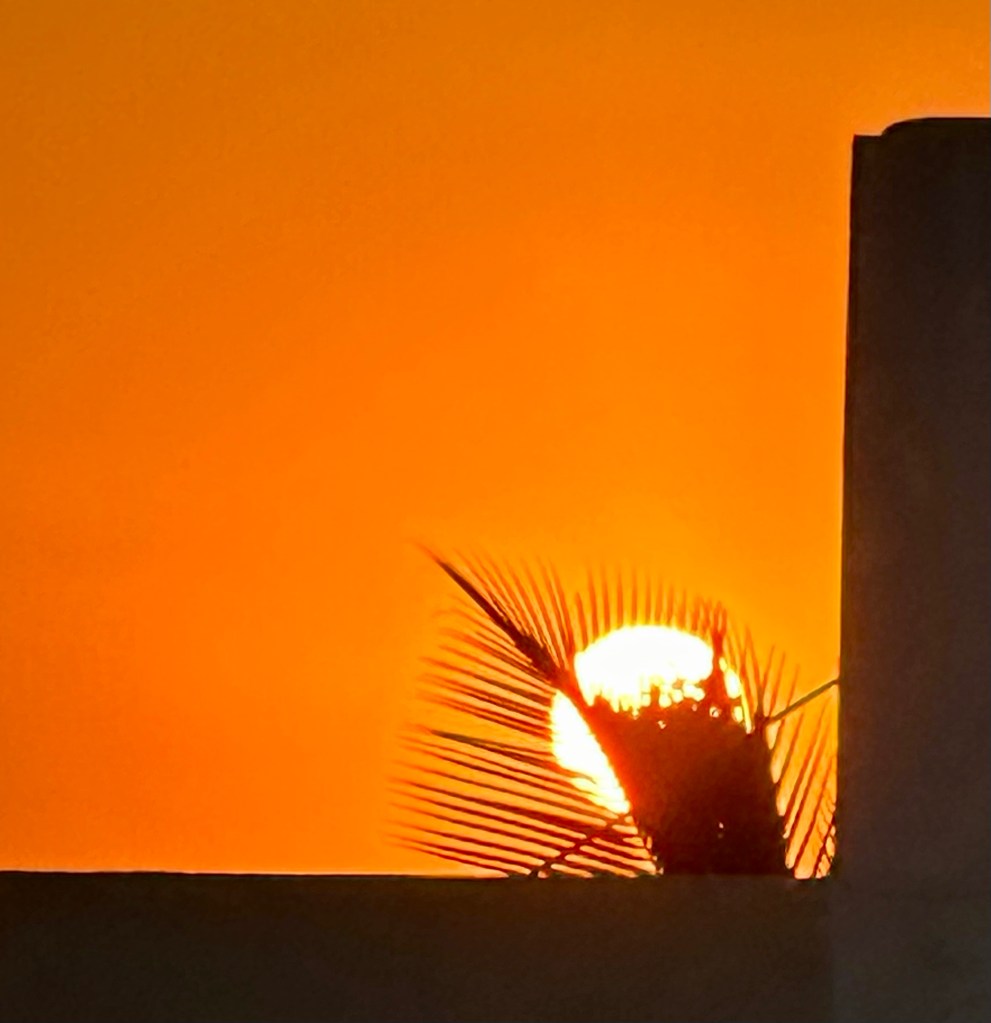
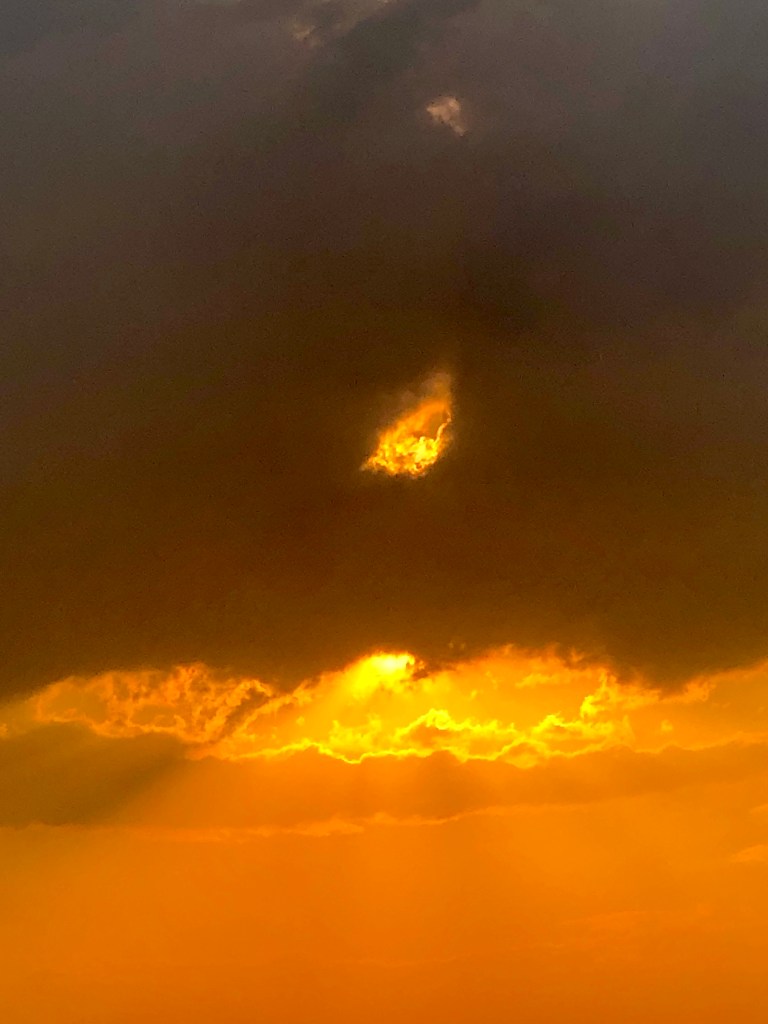
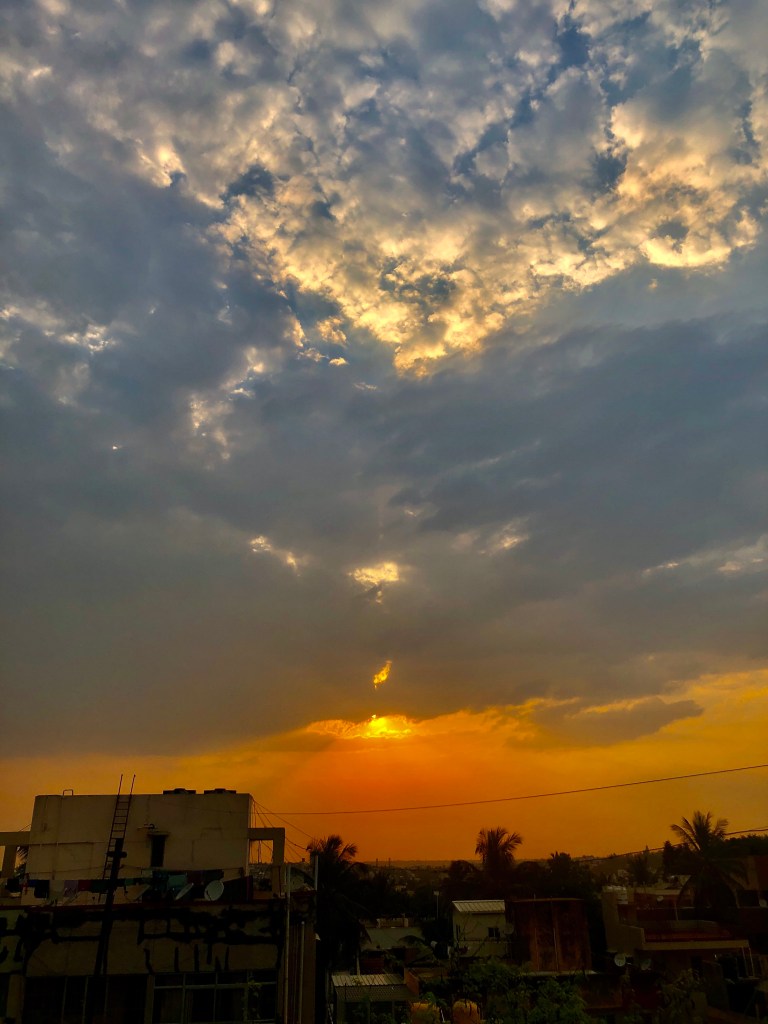
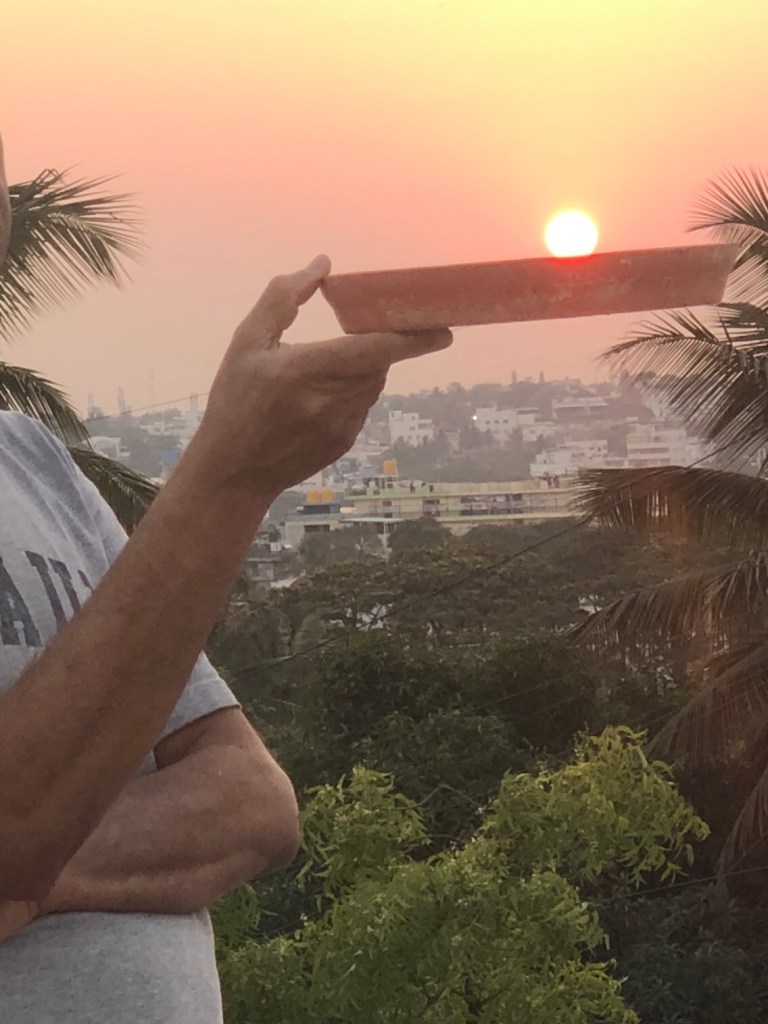
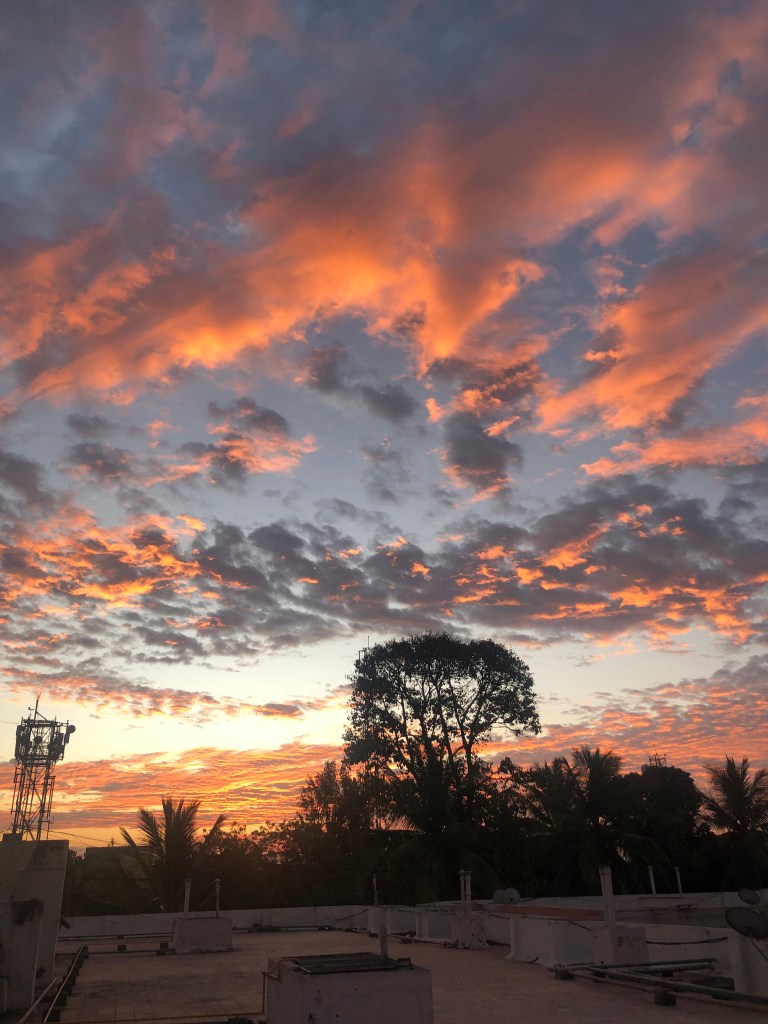
An interesting imagination fully backed up by Aditya & Varuna and most definitely by my iPhone.
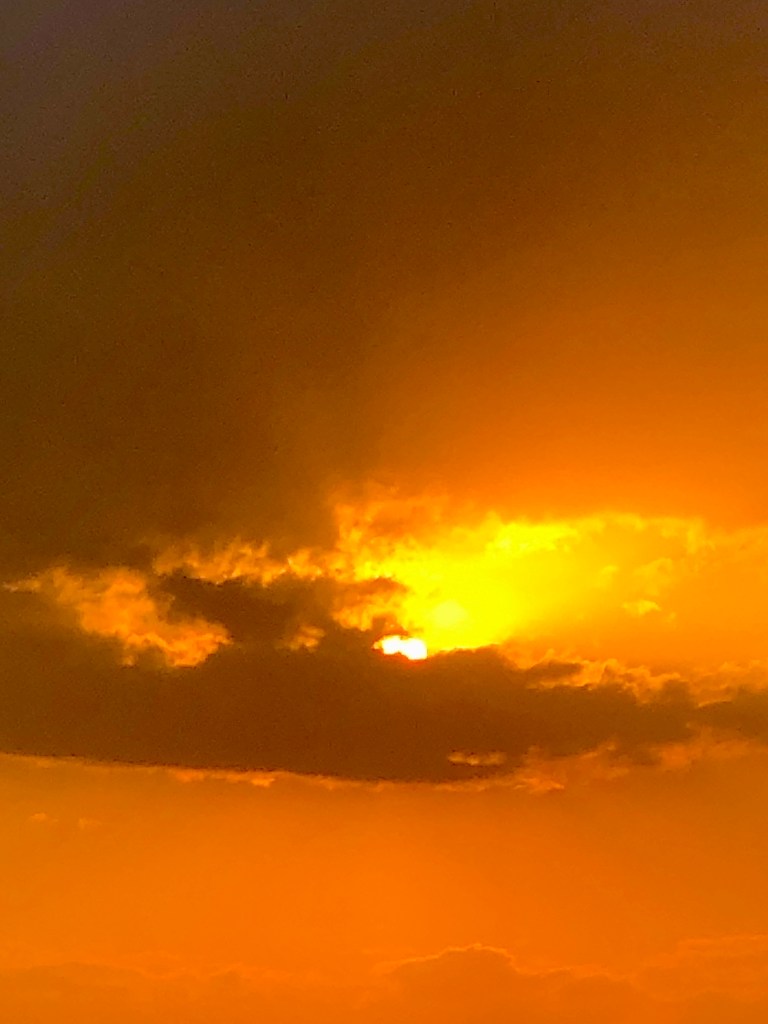
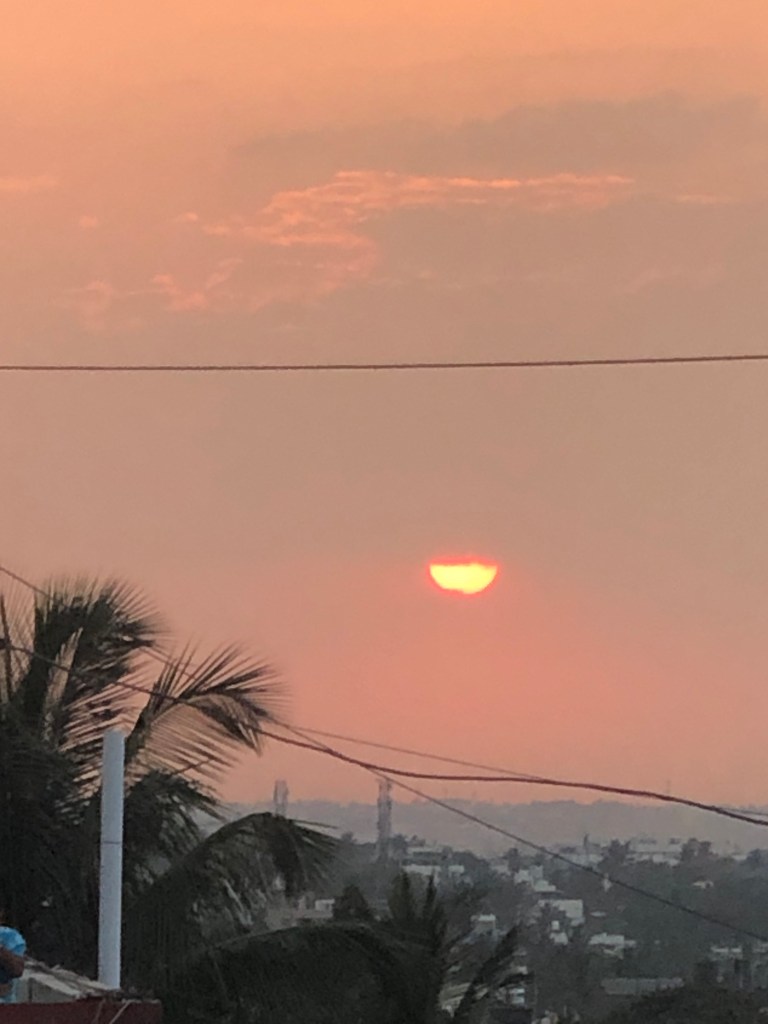
Monday, 03 April evening. Time for yet another routine in my retired life - the evening walk for one hour (scheduled at 1730 Hrs). Mother Earth was perhaps yearning for some water after a long, bright and sunny day. Varuna sensing this started to respond. He gathered his allies….and then started this amazing battle royal with Aditya.
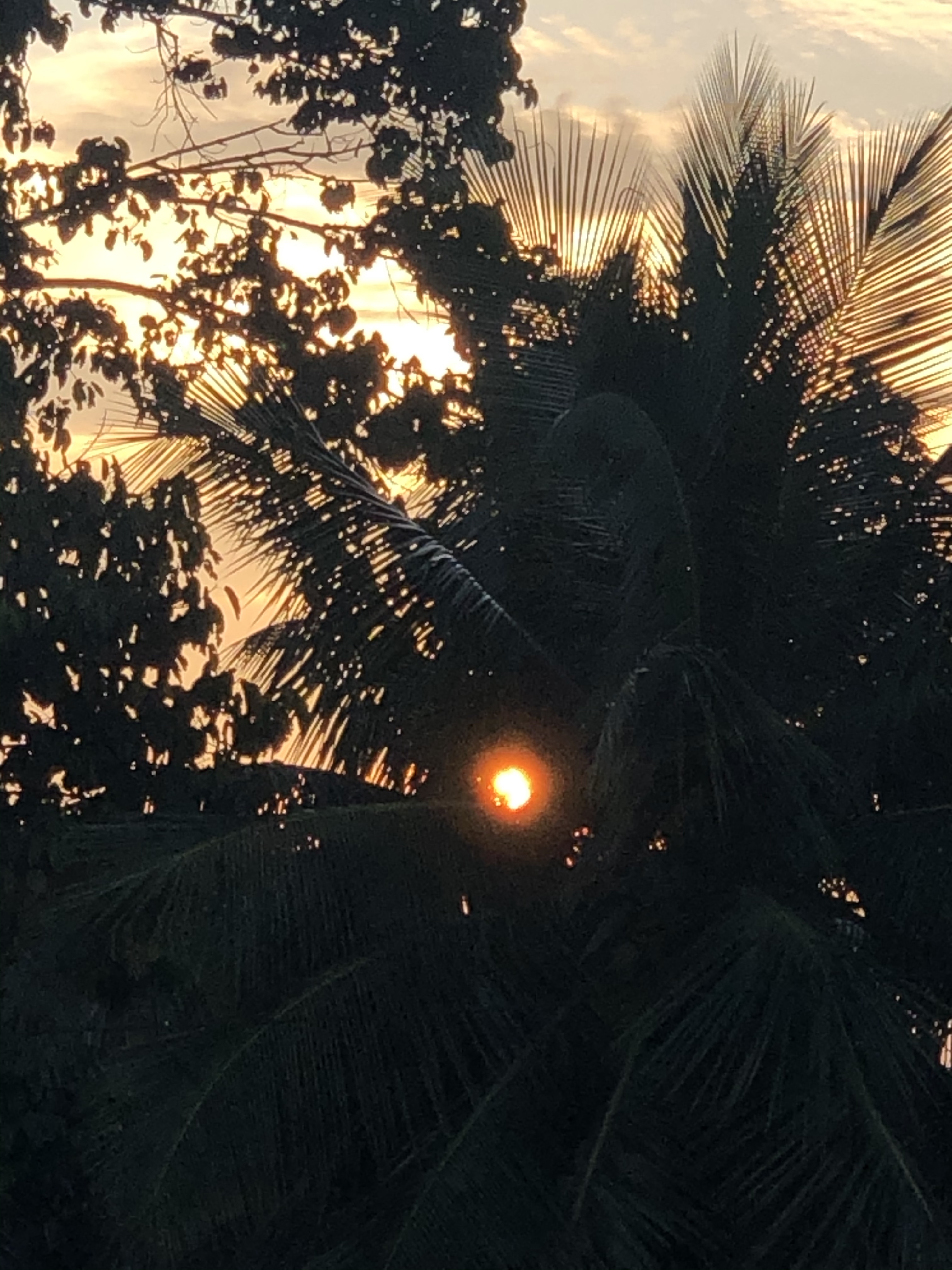
At 1749 Hrs, Varuna very nearly succeeded in vanquishing Aditya, with the later fighting to free his arms (Rays) and managed to do some stretching. (See the photo below)
The battle intensified for the next ten minutes with Aditya battling his way out
Aditya managed to extricate Himself from the clutches of Varuna and his allies briefly, before He was again well covered and surrounded.
There was hardly any winner here. Mother Earth sensing that both her close friends are battling out for Her sake, decided to call it off and rotated herself and ensured that Aditya moves away from the scene by setting Himself to resume his work at another location of Mother Earth, ten minutes after the battle started.
Strangely the entire battle was enacted behind an Apartment named “Krishna Leela”.
The Year 2021 is coming to an end shortly. The threat of Covid-19 and its variants continues and as we find ways and means to mitigate the consequences of this pandemic, we should continue our vigil and care.
On a personal note, God has been extremely kind. With His Grace and blessings from elders, I could continue my journey of learning. Whatever I could assimilate, I could bring them out through my blogs and books and they have been well received.
From a modest beginning in 2019, prabhusponder.com now has over 250 followers, 18000 visitors from around the world (over 35 countries) and 36000 views. This only reinforces that I need to learn more and share more.
So, here is a big THANK YOU and a sincere prayer for the New Year 2022.
We saw in the previous Sloka 3, the vedantic concept of conjoined existence and light in perception of objects and understood that both “being” and “knowing” are nothing but the same (tat tvam asi). In Sloka 4, Adi Sankara throws more light on the “Light”.
Questions
Before we venture into the Sloka, I am going to start this blog with three sets of questions.
Set 1
Can you see yourselves in broad day light ?
Can you see your friend in a crowd in the park in the day light ?
Set 2
Can you see yourselves in a pitch dark room ?
Can you see your friend in the same pitch dark room?
Set 3
Do you need a torch to see Sun in the daytime.
Can you see the stars and constellations on a clear night?
Answers
These are very simple and innocuous questions. Answering these shouldn’t pose difficulties.
Set 1
Yes. I can see myself in broad light.
Yes. I searched and can see my friend in a crowd in the park.
Set 2
No. I cant see myself physically but I know that I am there.
No. I can’t see my friend in the pitch dark room. I need light.
Set 3
I don’t need a torch to see the Sun in daylight. It is all powerful.
Yes. I am able to see stars and constellations on a clear night.
Explanatory Notes for the answers
Now let us amplify the answers given.
Set 1
Suppose if I ask whether you have seen your friend in the crowd, you will have to look around to see whether he has come or not; which means that a process is required. But when I ask you the question, are you there, you do not take any time, or even thinking. Even before the process of thinking starts, “I am here” is an evident fact.
SET 2
I don’t need a light to say that I am inside a dark room since I know that I am there. It is self evident as indicated above. But I need a process and a light to see anyone else.
SET 3
I don’t need an external light to see the Sun in daylight. It is the most powerful light source. It is a “maha deepam”. But the strange fact is I can see the stars which are millions of miles away in the sky on a clear night. Perhaps I have a powerful source of light inside me (a maha deepam) that helps me to see the stars. Maybe ! I don’t know.
Preamble to the Vedic Philosophy behind the “Light”
Apparently in these three sets of questions and answers, the underlying focus is on light and sight. Let us now throw some light on this light.
An object in the world becomes known at a particular time by our special effort. If I have to see my friend in a crowd at the park, it is an event in space and time. I have to turn in that direction and my mind should be behind the eye. Or the eyes will not see. And the light should fall on the crowd; and then a thought should take place in the mind; and that is called vritti pariṇāma, and when that takes place alone, the knowledge of my friend takes place; as an event, in the mind, because of the operation of the sense organ called eye. So, the steps involved in this light throwing process called mano vritti is as under:
1. Some object is there.
2. Light falls on it.
3. You see it through your effort with your eyes.
4. It translates that it is other than you
5. You recognize it through something.
6. It forms a wave thought
7. That gets reflected in a medium to lend existence
The process is nothing complicated. Simple. Isn’t it? But then how do you say “I am here” when you are in a pitch dark room and someone asks you “Where are you?” You even say sometimes “Don’t switch on the light. I am relaxing”. Strange ! Are you self luminous? Exactly. This is called svayam prakāśatvam of ātmā; self-evidence of ātmā; this is a very important concept in vedānta. In India we have people named as Swayam Prakash.
The core of an Individual known as ātmā is not only svayam prakāś but also a “maha deepam” – a great light.
In a lighter vein that is why if we see several Indian movies particularly the historical/mythological ones, you will see in death scenes, a light moves up from the body towards the heaven. We see obituary statements like “The light in our life has merged with the Almighty” even today.
With this introductory understanding that core of all of us viz., the inner consciousness known as the ātmā is compared to a maha deepam (the light like Sun) in, let us proceed toward our goal of understanding the Sloka 4 where Adi Sankara again comes out with simple experiments to drive home the Vedantic Concepts.
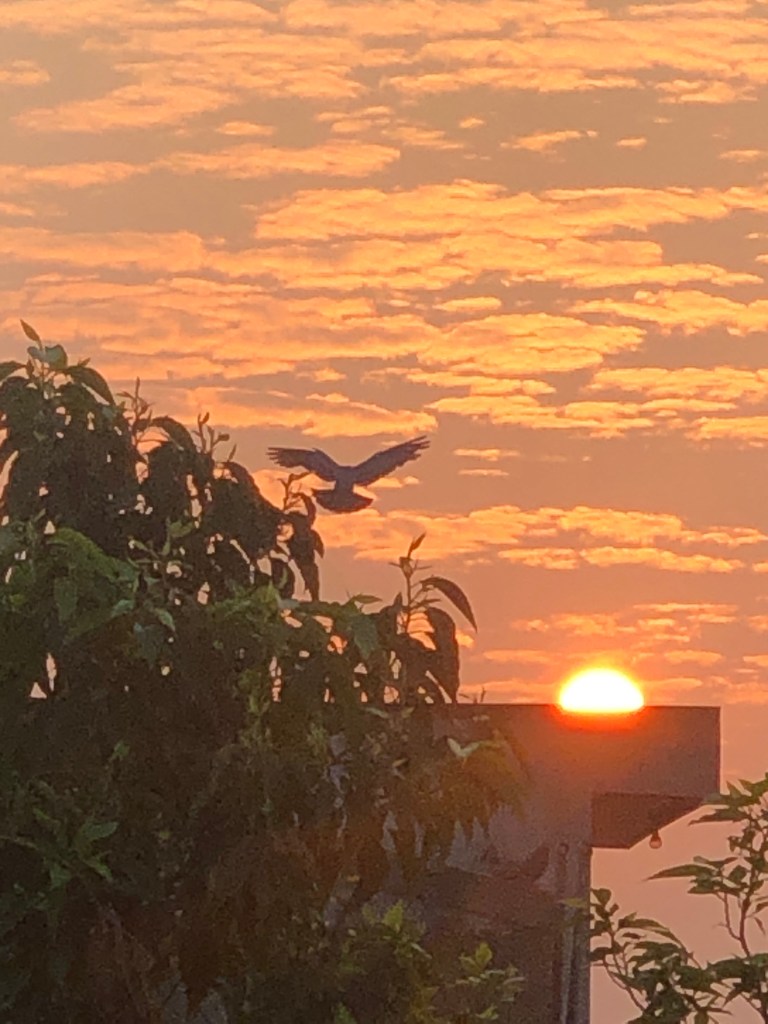
Looking at the Sunrise with awe and reciting Aditya Hrudayam during my early morning walks has been my most enjoyable moment for the day for several years.
Nothing can be more invigorating than this particularly in this era of pandemic and lock down. The one hour that I spend in the early morning is worth the gold. That is what Aditya (Sun) seems to be telling me today morning.
Watch Him talk to me today, Sunday the 16th Morning between 0545 and 0645 Hrs in Bangalore
“It is an oft-quoted saying that philosophy begins in wonder. The mystery of the world with all its changes strikes the reflective temper. The Vedic philosophy grew out of a demand for the explanation of actual experience. Philosophy bade men seek beneath all change, which is the law of life, unity and persistency. All things are passing; what remains? Anything or nothing? The Vedic age raised the problem of philosophy and offered a solution. It was then that attempts to reflect upon the world of experience were made for the first time. When we reflect upon the world of experience, the word illusion (“Maya”) comes to the foreground.
The doctrine of Maya is consideredby many thinkers,to be an integral part of the Vedanta philosophy. The Vedanta system is supposed to be an acosmic pantheism, holding that the Absolute called Brahman alone is real and the finite manifestations are illusory. There is one absolute undifferentiated reality, the nature of which is constitutedby knowledge. The entire empirical world, with its distinction of finite minds and the objects of their thought,is an illusion. Subjects and objects are like the fleeting images which encompass the dreaming soul and melt away into nothingness at the momentof waking.
The term Maya signifies the illusory character of the finite world.” ( Dr. S. Radhakrishnan, Eminent Indian Philosopher)
Wait a minute; does this statement strike a chord in us – in today’s COVID-19 environment?
It looks like it happened “just recently”. A year and a quarter has passed since the virus silently spread across the world. Millions of lives lost. Inter and intra relationships & transactions among and within individuals and society have been completely turned around leaving one to wonder whether it is all a dream and whether we all are waking up to a new state after a deep sleep. Yes, all the three basic states of our Consciousness (awake, dream and deep sleep) have come to play in this crucial time in each one of us thanks to Maya (She, The Big M,I call it).
Well, to me it appears like that; so I woke up after my second vaccination, with a new found determination to explore Maya and her origin, the Vedanta. True to its nature, the Big M treated me like a kid (which I am) and presented me with an exclusive giant Mall with infinite toy stores. No wonder I am lost. Not to disappoint me, the Big M presented me with three books titled Tattva Bodha, Isavasya Upanishad and Dakshinamurthy Stothram.
The last 2 weeks have been fairly severe in terms of the weather; temperatures dropping to single digits (deg F) and snow storms lashing cities forcing kids like me to seek the comfort of our cozy home – that means the Big M has given me an opportunity to deep dive into the books that I got from Her. Each Sloka (Verse) and each word in the three books, is sending me into “space walks” in search of the Self . Holding each Sloka as my life line, I venture into the space of contemplation. Whenever I return back to my home base, I stare through the window at the vast white carpet of snow all around and tried to relate my space walk with the “ground reality”.
In one such “stare” in the early morning after I went on my 18th space walk (corresponding to the 18th Sloka of the Isavasya Upanishad) , the day after the snow storm I did have a direct response from the principal character of that Sloka. Here is that Sloka, its meaning in English and Tamil and the response of the character .
A word of caution here – Millions of pages have been written over centuries by “Subject” – “Matter” – Specialists to provide commentaries for the Slokas in these books. Summing them up into few lines is absolutely immature and childish; yet as a child I have started by scribblings on Vedanta. Pardon me for that.
But Children have the right to enquire and ask questions. The child I am, I am asking questions to myself with the fond hope that someday I will find answers.
The Sloka
अग्ने नय सुपथा राये अस्मान्विश्वानि देव वयुनानि विद्वान् ।
युयोध्यस्मज्जुहुराणमेनो भूयिष्ठां ते नम उक्तिं विधेम ॥ १८ ॥
English Transliteration
agne naya supathā rāye asmānviśvāni deva vayunāni vidvān |
yuyodhyasmajjuhurāṇameno bhūyiṣṭhāṃ te nama uktiṃ vidhema || 18 ||
Meaning in Tamil
அழல்தெய்வமே ! புரிவினையாவுமறிந்திட்டு – யாம்
நல்வினைப்பயனைதுய்த்திடநல்வழியேநடத்திடு
உள்உறைதீவினைவஞ்சம்தனைவிடுத்திடு
அளித்திட்டேன்பக்தியுடன்எம்வணங்குதலை
Meaning in English
O god of fire, lead us by the good path
To eternal joy. You know all our deeds.
Deliver us from evil, we who bow
And pray again and again.
(From The Upanishads by Eknath Easwaran)
The response
Music Courtesy: Jagruthi an awakening by Music India. (No commercial interests for me).
Resilience is the process of adapting oneself in the face of adversity. Our lives in 2020 is an example. As we step into the New Year 2021, nothing better than to remind ourselves of our continued commitment to this process. The first to help us in this process is none other than Aditya. Therefore I commence my blogging this year in 2021 with a rededication of my earlier prayer to Aditya in an AV format.
in the concluding phase of Aditya Hridayam, the impact that the Sun had on a tired and weary Rama is brought out. While these verses might sound “unrealistic” to some of the present time “rational thinking” personnel, the fact that Sun has a refreshing effect on life and rejuvenates millions of living beings into action is undeniable.
Verse 28
एतच्छ्रुत्वामहातेजाःनष्टशोकोऽभवत्तदा।
धारयामाससुप्रीतोराघवःप्रयतात्मवान्॥२८॥
– EtacchrutvA mahAtEjA naShTashOkO$bhavattadA
– dhArayAmAsa suprItO rAghava: prayatAtmavAn
Meaning of the Sanskrit Words
tadA = then
mahAtEjA = one with tremendous energy
Etat = this
shrutvA = having heard
naShTashOka: = losing grief, cheered up
abhavat = became [Simple Past, la~Ng lakAra:]
suprIta: = pleased, gladdened
prayatAtmavAn = one with a pious-minded, subdued mind






 Prabhu's Ponder