Carnatic Musing 38 – Sringara Saktyayudha – Raga Rama Manohari

Composer:

Muthuswamy Dikshithar. Pl. refer http://musicinfoguide.blogspot.com/2007/08/muthuswami-dikshitar-1775-1835.html

Audio Link

Listen to Sanjay Subramanian at https://www.dropbox.com/s/cbi8nezfgrg59dq/Sanjay%20Subrahmanyan%20-%20shrngAra%20shaktyAyudhadhara%20-%20rAmamanOhari%20-%20dIkshitar-Je9UnymFHqs.mp3?dl=0

Sanskrit Verse

पल्लवि

शृङ्गार शक्त्यायुध धर शरवणस्य

दासोऽहं अनिशं धन धान्य प्रदस्य

समष्टि चरणम्

गङ्गामृत पूरित घटाभिषेकस्य

गद्य पद्यादि नुत कोमळतर पदस्य

अङ्गारकादि नव ग्रह वन्दितस्य

आदि मध्यान्त रहिताप्रमेय वरस्य

(मध्यम काल साहित्यम्)

जगदम्बिकादि सकल देवता मोहित

जननादि खेद भञ्जन चतुरतरस्य

नग राज सुता नन्दीश नव नन्दादि

भक्त जनान्तःकरणानन्द गुरु गुहस्य

variations –

नन्दादिनन्द्यादि

Meaning in Tamil

பல்லவி

சிங்காரவேலன் சரவணனின் அடிமை யான் எக்காலமும்

சீர்மிகு செல்வ வளம் வாரி வழங்கும் சக்தி வேலாயுதன்.. சிங்கார

சமஷ்டி சரணம்

நிரைகுட கங்கை நீர் புனித திருமுழுக்காடும்

உரைகவிபல போற்றும் கமலமலர்ப்பாதமுடை

அங்காரகன் சேர் நவகோளதிபதிகள் துதிக்கும்

ஆதி மத்ய அந்தமிலா அளவிலா மேன்மைமிகு..…. சிங்கார

அன்னை சக்தியுடன் அனத்து உம்பர்க்கும் அனந்தம் தரும்,

அல்லல்மிகு பிறவிப் பிணி தீர்க்கும் அதிவித்தகன்,

அன்னை உமையவள் மகேசனுடன்அடியார்க்கும்

நவசக்தி மைந்தருக்கும் அளவிலா இன்பமளி குருகுகன்…… சிங்கார

English Transliteration

pallavi

SRngAra SaktyAyudha dhara SaravaNasya

dAsO(a)haM aniSaM dhana dhAnya pradasya

samashTi caraNam

gangAmRta pUrita ghaTAbhishEkasya

gadya padyAdi nuta kOmaLa-tara padasya

angArakAdi nava graha vanditasya

Adi madhyAnta rahitApramEya varasya

(madhyama kAla sAhityam)

jagadambikAdi sakala dEvatA mOhita –

jananAdi khEda bhanjana catura-tarasya

naga rAja sutA nandISa nava nandAdi –

bhakta janAntaHkaraNAnanda guru guhasya

variations –

nandAdi – nandyAdi

kshEtra – Sikkil Singaravelan.

Meaning in English

I am the slave forever of Lord Saravana, the handsome one holding the powerful spear as weapon and who showers wealth and grains

He is the one:

who is bathed with pitchers filled with the waters of Ganga, with very tender feet which are glorified in prose and poetry, worshipped by the nine planets led by Angaraka, with neither beginning nor middle nor end,immeasurable eminent one, who charms all the celestials beginning with Parvati(the universal mother), expert at shattering the sorrow caused by birth etc. delights the hearts of Parvati, Nandi, Nava-nandanas and other devotees. He is Guruguha

Comments:

• This Kriti is in the sixth Vibhakti

• “SRngAra SaktyAyudha dhara” translates to Singaravelan in Tamil, as the lord is known in the Sikkal temple

• The Nava-Nandanas or Nava-Veeras are the sons of the Nava-Shaktis born by the grace of Shiva, and are Subrahmanya’s brothers. The eldest of them is Veerabahu. They assist him in war.

Meaning of the Sanskrit Words

पल्लवि

शृङ्गार – handsome

शक्ति-आयुध – Spear (Vel in Tamil) as the weapon

धर – holding

शरवणस्य – Saravana

दासो-अहं – Servant, I am

अनिशं – for ever

धन धान्य – wealth and grains

प्रदस्य – giver

समष्टि चरणम्

गङ्गा अमृत – The Ganga River water

पूरित घट- Filled pot

अभिषेकस्य – the one who is bathed in

गद्य – prose

पद्य- poetry

आदि – etc

नुत – euologise/glorify

कोमळ-तर पदस्य – lotus like feet

अङ्गारक-आदि – Planet mars etc

नव ग्रह – nine planets

वन्दितस्य – worshipped

आदि मध्य-अन्त रहित- beginning, middle and end

अप्रमेय – immeay

वरस्य – eminent

जगद्-अम्बिका- the Goddess of the world – Parvati

आदि सकल देवता – and all celestials included

मोहित – charms

जनन-आदि खेद भञ्जन चतुर-तरस्य – the expert at shattering the sorrow caused by birth etc.

नग राज सुता – the consort of the king of serpents – i.e., consort of Siva viz. – Parvati

नन्दि-ईश – the God Nandi

नव नन्द-आदि – भक्त जन- all devitees including the the sons of the nine Shaktis of Siva

अन्तः-करण- minds

आनन्द – pleasing

गुरु गुहस्य – Guru Guha (signature name of the composer)

Dakshinamurthy Stothram- Sloka 1 – ஆன்மாவும் அண்டமும் – SELF & THE UNIVERSE – “JIVA & JAGAT”

We saw in the last two blogs the Vedantic Concepts behind the Mirror and Dream. Let us now see how Bhagwadpaada Adi Sankara uses these two examples and teaches us further.

DAKSHINAMURTHY STHOTHRAM SLOKA 1

विश्वं दर्पणदृश्यमाननगरीतुल्यं निजान्तर्गतं

पश्यन्नात्मनि मायया बहिरिवोद्भूतं यथा निद्रया

यः साक्षात्कुरुते प्रबोधसमये स्वात्मानमेवाद्वयं

तस्मै श्रीगुरुमूर्तये नम इदं श्रीदक्षिणामूर्तये ॥१॥

தமிழ் மொழிபெயர்பு

நிலைக்கண்ணாடியில் பிரதிபலிக்கும் நகரமன்றோ

நிலையிலா இவ்வுலகமதின் நிழற்படம் நம்முள்ளே !

நம்முள்ளுறை தரணிதனை, நாம் உறவாடும் வெளியுலகமென

மனத்திரையில் காண்போம், விழித்தவுடன் மடியும் கனவென !

அவ்வாறே மாயையினால் மருவுடனே நமை அறியா நமக்கு,

ஆன்மீக விழிப்புணர்வூட்டி நம்முள்ளுறை தூய ஒருமையான

பரம்பொருளே நானெனும் ஆன்மா” எனும் அறிவு புகட்டும்

ஆதிஅந்தமிலா மோனநிலை ஆசானாம் அருள்மிகு

தக்ஷிணாமூர்த்தி  பொற்பாதம் பணிந்திடுவோம்

The Meaning:

“To Him who by illusion of Ātman, as by sleep, sees the Universe existing within Himself – like a city seen to exist within a mirror – as though it were manifested without; to Him who beholds, when awake, His own very Self, the second less; to Him who is incarnate in the Teacher; to Him in the Effulgent form facing the South, to Him (Siva) be this bow!”

First Line of the Sloka

विश्वं दर्पणदृश्यमाननगरीतुल्यं निजान्तर्गतं पश्यन्नात्मनि मायया बहिरिवोद्भूतं यथा निद्रया

Vishvam Darpana-Drshyamaana-Nagarii-Tulyam – viśvam means this visible universe; the universe which we see in our waking state is comparable to darpaṇa dṛśyamāna nagari tulyam, comparable to the reflected city being seen in a huge mirror.

Nija-Antargatam – This visvam is within oneself only

Pashyann-Aātmani – This visvam (the world we are experiencing within ourselves only) is actually existing in me, ātmani pasyathi.

Mayayaa –  because of the “aadhiṣṭāna ajnānam” i.e., avidya or maya (Ref the previous blogs)

bahiri udbhūtam – appears as though outside,

yathaa – like

nidrayaa – when we are asleep,

(the dream world which is really existing within ourselves appears as though outside, when we are asleep – implied meaning).

Iva – By using the word iva: as though outside, Sankaracharya conveyed that it is really not outside, everything is inside me only.

Second Line of the Sloka

यः साक्षात्कुरुते प्रबोधसमये स्वात्मानमेवाद्वयं Yah Saakssaat-Kurute Prabodha-Samaye Sva-[A]ātmaanam-Eva-Advayam

Yah:  – In this context refers to the sleeping person “supta puruṣaḥ”; and this sleeping person was seeing the svapna viśvam outside; the sleeping person was seeing the dream world outside;

prabhodha samaya –  but when the sleeping person wakes up, what is his experience; his outside dream world is resolved into himself. All elements of svapna viz. svpna deśa disappears into himself; svapna kālaḥ, svapna padārthaḥ, svapna jīvaḥ, they all dissolve effortlessly; since the entire dream world is resolved into himself, what remains? he the waker alone remains. Therefore, “supta puruṣaḥ, prabodha samaye,

advaiyam svatmānam sākṣātkurute” –  meaning that on waking up, the sleeping person recognises himself as the secondless one; without any dream object. After waking up, I do not see the waker; I claim myself to be the waker. This claiming is called sākṣātkāraha. I should not use any other verb. If I say I see the waker, waker appears to be another person. If I say I experience the waker; it appears as though waker is different. Suppose I say I become the waker; even that word is not correct strictly because; there is no becoming involved; I was the waker before, I am the waker now, therefore, I do not even become the waker. I claim myself to be the waker; this claiming is called sākṣātkāraha.

Similarly, in self-knowledge, I do not experience the ātma/ In self-knowledge I do not see the ātma. In self-knowledge I do not become the ātma; In self-knowledge I claim I am the ātma. And this peculiar process of claiming is called sākṣātkāraha. So, it is not coming face to face. sākṣātkāraha, if it is translated as direct experience, we will have all kinds of misconception that when I wake up Brahman will be standing in front, smiling, giving darshanam. It is not like that, I am the waker. Therefore, prabhoda samaye, on waking up supta puruṣaḥ svātmaanam advyayam eva sākṣātkārute.

Last Line of the Sloka

तस्मै श्रीगुरुमूर्तये नम इदं श्रीदक्षिणामूर्तये Tasmai Shrii-Guru-Muurtaye Nama Idam Shrii-Dakssinnaamuurtaye

tasmai  – means prabuddha puruṣāya; to that woken-up person, who is a jnāni; who is liberated; who knows I am jagatadhishtaanam, to that jnani my namaskaaram. So tasmai prabuddha puruṣāya, jnānine namaha. And who is that jnāni?

Shree gurumurthaye – who alone is a guru, who alone can serve as a guru and who is my guru, gurumoorthaye.

Namaha – my salutations.

Thus we can see that a complex concept in Philosophy is explained by Adi Sankara in just two lines using two simple day to day events in human life – the examples of viewing in a mirror and dreaming captures the essence of Vedanta. We will conclude the Sloka 1 in the next blog with a summary.

References:

மேற்கோள் நூல்கள்

1. Dakṣiṇāmurty. Sthothram – Talks By Swami Paramarthananda; Transcribed by Sri P.S. Ramachandrn; Published by :Arsha Avinash

2. Dakshinamurti Stotra with Mānasollāsa of Sureśvarācārya translated by Alladi Mahadeva Sastri

3.சங்கரரின் தக்ஷிணாமூர்த்தி தோத்திரம்: சைவசித்தாந்த விளக்கம் – முனைவர்கோ.ந. முத்துக்குமாரசுவாமிwww.tamilhindu.com/

4. Prof. Mahadevan, IIM, Bangalore – https://www.sanskritfromhome.in/course/daksinamurtiSthothram /

5. https://Vedāntaḥstudents.com/class-notes/#1539832350612-778c6bda-cf96

6. தக்ஷிணாமூர்த்தி ஸ்தோத்திரம் – பகவான் ரமண மகரிஷி

Absolute Surrender to Sankara – TOTAKAASHTAKAM – ॥ तोटकाष्टकं ॥

In the process of my spiritual journey, I have been trying to understand the works of Adi Sankaracharya. The child in me ventured and tried to understand the following works of Adi Sankara so far.

Sivananda Lahari, Siva Panchaksharam, Subramanya Bhujangam, Nirvana Shatakam, Bhaja Govindam and Ganesha Pancharathnam. The current venture is into Dakshinamurthy Sthothram.

Last week during one of my Whatsapp messaging with my eldest brother (whose name is incidentally Gurumoorthy), I got the link of the MS Subbulakshmi’s song on Totakaashtakam. That was the trigger.

How childish I am and how immature I have been! True to the nature of a child (as would be described by Adi Sankara himself in one of the Slokas of Dakshinamurthy Stothram), it didn’t even occur to me that I should offer my prayers to Adi Sankara himself first, before venturing. How can anyone commence a journey without offering prayers to the காவல் தெய்வம் ? (The Protector) Sankara.

To me it became clear that The Guru, appeared as an innocuous message from my brother Gurumoorthy and triggered me to dive into Totakaashtakam and ensure that I don’t carry on the journey without offering my prayers to Adi Sankara – the Akhila Guru’s (Lord Sankara’s) avatar.

So, here is my humble understanding of the Ashtakam and my prayers to Adi Sankaracharya.

I dedicate this translation to the lotus feet of Maha Periavaa Sri Paramacharya of Kanchi. Here is a rare video clip of Maha Periavaa explaining Totakaashtakam.

I will resume Dakshinamurthy Stothram now in the next blog on 07th May 2021.

Prologue for the Sloka 1 – Master Piece

The Master Piece

It is an oft-quoted saying that philosophy begins in wonder. The mystery of the Universe with all its changes strikes the reflective temper of human beings. Through this reflective temper, human beings constantly question their experiences. The Vedic philosophy grew out of a demand for the explanation of actual experiences of an individual.

One of the fundamental laws of Vedanta is “ I am different from whatever I experience”. In general, this whole world that I experience therefore, comes under the Category – “The experienced” or in other words “The object” and I come under the category “The experiencer” or “The subject”.

Now, start the reflective temper by dismissing the object and the subject only remains. In this world I interact with persons and I clearly say that “I am not like this person; I am not like these group of persons; I am not this animal; I am not this; I am not that, I won’t be like that, I am different etc.”….and the list goes on. This way you go on dismissing everything that you experience as an object different from you and finally dismissing the world itself as an object. This is the first level of reflection. The next level is to look at yourselves, since you ruled out the world.

I am not the world that I experience ; but then who am I ? To my limited knowledge, there cannot be any other question other than this simple question which evoked such a vast, deep and wide analysis of the individual experiences by the Saints & Philosophers of Hinduism/Sanatana Dharma. One lifetime to understand the material available may not be adequate. Yet from this ocean of information and knowledge I will venture out and reproduce what is quoted in the basic source book on Vedanta “Tattva Bodha”.

स्थूलसूक्ष्मकारणशरीराद्व्यतिरिक्तः पञ्चकोशातीतः सन् अवस्थात्रयसाक्षी सच्चिदानन्दस्वरूपः सन् यस्तिष्ठति स आत्मा ।

‘I’ (addressed as Atma) am the one who is distinctly different from the gross, subtle and causal bodies; who is beyond the five layers (kośas); who abides as the self-evident witness to the three states of experience (of the nature of existence/awake-awareness/dream-fullness/deep sleep).

Vedanta identifies the features of a human body-mind-intellect complex with three types of bodies, 5 types of sheaths/layers, 5 sense organs 5 action organs , the mind the intellect and the three states of the consciousness (viz, wake, dream and deep sleep). This means that the “Atma (“I”) ” is beyond all these 21 seamlessly integrated features of body-mind-intellect complex.

“I” am not the world; “I” am not the body, “I” am not the mind/intellect. If “I” am different from all these three; then “I” must be a conscious principle, because I am experiencing them.

Thus the entire object or anātmā consists of three factors, the world, the body and the mind; and “I”, the ātmā, the observer consists of the consciousness principle called chaitanyam. This is the fundamental concept that we are trying to grapple with in Vedanta

At this stage I am again reminded of this excellent poem “Master Piece” by “Author Anonymous” which I posted in my blog on June 12, 2020 (Masterpiece – Prabhu’s Ponder (prabhusponder.com)).  It simply moved me – what deep understanding of the subject and what an expression! The author wanted to remain Anonymous and clearly stated that “spirituality decreases when it is attributed to a person. I was but a scribe.”

This master piece is what “I” am and can only be experienced rather than be defined.

Now in the first Sloka, the subject matter is: What is the relationship between I, the consciousness principle, and the entire universe; the inert matter. What is the relationship between I the ātmā, the consciousness principle, and the world, the inert principle called anātmā.

So अत्मअनात्म सम्भन्दः atma-anātma sambhandaḥ “ஆன்மாவும் அண்டமும்” “Jivatma and the Jagat” is the subject matter of the first verse; and Sankaracharya beautifully explains this with the help of two examples of mirror and dream, about which we will see in the coming blogs.

CAUTION 1:

Throughout the blogs, you will see fair mix of words in Sanskrit and Tamil. Wherever possible, I will try to use the transliterated/ words with verbatim letters in English for easy understanding based on my elementary knowledge.

CAUTION 2

As each Sloka brings out the essence of Vedanta, it is necessary that some basic concepts of the Vedanta is discussed first before dwelling into the Sloka. As such there will be introductory blogs which will cover the concepts before taking up the Sloka and its meaning. With my limited understanding I will try and make these conceptual blogs simple through day to day examples. If you find them too elementary, please bear with my ignorance. It will turn out that we may need a minimum of 4-5 blogs to cover each Sloka. Get ready for a long haul.

Dakshinamurthy Sthothram – Dhyana Slokas

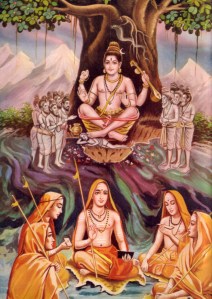
Sri. Dakshinamurthy

Sloka 1

मौनव्याख्या प्रकटित परब्रह्मतत्त्वं युवानं
वर्षिष्ठांते वसद् ऋषिगणैः आवृतं ब्रह्मनिष्ठैः ।
आचार्येन्द्रं करकलित चिन्मुद्रमानंदमूर्तिं
स्वात्मारामं मुदितवदनं दक्षिणामूर्तिमीडे ॥१॥

Mauna-Vyaakhyaa Prakattita Para-Brahma-Tattvam Yuvaanam
Varssisstthaam-Te Vasad Rssigannaih Aavrtam Brahma-Nisstthaih |
Aacaarye[a-I]ndram Kara-Kalita Cin-Mudram-Aananda-Muurtim
Sva-[A]ātmaaraamam Mudita-Vadanam Dakssinnaamuurti-Miidde||1||

பரம்பொருளின் தத்துவ உரை விதிதம் ஆழ்மௌனம்

வித்தக முதிர்ஞானியர் இடையமர் இளமை வடிவம்

ஆசானுக்கு ஆசானாம்  ஆதியும் முதலும்

ஞான முத்திரை காட்டும் கரமுடை பேரின்ப வடிவம்

அகமகிழும் புன்னகை நிறை அழகு வதனம்

பணிவோம் தக்ஷிணாமூர்த்தி  பொற்பாதம்

Salutations to Dakṣiṇāmurty whose exposition through profound silence is awakening the knowledge of the Supreme Brahman in the hearts of His disciples; who is Himself youthful but is sitting surrounded by old and great sages who are devoted to Brahman. The hands of the Supreme Spiritual Teacher form the Cin-Mudra. His appearance is still and blissful and who rejoices in His own Self which is reflected on his blissful face

Sloka 2

वटविटपिसमीपेभूमिभागे निषण्णं
सकलमुनिजनानां ज्ञानदातारमारात् ।
त्रिभुवनगुरुमीशं दक्षिणामूर्तिदेवं
जननमरणदुःखच्छेद दक्षं नमामि ॥२॥

Vatta-Vittapi-Samiipe-Bhuumi-Bhaage Nissannnnam

Sakala-Muni-Janaanaam Jnyaana-Daataaram-Aaraat |

Tri-Bhuvana-Gurum-Iisham Dakssinnaamuurti-Devam

Janana-Maranna-Duhkhac-Cheda Dakssam Namaami ||2||

கிளைமிகு ஆலத்தரு அருகில் நிலத்தலம் அமர்

வித்தக முனியோரின் ஞானமருள் போதகன்

மூவுலக ஆசான் ஜனன மரண துக்கம் அறு வல்லுநன்

தக்ஷிணாமூர்த்தி பொற்பாதம் பணிந்திடுவோம்

Sitting on the ground near the banyan tree (Vata) were all Munis (Sages), who were (sitting) near to the bestower of knowledge. They were (sitting) near to the Guru of the three worlds, the Lord Himself, personified as Dakshinamurthy Deva; near to the one, expert in severing the sorrows resulting from the cycles of births and deaths; I bow to that Dakshinamurthy.

Sloka 3

चित्रं वटतरोर्मूले वृद्धाः शिष्या गुरुर्युवा ।

गुरोस्तु मौनं व्याख्यानं शिष्यास्तुच्छिन्नसंशयाः ॥३॥

Citram Vatta-Taror-Muule Vrddhaah Shissyaa Gurur-Yuvaa |

Guros-Tu Maunam Vyaakhyaanam Shissyaas-Tuc-Chinna-Samshayaah ||3||

வேரூன்றிய ஆலத்தரு அடியில்

வயதுமுதிர் ஞானிய சீடர்தம் நடுவே

இளமை நிறை ஆசான் மோன வழியே

சீடர்தம் ஐயம் தீர்க்கும் சித்தாந்த விதிதம்

விந்தைமிகு காட்சி அன்றோ இது

It is indeed a strange picture to behold; At the root (i.e. base) of a banyan tree (Vata) are seated old disciples (i.e. aged disciples) in front of an young Guru, The Guru is silent, and silence is His exposition (of the highest knowledge); and that (silence) is severing the doubts (automatically) from the minds of the disciples.

Sloka 4

निधये सर्वविद्यानां भिषजे भवरोगिणाम् ।

गुरवे सर्वलोकानां दक्षिणामूर्तये नमः ॥४॥

Nidhaye Sarva-Vidyaanaam Bhissaje Bhava-Roginnaam |

Gurave Sarva-Lokaanaam Dakssinnaamuurtaye Namah ||4||

சகல கல்விக் களஞ்சியமாய்

பிறவிப் பிணி தீர் மருந்தாய்

சகல உலக ஆசானாய் நிறை

தக்ஷிணாமூர்த்தி பொற்பாதம் பணிந்திடுவோம்

(Salutations to Sri Dakshinamurthy) who is a receptacle to all Knowledge, who is a Medicine to all the diseases of Worldly bondage, who is a Guru to all the Worlds; Salutations to Sri Dakshinamurthy

Sloka 5

ॐ नमः प्रणवार्थाय शुद्धज्ञानैकमूर्तये ।

निर्मलाय प्रशान्ताय दक्षिणामूर्तये नमः ॥५॥

Om Namah Prannava-Arthaaya Shuddha-Jnyaanai[a-E]ka-Muurtaye |

Nirmalaaya Prashaantaaya Dakssinnaamuurtaye Namah ||5||

ஓங்காரப் பிரணவ மந்திரத்தின் உட்பொருளாய்

மாசிலா தூய ஒருமை நல்லறிவின் உள்வடிவாய்

கரையிலா சுத்த அமைதிநிறை ஆண்டவனாம்

தக்ஷிணாமூர்த்தி பொற்பாதம் பணிந்திடுவோம்

Salutations to the embodiment of Pranava (Om), Salutations to the personification of the pure, non-dual knowledge, Salutations to the pure and stainless, and Salutations to the tranquil; Salutations to Sri Dakshinamurthy.

Sloka 6

चिद्घनाय महेशाय वटमूलनिवासिने ।

सच्चिदानन्दरूपाय दक्षिणामूर्तये नमः ॥६॥

Cid-Ghanaaya Mahe[aa-Ii]shaaya Vatta-Muula-Nivaasine |

Sac-Cid-Aananda-Ruupaaya Dakssinnaamuurtaye Namah ||6||

ஆத்மாவின் திடவடிவான இறைக்கு இறையோனை

ஆலத்தருவேரடி அமர்ந்த ஆதிபோதகனை

பேரின்பப் பரம்பொருளின் வடிவ

தக்ஷிணாமூர்த்தி பொற்பாதம் பணிந்திடுவோம்.

(Salutations to Sri Dakshinamurthy) Salutations to the one who is (as if) Consciousness solidified, Salutations to the Mahesha (the Great God), Salutations to the one who dwell at the root (i.e. base) of the banyan tree (Vata), Salutations to the embodiment of Sacchidananda (Existence, Consciousness, Bliss); Salutations to Sri Dakshinamurthy.

Sloka 7

ईश्वरो गुरुरात्मेति मूर्तिभेदविभागिने ।

व्योमवद् व्याप्तदेहाय दक्षिणामूर्तये नमः ॥७॥

Iishvaro Gurur-Aatme[a-I]ti Muurti-Bheda-Vibhaagine |

Vyoma-Vad Vyaapta-Dehaaya Dakssinnaamuurtaye Namah ||7||

ஆத்மா ஆசான் ஆண்டவன் எனும் மூவடிவாய்

ஆகாயமென நீக்கமற பரவி நிறைந்திடும்

தக்ஷிணாமூர்த்தி பொற்பாதம் பணிந்திடுவோம்

“Ishwara – Guru – Atman”; (underlying) these different forms of (apparent) separation like a sky (i.e. spiritual sky or Chidakasha) who pervades, Salutations to that Dakshinamurthy.

Plan for the month of May 2021

Starting from April 30, 2021 we will try and understand the first Sloka of Dakshinamurthy Stothram through 5 blogs, each spaced at one week from the other.

Siva Panchaakshara Stothram

The Panchakshara (पञ्चाक्षर) literally means “five letters” in Sanskrit and refers to the five holy letters Na, Ma, Śi, Vā and Ya. This is prayer to Lord Siva and is associated with Siva’s Mantra , OM Namah Sivaya of which is also called the Panchakshari Mantra.

Here is a translation in Tamil of the epic Sthothram by Adi Sankaracharya

Carnatic Musing 37 – aruNAcala nAthaM smarAmi – Ragam sArangA

Composer :

Muthuswamy Dikshithar. Pl ref http://musicinfoguide.blogspot.com/2007/08/muthuswami-dikshitar-1775-1835.html

Audio Link :

Pl. listen to the Hyderabad Brothers at https://www.dropbox.com/s/xbi1q317iamr0hv/Arunachala%20Natham%20-%20Saranga%20-%20Hyderabad%20Brothers-uFmaVReLFi8.mp3?dl=0

Sanskrit Verses :

अरुणाचल नाथम् – रागं सारङ्गा – ताळं रूपकं

पल्लवि

अरुणाचल नाथं स्मरामि अनिशं

अपीत कुचाम्बा समेतम्

अनुपल्लवि

स्मरणात् कैवल्य प्रद चरणारविन्दं

तरुणादित्य कोटि संकाश चिदानन्दं

(मध्यम काल साहित्यम्)

करुणा रसादि कन्दं शरणागत सुर बृन्दम्

चरणम्

अप्राकृत तेजो-मय लिङ्गं

अत्यद्भुत कर धृत सारङ्गं

अप्रमेयं अपर्णाब्ज भृङ्गं

आरूढोत्तुङ्ग वृष तुरङ्गम्

(मध्यम काल साहित्यम्)

विप्रोत्तम विशेषान्तरङ्गं

वीर गुरु गुह तार प्रसङ्गं

स्व-प्रदीप मौलि विधृत गङ्गं

स्व-प्रकाश जित सोमाग्नि पतङ्गम्

Meaning in Tamil :

பல்லவி

அருணாசல நாதனை இடைவிடா நினைவேனே

உண்ணாமுலை அன்னையுடன் காட்சி தரும் …. அருணாசல

அனுபல்லவி

எண்ணம் ஒன்று போதும் அருணனின்

எம் முக்திக்கு வித்தாகும் அவன் கமலபாதம்

கோடி இளஞ்சூரியனின் கதிரொளித் தோற்றம்

பேரின்ப உள்ளுணர்வின் உருவகம்

மத்தியம கால சாகித்யம்

பரிவுடன் கருணை உணர்வின் அடிமூலம்

பணிந்திட்டு உம்பரார் அடைக்கலம்…..அருணாசல

சரணம்

அடிமுடி காணா அழல் வடிவ லிங்க வடிவோனே

அதி் அற்புத சாரங்கம் ஏந்திய கரம் உடையோனே

அயனும் அனந்தனும் அடைய இயலா அளவிலனே

அன்னையின் கமலமுக வட்டமிடும் கருவண்டே

உமையொரு பாகன் விடையேறும் விமலனே

மத்தியம கால சாகித்யம்

உயர் ஞானியர் உளம் நிறை ஒப்பிலாஅன்பனே

வீரமிகு குருகுகனை நேசமுடன் விழைவனே

மின்னார் செஞ்சடையில் கங்கை அணியோனே

அழல் மதி ஆதவன் விளை தரும் ஒளி மேலவனே

துலங்கும் தூய தமனியப்பிரபை உமையோனே….அருணாசல

Meaning in English:

For meaning and details about the deity and the temple, please refer https://sriramv.wordpress.com/2012/11/29/arunacalanatham-of-muttuswami-dikshitar/

Infinity – முழுமை – पूर्णम्

In Tamil, we use the word கடவுள் (kadavul) to indicate God. நம்மைக் கடந்தும் (kada) நமக்கு உள் (ul) இருப்பதுவே கடவுள் (Meaning that the one which is away from us and yet inside us is God). A very simple word with very deep meaning. One can keep contemplating on this word alone. Deeper introspection will drive us to the concept of Infinity. Talking about infinity from a philosophical perspective will take us directly to this very famous Sloka (Hymn). This śloka is from the Bṛhadāraṇyaka Upanishad and forms the mangalācarana mantra (Shanthi Sloka) for the Īśāvāsya Upanishad.

Excerpts from various commentaries on this sloka is summarised as understood by me in https://soundar53.substack.com/p/infinity

Narayaneeyam – Dasakam 1 – Conclusion

With very little knowledge of Sanskrit and abysmally poor idea about Vedanta and Spirituality, on January 4th of this year , I commenced my journey to try and get a feeling of the first Dasakam of Narayaneeyam. No need to emphasise the very low confidence that I had in this journey. It was akin to the journey by foot undertaken from the erstwhile State of Madras to Kasi (Varanasi) in the previous centuries, with the traveller not really sure if he will ever reach the destination; leave alone the chances of studying there.

As a beginner and a self-learner, like the Kasi traveller, I take lot of time to understand the sentence in Sanskrit (In Tamil we call it எழுத்துக்கூட்டி படிப்பது). Then look for help in splitting the long words into simple and understandable words (பதம் பிரித்து) and then refer to the dictionaries for meaning; come to some conclusion and then refine it with respect to the context. Many times I had lost hopes of me understanding the context and the concepts that are propounded by Bhattathri. But as I started the journey, I had an invisible hand holding mine after I finished studying each sloka – I can only guess that it was indeed the Lord of Guruvayur Himself.

So here I am; at the end of 75 days plus around 25 days of preparation , have just completed the first round of my study of 10 Slokas . I need to study this again and again till I get an understanding, as I feel that this Daskam brings out Vedantic concepts in describing Lord Guruvayurappan. I will do that as my next project. In the meantime, here is a consolidation of my learning.

Pl bear with me if you find my understanding and translation as inadequate. Please feel free to let me know through your comments.

Narayaneeyam – Dasakam 1 – Verse 10

Sanskrit Verse

ऐश्वर्यं शङ्करादीश्वरविनियमनं विश्वतेजोहराणां
तेजस्संहारि वीर्यं विमलमपि यशो निस्पृहैश्चोपगीतम्।
अङ्गासङ्गा सदा श्रीरखिलविदसि क्वापि ते सङ्गवार्ता
तद्वातागारवासिन् मुरहर भगवच्छब्दमुख्याश्रयोऽसि॥१०॥

Audio Link

https://www.dropbox.com/s/of5xqux33phzhbx/Sloka%2010.mp3?dl=0 – chanting by Sri. Sankararama Sharma

Meaning in Tamil

Dasakam 1 – Verse 10

Meaning in English

O Lord of Guruvaayur! Thy lordliness consists in being the controller of all gods from Lord Shankara onwards.Thy prowess overcomes that of those who excel the whole world in prowess. Thy pure fame is sung by even the most desireless sages. Laxmi Devi always resides in Thy bosom. Thou are omniscient and there is not the slightest trace of attachment in Thee. Therefore, the term ‘Bhagavan’ is applicable to Thee alone

English Transliteration

AishvaryaM shankaraadiishvaraviniyamanaM vishvatejOharaaNaaM

tejassanhaari viiryaM vimalamapi yashO nispRaihaishchOpagiitam .

angaasangaa sadaa shriirakhilavidasi na kvaapi tee sangavaartaa

tadvaataagaaravaasin murahara bhagavachChabdamukhyaashrayO(a)si .. 10

Meaning of the Sanskrit Words

ऐश्वर्यं – state of being a mighty lord (Lordliness)

शङ्करादीश्वरविनियमनं = [शङ्कर + आदी + ईश्वर + विनियमनं = Sankara + beginning + Lord/God + control/limit/restrict = ] controls all gods beginning with Sankara

विश्वतेजोहराणां = [विश् + तेजस् + हर = universe, powers, destroy = ] of those (powerful beings) who are the destroyers (हर) of the powers (तेजस्) of the universe (विश्व)

तेजस्संहारि = [तेज: + संहारि = powers, destroyer ] = is the destroyer (संहारिन्) of the powers (तेजस्)

वीर्यं = prowess

विमलमपि = विमलं + अपि = stain less/pure/untainted

यशो = fame/honour

निस्पृहैश्चोपगीतम् = [निस्पृहै: + च + उपगीतं] = free from desire,and, sing/sung

अङ्गासङ्गा = अङ्ग + सङ्ग = part of the body (implies heart):, union

सदा – always (resides in your bosom)

श्रीरखिलविदसि = श्री + अखिलविदसि = Lakshmi, omnipresent

न क्वापि ते सङ्गवार्ता = no, anywhere, the, attachment (you are beyond any attachment)

तद्वातागारवासिन् = तत + वातगार + वासिन् = hence, air(vayu), house (guruvayur)

मुरहर = Mura the demon, victor (Murari, Krishna):

भगवच्छब्दमुख्याश्रयोऽसि = भगवत् + शब्द+ द्मुख्य + आश्रय: + असि = Bhagwan , the sound, main, base, you are (You are the main base for the name Bhagwan). The author says that only You deserve to be called Bhagavaan since You possess the six qualities of ऐश्वर्यं (sovereignty), वीर्यं (virility), यशः (fame), श्रीः (wealth), ज्ञानं (knowledge), वैराग्यम् (detachment).