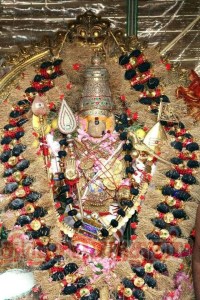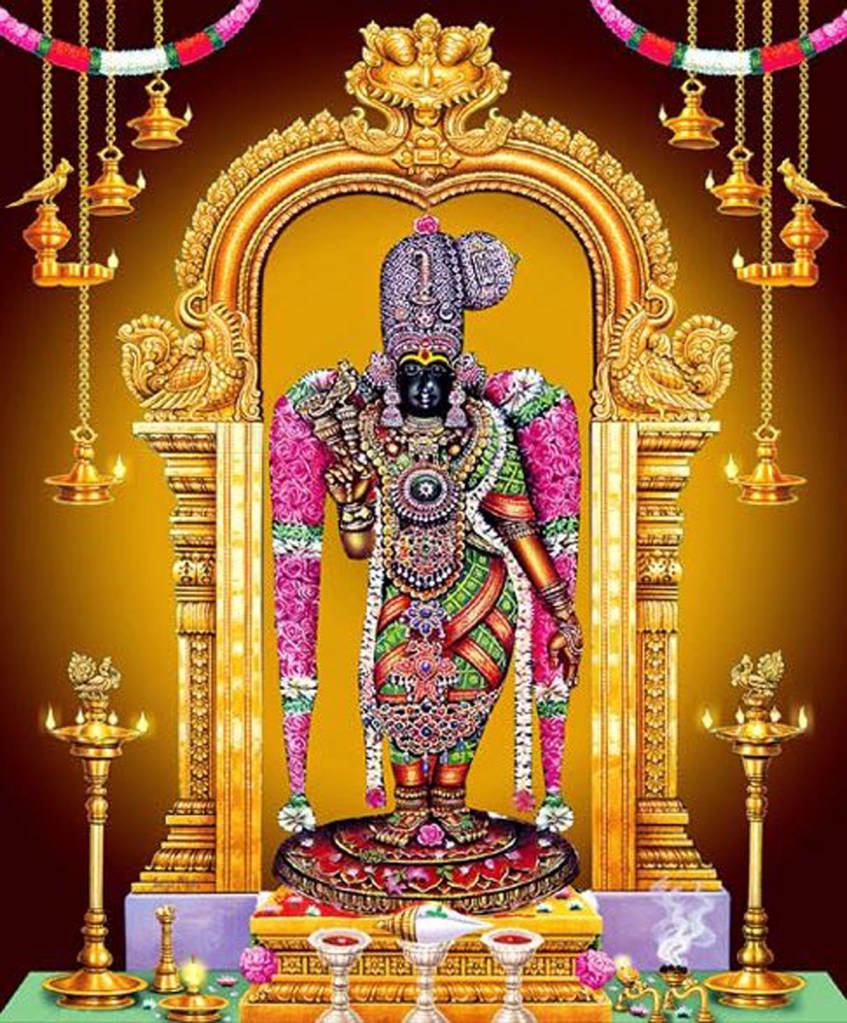
Meenakshi Pancharathnam – Sloka 1

Audio Link

https://www.dropbox.com/s/47wfb8xjqyhkxog/MPM%201.mp3?dl=0

Sanskrit Verse 1

उद्यद्भानुसहस्रकोटिसदृशां केयूरहारोज्ज्वलां

विम्बोष्ठीं स्मितदन्तपङ्क्तिरुचिरां पीताम्बरालङ्कृताम्

विष्णुब्रह्मसुरेन्द्रसेवितपदां तत्त्वस्वरूपां शिवां

मीनाक्षीं प्रणतोऽस्मि सन्ततमहं कारुण्यवारांनिधिम् ॥१॥

Meaning in Tamil – தமிழாக்கம்

உதிக்கும் செங்கதிரொளி ஓராயிரம் கோடி நிகருடன்

ஒளிமிகு கைவளைகாப்பு அணி நறுந்தொடையுடன்

கொவ்வைச் செவ்வாய் கோர்வை முத்துப்பல்வரிசை உதிர்

குமிண் சிரிப்புடன் பொன் பட்டாடை அணிந்து

அரங்கனும் அயனும் அமரனும் போற்றிடும் பாதமிரண்டுடன்

மெய்ப்பொருளின் பொங்கும் மங்கல உருவுடை

அங்கயற்கண்ணியே, அடிபணிவேன் யான் அனுதினமுமே

கருணைக்கடலே ! 1

ஆயிரம் கோடி உதயசூரியனின் ஒளிக்கு ஈடான ஒளியை உடையவளும்; வளையல்கள், மாலைகள் போன்ற அணிகளால் ஒளிவீசுபவளும்; கோவைப்பழங்கள் போன்ற இதழ்களை உடையவளும் புன்னகை புரியும் பல்வரிசைகள் உடையவளும்; பொன் பட்டாடைகளால் அழகு பெற்றவளும் திருமால், பிரமன், தேவர் தலைவன் போன்றவர்களால் வணங்கப்பட்ட திருவடிகளை உடையவளும் உண்மைப் பொருளானவளும் மங்கள வடிவானவளும் கருணைக்கடல் ஆனவளும் பெரும் செல்வம் ஆனவளும் ஆன மீனாட்சியை அடியேன் எப்பொழுதும் வணங்குகிறேன்.

Meaning in English

1.1: I meditate on Devi Meenakshi Who is rising (in my mental vision) with the splendour of Thousand Million Suns, shining with Bracelets and Garlands (matching the splendour of the rising Suns),

1.2: She is rising with a Smiling Face, (appearing beautiful) with Lips Red like Bimba Fruits, and having beautiful Rows of Teeth; She is adorned with shining Yellow Garments (which are again matching the splendour of the rising Suns),

1.3: Vishnu, Brahma and the king of Suras (i.e. Indra Deva) are serving Her Lotus Feet; And Her Auspicious Form is of the essence of Eternal Consciousness (Tattva),

1.4: (Seeing that vision) I Bow down again and again to Devi Meenakshi, Who is an Ocean of Compassion.

English Transliteration

Udyad-Bhaanu-Sahasra-Kotti-Sadrshaam Keyuura-Haaro[a-U]jjvalaam

Vimbo[a-O]sstthiim Smita-Danta-Pangkti-Ruciiraam Piita-Ambara-Alangkrtaam |

Vissnnu-Brahma-Surendra-Sevita-Padaam Tattva-Svaruupaam Shivaam

Miinaakssiim Prannato-[A]smi Santatam-Aham Kaarunnya-Vaaraam-Nidhim ||1||

Transliteration in Tamil

உத்³யத்³பா⁴நு ஸஹஸ்ரகோடிஸத்³ருʼஶாம் கேயூரஹாரோஜ்ஜ்வலாம்

பி³ம்போ³ஷ்டீ²ம் ஸ்மிதத³ந்தபங்க்திருசிராம் பீதாம்ப³ராலங்க்ருʼதாம் ।

விஷ்ணுப்³ரஹ்மஸுரேந்த்³ரஸேவிதபதா³ம் தத்வஸ்வரூபாம் ஶிவாம்

மீனாக்ஷீம் ப்ரணதோ3ஸ்மி ஸந்ததமஹம் காருண்யவாராம்நிதி⁴ம் || 1 ||

Meaning of the Sanskrit Words (Meanings from greenmesg.org)

उद्यद्भानुसहस्रकोटिसदृशां (Udyad-Bhaanu-Sahasra-Kotti-Sadrshaam): Who shines like Thousand Million rising Suns

उद्यद् (Udyad) = Rising

भानु (Bhaanu) = Sun

सहस्र (Sahasra) = Thousand

कोटि (Kotti) = Ten Million

सदृश (Sadrsha) = Like, Resembling, Similar to

केयूरहारोज्ज्वलां (Keyuura-Haaroa-Ujjvalaam): Who is adorned with bracelets and garlands

केयूर (Keyuura) = Bracelet worn on the upper arm

हार (Haara) = Garland

उज्ज्वल (Ujjvala) = Luminous

विम्बोष्ठीं (Vimba-Osstthiim): Who has beautiful Lips like Bimba Fruits

विम्ब (Vimba) = Bimba Fruit

ओष्ठ (Ossttha) = Lip

स्मितदन्तपङ्क्तिरुचिरां (Smita-Danta-Pangkti-Ruciiraam): Who smiles gently and has beautiful rows of Teeth

स्मित (Smita) = Smiling

दन्त (Danta) = Teeth

पङ्क्ति (Pangkti) = Row or Set

रुचिर (Rucira) = Pleasant, Charming

पीताम्बरालङ्कृताम् (Piita-Ambara-Alangkrtaam): Who is adorned with shining Yellow Garments

पीत (Piita) = Yellow

अम्बर (Ambara) = Clothes, Apparel, Garment

अलङ्कृत (Alangkrta) = Adorned, Decorated

विष्णुब्रह्मसुरेन्द्रसेवितपदां (Vissnnu-Brahma-Surendra-Sevita-Padaam): Whose Lotus Feet is served by Vishnu, Brahma and the king of Suras, i.e. Indra Deva

विष्णु (Vissnnu) = Sri Vishnu

ब्रह्म (Brahma) = Sri Brahma

सुरेन्द्र (Surendra) = The Lord of Devas, Indra Deva

सेवित (Sevita) = Served

पद (Pada) = Foot

तत्त्वस्वरूपां (Tattva-Svaruupaam): Who is the embodiment of the essence of Existence

तत्त्व (Tattva) = True or Real State

स्वरूप (Svaruupa) = One’s own nature

शिवां (Shivaam): Who is Auspicious

शिव (Shiva) = Auspicious

मीनाक्षीं (Miinaakssiim): Devi Meenakshi

प्रणतोऽस्मि (Prannato-Asmi): I [always] bow down [to Devi Meenakshi]

प्रणत (Prannata) = Bowed to, saluted reverentially

अस्मि (Asmi) = I am

सन्ततमहं (Santatam-Aham): I always [bow down to Devi Meenakshi]

सन्तत (Santata) = Always

अहम् (Aham) = I

कारुण्यवारांनिधिम् (Kaarunnya-Vaaraam-Nidhim): Who is an ocean of Compassion

कारुण्य (Kaarunnya) = Compassion, Kindness

वारि (Vaari) = Water

निधि (Nidhi) = Sea, Receptacle

Mind and Guruguha Bhakti – A Carnatic Perspective of Vedanta

Palani Murugan

Preamble

Around the Christmas period in the month Marghazhi (December 26th to be precise), we were travelling by road from Dindigul to Coimbatore via the holy place of Palani. We saw a continuous stream of people walking on barefoot all along the stretch of the highway that led to Palani. It was clearly an indication that the bhakti filled festival of Thaipoosam is not far away.

“Thaipoosam is an important festival observed by the Hindus of southern India during the Tamil month of Thai (January – February). Outside of India, it is celebrated mainly by the Tamil speaking community settled in Malaysia, Singapore, South Africa, Sri Lanka and elsewhere around the world. Thaipusam is dedicated to the Hindu god Murugan, the son of Shiva and Parvati. Murugan is also known as Karttikeya, Subrahmanya, Sanmukha, Shadanana, Skanda and Guha. It is believed that on this day, Goddess Parvati presented a lance to Lord Murugan to vanquish the demon army of Tarakasura and combat their evil deeds. Therefore, Thaipusam is a celebration of the victory of good over evil. Thaipusam is celebrated during the full moon in the Tamil month of Thai and commemorates the birthday of the Hindu deity Murugan.”

All along the drive I was thinking if I could relate this bhakti oriented activity with the Advaita Vedantic mindset that I have been focusing on over the last couple of years and come out with some learning that will be immensely satisfying. In other words, I need to link Guha (Bhakti) with Sankara (Advaita); the Manifest with the Unmanifest; the Son with the Father. Looks simple; but impossible without a Guru.

That thinking took me to another Guruguha, one of the trinity in Carnatic music world. Yes, Muthuswamy Dikshithar provided me, the link for relating Bhakti with Vedanta.

Here is that link

Audio Link

https://www.dropbox.com/s/cayaurvs20rng42/Muthuswamy%20Dikshitar%20Kriti-%20Manasa%20Guruguha-%20Anandabhairavi-%20Rupakam-%20DK%20Pattamal-WXfG6a5FsEI.mp3?dl=0

Now let us study this Kriti (composition)

Sanskrit Verses

पल्लवि

मानस गुरु गुह रूपं भजरे रे

माया-मय हृत्तापं त्यजरे रे

अनुपल्लवि

मानव जन्मनि संप्राप्ते सति

परमात्मनि निरतिशय सुखं व्रजरे रे

चरणम्

सत्व गुणोपाधि सहित सदाशिवं

स्वाविद्या समेत जीवोद्भवम्

तत्वं तामस युत विश्व वैभवं

तारकेश्वरं आनन्द भैरवम्

(मध्यम काल साहित्यम्)

नत्वा श्री गुरु चरणं कृत्वा नाम स्मरणं

जित्वा मोहावरणं मत्वा त्वदेक शरणम्

English Transliteration

Pallavi

mānasa guru guha rūpaṃ bhajarē rē

māyā-maya hṛttāpaṃ tyajarē rē

Anupallavi

mānava janmani saṃprāptē sati

paramātmani niratiśaya sukhaṃ vrajarē rē

Caraṇa

satva guṇōpādhi sahita sadāśivaṃ

svāvidyā samēta jīvōdbhavam

tatvaṃ tāmasa yuta viśva vaibhavaṃ

tārakēśvaraṃ ānanda bhairavam

(madhyama kāla sāhitya)

natvā śrī guru caraṇaṃ kṛtvā nāma smaraṇaṃ

jitvā mōhāvaraṇaṃ matvā tvadēka śaraṇam

Meaning in English

Oh mind, worship the form of Guruguhan. Give up the agony of the heart caused by illusion.When human birth has been obtained, attain the perfect unsurpassed bliss of the Supreme Being ( don’t waste the opportunity) He is SADASIVA, full of SATVAGUNA;All living beings are born out of Him as the result of the impact of AVIDYA. The universe with its TAMASIC qualities is again a manifestation of His greatness; He is TARAKESVARA and ANANDA BHAIRAVA. Prostrate on His feet ; Mediate on His name; Conquer the veil of illusion and Think of Him as your sole refuge.

Meaning in Tamil

பல்லவி

போற்றிடுவாய் மனமே குருகுகன் வடிவம்தனையே

அகற்றிடுவாய் மாயைவிளை இதய நோவதனையே

அனுபல்லவி

அரிய மானிடப் பிறவியெடுத்த நீ,

அடைந்திடு நாடி இறையருட் பேரின்பம்தனை

சரணம்

நற்குணப்பண்பின் வடிவான சதாசிவன் அவன்

அகஇருள் விளை உயிரின உருவகமூலம் அவன்

இருள்நிறை இவ்வண்டம் கடந்த பேரொளி அவன்

காக்கும் கடவுளாம் ஆனந்த பைரவன் அவன்

மத்தியம கால சாகித்யம்

குருகுகனின் பாதம் பணிந்து நாமம் துதித்து

இருள் மாயத்திரையகற்றி அடைக்கலம் அவன்

ஒருவனே என நினைந்து ….போற்றிடுவாய் மனமே

Understanding the Kriti

Right at the beginning of the Kriti (Pallavi), Muthuswamy Dikshithar relates Jiva, Jagat and Isvara through their manifestations Mind, Maya and Guha. He “straight away instructs the mind to strive for higher goals – “Oh mind!!(“rE mAnasa”) meditate on (“bhajarE”) guha, the form of guru and abandon (“tyajarE”) the delusionary (“mAya-maya”) sorrows and afflictions of the heart/mind (“hRttApam”). He straightaway equates a guru as a form of the Lord Himself and commands the mind to worship him and meditate on him.”

Continuing, Dikshithar in the anupallavi, says “Having obtained the human birth form, go,take the path and try to attain the unsurpassed bliss associated with the supreme consciousness” – a reference to the Isavasya Upanishad Slokas which outline the paths that one can pursue for understanding the “Atma Svaroopam”.

In the caraNam, dIkshitar describes the Lord as ” The form of everlasting consciousness (“sadASivaM”), the one endowed with (“sahita”) with qualities of (“guNOpAdhi”) satva. The one from whom all the living beings (“jIva”) are born (“udbhavam”) as a result of their own ignorance (“sva avidya”). His greatness (“vaibhavaM”) symbolises the truth (“tatvam”) that lies beyond this world (“viSva”) filled with tamasic qualities (“tAmasa yuta”). He is tArakEswara, the Lord who helps cross this ocean of samsara. He is the form of Anandabhairava, radiating ever-lasting bliss”. Again I am reminded of the Shanthi Sloka and the first Sloka of Isavasya Upanishad – Isavasyam idham sarvam.

In the madhyamakAla sAhityam, Dikshithar says “Worship (“natvA”) the feet (“caraNam”) of the auspicious preceptor (“shrI guru”). Chant and meditate on his name (“nAmasmaraNam”). Conquer (“jitvA”) the sheath/veil (“AvaraNam”) of delusion/desire (“mOha”). Surrender to him as the sole (“twadEka”) refuge (“SaraNam”).” Pray, meditate, get mind control, come out of ignorance, surrender and reach Sat Cit Ananda – the very process that takes you to your SELF and reveals that “Tat Tvam Asi” which is the essence of Vedanta.

Carnatic Musing 39 – MAANASA GURU GUHA – Ananda Bhairavi

Composer

Muthuswamy Dikshithar. Pl ref http://musicinfoguide.blogspot.com/2007/08/muthuswami-dikshitar-1775-1835.html

Audio Link

Listen to the evergreen voice of the one and only one MD Ramanathan. Ananda Bhairavi smoothly flows with all its curls and swirls effortlessly. https://www.dropbox.com/s/89bhl91awc7oe35/M.D%20Ramanathan-AIR-ManasaGuruguha-Anandabhairavi-IkvKJgY1gsA%281%29.mp3?dl=0

Sanskrit Verses

पल्लवि

मानस गुरु गुह रूपं भजरे रे

माया-मय हृत्तापं त्यजरे रे

अनुपल्लवि

मानव जन्मनि संप्राप्ते सति

परमात्मनि निरतिशय सुखं व्रजरे रे

चरणम्

सत्व गुणोपाधि सहित सदाशिवं

स्वाविद्या समेत जीवोद्भवम्

तत्वं तामस युत विश्व वैभवं

तारकेश्वरं आनन्द भैरवम्

(मध्यम काल साहित्यम्)

नत्वा श्री गुरु चरणं कृत्वा नाम स्मरणं

जित्वा मोहावरणं मत्वा त्वदेक शरणम्

Meaning in Tamil

பல்லவி

போற்றிடுவாய் மனமே குருகுகன் வடிவம்தனையே

அகற்றிடுவாய் மாயைவிளை இதய நோவதனையே

அனுபல்லவி

அரிய மானிடப் பிறவியெடுத்த நீ,

அடைந்திடு நாடி இறையருட் பேரின்பம்தனை

சரணம்

சத்வகுணப்பண்பின் வடிவான சதாசிவன் அவன்

அகஇருள் விளை உயிரின உருவகமூலம் அவன்

இருள்நிறை இவ்வண்டம் கடந்த பேரொளி அவன்

காக்கும் கடவுளாம் ஆனந்த பைரவன் அவன்

மத்தியம கால சாகித்யம்

குருகுகனின் பாதம் பணிந்து நாமம் துதித்து

இருள் மாயத்திரையகற்றி அடைக்கலம் அவன்

ஒருவனே என நினைந்து ….போற்றிடுவாய் மனமே

English Transliteration

Pallavi

mānasa guru guha rūpaṃ bhajarē rē

māyā-maya hṛttāpaṃ tyajarē rē

Anupallavi

mānava janmani saṃprāptē sati

paramātmani niratiśaya sukhaṃ vrajarē rē

Caraṇa

satva guṇōpādhi sahita sadāśivaṃ

svāvidyā samēta jīvōdbhavam

tatvaṃ tāmasa yuta viśva vaibhavaṃ

tārakēśvaraṃ ānanda bhairavam

(madhyama kāla sāhitya)

natvā śrī guru caraṇaṃ kṛtvā nāma smaraṇaṃ

jitvā mōhāvaraṇaṃ matvā tvadēka śaraṇam

Meaning in English

Oh mind, worship the form of Guruguhan. Give up the agony of the heart caused by illusion.When human birth has been obtained, attain the perfect unsurpassed bliss of the Supreme Being ( don’t waste the opportunity) He is SADASIVA, full of SATVAGUNA;All living beings are born out of Him as the result of the impact of AVIDYA. The universe with its TAMASIC qualities is again a manifestation of His greatness; He is TARAKESVARA and ANANDA BHAIRAVA. Prostrate on His feet ; Mediate on His name; Conquer the veil of illusion and Think of Him as your sole refuge.

Meaning of the Sanskrit Words

पल्लवि

मानस – mind

गुरु गुह – Guru Guha – Lord Subramanya (also pen name of Dikshithar)

रूपं – form

भजरे – worship

माया-मय -illusion

ह्र्त् – heart

तापम् – agony

त्यजरे – give up

Anupallavi

मानव – human

जन्मनि – birth

संप्राप्ते – gained/obtained/attained

सति –

परमात्मनि – Supreme Being

निरतिशय – unsurpassed/ perfect

सुखं – bliss/pleasure

व्रज-

CaraNam

सत्व – good qualities – Saatvic

गुण – virtues/traits

उपाधि – attribute

सहित – together

सदाशिवं – Sadasiva

स्व – self

अविद्या – ignorance / illusion

समॆत – along with

जीव – vital/life

उद्भवम् – creation

तत्वं – reality/truth

तामस – Dark qualities

युत – combined

विश्व – universe

वैभवं – ceremony

तारक – rescue/save

ईश्वरं – Supreme Being

आनन्द – delight/happy

भैरवम् – Bhairava

(मध्यम काल साहित्यम्)

नत्वा – bow down ( from the word nata)

श्री गुरु – Revered Teacher

चरणं – foot

कृत्वा – having done

नाम – name

स्मरणं – mental recitation

जित्वा – overcoming

मोह – delusion

आवरणं – cover

मत्वा – think (derived from the word mati)

त्वद् – your

ऎक – only

शरणम् – refuge

Hit the Bed & grab “The Comforter”

“OMG ! What a hectic day ! I need to relax !

This is how most of us feel as we hit the bed at night after a long working day.

There is a very nice way to relax immediately.

Play this song. Close your eyes. Look at no one else except yourselves and recollect the meaning of this verse.

Video Link

In this Verse, if you desire, substitute Mahadeva/Siva with the God of your choice. If you don’t believe in God, substitute it with whatever rationale your “SELF” wants. The core is to contemplate and own the responsibility for your actions or otherwise.

You, for sure will chill out immediately and off you sleep peacefully ! I do it everyday.

Remember- There are no rights and wrongs; there are only consequences and there is only one TRUTH. Crisis of Contrition in us is the path for progress.

Carnatic Musing 38 – Sringara Saktyayudha – Raga Rama Manohari

Composer:

Muthuswamy Dikshithar. Pl. refer http://musicinfoguide.blogspot.com/2007/08/muthuswami-dikshitar-1775-1835.html

Audio Link

Listen to Sanjay Subramanian at https://www.dropbox.com/s/cbi8nezfgrg59dq/Sanjay%20Subrahmanyan%20-%20shrngAra%20shaktyAyudhadhara%20-%20rAmamanOhari%20-%20dIkshitar-Je9UnymFHqs.mp3?dl=0

Sanskrit Verse

पल्लवि

शृङ्गार शक्त्यायुध धर शरवणस्य

दासोऽहं अनिशं धन धान्य प्रदस्य

समष्टि चरणम्

गङ्गामृत पूरित घटाभिषेकस्य

गद्य पद्यादि नुत कोमळतर पदस्य

अङ्गारकादि नव ग्रह वन्दितस्य

आदि मध्यान्त रहिताप्रमेय वरस्य

(मध्यम काल साहित्यम्)

जगदम्बिकादि सकल देवता मोहित

जननादि खेद भञ्जन चतुरतरस्य

नग राज सुता नन्दीश नव नन्दादि

भक्त जनान्तःकरणानन्द गुरु गुहस्य

variations –

नन्दादिनन्द्यादि

Meaning in Tamil

பல்லவி

சிங்காரவேலன் சரவணனின் அடிமை யான் எக்காலமும்

சீர்மிகு செல்வ வளம் வாரி வழங்கும் சக்தி வேலாயுதன்.. சிங்கார

சமஷ்டி சரணம்

நிரைகுட கங்கை நீர் புனித திருமுழுக்காடும்

உரைகவிபல போற்றும் கமலமலர்ப்பாதமுடை

அங்காரகன் சேர் நவகோளதிபதிகள் துதிக்கும்

ஆதி மத்ய அந்தமிலா அளவிலா மேன்மைமிகு..…. சிங்கார

அன்னை சக்தியுடன் அனத்து உம்பர்க்கும் அனந்தம் தரும்,

அல்லல்மிகு பிறவிப் பிணி தீர்க்கும் அதிவித்தகன்,

அன்னை உமையவள் மகேசனுடன்அடியார்க்கும்

நவசக்தி மைந்தருக்கும் அளவிலா இன்பமளி குருகுகன்…… சிங்கார

English Transliteration

pallavi

SRngAra SaktyAyudha dhara SaravaNasya

dAsO(a)haM aniSaM dhana dhAnya pradasya

samashTi caraNam

gangAmRta pUrita ghaTAbhishEkasya

gadya padyAdi nuta kOmaLa-tara padasya

angArakAdi nava graha vanditasya

Adi madhyAnta rahitApramEya varasya

(madhyama kAla sAhityam)

jagadambikAdi sakala dEvatA mOhita –

jananAdi khEda bhanjana catura-tarasya

naga rAja sutA nandISa nava nandAdi –

bhakta janAntaHkaraNAnanda guru guhasya

variations –

nandAdi – nandyAdi

kshEtra – Sikkil Singaravelan.

Meaning in English

I am the slave forever of Lord Saravana, the handsome one holding the powerful spear as weapon and who showers wealth and grains

He is the one:

who is bathed with pitchers filled with the waters of Ganga, with very tender feet which are glorified in prose and poetry, worshipped by the nine planets led by Angaraka, with neither beginning nor middle nor end,immeasurable eminent one, who charms all the celestials beginning with Parvati(the universal mother), expert at shattering the sorrow caused by birth etc. delights the hearts of Parvati, Nandi, Nava-nandanas and other devotees. He is Guruguha

Comments:

• This Kriti is in the sixth Vibhakti

• “SRngAra SaktyAyudha dhara” translates to Singaravelan in Tamil, as the lord is known in the Sikkal temple

• The Nava-Nandanas or Nava-Veeras are the sons of the Nava-Shaktis born by the grace of Shiva, and are Subrahmanya’s brothers. The eldest of them is Veerabahu. They assist him in war.

Meaning of the Sanskrit Words

पल्लवि

शृङ्गार – handsome

शक्ति-आयुध – Spear (Vel in Tamil) as the weapon

धर – holding

शरवणस्य – Saravana

दासो-अहं – Servant, I am

अनिशं – for ever

धन धान्य – wealth and grains

प्रदस्य – giver

समष्टि चरणम्

गङ्गा अमृत – The Ganga River water

पूरित घट- Filled pot

अभिषेकस्य – the one who is bathed in

गद्य – prose

पद्य- poetry

आदि – etc

नुत – euologise/glorify

कोमळ-तर पदस्य – lotus like feet

अङ्गारक-आदि – Planet mars etc

नव ग्रह – nine planets

वन्दितस्य – worshipped

आदि मध्य-अन्त रहित- beginning, middle and end

अप्रमेय – immeay

वरस्य – eminent

जगद्-अम्बिका- the Goddess of the world – Parvati

आदि सकल देवता – and all celestials included

मोहित – charms

जनन-आदि खेद भञ्जन चतुर-तरस्य – the expert at shattering the sorrow caused by birth etc.

नग राज सुता – the consort of the king of serpents – i.e., consort of Siva viz. – Parvati

नन्दि-ईश – the God Nandi

नव नन्द-आदि – भक्त जन- all devitees including the the sons of the nine Shaktis of Siva

अन्तः-करण- minds

आनन्द – pleasing

गुरु गुहस्य – Guru Guha (signature name of the composer)

Dakshinamurthy Stothram- Sloka 1 – ஆன்மாவும் அண்டமும் – SELF & THE UNIVERSE – “JIVA & JAGAT”

We saw in the last two blogs the Vedantic Concepts behind the Mirror and Dream. Let us now see how Bhagwadpaada Adi Sankara uses these two examples and teaches us further.

DAKSHINAMURTHY STHOTHRAM SLOKA 1

विश्वं दर्पणदृश्यमाननगरीतुल्यं निजान्तर्गतं

पश्यन्नात्मनि मायया बहिरिवोद्भूतं यथा निद्रया

यः साक्षात्कुरुते प्रबोधसमये स्वात्मानमेवाद्वयं

तस्मै श्रीगुरुमूर्तये नम इदं श्रीदक्षिणामूर्तये ॥१॥

தமிழ் மொழிபெயர்பு

நிலைக்கண்ணாடியில் பிரதிபலிக்கும் நகரமன்றோ

நிலையிலா இவ்வுலகமதின் நிழற்படம் நம்முள்ளே !

நம்முள்ளுறை தரணிதனை, நாம் உறவாடும் வெளியுலகமென

மனத்திரையில் காண்போம், விழித்தவுடன் மடியும் கனவென !

அவ்வாறே மாயையினால் மருவுடனே நமை அறியா நமக்கு,

ஆன்மீக விழிப்புணர்வூட்டி நம்முள்ளுறை தூய ஒருமையான

பரம்பொருளே நானெனும் ஆன்மா” எனும் அறிவு புகட்டும்

ஆதிஅந்தமிலா மோனநிலை ஆசானாம் அருள்மிகு

தக்ஷிணாமூர்த்தி  பொற்பாதம் பணிந்திடுவோம்

The Meaning:

“To Him who by illusion of Ātman, as by sleep, sees the Universe existing within Himself – like a city seen to exist within a mirror – as though it were manifested without; to Him who beholds, when awake, His own very Self, the second less; to Him who is incarnate in the Teacher; to Him in the Effulgent form facing the South, to Him (Siva) be this bow!”

First Line of the Sloka

विश्वं दर्पणदृश्यमाननगरीतुल्यं निजान्तर्गतं पश्यन्नात्मनि मायया बहिरिवोद्भूतं यथा निद्रया

Vishvam Darpana-Drshyamaana-Nagarii-Tulyam – viśvam means this visible universe; the universe which we see in our waking state is comparable to darpaṇa dṛśyamāna nagari tulyam, comparable to the reflected city being seen in a huge mirror.

Nija-Antargatam – This visvam is within oneself only

Pashyann-Aātmani – This visvam (the world we are experiencing within ourselves only) is actually existing in me, ātmani pasyathi.

Mayayaa –  because of the “aadhiṣṭāna ajnānam” i.e., avidya or maya (Ref the previous blogs)

bahiri udbhūtam – appears as though outside,

yathaa – like

nidrayaa – when we are asleep,

(the dream world which is really existing within ourselves appears as though outside, when we are asleep – implied meaning).

Iva – By using the word iva: as though outside, Sankaracharya conveyed that it is really not outside, everything is inside me only.

Second Line of the Sloka

यः साक्षात्कुरुते प्रबोधसमये स्वात्मानमेवाद्वयं Yah Saakssaat-Kurute Prabodha-Samaye Sva-[A]ātmaanam-Eva-Advayam

Yah:  – In this context refers to the sleeping person “supta puruṣaḥ”; and this sleeping person was seeing the svapna viśvam outside; the sleeping person was seeing the dream world outside;

prabhodha samaya –  but when the sleeping person wakes up, what is his experience; his outside dream world is resolved into himself. All elements of svapna viz. svpna deśa disappears into himself; svapna kālaḥ, svapna padārthaḥ, svapna jīvaḥ, they all dissolve effortlessly; since the entire dream world is resolved into himself, what remains? he the waker alone remains. Therefore, “supta puruṣaḥ, prabodha samaye,

advaiyam svatmānam sākṣātkurute” –  meaning that on waking up, the sleeping person recognises himself as the secondless one; without any dream object. After waking up, I do not see the waker; I claim myself to be the waker. This claiming is called sākṣātkāraha. I should not use any other verb. If I say I see the waker, waker appears to be another person. If I say I experience the waker; it appears as though waker is different. Suppose I say I become the waker; even that word is not correct strictly because; there is no becoming involved; I was the waker before, I am the waker now, therefore, I do not even become the waker. I claim myself to be the waker; this claiming is called sākṣātkāraha.

Similarly, in self-knowledge, I do not experience the ātma/ In self-knowledge I do not see the ātma. In self-knowledge I do not become the ātma; In self-knowledge I claim I am the ātma. And this peculiar process of claiming is called sākṣātkāraha. So, it is not coming face to face. sākṣātkāraha, if it is translated as direct experience, we will have all kinds of misconception that when I wake up Brahman will be standing in front, smiling, giving darshanam. It is not like that, I am the waker. Therefore, prabhoda samaye, on waking up supta puruṣaḥ svātmaanam advyayam eva sākṣātkārute.

Last Line of the Sloka

तस्मै श्रीगुरुमूर्तये नम इदं श्रीदक्षिणामूर्तये Tasmai Shrii-Guru-Muurtaye Nama Idam Shrii-Dakssinnaamuurtaye

tasmai  – means prabuddha puruṣāya; to that woken-up person, who is a jnāni; who is liberated; who knows I am jagatadhishtaanam, to that jnani my namaskaaram. So tasmai prabuddha puruṣāya, jnānine namaha. And who is that jnāni?

Shree gurumurthaye – who alone is a guru, who alone can serve as a guru and who is my guru, gurumoorthaye.

Namaha – my salutations.

Thus we can see that a complex concept in Philosophy is explained by Adi Sankara in just two lines using two simple day to day events in human life – the examples of viewing in a mirror and dreaming captures the essence of Vedanta. We will conclude the Sloka 1 in the next blog with a summary.

References:

மேற்கோள் நூல்கள்

1. Dakṣiṇāmurty. Sthothram – Talks By Swami Paramarthananda; Transcribed by Sri P.S. Ramachandrn; Published by :Arsha Avinash

2. Dakshinamurti Stotra with Mānasollāsa of Sureśvarācārya translated by Alladi Mahadeva Sastri

3.சங்கரரின் தக்ஷிணாமூர்த்தி தோத்திரம்: சைவசித்தாந்த விளக்கம் – முனைவர்கோ.ந. முத்துக்குமாரசுவாமிwww.tamilhindu.com/

4. Prof. Mahadevan, IIM, Bangalore – https://www.sanskritfromhome.in/course/daksinamurtiSthothram /

5. https://Vedāntaḥstudents.com/class-notes/#1539832350612-778c6bda-cf96

6. தக்ஷிணாமூர்த்தி ஸ்தோத்திரம் – பகவான் ரமண மகரிஷி

Siva Panchaakshara Stothram

The Panchakshara (पञ्चाक्षर) literally means “five letters” in Sanskrit and refers to the five holy letters Na, Ma, Śi, Vā and Ya. This is prayer to Lord Siva and is associated with Siva’s Mantra , OM Namah Sivaya of which is also called the Panchakshari Mantra.

Here is a translation in Tamil of the epic Sthothram by Adi Sankaracharya

Carnatic Musing 37 – aruNAcala nAthaM smarAmi – Ragam sArangA

Composer :

Muthuswamy Dikshithar. Pl ref http://musicinfoguide.blogspot.com/2007/08/muthuswami-dikshitar-1775-1835.html

Audio Link :

Pl. listen to the Hyderabad Brothers at https://www.dropbox.com/s/xbi1q317iamr0hv/Arunachala%20Natham%20-%20Saranga%20-%20Hyderabad%20Brothers-uFmaVReLFi8.mp3?dl=0

Sanskrit Verses :

अरुणाचल नाथम् – रागं सारङ्गा – ताळं रूपकं

पल्लवि

अरुणाचल नाथं स्मरामि अनिशं

अपीत कुचाम्बा समेतम्

अनुपल्लवि

स्मरणात् कैवल्य प्रद चरणारविन्दं

तरुणादित्य कोटि संकाश चिदानन्दं

(मध्यम काल साहित्यम्)

करुणा रसादि कन्दं शरणागत सुर बृन्दम्

चरणम्

अप्राकृत तेजो-मय लिङ्गं

अत्यद्भुत कर धृत सारङ्गं

अप्रमेयं अपर्णाब्ज भृङ्गं

आरूढोत्तुङ्ग वृष तुरङ्गम्

(मध्यम काल साहित्यम्)

विप्रोत्तम विशेषान्तरङ्गं

वीर गुरु गुह तार प्रसङ्गं

स्व-प्रदीप मौलि विधृत गङ्गं

स्व-प्रकाश जित सोमाग्नि पतङ्गम्

Meaning in Tamil :

பல்லவி

அருணாசல நாதனை இடைவிடா நினைவேனே

உண்ணாமுலை அன்னையுடன் காட்சி தரும் …. அருணாசல

அனுபல்லவி

எண்ணம் ஒன்று போதும் அருணனின்

எம் முக்திக்கு வித்தாகும் அவன் கமலபாதம்

கோடி இளஞ்சூரியனின் கதிரொளித் தோற்றம்

பேரின்ப உள்ளுணர்வின் உருவகம்

மத்தியம கால சாகித்யம்

பரிவுடன் கருணை உணர்வின் அடிமூலம்

பணிந்திட்டு உம்பரார் அடைக்கலம்…..அருணாசல

சரணம்

அடிமுடி காணா அழல் வடிவ லிங்க வடிவோனே

அதி் அற்புத சாரங்கம் ஏந்திய கரம் உடையோனே

அயனும் அனந்தனும் அடைய இயலா அளவிலனே

அன்னையின் கமலமுக வட்டமிடும் கருவண்டே

உமையொரு பாகன் விடையேறும் விமலனே

மத்தியம கால சாகித்யம்

உயர் ஞானியர் உளம் நிறை ஒப்பிலாஅன்பனே

வீரமிகு குருகுகனை நேசமுடன் விழைவனே

மின்னார் செஞ்சடையில் கங்கை அணியோனே

அழல் மதி ஆதவன் விளை தரும் ஒளி மேலவனே

துலங்கும் தூய தமனியப்பிரபை உமையோனே….அருணாசல

Meaning in English:

For meaning and details about the deity and the temple, please refer https://sriramv.wordpress.com/2012/11/29/arunacalanatham-of-muttuswami-dikshitar/

Carnatic Musing 36 – Sankari SaMkuru Chandramukhi – Raga Saveri

Composer

Shyama Sastry . There is an excellent treatise on Shyama Sastry by Mr. Sreenivasa Rao in his 11 blogs . Pl visit https://sreenivasaraos.com

Audio Link

Whenever I talk about Carnatic Music Performance by siblings, the first one that comes to my mind cannot be anyone else except that of the legends DK Pattammal & DK Jayaraman. Here is their ageless rendition of Ragam Saveri. Pl listen and enjoy.

https://www.dropbox.com/s/zf6wt5jrqkhk7nj/DK%20Pattammal%20%26%20DK%20Jayaraman%20-%20shankari%20shamkuru%20candramukhi%20-%20sAvEri%20-%20syAmA%20sAstri-7PaWa3JVRhw.mp3?dl=0

Sanskrit Verses

पल्लवि

शङ्करी  शङ्कुरु  चन्द्रमुखी अखिलाण्डेश्वरी (श्री)

शाम्भवी सरसिज भव वन्दिते गौरी (अम्ब)

अनुपल्लवि

सङ्कट  हारिणी रिपु विदारिणी कल्याणी

सदा नत फल दायिके (alt: दायकी ) हर नायिके  (alt: नायकी) जगत् जननी

चरणम् 1

जम्बुपति विलासिनी जगदवनोल्लसिनी

कम्बु  कन्धरे भवानी कपाल धारिणी शूलिनी

चरणम् 2

अङ्गज  रिपु तोशिनी अखिल  भुवन पोशिनी

मङ्गल  प्रदे मृदानी मराल संनिभ गमनी

चरणम् 3

श्याम कृष्ण सोदरी श्यामळे शातोदरी

सामगान  लोले बाले सदार्ति भञ्जन  शीले

English Transliteration

In the kRti ‘Sankari SaMkuru’ – rAga sAvEri (tALa Adi), SrI SyAmA Sastry prays to Mother akhilANDESvari at tiruvAnaikkoil (jambukESvaraM).

pallavi

Sankari SaM-kuru candra mukhi 1akhil(A)ND(E)Svari

SAmbhavi sarasija bhava vanditE 2gauri amba

anupallavi

sankaTa hAriNi ripu vidAriNi kalyANi

sadA nata 3phala dAyikE hara nAyikE jagaj-janani (Sankari)

caraNam 1

jambu pati vilAsini jagad-avan(O)llAsini

kambu kandharE bhavAni 4kapAla dhAriNi SUlini (Sankari)

caraNam 2

angaja ripu tOshiNi akhila bhuvana pOshiNi

mangaLa pradE 5mRDAni 6marALa sannibha gamani (Sankari)

caraNam 3

SyAma kRshNa sOdari SyAmaLE 7SAt(O)dari

sAma gAna lOlE 8bAlE sad(A)rti bhanjana-SIlE (Sankari)

Meaning in Tamil

பல்லவி

சங்கரி தந்திடு மன அமைதி,

அகிலாண்டேஸ்வரி,

சாம்பவி, நாபிக்கமலம் உதய அயன் துதி கௌரி, அன்னையே

அனுபல்லவி

இடர்களை பகையழி கல்யாணி

துதிஉரை அடியார்க்கு அருள் அளிஇப்

புவிஈன்ற அன்னையே அரன் நாயகியேசங்கரி

சரணம் 1

ஜம்புநாதனின் துணைவியே,புவி காத்து மகிழும்

சங்குமிடறு கொள் கபாலசூலம் அணி பவானியே

சரணம் 2

காமாரிதனை மகிழ்வூட்டும் அண்டம் பேணும்

மங்களம் வழங்கும் அன்னநடை பயிலும் அகிலாண்டேஸவரி….சங்கரி

சரணம் 3

நீல வண்ணனின் சகோதரி உமையே கொடி இடையாளே

சாமவேத கீதமகிழ் வினைதீர்க்குணமுடை நங்கையே….சங்கரி

Meaning in English

O Consort of Shankara/Shiva! Please create tranquility ! O Moon faced one ! O Goddess of the whole universe ! O ShambhavI! One worshipped by Brahma, the one born in a lotus ! O Mother Gauri !

One who removes/destroys danger/crises ! One who crushes enemies ! O Auspicious one ! One who gives reward to those who always bow to her. O Consort of Shiva ! O Mother of the world !

One who sports with Shiva , (from Jambukeshwara Temple of Tiruvanaikaval, where the Goddess is called Akhilandeshwari. This is one of the Pancha Bhoota Sthalams, representing water). One who takes joy in protecting the world ! One whose neck is like a conch ! O Bhavani ! One who carries a skull ! One who weilds a spear !

One who pleases the enemy of the God of Love ! One who nourishes the entire world ! One who provides good fortune/welfare/happiness ! O Consort of Shiva ! One who walks like a swan !

O Sister of the dark skinned Krishna (also signature of the composer)! O Shyamala ! One with a slender belly/waist ! One who takes pleasure in the chanting of Sama Veda! O Young one ! One whose nature is to always dispel grief !

Meaning of the Sanskrit Words

पल्लवि

शङ्करी  – Shankari

शङ्कुरु  – शम कुरु – tranquility do – give peace

चन्द्रमुखी – moon like face

अखिलाण्डेश्वरी – अखिल अण्ड ईश्वरि – Whole-universe-goddess – goddess of the whole universe

श्री – auspicious

शाम्भवी – Shambhavi – Siva’ wife

सरसिज – lotus

भव – produced

वन्दिते – pray

गौरी – Gauri

अम्ब – mother

अनुपल्लवि

सङ्कट  – crisis/danger

हारिणी – remove / dispel

रिपु – enemy

विदारिणी – breaking / crush/ destroy

कल्याणी – Kalyani (prosperous)

सदा – airways

नत – bowing to

फल – fruit / reward

दायिके (alt: दायकी ) – provider / bestowed

हर नायिके  (alt: नायकी) – consort of Lord Siva

जगत् – world

जननी – Mother

चरणं १

जम्बुपति – Lord Jambukeshwara of Thiruvanaikaval

विलासिनी – wife

जगदवनोल्लसिनी –

जगत् – universe

अवन – protect

उल्लासिनि – take joy or delight

कम्बु  – conch

कन्धरे – necked

भवानी – Bhavaani

कपाल – skull

धारिणी – carries/wearing

शूलिनी – trident holding

चरणं २

अङ्गज  – Manmathan – Lord of Cupid

रिपु – enemy

तोशिनी – pleases/delights

अखिल  – entire

भुवन – universe

पोशिनी – nourishes

मङ्गल  – auspicious/happy/welfare

प्रदे – provides / gives

मृदानी – Wife of Lord Siva (मृदा)

मराल – swan

संनिभ – similar to

गमनी – walk

चरणं ३

श्याम – dark colored कृष्ण – Lord Krishna (pen name of the author)

सोदरी – sister

श्यामळे – Ok Shyamala (Parvati)

शातोदरी- शात-उदरि – slender – waist

सामगान  – सम गान – Sama Veda – Music/chant

लोले – pleasure

बाले – oh girl

सदार्ति – सदा अर्ति – always grief

भञ्जन  – relieve

शीले – nature

Notes –

Variations –

2 – gauri amba – gauri.

3 – phala dAyikE – phala dAyaki.

References

1 – akhilANDESvari – name of Mother at tiruvAnaikka (tiruvAnaikkoil) – Consort of ‘jambukESvara’ (jambu pati). Please refer to tiruvAnaikkA – 1; tiruvAnaikkA – 2 (Tamil website)

4 – kapAla dhAriNi – According to above website, akhilANDESvari was a ‘ugra dEvatA’ who was pacified by Adi Sankara by installing SrI cakra in Her ears.

5 – mRDAni – Wife of mRDa – Siva. Please refer to lalitA sahasra nAma (564) – ‘mRDAnI’.

6 – marALa sannibha gamani – swan-like gaited. Please also refer to lalitA sahasra nAma (47) – ‘marALI manda gamanA’. Also refer to – discourse of kAnci mahAsvAmi on ‘saundarya lahari’ (91).

7 – SAtOdari – Slender waited. It also means ‘daughter of himavAn’ who is called ‘SatOdara’ (having hundreds of caves). Please refer to lalitA sahasra nAma (130) – ‘SAtOdarI’.

8 – bAlE – Mother tripura sundari is called ‘bAlA’ – please refer to lalitA sahasra nAma (965). A 9-year girl is called ‘bAlA’.

Carnatic Musing 35 – Manasa Sancharare – Ragam Sama

Composer

Sadasiva Brahmendrar. (http://www.krishnamurthys.com/profvk/gohitvip/sadasiva.html)

Audio Link

Listen to the child prodigy Rahul Vellal – https://www.dropbox.com/s/96l5sppsbswgzp8/Manasa%20Sanchara%20Re%20Brahmani%20_%20Vande%20Guru%20Paramparaam%20_%20Rahul%20Vellal-TLhM9HzUiNk.mp3?dl=0

Meaning in English

Fix the wandering mind on the Supreme Being. Fix it on the one who has his hair decorated with peacock feather and whose cheeks are more glossy than a polished mirror. Fix the mind on the one who wanders around in the bosom of Goddess Lakshmi and who is like the wish fulfilling Mandara Tree fir his devotees. Be like the Chakora bird which awaits the bright moon everyday and dwell your mind on the glittering moon like face of the Lord. Fix your mind on the flautist who brings out melodious tune through his flute.

Meaning in Tamil

பல்லவி

ஆண்டவனில் நிலை நிறுத்து, அலையும் மனதை

சரணம் 1

செருமயில் இறகு சிரம் தனில் அணி

மெருகேறிய கண்ணாடிக் கன்னமுடை ….. ஆண்டவனில்

சரணம் 2

பூமகள் விரி மார் அரண் உலவும்

சேவிக்கும் அடியார் விழை தீர் தருவாம்

சரணம் 3

கமலமலர் முகமுடை நிலவெதிர் சகோரமென

மூழ்கி திளையும் மதுர குழலூதும்…. ஆண்டவனில்

Sanskrit Verses

पल्लवि

मानस सञ्चर रे ब्रह्मणि मानस सञ्चर रे

चरणम् 1

मद शिखि पिञ्छालंकृत चिकुरे महनीय कपोल विजित मुकुरे

चरणम् 2

श्री रमणी कुच दुर्ग विहारे सेवक जन मन्दिर मन्दारे

चरणम् 3

परमहंस मुख चन्द्र चकोरे परिपूरित मुरळी रव धारे

English Transliteration

pallavi

mAnasa sancara rE brahmaNi mAnasa sancara rE

caraNam 1

mada Sikhi pinchAlaMkRta cikurE mahanIya kapOla vijita mukurE

caraNam 2

SrI ramaNI kuca durga vihArE sEvaka jana mandira mandArE

caraNam 3

paramahaMsa mukha candra cakOrE paripUrita muraLI rava dhArE

Meaning of the Sanskrit Words

पल्लवि

मानस – Mind

सञ्चर – traverse/wander – here it means dwell, hover

रे – Oh

ब्रह्मणि – upon the Supreme Being

चरणम् 1

मद – proud

शिखि – peacock

पिञ्छ- feather

अलंकृत – decoration

चिकुरे – the hair of the head

महनीय – glorious

कपोल – cheek

विजित – conquer

मुकुरे – mirror

चरणम् 2

श्री – Goddess Lakshmi

रमणी – delightful

कुच – bosom

दुर्ग – fort

विहारे – pleasure trip/walking around, play

सेवक – worshipping

जन – people

मन्दिर – temple

मन्दारे – mandara tree

चरणम् 3

परम-हंस – super lotus

मुख – face

चन्द्र – moon

चकोरे – chakora bird

परिपूरित – filled fully

मुरळी – flute

रव – sound/music

धारे – playing