Guru Purnima & Dedication to the Guru

Last year in 2019, it was July 19th. July is normally the month of Guru purnima. This year it is on 5th July 2020.

Last year being the first year of my blogging, I dedicated the blog to my Guru, my father. This year I was contemplating as to what to do. What better way to dedicate & observe this month than to try and understand the unique composition by the greatest legend who lived in the 20th century – Kanchi Maha Swami fondly known as Paramacharya, Kanchi Periavaa, Shri. Chandrashekarendra Saraswathi.

In this month starting July 3, on every Friday, over 5 blogs I will try and understand His Durga Pancharathnamala. The available information in the world wide web was of immense help to me in this process.

It is also a strange coincidence that the first Carnatic Music Composition that came to me for my Tamil translation work in July is on Goddess Kamakshi, the principal deity on whom Paramacharya Kanchi Maha Swami composed Durga Pancharathnamala. This is scheduled on July 5th.

Carnatic Musing 5 – Lord Krishna – Annamacharya – Raga Yamuna Kalyani

Audio Link to the song:

https://www.dropbox.com/s/oeczejjcbhefy4a/Bhavayami%20Gopalabalam%20by%20MS%20Subbulakshmi-gsjHwzibQkc.mp3?dl=0

Sanskrit Verses of the Composition

पल्लवि

भावयामि गोपाल बालम् मनः सेवितं
तत्पदं चिन्तयेयं सदा

चरणं

कटि घटित मेखला खचित मणि घण्टिका
पटल निनदेन विभ्राजमानं
कुटिल पद घटित सङ्कुल शिञ्जिते नतं
चटुल नटना समुज्ज्वल विलासं

चरणं १

निरत कर कलित नवनीतं ब्रह्मादि
सुर निकर भावना शोंभित पदं
तिरुवेङ्कटाचल स्थितं अनुपमं हरिं
परम पुरुषं गोपाल बालम्

English Transliteration

pallavi

bhAvayAmi gopAlabAlaM manaH sevitam

tatpadaM cintayeyaM sadA

caraNam 1

kaTi ghaTita mekhalA khacita maNi ghaNTikA

paTala ninadena vibhrAjamAnam

kuTila pada ghaTita saMkula shinjite natam

caTula naTanA samujjvala vilAsam || 1 ||

caraNam 2

nirata kara kalita navanItaM brahmAdi

sura nikara bhAvanA shobhita padam

tiruveNkaTAcala sthitaM anupamaM harim

parama puru.saM gopAlabAlam || 2 ||

Meaning of the Sanskrit Words

पल्लवि

भावयामि – I meditate

गोपाल – (गो पाल) – cow protector – Lord Gopala

बालम्  – child/Boy

मनः – heart of mine

सेवितं – pray
तत्पदं – (तत् पदं) – whose feet

चिन्तयेयं – dwells

चरणं १

कटि – waist

घटित – connected with/made/involved

मेखला – girdle

खचित – tied/fastened

मणि – bead

घण्टिका – small bell
पटल – multitude

निनद- sound

विभ्राजमानं- shining/glorious/radiant
कुटिल – curved

पद – feet

घटित – connected with/made/involved

सङ्कुल – with

शिञ्जिते – tinkling

नतं – inclined/bent
चटुल – lovable

नटना – dance

समुज्ज्वल – radiant/splendid

विलासं – appearance.

चरणं २

निरत – engaged in

कर – hand

कलित – provided with

नवनीतं – butter

ब्रह्मादि – (ब्रम अति) – Lord Brahma and others
सुर – Devas/Demigods

निकर – multitude

भावना – feelings

शोंभित – made beautiful / embellished with

पदं – feet
तिरुवेङ्कटाचल – Tirupati

स्थितं – living

अनुपमं – in comparable

हरिं – Lord Vishnu
परम – Supreme

पुरुषं – Being

गोपाल – cow protector – Lord Krishna

बालम् – child/boy.

Composition in Tamil

பல்லவி

என்னுள்ளமுறை ஆநிரைமேய்ப் பாலனவன் பொற்பாதம்தனை

எந்நேரமும் சிந்தனை செய்து சேவித்திடுவேனே யான்…..என்னுள்

சரணம் 1

முத்துமணிமேகலை இடைதனில் பன்னொலி எழுப்ப

சின்னஞ்சிறு வளைபதங்கள் சிலம்பொலிக்க

கனகமணி அசையும் ஒளிமிகு திருநடன அழகு தோற்றமிகு…..என்னுள்

சரணம் 2

வெண்ணைபிடித் திருக்கரம், நான்முகனும்

தேவர் திரளும் வணங்கும் பொற்பாதம்

திருவேங்கடம் உறை ஒப்பிலா திருமாலாம்

அதிஉயர் இறை ஆநிரைமேய்ப் பாலனாம்…….என்னுள்

Meaning of the composition in English

I meditate upon the cowherd boy on whose feet my mind dwells always. He is Glorious in a girdle inlaid with precious stones and small bells tied to his waist which rings with a multitude of sounds; with radiant and lovable appearance while dancing, His cute little legs inclined and with the anklets tinkling; Hand engaged in providing butter, feet made beautiful by the prayers (bowing) of multitude of gods like Brahma and other demigods. Living in the hill of tiruvengkata, the incomparable Hari is the supreme being, the cowherd boy.

Carnatic Musing 4 – Lord Krishna – Purandara Dasa – Raga Sindhu Bhairavi

Audio Link to the Song:

https://www.dropbox.com/s/74utb93i26n3wsc/Venkatachala%20Nilayam%20I%20Rahul%20Vellal%20I%20Purandara%20Dasa-97K3UUH5kG8.mp3?dl=0

Sanskrit Composition

पल्लवि

वॆन्कटाचल निलयम् वैकुण्ठ पुरवासम्

पन्कज नॆत्रम् परम पवित्रम् श्न्क चक्रधर चिन्मय रूपम्

(वॆन्कटाचल)

चरणम् १

अम्बॊत्भव विनुतम् अगणित गुणनामम्

तुम्बुरु नारद गानविलॊलम्

अम्बुधि शयनम् आत्माभुरामम्

चरणम् २

पाहि पाण्डव पक्शम् कौरव मधरणम् बाहु

पराक्रम पूर्णम् अहल्या शाप भय निवारनम्

चरणम् ३

सकल वॆद विचारम् सर्व जीव निकरम्

मकर कुण्डलधर मदन गॊपालम्

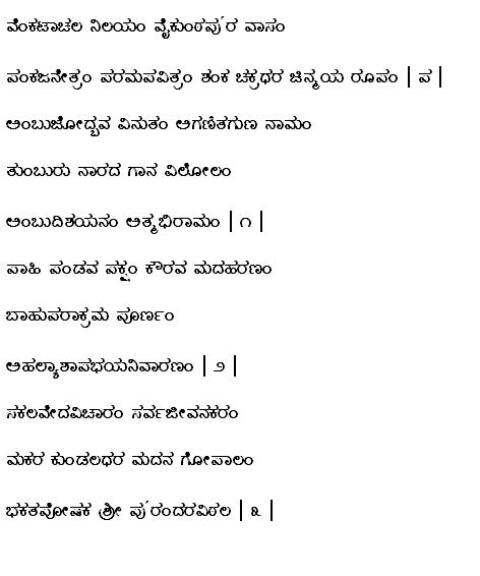
भक्त पॊशक श्रि पुरन्दर विट्तलम्

English Transliteration

Pallavi

vEnkaTAcala nilayam vaikuNTha puravAsam

pankaja nEtram parama pavitram shankha cakradhara cinmaya rUpam (venkaTAcala).

CaraNam 1

ambujOtbhava vinutam agaNita guNanAmam

tumburu nArada gAnavilOlam ambudhi shayanam AtmAbhirAmam.

CaraNam 2

pAhi pANDava pakSam kaurava madaharaNam bAhu

parAkrama pUrNam ahalyA shApa bhaya nivAranam

CaraNam 3

sakala vEda vicAram sarva jIva nikaram

makara kuNDaladhara madana gOpAlam

bhakta pOSaka shrI purandara viTTalam

Meaning of the Sanskrit words

Pallavi

वें – sin

कटा – destroys

चल – hill

(The holy place of Tirupathi is referred here as Venkatachala)

व्निलयम् – dwelling

वैकुण्ठ पुर – the city of vaikuntham

वासम् – resident

पन्कज – lotus

नॆत्रम् – eyes

परम – absolute/supreme

पवित्रम् – purity/holy

श्न्क – conch

चक्रधर – discuss/disc

चिन्मय – pure thought

रूपम् – form

CaraNam 1

अम्भुज – lotus

उद्भव – prop from

(अम्बॊत्भव) (the person who comes out of the lotus)

विनुतम् – Lord Brahma

अगणित – countless

गुण – virtue

नामम् – name

तुम्बुरु – sage tumburu

नारद – sage naradha

गान – song

विलॊलम् – captivated

अम्बुधि – ocean

शयनम् – recline

आत्मा – soul

अभिरामम् – delightful

CaraNam 2

पाहि – protect

पाण्डव – Pandavas

पक्शम् – side of

कौरव – Kauravas

मध – pride

हरणम् – destroy

बहु – plenty

पराक्रम – valour

पूर्णम् – complete

अहल्या – Ahalya

शाप – curse

भय – fear

निवारनम् – relief/remove

CaraNam 3

सकल – every/all

वॆद – Vedha

विचारम् – enquiry

सर्व- all

जीवन – lives

करम् – anchor/creator

मकर – carp shaped

कुण्डल – ear rings

धर – wear

मदन – handsome

गॊपालम् – cow protector

भक्त – devotees

पॊशक – protect

श्रि पुरन्दर विट्तलम् – Purandara Vittala (pen name ofPurandara Dasa)

Composition in Tamil

பல்லவி

வேங்கடமலைவாழ் வைகுந்த நகர் வாசனே

கமலக்கண்ணனவன் ஒப்புயர்வற்ற புனிதனே

சங்கு சக்கரமுமடன் தூய எண்ணமுடை வடிவனே….வேங்கட

சரணம் 1

ஆம்பல்முளை அயன் வணங்கும்

எண்ணற்ற நற்பண்பின் களஞ்சியமே

தும்புரு நாரத முனி இசை மகிழும்

ஆழிதுயில் உள்ளம் மகிழும் …….வேங்கட

சரணம் 2

ஐவரை அணைத்து கவுரவரின் ஆணவமழித்து

வெகுபல வீரபேராண்மை உடை நிறையோனே

அகலிகையின் தடுப்பருஞ்சாபம் நீக்கோனே …..வேங்கட

சரணம் 3

மறைநூலின் உட்பொருள் ஆராயலாய்

அனைத்துயிரின் ஆதாரமாயும்

மகர குண்டலமணி அழகான ஆநிரைமேயோனே

பக்தர்களை காக்கும் புரந்தர விட்டலமே …..வேங்கடம

Meaning of the composition in English

I pray the

One whose dwelling is Tirupati, whose residence is the city of vaikuNTha, one whose eyes are like lotuses, one who is supremely pure, one who bears a conch and a discuss and whose form is that of pure thought,

One who is worshipped by brahmA ,one who is the storehouse of countless virtues, one who is captivated by the music of sages such as tumburu and nArada, one who reclines in the ocean and is delightful to the soul

Protect me Oh ! The one who took the side of the pANDavas, and one who destroyed of the pride of the kauravas, one who is complete with multiple types of valor/courage/heroism, one who is the cause of the removal of the fear of ahalyA’s curse

One who is the focus of deliberation of all the vEdas, one who is the anchor/creator of all life forms, one who is madana gOpAla, wearing carp-shaped earrings, one who is SrI purandara viTThala, the protector/nourisher of his devotees

Composition in Kannada

Carnatic Musing 3 – Universal God – Sadasiva Brahmendra – Raga Madhuvanthi

Audio Link to the Song:

https://www.dropbox.com/s/329rw6g0f2y63ud/Sarvam%20Brahma%20mayam%20%20By%20sadavsiva%20brambendraaih%20%20Brothers1-BjztyfYsJbM.mp3?dl=0

Sanskrit Verses of the Composition

Pallavi

सर्वं ब्रह्ममयं रे रे

चरणं १

किं वचनीयं किमवचनीयं

किं रसनीयं किमरसनीयम् ……सर्वं

चरणं २

किं पठनीयं किमपठनीयं

किं भजनीयं किमभजनीयम् …..सर्वं

चरणं ३

किं बोद्धव्यं किमबोद्धव्यं

किं भोक्तव्यं किमभोक्तव्यम् (सर्वं..)

चरणं ४

सर्वत्र सदा हंस ध्यानं

कर्तव्यं भो मुक्ति-निदानम् (सर्वं..)

English Transliteration

pallavi

sarvam brahmamayam rE rE

CaraNam 1

kim vacanIyam kima vacanIyam

kim racanIyam kima racanIyam …..sarvam

caraNam 2

kim paThanIyam kima paThanIyam

kim bhajanIyam kima bhajanIyam …….sarvam

CaraNam 3

kim bOddhavyam kima bOddhavyam

kim bhOktavyam kima bhOktavyam …….sarvam

CaraNam 4

sarvatra sadA hamsa dhyAnam

kArtavyam bhO mukti nidAnam

Meaning of the Sanskrit words

Pallavi

सर्वं – everything/all

ब्रह् – The Absolute (God)

ममयं – belongs/consists

CaraNam

किं – what

वचनीयं – spoken

अवचनीयं – unspoken

रसनीयं – tasty/palatable

अरसनीयं – unpalatable

पठनीयं – fit to study/learn

अपठनीयं – unfit to study/learn

भजनीयं – to be revered/prayed

अभजनीयं – not to pray/sing

बोद्धव्यं – to be taught

अबोद्धव्यं – not to be taught

भोक्तव्यं – to be possessed/enjoyed

अभोक्तव्यं – not to be possessed/enjoyed

सर्वत्र – everywhere

सदा – continually

हंस – soul/spirit/god

ध्यानं – meditate

कर्तव्यं – duty

भो – that only

मुक्ति- salvation

निदानम् – primary cause

Meaning in Tamil

பல்லவி

அனைத்தும் ஆண்டவன் அனைத்திலும் ஆண்டவன்

சரணம் 1

சொல்லும் சொல்லாத சொல்லும்

உகந்ததும் ஒப்பாததும்….அனைத்தும்

சரணம் 2

கற்பதும் கல்லாததும்

மதிப்பதும் மதியாததும்…….அனைத்தும்

சரணம் 3

கற்பிப்பதும் புகட்டாதனவும்

அனுபவிப்பதும் அடையாதனவும் ……அனைத்தும்

சரணம் 4

எங்கும் எப்பொழுதும் இறைதுதி பணி ஒன்றே

பேரின்பவீடு அடைய மூலகாரணமன்றோ ……அனைத்தும்

Carnatic Musing 2 – Lord Siva – Papanasam Sivan Krithi – Raga HindOLam

Audio Link to the Song

https://www.dropbox.com/s/7m8551dkapp43zi/Samaganalolane%20-%20Hindolam-5dhRh2EDt5w.mp3?dl=0

Sanskrit Verse

पल्लवि

साम्गान लोलने शदाशिव

शन्करने दायाकरने जय………सामगान्

अनुपल्लवि

सॊमसुन्दर छन्द्रस्केकर

सॊमस्कन्दा श्रिथजन् सुभकर…… सामगान

चरणम्

कामारे पुररे कल्पक्क

नायिक नाथ करलकर

श्री महदेव देव कपालि

दीण रामदासन् जथदर……साम गान

English Transliteration

Pallavi

Saamagaana lolane Sadashiva |

Shankarane Dayaakarane jaya || (Saamagaana)

anupallavi

Soomasundara Chandrashekara |

Soomaskandaa Shrithajana Subhakara | (Saamagaana)

caraNam

KaamAre PuraRe Kalpakka |

Naayika NaaTha Karalakara ||

Shree Maha Deva DeVa KapAli |

DeeNa RamaDasan Jathadara || (Saamagaana)

Meaning of the Sanskrit Words

पल्लवि

साम -Saama Veda

गान – Music

लोल – desire/enjoy

शदाशिव – Sadasiva

शन्करने – Sankara

दयाकर – show compassion

जय- victory

अनुपल्लवि

सॊम – moon

सुन्दर – beauty

चन्द्र – moon

शेकर – crest

सॊम – moon

स्कन्दा – in this context it implies body

श्रिथ – seeking

जन् – people

सुभकर – do good

चरणम्

कामा – desire

रिपु: – enemy

कल्पक – the one that yields what one wishes.

नायिक – lady leader / heroine

नाथ – Lord / husband

करल – fear /terrible

कर – do

श्री – auspicious

महदेव – great Lord

देव – god

कपालि – wearing skulls

दीण – poor

रामदासन् – Ramadasan (the composer’s nickname)

जथ – hair

दर – having/holding

Meaning in English

Oh, one who enjoys saama (musical,vedic,appeasing) music, Oh omnipresent

Oh, Shankara, Oh merciful (giver of mercy), victory to you.

Oh, one adorned the moon, one having the moon on his head

One on whom the moon plays, one who does good for the people who seek his shelter

Oh, one who is the enemy of desires,

Oh. Lord of the goddess Kalpaganayaki , Oh, One who causes terrible things

Oh auspicious Great God, Oh, wearer of skulls

Oh, longhaired one worshipped by the meek Ramadasan.

Meaning in Tamil

பல்லவி

சாமவேத இசைப்பிரியனே சதாசிவனே

சங்கரனே கருணாகரனே வாகைசூடும் …..சாமவேத

அனுபல்லவி

நிலவெழிலோனே பிரைநிலவணியோனே

நிலவுலாமேனியனே அடியார்க்கு அருளும்……சாமவேத

சரணம்

இச்சைகளைவோனே கற்பகநாயகியின் நாதனே

அச்சம் விளையோனே அருள்மிகு ஆண்டவனே

கபாலம் அணியோனே எளியோன் ராமதாசன்

பணிந்திடும் சடைமுடிதரியோனே ………சாமவேத

NIRVANA SHATAKAM (ATMA SHATAKAM) Verse 6

Sanskrit Verse

अहं निर्विकल्पो निराकाररूपो

विभुत्वाच्च सर्वत्र सर्वेन्द्रियाणाम्

चासङ्गतं नैव मुक्तिर्न मेयः

चिदानन्दरूपः शिवोऽहम् शिवोऽहम् ॥६॥

English Transliteration

Aham Nirvikalpo Niraakaara-Ruupo

Vibhu-Tvaacca Sarvatra Sarve[a-I]ndriyaannaam |

Na Caa-Sanggatam Naiva Muktirna Meyah

Cid-aananda-ruupah Shivo[a-A]ham Shivo[a-A]ham ||6||

Meaning of the Sanskrit Words

निर्विकल्पो (Nirvikalpo): Without any Variation

निराकाररूपो (Niraakaara-Ruupo): Nature of Formless

रूप (Ruupa) = Form, Nature

विभुत्वाच्च (Vibhu-Tvaacca): Existing as the substratum

विभू (Vibhuu) = Existing

त्वच् (Tvac) = Cover

सर्वत्र (Sarvatra): Everywhere

सर्वेन्द्रियाणाम् (Sarva-Indriyaannaam): Everyone’s Sense Organs

सर्व (Sarva) = All

इन्द्रिय (Indriya) = Sense Organ

चासङ्गतं (Ca-Aasanggatam): And Attachment

च (Ca) = And

आसङ्ग (Aasangga) = Clinging, Attachment

मुक्तिर्न (Muktirna): Neither Freedom

मुक्ति (Mukti) = Freedom, Liberation

न (Na) = Not

मेयः (Meyah): Measurable

चिदानन्दरूपः (Cid-Aananda-Ruupah): Nature of Blissful Consciousness

चित् (Cit) = Consciousness

आनन्द (Aananda) = Bliss

रूप (Ruupa) = Nature

शिवोऽहम् (Shiva-Aham): I am Shiva, the Blissful Consciousness

शिव (Shiva) = signifying Consciouness

अहम् (Aham) = I

Meaning of the Verse

6.1: I am Without any Variation, and Without any Form,

6.2: I am Present Everywhere as the underlying Substratum of everything, and behind all Sense Organs,

6.3: Neither do I get Attached to anything, nor get Freed from anything,

6.4: I am the Ever Pure Blissful Consciousness; I am Shiva, I am Shiva, The Ever Pure Blissful Consciousness

6. I have neither dualities nor shape or form; I am present everywhere (omnipresent) and pervade all the senses; I am always equanimous; I am neither liberation nor bondage; I am of the nature of Pure Consciousness-Bliss-Absolute, I am Shiva, I am (verily) Shiva.

Meaning in Tamil

வரையில்லோன் வடிவமுமில்லோன் யான்

உட்கூறென நீக்கமற நிறை ஐந்தவித்தோன் யான்

பற்றேதும் எனக்கில்லை வீடுபேறேதுமெனக்கில்லை

உள்உணர்வின் பேரின்ப வடிவான சிவமே யான் சிவமே யான்

Carnatic Musing 1 – Lord Ganapathy – Muthuswamy Dikshitar Krithi – Raga Nattai

I begin the blog series with a prayer to Lord Ganesh by Sri. Muthuswamy Dīkshitar (with a pen name Guruguha), one of the Trinity of Carnatic Music. This composition in Raga Nattai in the 17th Century, is still one of the most sought after one by musicians across the world. The undercurrent of Nattai raga and the effervescence of the lyrics have withstood the test of time though hundreds of adaptations and fusions that have been tried out by scores of musicians.

Link to the audio

https://www.dropbox.com/s/bcdkokvtx7ot6h7/Mahaganapathim.mp3?dl=0

Pallavi – पल्लवि

महा गणपतिं मनसा स्मरामि

वसिष्ट वामदेवादि वन्दित ||

Transliteration of Pallavi

mahA gaNapatim manasA smarAmi

vasishTa vAmadEvAdi vandita

Meaning of the words of Pallavi

महा – The great

गणपतिं  – Ganapathi (Lord Vinayaka/Ganesha)

मनसा – by mind

स्मरामि – meditate

वसिष्ट – Sage Vashista

वामदेव – Sage Vamadeva

अदि – others

वन्दित – worship

Meaning of Pallavi in Tamil

அருள்மிகு கணபதியை நினைவேனே உள்ளமதில்

பெருமுனி வசிஷ்டர் வாமதேவர் முதலோர் வணங்கிடும்

Samashti Charanam – समष्टिचरणं

महादेवसुतं गुरुगुहनुतं

मार कोटि प्रकाशं शान्तं

महाकाव्य नाटकादि प्रियं

मूषिक वाहन मोदक प्रियं

Transliteration of Samashticharanam

mahA dEva sutam guruguha nutam

mAra kOTi prakAsham shAntam

mahA kAvya nATakAdi priyam

mUshika vAhana mOdaka priyam

Meaning of the words of Samashti Charanam

महादेव – Lord Shiva / Mahadeva

सुतं – son

गुरुगुह – Lord Subramanya

नुतं – praise

मार – Cupid’s

कोटि – crore

प्रकाशं – brightness

शान्तं – tranquil/peace

महा – great

काव्य – poetry

नाटक – play

अदि – others

प्रियं – like

मूषिक – mouse

वाहन – vehicle/mount

मोदक – sweet meat

प्रियं – like

Meaning of the Samashti Charanam in Tamil

கயிலையனின் அரும்புதல்வனே குருகுகன் புகழும்

கோடிமன்மத பொலிவுடை அமைதியின் அருள்வடிவே

பெருங்கவி கூத்துபல விழைவோனே

சுண்டெலி ஊர்தியுடை மோதகப்பிரியனே

Meaning of the Composition

I meditate (smarAmi) on the supreme (mahA) Ganapati who is worshipped (vandita) by Vasishta, the Vamadevas, etc (Adi). He, the son (sutam) of Lord Shiva (mahAdEvA), is praised (nutam) by Guruguha. He shines bright (prakAsham) like millions (kOti) of cupids (mAra). He is tranquil (shAntam). He loves (priyam) great poetry (mahA kAvya), drama (nAtaka), etc (Adi). He loves (priyam) the sweet Modaka. His mount (vAhanam) is a mouse (mUshika).

Meaning in Tamil

பெருமுனி வசிஷ்டர் வாமதேவர் முதல்வோர் வணங்கிடும், கயிலாயனின் அரும்புதல்வனாம், குருகுகன் புகழும் கோடிமன்மத பொலிவுடை, அமைதியின் அருள்வடிவான, அருங்கவி கூத்துபல விழைவோனை, சுண்டெலி ஊர்தியுடை மோதகப்பிரியனை, அருள்மிகு கணபதியை, உள்ளமதில் நினைவேனே

NIRVANA SHATAKAM (ATMA SHATAKAM) Verse 5

Sanskrit Verse

मृत्युर्न शङ्का मे जातिभेदः

पिता नैव मे नैव माता जन्मः

बन्धुर्न मित्रं गुरुर्नैव शिष्यं

चिदानन्दरूपः शिवोऽहम् शिवोऽहम् ॥५॥

English Transliteration

Na Mrtyur-Na Shangkaa Na Me Jaati-Bhedah

Pitaa Naiva Me Naiva Maataa Na Janmah |

Na Bandhurna Mitram Gurur-Na-Iva Shissyam

Cid-Aananda-Ruupah Shivo[a-A]ham Shivo[a-A]ham ||5||

Meaning of the Sanskrit Words

मृत्यु (Mrtyu) = Death

न (Na) = Not

शङ्का (Shangkaa): Apprehension, Fear

जाति (Jaati) = Caste or Creed

भेद (Bheda) = Distinction

पिता (Pitaa): Father

माता (Maataa): Mother

जन्मः (Janmah): Birth

बन्धु (Bandhu) = Relation

न (Na) = Not

मित्रं (Mitram): Friend

गुरु (Guru) = Guru or Spiritual Preceptor

न (Na) = Not

इव (Iva) = In the same manner

शिष्यं (Shissyam): Disciple

चित् (Cit) = Consciousness

आनन्द (Aananda) = Bliss

रूप (Ruupa) = Nature

शिव (Shiva) = signifying Consciouness

अहम् (Aham) = I

Meaning of the Verse

5.1: Neither am I bound by Death and its Fear, nor by the rules of Caste and its Distinctions,

5.2: Neither do I have Father and Mother, nor do I have Birth,

5.3: Neither do I have Relations nor Friends, neither Spiritual Teacher nor Disciple,

5.4: I am the Ever Pure Blissful Consciousness; I am Shiva, I am Shiva,

The Ever Pure Blissful Consciousness.

5. I have no apprehension of death; neither do I have any distinction of caste (or creed); I have neither father, nor mother, nor (even) birth; neither friend nor kith and kin; neither teacher (guru) nor disciple; I am of the nature of Pure Consciousness-Bliss-Absolute, I am Shiva, I am (verily) Shiva.

Meaning in Tamil

மரணமும் மரணபயமும் சாதியும் மதமும் எனை வரையறைவதில்லை

தந்தையும் தாயும் எனக்கில்லை இப்புவியில் பிறப்பும் எனக்கில்லை

உற்றாரும் உறவினரும் எனக்கில்லை ஆசானும் சீடனும் எனக்கில்லை

உள்உணர்வின் பேரின்ப வடிவான சிவமே யான் சிவமே யான்

Carnatic Musings

In my “blogging journey” so far, the focus is on Spirituality and Travel. In this journey there is one vital companion of mine, about whom I did not write anything and I just took “him/her” for granted. I always assumed that this companion can’t be separated from me and will always be with me in my soul satisfying pursuit as an integral part of myself. But having gone through the spiritual hymns that defined “I” in my previous blogs, it is quite natural for me to detach this integral companion and look at him/her a bit closely.

The result of this detached look is this Category of my blog. CARNATIC MUSINGS.

In this Category the soul of several compositions in Sanskrit will be looked at and the meaning they provide will be absorbed and presented in Tamil. The Tamil meaning provided is by no means in a musically tunable form. It is just an expression of my limited vocabulary in Tamil. To begin with, the blogs will cover a song each from the Trinity of Carnatic Music. Subsequently, Readers/Viewers requests will be given priority. May I request your indulgence? You can send your request through mail or comment. The request should be about Carnatic Music Compositions.

Once again a word of CAUTION: “I” am not a specialist in Music; neither do “I” know to sing nor “I” know the “Sastra” of any music leave alone Carnatic Music. The only connection that “I” have is that undefinable relationship that a Cobra has when the Snake Charmer plays his tune in front of it with his “Magudi/Pungi” (Wind Instrument).

Note: For those who are brand new to Carnatic Music, I would recommend adequate “googling” like me. The blogs here will not able to be of any assistance. My apologies.

I intend to begin the blogs in this category from June onwards.

NIRVANA SHATAKAM (ATMA SHATAKAM) Verse 4

Verse 4

पुण्यं पापं सौख्यं दुःखं

मन्त्रो तीर्थं वेदा यज्ञाः

अहं भोजनं नैव भोज्यं भोक्ता

चिदानन्दरूपः शिवोऽहम् शिवोऽहम् ॥४॥

English Transliteration

Na Punnyam Na Paapam Na Saukhyam Na Duhkham

Na Mantro Na Tiirtham Na Vedaa Na Yajnyaah |

Aham Bhojanam Naiva Bhojyam Na Bhoktaa

Cid-Aananda-Ruupah Shivo[a-A]ham Shivo[a-A]ham ||4||

Meaning of the Sanskrit Words

पुण्यं (Punnyam): Merits

पापं (Paapam): Sins

सौख्यं (Saukhyam): Worldly Joy

सुख (Sukha) = Worldly Joy

दुःखं (Duhkham): Worldly Sorrow

मन्त्रो (Mantro): Sacred Hymns

तीर्थं (Tiirtham): Sacred Place, Pilgrimage

वेदा (Vedaa): Sacred Scriptures

यज्ञाः (Yajnyaah): Sacrificial Offerings

अहं (Aham): I

भोजनं (Bhojanam): Enjoyment or Experience

भोज्यं (Bhojyam): Object to be Enjoyed or Experienced

भोक्ता (Bhoktaa): Enjoyer or Experiencer

चिदानन्दरूपः (Cid-Aananda-Ruupah): Nature of Blissful Consciousness

चित् (Cit) = Consciousness

आनन्द (Aananda) = Bliss

रूप (Ruupa) = Nature

शिवोऽहम् (Shiva-Aham): I am Shiva, the Blissful Consciousness

शिव (Shiva) = signifying Consciouness

अहम् (Aham) = I

Meaning of the Verse

4.1: Neither am I bound by Merits nor Sins, neither by Worldly Joys nor by Sorrows,

4.2: Neither am I bound by Sacred Hymns nor by Sacred Places, neither by Sacred Scriptures nor by Sacrifies,

4.3: I am Neither Enjoyment (Experience), nor an object to be Enjoyed (Experienced), nor the Enjoyer (Experiencer),

4.4: I am the Ever Pure Blissful Consciousness; I am Shiva, I am Shiva, The Ever Pure Blissful Consciousness.

4. Neither virtue (punyam) nor sin (papam) nor happiness nor sorrow; nor a holy chant nor a holy place of pilgrimage nor Veda nor sacrifice; I am neither enjoyment, nor enjoyable object, nor the enjoyer; I am of the nature of Pure Consciousness-Bliss Absolute, I am Shiva, I am (verily) Shiva.

Meaning in Tamil

பாவ புண்ணியம் இன்ப துன்பம் எனக்கில்லை

பாசுரமும் திருத்தலமும் மறைநூலும் வேள்வியும் எனக்கில்லை

பலன் நுகர்வும், நுகர்வதும், நுகர்வோனும் நானில்லை

உள்உணர்வின் பேரின்ப வடிவான சிவமே யான் சிவமே யான்